Common Challenges in Getting a Certificate of Occupancy
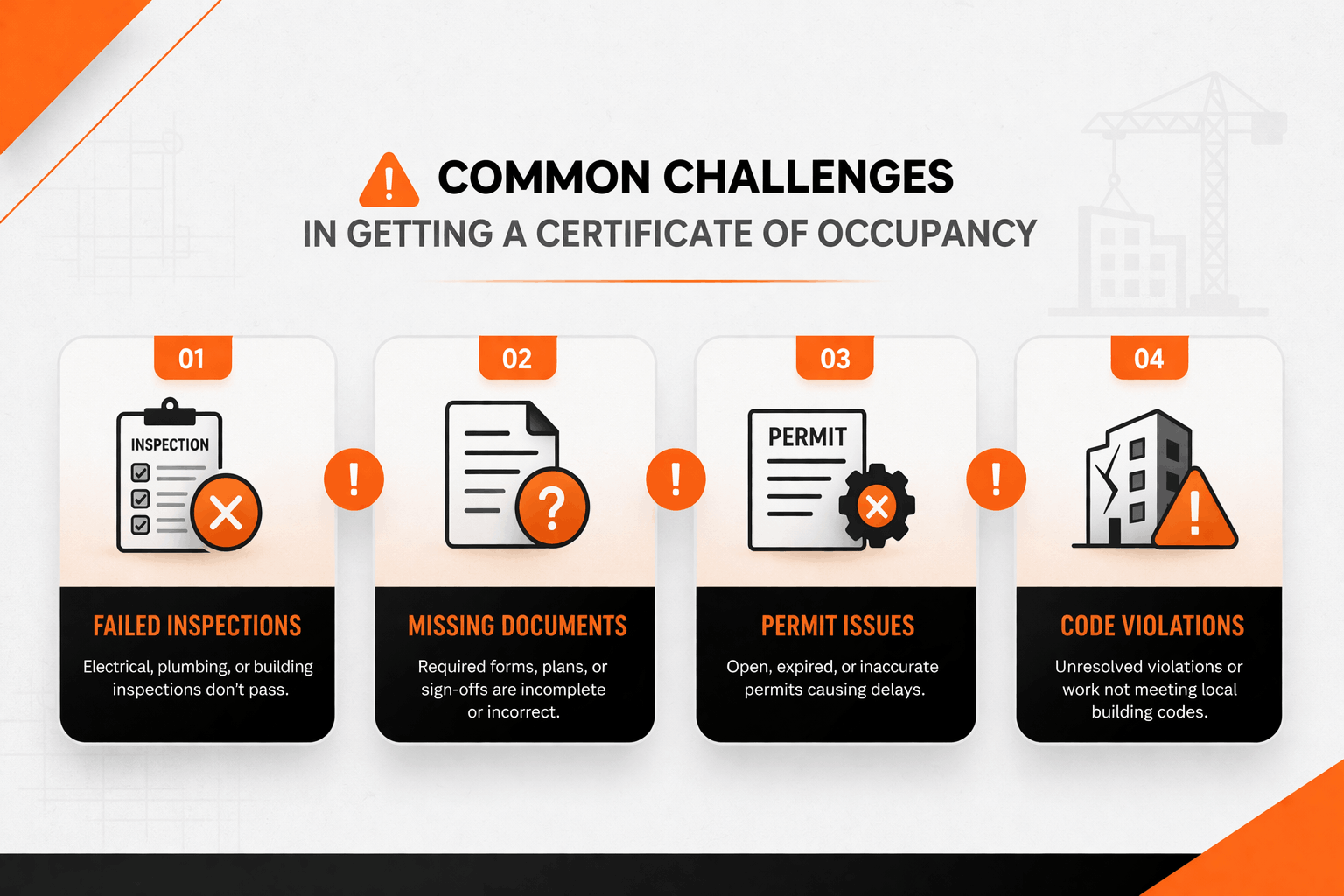
Many projects face delays during the CO process. Most of these issues are preventable with proper planning. Here are some of the most common challenges.
Failed Inspections
Inspections can fail for several reasons.
Common issues include:
Failed inspections require corrections and re-inspections, which add time.
Missing or Incorrect Documents
Incomplete paperwork can stop the process.
This may include:
Even small errors can lead to delays or rejection.
Delays from City Departments
City review times can vary depending on workload.
Delays may happen due to:
Following up consistently helps keep things moving.
Code Compliance Issues
Buildings must meet all local codes before approval.
This includes:
ADA accessibility requirements
Fire exits and safety systems
Ventilation and structural standards
Why Hire a CO Expediting Consultant?
Handling the Certificate of Occupancy process on your own can take time. It also requires dealing with multiple departments, inspections, and strict requirements. Even small mistakes can lead to delays.
Working with a consultant helps keep everything organized and on track.
Save Time and Avoid Delays
Time matters, especially when you are trying to open a business or complete a project.
A consultant helps by:
Keeping the process moving forward
Avoiding missed steps or repeated work
Coordinating timelines between inspections and approvals
This reduces waiting time and helps you meet your opening goals.
Reduce the Risk of Rejections
Many CO applications are delayed due to simple errors or missing details.
We help reduce that risk by:
Reviewing all documents before submission
Checking compliance early in the process
Identifying issues before inspections
Fixing problems early is always faster than correcting them later.
Local Knowledge of Austin Requirements
Every city has its own process and expectations. Austin is no different.
Having local experience helps with:
Understanding city procedures
Knowing what inspectors look for
Preparing for common issues
This insight helps avoid unnecessary back-and-forth.
Clear Communication with City Departments
Coordinating with multiple departments can be confusing and time-consuming.
We handle communication by:
Following up with city officials
Responding to comments or corrections
Keeping you updated at each stage
This keeps the process simple and reduces stress on your end.
Our CO Assistance Process at JDJ Consulting
We follow a clear and structured approach to help you get your Certificate of Occupancy without delays. Each step is designed to keep your project organized and compliant.
Initial Consultation
We start by understanding your project.
This includes:
This gives you a clear plan from the beginning.
Compliance Review
Before moving forward, we check if everything meets city requirements.
We review:
Approved plans
Permit status
Inspection readiness
If there are any issues, we address them early.
Application Preparation and Submission
We handle the paperwork so you don’t have to.
This includes:
Accuracy at this stage helps prevent delays.
Inspection Coordination
We schedule and manage all required inspections.
Our role includes:
Coordinating with inspectors
Preparing your site for inspection
Addressing any issues that come up
This helps ensure inspections pass the first time whenever possible.
Final Approval and CO Issuance
As your project reaches completion, we stay involved until the certificate is issued.
We:
Follow up with city departments
Respond to final comments
Confirm all conditions are met
Our goal is to get your CO approved without last-minute issues.
Who Needs Certificate of Occupancy Assistance?
Certificate of Occupancy services are useful for many types of clients. If your project involves construction, renovation, or a change in use, you may need support.
Commercial Property Owners
Owners need a CO before leasing or using their property. We help ensure the space is ready for occupancy and meets all requirements.
Real Estate Developers
Developers often manage multiple projects at once. We help keep timelines on track and handle the approval process efficiently.
Business Owners and Tenants
If you are opening a new location, delays can affect your launch. We help you meet deadlines and avoid unexpected issues.
General Contractors
Contractors are responsible for completing the work, but CO approval adds another layer. We assist with coordination, documentation, and final approvals so projects can close smoothly.
Certificate of Occupancy vs Certificate of Completion
Many people confuse these two documents. While they sound similar, they serve different purposes. Understanding the difference helps you avoid delays and confusion at the final stage of your project.
| Feature | Certificate of Occupancy (CO) | Certificate of Completion |
|---|
| Purpose | Allows a building to be legally occupied | Confirms construction work is finished |
| Legal Requirement | Required before using or opening a space | Not enough for occupancy |
| Focus | Safety, code compliance, and zoning | Construction completion only |
| Issued By | Local city or authority | Local authority or inspector |
Why Choose JDJ Consulting for CO Assistance in Austin?
Choosing the right consultant can make a big difference in how smoothly your project moves. At JDJ Consulting, we focus on keeping the process simple, clear, and efficient.
We understand the local requirements and work closely with city departments to avoid delays.
Here’s what sets us apart:
Strong understanding of Austin’s permitting and inspection process
End-to-end support from application to final approval
Clear and consistent communication
Focus on reducing delays and avoiding rework
Experience with commercial projects of different sizes
We don’t just submit paperwork. We stay involved at every stage to make sure your project reaches approval without unnecessary issues.
Get Help with Your Certificate of Occupancy Today
Getting a Certificate of Occupancy doesn’t have to be stressful or time-consuming. With the right support, the process can be smooth and predictable.
At JDJ Consulting, we help you stay on track, avoid delays, and move toward final approval with confidence.
If you’re planning a project or close to completion, now is the right time to get expert support. Reach out to our team today and let’s get your Certificate of Occupancy approved without unnecessary setbacks.
FAQs: Certificate of Occupancy Assistance Services in Austin
What is a Certificate of Occupancy (CO)?
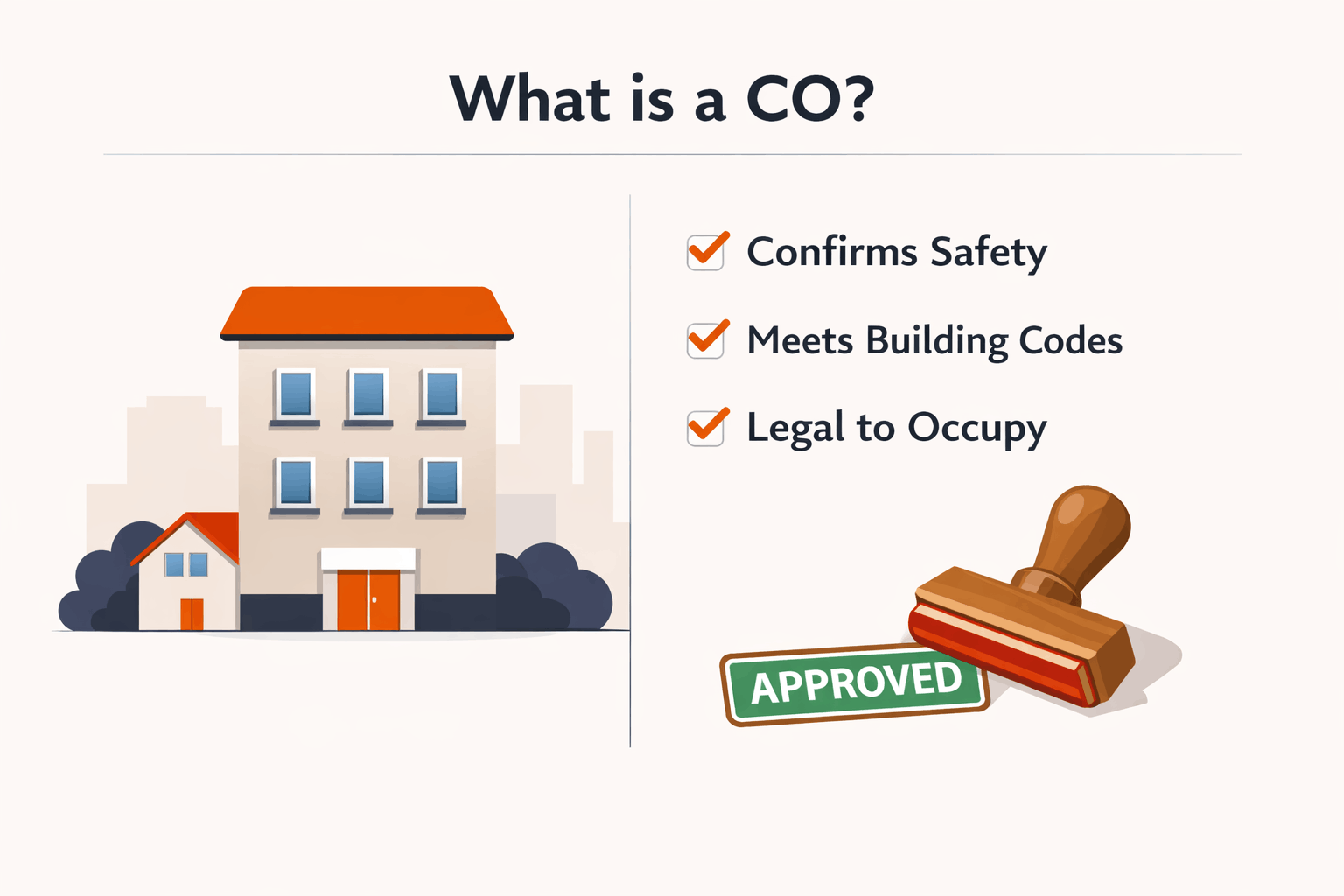
A Certificate of Occupancy is an official document that the city issues to confirm that a building meets safety standards and legal requirements for use. It verifies compliance with building codes, zoning laws, and safety regulations.
In simple terms, it means:
The structure meets all code requirements
Inspectors have approved all inspections
You can legally use or occupy the space
Without it, you cannot treat the property as ready for use.
When do I need a Certificate of Occupancy?
You need a Certificate of Occupancy in several common situations, especially for commercial properties.
These include:
You complete new construction
You build out or renovate a tenant space
You change how a building is used (for example, retail to office)
You open a new business location
If your project changes how people use or occupy a space, you will likely need a CO.
How long does it take to get a Certificate of Occupancy?
Your preparation level directly affects how long the process takes.
In most cases:
Key factors include:
Inspectors fail inspections
You submit incomplete documents
The city has a high workload
Good planning helps you avoid delays.
What inspections are required for a CO?
Your project must pass several inspections before you can receive a CO.
Most projects require:
Some projects may require additional inspections. You must pass all required inspections before the city issues your CO.
Can I operate a business without a CO in Austin?
No, you cannot legally operate a business without a valid Certificate of Occupancy.
If you try to operate without one:
The city may issue fines or penalties
Officials may shut down your operations
Utility providers or licensing agencies may delay approvals
You must obtain a CO before you open and operate a commercial space.
What is a Temporary Certificate of Occupancy (TCO)?
A Temporary Certificate of Occupancy allows you to use a building before you complete all final work.
The city may issue a TCO when:
You still need to complete minor items
The building meets safety requirements
Final approvals are still in progress
You must complete the remaining work within the timeline set by the city.
What happens if my CO application is rejected?
If the city rejects your application, it will list the issues that you must fix.
Common reasons include:
Inspectors fail one or more inspections
You submit missing or incorrect documents
The project does not meet code requirements
After you fix the issues, you can request a re-inspection or resubmit your application.
Do I need a new CO for a change of use?
Yes, you must apply for a new CO when you change how a building is used.
Examples include:
You convert retail space into office space
You open a restaurant in a former shop
You change the occupancy classification
The city must confirm that the new use meets zoning and safety requirements.
What documents are required for a CO application?
You must submit a complete set of documents to support your application.
These typically include:
Accurate and complete documents help you avoid delays.
How much does a Certificate of Occupancy cost?
The cost depends on the size and type of your project.
Typical costs include:
City application fees
Inspection fees
Permit-related expenses
You may also pay additional costs if you need corrections or re-inspections.
What is the difference between a CO and a Certificate of Completion?
These two documents serve different purposes.
You cannot legally occupy a building with only a completion certificate. You still need a CO.
Can I speed up the CO approval process?
Yes, you can reduce delays if you prepare everything correctly.
To speed up the process:
Close all permits before applying
Pass inspections on the first attempt
Submit complete and accurate documents
You can also work with a consultant to keep everything on track.
What are the most common reasons for CO delays?
Most delays come from issues that you can prevent.
Common reasons include:
You can avoid many of these problems with early planning and review.
Who issues the Certificate of Occupancy?
The local city or governing authority issues the Certificate of Occupancy.
In Austin, this typically involves:
The building department
Inspection teams
Zoning officials
These departments review your project and confirm that it meets all requirements.
Can I transfer a Certificate of Occupancy to a new owner?
In most cases, the CO stays with the building and its approved use, not the owner.
However:
You should always confirm requirements with the city before making changes.
What is included in a CO inspection?
Inspectors check whether your building meets all safety and code standards.
They typically review:
You must meet all code requirements before the city approves your CO.
Can delays in permits affect my CO?
Yes, permit issues often delay the CO process.
Common problems include:
Open or expired permits
Incorrect permit details
Missing approvals
You must close all permits before the city can issue your CO.
Why should I hire a consultant for CO assistance?
A consultant simplifies the process and helps you avoid delays.
They help you by:
This support helps you move your project from start to approval more efficiently.