Building a home, adding an extension, or remodeling a property in Texas comes with many steps. One of the most important is obtaining a building permit. But how much does it cost?
Permit costs can vary widely depending on your city, the type of project, and even the size of your home. Understanding these costs early can help you plan your budget and avoid surprises. In this guide, we’ll break down permit fees in Texas, explain why they matter, and give examples from major cities.
What Is a Building Permit and Why Do You Need One?
Before we talk numbers, it helps to understand what a building permit actually is.
A building permit is an official approval from your city or county that lets you start construction or make significant changes to a property. It ensures your project meets safety, zoning, and building code requirements.
Why Permits Are Important
-
Safety First: Permits ensure the work is done safely. Inspectors check structural integrity, electrical systems, plumbing, and more.
-
Protect Property Value: Permits help maintain the value of your home. Unpermitted work can make it hard to sell.
-
Avoid Fines: Building without a permit can lead to costly fines or forced demolition.
-
Insurance Coverage: Most insurance companies require permits for major renovations. Without them, claims may be denied.
Projects That Typically Require Permits
Some projects almost always need a permit:
-
New construction or additions
-
Major remodels
-
Electrical, plumbing, or HVAC work
-
Pools, decks, or accessory buildings in many cities
Smaller projects, like painting or installing a fence in some areas, may not need a permit. Always check with your local building department.
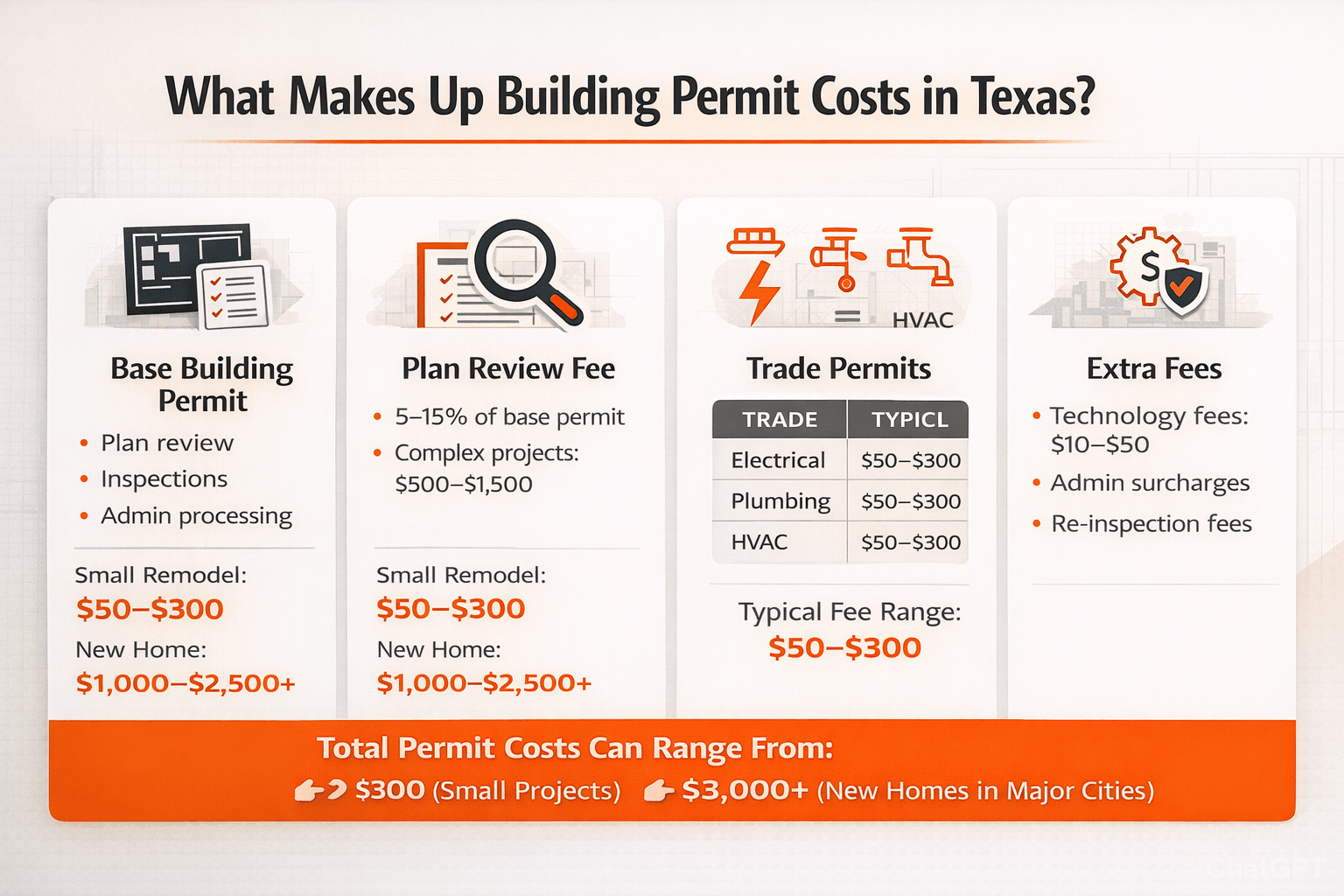
Main Components of Permit Costs in Texas
Permit costs aren’t just one flat fee. They often include multiple components, depending on your project type and location. Understanding these components helps homeowners plan their budget more accurately.
Base Building Permit Fee
This is the primary cost for your construction project. It covers:
-
Review of construction plans
-
Basic inspections
-
Administrative processing
Typical Costs:
-
Small remodel: $50–$300
-
New home: $1,000–$2,500+
The exact cost depends on your city and the total project value.
Plan Review Fee
Before construction begins, cities review your plans to make sure they follow building codes.
-
Usually 5–15% of the base permit fee
-
Larger or more complex projects may cost $500–$1,500
Trade Permits and Inspection Fees
Many cities require separate permits for specific trades. Each may have its own inspections. Common examples:
| Trade Type | Typical Fee Range |
|---|---|
| Electrical | $50–$300 |
| Plumbing | $50–$300 |
| HVAC | $50–$300 |
Combining trades may save some money, but check local rules.
Technology, Administration, and Surcharge Fees
Some municipalities add small fees for:
-
Online permit processing
-
Administrative tasks
-
Sustainability or technology support
Typical Cost: $10–$50
These are usually minor but should still be included in your total permit budget.
Typical Permit Costs in Major Texas Cities
Permit costs vary by city. Larger cities usually have higher fees than small towns or rural areas. Here’s a snapshot of what homeowners can expect for a standard residential project (~2,000 sq. ft.):
| City | Base Permit Fee | Plan Review Fee | Trade & Inspections | Approx. Total Cost |
|---|---|---|---|---|
| Austin | $1,800–$2,200 | $500–$800 | $600–$1,000 | $3,200–$4,300 |
| Houston | $1,500–$2,000 | $400–$600 | $800–$1,000 | $2,800–$3,000 |
| Dallas | $1,400–$1,800 | $400–$600 | $600–$800 | $2,400 |
| San Antonio | $1,300–$1,700 | $350–$500 | $600–$800 | $2,250 |
| Small Cities / Rural | $200–$800 | $50–$150 | $50–$200 | $300–$1,000 |
Remember, these are approximate costs. Always confirm with your city or county building department.
How Permits Are Calculated — Behind the Numbers
Many homeowners assume permit fees are fixed. In reality, Texas cities often calculate fees based on multiple factors. Understanding these helps you estimate costs more accurately.
Project Valuation
Most cities base permit fees on project value. This includes:
-
Cost of construction materials
-
Labor costs
-
Size of the project (square footage)
For example, a $300,000 home might have a base permit fee of around $1,060, while a $500,000 home could exceed $2,000.
Tip: Check your city’s permit fee schedule — it usually lists value bands to help you estimate.
Minimum & Administrative Fees
-
Some cities have a minimum fee even for small projects.
-
Extra administrative fees may cover staff review, inspections, and document handling.
-
This ensures even small projects contribute to city oversight costs.
Inspection Frequency
-
Projects requiring multiple inspections (foundation, framing, electrical, plumbing, final) generally cost more.
-
Re-inspections or failed inspections may add extra charges.
-
Planning for at least one or two extra inspections can prevent surprise expenses.
Permit Costs for Different Project Types
Permit costs vary based on the type of project. Let’s break down common categories in Texas:
| Project Type | Typical Permit Cost Range | Notes |
|---|---|---|
| New Home Construction | $1,000–$2,500+ | Includes base fee, plan review, trades, and inspections |
| Major Remodel / Addition | $500–$1,500+ | Higher if structural changes or multiple trades involved |
| Minor Remodel / Interior | $50–$300 | Small projects may only require a base permit |
| Accessory Structures | $50–$500 | Garages, sheds, pools often have separate permits |
| Trade-Only Projects | $50–$350 per trade | Electrical, plumbing, or HVAC only |
Key Points to Remember
-
New construction usually costs the most because it combines multiple fees.
-
Major remodels can approach new construction costs if they involve structural changes.
-
Smaller projects often have flat fees, making budgeting easier.
Always check your city or county regulations, as some trades may require permits even for minor work.
Optional and Hidden Fees to Watch For
Permit fees are not always straightforward. Homeowners often encounter additional charges:
-
Impact Fees: Charged for public infrastructure (roads, parks, schools). Can range from $5,000–$20,000 in larger cities.
-
Water/Sewer Tap Fees: For connecting utilities to your property.
-
Engineering or Development Review Fees: Sometimes required for site grading or drainage plans.
-
Re-Inspection Fees: If your work fails initial inspection or changes are needed.
-
Technology or Sustainability Fees: Some cities charge extra for online permits or energy efficiency reviews.
Budgeting for these optional costs ensures you won’t face unexpected expenses during construction.
Tips to Minimize Extra Fees
-
Group inspections when possible.
-
Submit accurate plans to reduce re-inspections.
-
Confirm impact fees and utility fees before starting construction.
-
Work with a contractor or permit expediter familiar with local regulations.
How to Estimate Your Total Permit Budget
Planning ahead is key to avoid surprises. Estimating your permit costs doesn’t have to be complicated if you follow a few steps.
1st Step: Identify Required Permits
Start by listing all permits your project may need:
-
Building permit (main construction)
-
Electrical permit
-
Plumbing permit
-
HVAC (mechanical) permit
-
Specialty permits (pool, fence, accessory structures)
Tip: Your city or county website often has a checklist of required permits.
2nd Step: Check Local Fee Schedules
-
Most Texas cities post fee schedules online.
-
Fees may be flat, per square foot, or percentage of project valuation.
-
Example: Houston uses valuation-based tables; Austin uses both flat and percentage fees.
3rd Step: Add Plan Review and Inspection Fees
-
Plan review fees are often a percentage of the base permit cost.
-
Trade inspections usually have separate fees per trade.
-
Include at least one extra inspection for re-checks.
4th Step: Include Optional or Hidden Fees
-
Impact fees, utility connections, and tech fees can add up.
-
Even minor fees ($10–$50) should be included to avoid under-budgeting.
5th Step: Build in a Contingency
-
A buffer of 10–20% of total permit costs is recommended.
-
This covers unexpected re-inspections or administrative changes.
Example Budget Table for a 2,000 sq. ft. Home in Austin:
| Fee Type | Estimated Cost |
|---|---|
| Base Building Permit | $2,000 |
| Plan Review Fee | $600 |
| Electrical, Plumbing, HVAC | $900 |
| Technology/Admin Fees | $50 |
| Impact Fees (if applicable) | $10,000 |
| Contingency (10%) | $1,355 |
| Total Estimated Budget | $14,905 |
Tips to Save Money or Avoid Mistakes
Saving money on permit fees isn’t about skipping permits — it’s about planning and efficiency.
-
Apply Early: Submitting applications early can prevent late fees and delays.
-
Combine Inspections: Some cities allow grouping inspections to reduce fees.
-
Hire a Permit Expediter: For larger projects, an experienced expediter can help avoid errors and speed approvals.
-
Check Local Requirements: Some cities have special rules for trade work.
-
Avoid Unpermitted Work: Doing work without a permit can cost far more in fines and retroactive inspections.
-
Accurate Documentation: Complete and correct plans reduce re-inspection fees.
Following these tips helps your project stay on schedule and budget, while keeping it compliant with Texas regulations.
Conclusion — Final Thoughts on Texas Permit Costs
Building or remodeling in Texas involves more than construction. Permit costs can significantly affect your budget, and understanding them is essential.
Key takeaways:
-
Costs vary widely depending on city, project type, and size.
-
Base permit fees, plan review, inspections, and optional fees all add up.
-
Major cities like Austin and Houston tend to have higher costs, while smaller towns may be more affordable.
-
Planning ahead, using local fee schedules, and including a contingency ensures a smooth process.
Following this guide will help homeowners make informed decisions, avoid surprises, and complete projects safely and legally.
Need Help with Permits?
Let JDJ Consulting guide you through Texas building permit costs and approvals. Call or contact us online to schedule your free consultation with our permit expeditors.
Frequently Asked Questions (FAQs): Building Permits Cost
Do I need a permit for a fence in Texas?
Yes, in many cities, fences above a certain height require a permit. Requirements vary by location, so check with your local building department.
Are permit fees refundable?
Typically, permit fees are non-refundable, even if your project changes or is canceled. Some cities may refund unused plan review fees — check local regulations.
How long does permit approval take?
Approval can range from a few days to several weeks, depending on city workload and project complexity. Submitting complete plans reduces delays.
What happens if I build without a permit?
You may face fines, stop-work orders, or be required to demolish unpermitted work. Insurance claims could also be denied.
Can I combine inspections to save money?
Some municipalities allow grouping inspections, but not all. Ask your city’s building department for options.
Do trade permits cost extra?
Yes, electrical, plumbing, and HVAC work often require separate permits and inspections. Costs range from $50–$350 per trade.