
If you’re planning a construction project in California, one of the first questions you’ll ask is simple: How long will the building permit take?
Table of Contents
In Los Angeles, this question matters even more. Permit timelines here can affect your budget, contractor schedule, and even financing. Delays are common. Still, many of them are avoidable when expectations are clear from the start.
This guide focuses mainly on Los Angeles City and Los Angeles County, with broader California context where helpful. We’ll explain realistic timelines, why delays happen, and what you should plan for before submitting a permit application.
Whether you’re remodeling a home, building an ADU, or starting a commercial project, understanding the process early can save weeks or even months later.
🧠 LA Permit Review Flowchart
- Plan Prep — Architect + Energy docs ready
- Submit — Online filing + fee payment
- Plan Check Review — LADBS & other departments
- Corrections — You revise & resubmit
- Final Sign-off — Pay final fees
- Permit Issued — You can legally start work
Typical review cycles can add weeks to overall timing.
Average Building Permit Timelines in California
California building permits usually take longer than many other states. This is due to strict safety rules, energy standards, and local zoning laws. Seismic design and fire regulations also add extra review steps.
That said, timelines vary widely depending on the project type and location.
Typical Permit Timeframes Across California
Below is a general statewide overview. These are averages, not guarantees.
| Project Type | Typical Permit Timeline (California) |
|---|---|
| Minor interior remodel | 2–4 weeks |
| Standard residential remodel | 4–8 weeks |
| Home addition | 6–12 weeks |
| ADU (Accessory Dwelling Unit) | 6–16+ weeks |
| New single-family home | 3–6 months |
| Commercial or mixed-use | 4–9+ months |
These timelines assume:
Plans are complete
Zoning is compliant
No environmental review is required
If any of those are missing, approvals can take much longer.
Why California Permits Take Longer
Several factors slow down the process statewide.
For example:
Title 24 energy compliance is mandatory
Seismic and structural reviews are strict
Fire access and life-safety rules are detailed
Local zoning laws vary city by city
Because of this, permit review often happens in stages. Each stage adds time.
Even small mistakes in plans can result in correction notices. Each correction cycle can add weeks.
How Long Does It Take to Get a Building Permit in Los Angeles?
Los Angeles is one of the most complex permitting environments in California. While the city has online systems, review timelines remain longer than many people expect.

Most permits in Los Angeles go through LADBS (Los Angeles Department of Building and Safety). Depending on the project, other departments may also be involved.
Typical Los Angeles Permit Timelines
Here’s a Los Angeles–specific snapshot based on real-world averages.
| Project Type | Average Timeline (Los Angeles) |
|---|---|
| Interior remodel (non-structural) | 4–6 weeks |
| Residential remodel | 6–10 weeks |
| ADU permit | 8–16 weeks |
| New residential construction | 4–8 months |
| Commercial tenant improvement | 3–6 months |
| Ground-up commercial build | 6–12+ months |
These timelines assume:
No zoning conflicts
No CEQA review
One or two correction cycles
Projects that require planning approvals or variances often take longer.
Los Angeles City vs. Los Angeles County
Permit timelines also depend on where the property is located.
Los Angeles City and Los Angeles County operate under different departments.
City of Los Angeles (LADBS):
More departments involved
More layered reviews
Often slower for complex projects
Los Angeles County:
Slightly simpler review structure
Faster in some unincorporated areas
Still strict on code compliance
In some cases, county permits move faster than city permits. However, this depends heavily on the project scope and location.
📊 Typical Permit Approvals in Los Angeles
Interior Remodel (weeks)4–6
Residential Remodel (weeks)6–10
ADU Project (weeks)8–16+
New Residential Build (months)4–8
Commercial / Large Projects (months)6–12+
Source: LADBS 2025 Review & JDJ Consulting estimates 📍
Why Los Angeles Permits Take Longer Than Expected
Several local factors play a role.
These include:
High application volume year-round
Limited plan check staffing
Multiple department sign-offs
Frequent zoning clarification requests
Additionally, most Los Angeles projects require at least one correction cycle. Some need two or more.
Each correction round can add 2 to 6 weeks.
Setting Realistic Expectations Early
In Los Angeles, speed often depends on preparation. Clean plans matter. Local code knowledge matters even more.
Submitting incomplete drawings almost always leads to delays. On the other hand, permit-ready plans reduce back-and-forth and keep reviews moving.
Planning for realistic timelines from day one helps avoid rushed decisions later.
Step-by-Step Building Permit Process in Los Angeles
Understanding the permit timeline starts with understanding the process itself. In Los Angeles, permits move through several stages. Each stage has its own review time. Missing a step often leads to delays later.
Here’s how the process typically works.
Step 1 — Pre-Planning and Document Preparation
This is the most overlooked stage. Yet, it has the biggest impact on how fast your permit moves.
Before submitting anything to LADBS, you need complete and accurate documents.
Most Los Angeles projects require:
Architectural plans
Structural drawings and calculations
Title 24 energy compliance reports
Site plans showing setbacks and zoning details
Soils report (for some new builds or hillside areas)
For ADUs and additions, zoning diagrams are especially important. Many delays happen because plans do not match zoning rules.
This preparation phase usually takes:
2–4 weeks for small projects
4–6 weeks for larger or complex projects
Rushing this step often leads to longer plan check times later.
Step 2 — Permit Application Submission
Once plans are ready, the application is submitted to the City of Los Angeles through the LADBS online system.
At this stage:
Plans are uploaded digitally
Fees are paid
The project is logged into the review queue
This does not mean the review starts immediately. First, the city checks whether the submission is complete.
If documents are missing or incorrectly labeled, the application may be rejected. When that happens, the review clock stops before it even starts.
This intake phase usually takes:
A few days to one week
Clean submissions move forward faster.
Step 3 — Plan Check and Departmental Review
This is where most of the waiting happens.
In Los Angeles, permits often go through multiple departments. The exact list depends on the project.
Common reviewing departments include:
Building and Safety
Zoning
Fire Department
Public Works
Planning (when zoning or land use is involved)
Each department reviews plans separately. Some reviews happen at the same time. Others happen in sequence.
Initial plan check timelines are typically:
4–8 weeks for residential projects
8–12 weeks or more for complex builds
High workloads and staffing levels can extend these timelines. Summer months are often slower.
Step 4 — Corrections, Comments, and Resubmittals
Most Los Angeles permits receive comments after the first review. This is normal.
Correction notices may request:
Clarification of structural details
Zoning compliance adjustments
Fire access changes
Energy report revisions
Once comments are issued, the applicant must revise plans and resubmit them.
Each correction cycle usually adds:
2–6 weeks, depending on scope and response time
Projects with multiple correction rounds can see timelines stretch quickly. This is why experienced preparation matters so much.
Step 5 — Final Approval and Permit Issuance
Once all departments approve the plans, the permit moves to final processing.
At this stage:
Remaining fees are paid
Final signatures are completed
The permit is officially issued
In most Los Angeles cases, final issuance takes:
3–10 business days after last approval
Once issued, construction can legally begin.
🤔 Quick Permit Readiness Quiz
How ready is your project for fast permit approval?
- ✔️ Are plans complete and code‑ready?
- ✔️ Have you confirmed zoning compliance?
- ✔️ Do you have Title 24 energy reports?
- ✔️ All fees paid up front?
Mostly YES = faster timeline! ⚡
Why This Process Feels Slow
Los Angeles permits are not delayed for no reason. The city enforces strict safety, zoning, and energy standards. Each review layer adds time, but also reduces risk later.
The key is knowing what to expect and planning accordingly.
Key Factors That Affect Permit Timelines in Los Angeles
No two permit applications move at the same speed in Los Angeles. Even similar projects can have very different timelines. That’s because several factors influence how long a permit review takes.
Understanding these factors helps you plan better and avoid surprises.
Project Type and Size
The size and scope of your project matter more than anything else.
Smaller projects usually move faster. Larger projects take longer due to added reviews.
For example:
Interior remodels often require fewer departments
Additions and ADUs need zoning and structural review
New construction triggers multiple plan checks
Commercial projects take even longer. They must meet fire, accessibility, and life-safety rules. Each added requirement adds review time.
In short, the more complex the project, the longer the permit timeline.
Zoning and Land Use Rules
Zoning issues are one of the most common causes of delay in Los Angeles.
Every property falls under a specific zoning category. If the proposed work does not fully comply, the permit cannot move forward.
Common zoning issues include:
Setback violations
Height limits
Floor area restrictions
Parking requirements
Some projects require:
Zoning clarifications
Variances
When zoning approvals are needed, timelines can increase by several months.
California Building Code and Title 24 Compliance
California has some of the strictest building rules in the country. Los Angeles enforces them closely.
Most permits require compliance with:
California Building Code
Title 24 energy efficiency standards
Seismic safety requirements
Even small errors in energy reports or structural notes can trigger corrections.
These reviews protect safety. However, they also extend timelines if plans are not prepared correctly.
Environmental and CEQA Considerations
Some Los Angeles projects must go through environmental review.
This often applies to projects:
Near coastal zones
In hillside areas
Near historic or protected properties
With large-scale impacts
When CEQA review is required, permit timelines change completely. Approval can take months or longer, depending on the scope.
Not every project triggers CEQA. But when it does, early planning becomes critical.
City Workload and Review Backlogs
Los Angeles receives thousands of permit applications every month. Review speed depends on staffing and workload.
Busy periods often include:
Spring and summer construction seasons
Post-policy change surges (such as ADU rule updates)
During these times, even well-prepared projects may move slowly.
This is why timeline estimates are always ranges, not fixed dates.
Quality of Submitted Plans
Clean, accurate plans move faster. Incomplete plans do not.
Common submission problems include:
Missing notes or details
Inconsistent dimensions
Incorrect zoning data
Outdated code references
Each issue creates comments. Each comment adds time.
Strong preparation reduces correction cycles and keeps the review moving.
Why These Factors Matter
Permit delays are rarely random. They usually come from one or more of these factors.
Knowing them early helps you:
Set realistic schedules
Budget accurately
Avoid rushed decisions later
💰 Permit Fee Estimator
—
Based on typical Los Angeles permit fees. Actual fees may vary by project type, valuation, and LADBS review.
Common Permit Delays in California and Los Angeles
Permit delays are frustrating. In Los Angeles, they are also common. Most delays follow clear patterns. Knowing them helps you avoid costly mistakes.
Below are the most frequent reasons permits take longer than expected.
Incomplete or Inaccurate Plans
This is the top cause of delays.
Plans must match city codes exactly. Even small errors can trigger comments.
Common issues include:
Missing dimensions or notes
Conflicting floor plans and elevations
Incorrect zoning information
Outdated code references
When plans are incomplete, the city issues corrections. Each correction round can add weeks.
Zoning Conflicts and Code Interpretation
Zoning rules in Los Angeles are complex. Misunderstanding them causes delays.
Typical zoning problems include:
Exceeding allowed height
Incorrect setbacks
Floor area over the limit
Parking shortfalls
Some projects require zoning clearance before plan check can finish. Others need special approvals.
When zoning issues appear late, timelines stretch fast.
Title 24 and Energy Report Errors
California energy rules are strict. Los Angeles enforces them closely.
Energy reports must match architectural and mechanical plans. When they don’t, reviewers flag the issue.
Common problems include:
Incorrect window values
Mismatched square footage
HVAC systems not shown consistently
These errors often seem small. Still, they can delay approval by several weeks.
Fire Department and Life-Safety Reviews
Fire access and life-safety rules apply to many projects. This is especially true for ADUs and commercial work.
Fire review delays often involve:
Driveway access width
Hose reach distance
Emergency access routes
Fire-rated construction details
Fire comments usually come later in the review process. When that happens, projects often face another resubmittal cycle.
Environmental or CEQA Review Triggers
Some projects trigger environmental review unexpectedly.
This can happen when a site:
Is in a hillside area
Falls under historic protection
Lies near coastal or sensitive zones
When CEQA applies, timelines change completely. What started as a weeks-long process may turn into months.
High Department Workloads
Even perfect plans can face delays during busy periods.
Los Angeles sees high permit volume year-round. During peak seasons, plan check queues grow longer.
This factor is outside the applicant’s control. Still, it affects timelines across the board.
Poor Coordination Between Consultants
When architects, engineers, and energy consultants are not aligned, problems follow.
Miscommunication leads to:
Conflicting documents
Multiple corrections
Longer resubmittal cycles
Strong coordination shortens review time.
Why Most Delays Are Preventable
Most permit delays come from planning gaps, not city rules alone.
Clear plans. Local experience. Early review. These reduce problems before submission.
Real-World Los Angeles Permit Timeline Examples
Permit timelines make more sense when you see real scenarios. Below are common Los Angeles projects and how long permits typically take when things go reasonably well.

These examples assume no major zoning issues and standard correction cycles.
Example 1 — Interior Residential Remodel
Project scope: Kitchen and bathroom remodel. No structural changes.
Permit requirements:
Architectural plans
Basic plan check
LADBS approval only
Typical timeline:
Plan preparation: 2 weeks
Plan check review: 3–4 weeks
Corrections and resubmittal: 1–2 weeks
Permit issuance: 3–5 days
Total time: 5–8 weeks
These projects move faster because they involve fewer departments. Still, missing details can slow things down quickly.
Example 2 — ADU Permit in Los Angeles
Project scope: Detached backyard ADU.
Permit requirements:
Architectural plans
Structural calculations
Title 24 energy report
Zoning and fire review
Typical timeline:
Plan preparation: 3–5 weeks
Initial plan check: 6–8 weeks
Corrections and resubmittal: 2–4 weeks
Final approval and issuance: 1 week
Total time: 8–16 weeks
ADUs often face zoning and fire comments. Most require at least one full correction cycle.
Example 3 — Commercial Tenant Improvement
Project scope: Interior build-out for a retail or office space.
Permit requirements:
Architectural and structural plans
ADA compliance review
Fire department approval
Mechanical, electrical, and plumbing review
Typical timeline:
Plan preparation: 4–6 weeks
Plan check review: 8–12 weeks
Corrections and resubmittal: 3–6 weeks
Permit issuance: 1–2 weeks
Total time: 3–6 months
Commercial permits take longer due to added life-safety and accessibility requirements.
Why These Examples Matter
These timelines are not worst-case scenarios. They are realistic. Projects with zoning conflicts, CEQA review, or multiple correction cycles often take longer. Planning for these ranges helps avoid rushed decisions and unexpected costs.
📈 Permit Approval Probability
0%
Higher readiness = faster permit approval.
How to Speed Up the Building Permit Process in Los Angeles
You cannot control city workloads. Still, you can control how prepared your project is. In Los Angeles, preparation makes a real difference.
Below are proven ways to reduce delays and keep your permit moving.
Submit Permit-Ready Plans From the Start
Clean plans move faster. Incomplete plans do not.
Permit-ready plans clearly show:
Accurate dimensions
Correct zoning data
Consistent notes across all sheets
Updated code references
When plans are clear, reviewers spend less time asking questions. Fewer questions mean fewer corrections. This alone can save several weeks.
Work With Professionals Who Know Los Angeles Codes
Local experience matters.
Architects and engineers familiar with Los Angeles codes know what reviewers expect. They design plans that meet city standards the first time.
This reduces:
Zoning misinterpretations
Structural clarification requests
Energy compliance errors
Out-of-area designers often miss local rules. That leads to longer reviews.
Use Permit Expediting Services When Needed
Permit expeditors help projects stay on track. They do not skip rules. Instead, they manage the process closely.
A permit expeditor can:
Monitor review status
Communicate with LADBS reviewers
Flag issues early
Help respond to correction comments
For time-sensitive projects, expediting often pays for itself.
Schedule Pre-Submission Reviews When Available
Some departments offer early consultations. These reviews catch issues before formal submission.
Pre-submission feedback helps:
Confirm zoning compliance
Clarify department requirements
Reduce major corrections later
Addressing problems early saves time during plan check.
Respond Quickly to Correction Comments
Delays often happen between review cycles. Once comments are issued, the clock shifts to the applicant. Slow responses lead to longer timelines. Fast resubmittals help keep your project active in the queue.
Keep All Consultants Aligned
Coordination matters more than most people expect.
Architectural plans must match:
Structural drawings
Energy reports
Mechanical layouts
When documents conflict, reviewers flag the issue. That creates extra correction rounds. Clear communication keeps everything consistent.
Why Speed Still Has Limits
Even well-prepared projects take time in Los Angeles. City reviews are detailed by design. Still, strong preparation reduces unnecessary delays and keeps timelines predictable.
What Happens If Your Permit Is Delayed
Permit delays are more than an inconvenience. In Los Angeles, they often affect the entire project timeline. Understanding the impact helps you plan and adjust before problems grow.
Construction Start Dates Shift
Most contractors schedule jobs weeks or months in advance. When a permit is delayed, start dates often change.
This can lead to:
Contractors becoming unavailable
Higher labor costs
Rescheduling fees
Delays early in the process often affect everything that follows.
Costs Increase Over Time
Time equals money in construction.
Permit delays may cause:
Extended design fees
Higher material costs
Loan interest increases
Storage or holding costs
Even small delays can add up over time.
Financing and Lender Deadlines Are Affected
Many construction loans have strict timelines. Lenders expect permits to be issued by certain dates.
When permits are delayed:
Loan approvals may expire
Rate locks may be lost
Additional documentation may be required
Keeping lenders informed becomes important when timelines shift.
Project Decisions Get Rushed
Delays often create pressure later.
When permits take longer than expected, owners may rush:
Contractor selection
Material choices
Scheduling decisions
Rushed decisions often lead to mistakes. Planning ahead reduces this risk.
How to Respond to a Delay
Delays happen, even with strong preparation.
When they do:
Ask for clear correction explanations
Adjust schedules early
Communicate with contractors and lenders
Track permit status closely
Staying proactive helps limit the impact.
Why Realistic Planning Matters
Most permit delays are not personal. They are part of working in Los Angeles.
Projects that plan for flexibility handle delays better than those built on tight assumptions.
Permit Validity and Construction Deadlines in California
Getting a permit approved is a big step. Still, it’s not the end of the process. In California, building permits come with time limits. Missing those deadlines can cause problems later.

Knowing these rules helps you avoid losing your permit.
How Long Building Permits Are Valid in Los Angeles
In most Los Angeles jurisdictions, a building permit is valid for a limited period.
Typically:
Construction must start within 6 months of permit issuance
Work must continue without long gaps
Extended inactivity can cause the permit to expire
Exact timelines can vary by permit type and location. Always confirm details with LADBS or the county office.
What Counts as “Starting Construction”
Starting construction usually means more than site prep.
In most cases, it includes:
Approved inspections
Physical construction activity
Work tied directly to the permitted scope
Simply pulling a permit without progress may not be enough to keep it active.
Permit Expiration Risks
When a permit expires:
Work must stop
Reapplication may be required
Fees may need to be paid again
In some cases, expired permits must meet updated building codes, which can increase costs.
Extension Options in California
Extensions are sometimes available. However, they are not automatic.
Extensions may require:
Written requests
Proof of progress
Payment of extension fees
Not all permits qualify for extensions. Planning ahead reduces the risk of expiration.
Why Timelines Matter After Approval
Many owners focus only on getting the permit. What happens next matters just as much.
Delays after approval can:
Increase costs
Create scheduling issues
Force redesigns if codes change
Keeping work moving protects your permit and your budget.
Final Thoughts — Planning Ahead Matters
Building permits in California, especially in Los Angeles, can take longer than expected. Delays are common but often preventable with careful preparation.
Key takeaways:
Start with complete, code-compliant plans
Understand local zoning and Title 24 requirements
Expect multiple correction cycles
Plan for permit validity and construction deadlines
Use local professionals or expeditors when needed
Realistic expectations and proactive planning save time, money, and stress.
Get Help With Your Los Angeles Building Permit
If you’re planning a construction project in Los Angeles, professional guidance can make a difference. JDJ Consulting helps property owners:
Assess realistic permit timelines
Prepare and review all required documents
Coordinate with LADBS and other departments
Offer expediting services for faster approvals
Contact us today to discuss your project. Our experienced team can help ensure your permit process is smooth, efficient, and aligned with Los Angeles regulations.
- Call us at (818) 793-5058
- Or reach out online via our contact page to schedule your free project.
🏗️ How Long It Takes to Get a Building Permit in Los Angeles
1.
Prepare Complete Plans
Have architectural drawings, structural, and energy reports ready for submission.
2.
Submit Application Online
Complete online permit application and pay applicable fees promptly to start review.
3.
Plan Check Review
City departments check plans for code compliance, which may take several weeks.
4.
Address Corrections Quickly
Respond to plan check comments promptly to avoid additional delays in approval.
5.
Final Approval & Permit Issued
Once all corrections are approved and fees paid, the permit is officially issued.
6.
Track Your Timeline
Monitor progress using checklists or dashboards to estimate total approval time.
📞 Book Your Permit Consultation
FAQs About How Long Does it Take to Obtain a Building Permit
How long does it take to get a building permit in Los Angeles?
It depends on the project type and complexity:
Minor residential remodels: 4–8 weeks
ADUs: 8–16 weeks
New residential construction: 4–8 months
Commercial projects: 3–6 months or longer
Factors affecting timeline include plan completeness, zoning compliance, correction cycles, and departmental workloads.
What factors influence building permit approval time in Los Angeles?
Key factors include:
Project type and size
Completeness of submitted plans
Zoning and land use compliance
Title 24 energy and seismic requirements
Environmental review (CEQA)
Preparing accurate documents and coordinating with professionals can reduce review time significantly.
Do I need a building permit for a small remodel in Los Angeles?
Yes. Most construction projects require a permit, even small remodels. Common requirements include:
Interior changes affecting electrical, plumbing, or structural elements
ADUs or additions
Any exterior modifications that affect setbacks or rooflines
Always check with LADBS before starting work to avoid penalties.
How do ADU permits differ from standard residential permits in Los Angeles?
ADU permits are typically more detailed because of:
Zoning checks for lot coverage, height, and setbacks
Fire safety and emergency access requirements
Energy compliance under Title 24
They usually take 8–16 weeks due to multiple departments reviewing plans.
Can building permits be expedited in Los Angeles?
Yes, through professional expediting services or pre-submission consultations. Expeditors:
Track reviews
Communicate with LADBS reviewers
Flag issues early
Help respond to corrections promptly
Expedited permits reduce review delays but cannot bypass required approvals.
How do zoning laws affect building permit timelines?
Zoning laws determine whether your project meets height, setback, and floor area requirements.
Non-compliant projects may need variances or conditional use permits
Zoning review adds weeks or months to your permit timeline
Early verification reduces delays
Always confirm zoning compliance before submitting plans.
What is included in a building permit application in Los Angeles?
Typical requirements:
Complete architectural and structural plans
Title 24 energy reports
Site and zoning plans
Mechanical, electrical, and plumbing layouts
Fees and signatures
Incomplete or inaccurate applications lead to corrections and longer timelines.
How many plan check cycles are typical in Los Angeles?
Most projects undergo 1–2 correction cycles.
Residential remodels: usually 1 cycle
ADUs and additions: often 2 cycles
Commercial projects: may require 2–3 cycles
Each resubmittal can add 2–6 weeks to the overall timeline.
How long is a Los Angeles building permit valid?
Construction must usually start within 6 months of permit issuance
Work must continue without long gaps
Extensions may be available with written requests and fees
Failure to start on time can require reapplication and fees.
Can a permit expire before construction starts?
Yes. If you do not start work within the permit validity period:
Work must stop
Permit may need reapplication
Fees may apply again
Planning and starting construction promptly avoids expiration issues.
How do environmental reviews affect permit timelines?
Projects in sensitive areas may trigger CEQA review.
Hillside, coastal, or historic sites are common examples
Review can add months to the process
Early consultation identifies potential issues
Environmental compliance ensures long-term project safety but extends timelines.
What role does Title 24 play in Los Angeles building permits?
Title 24 governs energy efficiency for new construction and renovations.
Energy reports must match architectural and mechanical plans
Inaccuracies trigger corrections
Compliance is required for permit approval
Correct documentation from the start saves weeks in review.
Why do commercial permits take longer than residential ones?
Commercial projects are more complex due to:
Life-safety and fire department reviews
ADA compliance requirements
Multiple department sign-offs
Larger scope and structural complexity
These factors often extend timelines to 3–6 months or more.
How can I avoid permit delays in Los Angeles?
Key strategies:
Submit complete, code-compliant plans
Use experienced architects and engineers
Consider permit expeditors
Coordinate all consultants
Respond quickly to corrections
Preparation and communication reduce unnecessary delays.
Can I start construction before my permit is approved?
No. Starting work without a permit can result in:
Fines and penalties
Stop-work orders
Reinspection fees
Possible re-permitting
Always wait for official permit issuance before beginning any construction.
What happens if a permit is denied?
A permit may be denied due to:
Zoning non-compliance
Incomplete or incorrect plans
CEQA or environmental issues
Denials can be addressed by resubmitting revised plans or applying for variances. Professional guidance helps navigate this process.
How do LADBS workloads affect permit timelines?
High city workloads slow approvals, even with complete plans.
Peak construction seasons are busier
Staffing shortages may increase wait times
Online portals help track status but do not speed reviews
Preparation reduces delays caused by high volume.
What is a correction notice in the permit process?
A correction notice is a request from LADBS for revisions.
Common reasons: missing details, code inconsistencies, zoning conflicts
Each correction cycle adds 2–6 weeks
Responding quickly keeps the permit moving
Most permits require at least one correction cycle.
Can permit timelines vary by Los Angeles neighborhood?
Yes. Timelines depend on:
Local department workload
Complexity of local zoning rules
Historical or environmental restrictions
Projects in unincorporated areas may move faster than those in central Los Angeles.
What is the best way to track my permit status?
Use LADBS online portal to monitor review stages
Communicate regularly with your architect, engineer, or expeditor
Respond promptly to correction notices
Active tracking helps avoid unnecessary delays.
What do I need to include in a building permit application?
When applying for a building permit, you usually need to provide site plans, construction drawings, and detailed information about your construction project. Having everything complete and accurate helps speed up the permit issuance process.
How long does the review process usually take?
The review process can vary depending on the size and type of project. Small residential projects may take a few weeks, while larger construction projects can take a few months. Departments like the Building Department and Fire Department check the plans to make sure they follow all codes.
How much do permit fees cost in Los Angeles?
Permit fees depend on the type of work, project size, and total cost of construction. Paying fees on time helps prevent delays in the permitting process.
Do building codes affect my permit timeline?
Yes. Following the International Building Code, local zoning regulations, and other construction codes is required. If your building plans don’t meet these codes, the review may require corrections, which can add weeks to the process.
How can I make the permitting process faster?
Make sure your site plans and construction drawings are complete and correct. Check that your project meets all zoning laws and submit documents through the ONLINE Portal for faster review and approval.
What happens after my permit is approved?
Once approved, you’ll get your permit or Certificate of Occupancy, which lets you legally start your construction work. This stage also confirms that all permit fees are paid and departments have signed off.
Are there special or temporary permits?
Yes, some projects may need temporary permits or sign permits. These require specific checks during the plan review phase and approvals from the Building Department and other authorities.
What is the plan review phase, and why is it important?
The plan review phase is when the Building Department checks your construction plans, site plans, and building plans to ensure they meet all code requirements, including the International Building Code. This step is crucial for safe and compliant construction work.
Can I track my permit online?
Yes! Many cities, including Los Angeles, have an ONLINE Portal where you can submit documents, pay permit fees, and track your permit timelines. This helps you stay updated on the application review progress.
How do zoning regulations affect my permit?
Your project must comply with local zoning laws, zoning districts, and Planning & Zoning rules. Meeting zoning requirements ensures your construction project can move through the permitting process without delays.
Do I need special approvals for construction in flood zones?
Yes, projects in a flood zone may require additional checks by the Building Department to comply with health and safety rules and construction codes. Extra documents like site plans may also be needed.
What are correction cycles, and how do they affect my permit?
If your building plans or construction drawings don’t meet code requirements, the Building Department will issue corrections. Each correction cycle can add days or weeks to your permit timelines, so it’s best to submit accurate documents initially.
Are there inspections after a permit is issued?
Yes. Once your permit is issued, the Building Department and sometimes the Fire Department will perform building inspections during construction work to ensure compliance with construction codes and building plans.
What is a Certificate of Compliance, and when do I need it?
A Certificate of Compliance confirms that your construction project follows all building codes and site plans. It’s required before you can legally occupy or use your building, similar to a Certificate of Occupancy.
Can residential and commercial permits differ?
Yes. Residential permits and commercial permits have different permitting processes, permit fees, and required documents. Larger construction projects usually take longer to review and may involve more departments.
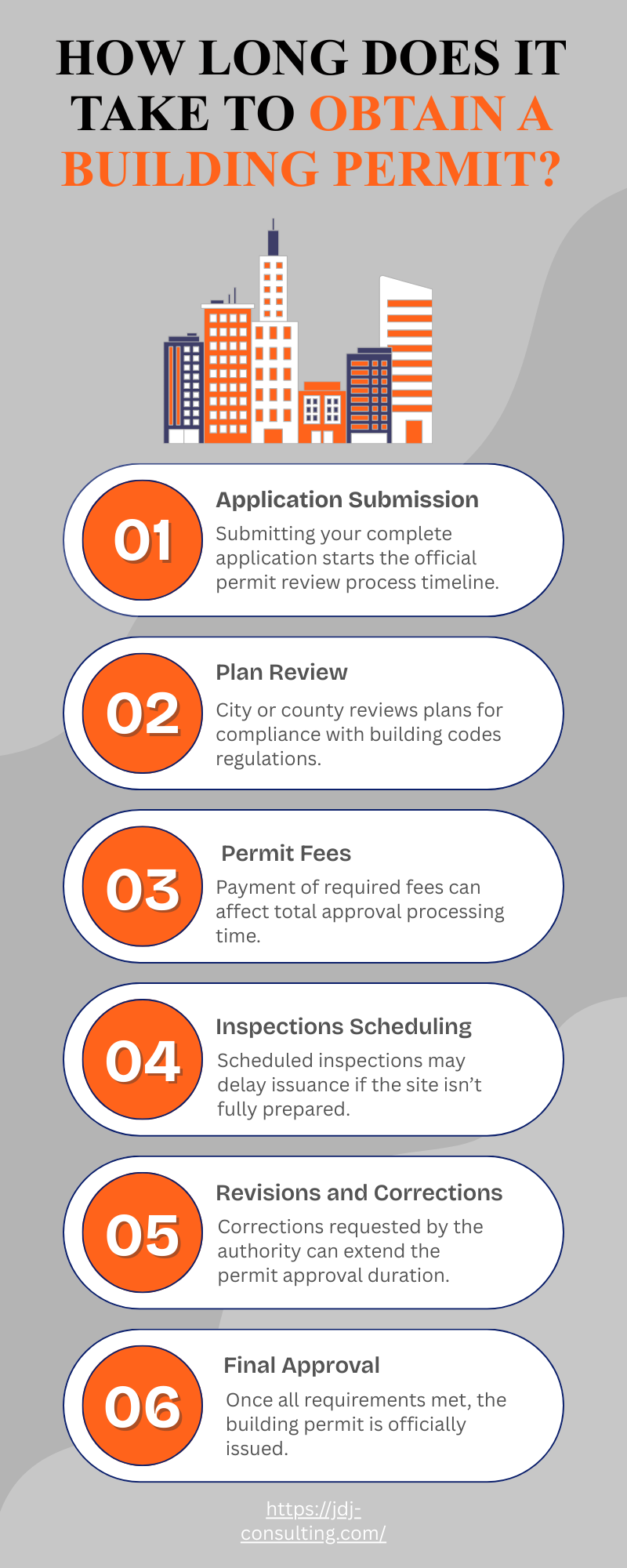
Learn the step-by-step process and typical timeline for obtaining a building permit in Texas.