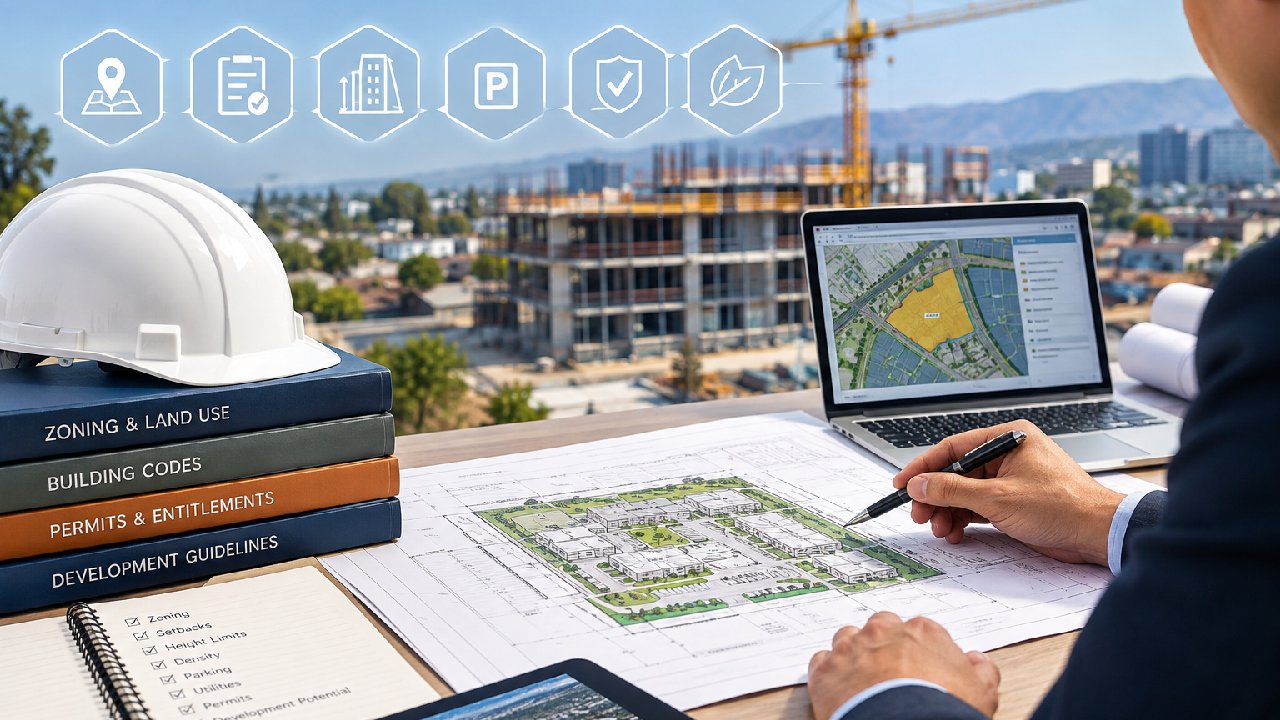

Every real estate decision starts with a simple concern: how can this property be used in the most practical and valuable way? Whether the property is vacant land, an aging building, or an active commercial site, its true potential is not always obvious at first glance.
Table of Contents
This is where the concept of highest and best use in real estate becomes essential. It plays a central role in real estate consulting, valuation, and development planning. Investors rely on it to assess returns. Developers use it to shape projects. Property owners depend on it to avoid leaving value on the table.
In this article, we begin with the fundamentals. We explain what highest-and-best-use means, why it matters, and how professionals evaluate it using a structured approach. The goal is to give you a clear, practical understanding of how informed real estate decisions are made.
What Is Highest and Best Use in Real Estate?
Highest-and-best-use refers to the use of a property that results in the greatest value, given real-world constraints. It is not about what the property is used for today. Instead, it focuses on what use makes the most sense under current market, legal, and physical conditions.
A property can be fully functional and still be underutilized. For example, a single-story retail building in a growing downtown area may generate income, but it could be far more valuable as a mixed-use development. Highest-and-best-use analysis helps identify that difference.
At its core, this concept answers one question: what use of this property creates the greatest overall benefit right now?
Why Highest-and-Best-Use Matters
Highest-and-best-use is not a theoretical idea. It directly influences how properties are valued, planned, and developed.
It affects decisions such as:
How an appraiser determines market value
Whether a site should be redeveloped or preserved
How investors compare competing opportunities
How consultants advise on zoning and feasibility
Without this analysis, decisions are often based on assumptions rather than facts. Over time, that leads to missed opportunities or costly mistakes.
Current Use Versus Best Use
One of the most common misunderstandings in real estate is assuming that current use equals best use. In reality, market conditions change, neighborhoods evolve, and land-use rules shift. What worked ten years ago may no longer be the most effective option today.
Highest-and-best-use looks beyond existing conditions. It evaluates what should be done with a property, not just what is being done.
Breaking Down the Concept in Simple Terms
The phrase may sound technical, but the idea is straightforward.
When these three elements align, the result is a use that supports long-term value and sound planning.
The Four Critical Tests of Highest-and-Best-Use
Not every potential use qualifies as highest-and-best-use. To narrow down realistic options, real estate professionals rely on four well-established tests. Each test eliminates uses that do not meet essential requirements.
These tests are applied in sequence. Skipping one often leads to flawed conclusions.

Physical Possibility
The first test examines the physical characteristics of the property. A proposed use must be physically achievable on the site.
Factors reviewed at this stage include:
Lot size, shape, and frontage
Topography and soil conditions
Access points and visibility
Availability of utilities and infrastructure
For example, a narrow lot may not support certain building layouts, while steep slopes can significantly increase construction costs. If a use cannot be reasonably built or supported, it is removed from consideration.
Legal Permissibility
Once physical constraints are addressed, the next step is determining whether a use is legally allowed. This review focuses on existing regulations and restrictions.
Key considerations include:
Zoning and land-use classifications
Local development and building codes
Environmental regulations
Easements and deed restrictions
Some uses may be allowed outright, while others may require special approvals. Any assumptions about rezoning or variances must be realistic and supported by market and policy trends.
Financial Feasibility
A use may be physically possible and legally permitted, yet still fail financially. This test evaluates whether the proposed use makes economic sense.
Financial feasibility considers:
Development and construction costs
Operating and maintenance expenses
Market rents or sale prices
Financing assumptions and expected returns (ROI)
If projected income does not exceed costs at a reasonable level, the use is no longer viable.
Maximum Productivity
The final test compares all remaining options. At this point, every use under consideration is physically possible, legally permitted, and financially feasible.
The question then becomes which option produces the highest overall value. This assessment looks at net returns, risk, and long-term performance rather than short-term gains alone.
The use that performs best under these measures is identified as the highest-and-best-use.
How to Conduct a Highest-and-Best-Use Analysis (Step by Step)
Once the concept of highest-and-best-use is clear, the next step is applying it in practice. This process is structured, but it is not complicated. When done correctly, it helps real estate professionals make decisions based on facts, not assumptions.
A proper analysis moves in stages. Each step builds on the one before it. Skipping steps often leads to overestimating value or misunderstanding market demand.
Below is a practical, real-world approach used by consultants, appraisers, and developers.
Step 1: Analyze the Property and Site Conditions
Every highest-and-best-use study starts with the site itself. Before looking at zoning or financial data, it is important to understand what the property can physically support.
This step focuses on observable, measurable features.
Key elements to review include:
Total land area and usable square footage
Shape, frontage, and corner influence
Topography, slope, and drainage
Soil conditions and environmental factors
Access to roads, utilities, and public services
For improved properties, the existing structure also matters. Age, layout, condition, and adaptability all affect future use. In some cases, an existing building supports reuse. In others, removal may be more practical.
At this stage, the goal is not to choose a use. It is to eliminate ideas that are not physically realistic.
Step 2: Review Zoning and Legal Constraints
After confirming what is physically possible, the next step is understanding what is legally allowed. This step often determines the range of realistic options.
Legal review typically includes:
Current zoning designation
Permitted, conditional, and prohibited uses
Density limits and floor area ratios
Height, setback, and parking requirements
Overlay districts or special planning areas
It is also important to identify whether zoning changes are possible. In growing markets, rezoning or variances may be common. However, assumptions must be grounded in local policy trends and planning history.
A use that depends on unlikely approvals should be treated with caution.
Step 3: Identify Market Demand and Use Trends
Once physical and legal options are defined, the focus shifts to the market. A highest-and-best-use analysis must reflect real demand, not personal preference.
Market research typically examines:
Recent sales of comparable properties
Rental rates and absorption trends
Vacancy levels by property type
Population growth and employment patterns
Nearby development activity
This step helps narrow down which legally permitted uses are actually supported by the market. A use may be allowed, but if demand is weak, it will struggle financially.
To keep analysis organized, many consultants compare use types side by side.
This type of comparison helps clarify which options deserve deeper financial review.
Step 4: Test Financial Feasibility
Financial feasibility is often the most detailed part of the analysis. It evaluates whether a potential use generates sufficient returns after accounting for all costs.
This step considers both development and long-term performance.
Typical financial inputs include:
Land acquisition or holding costs
Construction or renovation expenses
Soft costs such as design and permitting
Operating expenses and maintenance
Expected rental income or sale value
The goal is not to create a perfect financial model. Instead, it is to determine whether a use can reasonably support itself in the current market.
If projected income fails to exceed costs, the use is removed from consideration.
Step 5: Compare Feasible Uses and Determine Maximum Productivity
By this stage, only a few viable options remain. Each option is physically possible, legally permitted, and financially feasible.
The final step is comparing these uses to determine which produces the highest value.
This comparison focuses on:
Net operating income or net sale proceeds
Risk exposure and market stability
Long-term value growth potential
Below is an example of how final options may be evaluated.
The use with the strongest overall performance becomes the highest-and-best-use.
Step 6: Document Assumptions and Conclusions
A highest-and-best-use analysis should always be documented clearly. This is especially important for consulting reports, appraisals, and development planning.
Documentation should explain:
Why certain uses were excluded
What assumptions were made
How market data supported conclusions
Why the final use was selected
Clear documentation improves transparency and supports decision-making. It also allows future reviews if market conditions change.
Highest-and-Best-Use for Vacant Land vs. Improved Properties
Highest-and-best-use depends on what is on the site. Vacant land and improved properties create different challenges, costs, and opportunities. Treating them the same can lead to mistakes.
This section shows how professionals approach each type. It also explains how existing buildings can help or limit value.

Highest-and-Best-Use for Vacant Land
Vacant land analysis starts with a clean slate. Without buildings, the focus is on what can be built.
The four tests still apply: physical possibility, legal permissibility, financial feasibility, and maximum productivity. Physical and legal limits matter most at this stage.
Key things to check:
Zoning and allowed uses
Density limits
Infrastructure and utilities
Site access and visibility
Market demand for new construction
Without demolition costs, financial feasibility is easier. But higher-density projects need more upfront money.
Examples of possible uses for land zoned for multifamily housing:
Townhomes
Low-rise apartments
Mixed-use residential projects
The highest-and-best-use is the option that fits zoning, meets demand, and earns the most profit.
Highest-and-Best-Use for Improved Properties
Buildings add another layer. They can increase value or limit future options.
The main question is whether to:
Keep the building as it is
Renovate or adapt it
Remove it completely
This depends on how the land value compares to the building value. If the land is worth more, redevelopment may make sense. If not, reusing the building may work better.
When Reuse Makes Sense
Many buildings can be adapted to meet demand. Examples:
Converting offices to apartments
Updating old retail centers
Renovating industrial buildings for new purposes
Reusing buildings can reduce risk, cut costs, and save time compared to new construction.
When Demolition Makes Sense
Some buildings reduce value. Demolition may be the best option if:
The layout cannot support modern use
Structural or code issues are expensive to fix
Zoning allows more density
Market demand favors new development
In these cases, the property is treated as vacant, even if a building exists.
Comparing Vacant and Improved Properties
| Factor | Vacant Land | Improved Property |
|---|---|---|
| Existing structures | None | Must assess |
| Costs | Construction only | Renovation or demolition |
| Flexibility | High | Limited |
| Timeline | Longer | Can be faster |
| Risk | High upfront | Depends on building |
Why This Matters
Developers and consultants must know if buildings add or reduce value. A property may look productive but block better options. Highest-and-best-use analysis shows the best path. It keeps decisions in line with the market, rules, and financial logic.
Tools and Techniques Used in Highest-and-Best-Use Analysis
Once feasible uses are identified, professionals rely on practical tools to guide their conclusions. These tools add structure and reduce guesswork. Used together, they help confirm whether a proposed use fits the site and the market.
Instead of guessing, consultants gather data from multiple sources. Each source answers a different question. Together, they provide a clear picture of opportunity and risk.
Zoning Maps and Land-Use Resources
Zoning research is the backbone of any highest-and-best-use study. Before modeling costs or projecting income, professionals check what the law allows.
Local planning departments often provide:
Zoning maps and land-use classifications
Permitted and conditional use tables
Development standards and overlays
These resources clarify:
Density limits
Height restrictions
Parking rules
Setback requirements
Zoning maps also reveal transition areas. These areas often show where redevelopment potential is highest. They are common near commercial corridors or transit routes.
Market Data and Comparable Properties
Once zoning is clear, market data drives the analysis. Even a legally allowed use will fail if demand does not exist.
Professionals examine:
Recent sales of similar properties
Rental rates by property type
Vacancy levels and absorption trends
Nearby development activity
Comparables provide context. They show what buyers and tenants accept in the market. When several comparables point the same way, confidence in the selected use grows.
Many consultants summarize this information in simple tables or charts to stay organized.
Financial Feasibility Models
After reviewing market data, analysts test the numbers. Financial modeling compares uses under realistic assumptions.
They focus on:
Estimated construction or renovation costs
Expected rental income or sale proceeds
Operating expenses and reserves
Financing terms and timelines
The goal is clarity, not precision. A model only needs to answer one question: does this use create more value than the alternatives?
Simple projections often reveal more than complex spreadsheets. If margins are thin or risks are high, the model signals caution.
Site Inspections and Field Observations
Desk research alone cannot tell the full story. Site visits add critical context.
During inspections, professionals observe:
Traffic patterns and access points
Surrounding land uses
Building condition and layout
Neighborhood character
These observations explain why some uses succeed while others fail. They also confirm whether market data matches real-world conditions.
Professional Judgment and Experience
Even with strong data, experience matters. Consultants use judgment when interpreting results, especially in changing markets.
They ask practical questions, such as:
Does this use fit the neighborhood pattern?
Can the market absorb additional supply?
Does timing support development now?
Good analysis balances data with context. It avoids rigid formulas and focuses on realistic outcomes.
How Highest-and-Best-Use Connects to Real Estate Valuation Methods
Highest-and-best-use (HBU) guides how a property is valued. Appraisers, investors, and consultants rely on it before choosing a valuation method. Without it, even good data can lead to wrong conclusions.
In short, HBU answers “what should the property be used for?” Valuation methods answer “how much is it worth?” When these match, value estimates are accurate and reliable.
Why Valuation Depends on Highest-and-Best-Use
A property’s value reflects its potential, not its current use.
Example:
A warehouse near a growing residential area may still generate rent.
But if zoning and demand allow residential use, its value changes.
Confirming HBU first prevents undervaluing or overpricing a property. After that, the right valuation method is chosen.
Market Approach
The market approach compares a property to recent sales of similar properties. It works well when an active market exists.
HBU and the market approach align because:
Comparable sales show how buyers value potential uses.
Market prices show which uses create demand.
Trends reveal changing preferences.
For land or redevelopment sites, appraisers pick comparables based on intended use, not current use. This keeps value realistic.
Income Approach
The income approach focuses on a property’s earning potential. It is used for buildings that generate income, such as apartments, offices, or retail.
HBU guides the income approach by defining:
Type of income to analyze
Expected rent
Vacancy rates
Operating costs
Example: Valuing an office building as office space may be wrong if the market favors residential conversion. Income projections must match the highest-and-best-use.
Cost Approach
The cost approach calculates value using replacement costs minus depreciation. It is often used for new or special-use properties.
HBU affects the cost approach by asking:
Should the building stay as it is?
Does replacement meet market demand?
Is the land worth more than the building?
If the land is more valuable than the building, redevelopment may be better than preservation.
Choosing the Right Method
No single method fits all properties. Professionals choose based on use, data, and market conditions.
| Valuation Method | Best For | Role of HBU |
|---|---|---|
| Market approach | Land, small commercial, residential | Guides comparables |
| Income approach | Income-producing properties | Sets income and expenses |
| Cost approach | Special-use or new buildings | Tests replacement and land value |
Many analyses use more than one method. But all must reflect the same HBU conclusion.
Why It Matters
For consultants, connecting HBU to valuation ensures clear advice. For investors, it protects money.
When value reflects true use, decisions match the market. Ignoring HBU weakens opinions. Aligning valuation with HBU improves credibility and reduces risk.
Real-World Examples of Highest-and-Best-Use in Practice
Theory only goes so far. Real understanding comes from seeing how highest-and-best-use analysis plays out in actual projects. In practice, small differences in location, zoning, or demand can completely change a property’s future.
Below are common scenarios that show how professionals apply highest-and-best-use principles in real-world settings.

Urban Infill Property in a Growing Downtown
Consider a small parcel located near a downtown core. The site currently holds an older, single-story commercial building. It generates steady income, but the surrounding area continues to densify.
At first glance, keeping the building may seem reasonable. However, a closer review changes the picture.
Zoning allows higher density
Residential demand continues to rise
Comparable sites support mixed-use development
Financial modeling shows that a mid-rise residential project produces significantly higher long-term value than the existing use. As a result, the highest-and-best-use shifts from simple commercial occupancy to redevelopment.
Suburban Vacant Land Near Expanding Neighborhoods
Vacant land on the edge of a growing suburb often presents multiple development options. The site may support single-family homes, townhomes, or low-density multifamily units.
Market research becomes critical here.
Single-family homes sell quickly
Rental demand remains strong
Infrastructure supports increased density
Although single-family development appears less risky, townhomes generate higher overall returns. When all four tests align, attached residential use becomes the highest-and-best-use.
Aging Retail Center in a Changing Market
Retail properties often face shifting demand. An older neighborhood shopping center may struggle as consumer behavior changes.
In this scenario:
Zoning permits mixed-use redevelopment
Retail vacancy continues to increase
Residential demand remains stable
Adaptive reuse analysis shows that converting part of the center into residential units improves cash flow while reducing vacancy risk. Instead of full demolition, partial redevelopment offers the strongest value outcome.
Industrial Property in a Transitional Area
Industrial sites near residential growth often face pressure for change. A warehouse located near new housing developments may still function, but market forces push toward conversion.
Site review confirms:
Adequate size and access
Zoning that supports change
Strong residential pricing
Even though industrial use remains feasible, residential redevelopment produces higher net value. Highest-and-best-use analysis supports long-term repositioning rather than short-term income preservation.
Summary of Common Use Shifts
These examples show a clear pattern. Highest-and-best-use often changes when markets evolve.
Each decision relies on data, not assumptions.
Why Examples Matter in Real Estate Consulting
Real-world scenarios help clients understand why recommendations change. They also show that highest-and-best-use analysis protects against emotional or outdated decision-making.
By grounding advice in observable trends and measurable results, consultants deliver guidance that aligns with both market reality and long-term value.
Common Misconceptions About Highest-and-Best-Use
Even experienced property owners and investors misunderstand highest-and-best-use. These misconceptions often lead to poor planning, inflated expectations, or missed opportunities. Clearing them up helps keep decisions grounded in reality.
Below are some of the most common misunderstandings seen in real estate consulting and development work.
“The Current Use Is Always the Best Use”
This is the most frequent mistake. Many owners assume that because a property performs adequately today, it must represent its best use.
Markets do not stand still. Population shifts, zoning changes, and new infrastructure constantly reshape demand. A use that worked in the past may no longer support maximum value today.
Highest-and-best-use looks forward, not backward.
“If It Makes Money, It Must Be Highest-and-Best-Use”
Profit alone does not determine best use. A property can generate income and still fall short of its potential.
For example, a small rental property may cash flow steadily. However, if zoning and market demand support higher-density housing, that rental may underperform relative to its land value.
Best use focuses on maximum value, not just acceptable returns.
“Rezoning Will Always Solve the Problem”
Some investors rely too heavily on rezoning assumptions. While rezoning can add value, it is never guaranteed.
Local policies, community opposition, and planning priorities influence outcomes. Strong analysis treats rezoning as a possibility, not a certainty, unless clear evidence supports approval.
Ignoring this reality increases risk and weakens conclusions.
“Highest-and-Best-Use Never Changes”
Highest-and-best-use reflects current conditions. It can and does change over time.
Economic cycles, infrastructure investments, and demographic trends all affect land use patterns. A property’s best use today may differ from its best use five years from now.
Smart analysis accounts for timing and market momentum.
“One Use Must Be Perfect”
No use meets every goal. Each option carries trade-offs involving risk, cost, and return.
Highest-and-best-use does not seek perfection. It identifies the most reasonable and productive option given current constraints.
This mindset keeps decisions practical and defensible.
Misconceptions vs. Reality
The table below summarizes how these misunderstandings differ from professional practice.
Why Addressing These Misconceptions Matters
Misunderstandings lead to flawed strategies. When owners and investors rely on assumptions, they risk overpaying, under-developing, or delaying action.
By correcting these ideas early, highest-and-best-use analysis becomes a tool for clarity rather than confusion.
How Professional Appraisers Apply Highest-and-Best-Use
Professional appraisers use highest-and-best-use (HBU) to value property. Their goal is to determine what a property can earn under its most productive and allowed use. This helps buyers, lenders, and investors make decisions based on real potential, not just current use.

Identifying Highest-and-Best-Use in Appraisal Reports
Appraisers start with the four HBU tests:
Physical possibility – Can the property support the proposed use?
Legal permissibility – Does zoning allow it?
Financial feasibility – Will the use generate profit?
Maximum productivity – Which option produces the most value?
They also study market data, zoning rules, and property features. All findings appear in the appraisal report. This makes the analysis clear and credible.
Typical steps include:
Describing the property’s features and limitations
Listing current and possible legal uses
Comparing similar properties and recent sales
Performing financial analysis, including income and development costs
The final report shows which use creates the highest value and why. This supports investment and lending decisions.
Using HBU to Guide Investment Decisions
Investors and lenders rely on appraisals to weigh risk and opportunity. When an appraisal uses HBU:
Lenders better assess collateral
Investors compare projects fairly
Developers focus on options with the highest returns
Appraisers turn market data and site conditions into actionable insights. HBU ensures valuations reflect real opportunities.
The Role of Experience and Judgment
Data alone is not enough. Professional judgment matters. Appraisers interpret trends, market conditions, and property specifics. Experience helps them see how zoning, infrastructure, or demand changes may affect value.
Conclusion — Making Smart Real Estate Decisions with Highest-and-Best-Use
Highest-and-best-use (HBU) is essential for anyone involved in real estate. It looks beyond what a property is now to what it can truly become.
By considering physical, legal, financial, and market factors, property owners, investors, and developers can make informed choices. HBU helps reduce risk, clarify options, and maximize value.
Whether you own vacant land, an existing building, or a property in transition, following the HBU framework ensures decisions are practical, profitable, and aligned with the market.
Take Action
If you own property, plan a development, or need an expert assessment, HBU is the first step.
At JDJ Consulting, we help owners, investors, and developers find the most productive and profitable use for their property. We combine market research, zoning analysis, and financial modeling to give actionable insights.
Call (818) 793-5058 or contact us online to schedule a consultation. Discover how your property can reach its highest-and-best-use today.
Resources on Highest-and-Best-Use and Real Estate Valuation
Appraisal Institute – Highest and Best Use
Detailed guide on how appraisers apply HBU principles.Investopedia – Highest and Best Use Definition
Simple overview and examples of HBU in practice.Academia – Impact of Density on HBU
Academic articles on HBU in residential land.Urban Land Institute – Real Estate Valuation Methods
Insights on valuation approaches connected to highest-and-best-use.JDJ Consulting – Real Estate Consulting Blog
Guides on zoning, development, and property analysis.