Table of Contents
Building permits ensure safety, compliance, and legal protection. In Florida, codes focus on wind and flood resistance, so permits enforce measures like impact‑resistant windows. Without a permit, unapproved work can lead to fines, stop-work orders, or costly rebuilds.
Permits also protect your investment: lenders and buyers often require proof that work was permitted and inspected. In short, getting a permit means your construction follows state and local building codes (Florida’s 8th Edition codes were updated in 2023) and is reviewed for safety before you start.
What Requires a Residential Building Permit in Florida?
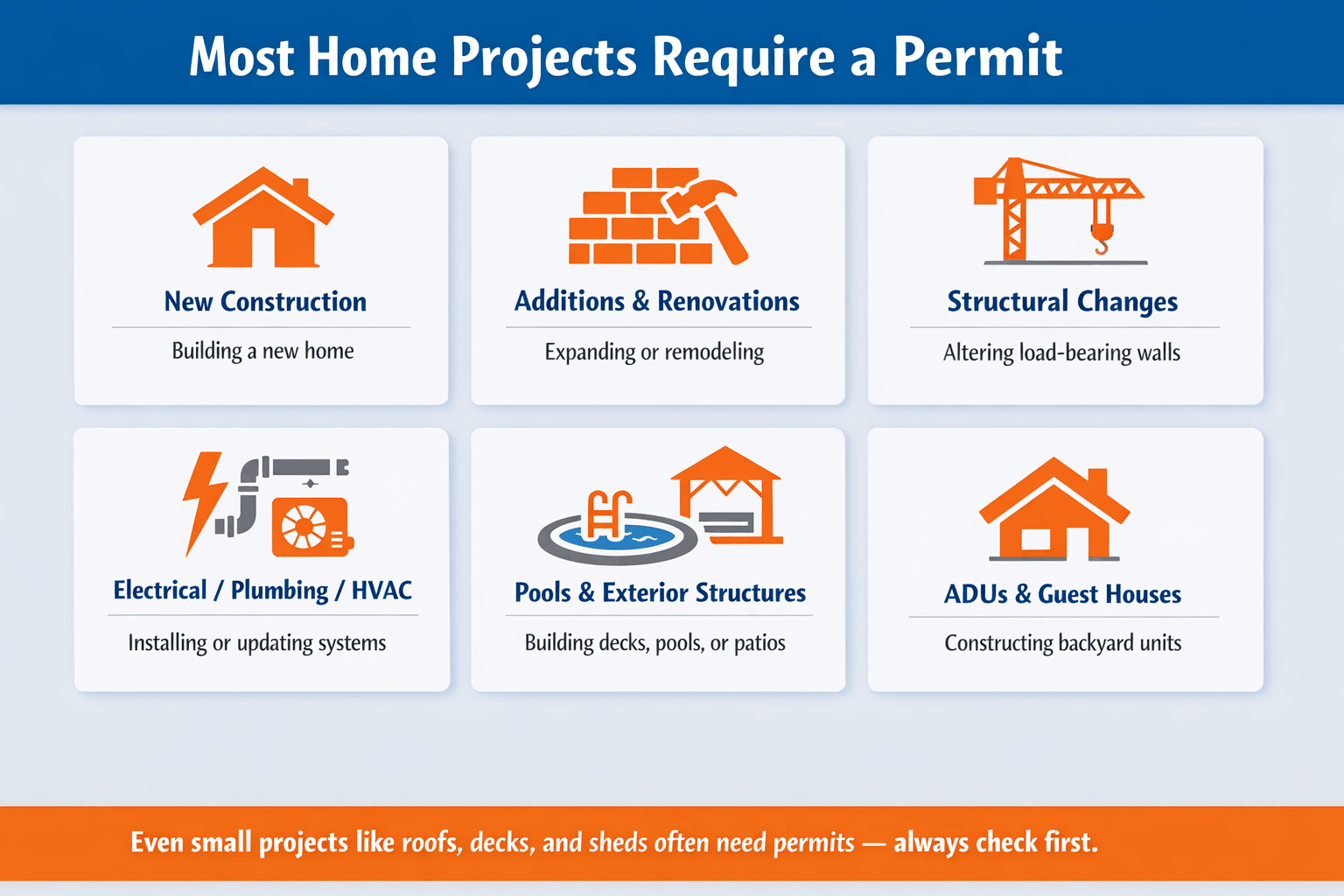
Most significant home projects need a permit. Examples include:
New Construction: Building a new house or duplex.
Additions & Major Renovations: Adding rooms, garages, decks, patios, or large sheds.
Structural Changes: Moving walls, adding beams, or altering foundations.
Systems Work: Installing new electrical panels, plumbing lines, HVAC, or gas systems.
Exterior Work: Building a swimming pool, substantial fence, or major landscaping hardscapes.
Accessory Units: Constructing an accessory dwelling unit (ADU) or guest house.
Even if work seems minor, check first – many local codes require permits for decks, roof replacements, and large outbuildings. For example, PermitFlow notes that building a new structure, major remodeling, and installing new plumbing or electrical almost always requires a Florida permit. (Minor interior cosmetic work is often exempt, but when in doubt, ask the local building department.)
Who Issues Building Permits in Florida?
Permits are issued by local building departments, under state oversight. The Florida Department of Business & Professional Regulation (DBPR) and the Florida Building Commission set statewide codes, but city or county building officials actually review applications and issue permits. This means the exact process can vary by city or county. For example, Miami-Dade County issues permits through its Permitting Portal, while the City of Miami uses the iBuild system. Always start by finding the building department for your city (or county, if unincorporated) and following their procedures.
Florida’s Building Codes and Regulations
Florida follows a single statewide Building Code (8th Edition, 2023) that addresses hurricane safety, energy efficiency, and more. Local jurisdictions adopt this code, so structural and safety standards are generally the same across Florida. However, each city/county can have additional requirements (like zoning rules or local amendments). For example, Miami requires that permit filings use specific digital portals and file formats.
Key points about codes and authorities:
Florida Building Code (FBC): Covers structural, fire, electrical, plumbing, mechanical, energy, and accessibility requirements. It’s updated every three years; the 2023 version took effect Dec 31, 2023.
Local Amendments: Cities/counties may have extra rules (e.g. Miami’s registration for expediters or height restrictions in certain zones).
Certificate of Occupancy: After final inspection, you often need an official sign-off (CO) to legally occupy the home.
Note: A building permit only approves construction methods and safety. You may also need separate approvals, such as zoning clearance (for land use/setback compliance) or a certificate of occupancy (to occupy the finished building). These are distinct from the building permit itself.
Florida vs. Other States: What’s Different?
Although the overall permit process is similar nationwide, Florida has some unique factors:
Hurricane & Flood Requirements: Florida’s coastal location means its codes emphasize wind-load and flood-zone standards. After Hurricane Andrew (1992), for example, Florida required impact-resistant windows and stronger roof attachments.
Environmental Permits: Projects near wetlands or coastline may need special environment/stormwater permits. In Florida, there’s even a Coastal Construction Control Line (CCCL) where construction requires extra review.
Uniform Building Code: Unlike some states with wide local variations, Florida’s building code is statewide. Cities still handle permitting, but the safety rules (FBC) are consistent. This is similar to states like California. (By contrast, Texas relies on city codes, and Colorado focuses on snow loads.)
Post-Storm Processes: Florida law forbids raising permit fees for 180 days after major hurricanes and requires streamlined post-disaster permitting.
These factors mean Florida homeowners should pay special attention to wind, flood, and environmental considerations when planning permits.
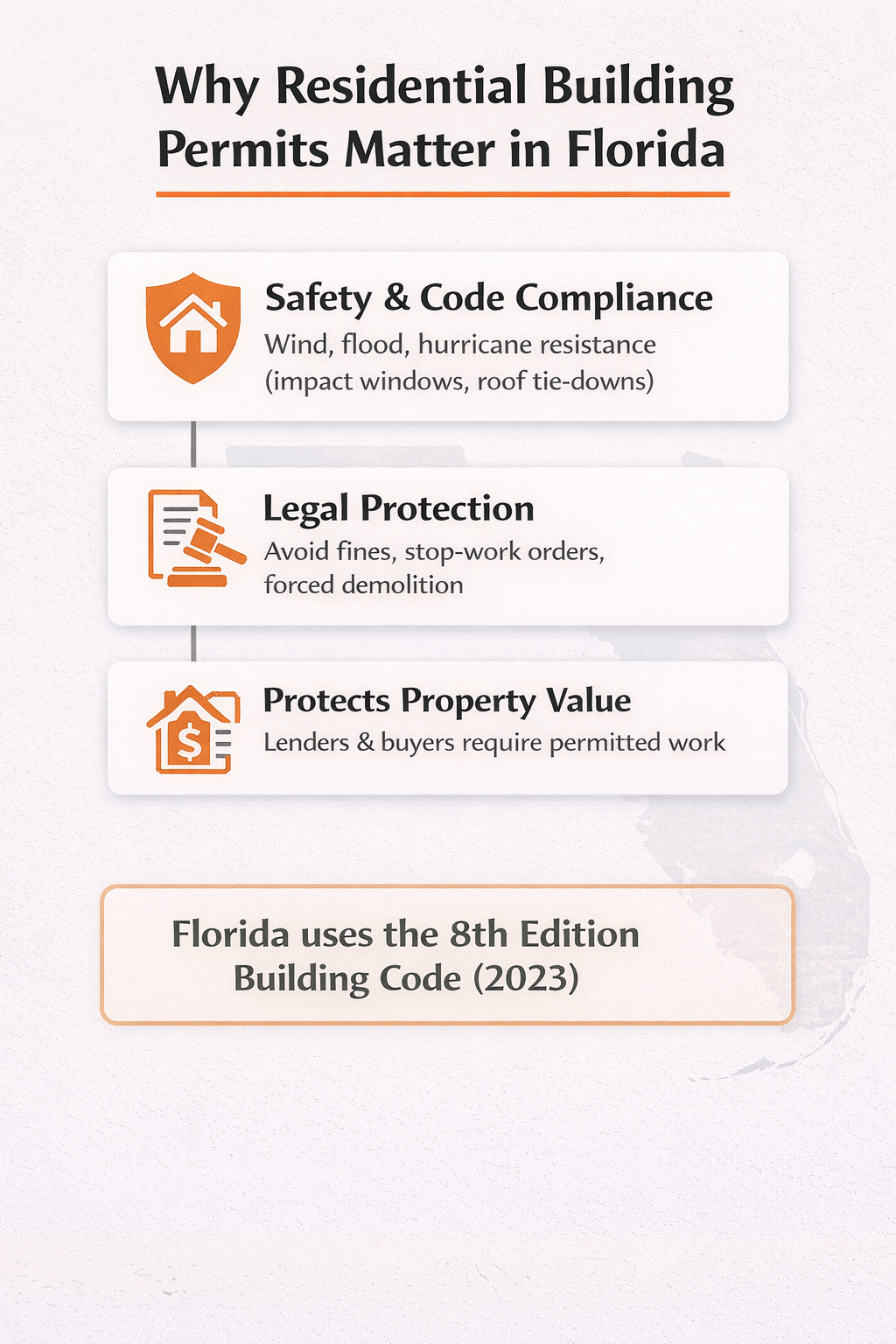
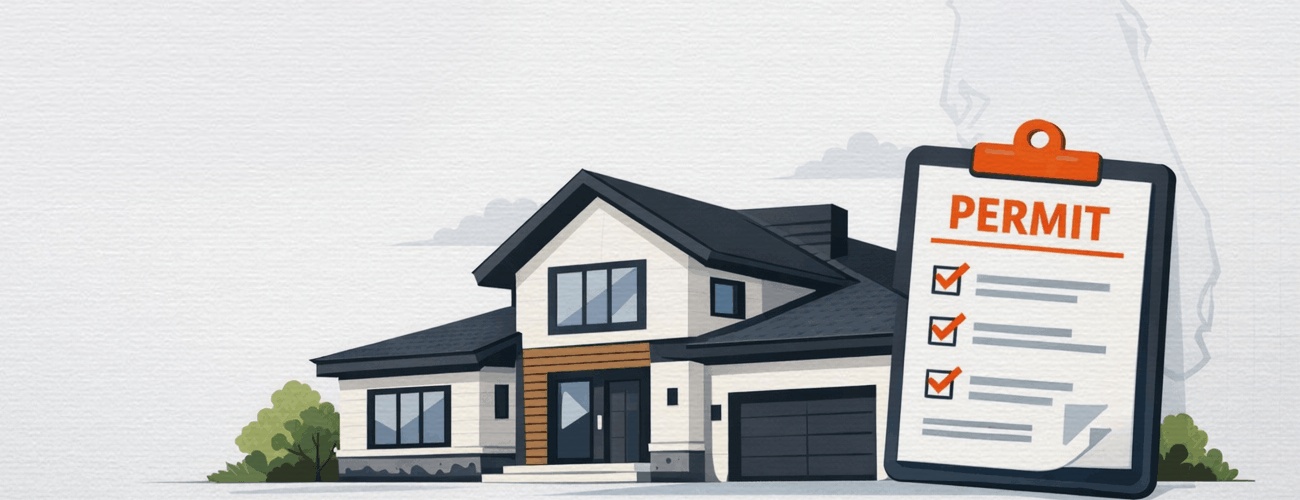
An overview of why residential building permits are essential in Florida, emphasizing safety standards, legal protection, and long-term property value.
Step-by-Step Guide: Getting Your Residential Permit
1. Determine the Right Permit Type
First, identify which permit you need. Most jurisdictions offer multiple permit categories (building, electrical, plumbing, mechanical, etc.). If you’re adding a room, you likely need a building permit (sometimes called “master permit”), and any associated trade permits. If unsure, check the local building department website for permit types. Properly identifying the permit ensures your application is routed correctly.
2. Gather Required Documents
Collect all paperwork before applying. Typical requirements include:
Property Details: Legal address, parcel number, lot survey or site plan.
Plans and Drawings: Architectural/site plans or engineer’s drawings for the proposed work. All plans must meet code standards (often stamped by a licensed architect/engineer).
Proof of Ownership: Deed or Title, and in some cases Homeowners’ Association (HOA) approval or covenants.
Contractor Info: Name, license number, and insurance/bond of the contractor (Florida requires licensed contractors).
Other Forms: Permit application form, owner’s authorization (if you’re not the owner), tree/tree removal permits, etc.
Florida Note: If your project is a “threshold building” (over 3 stories or 50 ft, or occupancy >500 people) you must submit a special structural inspection plan and hire a Florida‑certified special inspector. This applies more to large condos or multi-family, but it’s in state law so make sure to check if your structure qualifies.
3. Submit Your Application (Usually Online)
Most Florida cities/counties allow online permit submissions now. For example, Miami uses iBuild and ProjectDox portals, while other areas have their own e‑permitting systems. Follow these steps:
Create an account: Register on the local portal (or visit the permit office in person if required).
Upload Forms and Plans: Submit the completed application form and all supporting documents via the portal. Ensure files meet required naming conventions and formats (e.g. PDF, DWG) to avoid rejection.
Select Review Type: Choose the correct plan review timeline (many Florida permits now have a fast-track vs. standard review option).
Before submission, double-check everything: missing or mis-named files are the most common reason for delays.
4. Pay Fees
There’s no free permit! Upon submission (or approval), you’ll pay permit fees. Fees can include:
Permit Application Fee: Often based on project value or square footage.
Trade Fees: Separate fees for electrical, plumbing, mechanical permits.
Impact Fees: (in some cities) for added infrastructure usage.
State & County Surcharges: Florida requires state surcharges on all building permits (e.g. for DBPR and Building Code Administrators) and local surcharges (e.g. Miami‑Dade’s solid waste surcharge).
For example, Miami charges 0.5% of construction cost for residential building permits (min $45), plus a solid waste surcharge of $0.22 per $100 of cost. PermitFlow notes that fees range “from a couple hundred to several thousands” depending on project and location. Always budget for these fees and pay them promptly; in most jurisdictions you must pay up-front before reviews begin.
5. Wait for Review and Respond to Corrections
Once submitted, the building department and other agencies (zoning, fire, planning, etc.) review your plans. This often happens in rounds: initial review, comment response, second review, etc. Expect to:
Receive Review Comments: The city may ask for clarifications or missing documents. Respond quickly and thoroughly; Florida law often sets tight deadlines (in Miami-Dade, you must address all review comments within 10 business days or your permit can be denied).
Revisions: Update your plans/documents as requested and resubmit via the portal.
Inspections (if applicable): For some permits, a pre-inspection or site inspection of existing conditions may be needed.
Be patient but proactive. Mistakes here (incomplete plans, overlooked requirements) are the leading causes of delays. If the building department has questions, they may request additional info through the portal. Responding quickly will keep your permit on track.
6. Receive Your Permit and Post It
After all reviews are satisfied and fees paid, you’ll be issued the final permit. You must:
Print & Display: Print the permit and post it visibly at the job site before starting work. It typically has an official permit number and authorizations.
Plan Copies: Keep a copy of approved plans on site. Inspectors will reference these during inspections.
Congratulations! Now you can proceed with construction. Remember, after or during construction you’ll need inspections at key stages (foundation, framing, electrical, final, etc.). The permit card will list required inspections. Only when the final inspection is passed will you receive a certificate of occupancy or completion.
Costs of Permits in Florida
Permit costs vary widely by city, project scope, and local surcharges. Here are some general guidelines:
Percentage of Project Cost: Many Florida cities charge a percentage of construction value. For example, Miami-Dade charges 0.5% of the estimated cost for a residential permit. Other counties (like Palm Beach) use a similar percentage model.
Per Square Foot: Some jurisdictions use fixed rates per square foot. E.g., Collier County charges about $0.055 per sq ft for new construction permit review.
Minimum Fees: Municipalities often have minimum fees (for small projects) and maximums. For instance, Miami’s surcharge has a min of $26 and max $600 for residential permits.
Trade Permits: If doing electrical/plumbing/mechanical, each has its own fee, often based on horsepower or fixture count.
State Surcharges: Florida law adds state fees (to fund licensing boards and DBPR). These are typically a small flat amount or percentage.
Unpermitted Work Penalties: Starting work without a permit doubles or quadruples the fee in Miami, plus $110 penalties.
In practice, budget several hundred to several thousand dollars for typical home projects. Always get a fee schedule or estimate from the local building department. Many cities have online fee calculators or published schedules.
How Long Will a Permit Take?
Timelines vary by project size and jurisdiction, but here are ballpark ranges:
Small Residential Projects: 1–8 weeks. Simple roof repairs or minor remodels can often be approved in a few days to a couple of weeks (if submitted correctly). In Miami-Dade, even a simple permit often takes about 6–8 weeks from initial submittal to approval.
Home Additions/New Homes: 6–12+ weeks. Adding a room or building a house usually involves multiple review rounds. On average, a new single-family home permit might take 6–12 weeks nationwide, and similarly in Florida (possibly longer in high-demand areas).
Large or Complex Projects: 3–6 months or more. Multi-unit buildings or high-value renovations involve extra agencies (environment, public works, etc.) and can take 3–6 months or longer.
Miami-Dade Example: A civil engineering blog reports a typical Miami-Dade permit timeline: roughly 1–2 weeks for pre-application, 1–2 weeks for initial plan acceptance, 4–8 weeks for multi-department reviews, then 2–3 weeks for corrections and 1 week for final approval. Overall, small projects often finish in 6–8 weeks, while larger ones stretch to several months.
Reducing Delays: Most delays come from fixable issues – incomplete plans, missing docs, or slow responses. Florida law (Section 553.792) now mandates quick turnaround on reviews (10 business days for reviews in many cases), but practically, expect at least a month of processing even for simple projects. Planning extra time can prevent construction delays.
Miami’s Permit Process (vs. Other Florida Cities)
Miami has its own twists: multiple digital systems, more approvals, and recent rules. Key points:
Online Systems: Miami uses the iBuild portal for applications and ProjectDox for plan uploads. Other cities (like Fort Lauderdale, Orlando, Tampa) have similar e‑permit portals, but names and interfaces differ.
Multiple Reviews: Miami requires separate sign-off from building, planning, zoning, fire, etc.. Each dept reviews independently, adding weeks. (By contrast, smaller cities might combine reviews.) According to JDJ Consulting, a single permit in Miami can trigger 4–5 department reviews, so coordination is key.
Permit Expeditor Registration: Since 2023, Miami requires permit expediters (consultants who pull permits for others) to register with the city. This doesn’t affect homeowners directly, but means if you hire an expediter, they must be officially registered.
Permit Timeline Law: Florida’s new law (SB 102/Section 553.792) imposes strict review deadlines for Miami permits. For qualifying residential permits, reviewers must finish initial review quickly and applicants have 10 business days to respond to comments. This can speed things up, but only if deadlines are met.
Costs: Miami’s fees (see above) may be higher than some other counties. Neighboring Broward or Palm Beach counties have their own schedules. Always compare local fee info.
Other Cities: Many Florida cities are simpler. For example, smaller counties might process residential permits in 1–2 weeks if the project is minor. However, any major city (Orlando, Tampa, Jacksonville) will have complex reviews too.
In summary, Miami’s process tends to be more complex and regulated, so allow plenty of time and double-check all requirements. If your project is in a different Florida city, you’ll still need to follow that locale’s rules, but you can often find similar steps: local portal, checklist, fees, etc.
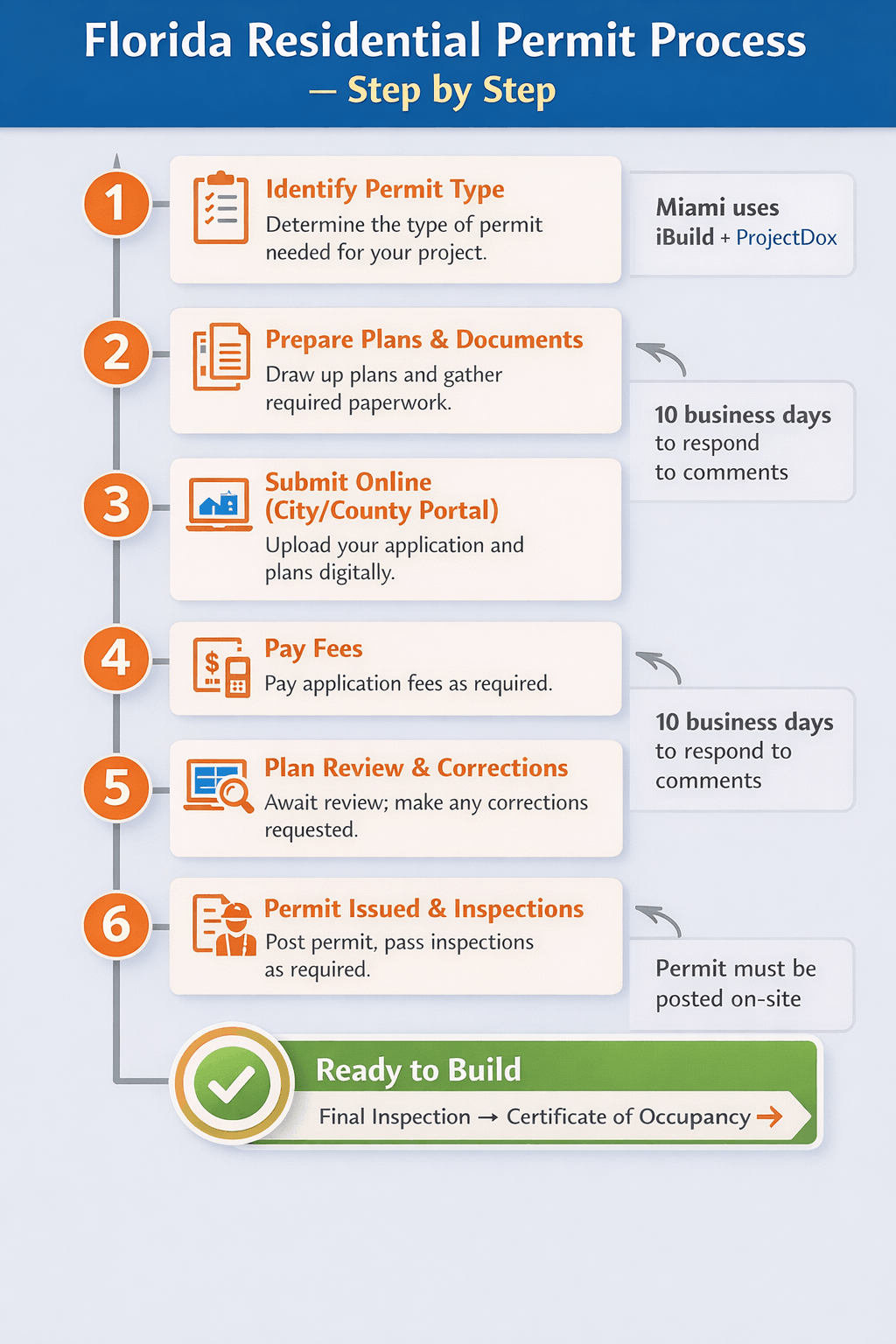
A clear step-by-step roadmap of Florida’s residential permitting process, from identifying the permit type to final inspection and certificate of occupancy.
Should You Hire a Permit Expediter?
For many homeowners, pulling permits is a do-it-yourself process. But a permit expediter (or permit runner) can handle the legwork. Consider an expediter if:
Project Is Large or Urgent: Bigger jobs involve more departments and stricter deadlines. An expediter knows the process and can keep things moving. In Miami, expediter experience can help avoid common pitfalls.
You Are Unsure of the Process: An expediter ensures all forms are completed correctly. They can clarify which permits you need and catch missing docs ahead of review.
Time Savings: Per JDJ Consulting, expediters often speed up approvals by handling submissions and avoiding repeated corrections. Homeowners using an expediter often save weeks or months.
Cost Consideration: Expediter fees vary. For Miami, JDJ estimates about $300–$700 for a small home project, $700–$1,500 for medium additions, up to $5,000 for large projects.
Downsides: Hiring an expediter costs extra and you still must pay the permit fees. If your project is very small (like replacing a roof or AC unit), you might handle it yourself more cheaply. Also, hiring an expediter doesn’t skip any requirements – it just makes sure you follow them correctly.
Tip: Check if your local area requires expediter registration. In Miami, for example, expediters must register with the Building Dept. Be sure to hire a legitimate, registered professional.
Common Pitfalls and How to Avoid Them
Even simple mistakes can stall your permit. Watch out for:
Incomplete Applications: Leaving out required fields (owner’s signature, contractor license number, etc.) or documents (site plan, proofs of ownership) will cause immediate rejection. Prepare a checklist from the city’s guidelines.
Wrong Plan Formats: Miami, for example, has strict naming and file format rules for uploads. Submitting drawings in incorrect scale or missing engineer stamps will lead to rejections.
Ignoring Zoning/HOA Rules: Even if your construction is safe, it may break zoning laws (e.g. building too close to property line). Check setbacks and HOA covenants first – zoning violations can kill a permit.
Slow Response to Corrections: Delaying updates after a review comment can void your application. In Miami, you have only 10 business days to fix issues. Keep tabs on your portal account and act promptly.
Not Posting the Permit: After approval, the permit must be posted on-site. Inspectors will look for this; failure to display can result in fines.
Quick Tips: Double-check local checklists and attend pre-application meetings if offered. Communicating early with building staff can clarify tricky requirements. Always retain copies of submitted documents and communications – it helps if questions arise later.
Special Florida Considerations
Hurricane and Wind Requirements: Florida’s codes demand hurricane-resilient construction. This means impact-rated doors/windows, reinforced roof connections, and possibly elevated foundations in flood zones. Your permit plans must reflect these (engineer’s design or products that meet the FBC). As PermitFlow notes, after Hurricane Andrew, Florida requires impact-resistant glazing in high-wind areas.
Flood Zones and Elevation: If your property is in a flood zone, the permit may require an elevation certificate and plans showing required freeboard. This can affect foundation design.
Environmental Permits: For coastal or wetland projects, you might need state or federal permits (for dredging, stormwater, etc.) in addition to the building permit. Start these early, as they can take weeks.
Coastal Construction Control Line (CCCL): Building seaward of Florida’s CCCL requires special CCCL permits to protect dunes and habitat.
Post-Storm Rules: Florida law now provides that for 180 days after a declared hurricane, permit fees cannot be increased, and mobile homes can be replaced temporarily. Check if special expedited processes apply if you’re rebuilding after a storm.
Upcoming Laws: Be aware of new statutes like Section 553.792 (SB 102), which impose strict plan-review timelines on local governments. These are meant to speed up approvals but may also require tighter planning on your end.
Key Takeaways
Permits Protect You: They ensure your home is safe and legal. Skipping them can cost far more than obtaining them properly.
Plan Thoroughly: Understand which permits you need, gather all documents, and double-check the local checklist before submitting.
Know Local Rules: Procedures vary by city. If you’re in Miami, prepare for an online process with multiple reviews and recent timeline laws. In other Florida cities, steps are similar but check their specific portals and fees.
Budget Time and Money: Allow several weeks for approval (months for big projects) and set aside permit fees. Consider hiring an expediter for complex jobs, as they can often prevent costly delays.
Communicate Early: Meet with building officials or expediters before submitting plans to catch issues early. Promptly address any review comments to stay on schedule.
By following these steps and being prepared, Florida homeowners can navigate the building permit process more smoothly. Always reach out to your local building department if in doubt – asking questions up front is far better than fixing problems later.
Sources: Authoritative guides and resources on Florida permitting processes. Each provided key insights into permit steps, requirements, timelines, and local specifics.