
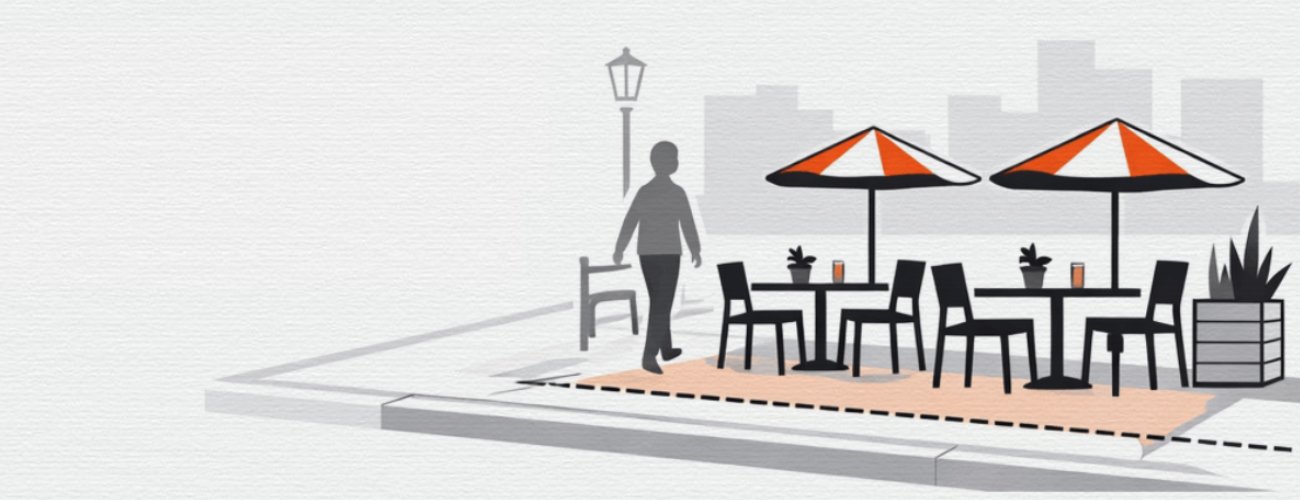
Creating an inviting outdoor dining experience is a great way for restaurants and cafés to expand seating and engage customers. However, when placing tables, chairs, and umbrellas on public sidewalks, businesses must ensure that all customers—including those with disabilities—can move safely and comfortably.
In Texas, ADA (Americans with Disabilities Act) compliance is a critical part of the sidewalk café permit process. Cities carefully review layouts to ensure clear pedestrian pathways, accessible entry and exit points, and proper table spacing. Failure to meet ADA standards can lead to permit delays, fines, or removal of outdoor seating.
This guide provides a clear, step-by-step overview of ADA requirements for sidewalk cafés, helping business owners design outdoor spaces that are accessible, safe, and compliant with local regulations.
Table of Contents
What Is a Sidewalk Café Permit in Texas?
A sidewalk café permit allows a restaurant or café to place outdoor seating on a public sidewalk. This includes tables, chairs, umbrellas, and planters that sit outside your business but within city-owned space.
In Texas, most sidewalks are part of the public right-of-way. This means the city controls how that space is used. So, even if the sidewalk sits in front of your restaurant, you still need approval before placing any outdoor dining setup there.
A sidewalk café permit helps cities:
Keep walkways safe for pedestrians
Maintain ADA-accessible travel paths
Ensure emergency access routes remain open
Manage public safety and traffic flow
Without this permit, placing outdoor seating in front of your business may count as an encroachment. This can lead to code violations, fines, or even removal of furniture by city authorities.
Definition of a Sidewalk Café
A sidewalk café is an outdoor dining area located next to a licensed food service establishment. It sits on public property such as:
Sidewalks
Street-level walkways
Converted parking lanes (in some cities)
This area must stay open to the public. It cannot block building entrances, exits, or required pedestrian paths. In most Texas cities, sidewalk cafés must:
Use removable furniture
Avoid permanent construction
Follow city spacing rules
Maintain safe access for all users
Some cities also require visual barriers such as planters or railings. These help define the dining area while keeping it separate from the walking path.
Public Right-of-Way Explained
The public right-of-way includes any land used for:
Pedestrian movement
Streets and roads
Utility access
Emergency services
When a business uses this space for outdoor seating, it changes how the public interacts with that area. As a result, cities review these requests carefully.
They want to ensure:
People using wheelchairs can pass safely
Fire exits stay clear
Utility covers remain accessible
Traffic visibility is not blocked
Because of these concerns, your permit application must show how your outdoor dining setup will fit within the available sidewalk width.
When Do You Need a Sidewalk Dining Permit?
You will need a sidewalk café permit in Texas if you plan to:
Place tables or chairs on the sidewalk
Serve food outdoors in front of your business
Install umbrellas or barriers outside
Use public walkways for customer seating
Even temporary setups may require approval. For example, placing two small tables outside your café without a permit may still violate local code. Many business owners assume small setups do not need approval. However, cities treat any use of public space as regulated activity.
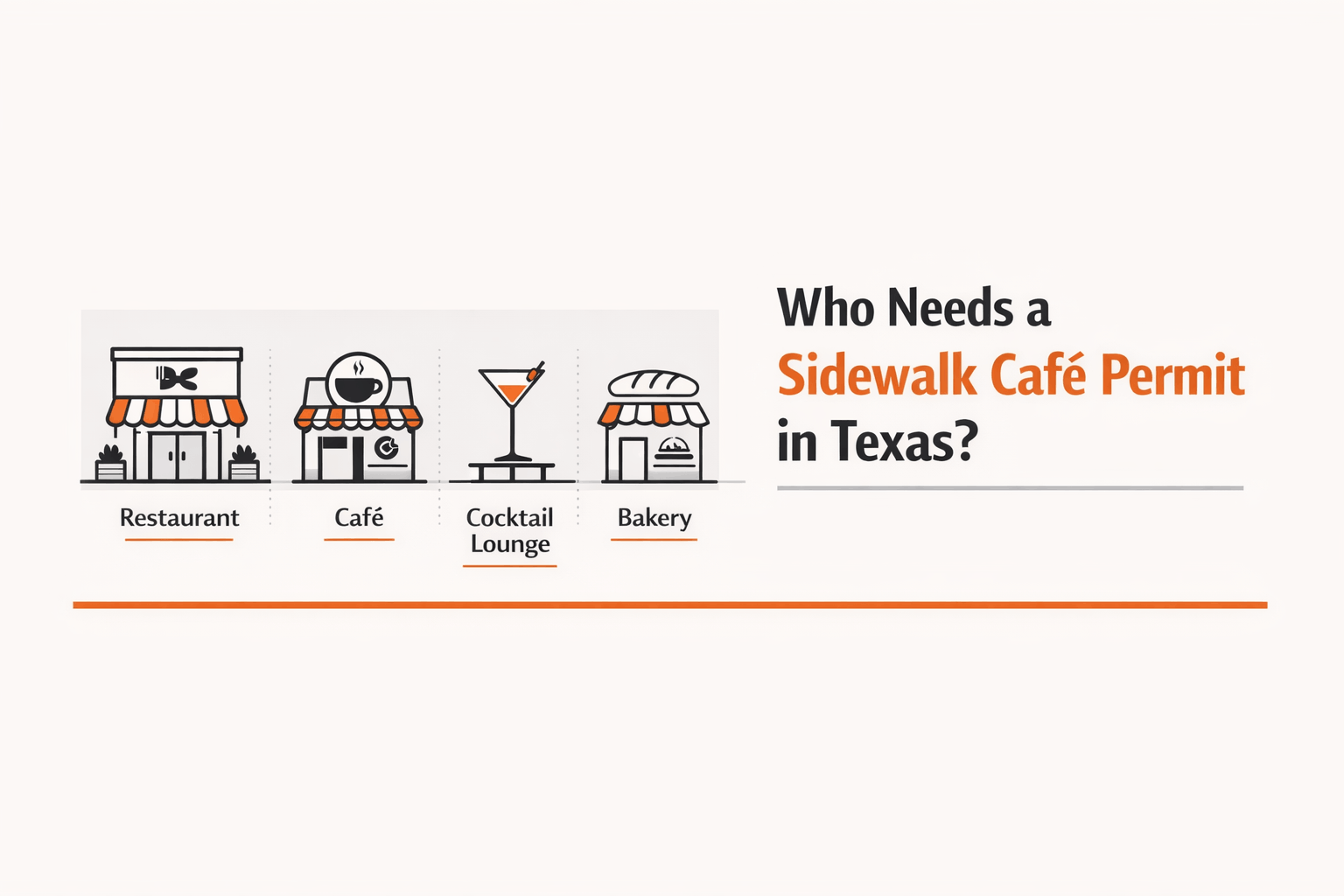
Who Needs a Sidewalk Café Permit in Texas?
Not every business qualifies for sidewalk dining approval. In most cases, you must operate a licensed food establishment to apply.
This includes:
Restaurants
Coffee shops
Cafés
Bakeries
Cocktail lounges
Retail food businesses
Mobile vendors or temporary food stalls may fall under separate permit rules. In addition, your business must sit next to the area where you plan to place outdoor seating. You cannot extend seating across property lines or into shared public zones without special approval.
Business License Requirements
Before applying for a sidewalk café permit, you will need:
An active food service license
A valid business registration
Proof of property lease or ownership
Written consent from the property owner
Some cities may also request:
Sales tax registration
Health department approval
Certificate of occupancy
These documents confirm that your business meets basic operational standards before using public space.
Ownership and Property Approval
If you lease your building, you must obtain written permission from the property owner before submitting your permit application.
This approval should include:
The proposed outdoor dining layout
Placement of furniture
Operating hours for the café area
Without property owner consent, your application may be rejected during the review process.
Types of Outdoor Dining Permits in Texas
Texas cities offer different types of permits based on how your outdoor seating will function. Choosing the correct permit type helps avoid delays during review.
Below are the most common permit categories.
Temporary Sidewalk Café Permit
This permit works best for:
Seasonal outdoor seating
Event-based dining setups
Short-term business expansion
Temporary permits often require:
A simple site layout
Proof of insurance
City inspection before approval
They usually expire within a set time frame.
Permanent Outdoor Dining License
A permanent permit applies to long-term sidewalk café operations.
This option may require:
Detailed site plans
ADA accessibility review
Ongoing annual renewal
Cities may also conduct periodic inspections to ensure continued compliance.
Right-of-Way Café Permit
Some municipalities classify sidewalk cafés under right-of-way usage permits.
These permits apply when:
Seating extends into pedestrian pathways
Barriers or railings define the café space
Utility access points exist nearby
Because public access must remain open, these permits often involve stricter design guidelines.
Table: Common Outdoor Dining Permit Types in Texas
| Permit Type | Best For | Duration | Review Level |
|---|---|---|---|
| Temporary Café Permit | Seasonal seating | Short-term | Basic |
| Permanent Dining Permit | Year-round use | Annual | Detailed |
| Right-of-Way Permit | Public sidewalk use | Annual | Strict |
| Event-Based Permit | Special events | Limited | Moderate |
Texas Sidewalk Café Permit Requirements
Before your permit gets approved, your outdoor dining setup must meet city design and safety rules. These rules help protect pedestrians, maintain accessibility, and ensure emergency access. While exact standards vary by city, most Texas municipalities follow similar sidewalk café requirements.
These usually include:
Minimum pedestrian clearance
ADA-accessible routes
Fire safety spacing
Entry and exit access
Utility clearance zones
Your layout plan must show how your setup will meet each of these conditions.
Minimum Sidewalk Clearance Rules
One of the most important requirements involves pedestrian access. Cities require a clear walking path along the sidewalk. This path must stay open at all times, even when your outdoor seating area is full.
In most cases:
A minimum of 4 to 6 feet of clear space must remain
The path must be straight and unobstructed
It cannot include table edges or chair backs
It must connect to building entrances
Outdoor furniture cannot:
Block doorways
Extend into curb ramps
Obstruct bus stops
Interfere with crosswalk access
If your sidewalk is too narrow, your permit may be denied.
Fire Safety Requirements
Fire departments also review sidewalk café layouts during the permit process.
Your setup must:
Allow emergency exit access
Maintain hydrant clearance
Avoid blocking fire lanes
Keep exit doors fully operational
Outdoor heaters, if used, must follow safety spacing rules. They should sit away from:
Flammable materials
Walkways
Building exits
Cities may also require:
Non-combustible barriers
Stable umbrella bases
Secured planters
These measures reduce safety risks during crowded hours.
ADA Accessibility Requirements
Sidewalk cafés must also follow ADA accessibility standards. This ensures that all customers and pedestrians can move safely through the space.
Your layout must:
Maintain an accessible path of travel
Provide stable walking surfaces
Avoid sudden level changes
Keep ramps unobstructed
In some cities, you may also need:
Accessible seating options
Proper table height
Clear knee space for wheelchairs
Failure to meet ADA requirements is one of the most common reasons permit applications are rejected.
Table: Typical Sidewalk Clearance Requirements in Texas
| Requirement | Standard Range |
|---|---|
| Pedestrian Path Width | 4 – 6 feet |
| Hydrant Clearance | 3 feet |
| Exit Door Clearance | 5 feet |
| Barrier Height | 30 – 42 inches |
| Ramp Access | Must remain open |
Documents Required for Sidewalk Café Permit Application
Once your layout meets city rules, the next step involves submitting your application package. Most Texas cities ask for similar documents. Providing these early can speed up the approval process.
You may need:
Completed permit application
Outdoor seating layout plan
Furniture placement details
Proof of insurance
Property owner approval
Utility access information
Some cities also request adjacent tenant notification forms.
Completed Permit Application
This form includes:
Business name
Contact information
Permit type requested
Operating hours
Make sure all fields are filled out clearly. Incomplete applications often delay review.
Site Layout Plan
Your layout plan should show:
Sidewalk width
Seating area location
Pedestrian clearance
Furniture placement
Cities often ask for scaled drawings. These help officials verify that the setup meets spacing rules.
Furniture Placement Details
Your plan must list:
Table sizes
Chair placement
Umbrella location
Planter or barrier setup
Movable furniture is usually required. Permanent installations may need additional review.
Insurance Certificates
Most cities require general liability insurance before approval.
Your policy must:
Cover sidewalk use
Include city as additional insured
Meet minimum coverage limits
Without valid insurance, your permit cannot move forward.
Insurance and Liability Requirements in Texas
Using public space increases risk exposure. For this reason, Texas cities require sidewalk café operators to carry liability coverage. Insurance protects both your business and the city from:
Slip and fall injuries
Property damage
Public accidents
General Liability Insurance
Most municipalities require:
Commercial general liability coverage
Coverage for outdoor dining operations
Policy validity for permit duration
Coverage limits may vary by city.
However, many require:
$500,000 minimum per occurrence
Up to $1 million aggregate coverage
Liquor Liability Insurance
If your café serves alcohol outdoors, you may also need liquor liability coverage. This applies to:
Wine service
Beer sales
Cocktail lounges
It protects against alcohol-related incidents that may occur in the outdoor seating area.
Surety Bond Requirements
Some Texas cities also request a surety bond when approving right-of-way permits. This bond ensures that:
Outdoor furniture will be removed if needed
Sidewalk damage will be repaired
Public space will be restored after permit expiration
Bond amounts may vary depending on seating size and sidewalk use.
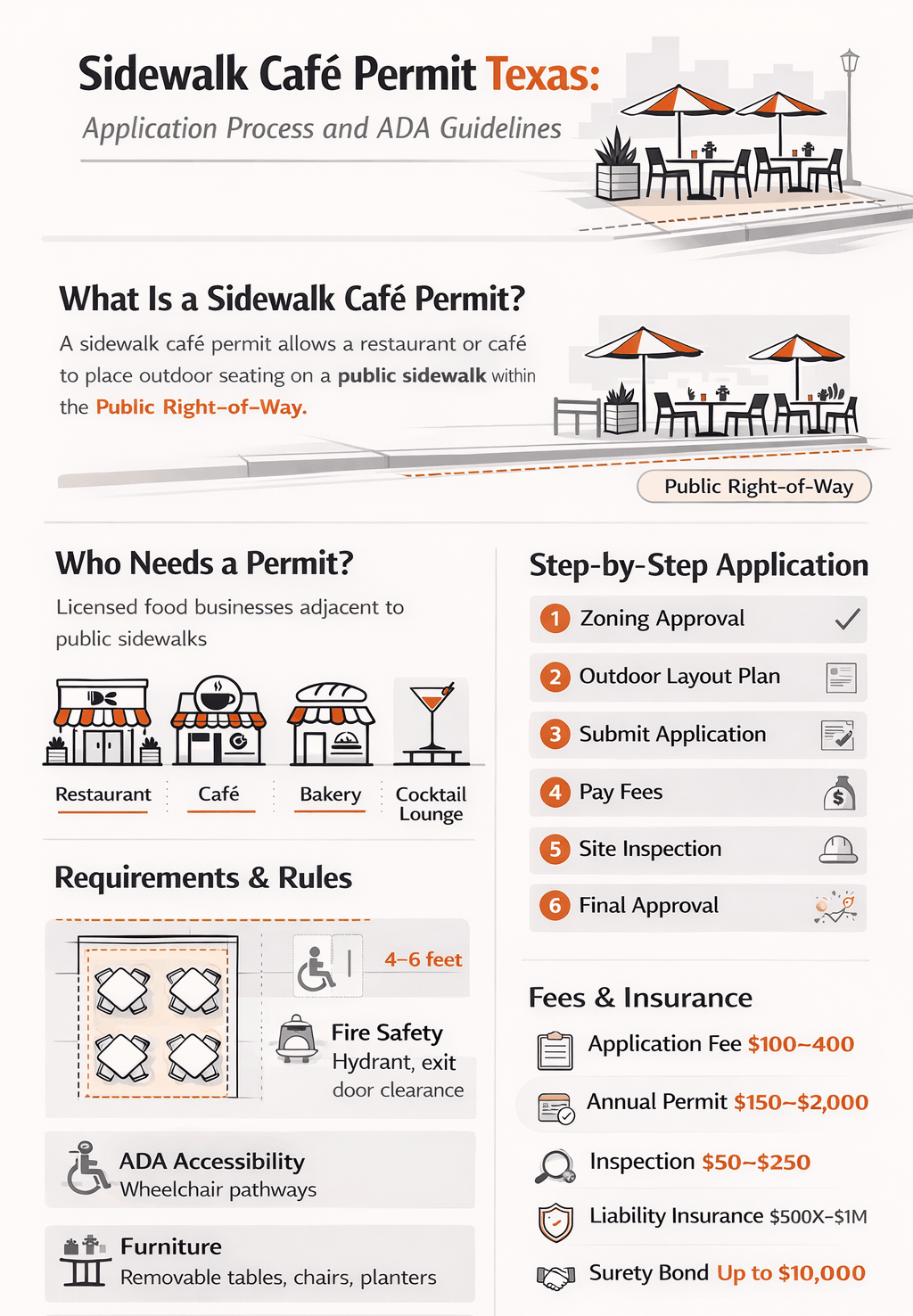
Step-by-Step Sidewalk Café Permit Application Process
Applying for a sidewalk café permit in Texas involves several review stages. Each step helps the city confirm that your outdoor dining area will not block public access or create safety risks. While the process may differ slightly by location, most Texas cities follow a similar approval path.
Below is a simple breakdown of the typical application process.
1 Step – Confirm Zoning Approval
Start by checking your property zoning. Not all zoning districts allow outdoor dining. Some may restrict sidewalk seating based on:
Pedestrian traffic levels
Street width
Nearby residential zones
Historic district regulations
You can confirm this through your local planning or development department. If your zoning does not allow sidewalk cafés, you may need special approval before moving forward.
2 Step – Prepare Outdoor Dining Layout
Next, create a layout plan for your proposed café area. This plan should show:
Total sidewalk width
Seating area boundaries
Pedestrian clearance path
Entry and exit access
Furniture placement
Cities may ask for scaled drawings. These help reviewers verify ADA compliance and emergency access. A clear layout also reduces the chance of permit rejection.
3rd Step – Submit Permit Application
Once your layout is ready, submit your permit application along with all required documents. Your application package may include:
Completed permit form
Site layout plan
Insurance certificate
Property owner consent
Adjacent tenant notice (if required)
Incomplete submissions often delay approval. So, review your documents carefully before filing.
4th Step – Pay Application Fees
After submission, you will need to pay the required permit fees. Fees usually depend on:
Seating area size
Location within the city
Permit type requested
Some cities charge:
One-time application fees
Annual permit renewal fees
Inspection fees
Payment is often required before your application moves to the next stage.
5th Step – Site Inspection
City officials may inspect your business location after reviewing your plans. During inspection, they check:
Available sidewalk space
Accessibility routes
Entry and exit clearance
Nearby utilities or fire hydrants
If your setup does not match the approved layout, you may need to revise your plan.
6th Step – Final Approval
Once inspection is complete, the city will issue your sidewalk café permit. You may then:
Place outdoor furniture
Install approved barriers
Begin sidewalk dining operations
Make sure your setup matches the approved plan at all times. Unauthorized changes can result in permit suspension.
Sidewalk Café Permit Fees in Texas
Permit fees vary by city. However, most municipalities charge based on seating area size and permit duration. You may encounter:
Application fees
Annual usage fees
Inspection costs
Renewal charges
Knowing these costs in advance helps you plan your outdoor dining expansion.
Table: Typical Sidewalk Café Permit Costs in Texas Cities
| Fee Type | Estimated Cost |
|---|---|
| Application Fee | $100 – $400 |
| Annual Permit Fee | $150 – $2,000 |
| Inspection Fee | $50 – $250 |
| Liability Insurance | $500K – $1M Coverage |
| Surety Bond | Up to $10,000 |
Outdoor Dining Design Guidelines in Texas
Cities review your café layout to ensure it meets design standards. These standards help maintain safe movement along public walkways. Your outdoor setup must:
Stay within the approved boundary
Maintain pedestrian clearance
Avoid blocking public infrastructure
Use stable furniture
Allowed Furniture Types
Most cities allow:
Tables
Chairs
Umbrellas
Planters
Portable railings
These items must remain movable. Permanent fixtures may require separate building permits.
Not Allowed Elements
Some items are usually restricted on public sidewalks. These include:
Fixed signage
Generators
Open flames
Built-in counters
Permanent structures
Installing these without approval may lead to permit cancellation.
Operating Rules After Permit Approval
Getting your sidewalk café permit approved is only the first step. Once your outdoor dining area is active, you must follow city operating rules at all times.
These rules help maintain:
Pedestrian safety
Clean public walkways
Emergency access
ADA compliance
Failure to follow approved operating conditions may lead to warnings, fines, or permit suspension.
Operating Hours
Some Texas cities set specific operating hours for sidewalk cafés.
Your permit may:
Limit early morning setup
Restrict late-night service
Require furniture removal after closing
These limits often depend on:
Nearby residential zones
Noise control policies
Street traffic levels
Always review your permit conditions before setting outdoor service hours.
Trash and Maintenance
Outdoor dining areas must remain clean throughout operating hours. You are responsible for:
Removing food waste
Cleaning spills
Keeping walkways dry
Preventing trash buildup
Cities may conduct periodic inspections to check sanitation conditions. Poor maintenance may result in violations.
Weather Safety Measures
Outdoor furniture must remain stable during wind or rain.
You may need to:
Secure umbrellas
Remove lightweight chairs
Store loose items during storms
If severe weather is expected, some cities require:
Temporary closure of outdoor seating
Furniture removal from public walkways
This helps reduce the risk of property damage or pedestrian injury.
Furniture Storage
Many permits require businesses to store outdoor furniture when not in use. This includes:
Tables
Chairs
Portable railings
Decorative planters
Furniture should not remain on public sidewalks after approved hours. Blocking pedestrian space overnight may lead to permit violations.
Permit Renewal Process
Most sidewalk café permits in Texas are valid for one year. After this period, you must renew your permit to continue operating. Renewal helps cities confirm that your setup still meets safety and accessibility standards.
Renewal Timeline
Cities usually notify permit holders before expiration. However, you should:
Track your renewal date
Submit documents early
Pay renewal fees on time
Late renewals may interrupt your outdoor dining operations.
Required Documentation
Renewal applications may require:
Updated insurance certificate
Current business license
Confirmation of seating layout
Property owner approval
If your layout has changed, you may need:
A revised site plan
New inspection approval
Consequences of Permit Expiration
If your permit expires, you may need to:
Remove all outdoor furniture
Stop sidewalk dining service
Submit a new application
Operating without renewal may lead to fines or enforcement action.
ADA Compliance for Sidewalk Cafés in Texas
Sidewalk cafés must meet ADA accessibility standards at all times. This ensures that people with disabilities can move safely through public walkways. Cities review accessibility during:
Initial permit application
Layout approval
On-site inspection
Failure to meet ADA guidelines may delay approval or lead to permit denial.
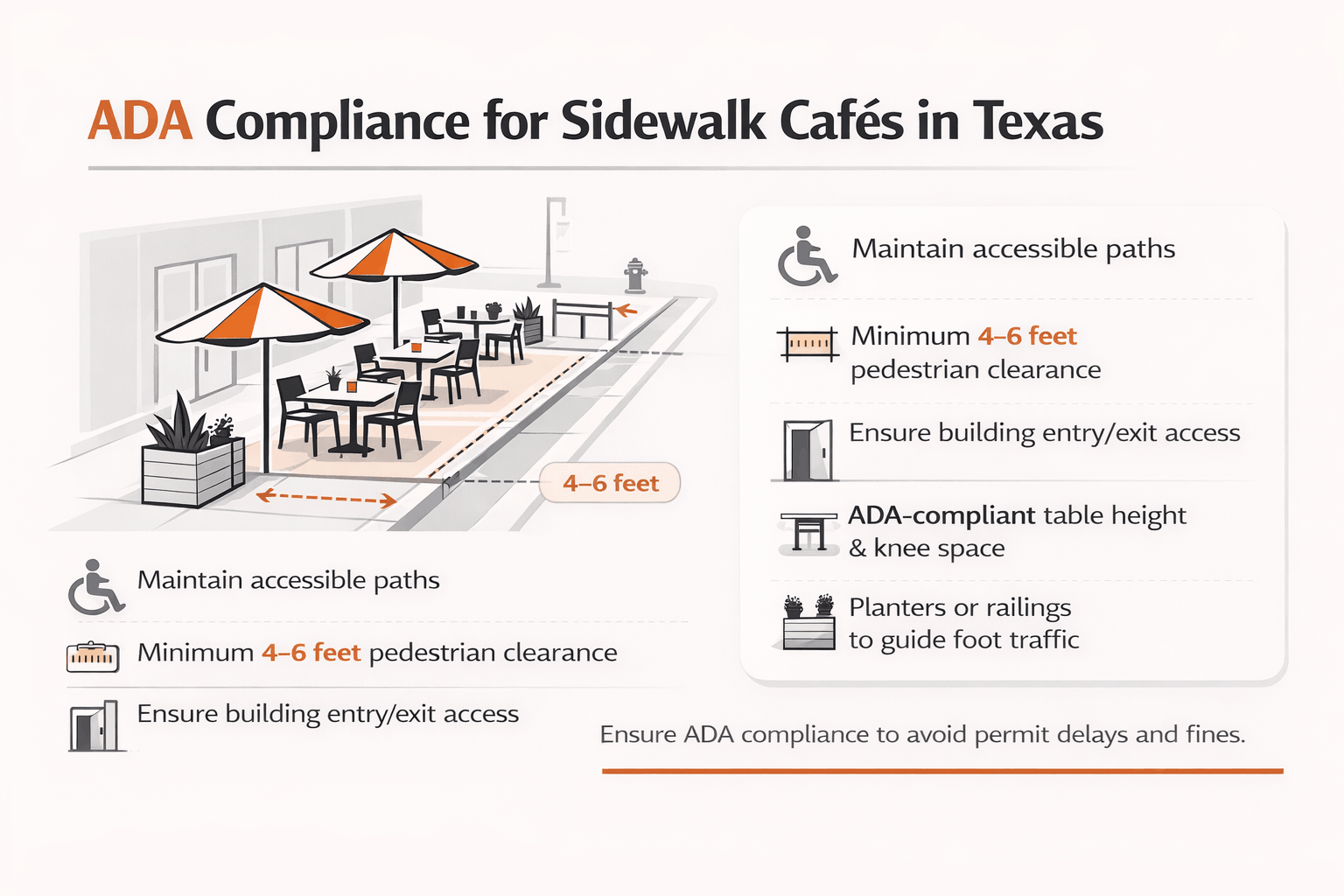
Key ADA requirements for sidewalk cafés in Texas to maintain accessible travel paths and safe outdoor dining.
Required Pathway Width
Outdoor seating must not block accessible travel paths. Your setup should:
Maintain a clear walking route
Connect building entrances
Avoid sudden level changes
Wheelchair users must be able to move freely along the sidewalk.
Accessible Seating Requirements
Some cities recommend or require:
Wheelchair-accessible tables
Proper table height
Clear knee space
These seating options should sit within the approved café area.
Emergency Egress Compliance
Outdoor furniture must not:
Block fire exits
Obstruct evacuation routes
Interfere with entry doors
Maintaining these access points helps protect both customers and pedestrians.
Common Reasons Sidewalk Café Permits Get Rejected
Many sidewalk café permit applications in Texas get delayed or denied during the review stage. In most cases, this happens due to missing documents or non-compliant layout plans.
Understanding these issues early can help you avoid setbacks. Below are some of the most common reasons for permit rejection.
Incomplete site layout plan
Missing pedestrian clearance
ADA non-compliance
Furniture placed near exits
No property owner consent
Invalid insurance certificate
Zoning conflicts
Utility access blocked
Fire hydrant clearance not maintained
Even small errors in your layout plan can cause delays. For example, placing a table within the required walking path may result in immediate application revision requests. Cities often review:
Walkway width
Entry and exit access
Emergency routes
Ramp connections
If any of these are blocked, your permit may not move forward. Submitting a complete and accurate application helps speed up approval.
Benefits of Getting a Sidewalk Café Permit
Adding outdoor seating can improve both customer experience and business revenue. When done correctly, sidewalk dining areas can:
Increase available seating
Improve street visibility
Create a more welcoming atmosphere
Boost customer engagement
Outdoor seating also allows:
Better space management
Seasonal business expansion
Flexible dining arrangements
Many customers prefer open-air seating, especially during peak dining hours.
This can lead to:
Higher foot traffic
Longer customer stays
Increased daily sales
With proper planning, sidewalk cafés can become a valuable extension of your indoor space.
How JDJ Consulting Group Helps With Sidewalk Café Permit Approval
Applying for a sidewalk café permit involves design review, accessibility planning, and compliance checks. These steps can become complex, especially when using public right-of-way space. JDJ Consulting Group helps businesses prepare permit-ready outdoor dining plans that meet local and ADA standards.
Our services include:
Code compliance review
ADA accessibility consultation
Outdoor layout evaluation
Permit documentation support
Inspection preparation
We help ensure your seating layout:
Maintains required sidewalk clearance
Supports accessible travel paths
Avoids emergency route obstruction
Meets city design guidelines
This reduces the risk of:
Application delays
Costly revisions
Permit rejection
Whether you are applying for a temporary or permanent sidewalk café permit, our team can help guide the process from planning through approval.
Final Thoughts on Texas Sidewalk Café Permits
Sidewalk cafés can add value to your business when they follow city rules and accessibility standards. Before placing outdoor seating on public sidewalks, make sure your layout:
Maintains pedestrian clearance
Meets ADA guidelines
Follows fire safety rules
Matches approved permit plans
Planning ahead helps prevent delays during the approval process. With the right documents and a compliant design, you can expand your seating area while keeping public walkways safe and accessible.
Need Help With Sidewalk Café Permit Approval in Texas?
Applying for a sidewalk café permit can take time. It also requires careful planning to meet accessibility and safety standards. Even small layout issues can delay approval.
If your outdoor dining plan blocks:
Pedestrian walkways
Accessible travel paths
Emergency exits
Utility access points
your permit application may be rejected.
JDJ Consulting Group helps restaurants and commercial property owners prepare permit-ready outdoor seating layouts that follow ADA and local code requirements.
Our team can assist with:
Sidewalk café layout planning
ADA compliance review
Accessibility consulting
Permit documentation support
Inspection preparation
We work with your design team to ensure your outdoor dining area meets city guidelines before submission.
This helps reduce:
Application delays
Revision requests
Compliance violations
If you are planning to add sidewalk seating in Texas, JDJ Consulting Group can help you move through the permit process with confidence. Contact our consultants today to discuss your sidewalk café permit requirements and accessibility compliance needs.
- Phone number (818) 793-5058
- Email: sales@jdj-consulting.com
FAQs: Sidewalk Café Permit Texas
What is a sidewalk café permit in Texas?
A sidewalk café permit in Texas is a municipal authorization allowing restaurants and cafés to place tables, chairs, umbrellas, and planters on public sidewalks for outdoor dining. The permit ensures that pedestrian pathways remain clear, emergency access is maintained, and safety regulations are met. Most cities require:
A site layout plan
General liability insurance
Compliance with local zoning and ADA requirements
Learn more: Austin Texas Sidewalk Café Permits
Who needs a sidewalk café permit in Texas?
Businesses that operate licensed food establishments and wish to use public sidewalks for outdoor dining typically need a permit. This includes:
Restaurants and cafés
Bakeries and cocktail lounges
Retail food establishments
Temporary or mobile vendors may require separate approvals. Always confirm with your city’s development services or zoning office. Reference: Fort Worth Outdoor Dining Rules
What types of sidewalk café permits are available in Texas?
Common permit types include:
Temporary Café Permit: Short-term or seasonal seating
Permanent Dining Permit: Year-round outdoor dining
Right-of-Way Permit: Seating in pedestrian pathways with stricter guidelines
Event-Based Permit: Special event dining
Each type varies in duration, review requirements, and fees. Choosing the correct type avoids delays. More info: El Paso Sidewalk Dining Permits
What are the key ADA requirements for sidewalk cafés?
ADA compliance ensures safe access for all customers. Requirements include:
Minimum 4–6 feet of pedestrian clearance
Unobstructed entryways and ramps
ADA-compliant table height and knee clearance
Stable walking surfaces without sudden level changes
Properly defined outdoor dining area using planters or barriers
Learn more: ADA Guidelines
How much sidewalk clearance is required for ADA compliance?
Texas cities generally require 4–6 feet of clear sidewalk space for pedestrian access, including wheelchairs and mobility devices. This ensures:
Safe passage along the sidewalk
Accessible travel paths to building entrances
Compliance with city safety and ADA regulations
Obstructing the pedestrian path may result in permit rejection.
Reference: Austin ADA Sidewalk Standards
What documents are needed to apply for a sidewalk café permit?
Typical documentation includes:
Completed permit application form
Outdoor seating layout plan
Property owner approval or lease consent
Proof of general liability insurance
Food service license and sales tax registration
Some municipalities may also request adjacent tenant notifications. Reference: Fort Worth Permit Checklist
Do temporary sidewalk cafés need permits?
Yes. Even seasonal or temporary outdoor seating setups require approval. Temporary permits generally involve:
A simplified site layout plan
Proof of liability insurance
Short-term city review and inspection
Cities treat any use of public sidewalks as regulated activity. More info: Austin Temporary Permits
Can I place permanent structures on the sidewalk?
No. Sidewalk cafés must use removable furniture only. Permanent fixtures like counters, signage, or generators typically require additional building permits. This ensures:
Pedestrian safety
Compliance with ADA and city codes
Flexibility for seasonal or temporary changes
How long does it take to get a sidewalk café permit approved?
Approval timelines vary, but typically include:
Zoning and site plan review
Verification of required documents
City inspection
Most cities process applications in 2–6 weeks, though early submission and complete documentation can speed up approval.
How often do sidewalk café permits need renewal?
Sidewalk café permits are usually valid for one year. Renewal ensures ongoing compliance with ADA, pedestrian clearance, and fire safety standards. Renewal typically requires:
Updated insurance certificates
Current business license
Review of any layout changes
Reference: Austin Permit Renewal Guidelines
What fees are associated with a sidewalk café permit?
Typical costs include:
Application fee: $100–$400
Annual permit fee: $150–$2,000
Inspection fee: $50–$250
Liability insurance: $500K–$1M coverage
Surety bond (if required): up to $10,000
Fees vary by city and seating area size.
Are there restrictions on operating hours for sidewalk cafés?
Yes. Cities may restrict hours to:
Reduce noise in residential areas
Maintain public safety
Ensure visibility and pedestrian flow
Businesses must adhere to approved operating hours to remain compliant.
What happens if my sidewalk café permit expires?
If a permit expires:
All outdoor furniture must be removed
Sidewalk dining must cease
A new permit application must be submitted
Operating without a valid permit can result in fines or enforcement actions.
Can I install umbrellas and barriers on the sidewalk?
Yes, as long as they are removable and within the approved layout. Barriers and planters help define the café area without blocking pedestrian paths or ADA-accessible routes. Permanent structures usually require additional approval.
How does zoning affect sidewalk café permits?
Zoning regulations may restrict outdoor seating based on:
Pedestrian traffic and sidewalk width
Proximity to residential areas
Historic district protections
Always check with your city’s development services before submitting a permit application. Reference: El Paso Zoning Info
What are common reasons for permit rejection?
Common causes include:
Incomplete site layout plans
ADA non-compliance
Obstructed entryways or utility access
Missing property owner consent
Conflicts with city zoning or fire codes
Is insurance required for sidewalk cafés?
Yes. General liability insurance is required to cover:
Slip-and-fall injuries
Property damage
Public accidents
If alcohol is served, liquor liability insurance may also be necessary. Reference: Texas Alcoholic Beverage Commission
Do I need the property owner’s permission to apply?
Yes. Written consent from the property owner or landlord is mandatory. Approval should include:
Outdoor seating layout
Furniture placement
Operating hours of the sidewalk café
Can sidewalk cafés block crosswalks or bus stops?
No. Outdoor seating must not obstruct pedestrian crosswalks, ramps, bus stops, or emergency access points. Cities review applications to ensure public safety and accessibility are maintained.
How can JDJ Consulting Group help with sidewalk café permits?
JDJ Consulting Group assists with:
Reviewing code compliance and ADA requirements
Preparing permit-ready outdoor layouts
Supporting inspection and documentation preparation
Their expertise reduces delays, minimizes revisions, and ensures permits are approved efficiently. Contact: JDJ Consulting Group