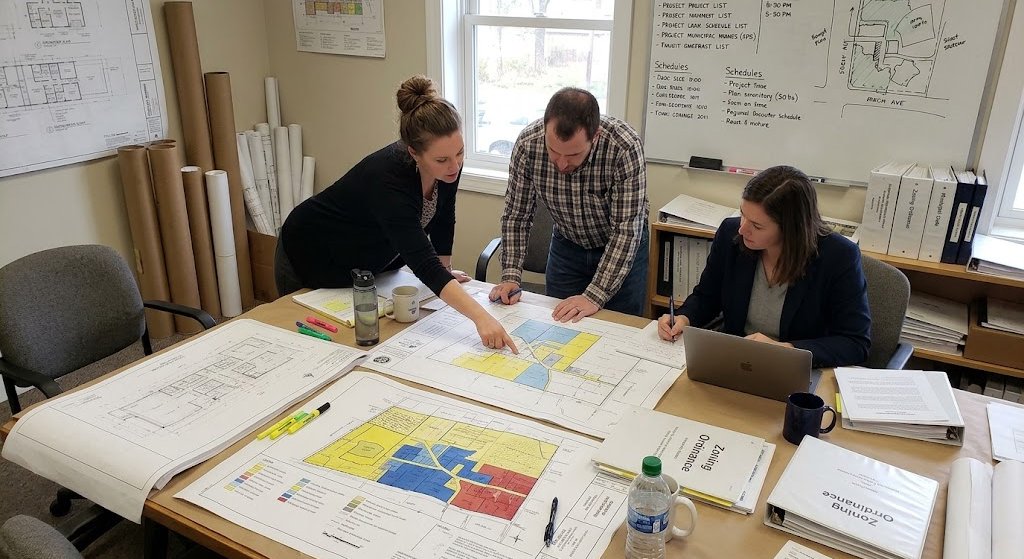

Buying a property is more than choosing a location or price. What matters most is what lies beneath the surface. Small, hidden issues can quickly turn into major costs if they go unnoticed.
That is why due diligence is essential. It helps you look beyond first impressions and make decisions based on facts, not assumptions.
In this guide, we break down how due diligence in property inspections protects your investment and gives you confidence at every step.
Table of Contents
What Is Due Diligence in Property Inspections?
Due diligence in property inspections means doing a careful check before you buy, sell, or invest in real estate. It is not just a quick look. It is a structured review of the property’s condition, risks, and overall value. In simple terms, it is about making sure there are no surprises after the deal is done.
Many buyers focus only on how a property looks. However, what you cannot see often matters more. Hidden wiring issues, structural damage, or legal problems can turn a good deal into a costly mistake. That is where due diligence plays a key role. It helps you move from guesswork to informed decisions.
Simple Definition of Due Diligence
Due diligence is the process of checking everything about a property before making a final decision.
It includes:
Inspecting the physical condition
Reviewing legal documents
Understanding financial risks
Studying the surrounding area
Think of it as a full background check on a property. Instead of relying on surface details, you gather facts. This helps you avoid risk and plan better.
Here is a simple breakdown:
| Aspect | What It Means | Why It Matters |
|---|---|---|
| Physical Check | Inspecting structure and systems | Finds hidden damage |
| Legal Review | Checking ownership and permits | Avoids disputes |
| Financial Review | Estimating costs and value | Prevents overspending |
| Location Review | Studying area and demand | Supports long-term value |
Each part works together. Skipping one can lead to problems later.
Why Property Inspections Are Central to Due Diligence
Property inspections are the foundation of due diligence. Without them, you are making decisions based on incomplete information. An inspection shows the actual condition of the property, not just what is visible during a visit.
For example:
A wall may look fine but hide moisture damage
Electrical systems may appear functional but be outdated
Roofing may seem stable but have underlying wear
These are not small issues. They can affect safety, cost, and resale value.
A proper inspection helps you:
Identify repair needs early
Estimate future maintenance costs
Understand safety risks
Plan upgrades if needed
It also supports better negotiation. When you have clear findings, you can ask for repairs or adjust the price. In short, inspections turn assumptions into facts.
Due Diligence vs Property Inspection (Key Difference)
Many people use these terms in the same way, but they are not the same. A property inspection is one part of due diligence. Due diligence is the bigger process.
Here is how they differ:
| Factor | Property Inspection | Due Diligence |
|---|---|---|
| Scope | Physical condition only | Full evaluation |
| Focus | Structure and systems | Legal, financial, physical |
| Purpose | Identify defects | Reduce overall risk |
| Outcome | Inspection report | Final decision support |
A property inspection answers: “What is wrong with this property?” Due diligence answers: “Is this property worth the investment?”
Both are important. However, relying only on inspection is not enough. You need the full picture to make a smart decision.
Why Due Diligence Matters Before Buying Any Property
Buying a property is a major decision. It involves time, money, and long-term commitment. Due diligence helps reduce uncertainty and protects your investment. Without it, you are relying on assumptions. That is risky. With it, you gain clarity and control.
Avoiding Costly Mistakes
One of the biggest benefits of due diligence is avoiding unexpected costs. Many issues are not visible during a basic walkthrough. These include:
Structural cracks
Roof damage
Faulty wiring
Plumbing leaks
If these problems go unnoticed, repair costs can rise quickly.
For example:
A minor leak today can become major water damage later
Old wiring can lead to safety hazards or system failure
Due diligence helps you find these issues early. This allows you to:
Plan repairs
Adjust your budget
Decide if the property is still worth it
In many cases, it can save thousands.
Identifying Hidden Legal and Financial Risks
Not all risks are physical. Some are legal or financial.
A property may have:
Ownership disputes
Unpaid taxes
Zoning restrictions
Missing permits
These issues can delay or even block a deal. For example, if permits are missing, you may not be allowed to make changes. If taxes are unpaid, you could inherit that liability.
Due diligence helps you verify:
Clear ownership
Proper approvals
Legal compliance
This protects you from future complications.
Understanding True Property Value
The listed price of a property does not always reflect its true value. Due diligence helps you see the full picture.
For example:
A lower-priced property may need major repairs
A higher-priced property may have strong long-term value
When you combine inspection findings with market data, you get a more accurate estimate. This helps you avoid overpaying.
Gaining Negotiation Power
Information gives you leverage. When you have a detailed inspection report and due diligence findings, you can negotiate with confidence.
You can:
Request repairs before closing
Ask for a price reduction
Set conditions in the agreement
Sellers are more likely to respond when your requests are backed by facts. This makes the process fair and transparent.
Key Components of Due Diligence in Property Inspections
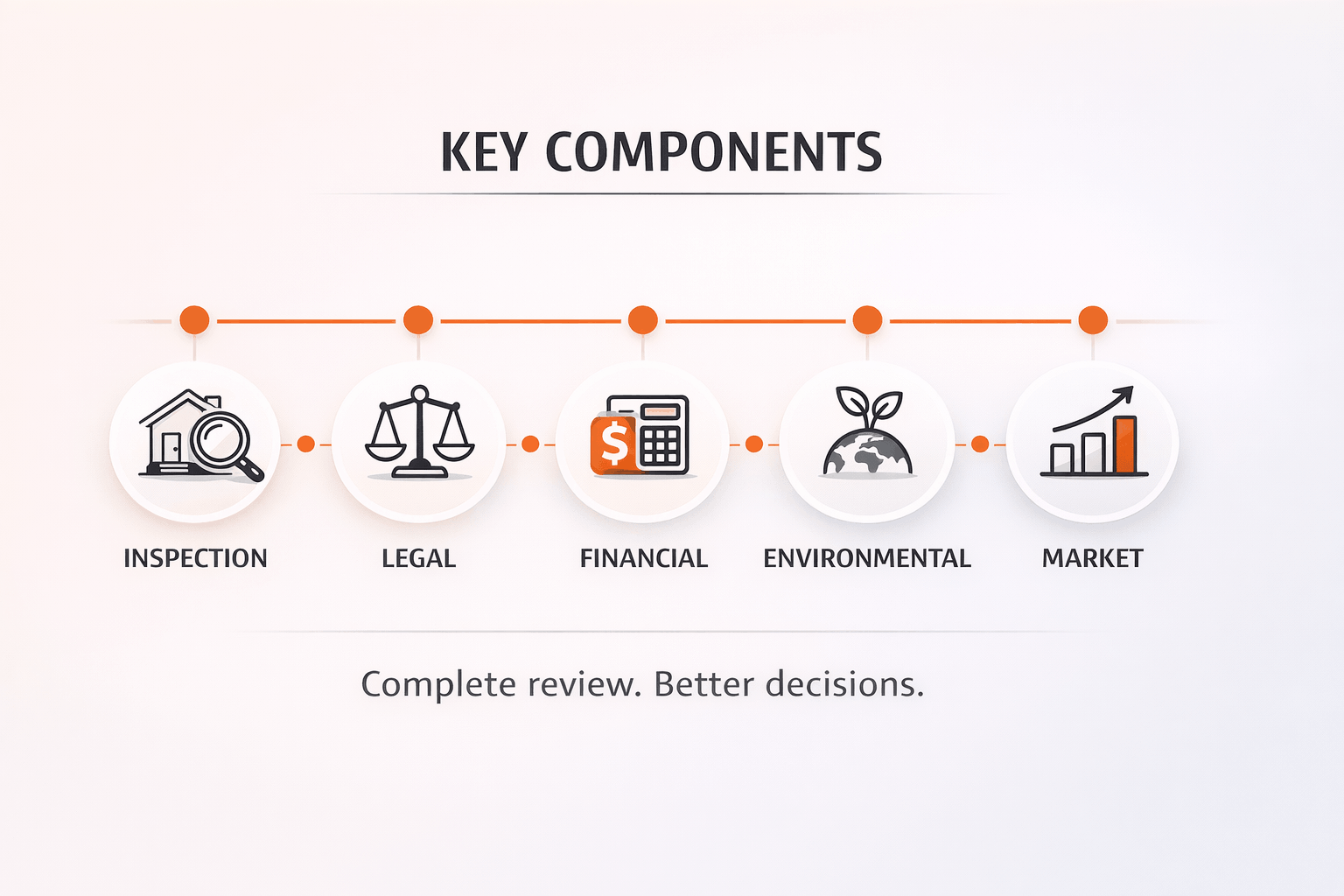
Due diligence is not a single step. It is a combination of different checks that work together. Each component adds a layer of clarity.
Physical Property Inspection
This is the most visible part of due diligence. It focuses on the condition of the property.
Key areas include:
Foundation and structure
Roof and exterior
Electrical systems
Plumbing systems
HVAC systems
The goal is to identify:
Damage
Wear and tear
Safety concerns
A detailed inspection report highlights both major and minor issues.
Legal Due Diligence
Legal checks confirm that the property is free from disputes and complies with local regulations.
This includes:
Title verification
Zoning compliance
Building permits
Property boundaries
If any issue arises here, it can delay or stop the transaction. That is why this step is essential.
Financial Due Diligence
Financial review helps you understand the true cost of ownership.
It includes:
Property taxes
Repair and maintenance costs
Utility expenses
Potential return on investment
This is especially important for investors. It ensures the property makes financial sense.
Environmental Due Diligence
Environmental factors can affect both safety and value.
This includes checking for:
Flood risks
Soil issues
Mold or contamination
Pest problems
Ignoring these can lead to long-term damage and health concerns.
Market and Location Analysis
Location plays a major role in property value.
This step involves:
Studying local demand
Reviewing nearby developments
Understanding neighborhood trends
A good property in a weak area may not perform well. A decent property in a growing area may increase in value.
Here is a quick summary of all components:
| Component | Focus Area | Key Benefit |
|---|---|---|
| Physical Inspection | Property condition | Identifies defects |
| Legal Review | Ownership and compliance | Prevents disputes |
| Financial Review | Costs and returns | Supports budgeting |
| Environmental Check | Safety and risks | Avoids hazards |
| Market Analysis | Location trends | Improves decision-making |
Due diligence works best when all these parts are combined. Each one fills a gap. Together, they provide a clear and reliable view of the property.
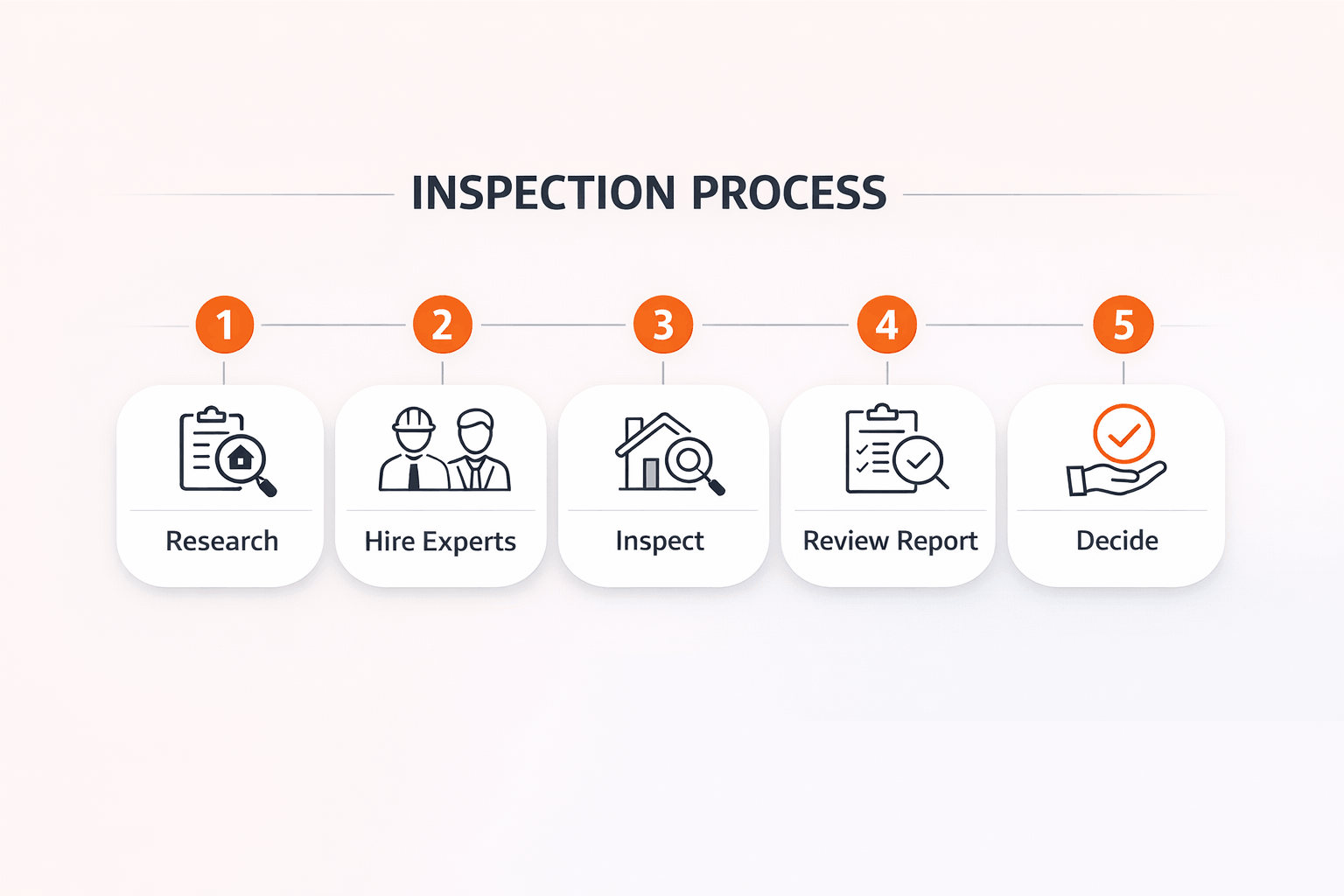
The Property Inspection Process in Due Diligence
A clear process makes due diligence easier to manage. It also helps you stay organized and avoid missing key steps. Most successful property decisions follow a structured inspection process. Each step builds on the previous one. Together, they give you a complete picture.
Step 1: Initial Property Research
Before any inspection, start with basic research. This step helps you understand the property at a high level.
Look into:
Property history
Previous sales data
Listing details
Neighborhood trends
You can also check if the property has had past issues, such as repairs or disputes. At this stage, you are not making decisions yet. You are gathering early insights. This helps you decide if the property is worth deeper evaluation.
Step 2: Hiring Qualified Inspectors
Once the property looks promising, the next step is to bring in professionals. A general inspector is a good start. However, some properties need specialists.
For example:
Electricians for wiring systems
Structural experts for foundation issues
Pest inspectors for termite damage
Choosing the right professionals matters. Their experience affects the quality of the report.
Here is a simple guide:
| Inspector Type | What They Check | When You Need Them |
|---|---|---|
| General Inspector | Overall condition | Every property |
| Electrical Specialist | Wiring and panels | Older buildings |
| Structural Engineer | Foundation and load issues | Visible cracks or damage |
| Pest Inspector | Termites and infestations | High-risk areas |
Working with qualified experts reduces risk. It also gives you reliable information.
Step 3: Conducting the Inspection
This is the most detailed step. Inspectors visit the property and check all major systems.
They look at:
Structure and foundation
Roofing and exterior
Electrical and plumbing systems
Heating and cooling systems
Most inspections are visual. However, some may include tools or testing equipment. Inspectors take notes, photos, and measurements. They focus on both current issues and potential risks. It is a good idea to attend the inspection if possible. This allows you to ask questions and understand the findings better.
Step 4: Reviewing Inspection Reports
After the inspection, you will receive a detailed report.
This document includes:
Identified issues
Severity of problems
Suggested repairs
Safety concerns
Not all issues are urgent. Some are minor and easy to fix. Others may require significant investment.
To make it easier, break the findings into categories:
Critical issues (safety or structural)
Moderate issues (repair needed soon)
Minor issues (cosmetic or low risk)
This helps you focus on what matters most.
Step 5: Decision-Making Based on Findings
The final step is making a decision. Based on the inspection and due diligence findings, you have three main options:
Move forward with the purchase
Negotiate repairs or price
Walk away from the deal
Each option depends on risk, cost, and your long-term goals. If major issues exist, it may not be worth the investment. On the other hand, small issues can often be negotiated. The key is to make a decision based on facts, not emotion.
Types of Property Inspections Involved in Due Diligence
Not all inspections are the same. Different properties require different types of checks. Understanding these types helps you choose the right approach.
Structural Inspection
This inspection focuses on the building’s strength and stability.
It includes:
Foundation condition
Walls and support systems
Roof structure
Structural issues can be serious. They often require costly repairs. That is why this inspection is critical, especially for older properties.
Electrical and Plumbing Inspection
These systems are essential for daily use.
Electrical inspections check:
Wiring condition
Circuit panels
Safety compliance
Plumbing inspections check:
Pipes and leaks
Water pressure
Drainage systems
Problems in these systems can affect safety and comfort.
Pest and Termite Inspection
Pests can cause hidden damage over time.
This inspection looks for:
Termite activity
Wood damage
Signs of infestation
Even small infestations can lead to major repairs if ignored.
Environmental Inspection
Environmental checks focus on health and safety risks.
These include:
Mold presence
Soil contamination
Flood risk
This type of inspection is important in areas with known environmental concerns.
Specialized Inspections (Commercial Properties)
Commercial properties often require deeper analysis.
These inspections may include:
Fire safety systems
Compliance with regulations
Load capacity and usage limits
They are more detailed because the risks are higher.
Here is a quick comparison:
| Inspection Type | Main Focus | Importance Level |
|---|---|---|
| Structural | Stability and strength | Very High |
| Electrical | Safety and functionality | High |
| Plumbing | Water systems | High |
| Pest | Damage from insects | Medium |
| Environmental | Health risks | High |
Choosing the right combination depends on the property type and condition.
Levels of Due Diligence in Property Inspections
Not every property requires the same level of due diligence. The depth of your review should match the level of risk.
Basic Due Diligence
This is the simplest level.
It includes:
General property inspection
Basic document review
It is often used for:
Newer properties
Low-risk transactions
While it is quick, it may miss deeper issues.
Enhanced Due Diligence
This level goes a step further.
It includes:
Specialized inspections
Detailed financial review
Deeper legal checks
It is suitable for:
Older properties
Medium-risk investments
This approach provides more clarity and reduces uncertainty.
Full Due Diligence
This is the most detailed level.
It covers:
Comprehensive inspections
Full legal verification
In-depth financial analysis
Market evaluation
It is best for:
Commercial properties
High-value investments
Complex transactions
Here is a simple comparison:
| Level | Scope | Best For |
|---|---|---|
| Basic | Limited checks | Low-risk properties |
| Enhanced | Moderate review | Older or mid-risk properties |
| Full | Complete analysis | High-value or commercial deals |
The level you choose depends on your goals, budget, and risk tolerance. However, in most cases, a deeper review leads to better decisions.
Common Issues Found During Property Due Diligence
Even well-maintained properties can have hidden problems. Due diligence helps uncover these early, before they turn into expensive surprises. Some issues are minor. Others can affect safety, value, or even the ability to complete the deal.
Structural Problems
Structural issues are among the most serious findings. They affect the stability of the building and often require costly repairs.
Common signs include:
Cracks in walls or foundation
Uneven floors
Sagging roofs
Water damage in structural areas
These problems may not always be visible during a quick visit. However, a detailed inspection can reveal them. If structural damage is severe, it may be best to reconsider the purchase.
Electrical and System Failures
Electrical issues are common, especially in older properties.
These can include:
Outdated wiring
Overloaded panels
Faulty outlets
Lack of proper grounding
Such problems are not just inconvenient. They can be dangerous. In addition, HVAC and plumbing systems may also show signs of wear. Repairs in these areas can add up quickly.
Legal Complications
Legal issues can delay or stop a transaction.
Some common problems include:
Unclear property titles
Ownership disputes
Unpaid taxes
Missing permits
These are not always obvious. That is why legal checks are a key part of due diligence. Fixing legal issues can take time. In some cases, they may not be worth the effort.
Zoning and Compliance Issues
Zoning rules control how a property can be used. If a property does not meet local regulations, you may face restrictions.
Examples include:
Using residential property for commercial purposes
Building extensions without approval
Violating land-use rules
These issues can limit your plans for the property.
Environmental Hazards
Environmental risks can affect both safety and long-term value.
Common concerns include:
Mold growth
Flood-prone areas
Soil contamination
Pest infestations
These problems may require ongoing management or costly fixes.
Here is a quick summary of common issues:
| Issue Type | Example | Impact |
|---|---|---|
| Structural | Foundation cracks | High repair cost |
| Electrical | Old wiring | Safety risk |
| Legal | Title disputes | Deal delays |
| Zoning | Usage restrictions | Limited options |
| Environmental | Mold or flooding | Health and cost risks |
Due Diligence Checklist for Property Inspections
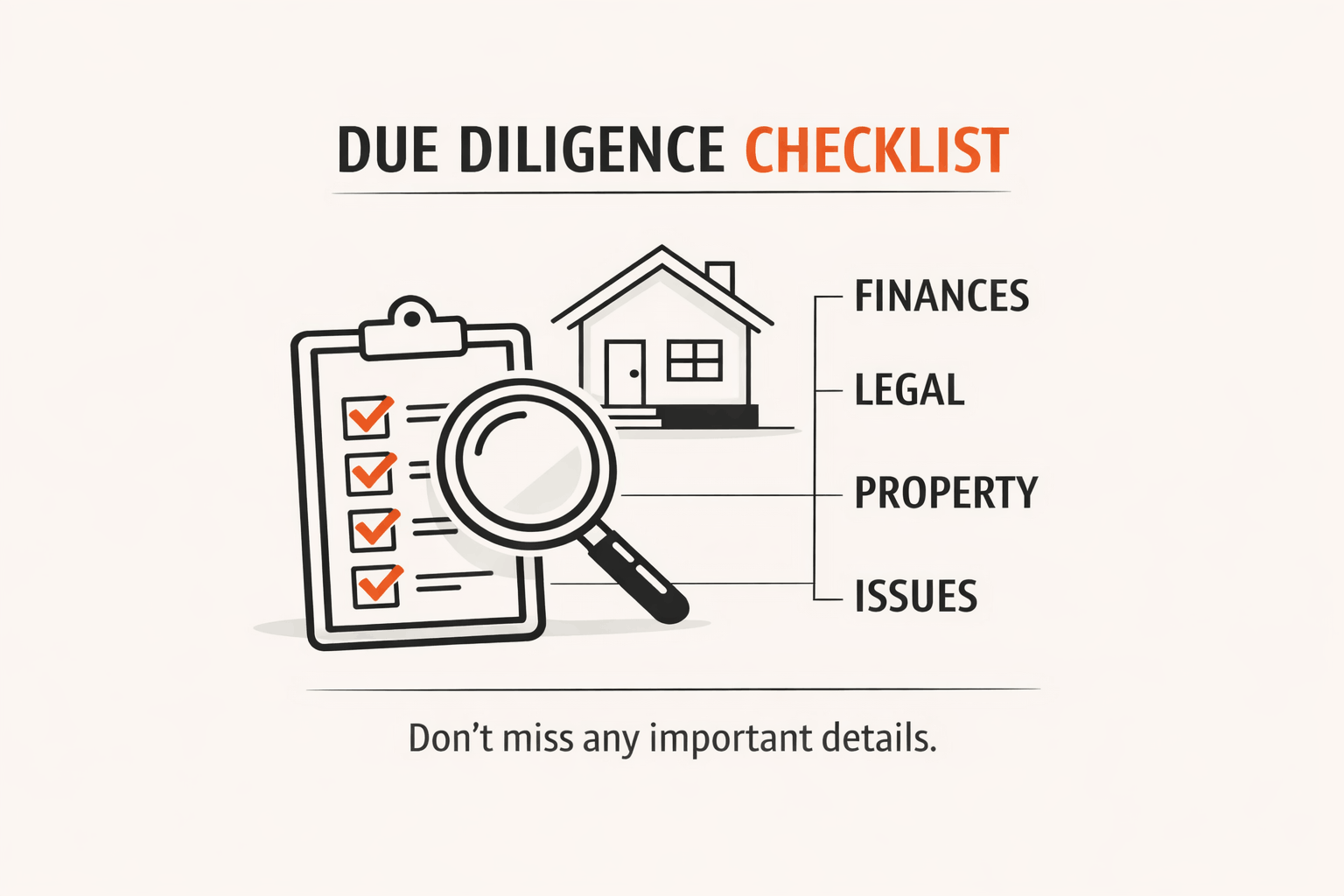
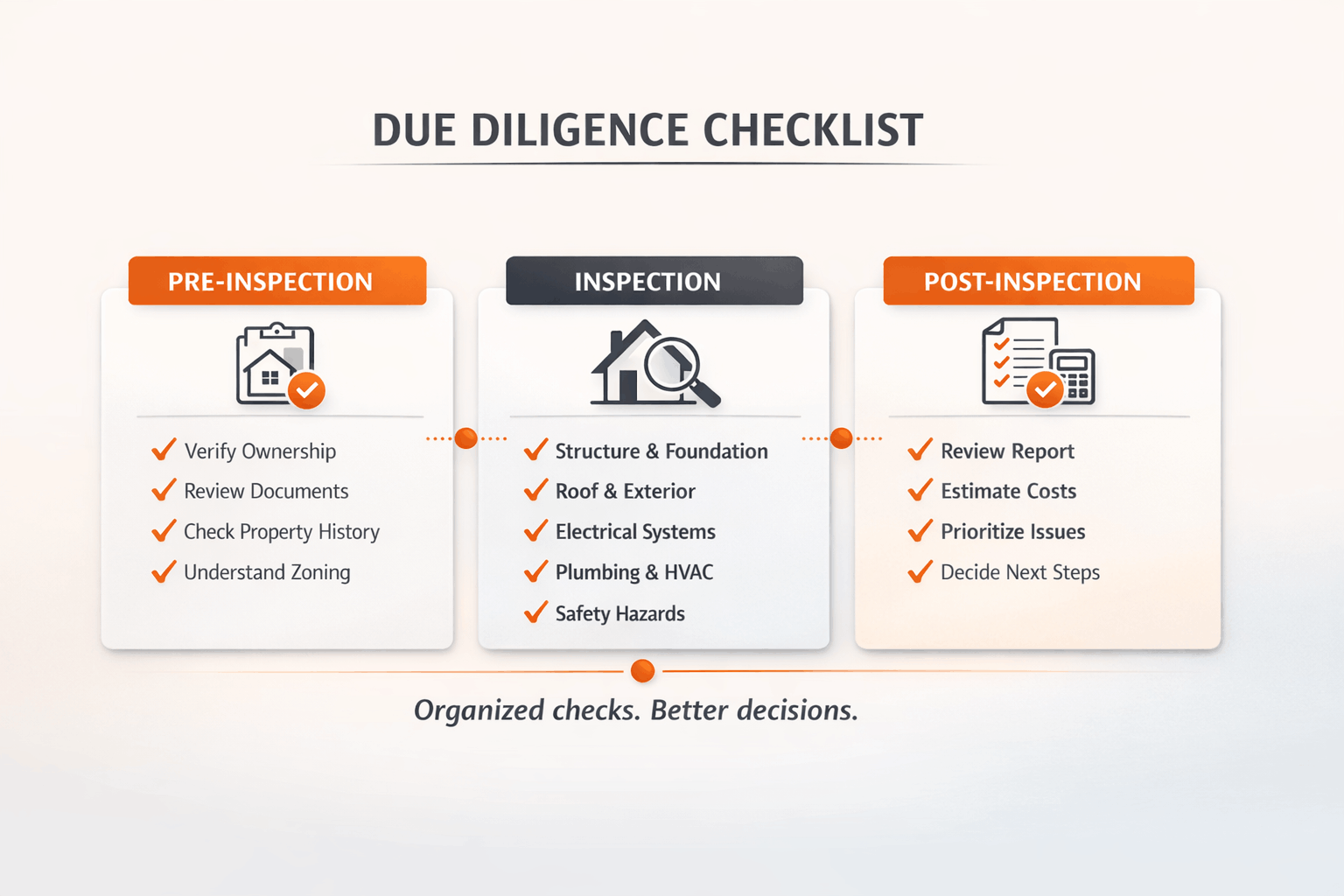
A checklist helps you stay organized. It ensures that no important step is missed. You can divide the process into three stages.
Pre-Inspection Checklist
Before the inspection, gather basic information.
This includes:
Verify ownership details
Review property documents
Check past sales history
Understand local zoning rules
This step prepares you for a deeper review.
Inspection Checklist
During the inspection, focus on key areas.
Structure and foundation
Roof and exterior
Electrical systems
Plumbing systems
HVAC systems
Safety hazards
Take notes and ask questions. If something looks unclear, request further checks.
Post-Inspection Checklist
After the inspection, review everything carefully.
Go through the inspection report
Estimate repair costs
Prioritize major issues
Decide on next steps
This stage is where decisions are made.
Here is a simple checklist table:
| Stage | Key Actions | Goal |
|---|---|---|
| Pre-Inspection | Document review | Prepare for evaluation |
| Inspection | Physical checks | Identify issues |
| Post-Inspection | Report analysis | Make informed decision |
Common Mistakes to Avoid in Property Due Diligence
Even experienced buyers can make mistakes. These errors often lead to higher costs or poor decisions. Being aware of them can help you avoid problems.
Skipping the Inspection
Some buyers skip inspections to save time or money. This is one of the biggest risks. Without an inspection, you are relying only on appearance. Hidden issues can go unnoticed.
Ignoring Legal Verification
Legal checks are just as important as physical inspections. Failing to verify ownership or permits can lead to serious complications later. Always confirm that all documents are valid and complete.
Underestimating Repair Costs
Many buyers assume repairs will be minor. However, small issues can grow into major expenses.
It is important to:
Get realistic cost estimates
Include a buffer in your budget
This helps avoid financial stress later.
Rushing the Due Diligence Process
Due diligence takes time. Rushing through it increases the chance of missing important details.
Take enough time to:
Review reports carefully
Ask questions
Consult professionals
A slower process often leads to better decisions.
Not Hiring Professionals
Trying to handle everything alone can lead to errors. Professionals bring experience and technical knowledge. They can identify issues that are easy to miss.
Here is a quick overview of mistakes and their impact:
| Mistake | Risk | Result |
|---|---|---|
| Skipping inspection | Hidden issues | High repair costs |
| Ignoring legal checks | Ownership problems | Deal complications |
| Underestimating costs | Budget issues | Financial strain |
| Rushing process | Missed details | Poor decisions |
| No professionals | Incomplete analysis | Higher risk |
Avoiding these mistakes improves your chances of making a safe and smart investment.
Role of Professionals in Property Due Diligence
Due diligence is not something most buyers should handle alone. It involves technical checks, legal reviews, and financial analysis. Each part requires specific knowledge. That is why professionals play a key role. They help you see risks clearly and avoid costly errors.
Property Inspectors
Property inspectors focus on the physical condition of the building.
They examine:
Structure and foundation
Electrical systems
Plumbing and HVAC
Roof and exterior
Their report gives you a clear view of what needs repair or replacement. A good inspector does more than list problems. They explain the severity and possible impact.
Real Estate Consultants
Consultants help you understand the bigger picture.
They provide insights on:
Market value
Location trends
Investment potential
They also guide you through the process. This includes helping you compare properties and assess risk. For businesses like JDJ Consulting, this is where value is added. A professional opinion can turn complex data into simple decisions.
Legal Advisors
Legal experts make sure everything is valid and compliant.
They check:
Property title
Ownership history
Contracts and agreements
Zoning and permits
This step protects you from disputes and legal trouble. Without proper legal review, even a good property can become a problem.
Financial Analysts
Financial experts help you understand the cost side.
They review:
Purchase price vs actual value
Repair and maintenance costs
Return on investment
This is especially important for investors. It ensures the property makes financial sense in the long run.
Due Diligence for Different Property Types
Not all properties require the same approach. The level of due diligence depends on the type of property. Each category has its own risks and priorities.
Residential Properties
Residential due diligence is usually more straightforward.
The focus is on:
Safety and comfort
Basic structural condition
Utility systems
Buyers often look for a move-in ready condition. However, inspections are still important. Even small issues can affect daily living.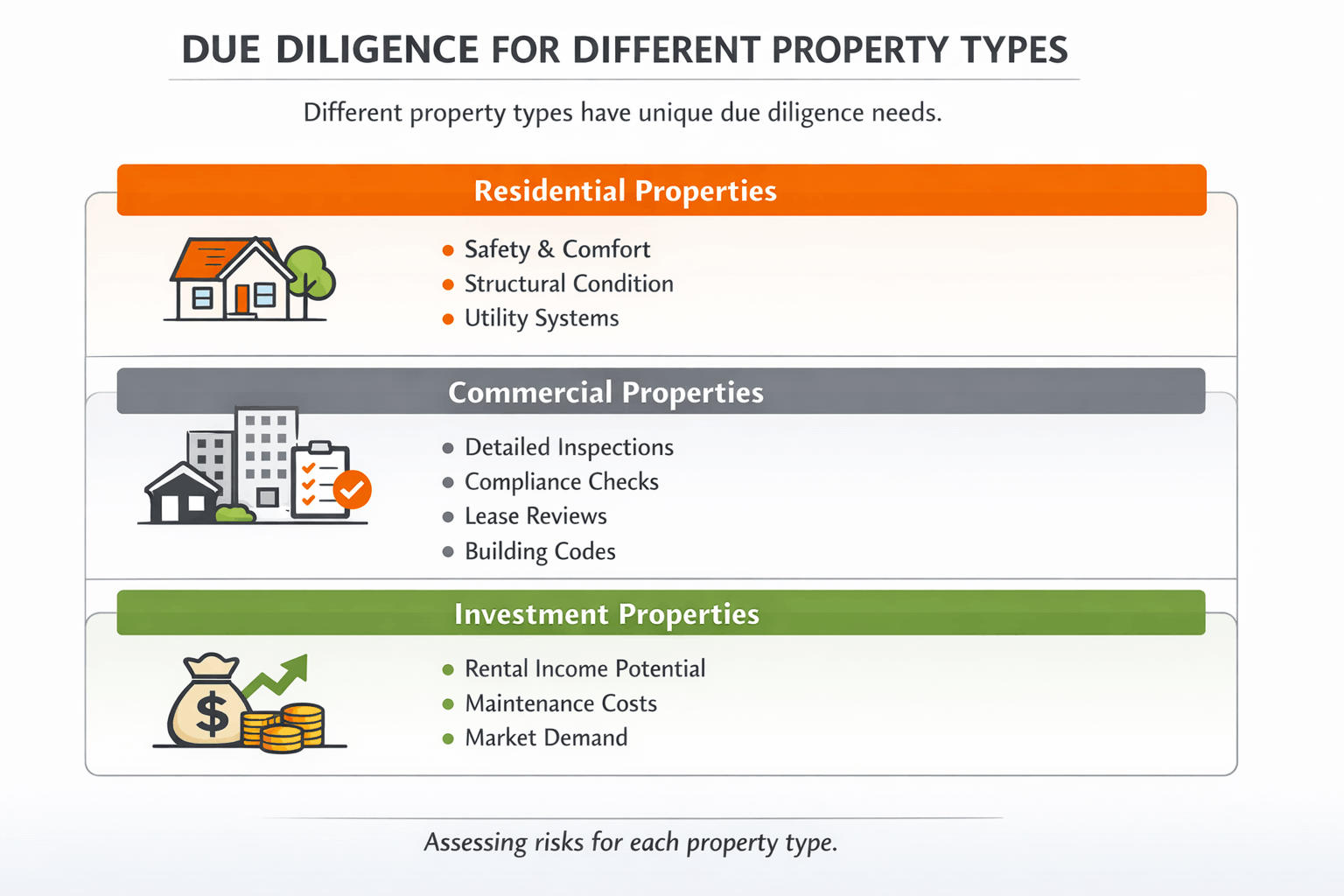
Commercial Properties
Commercial properties are more complex.
They often require:
Detailed inspections
Compliance checks
Business-use evaluations
You may also need to review:
Lease agreements
Building codes
Capacity limits
Because the investment is larger, the risk is higher. That is why full due diligence is recommended.
Investment Properties
Investment properties focus on returns.
Due diligence here includes:
Rental income potential
Maintenance costs
Market demand
The goal is not just condition, but profitability. A property may look good but perform poorly as an investment. Due diligence helps you avoid that mistake.
Here is a quick comparison:
| Property Type | Main Focus | Risk Level |
|---|---|---|
| Residential | Safety and condition | Moderate |
| Commercial | Compliance and usage | High |
| Investment | Returns and costs | High |
How Due Diligence Impacts Long-Term Property Value
Due diligence is not just about the purchase. It also affects the future value of the property. A well-evaluated property performs better over time.
Preventing Future Expenses
Early detection of issues helps you avoid larger costs later.
For example:
Fixing a small leak now prevents major water damage
Updating wiring reduces safety risks
This keeps maintenance costs under control.
Improving Investment Decisions
When you understand all aspects of a property, you make better decisions.
You can:
Choose the right property
Avoid overpaying
Plan for future upgrades
This improves your overall return.
Ensuring Compliance and Safety
Properties that meet legal and safety standards hold their value better. They are easier to sell and less likely to face issues. Compliance also protects you from penalties or restrictions.
Supporting Resale Value
A well-maintained property with clear records attracts more buyers. Inspection reports and due diligence records show transparency. This builds trust and supports higher resale value.
Tools and Resources for Effective Due Diligence
Using the right tools makes the process easier and more accurate. They help you gather, organize, and analyze information.
Online Property Databases
These platforms provide:
Property history
Ownership records
Market trends
They are useful for initial research.
Inspection Reports and Software
Modern inspection tools create detailed reports with:
Photos
Notes
Repair estimates
These reports are easy to review and share.
Professional Services
Working with experts improves accuracy.
Services may include:
Inspection companies
Legal advisors
Consulting firms
They provide reliable insights and reduce risk.
Checklists and Templates
Simple tools like checklists help you stay organized. They ensure that no step is missed during the process.

Practical Tips for Successful Property Due Diligence
A few simple practices can improve your results.
Start Early
Begin due diligence as soon as you find a potential property. This gives you enough time to review everything carefully.
Set a Budget for Inspections
Inspections and professional services cost money. However, they are a small cost compared to potential losses. Plan for these expenses in advance.
Ask the Right Questions
Do not hesitate to ask:
What issues were found?
How serious are they?
What will it cost to fix them?
Clear answers lead to better decisions.
Document Everything
Keep records of:
Inspection reports
Legal documents
Communication with sellers
This helps you stay organized and protects you if issues arise later.
Think Long-Term
Do not focus only on the current condition.
Consider:
Future maintenance
Market trends
Resale potential
This ensures your decision remains valuable over time.
When to Walk Away From a Property
Not every deal is worth closing. Sometimes, the best decision is to walk away.
Major Structural Issues
If the property has serious structural damage, repairs may be too costly. In such cases, the risk may outweigh the benefit.
Legal Red Flags
Unclear ownership or missing documents can create long-term problems. If legal issues cannot be resolved quickly, it is safer to step back.
High Repair Costs
If repair costs exceed your budget, the investment may not make sense. Always compare repair costs with the property’s value.
Poor Investment Potential
If the property does not offer good returns, it may not be worth the effort. Due diligence helps you identify this early.
Conclusion: Why Due Diligence Is Non-Negotiable
Due diligence is not just a step in the process. It is the foundation of a smart property decision.
It helps you:
Identify risks
Understand true value
Plan costs
Make informed choices
Skipping it can lead to serious problems. Taking the time to do it properly protects your investment. Whether you are buying, selling, or investing, due diligence gives you confidence. For professional support, working with experienced consultants can make the process smoother and more reliable.
FAQs About Due Diligence in Property Inspections
What is due diligence in property inspections?
Due diligence in property inspections is the process of carefully evaluating a property before making a decision. It goes beyond a visual check and includes multiple layers of review.
Physical inspection of structure and systems
Legal document verification
Financial and cost assessment
This process helps ensure there are no hidden risks. It allows buyers to make decisions based on facts rather than assumptions.
Why are property inspections important in due diligence?
Property inspections are the core part of due diligence because they reveal the actual condition of the property.
Identify hidden damage
Detect safety risks
Estimate repair needs
Without inspections, buyers rely only on appearance. Inspections provide real data, which supports better decisions and reduces the risk of costly surprises.
What does due diligence include when buying property?
Due diligence includes several key checks that work together to give a full picture of the property.
Physical inspection
Legal verification
Financial review
Market analysis
Each part plays a role in reducing risk. Together, they help you understand if the property is worth the investment.
What is the difference between due diligence and a property inspection?
A property inspection is only one part of due diligence. Due diligence is a broader process.
Inspection: focuses on physical condition
Due diligence: includes legal, financial, and market checks
While inspections find problems, due diligence helps decide whether to move forward or not.
What are the key components of property due diligence?
Property due diligence is made up of several important components.
Physical inspection of the property
Legal checks for ownership and permits
Financial analysis of costs and value
Environmental risk assessment
Market and location review
Each component fills a gap, creating a complete and reliable evaluation.
What are the main steps in the property inspection process?
The inspection process follows a structured approach.
Research the property
Hire qualified inspectors
Conduct the inspection
Review the report
Make a decision
Following these steps ensures that no important detail is missed during due diligence.
What should I check before a property inspection?
Before the inspection, it is important to gather basic information about the property.
Verify ownership details
Review documents and history
Check zoning rules
This preparation helps you understand what to focus on during the inspection.
What is included in a property inspection checklist?
A property inspection checklist ensures a thorough evaluation.
Structure and foundation
Roof and exterior
Electrical and plumbing systems
HVAC systems
Safety hazards
Using a checklist keeps the process organized and reduces the chance of missing key issues.
What should I do after receiving an inspection report?
After receiving the report, review the findings carefully and prioritize issues.
Identify major vs minor problems
Estimate repair costs
Decide next steps
This stage is critical because it directly affects your final decision.
What are common problems found during due diligence?
Due diligence often reveals issues that are not visible at first glance.
Structural damage
Outdated electrical systems
Plumbing leaks
Legal or zoning issues
Identifying these early helps avoid unexpected costs and delays.
How does due diligence help avoid costly mistakes?
Due diligence helps you identify risks before committing to a purchase.
Detect hidden repairs
Avoid legal complications
Understand total costs
By addressing these early, you can prevent financial losses and make a safer investment.
How does due diligence affect property value?
Due diligence helps determine the true value of a property.
Reveals repair costs
Highlights potential risks
Supports accurate pricing
This ensures you do not overpay and helps you make a better long-term investment.
Can due diligence help with price negotiation?
Yes, due diligence gives you strong leverage during negotiations.
Use inspection findings to request repairs
Ask for price adjustments
Set conditions before closing
Clear evidence from reports makes negotiations more effective and fair.
What legal risks can due diligence uncover?
Due diligence helps identify legal issues that may affect ownership or use.
Title disputes
Unpaid taxes
Missing permits
Zoning restrictions
Addressing these early prevents delays and protects your investment.
What is environmental due diligence in property inspections?
Environmental due diligence focuses on risks related to the property’s surroundings.
Flood risks
Mold or contamination
Soil issues
Pest infestations
These factors can affect safety, health, and long-term value.
How does due diligence differ for residential and commercial properties?
The level of due diligence depends on the property type.
Residential: basic checks for safety and condition
Commercial: detailed inspections and compliance reviews
Commercial properties usually require deeper analysis due to higher risk and investment.
What are the different levels of due diligence?
Due diligence can vary based on risk and property type.
Basic: general inspection and review
Enhanced: deeper analysis with specialists
Full: complete evaluation including legal and financial checks
Choosing the right level depends on the complexity of the deal.
Why is hiring professionals important in due diligence?
Professionals bring expertise that helps identify issues you may miss.
Inspectors assess physical condition
Legal advisors verify documents
Consultants analyze risks
Their input improves accuracy and reduces the chance of costly mistakes.
When should you walk away from a property?
Sometimes due diligence reveals risks that are too high.
Major structural damage
Unresolved legal issues
High repair costs
Poor investment potential
Walking away can save you from long-term financial problems.
How can I make due diligence more effective?
A structured approach improves the effectiveness of due diligence.
Start early
Use a checklist
Ask detailed questions
Document everything
Taking time and staying organized leads to better, more confident decisions.