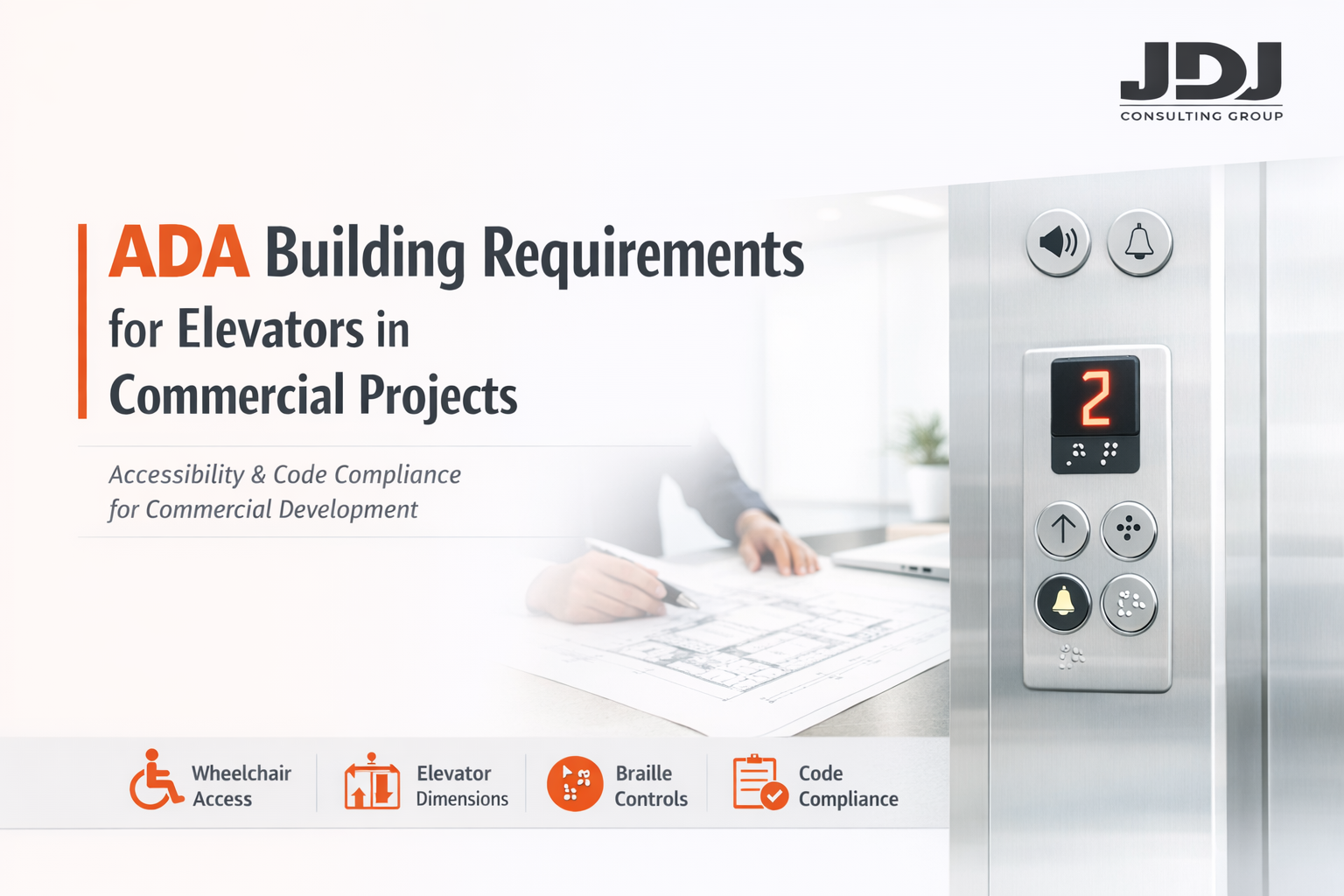
Elevators play an important role in commercial buildings. They help people move safely between floors, especially those with mobility challenges. However, installing an elevator is not just about convenience. In many commercial projects, it is also a legal requirement under the Americans with Disabilities Act (ADA).
ADA standards set clear rules for elevator design, size, controls, and safety features. These rules help ensure that everyone, including wheelchair users and individuals with limited mobility, can access all areas of a building.
When these requirements are overlooked, projects may face inspection failures, permit delays, or even occupancy issues. In some cases, building owners may need to make costly changes after installation.
In this guide, we will explain ADA building requirements for elevators in simple terms. You will learn what commercial projects must include to meet accessibility standards and avoid compliance issues during inspection.
Why ADA Elevator Compliance Matters in Commercial Construction
Elevators are not just a convenience in commercial buildings. In many cases, they are a legal requirement. The Americans with Disabilities Act (ADA) requires that people with mobility challenges must be able to access all public areas of a building safely.
This includes:
Office buildings
Healthcare facilities
Retail stores
Hotels
Government buildings
Educational facilities
If a building has multiple floors, it must provide an accessible route between those floors. In most commercial projects, this route is an elevator.
However, installing an elevator is not enough. The elevator must also meet ADA accessibility standards. These standards cover things like:
Door width
Cab size
Control panel height
Braille signage
Floor announcements
Emergency communication
Each of these features plays a role in accessibility. When these details are ignored, projects often face inspection issues. In some cases, the building may not receive a Certificate of Occupancy. This can delay occupancy by weeks or even months.
More importantly, non-compliance can lead to:
Failed inspections
Permit delays
Costly redesigns
ADA violation penalties
Legal complaints from tenants or visitors
Because of this, elevator compliance should not be treated as a final-stage checklist item. Instead, it should be addressed early in the planning phase. At JDJ Consulting Group, we often see projects where accessibility was considered too late.
This usually leads to:
Change orders
Equipment replacement
Structural modifications
All of which increase the project budget and timeline. Planning for ADA-compliant elevators from the start helps avoid these issues. It also supports smooth inspection approvals later in the process.
When ADA Elevator Requirements Apply to Your Building
Many developers assume that ADA elevator requirements apply only to large public buildings. In reality, these rules apply to most commercial facilities.
ADA elevator standards generally apply in:
New construction
Renovation projects
Building alterations
Facility upgrades
Change-of-use developments
If your project includes more than one story, and the building is open to employees, customers, or the public, an accessible route between floors is required. In most situations, stairs alone do not meet accessibility requirements.
Buildings That Must Provide ADA-Compliant Elevators
The following commercial properties typically require ADA-compliant elevators:
| Building Type | Elevator Accessibility Required |
|---|---|
| Office buildings | Yes |
| Retail centers | Yes |
| Hotels | Yes |
| Medical facilities | Yes |
| Government buildings | Yes |
| Multifamily housing (common areas) | Yes |
| Educational facilities | Yes |
Even smaller buildings may require elevators if upper floors provide services or amenities.
ADA Requirements for Existing Buildings
Existing buildings are not automatically exempt from accessibility laws.
If renovations or alterations are made, the project may trigger ADA upgrade requirements. In many cases, building owners must remove barriers if doing so is considered “readily achievable.”
Examples of elevator-related upgrades may include:
Installing accessible control panels
Updating door timing systems
Adding Braille signage
Improving floor leveling
Providing audible floor indicators
Retrofit projects often face compliance challenges. Older elevator systems may not meet current accessibility standards. When this happens, upgrades are usually required before approval. This is why accessibility reviews are important before renovation work begins.
Minimum ADA Elevator Dimensions for Commercial Buildings
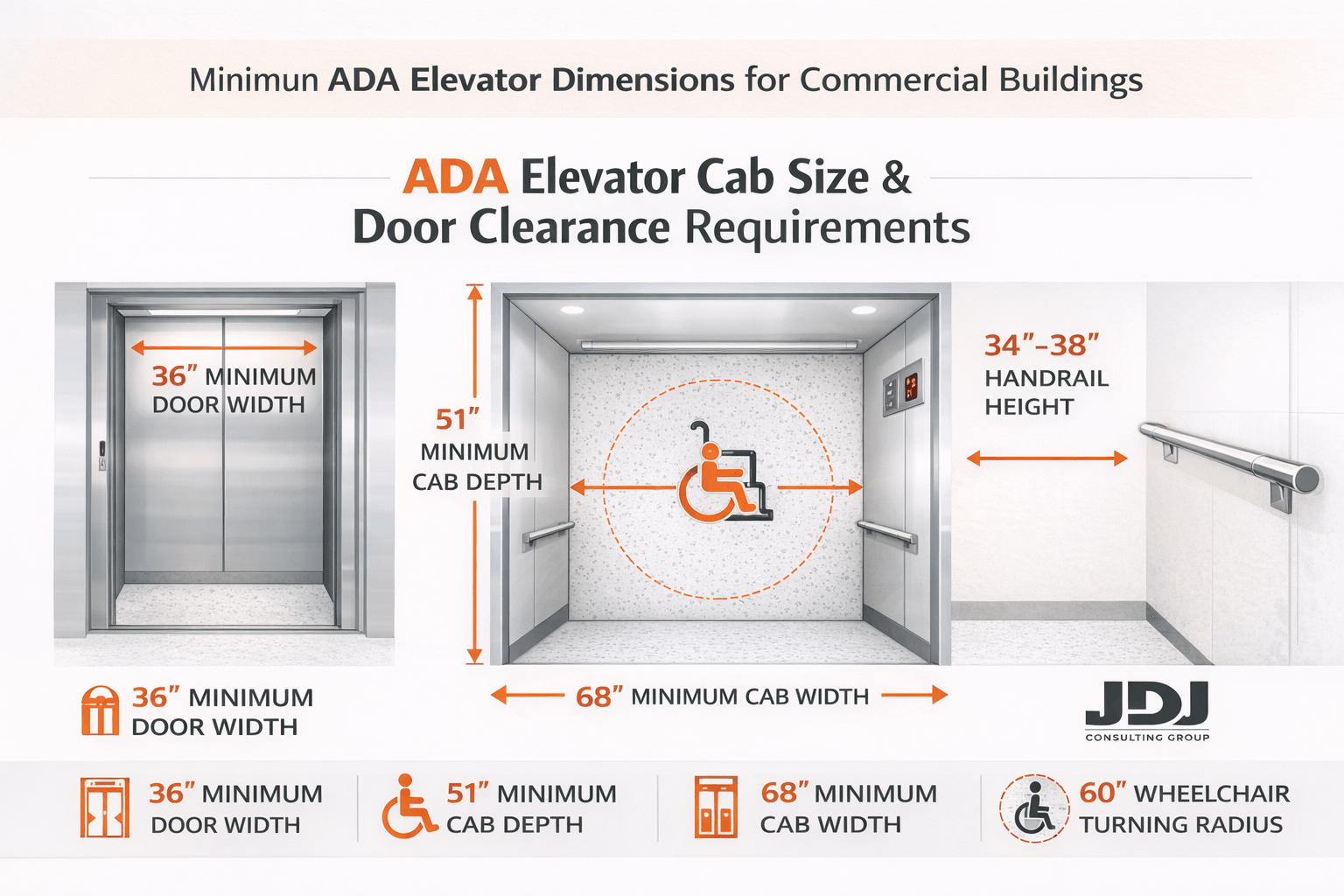
Elevator size and door clearance are among the most common reasons for inspection failure. ADA standards provide clear dimensional requirements to ensure wheelchair users can enter, turn, and exit safely. These requirements apply to both passenger elevators and platform lifts used in commercial facilities.
Elevator Door Width Requirements
The elevator door must provide enough clear opening space for wheelchair access.
| Requirement | ADA Minimum Standard |
|---|---|
| Clear door opening width | 36 inches |
| Platform lift door width | 32–42 inches |
| Landing clearance | Must allow wheelchair entry |
If the doorway is too narrow, wheelchair users may not be able to enter safely. This often results in failed inspections. Door timing also matters. Doors must remain open long enough for passengers to enter and exit without rushing.
Elevator Cab Size Requirements
In addition to the doorway, the interior space of the elevator must allow maneuverability.
| Elevator Configuration | Minimum Dimensions |
|---|---|
| Standard cab size | 51 inches deep |
| Minimum interior width | 68 inches |
| Turning space | 60-inch diameter |
These dimensions allow a wheelchair user to:
Enter the cab
Turn if necessary
Reach control buttons
Exit safely at the next floor
If the cab is too small, accessibility is compromised. This is especially common in retrofit projects where older elevators were not designed with ADA standards in mind. Ensuring proper cab dimensions during the design phase helps prevent structural changes later. It also supports smoother inspection approvals once installation is complete.
ADA Elevator Door Timing and Opening Requirements
Elevator doors must do more than open and close. They must allow enough time for people with mobility devices to enter and exit safely.
Many accessibility issues happen because doors close too quickly. This creates safety risks for:
Wheelchair users
People using walkers
Elderly occupants
Individuals with limited mobility
ADA standards require elevator doors to remain open for a minimum amount of time.
Minimum Door Open Time
Elevator doors must stay fully open for at least 3 seconds after a hall call is answered.
This timing is based on:
The width of the doorway
Passenger movement speed
Accessibility needs
If the doors close too soon, users may not have enough time to enter the cab safely.
This can lead to:
Inspection failure
User injury risks
Compliance violations
Adjusting door timing during installation helps prevent these problems later.
Landing Clearance and Floor Leveling
Elevator floors must align properly with the landing area. This ensures smooth entry and exit.
| Requirement | ADA Standard |
|---|---|
| Maximum vertical gap | ½ inch |
| Maximum horizontal gap | 1¼ inches |
| Floor alignment | Self-leveling required |
If the elevator floor sits too high or too low, wheelchair users may struggle to enter or exit. Improper leveling is a common issue in older buildings. Retrofit projects often need system adjustments to meet current ADA standards.
Reviewing these measurements during inspection prep can help avoid delays.
ADA Elevator Control Panel Requirements
Control panels must be easy to reach and use. This applies to both interior and exterior elevator controls. Passengers should be able to:
Press buttons without stretching
Identify floor numbers easily
Use emergency features when needed
Control placement is a key part of ADA compliance.
Button Height and Reach Range
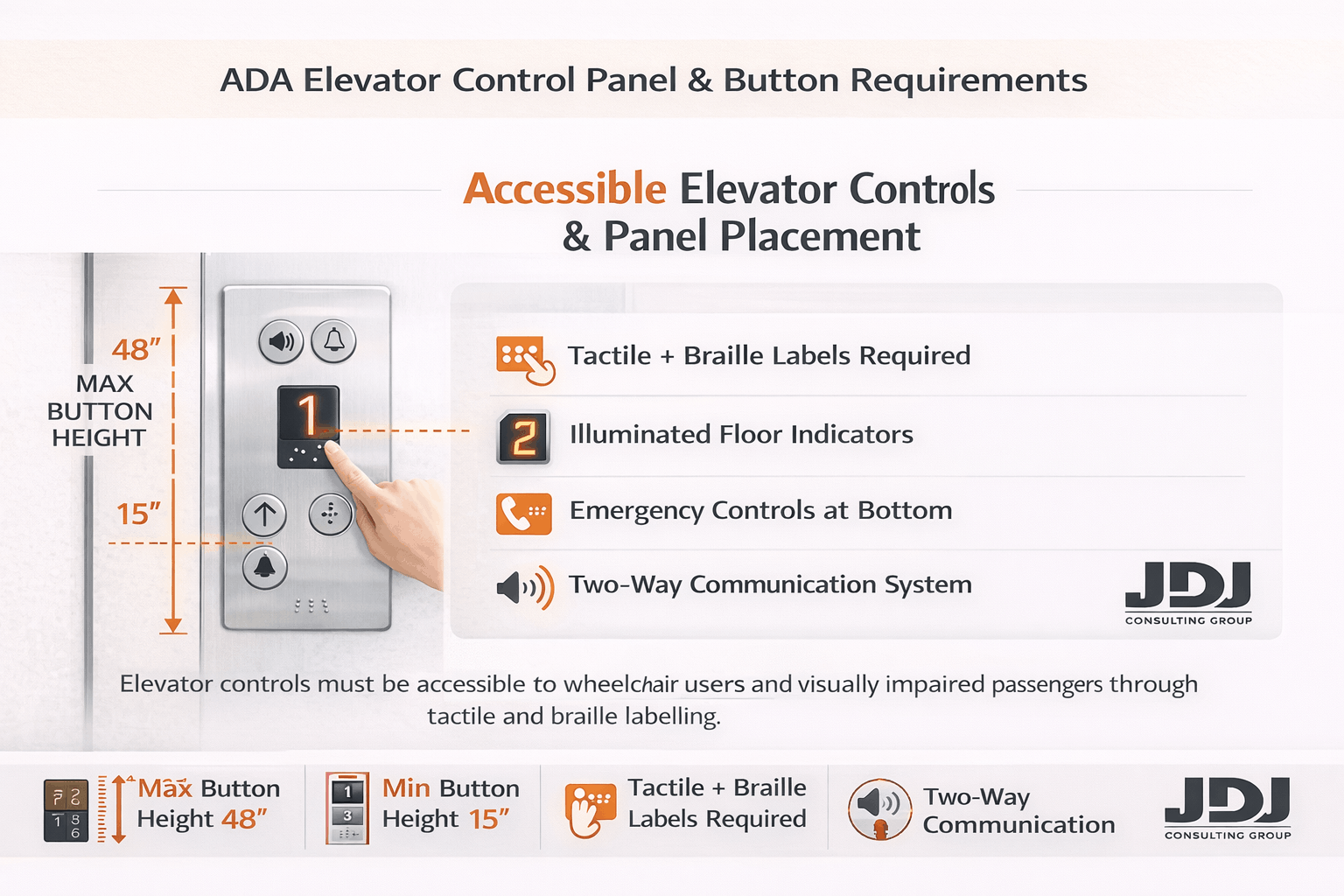
Elevator buttons must be placed within reach for seated passengers.
| Control Feature | ADA Requirement |
|---|---|
| Maximum button height | 48 inches |
| Minimum button height | 15 inches |
| Reach type | Forward or side reach |
If buttons are installed too high, wheelchair users may not be able to reach them. Lower placement improves accessibility for all users.
Braille and Tactile Button Requirements
Elevator controls must also support individuals with visual impairments. ADA standards require:
Raised characters
Braille floor identification
Tactile emergency buttons
Clear contrast between text and background
Emergency controls must be grouped separately from floor buttons. This allows users to locate them quickly during an emergency. Missing or incorrect signage is one of the most common compliance issues found during inspections.
Audible and Visual Indicator Requirements
Elevators must provide clear feedback to passengers during operation. People with visual or hearing impairments rely on these indicators to move safely between floors. Without proper alerts, users may:
Exit at the wrong floor
Miss their destination
Struggle during emergencies
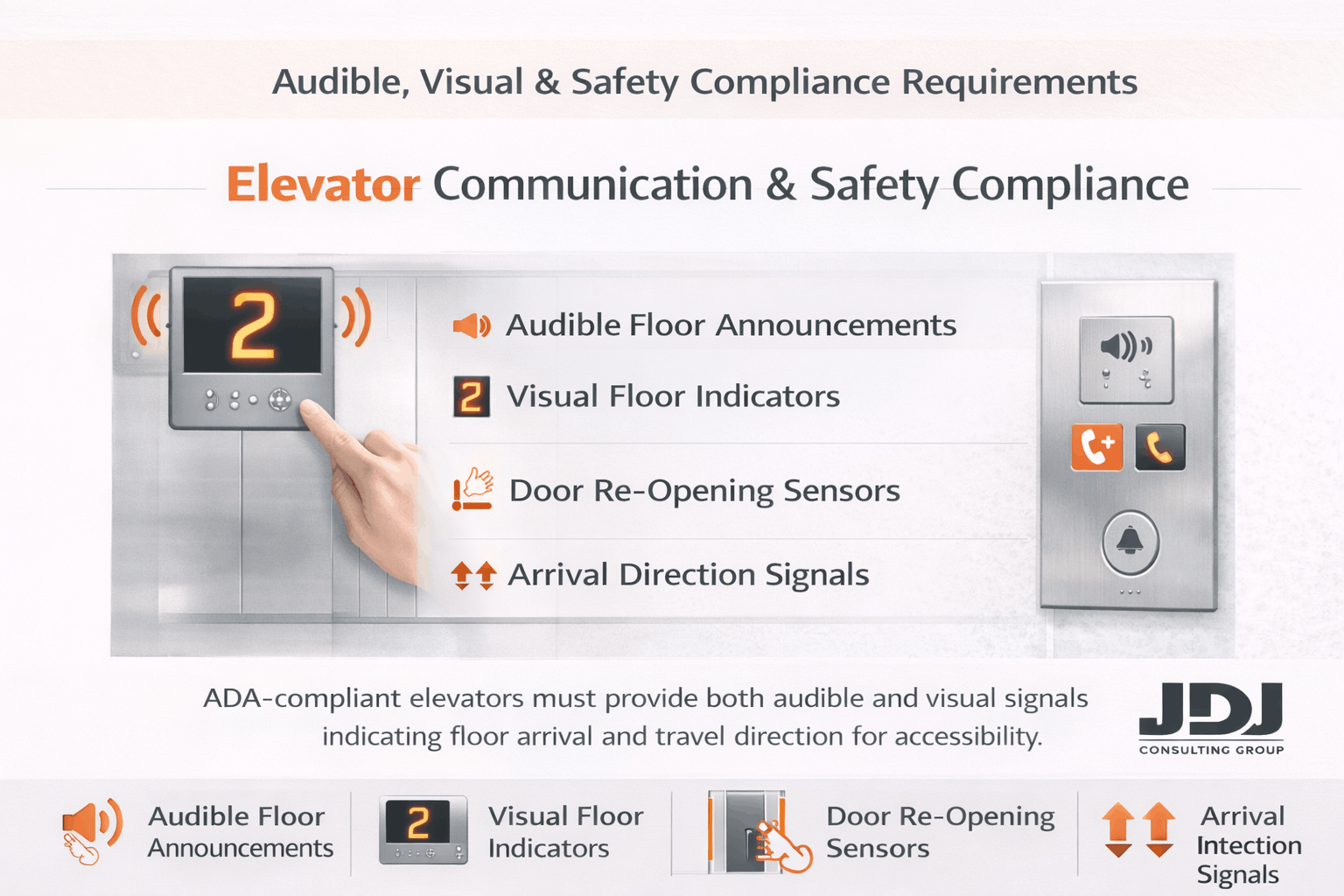
ADA standards require both audible and visual signals.
Floor Position Indicators
Elevators must include visual displays that show:
Current floor level
Direction of travel
Arrival at destination
These indicators should be:
Easy to read
Well-lit
Mounted at visible height
This helps all passengers confirm where they are in the building.
Audible Floor Announcements
Elevators must also provide audible signals.
These may include:
Floor arrival tones
Voice announcements
Directional chimes
Audible alerts help visually impaired passengers understand when:
The elevator arrives
Doors open
The desired floor is reached
These features must be tested during final inspection. If either audible or visual indicators are missing, the system may not pass accessibility review.
Emergency Communication Requirements
Emergency communication systems are required in all ADA-compliant elevators. These systems allow passengers to call for help if the elevator stops working.
In commercial buildings, this is especially important. Elevators serve:
Employees
Customers
Visitors
Patients
Tenants
If a passenger becomes trapped, they must be able to contact building personnel or emergency services.
Two-Way Communication Systems
ADA standards require a two-way communication system inside the elevator cab.
This system must:
Connect passengers to assistance
Work without voice input
Operate hands-free
Include both audio and visual communication
Passengers should not need to speak to activate help. This supports individuals who:
Have speech impairments
Experience hearing loss
Feel distress during emergencies
The system must also provide feedback that help is on the way.
Emergency Control Button Placement
Emergency buttons must be:
Easy to locate
Clearly labeled
Within reach range
Separated from floor controls
Improper button placement is a common issue in inspection reports. Ensuring proper location during installation helps avoid compliance failures later.
Elevator Interior Accessibility Requirements
The interior of the elevator must support safe movement for all passengers. Accessibility is not limited to entry points. Interior features must also meet ADA standards.
Slip-Resistant Flooring Requirements
Elevator floors must provide enough traction. This reduces the risk of:
Slips
Falls
Wheelchair movement issues
Acceptable flooring types include:
Non-polished tile
Textured vinyl
Rubber surfaces
Highly polished flooring may create safety risks. These materials are often flagged during inspections.
Interior Lighting Requirements
Lighting inside the elevator cab must be sufficient for visibility.
| Lighting Feature | ADA Requirement |
|---|---|
| Minimum illumination | 5 foot-candles |
| Even light distribution | Required |
| Glare reduction | Recommended |
Proper lighting helps passengers:
Read floor numbers
Locate buttons
Move safely inside the cab
Low lighting levels can create accessibility challenges, especially for visually impaired users. Lighting should be tested during system commissioning.
ADA Elevator Requirements for Renovation and Retrofit Projects
Older buildings often have elevator systems that do not meet current ADA standards. When renovation work begins, accessibility upgrades may be required. This depends on whether barrier removal is considered “readily achievable.”
Barrier Removal Requirements
Barrier removal refers to improving access in existing buildings. Examples of elevator-related improvements may include:
Installing Braille buttons
Adjusting door timing
Updating floor indicators
Improving control panel height
Adding audible announcements
These upgrades are often required when:
Major alterations are planned
Tenant spaces are reconfigured
Building use changes
Ignoring accessibility updates can delay project approval.
Upgrading Existing Elevator Systems
Retrofit projects may also require system modifications such as:
Cab resizing
Door widening
Control relocation
Communication system upgrades
Older elevators were not designed with accessibility in mind. As a result, modernization may be needed before inspections are completed.
Addressing these issues early helps:
Reduce redesign costs
Prevent permit delays
Improve approval timelines
Common ADA Elevator Compliance Mistakes That Delay Inspections
Many elevator systems fail inspection because of small compliance gaps. These issues are often missed during design or installation. In most cases, the elevator works fine. However, it does not meet accessibility standards.
This creates problems during:
Final inspections
Accessibility reviews
Occupancy approvals
Below are some of the most common ADA elevator compliance mistakes found in commercial projects:
Control buttons installed too high
Missing Braille labels
Incorrect door clear width
Cab dimensions too small
Poor floor leveling
Short door open time
Missing audible alerts
Inadequate emergency communication system
Low interior lighting
Improper button contrast
Each of these issues may seem minor. However, they can result in inspection failure. Correcting these problems after installation often leads to:
Equipment replacement
Design changes
Schedule delays
Additional permit reviews
Reviewing ADA elevator requirements early in the project helps prevent these setbacks.
ADA Elevator Compliance Checklist for Commercial Projects
A simple checklist can help project teams confirm compliance before inspection.
This is especially useful during:
Design reviews
Equipment selection
Installation
Final walkthroughs
| Compliance Area | ADA Requirement | |
|---|---|---|
| Door width | 36-inch clear opening | |
| Cab size | 51″ deep × 68″ wide | |
| Button height | Max 48 inches | |
| Braille signage | Required | |
| Audible floor alerts | Required | |
| Visual indicators | Required | |
| Emergency communication | Required | |
| Door open time | Minimum 3 seconds | |
| Floor leveling | Within ½ inch | |
| Interior lighting | 5 foot-candles |
This checklist should be reviewed before the inspection stage. Doing so helps identify compliance gaps early. It also allows time for corrections before final approval.
How ADA Elevator Compliance Supports Project Approval
ADA compliance plays a direct role in project approvals. Elevators that meet accessibility standards are less likely to:
Fail inspection
Require redesign
Delay occupancy
Compliance supports each stage of the construction process.
Permit Approval
Accessibility is reviewed during permit submission. If elevator plans do not meet ADA standards, permits may be delayed.
Inspection Clearance
Inspectors check:
Door clearance
Cab dimensions
Control panel height
Emergency systems
Any missing feature may result in a failed inspection.
Legal Risk Reduction
Non-compliant elevators can lead to:
ADA complaints
Tenant disputes
Legal claims
Ensuring compliance helps reduce liability.
Occupancy Certification
A Certificate of Occupancy may not be issued until accessibility standards are met. Without this approval, building use may be restricted.
How JDJ Consulting Group Helps Ensure Elevator ADA Compliance
ADA elevator compliance should be addressed during planning, not after installation. At JDJ Consulting Group, accessibility reviews are conducted as part of:
Code compliance consulting
Inspection readiness support
Plan review services
Retrofit consulting
Our team works with project stakeholders to:
Identify accessibility gaps
Review elevator specifications
Support compliance with ADA standards
Prepare for final inspections
This approach helps:
Avoid redesign costs
Reduce approval delays
Improve project timelines
Final Thoughts: Why Elevator Accessibility Should Be Addressed Early in Project Planning
ADA elevator compliance is an important part of commercial construction. Small accessibility issues can delay inspections and approvals. Addressing these requirements during early design helps prevent:
Costly changes
Equipment replacement
Permit resubmissions
Planning for compliance from the start supports smoother project delivery. It also ensures that buildings remain accessible for all occupants.
Need Help With ADA Elevator Compliance?
ADA elevator requirements can impact your permits and inspections. Even small issues may cause delays or require costly fixes later. JDJ Consulting Group works with developers and contractors to review elevator plans and help meet ADA standards before final inspection.
Phone: (818) 793-5058
Email: sales@jdj-consulting.com
Contact: https://jdj-consulting.com/contact-us/
Getting it right early can help you avoid delays and keep your project on track.