Opening a restaurant in a leased commercial space usually requires major construction work. Many restaurant spaces start as empty shells. Owners must build the kitchen, dining area, and service spaces before opening.
These upgrades are called restaurant tenant improvements. In commercial real estate, tenant improvements refer to the interior work needed to prepare a leased space for a business.
Restaurants need more upgrades than most retail stores. For example, a clothing store may only need lighting and display shelves. A restaurant requires kitchen equipment, ventilation systems, plumbing lines, and fire protection systems.
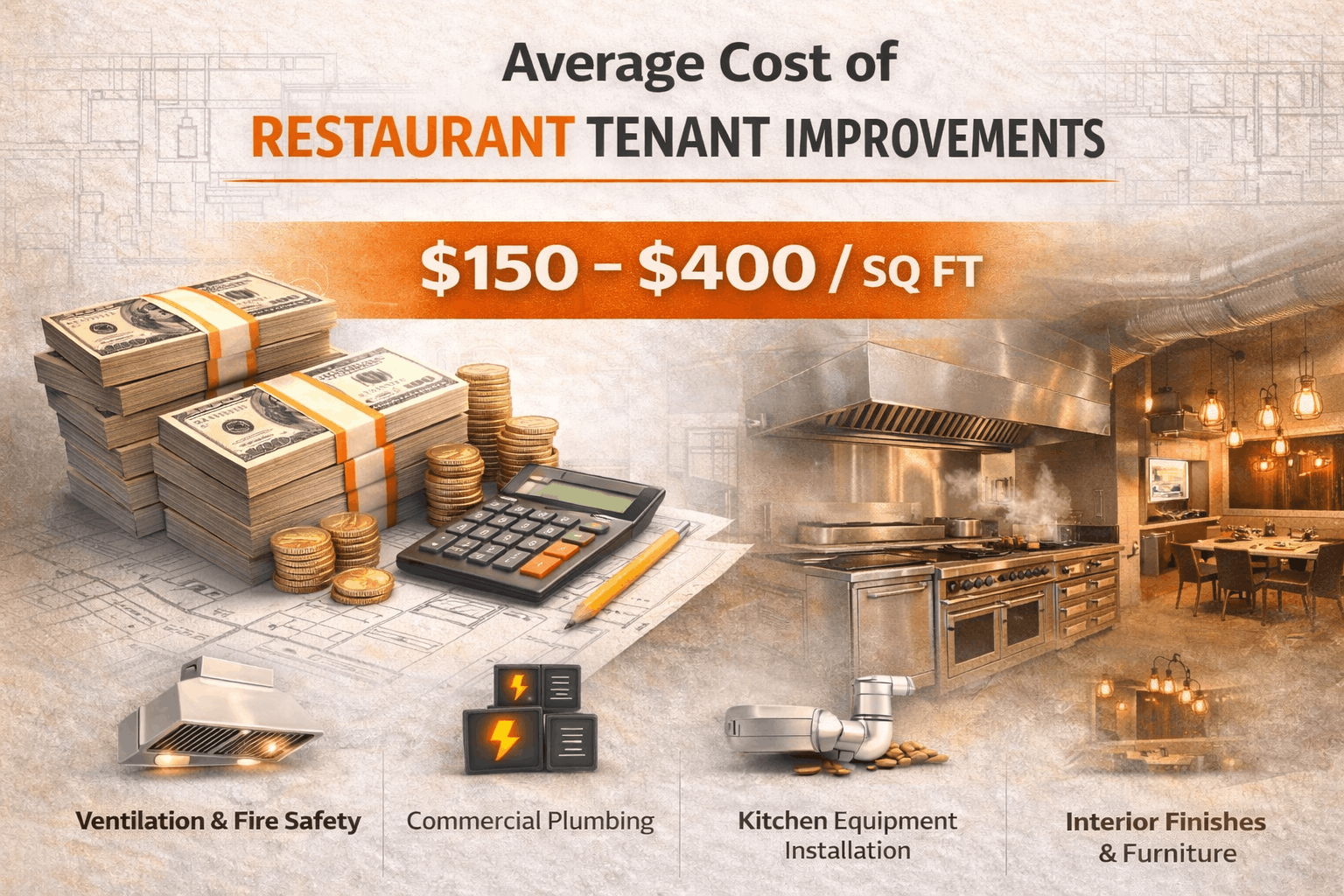
Because of these requirements, restaurant build-outs can be expensive. In many markets, the average cost of restaurant tenant improvements ranges from $150 to $400 per square foot. Larger or more complex restaurants may cost even more.
For restaurant owners and developers, understanding these costs early is very important. It helps with lease negotiations, financing decisions, and construction planning.
In this guide, we explain:
What restaurant tenant improvements include
Average restaurant build-out costs
The systems that drive construction expenses
If you are planning a restaurant project, this information can help you create a realistic budget before signing a lease.
What Are Restaurant Tenant Improvements?
Tenant improvements are the interior changes made to a commercial property so a tenant can operate their business.
In restaurant projects, these improvements often involve major construction work. A restaurant cannot operate in a basic retail shell. It needs specialized infrastructure for cooking, food storage, and customer service.
For this reason, restaurant tenant improvements are often called restaurant build-outs.
These improvements usually stay with the building even after the lease ends. While the tenant often pays for the construction, the property owner keeps the improvements as part of the building.
Definition of Tenant Improvements in Commercial Real Estate
In commercial real estate, tenant improvements (TI) refer to permanent upgrades made to a leased space.
These improvements prepare the property for the tenant’s operations. The work typically happens after a lease agreement is signed.
Common tenant improvements include:
Interior wall construction
Flooring installation
Lighting systems
Electrical upgrades
Plumbing systems
HVAC installation
For most retail businesses, these improvements are fairly simple. However, restaurants require far more construction work.
Restaurants must follow health codes, fire safety rules, and mechanical system requirements. These rules increase both the complexity and cost of tenant improvements.

Why Restaurants Require Extensive Tenant Improvements
Restaurants need several specialized systems to operate safely. These systems support cooking equipment, food preparation, and customer dining areas.
- First, restaurants require commercial kitchen infrastructure. This includes cooking lines, prep stations, refrigeration units, and dishwashing areas.
- Second, restaurants must install ventilation systems. Cooking produces heat, smoke, and grease. Commercial hood systems remove these elements and keep the kitchen safe.
- Third, restaurants need grease management systems. Grease traps prevent fats and oils from entering the sewer system.
- Fourth, fire safety systems are required. Many jurisdictions require fire suppression systems above cooking equipment.
These systems add significant cost to restaurant construction projects.
Common restaurant infrastructure includes:
Kitchen exhaust hood systems
Fire suppression systems
Heavy electrical panels
Commercial plumbing lines
Gas line installations
Because these systems work together, restaurant tenant improvements are more complex than most retail build-outs.
Difference Between Restaurant Tenant Improvements and Retail Build-Outs
Restaurant spaces differ greatly from typical retail spaces. Retail tenants often need basic interior work, while restaurants require specialized systems.
The table below shows the main differences.
| Feature | Restaurant Tenant Improvements | Standard Retail Build-Out |
|---|---|---|
| Plumbing | Extensive plumbing for kitchens and sinks | Minimal plumbing |
| Electrical | High capacity for cooking equipment | Standard lighting and outlets |
| Ventilation | Commercial kitchen exhaust systems required | Usually minimal ventilation |
| Fire protection | Kitchen fire suppression systems | Standard fire protection |
| Equipment installation | Large commercial appliances | Limited equipment |
These additional systems make restaurant construction more expensive. For example, installing a commercial kitchen hood system can cost tens of thousands of dollars. Electrical upgrades for cooking equipment can add even more.
Because of these costs, many restaurant operators prefer spaces that previously housed restaurants. These second-generation restaurant spaces often already include some kitchen infrastructure.
Examples of Common Restaurant Tenant Improvements
Most restaurant build-outs include several types of improvements. These changes prepare the space for both kitchen operations and customer service.
Below are some of the most common tenant improvements in restaurant projects.
Kitchen construction
Cooking line installation
Prep stations and food storage areas
Walk-in refrigerators or freezers
Dishwashing stations
Dining area improvements
Seating layout construction
Interior partitions
Lighting installation
Decorative finishes
Mechanical and infrastructure systems
HVAC installation
Plumbing upgrades
Electrical system expansion
Gas line installation
Safety systems
Fire suppression systems
Emergency lighting
Code compliance upgrades
Each improvement supports daily restaurant operations. However, these upgrades also make restaurant build-outs one of the most expensive tenant improvement projects in commercial real estate.
Average Cost of Restaurant Tenant Improvements
Restaurant tenant improvement costs vary widely. Several factors affect the final price, including the restaurant concept, size of the space, and the building’s existing condition. However, industry estimates provide a general range that restaurant owners can use when planning budgets.
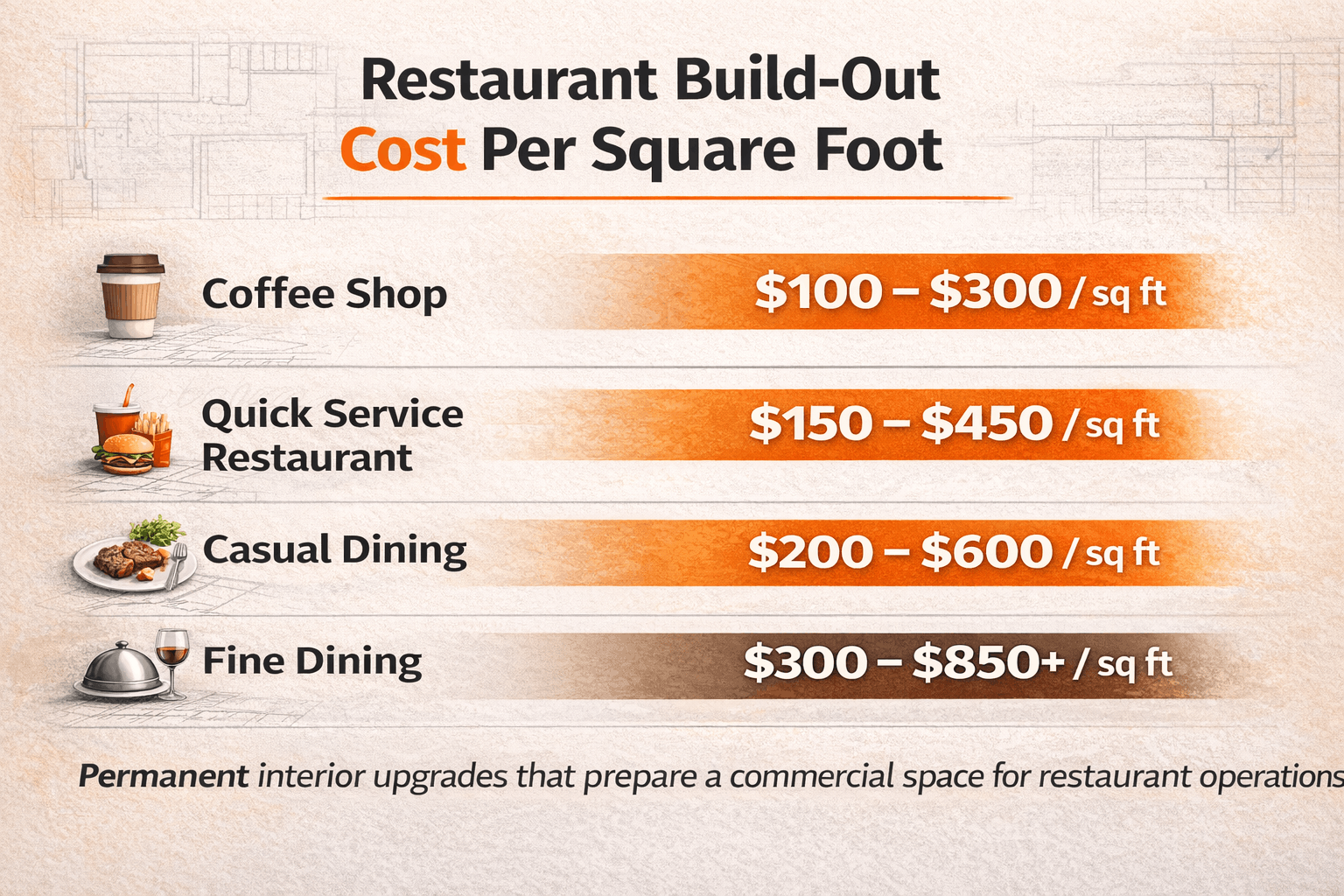
In many cases, restaurant build-outs cost between $150 and $400 per square foot. High-end restaurants or complex kitchen layouts may exceed that range.
Understanding these averages helps tenants estimate their construction budget before signing a lease.
Restaurant Tenant Improvement Cost Per Square Foot
Cost per square foot is the most common way to estimate restaurant construction costs. The final number depends on the type of restaurant and the level of interior finishes.
The table below shows typical cost ranges by restaurant type.
| Restaurant Type | Average Cost per Sq Ft |
|---|---|
| Coffee shop or café | $100 – $300 |
| Quick service restaurant (QSR) | $150 – $450 |
| Casual dining restaurant | $200 – $600 |
| Fine dining restaurant | $300 – $850+ |
Several factors affect these costs.
- First, kitchen size plays a major role. Restaurants with larger kitchens require more equipment, ventilation, and plumbing.
- Second, design complexity can increase costs. Custom interiors, specialty lighting, and premium materials can raise construction budgets quickly.
- Third, construction costs vary by location. Labor rates, permit fees, and material prices differ between cities.
Because of these factors, restaurant owners should treat these numbers as general estimates rather than fixed prices.
Total Restaurant Build-Out Costs by Restaurant Size
Another way to estimate restaurant tenant improvement costs is by looking at restaurant size.
Larger restaurants require more materials, equipment, and labor. However, they may also benefit from slightly lower costs per square foot.
The table below shows typical construction budgets based on restaurant size.
| Restaurant Size | Estimated Build-Out Cost |
|---|---|
| 1,000 sq ft | $150,000 – $400,000 |
| 2,000 sq ft | $300,000 – $800,000 |
| 3,000 sq ft | $450,000 – $1.2M |
| 5,000 sq ft | $750,000 – $2M+ |
For example, a 3,000-square-foot casual dining restaurant may spend around $600,000 on tenant improvements alone.
However, that number usually does not include:
Furniture and décor
Kitchen equipment purchases
Permits and licensing
Startup inventory
When these additional costs are included, the total investment for a restaurant project can easily exceed $1 million. Because restaurant construction requires significant capital, careful planning is critical.
Major Cost Components of Restaurant Tenant Improvements
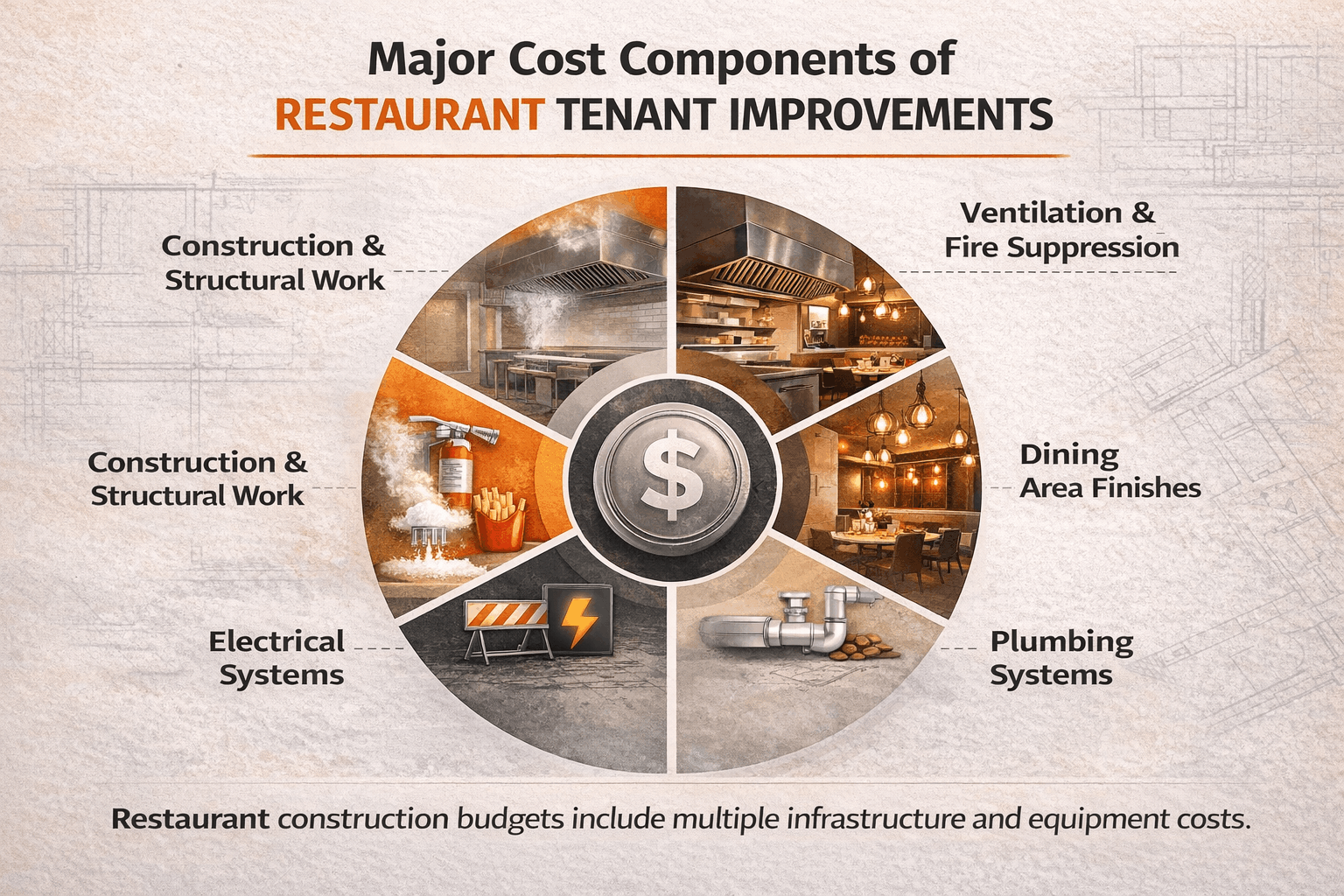
Restaurant build-outs include many moving parts. Each part adds to the total project cost. Some costs relate to construction, while others involve mechanical systems and equipment installation.
For most restaurant projects, the largest expenses fall into five main areas:
Construction and structural work
Mechanical, electrical, and plumbing systems
Kitchen equipment installation
Ventilation and fire protection systems
Interior design and dining area finishes
Understanding these components helps restaurant owners create better budgets. It also helps them identify where costs may increase during construction.
Below are the main cost categories in restaurant tenant improvement projects.
Construction and Structural Work
Construction work forms the basic structure of the restaurant space. This work prepares the interior layout and supports both kitchen and dining areas.
Most restaurant spaces begin as empty commercial shells. Contractors must build interior walls, ceilings, and flooring before equipment installation begins.
Common construction tasks include:
Interior wall framing
Drywall installation
Flooring systems
Ceiling construction
Door and window installation
Storage and service areas
Restaurants often require custom layouts. The kitchen, dining room, bar, and service stations must work together efficiently. For example, kitchen layouts must support food preparation flow. Staff should move easily between cooking stations, prep areas, and serving counters.
Dining areas also require thoughtful design. Seating arrangements must follow fire codes and accessibility rules.
The cost of structural construction depends on several factors, including:
Building condition
Restaurant size
Interior design complexity
Material choices
Basic construction may cost $50 to $150 per square foot depending on the project scope.
Mechanical, Electrical, and Plumbing (MEP) Systems
Mechanical, electrical, and plumbing systems—often called MEP systems—represent one of the largest expenses in restaurant tenant improvements.
Restaurants rely heavily on these systems to support kitchen equipment and maintain safe operations.
Electrical systems
Commercial kitchens use many high-powered appliances. These include ovens, fryers, refrigerators, and dishwashing machines.
Electrical upgrades may include:
New electrical panels
Additional circuits
High-voltage connections
Lighting systems
Many restaurant spaces require electrical capacity upgrades before equipment can be installed.
Plumbing systems
Restaurants also require extensive plumbing work. Kitchen sinks, dishwashing stations, and beverage systems all need water supply and drainage.
Common plumbing installations include:
Hand washing sinks
Dishwashing systems
Floor drains
Grease trap connections
Grease traps are especially important in restaurants. These systems prevent fats and oils from entering municipal sewer lines.
HVAC systems
Heating and cooling systems must handle the extra heat generated by cooking equipment. Restaurants often require upgraded HVAC systems to maintain comfortable indoor temperatures.
Because of these requirements, MEP systems can represent 30% to 40% of total construction costs in many restaurant projects.
Kitchen Equipment Installation
Kitchen equipment is another major cost category in restaurant tenant improvements.
A commercial kitchen includes specialized appliances designed for high-volume cooking. These appliances require proper installation, ventilation, and utility connections.
Common kitchen equipment includes:
Commercial ranges and ovens
Deep fryers
Flat-top grills
Refrigeration units
Freezers
Food preparation stations
Many restaurants also install walk-in refrigerators or freezers. These units require insulated panels and refrigeration systems.
Equipment installation involves more than simply placing appliances in the kitchen. Contractors must connect each piece of equipment to electrical, gas, and plumbing systems.
For example:
Gas ovens require gas line connections.
Dishwashers require plumbing and drainage.
Refrigeration systems require electrical power and ventilation.
Kitchen equipment costs vary widely depending on the restaurant concept.
Below is a general estimate of kitchen equipment costs.
| Restaurant Type | Estimated Kitchen Equipment Cost |
|---|---|
| Coffee shop | $30,000 – $100,000 |
| Quick service restaurant | $75,000 – $250,000 |
| Casual dining restaurant | $150,000 – $400,000 |
| Fine dining restaurant | $250,000 – $750,000+ |
High-end restaurants may spend even more on custom kitchen equipment.
Ventilation and Fire Suppression Systems
Ventilation systems are critical in restaurant kitchens. Cooking equipment produces heat, smoke, grease, and odors that must be removed safely.
Most commercial kitchens require Type I exhaust hood systems. These systems capture smoke and grease produced during cooking.
Ventilation systems typically include:
Stainless steel hood units
Exhaust ducts
Roof exhaust fans
Air makeup systems
Installing these systems can be expensive. Ventilation ducts often extend through multiple floors before reaching the roof.
Restaurants must also install fire suppression systems above cooking equipment. These systems release chemicals that extinguish fires in kitchen appliances.
Fire suppression systems are required by most building codes and fire safety regulations. Because ventilation and fire protection systems are highly regulated, installation must follow strict safety standards.
Costs for ventilation and fire suppression systems can range from $20,000 to $100,000 or more, depending on kitchen size and equipment.
Interior Design and Dining Area Build-Out
The dining area is where customers spend most of their time. For this reason, restaurant owners often invest heavily in interior design and finishes.
Interior improvements create the restaurant’s brand identity and customer experience.
Common dining area improvements include:
Flooring installation
Decorative lighting
Bar construction
Seating areas
Wall finishes and décor
Furniture also plays an important role. Restaurants must purchase tables, chairs, booths, and service counters.
Below is a simple overview of typical dining area expenses.
| Dining Area Element | Estimated Cost Range |
|---|---|
| Flooring installation | $10,000 – $40,000 |
| Lighting systems | $5,000 – $25,000 |
| Furniture and seating | $20,000 – $100,000 |
| Decorative finishes | $10,000 – $50,000 |
Interior design choices can increase or reduce costs significantly.
For example, a simple fast-casual restaurant may choose basic furniture and finishes. A fine dining restaurant may invest in custom lighting, premium materials, and detailed interior design.
While these features increase construction costs, they can also improve customer experience and brand recognition.
Restaurant Tenant Improvement Cost Breakdown Example
Many restaurant owners understand that build-outs are expensive. However, it can be hard to see where the money actually goes during construction.
A restaurant project includes many categories of expenses. These costs range from structural construction to equipment installation and permit fees.
Looking at a sample budget helps explain how tenant improvement costs are distributed. The examples below show typical construction budgets for different restaurant types.
These numbers are general estimates. Actual costs will vary based on location, design complexity, and equipment needs.
Example: 3,000 Square Foot Casual Dining Restaurant
A mid-sized casual dining restaurant often requires a large kitchen, a comfortable dining area, and several support spaces. These include food preparation areas, storage rooms, and restrooms.
Below is a simplified example of how tenant improvement costs might be distributed for a 3,000-square-foot restaurant.
| Construction Category | Estimated Cost |
|---|---|
| Interior construction and framing | $180,000 |
| Plumbing systems | $70,000 |
| Electrical systems | $80,000 |
| HVAC installation | $60,000 |
| Kitchen ventilation and fire suppression | $75,000 |
| Kitchen equipment installation | $150,000 |
| Dining area finishes and lighting | $65,000 |
| Permits and inspections | $25,000 |
Estimated total: $705,000
This estimate focuses on tenant improvements and equipment installation. It does not include other startup costs such as marketing, staff hiring, or operating capital.
For many restaurant owners, the kitchen represents one of the largest investments. Commercial cooking equipment and ventilation systems can add significant costs to the project.
The dining area also requires careful planning. Lighting, flooring, and seating must support the restaurant’s brand and customer experience.
Because of these factors, mid-sized restaurants can easily exceed $700,000 in build-out costs.
Example: Quick-Service Restaurant (QSR)
Quick-service restaurants usually require smaller kitchens and simpler dining areas. As a result, their build-out costs are often lower than full-service restaurants. However, they still require commercial kitchen equipment and ventilation systems.
Below is an example of a basic build-out budget for a 1,500-square-foot quick-service restaurant.
| Construction Category | Estimated Cost |
|---|---|
| Interior construction | $90,000 |
| Plumbing systems | $40,000 |
| Electrical systems | $45,000 |
| HVAC upgrades | $35,000 |
| Ventilation and hood system | $40,000 |
| Kitchen equipment | $85,000 |
| Interior finishes and furniture | $30,000 |
| Permits and inspections | $15,000 |
Estimated total: $380,000
While this budget is smaller than a full-service restaurant, it still represents a significant investment. Many fast-casual restaurants spend more depending on kitchen equipment and interior design choices.
Example: Coffee Shop Build-Out
Coffee shops usually have smaller kitchens and fewer cooking appliances. This reduces ventilation and equipment costs.
However, coffee shops often invest heavily in interior design. Comfortable seating areas and attractive finishes help create a welcoming environment.
Below is an example budget for a 1,200-square-foot coffee shop.
| Construction Category | Estimated Cost |
|---|---|
| Interior construction | $60,000 |
| Electrical upgrades | $30,000 |
| Plumbing systems | $20,000 |
| HVAC adjustments | $20,000 |
| Coffee equipment and counters | $65,000 |
| Furniture and interior finishes | $35,000 |
| Permits and inspections | $10,000 |
Estimated total: $240,000
While coffee shops may require fewer kitchen systems, equipment such as espresso machines and grinders can still be expensive.
Interior design is also important for coffee shops because customers often stay longer in these spaces.
Hidden Costs in Restaurant Tenant Improvements
Many restaurant owners plan for construction costs but overlook several additional expenses. These hidden costs can increase the overall project budget. Understanding these costs early can prevent financial surprises during construction.
Below are some of the most common hidden costs in restaurant tenant improvement projects.
Architectural and Engineering Fees
Before construction begins, restaurants usually need professional design services. Architects and engineers prepare the construction drawings required for permits and contractor bids.
These plans often include:
Floor layouts
Kitchen equipment placement
Plumbing and electrical systems
Ventilation systems
Engineering consultants may also be required to review structural changes, electrical loads, and HVAC capacity. Design services usually cost 5% to 10% of the construction budget.
For example, a $600,000 build-out may require $30,000 to $60,000 in design fees.
Permits and Inspections
Restaurant construction requires multiple permits and inspections. Local governments review plans to ensure the project meets building codes and health regulations.
Common approvals include:
Building permits
Health department permits
Fire department approvals
Plumbing inspections
Electrical inspections
Permit costs vary by city and project size. Some cities charge permit fees based on the total construction value. Inspection delays can also extend the construction timeline. This may increase labor costs and project management expenses.
Utility Connections and Impact Fees
Some restaurant projects require new utility connections or upgrades. For example, a restaurant may need larger electrical service or gas line capacity to support cooking equipment.
Common utility-related costs include:
Electrical service upgrades
Gas line installation
Water connection upgrades
Sewer capacity improvements
Some municipalities also charge impact fees for new commercial businesses. These fees support public infrastructure such as water and sewer systems.
Furniture, Fixtures, and Equipment (FF&E)
Furniture, fixtures, and equipment are often grouped into a category called FF&E. This includes all movable items used in the restaurant.
Common FF&E purchases include:
Tables and chairs
Booth seating
Service counters
Decorative lighting fixtures
Bar equipment
While FF&E may not be part of the construction contract, it still represents a major startup cost. Restaurant owners should include these purchases in their overall budget planning.
Contingency Budget
Unexpected issues often appear during construction.
For example:
Hidden structural problems
Outdated plumbing systems
Electrical capacity limitations
These issues may require additional work that was not included in the original construction plan.
For this reason, most construction professionals recommend setting aside a contingency budget of 10% to 20% of total project costs.
This reserve helps cover unexpected expenses without delaying the project.
How to Reduce Restaurant Tenant Improvement Costs
Restaurant construction can require a large investment. However, careful planning can help control costs without sacrificing quality.
Many restaurant owners reduce expenses by making smart decisions early in the project. Location choice, design simplicity, and equipment planning can all affect the final budget.
Below are practical strategies that help lower restaurant tenant improvement costs.
Choose Second-Generation Restaurant Spaces
One of the easiest ways to reduce construction costs is to lease a second-generation restaurant space.
These are commercial spaces that previously operated as restaurants. Because of this, they may already include important infrastructure.
Existing systems may include:
Kitchen ventilation systems
Grease traps
Gas lines
Electrical panels
Plumbing connections
Reusing these systems can save significant money.
For example, installing a new commercial hood system can cost tens of thousands of dollars. If the space already includes one, the restaurant owner may only need upgrades or adjustments.
However, it is still important to inspect existing equipment. Some systems may require repairs or code updates before they can be reused.
Negotiate Better Tenant Improvement Allowances
Lease negotiations can also affect construction costs.
Many landlords offer tenant improvement allowances to help tenants build out their space. These allowances contribute to construction expenses. Restaurant owners should discuss these allowances during lease negotiations.
Common negotiation strategies include:
Requesting higher TI allowances
Asking for free rent during construction
Negotiating landlord-funded improvements
Longer lease terms sometimes increase the allowance amount. For example, a landlord may offer a larger allowance for a 10-year lease compared to a 5-year lease.
Because restaurant construction costs are high, these negotiations can significantly affect the overall project budget.
Simplify Interior Design
Interior design can greatly affect restaurant construction costs. Custom features, decorative materials, and complex lighting systems increase both material and labor expenses. Restaurants can reduce costs by using simpler design choices.
Examples include:
Standard flooring materials
Simple lighting fixtures
Modular furniture
Minimal structural changes
A clean and simple design can still create an attractive dining space. Many successful restaurants focus on comfort and functionality rather than expensive finishes.
By simplifying the design, restaurant owners can keep the construction budget under control.
Lease or Finance Equipment
Kitchen equipment is one of the largest startup expenses in a restaurant project. Instead of purchasing all equipment upfront, some restaurant owners choose to lease or finance equipment. Equipment leasing spreads the cost over time. This reduces the amount of capital required during the construction phase.
Equipment that is often leased includes:
Refrigeration units
Dishwashing machines
Cooking appliances
Beverage systems
While leasing may increase long-term costs, it can improve cash flow during the early stages of the business. Restaurant owners should evaluate both purchasing and leasing options when planning their budgets.
Work With Experienced Commercial Consultants
Restaurant construction involves many moving parts. Design professionals, contractors, and local agencies must work together during the project. Working with experienced commercial consultants can help streamline the process.
Consultants often assist with:
Permit planning
Construction coordination
Budget planning
Code compliance reviews
These professionals help identify potential issues before construction begins. For example, early code reviews can prevent costly redesigns later in the project. While consulting services add a small cost upfront, they can reduce delays and budget overruns during construction.
Restaurant Tenant Improvement Timeline
Restaurant build-outs take time. Construction schedules vary depending on project size, permit approvals, and contractor availability.
Most restaurant projects follow several phases before opening. Understanding this timeline helps restaurant owners plan construction schedules and lease agreements.
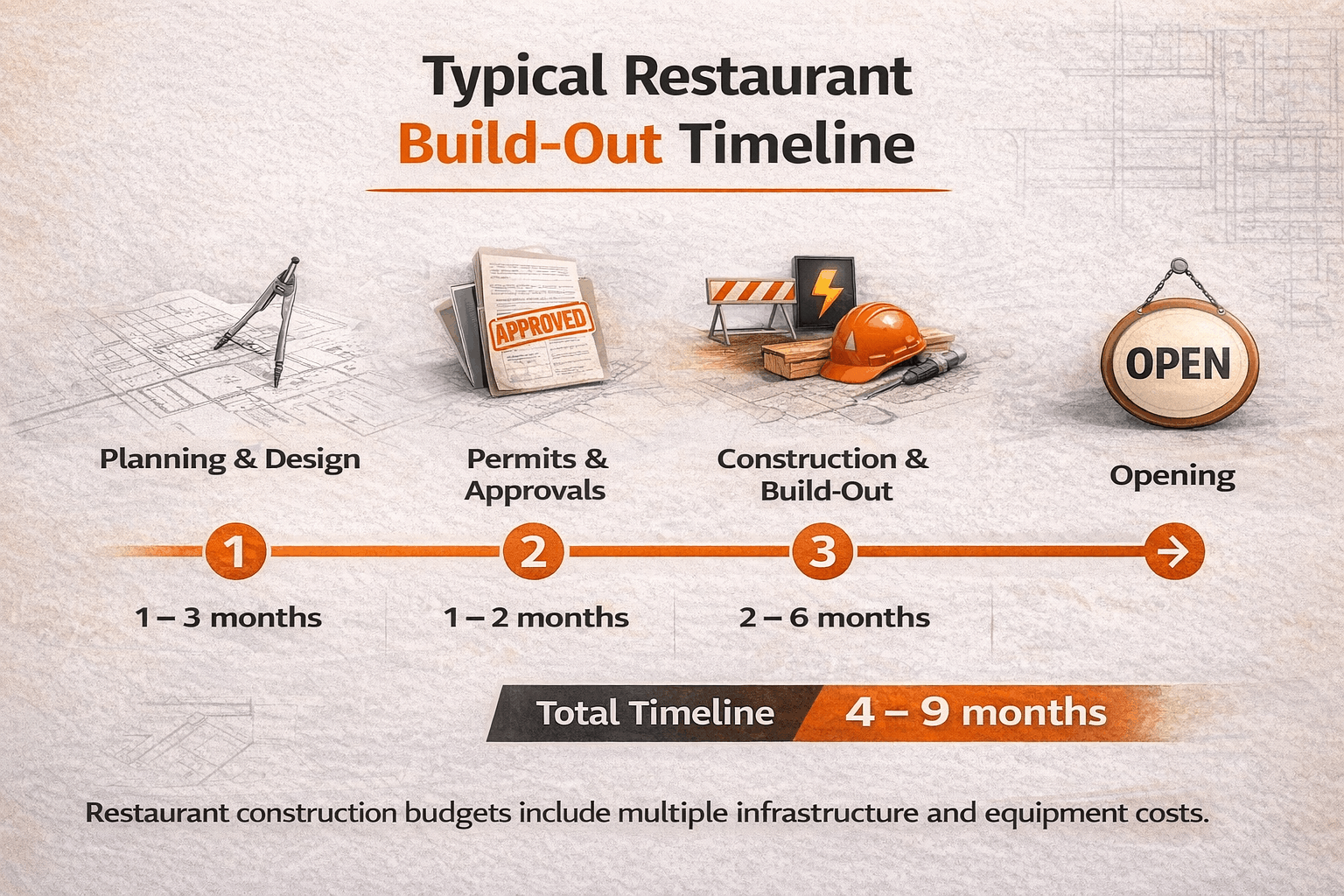
Planning and Design Phase
The first phase of a restaurant build-out involves planning and design.
During this stage, architects and designers develop the layout of the restaurant. They prepare drawings that show the kitchen, dining areas, restrooms, and service spaces.
Design plans also include mechanical systems such as:
Electrical layouts
Plumbing systems
Ventilation systems
This phase usually takes one to three months, depending on project complexity. Restaurant owners often make several design revisions before finalizing the plans.
Permitting and Approval Process
After the design plans are complete, they must be submitted for approval. Local agencies review the plans to ensure they meet building codes and health regulations.
Approvals may involve several departments, including:
Building department
Health department
Fire department
Permit review timelines vary widely between cities. Some approvals take four to eight weeks, while others may take longer if revisions are required.
During this stage, restaurant owners should stay in close contact with contractors and consultants to respond quickly to plan review comments.
Construction and Build-Out Phase
Once permits are approved, construction can begin.
Contractors start by preparing the interior structure of the space. This includes framing, plumbing installation, electrical work, and HVAC upgrades.
After the major infrastructure systems are installed, contractors move on to interior finishes.
This stage may include:
Flooring installation
Lighting installation
Kitchen equipment setup
Dining area construction
Construction timelines vary depending on project size. The table below shows typical construction durations.
| Restaurant Size | Typical Construction Time |
|---|---|
| Small café | 6 – 10 weeks |
| Quick service restaurant | 8 – 12 weeks |
| Casual dining restaurant | 12 – 20 weeks |
| Large full-service restaurant | 20 – 30 weeks |
Unexpected delays may occur during construction. Permit inspections, supply delays, or building issues can extend timelines. For this reason, restaurant owners should include extra time in their opening schedule.
Why Proper Planning Is Critical for Restaurant Tenant Improvements
Restaurant build-outs involve large investments and complex construction work. Without proper planning, projects can quickly face delays or cost increases.
Careful planning helps restaurant owners avoid common problems during construction. Below are several risks that proper planning can help prevent.
Budget Overruns
Construction budgets often increase when unexpected issues appear. For example, contractors may discover outdated electrical systems or structural problems during demolition.
These issues require additional work that was not included in the original estimate. Creating a detailed budget and contingency reserve helps reduce financial stress during the project.
Construction Delays
Delays are common in commercial construction. Permit approvals, inspection scheduling, and material availability can affect project timelines.
If construction takes longer than expected, restaurant owners may face additional costs such as rent payments or contractor fees. Planning ahead and working with experienced professionals can help keep projects on schedule.
Code Compliance Issues
Restaurants must follow strict health and safety regulations. If construction plans do not meet these requirements, authorities may require design changes or additional inspections. This can delay the opening date and increase construction costs. Early coordination with architects, engineers, and consultants helps ensure the project meets all local codes.
Permit and Inspection Failures
Permit approvals and inspections occur throughout the construction process. If a project fails an inspection, contractors must correct the issue before moving forward. This may require additional labor, materials, and time.
Proper planning and professional oversight help ensure that construction meets inspection standards the first time.