Sustainability is no longer a niche idea. It is now a core part of how commercial buildings are designed, built, and operated. Property owners, developers, and tenants all expect better energy performance, lower costs, and healthier indoor spaces.
That is where LEED certification comes in.
LEED, short for Leadership in Energy and Environmental Design, is one of the most recognized green building standards in the world. It gives a clear framework for designing efficient, responsible buildings. More importantly, it adds real business value.
Today, cities are tightening building codes. Investors are asking for ESG compliance. Tenants are choosing spaces that reduce energy costs and improve comfort. Because of this, LEED is no longer optional for many projects. It is becoming a smart business decision.
At the same time, many projects struggle with permitting. Delays, missing approvals, or poor coordination can slow everything down. This is where many LEED projects lose time and money.
So, it is not just about certification. It is about aligning LEED goals with the permitting process from day one.
Here is why LEED matters right now:
-
Energy costs continue to rise
-
Local regulations are getting stricter
-
Tenants prefer sustainable buildings
-
Investors want long-term efficiency
-
Buildings need to stay competitive
In simple terms, LEED helps you build better. Permitting helps you build legally. When both are aligned, projects move faster and perform better.
What is LEED Certification?
If you are new to LEED, the concept is simple. It is a rating system that measures how sustainable a building is. The system looks at design, construction, and operations. It then assigns points based on performance. The more points you earn, the higher your certification level.
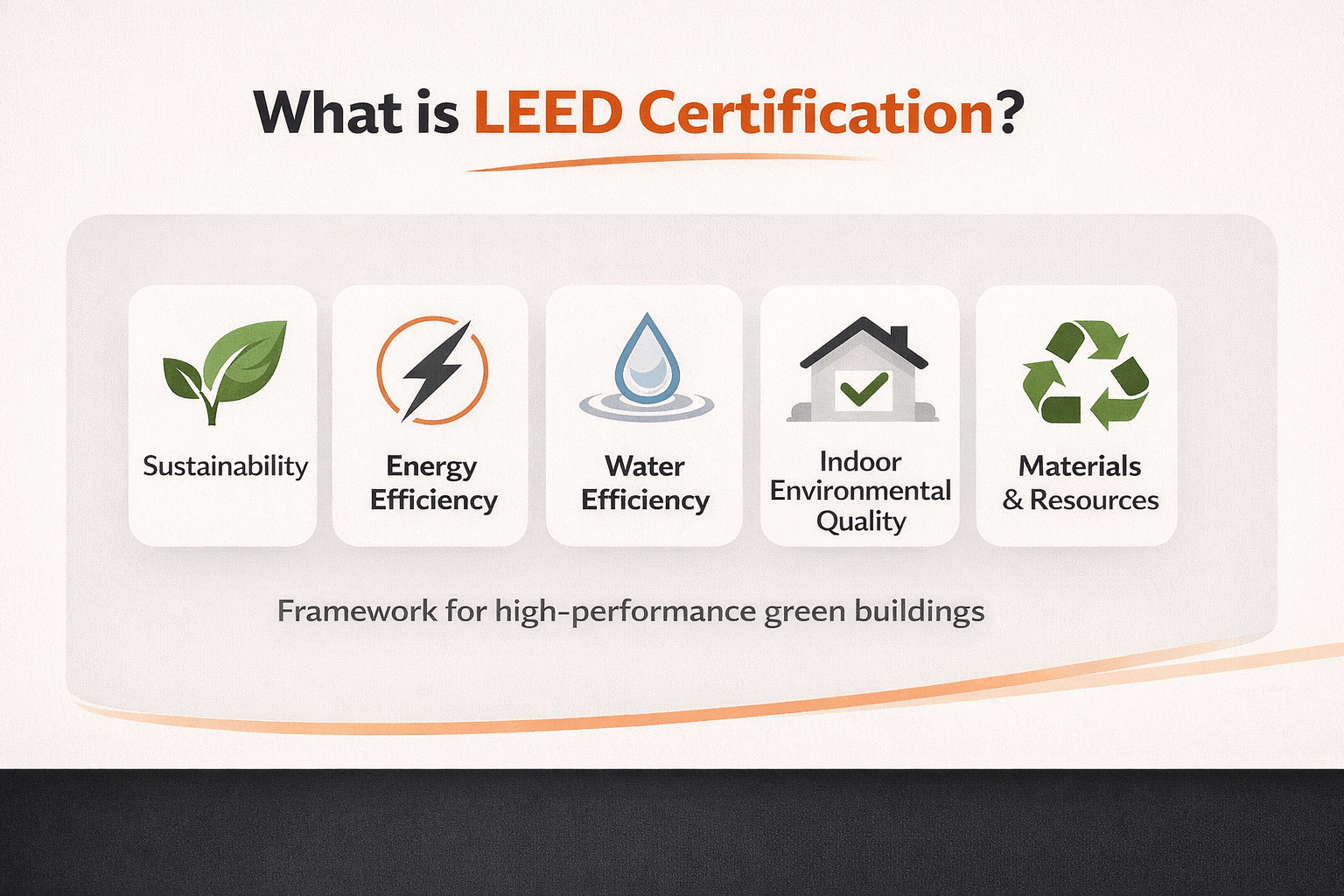
Definition of LEED Certification
LEED is developed by the U.S. Green Building Council (USGBC). It is used worldwide across many types of buildings.
It focuses on key areas such as:
-
Energy use
-
Water efficiency
-
Indoor air quality
-
Materials and resources
-
Site sustainability
Instead of guessing what “green” means, LEED gives clear standards. This makes it easier for teams to follow a structured approach.
Why LEED Certification Exists
Buildings have a major impact on the environment. They use large amounts of energy and water. They also affect human health. LEED was created to address these issues.
Its main goals are:
-
Reduce energy consumption
-
Lower greenhouse gas emissions
-
Improve indoor environments
-
Encourage responsible material use
At the same time, LEED helps owners reduce long-term costs. So, it is not just about the environment. It is also about performance and savings.
Key Benefits of LEED Certification
LEED offers both environmental and financial benefits. That is why it continues to grow in popularity.
Here is a clear breakdown:
| Benefit | What It Means for Your Project |
|---|---|
| Lower Energy Costs | Reduced utility bills over time |
| Higher Property Value | More attractive to buyers and investors |
| Better Tenant Retention | Comfortable and efficient spaces |
| Regulatory Alignment | Easier compliance with green codes |
| Strong Brand Image | Shows commitment to sustainability |
In addition, LEED-certified buildings often lease faster. Tenants are willing to pay more for efficient spaces. This creates a strong return on investment.
Understanding LEED Certification Levels and Rating Systems
Not all LEED projects are the same. The system is flexible. It adapts to different building types and goals.
To understand LEED fully, you need to know two things:
-
Certification levels
-
Rating systems
LEED Certification Levels Explained
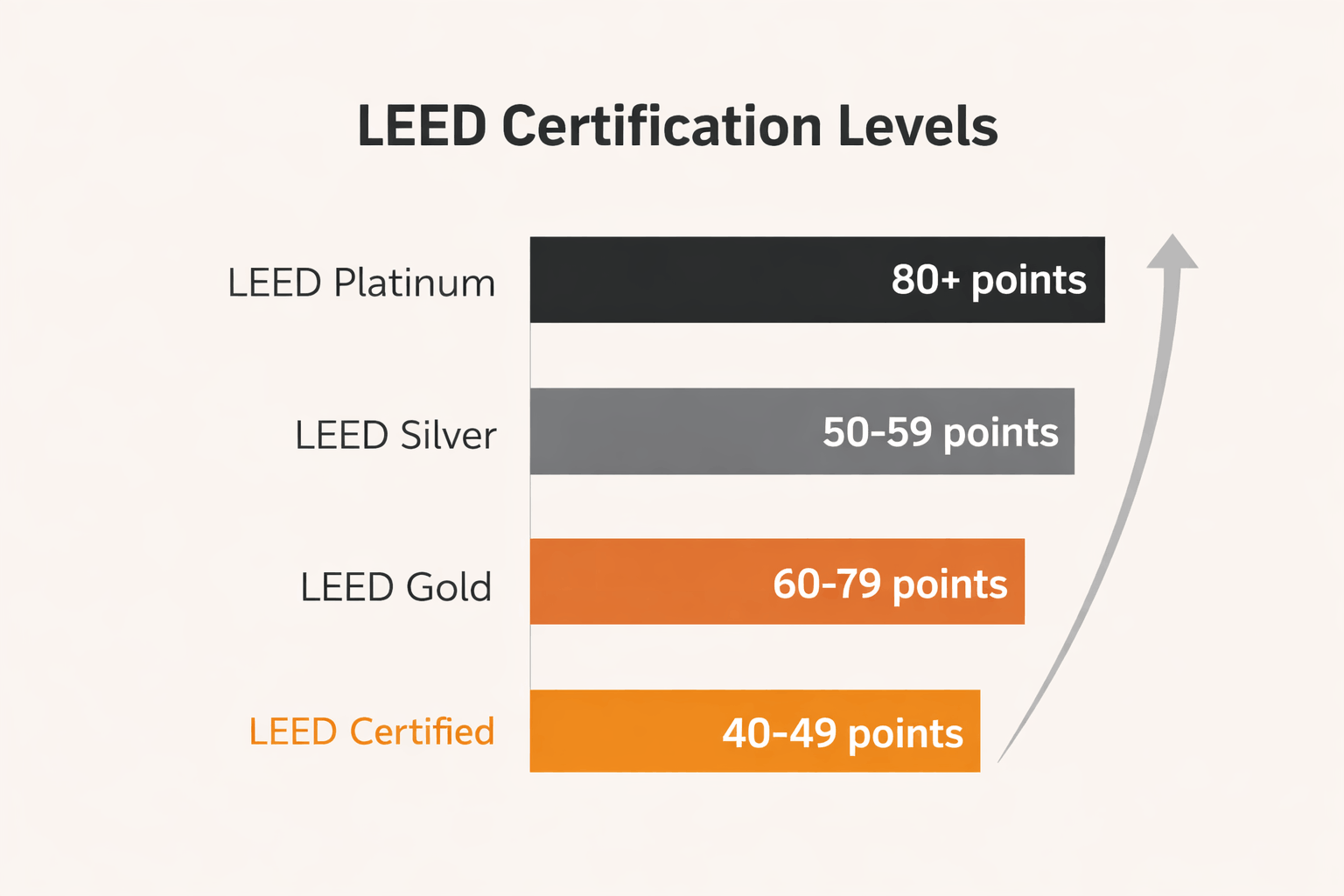
LEED uses a point-based system. Projects earn points across different categories. The total points determine the certification level.
Here is a simple breakdown:
| Level | Points Required | Meaning |
|---|---|---|
| Certified | 40–49 | Basic sustainability performance |
| Silver | 50–59 | Improved efficiency and design |
| Gold | 60–79 | High-performing building |
| Platinum | 80+ | Best-in-class sustainability |
Most commercial projects aim for Silver or Gold. Platinum is possible, but it requires strong planning and higher investment.
Different LEED Rating Systems
LEED is not a one-size-fits-all system. It has different tracks based on the type of project.
Here are the main ones:
-
BD+C (Building Design and Construction)
Used for new construction projects -
ID+C (Interior Design and Construction)
Focused on interior build-outs -
O+M (Operations and Maintenance)
For existing buildings -
Homes
For residential properties -
Neighborhood Development
For larger community projects
Choosing the right system is important. It affects your strategy, documentation, and timeline.
How LEED Points Are Calculated
LEED assigns points across several categories. Each category focuses on a specific area of sustainability.
Here are the main categories:
-
Energy and Atmosphere
-
Water Efficiency
-
Materials and Resources
-
Indoor Environmental Quality
-
Location and Transportation
Some categories carry more weight than others. For example, energy performance usually has the highest impact. Projects must meet certain prerequisites first. Then, they earn additional points through optional credits.
In simple terms:
-
Prerequisites = Required
-
Credits = Optional points
The key is to choose credits that match your project goals. A good strategy helps you avoid unnecessary costs while still reaching your target certification level.
Step-by-Step LEED Certification Process (From Start to Finish)
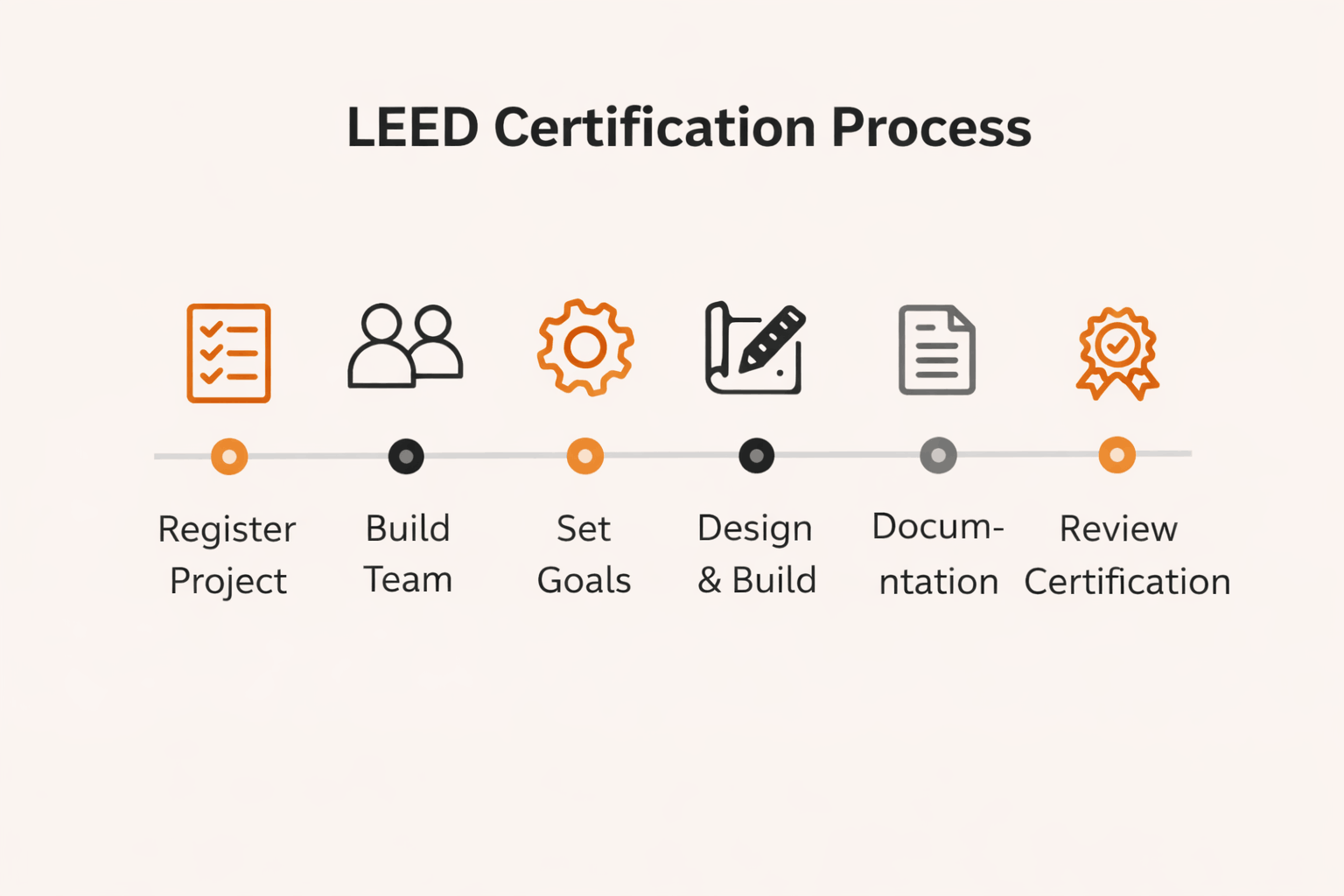
LEED certification is not a one-step task. It is a structured process that starts early in design and continues through construction and review. When teams plan properly, the process feels smooth. When they don’t, delays and extra costs show up quickly.
Here is a clear, step-by-step breakdown.
Step 1 – Register Your Project
Every LEED project starts with registration. You submit basic project details through the LEED online platform. This includes building type, size, and location.
At this stage:
-
You choose the correct LEED rating system
-
You pay the registration fee
-
You gain access to project tools
This step is simple, but it sets the foundation. Choosing the wrong rating system can cause issues later.
Step 2 – Build Your LEED Project Team
LEED is a team effort. You need the right people involved from the beginning.
A typical team includes:
-
Architects
-
Engineers
-
Contractors
-
LEED consultants
Many projects also include a LEED Accredited Professional (LEED AP). This person guides the certification strategy. A strong team helps avoid mistakes. It also improves your chances of reaching higher certification levels.
Step 3 – Define Goals and Credit Strategy
Before design begins, you need a clear plan.
This means deciding:
-
Your target certification level (Certified, Silver, Gold, Platinum)
-
Which LEED credits you will pursue
-
Your budget for sustainability features
Not all credits are equal. Some are easier and cheaper to achieve. Others require major design changes.
A good strategy focuses on:
-
High-impact credits (energy, water)
-
Low-cost opportunities
-
Credits that align with local codes
This step saves time later. Without a plan, teams often chase points too late in the project.
Step 4 – Implement Sustainable Design and Construction
This is where the real work happens. Your team integrates LEED requirements into the building design and construction process.
Examples include:
-
Energy-efficient HVAC systems
-
Water-saving fixtures
-
Sustainable building materials
-
Improved ventilation systems
At the same time, contractors must follow LEED guidelines during construction. This includes waste management and material tracking. Early coordination is key here. Changes during construction are expensive and slow.
Step 5 – Documentation and Submission
LEED is documentation-heavy. Every credit requires proof.
Teams must upload:
-
Energy models
-
Material data
-
Product certifications
-
Construction reports
This step often causes delays. Missing or incomplete documents can lead to rejection.
Here is a simple view of what is required:
| Documentation Type | Example |
|---|---|
| Energy Reports | HVAC performance models |
| Material Data | Recycled content proof |
| Water Calculations | Fixture efficiency reports |
| Indoor Air Quality | Ventilation testing results |
Keeping documentation organized from the start makes this step much easier.
Step 6 – Review and Certification
Once everything is submitted, the Green Business Certification Inc. (GBCI) reviews your project.
The review process includes:
-
Initial review
-
Feedback or clarification requests
-
Final decision
If issues are found, you can respond and resubmit. After approval, your certification level is awarded.
Step 7 – Maintenance and Recertification
LEED does not always end after certification. For existing buildings, performance must be maintained. Some projects also go through recertification.
This ensures that:
-
Energy performance stays consistent
-
Systems continue to operate efficiently
-
The building meets updated standards
How Permitting Fits Into LEED Certification
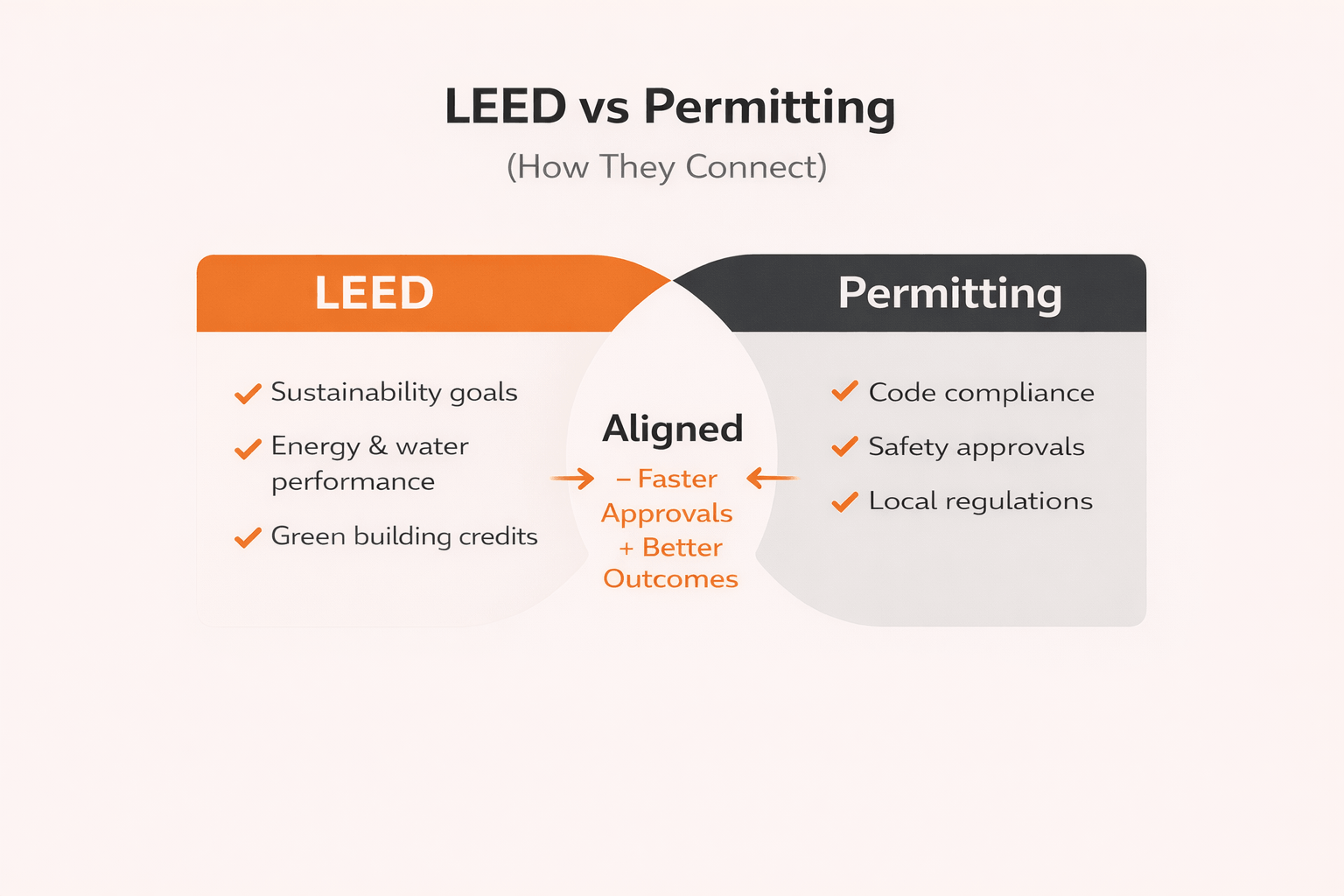
Many projects treat permitting and LEED as separate tasks. That approach often leads to delays. In reality, both processes should work together. Permitting ensures your project meets local laws. LEED ensures it meets sustainability goals. When aligned, they support each other.
What is Permitting in Construction?
Permitting is the approval process required before construction begins. Local authorities review your plans to ensure compliance with:
-
Building codes
-
Zoning laws
-
Safety standards
-
Environmental regulations
Without permits, construction cannot legally move forward.
Why Permitting is Critical for LEED Projects
LEED projects often include advanced systems. These systems may require additional approvals.
For example:
-
Energy-efficient systems may need code verification
-
Water-saving designs may require special approvals
-
Site changes may trigger environmental reviews
If permitting is delayed, the entire project timeline shifts. This can also impact your LEED certification schedule.
Here is how both processes connect:
| Area | LEED Requirement | Permitting Impact |
|---|---|---|
| Energy Systems | Efficiency targets | Code compliance review |
| Water Use | Reduced consumption | Plumbing approvals |
| Site Design | Sustainable location | Zoning approvals |
| Materials | Eco-friendly selection | Safety compliance |
When teams align both early, approvals move faster.
Types of Permits Required for LEED Projects
The exact permits depend on location and project type. However, most LEED projects require several common approvals.
These include:
-
Building permits
-
Electrical permits
-
Mechanical permits
-
Plumbing permits
-
Environmental permits
-
Zoning approvals
Each permit has its own timeline. Missing one can delay the entire project.
Aligning LEED Documentation with Permits
One of the best strategies is to align documentation. Many LEED requirements overlap with permitting requirements. For example:
-
Energy reports can support both LEED and code compliance
-
Water calculations can be used for permits and credits
-
Material data can satisfy multiple requirements
Instead of duplicating work, teams should create shared documentation.
This approach:
-
Reduces workload
-
Speeds up approvals
-
Minimizes errors
LEED Certification Costs, Timeline, and ROI
Before starting a LEED project, most owners ask the same question: Is it worth it? The answer depends on cost, timeline, and long-term value.
How Much Does LEED Certification Cost?
LEED costs vary based on project size and complexity.
Here are the main cost components:
-
Registration and certification fees
-
Consultant fees
-
Design and engineering upgrades
-
Construction adjustments
A general estimate looks like this:
| Cost Category | Typical Range |
|---|---|
| Registration Fees | $1,500 – $5,000 |
| Certification Fees | $2,000 – $25,000+ |
| Consultant Fees | $10,000 – $100,000+ |
| Design Upgrades | Varies by project |
Costs may seem high at first. However, many investments pay off over time through energy savings.
Timeline for LEED Certification
The timeline depends on project type. Most projects follow this general range:
-
Design phase: 2–4 months
-
Construction phase: 6–18 months
-
Review and approval: 2–6 months
Overall, many projects complete certification within 6 to 12 months after submission. Planning early helps reduce delays.
ROI of LEED Certification
LEED is not just a cost. It is an investment.
Here is where value comes from:
-
Lower utility bills
-
Reduced maintenance costs
-
Higher rental income
-
Increased property value
Many studies show that LEED-certified buildings outperform standard buildings over time.
In simple terms:
-
You spend more upfront
-
You save more long term
For commercial properties, this often leads to stronger returns and better tenant demand.
Common Challenges in LEED Certification (And How to Avoid Them)
LEED certification offers strong benefits. However, many projects face delays or miss their target level. Most issues are avoidable with better planning. Below are the most common challenges and how to handle them early.
Poor Documentation
Documentation is one of the biggest pain points. Every LEED credit requires clear proof. Missing files or incorrect data can lead to rejected submissions.
Common issues include:
-
Incomplete energy models
-
Missing product certifications
-
Incorrect calculations
-
Poor file organization
How to avoid it:
-
Assign one person to manage documentation
-
Keep records updated during the project
-
Use standardized templates
-
Review documents before submission
Good documentation saves time during review. It also reduces back-and-forth with reviewers.
Lack of Early Planning
Many teams think about LEED too late. This creates problems during construction.
For example:
-
Missed opportunities for easy credits
-
Expensive design changes
-
Limited system upgrades
How to avoid it:
-
Set LEED goals during the design phase
-
Identify target credits early
-
Align all teams before construction starts
Early planning always costs less than late changes.
Misunderstanding LEED Requirements
LEED has detailed rules. Misreading them can lead to lost points.
This often happens when teams:
-
Assume credits are easier than they are
-
Misinterpret prerequisites
-
Skip technical details
How to avoid it:
-
Work with experienced LEED consultants
-
Review official guidelines carefully
-
Ask for clarification when needed
Clear understanding leads to smoother execution.
Budget Constraints
Some sustainability features require upfront investment. This can create budget pressure.
Examples include:
-
High-efficiency systems
-
Advanced insulation
-
Smart building technology
How to avoid it:
-
Focus on cost-effective credits first
-
Prioritize energy-saving measures
-
Balance short-term costs with long-term savings
Not every credit needs high spending. Smart selection makes a big difference.
Permitting Delays
Permitting delays can slow down the entire LEED process.
Common causes include:
-
Missing approvals
-
Code compliance issues
-
Late submissions
How to avoid it:
-
Start permitting early
-
Align LEED and permit requirements
-
Maintain communication with local authorities
When permitting and LEED are aligned, projects move faster.
Best Practices for Successful LEED Certification
Successful LEED projects follow a clear structure. They focus on planning, coordination, and execution. Here are proven best practices.
Start Early in the Design Phase
The earlier you plan, the better your results.
At the design stage, you can:
-
Select efficient systems
-
Optimize building orientation
-
Choose better materials
Late-stage changes are costly. Early decisions are flexible and cheaper.
Hire Experienced LEED Consultants
LEED consultants guide the entire process.
They help with:
-
Credit selection
-
Documentation
-
Coordination between teams
Their experience reduces errors and improves efficiency.
Focus on High-Impact Credits
Not all credits offer the same value.
High-impact areas include:
-
Energy efficiency
-
Water savings
-
Indoor air quality
These credits often provide the best return.
Use Smart Documentation Systems
Tracking documents manually can cause confusion.
Instead, use organized systems to:
-
Store files
-
Track progress
-
Monitor credit status
This keeps everyone aligned and reduces mistakes.
Coordinate Across All Teams
LEED requires collaboration. Architects, engineers, and contractors must work together. Miscommunication leads to delays and rework.
Here is a quick comparison of poor vs. strong coordination:
| Approach | Result |
|---|---|
| Teams working separately | Delays and errors |
| Shared planning and communication | Faster approvals and better outcomes |
Clear communication improves project performance.
LEED Certification for Different Property Types
LEED is flexible. It applies to many types of buildings. Each type has its own priorities and challenges.
Commercial Buildings
Commercial properties are the most common LEED projects.
These include:
-
Office buildings
-
Retail centers
-
Mixed-use developments
Key focus areas:
-
Energy performance
-
Tenant comfort
-
Operating costs
LEED helps these buildings attract tenants and reduce expenses.
Industrial Facilities
Industrial buildings can also achieve LEED certification.
Examples include:
-
Warehouses
-
Manufacturing plants
-
Distribution centers
Challenges often include:
-
High energy use
-
Large spaces
-
Equipment efficiency
However, improvements in lighting and HVAC systems can deliver strong savings.
Residential Projects
LEED is not limited to commercial use. It also applies to housing.
This includes:
-
Single-family homes
-
Multi-family buildings
Key benefits:
-
Lower utility bills
-
Better indoor air quality
-
Improved comfort
Homebuyers are increasingly interested in energy-efficient living spaces.
Existing Buildings and Retrofits
Many older buildings pursue LEED through upgrades. This is done under the Operations and Maintenance (O+M) system.
Focus areas include:
-
Energy retrofits
-
Water efficiency upgrades
-
Improved maintenance practices
Retrofits can be cost-effective. They also extend the life of the building.
LEED vs Other Green Building Certifications
LEED is one of the most well-known certification systems. However, it is not the only one. Many developers compare LEED with other standards before making a decision. Each system has its own focus. Choosing the right one depends on your project goals.
LEED vs WELL Certification
LEED focuses on environmental performance. WELL focuses on human health and wellness.
Here is a simple comparison:
| Feature | LEED | WELL |
|---|---|---|
| Main Focus | Sustainability | Occupant health |
| Energy Efficiency | Strong focus | Limited focus |
| Indoor Air Quality | Included | Major priority |
| Water Efficiency | Yes | Yes |
| Certification Body | USGBC | IWBI |
In many cases, projects pursue both. LEED improves building performance, while WELL enhances user experience.
LEED vs BREEAM
BREEAM is another major green building system. It is widely used in Europe.
Here is how they compare:
| Feature | LEED | BREEAM |
|---|---|---|
| Origin | United States | United Kingdom |
| Global Use | Very high | Strong in Europe |
| Flexibility | High | Moderate |
| Scoring System | Points-based | Weighted scoring |
| Market Recognition | Very strong | Strong in EU |
For projects in the U.S. or North America, LEED is usually the preferred option. It aligns better with local regulations and market expectations.
When to Choose LEED
LEED is a strong choice when:
-
You are developing commercial real estate
-
You want strong market recognition
-
You need alignment with U.S. standards
-
You want to improve energy performance
It is also ideal for projects focused on long-term value and operational savings.
How JDJ Consulting Group Helps With LEED Certification and Permitting
LEED certification involves many moving parts. Permitting adds another layer of complexity. This is where experienced guidance makes a difference.
JDJ Consulting Group supports projects from start to finish.
End-to-End LEED Consulting
A clear strategy is critical.
JDJ helps with:
-
Selecting the right LEED rating system
-
Defining achievable certification goals
-
Identifying cost-effective credits
-
Managing documentation and submission
This structured approach reduces confusion and keeps projects on track.
Permitting Expertise
Permitting delays can impact timelines and budgets.
JDJ supports:
-
Permit planning and coordination
-
Code compliance reviews
-
Communication with local authorities
-
Faster approval processes
By aligning LEED and permitting early, projects move more smoothly.
Cost Optimization
Not every LEED feature needs a high budget.
JDJ focuses on:
-
High-impact, low-cost strategies
-
Energy-saving solutions with strong ROI
-
Avoiding unnecessary upgrades
This helps clients get the best value from their investment.
Project Coordination
One of the biggest challenges in LEED projects is coordination.
JDJ helps align:
-
Architects
-
Engineers
-
Contractors
This ensures everyone works toward the same goals. It also reduces delays and rework.
Future of LEED Certification (2026 and Beyond)
LEED continues to evolve. New versions focus on stronger performance and stricter standards. Understanding future trends helps you plan better.
Introduction of LEED v5
LEED v5 is expected to focus more on:
-
Carbon reduction
-
Climate resilience
-
Building performance tracking
This means projects will need to show real results, not just design intent.
Increased ESG and Regulatory Pressure
Governments and investors are placing more focus on sustainability.
This leads to:
-
Stricter building codes
-
Mandatory reporting requirements
-
Higher expectations from investors
LEED helps projects stay ahead of these changes.
Smart Buildings and Data Integration
Technology is becoming a key part of building performance.
Future LEED projects may include:
-
Smart energy monitoring systems
-
Automated building controls
-
Real-time performance tracking
These tools improve efficiency and simplify compliance.
Conclusion: Is LEED Certification Right for Your Project?
LEED certification is more than a sustainability label. It is a structured way to improve building performance, reduce costs, and increase long-term value.
However, success depends on planning. Projects that align LEED goals with permitting from the beginning move faster and perform better.
If you are developing or upgrading a property, now is a good time to consider LEED. Regulations are tightening, and market demand is growing.
With the right strategy and team, the process becomes much more manageable.
JDJ Consulting Group helps simplify both LEED certification and permitting. From early planning to final approval, the focus stays on efficiency, compliance, and results.
Contact us to schedule your free consultation here:
- Phone number (818) 793-5058
- Email: sales@jdj-consulting.com
- Contact page: https://jdj-consulting.com/contact-us/
FAQs About LEED Certification and Permitting
What is LEED certification and why is it important?
LEED certification is a globally recognized system that evaluates how sustainable a building is. It focuses on energy use, water efficiency, materials, and indoor air quality.
It is important because it helps reduce operating costs and improves building performance. In addition, certified buildings attract better tenants and meet growing environmental regulations. For many commercial projects, LEED is now a competitive advantage rather than an option.
How does the LEED certification process work?
The LEED process follows a structured path from registration to final approval. It requires planning, design alignment, and detailed documentation.
Key steps include:
-
Project registration and system selection
-
Credit strategy and goal setting
-
Design and construction integration
-
Documentation and submission
-
Review and certification
Each step builds on the previous one, so early planning is critical for success.
How long does it take to get LEED certification?
The timeline varies depending on project size and complexity. However, most projects follow a general timeframe.
-
Design and planning: 2–4 months
-
Construction phase: 6–18 months
-
Review process: 2–6 months
Overall, certification is often achieved within 6–12 months after submission. Early coordination and proper documentation can significantly reduce delays.
What types of buildings can get LEED certified?
LEED applies to a wide range of building types. It is designed to be flexible across different industries.
Eligible projects include:
-
Commercial offices and retail spaces
-
Industrial facilities and warehouses
-
Residential homes and apartments
-
Existing buildings and retrofits
Each type uses a specific rating system tailored to its needs.
What is the role of permitting in LEED certification?
Permitting ensures that a project meets local building codes and regulations. It runs alongside the LEED process.
When aligned properly, permitting can support LEED goals by:
-
Verifying energy and water compliance
-
Approving system installations
-
Ensuring safety and environmental standards
Poor coordination between LEED and permitting often leads to delays and added costs.
Do I need a LEED consultant for my project?
A LEED consultant is not mandatory, but it is highly recommended. They guide the entire process and reduce risks.
They help with:
-
Credit selection and strategy
-
Documentation management
-
Coordination between teams
Without a consultant, teams may miss credits or face delays due to errors or incomplete submissions.
Can existing buildings achieve LEED certification?
Yes, existing buildings can get certified under the Operations and Maintenance (O+M) system.
This process focuses on improving current performance rather than new construction. It includes:
-
Energy upgrades
-
Water efficiency improvements
-
Better maintenance practices
It is a cost-effective way to improve building value without major structural changes.
What are LEED credits and how do they work?
LEED credits are points awarded for meeting specific sustainability goals. Each credit focuses on a different area.
Main categories include:
-
Energy and Atmosphere
-
Water Efficiency
-
Materials and Resources
-
Indoor Environmental Quality
Projects must meet required prerequisites first, then earn additional points through optional credits.
What is the difference between LEED and green building codes?
LEED is a voluntary certification system, while green building codes are mandatory regulations.
Key differences:
-
LEED focuses on performance and recognition
-
Codes focus on minimum compliance standards
Many LEED strategies also help meet code requirements, which is why aligning both early is beneficial.
Is LEED certification required for commercial projects?
LEED is not always required, but it is becoming more common. Some cities and clients now expect it.
It is often required for:
-
Government-funded projects
-
Large commercial developments
-
ESG-focused investments
Even when not required, it helps improve marketability and long-term value.
What are the biggest challenges in LEED certification?
Most challenges come from poor planning and coordination. Common issues include:
-
Incomplete documentation
-
Misunderstanding credit requirements
-
Budget limitations
-
Permitting delays
These challenges can be avoided by starting early and working with experienced professionals.
How can I choose the right LEED rating system?
Choosing the correct rating system depends on your project type and goals.
For example:
-
BD+C is for new construction
-
ID+C is for interior projects
-
O+M is for existing buildings
Selecting the right system ensures smoother documentation and better alignment with project requirements.
Does LEED certification increase property value?
Yes, LEED-certified buildings often have higher market value. They are more attractive to tenants and investors.
Benefits include:
-
Lower operating costs
-
Higher rental rates
-
Improved occupancy rates
Over time, these factors contribute to stronger financial performance.
What is LEED v5 and how will it impact projects?
LEED v5 is the next version of the certification system. It focuses more on measurable performance.
Key areas include:
-
Carbon reduction
-
Climate resilience
-
Real-time building data
Future projects will need to show actual results, not just design intent.
Can LEED certification help reduce energy costs?
Yes, energy efficiency is a core part of LEED. Projects focus on reducing consumption through better systems.
This includes:
-
Efficient HVAC systems
-
Improved insulation
-
Smart energy controls
These upgrades can significantly lower utility bills over the building’s lifetime.
What permits are typically required for LEED projects?
Permit requirements vary by location, but most projects need several approvals.
Common permits include:
-
Building permits
-
Electrical and mechanical permits
-
Plumbing permits
-
Environmental approvals
Coordinating these with LEED documentation helps avoid delays.
How do I start the LEED certification process?
Starting a LEED project requires early planning and clear goals.
Basic steps include:
-
Define your certification target
-
Select the appropriate rating system
-
Build a qualified project team
-
Register your project
Starting early gives you more flexibility and better results.
Is LEED certification worth it for small projects?
It can be, depending on your goals. Smaller projects may benefit from improved efficiency and market appeal.
Consider LEED if you want:
-
Lower operating costs
-
Stronger brand positioning
-
Long-term savings
Even at a smaller scale, the benefits can outweigh the initial investment when planned correctly.
What are the 4 levels of LEED certification?
The four levels of LEED certification are based on how many points a project earns within the rating system. These levels reflect how well a project meets green building standards and sustainability goals.
-
LEED Certified (40–49 points) – Entry-level performance in energy efficiency and sustainability
-
LEED Silver (50–59 points) – Improved performance across key categories
-
LEED Gold (60–79 points) – High-performing LEED-certified buildings with strong efficiency
-
LEED Platinum (80+ points) – Top-tier sustainable building performance
Each level requires meeting prerequisites and earning credits across categories like Indoor Environmental Quality and Water Efficiency.
How much does it cost to get LEED certified?
The cost of LEED certification depends on project size, scope, and the chosen rating system. Costs include both direct fees and project-related expenses during the certification process.
Typical cost breakdown:
-
Registration and certification fees (paid through LEED Online)
-
Consultant fees, often involving a LEED AP
-
Design upgrades for energy efficiency and water and energy performance
-
Documentation and modeling costs
Most projects range from a few thousand dollars to over $100,000. However, LEED-certified buildings often deliver long-term cost savings through better building operations and reduced utility use.
What does it mean to have a LEED certification?
Having LEED certification means a building meets recognized green building standards. It shows that the project follows proven green building practices in design and operation.
In practical terms, this means:
-
Improved energy efficiency and lower operating costs
-
Better Indoor Environmental Quality for occupant comfort
-
Responsible use of natural resources and materials
-
Strong alignment with sustainable construction goals
For property owners, it also signals higher value and market demand. Many LEED-certified buildings attract better tenants and support long-term performance.
What is mandatory for LEED certification?
To achieve LEED certification, projects must meet required prerequisites before earning optional credits. These are defined within the LEED process and the chosen rating system (such as LEED v4 or upcoming LEED v5).
Mandatory elements include:
-
Meeting minimum requirements in categories like Energy & Atmosphere and Water Efficiency
-
Following standards for Indoor Environmental Quality to support occupant health
-
Submitting complete documentation through LEED Online
-
Complying with green building rating systems and guidelines