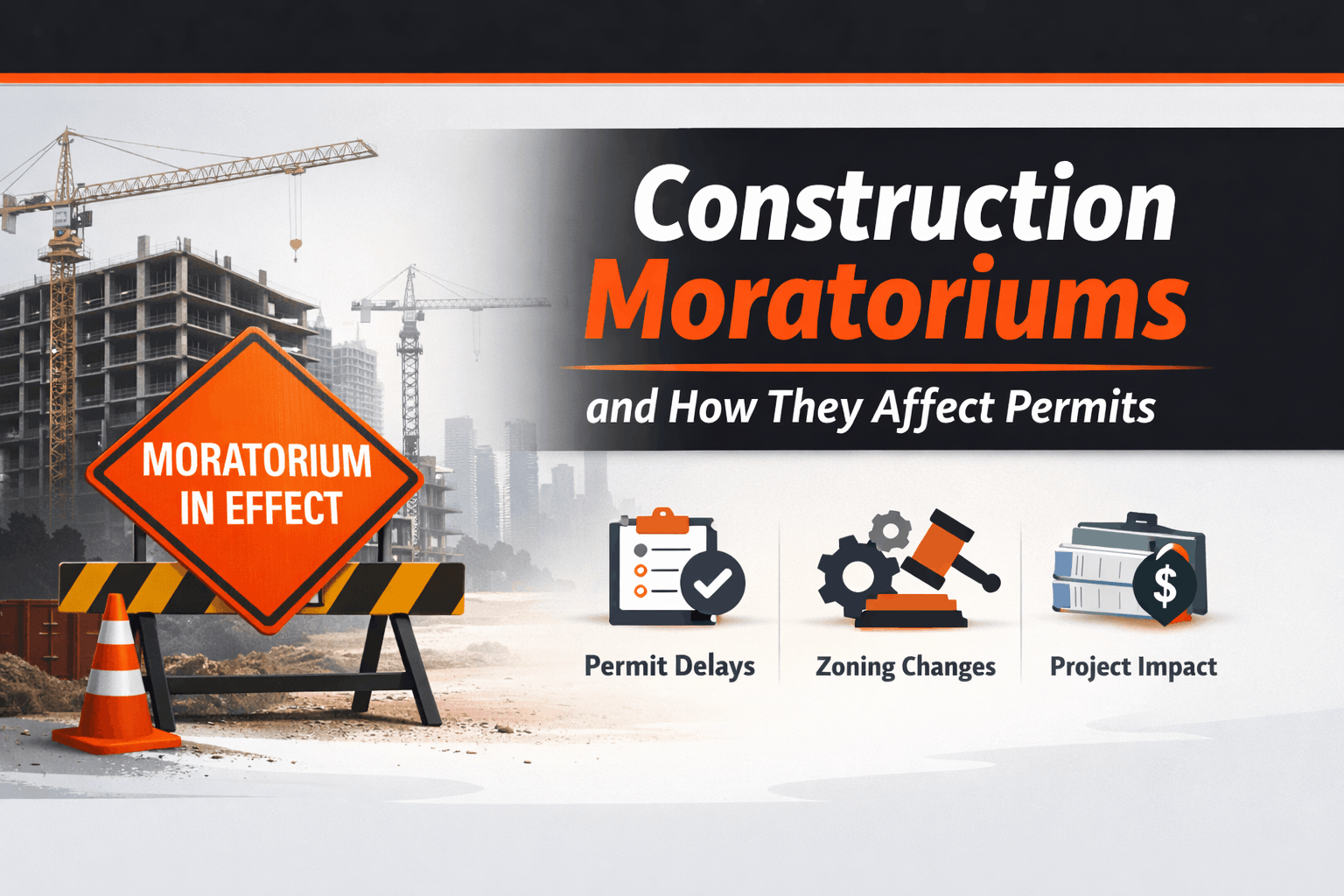
Construction projects do not always move forward as planned. Sometimes, local governments pause development altogether. This pause is called a construction moratorium. For developers, property owners, and investors, it can bring uncertainty and delays.
If you are working on a real estate project, this is something you cannot ignore. A moratorium can stop permit approvals overnight. In some cases, it can even change the rules you were planning under.
That said, moratoriums are not random decisions. Cities and counties usually impose them for specific reasons, such as infrastructure limits or zoning updates. Understanding why they happen helps you plan better and avoid costly mistakes.
In this guide, we will break down what construction moratoriums are, why they are used, and how they directly affect permits. More importantly, we will explain what you can do to reduce risk and keep your project moving.
What Is a Construction Moratorium? (Simple Explanation)
A construction moratorium is a temporary pause on development activity imposed by a local government. It can apply to new construction, permit approvals, or even specific types of projects.
In simple terms, it is a “hold” on building.
Cities use moratoriums when they need time to review policies, fix infrastructure issues, or control rapid growth. While the pause is temporary, the impact can be immediate and significant.
Definition of a Construction or Building Moratorium
A construction moratorium is a legal action taken by a city or county to temporarily stop certain types of development.
This can include:
-
New building permits
-
Ongoing permit reviews
-
Specific project types (like multifamily or commercial)
The goal is not to stop development forever. Instead, it gives local authorities time to assess problems and make updates.
For example, a city may pause development if its sewer system is reaching capacity. Rather than allowing more strain, officials may stop new permits until upgrades are planned.
How Moratoriums Differ from Permit Denials
It is important not to confuse a moratorium with a permit denial. They are very different.
Here is a simple comparison:
| Factor | Construction Moratorium | Permit Denial |
|---|---|---|
| Nature | Temporary pause | Permanent decision |
| Scope | Often affects many projects | Affects one project |
| Reason | Policy or infrastructure issue | Project-specific issue |
| Outcome | Can resume later | Requires redesign or appeal |
A moratorium pauses the process. A denial stops it.
This distinction matters because projects under a moratorium may still move forward later, often under new rules.
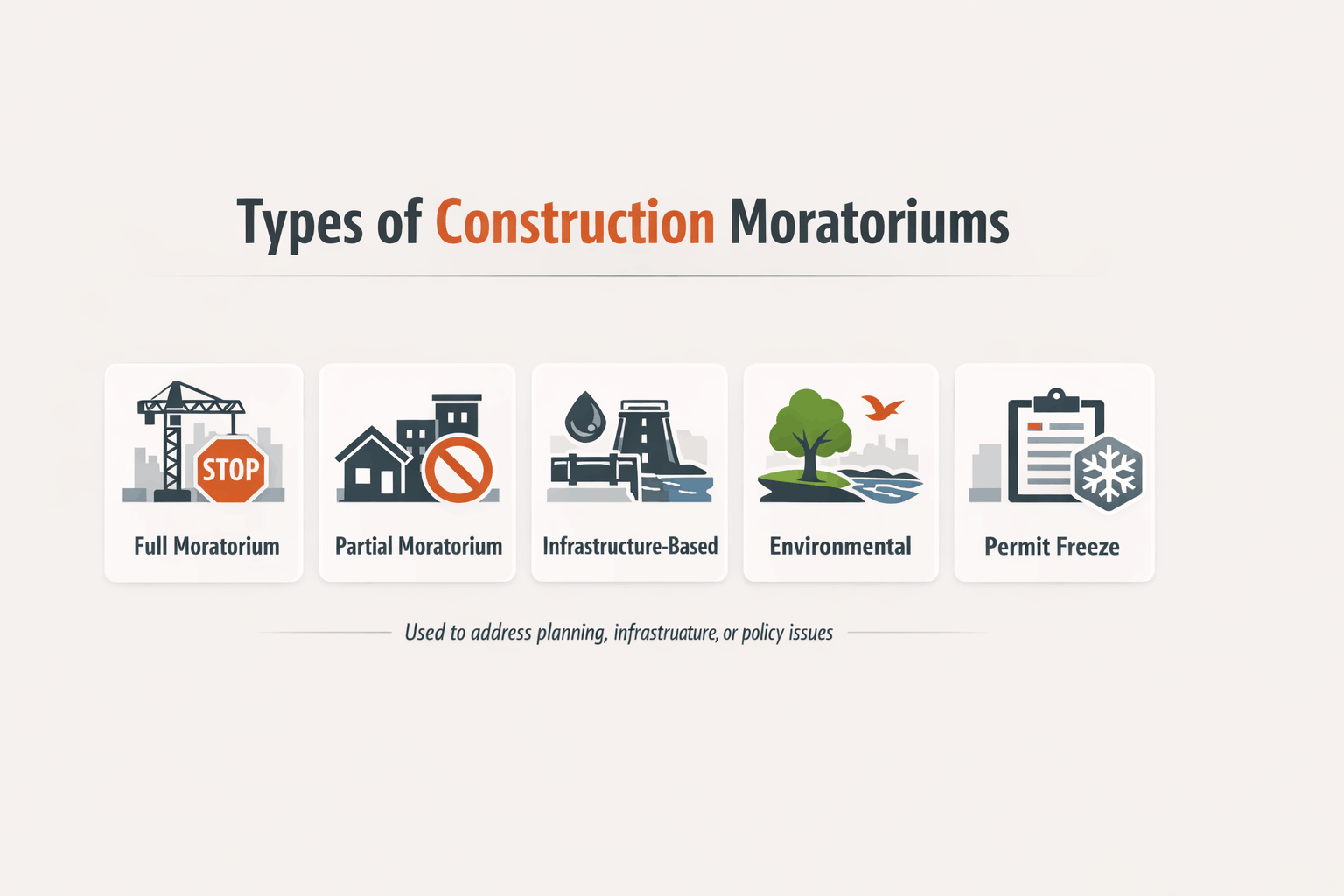
Types of Construction Moratoriums
Not all moratoriums are the same. The scope can vary depending on the issue a city is trying to address.
Here are the most common types:
1. Full Development Moratorium
-
Stops all new construction activity
-
Rare, but used in serious situations
2. Partial Moratorium
-
Targets specific property types
-
Example: multifamily housing or industrial use
3. Infrastructure-Based Moratorium
-
Triggered by limits in roads, water, or sewer systems
-
Very common in fast-growing areas
4. Environmental Moratorium
-
Used to protect sensitive areas
-
Often linked to wetlands, flood zones, or coastal regions
5. Permit Issuance Freeze
-
Applications may still be submitted
-
However, approvals are paused
Each type affects permits differently. That is why understanding the scope early is critical.
Why Governments Implement Construction Moratoriums
Moratoriums are usually a response to pressure. Cities do not stop development without a reason. In most cases, they are trying to solve a problem that could worsen if construction continues.
Understanding these reasons helps developers anticipate risks before they become costly delays.
Infrastructure Capacity Issues
One of the most common reasons for a moratorium is infrastructure strain.
As cities grow, systems like roads, water lines, and sewer networks can reach their limits. When that happens, local governments may pause development to prevent overload.
Common triggers include:
-
Sewer systems operating at capacity
-
Traffic congestion beyond planned limits
-
Water supply concerns
Without a pause, additional development could lead to system failure or expensive emergency upgrades.
Environmental Protection and Compliance
Environmental concerns are another major factor.
Certain areas require careful study before development can continue. If risks are identified, a moratorium may be used to stop further impact.
Examples include:
-
Flood-prone zones
-
Wetlands and protected habitats
-
Coastal or erosion-sensitive areas
In these cases, the pause allows time for environmental studies and updated regulations.
Zoning and Planning Updates
Zoning laws do not always keep up with growth. When cities realize their regulations are outdated, they may pause development to make changes.
This often happens in areas experiencing:
-
Rapid population growth
-
Increased demand for housing
-
Shifts in land use patterns
During this time, officials may rewrite zoning codes, adjust density limits, or introduce new design standards.
Rapid Growth and Overdevelopment Concerns
In high-demand markets, development can move faster than planning.
While growth is positive, too much of it in a short time can create issues such as:
-
Overcrowding
-
Strain on public services
-
Community opposition
A moratorium gives cities time to slow things down and reassess.
Legal or Policy Gaps
Sometimes, new development trends expose gaps in existing laws.
For example:
-
New property types not covered in zoning codes
-
Emerging industries with unclear regulations
In these cases, a moratorium acts as a pause while policymakers create clear guidelines.
How Construction Moratoriums Affect Permits
For most developers, the biggest concern is permits. A construction moratorium can directly impact whether your project moves forward or stalls.
The effect depends on timing, location, and the type of moratorium in place.
Immediate Impact on Permit Applications
The most direct impact is on new permit applications.
In many cases:
-
New applications are not accepted
-
Submitted applications are not processed
-
Review timelines are paused
This means even well-prepared projects can face delays.
If you are planning to submit a permit, timing becomes critical. A project submitted just before a moratorium may proceed. One submitted after may be put on hold.
What Happens to Pending Permits?
Pending permits fall into a gray area. The outcome depends on local rules.
Generally, there are three possibilities:
-
Approved permits → usually allowed to proceed
-
Under review → may be paused or delayed
-
Not yet submitted → likely blocked
Here is a simple breakdown:
| Permit Status | Typical Outcome During Moratorium |
|---|---|
| Approved | Can move forward |
| Under Review | May be paused |
| Not Submitted | Not accepted |
Because policies vary, it is important to confirm details with the local authority.
Permit Backlogs After a Moratorium Ends
When a moratorium is lifted, activity does not return to normal immediately. Instead, there is often a surge in applications. This creates a backlog.
As a result:
-
Review timelines increase
-
Approval processes become stricter
-
Agencies may be overwhelmed
This phase can be just as challenging as the moratorium itself.
Changes to Permit Requirements After the Pause
Another key issue is changing requirements. Once a moratorium ends, cities often introduce new rules. These may include:
-
Updated zoning regulations
-
Stricter environmental standards
-
Additional documentation requirements
For developers, this can mean redesigning parts of a project. In some cases, projects that were viable before the moratorium may no longer meet the new criteria.
Legal Considerations of Construction Moratoriums
Construction moratoriums may feel sudden, but they are not arbitrary. Local governments must follow legal standards when they impose them. For developers, understanding these rules is important. It helps you assess risk and respond the right way.
In most cases, moratoriums are allowed. However, they must meet certain conditions. If they do not, they can be challenged.
Are Moratoriums Legal?
Yes, construction moratoriums are generally legal. Cities and counties have the authority to regulate land use and development. This includes the ability to pause construction when needed.
That said, the moratorium must serve a valid public purpose.
Common justifications include:
-
Infrastructure limitations
-
Environmental protection
-
Public safety concerns
-
Planning and zoning updates
Courts usually support moratoriums when they are reasonable and clearly explained.
However, if a moratorium appears arbitrary or unfair, it may face legal challenges.
Time Limits and Extensions
A key legal requirement is that moratoriums must be temporary.
They are not meant to stop development indefinitely. Instead, they provide time for study, planning, or infrastructure improvements.
Most moratoriums fall within a typical range:
| Duration | Common Use Case |
|---|---|
| 3–6 months | Minor policy updates |
| 6–12 months | Zoning revisions or infrastructure review |
| 12+ months | Complex planning or large-scale issues |
In some cases, cities extend moratoriums. However, extensions usually require:
-
Additional review
-
Public hearings
-
Clear justification
If a moratorium continues without progress, it may raise legal concerns.
Property Rights and Regulatory Taking Concerns
One of the biggest concerns for property owners is whether a moratorium affects their rights.
In certain situations, a moratorium can be challenged as a regulatory taking. This happens when government action limits the use of property to the point where it causes financial harm.
Courts typically look at three factors:
-
Duration — How long the moratorium lasts
-
Impact — How much value the owner loses
-
Purpose — Whether it serves the public interest
Short-term moratoriums are usually upheld. Long-term restrictions with major financial impact are more likely to be challenged.
Retroactive Application Risks
Another important issue is how moratoriums apply to existing projects.
In most cases, moratoriums are not retroactive. This means:
-
Projects with approved permits can continue
-
Applications already submitted may still be reviewed
However, there are exceptions.
Some jurisdictions apply moratoriums to projects that are still under review. This can lead to delays even if you submitted early. Because of this, timing matters. Submitting a permit before a moratorium does not always guarantee protection.
Real-World Examples of Construction Moratoriums
To better understand how moratoriums work, it helps to look at real-world scenarios. While details vary by location, the patterns are often similar. These examples show why moratoriums are imposed and how they affect development.
Infrastructure-Based Moratorium Example
A fast-growing city begins to see strain on its sewer system. New developments are adding pressure, and the system is close to capacity. To avoid failure, the city pauses new permits for large residential projects.
During the moratorium:
-
Engineers assess system capacity
-
Upgrade plans are developed
-
New connection rules are introduced
Once lifted, developers must meet stricter requirements.
Environmental Moratorium Example
A coastal region faces increased flooding risk. New construction is contributing to drainage problems. The local government imposes a moratorium on development in flood-prone zones.
During this period:
-
Environmental studies are conducted
-
Flood maps are updated
-
Building elevation standards are revised
After the moratorium, projects must comply with new environmental guidelines.
Zoning Reform Moratorium Example
A city experiences rapid population growth. Existing zoning laws no longer support balanced development. Officials pause new multifamily permits to update zoning regulations.
Key actions include:
-
Revising density limits
-
Adjusting height restrictions
-
Introducing mixed-use zoning
When the moratorium ends, developers must follow updated rules.
Industry-Specific Moratorium Example
In some cases, moratoriums target a specific type of development.
For example:
-
Gas stations in oversaturated areas
-
Short-term rentals in residential zones
-
Large warehouses in urban districts
These targeted pauses allow cities to address concerns without stopping all development.
Impact on Developers, Investors, and Property Owners
Construction moratoriums affect different stakeholders in different ways. However, the common theme is uncertainty. Understanding these impacts helps you plan ahead and reduce risk.
Developers
Developers often face the most direct impact.
Common challenges include:
-
Project delays
-
Increased holding costs
-
Financing complications
If a project is paused, timelines shift. This can affect contracts, labor scheduling, and material costs. In some cases, developers may need to redesign projects to meet new regulations.
Investors
For investors, moratoriums introduce uncertainty.
This can lead to:
-
Delayed returns
-
Changes in project valuation
-
Increased risk perception
However, there can also be opportunities. After a moratorium, updated regulations may increase long-term property value in certain areas.
Property Owners
Property owners may also feel the effects, especially if they planned to develop or sell.
Potential impacts include:
-
Reduced development options
-
Lower short-term property value
-
Delayed project timelines
On the other hand, improved planning and infrastructure can increase value over time.
Community Impact (Balanced View)
Moratoriums do not only affect developers. They also impact the broader community.
Here is a balanced view:
| Benefits | Drawbacks |
|---|---|
| Better infrastructure planning | Slower economic activity |
| Environmental protection | Delayed housing supply |
| More controlled growth | Project uncertainty |
While they can slow development, moratoriums often aim to create more sustainable long-term growth.