Fire safety is not just a final inspection item in commercial construction. It is a core part of your project design from day one. If your building does not meet fire code requirements, you cannot get approval to open it. That means delays. Extra costs. And sometimes, a full redesign.
Many developers assume fire protection plans can be handled later in the process. In reality, most fire code issues start during early planning. These include exit layouts, sprinkler coverage, alarm systems, and fire-rated walls. If these elements are not included at the design stage, your plans may fail review.
For commercial projects, fire codes affect:
- Building permits
- Construction drawings
- Occupancy limits
- Inspection approvals
- Tenant move-in timelines
- Insurance eligibility
Even small errors can create problems. For example, if exit doors swing the wrong way, or the travel distance to an exit is too long, you may fail your fire inspection. This often leads to rework and resubmission.
At JDJ Consulting, we often see projects delayed because fire protection was not reviewed early. A simple layout change during planning can prevent weeks of delay later.
In this guide, we will break down the key fire code requirements that apply to commercial developments. This includes building approvals, occupancy classification, and exit design.
Why Fire Code Compliance Matters in Commercial Construction
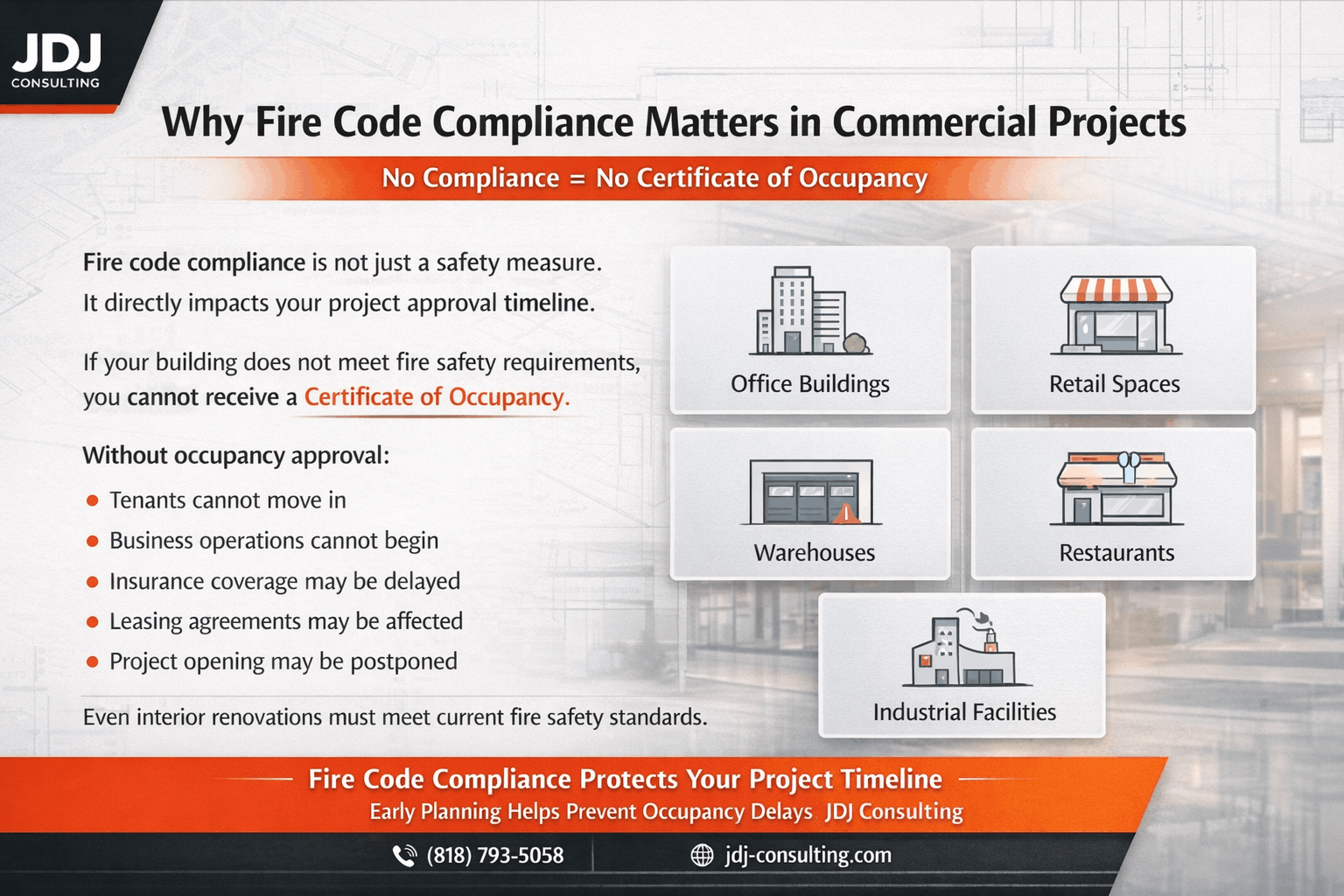
Fire codes exist to protect both people and property. But from a developer’s view, they also protect your project timeline. If your building does not meet fire safety rules, you cannot receive a Certificate of Occupancy. Without this certificate, your commercial space cannot legally open.
This applies to:
- Office buildings
- Retail spaces
- Warehouses
- Restaurants
- Mixed-use developments
- Industrial facilities
Even interior renovations or tenant improvements must meet current fire safety standards.
Impact on Project Approval and Permitting
Before construction begins, your building plans go through a review process. During this stage, the Authority Having Jurisdiction (AHJ) checks your fire safety design.
This review includes:
- Exit placement
- Fire alarm layout
- Sprinkler system coverage
- Occupant load
- Emergency lighting
- Fire-rated assemblies
If any part does not meet code, your plans may be rejected.
Common reasons for permit delays include:
- Missing exit signage
- Long travel distances
- Improper fire door ratings
- Incomplete sprinkler plans
- Alarm systems not zoned correctly
Each correction takes time. That can push back your entire project schedule.
Legal and Financial Risks of Non-Compliance
Ignoring fire code requirements can also create legal risk. If a fire occurs and your building does not meet safety standards, you may face:
- Liability claims
- Insurance disputes
- Fines from local authorities
- Business interruption losses
In some cases, insurance providers may deny coverage if required fire protection systems were not installed. Non-compliance may also lead to:
- Failed inspections
- Construction delays
- Higher redesign costs
- Tenant move-in delays
All of these issues increase your total project cost.
Life Safety vs Property Protection
Fire codes focus on two main goals: protecting people and limiting damage to the building.
| Fire Protection Goal | Purpose in Commercial Buildings |
| Life Safety | Help occupants exit safely |
| Fire Containment | Slow the spread of fire |
| Structural Protection | Reduce risk of collapse |
| Asset Protection | Limit property damage |
Life safety is always the top priority. This is why exit design, alarms, and emergency lighting must meet strict rules.
Key Fire Codes That Govern Commercial Development Projects
Commercial buildings must follow several national and local fire safety standards. These codes guide how fire protection systems should be designed and installed.
Most projects follow a mix of:
- Building codes
- Fire protection standards
- Life safety guidelines
Your design team must apply these codes based on your building type and occupancy.
NFPA Codes Every Developer Should Know
The National Fire Protection Association (NFPA) publishes widely used fire safety standards. These apply to most commercial construction projects.
Here are the key NFPA codes used in development:
| NFPA Standard | What It Covers |
| NFPA 13 | Automatic sprinkler systems |
| NFPA 14 | Standpipe systems |
| NFPA 72 | Fire alarm systems |
| NFPA 101 | Life safety requirements |
For example, NFPA 13 outlines how sprinkler systems must be spaced and supplied with water. NFPA 72 explains how fire alarms should detect smoke and alert occupants.
These standards help ensure that fire protection systems work as intended during an emergency.
International Building Code (IBC) Fire Safety Provisions
The International Building Code (IBC) also includes fire protection rules. These focus on building design and construction.
IBC fire safety provisions cover:
- Fire-rated walls
- Smoke barriers
- Emergency exits
- Occupancy load limits
- Fire detection systems
- Construction materials
The IBC also sets minimum safety levels based on building use. For example, a retail store may have different requirements than a warehouse.
Your occupancy classification often determines:
- If sprinklers are required
- How many exits are needed
- What fire resistance ratings apply
Role of Local Fire Marshals and Authorities
Local fire departments play a key role in enforcement.
They are responsible for:
- Reviewing building plans
- Conducting site inspections
- Verifying system installation
- Approving final occupancy
Even if your design meets national codes, the local Authority Having Jurisdiction (AHJ) has the final say. This is why early coordination with fire officials can help avoid delays later in the process.
Occupancy Classification and Fire Protection Requirements
Not all commercial buildings face the same fire risks. A small office does not present the same hazard level as a warehouse or restaurant. That is why fire codes group buildings by occupancy type.
Occupancy classification affects how your fire protection systems must be designed. It also impacts:
- Exit requirements
- Alarm systems
- Sprinkler coverage
- Fire resistance ratings
- Occupant load limits
If your building is placed in the wrong occupancy category, your plans may fail review. In many cases, this leads to costly redesigns during construction.
At JDJ Consulting, we often review commercial plans where the occupancy type was assumed early in design. Later, the Authority Having Jurisdiction (AHJ) may classify the building differently. This can change your entire fire protection layout.
Common Commercial Occupancy Types
Most commercial developments fall under one of the following occupancy groups:
| Occupancy Type | Example Use | Fire Risk Level |
| Business | Offices, banks | Moderate |
| Mercantile | Retail stores, malls | Moderate to High |
| Assembly | Restaurants, event halls | High |
| Industrial | Factories, workshops | High |
| Storage | Warehouses | High |
| Mixed-Use | Retail + residential | Varies |
Each occupancy type has its own fire safety rules.
For example:
- Assembly spaces often require voice evacuation systems
- Industrial spaces may need higher sprinkler density
- Storage facilities may require smoke control systems
Mixed-use buildings can be more complex. These developments may combine retail, office, and residential spaces in one structure. In this case, each section must meet its own fire protection requirements.
How Occupancy Load Impacts Fire Design
Occupant load refers to the number of people expected to use a space at one time. Fire codes use this number to calculate safety requirements.
Your occupant load affects:
- Number of exits required
- Exit door width
- Travel distance limits
- Alarm notification systems
- Emergency lighting placement
Higher occupant loads usually mean stricter fire safety rules.
For example:
- A large retail store needs more exits than a small office
- A crowded restaurant may require wider exit doors
- Event spaces may need additional alarm coverage
Below is a general example of how occupancy load can affect fire protection design:
| Occupant Load Range | Fire Protection Requirement |
| 1–49 persons | Basic exit signage |
| 50–299 persons | Multiple exits required |
| 300+ persons | Voice alarm systems |
| 500+ persons | Enhanced evacuation planning |
These limits help ensure that occupants can leave the building safely during an emergency.
Fire Protection Requirements Based on Occupancy Type
Once your occupancy classification is confirmed, fire protection systems must match the hazard level.
Typical requirements may include:
- Automatic sprinkler systems
- Fire alarm systems
- Smoke detection
- Fire-rated corridors
- Emergency lighting
- Exit signage
Industrial and storage buildings often require:
- High-density sprinkler coverage
- Standpipe systems
- Fire-resistant structural components
Assembly buildings may require:
- Emergency voice communication
- Panic hardware on exit doors
- Increased exit capacity
Even a simple tenant improvement can trigger upgrades. For example, converting office space into a restaurant may require:
- New sprinkler layout
- Additional exits
- Upgraded alarm systems
These changes can impact both design and construction timelines.
Means of Egress Requirements in Commercial Buildings
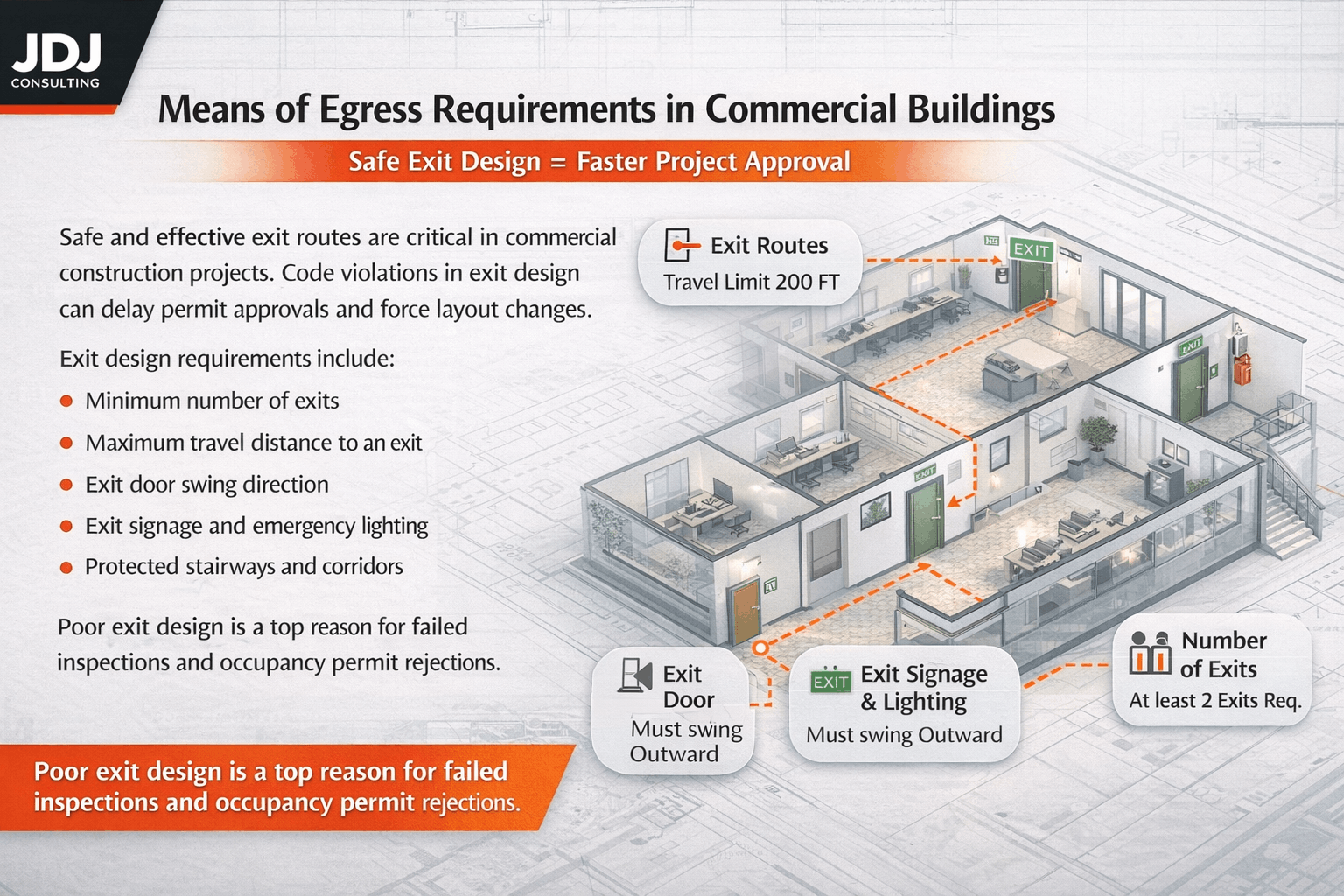
In a fire emergency, people must be able to leave the building quickly and safely. This is where means of egress comes in. The term “means of egress” refers to the path occupants use to exit a building. This path includes:
- Exit access
- Exit doors
- Corridors
- Stairways
- Exit discharge areas
Fire codes set strict rules for how these paths must be designed. If your exit system does not meet code, your building may fail inspection.
Poor egress design is one of the most common reasons for delayed approvals in commercial projects. In many cases, exit routes are planned after the main layout is complete. By that point, making changes can be difficult.
Minimum Exit Requirements
Every commercial building must have a safe number of exits. The required number depends on:
- Occupant load
- Building size
- Occupancy type
- Floor layout
In general, larger buildings need more exits.
Fire codes also require exits to be placed a certain distance apart. This helps ensure that if one exit is blocked by fire or smoke, occupants can still reach another.
Here are common exit design factors reviewed during plan approval:
- Number of exits on each floor
- Maximum travel distance to an exit
- Exit separation distance
- Door width
- Path of travel
Below is a simplified example:
| Occupant Load | Minimum Number of Exits |
| 1–49 persons | 1 exit |
| 50–500 persons | 2 exits |
| 501–1000 persons | 3 exits |
| 1000+ persons | 4 exits |
If your building does not meet these requirements, the design may need changes before approval.
Emergency Exit Design Rules
Exit doors must also meet fire safety standards. Some key requirements include:
- Doors must open in the direction of travel
- Exit doors must be easy to open
- Locking systems must allow quick release
- Exit signs must be illuminated
- Emergency lighting must remain active during power loss
Door hardware is also important. Assembly areas, such as restaurants or event spaces, often require panic hardware on exit doors. This allows people to open doors quickly without using keys.
Exit signage must be clearly visible from all parts of the building. In addition, backup lighting is required to help occupants find exits during an emergency.
Stairways and Exit Passageways
Multi-story commercial buildings must include protected stairways. These stairways provide a safe route from upper floors to the outside.
Fire codes usually require stairways to be enclosed with fire-rated construction. This helps prevent smoke and fire from spreading into the exit path.
Protected exit routes may include:
- Fire-rated stair enclosures
- Smoke barriers
- Exit passageways
- Fire doors
Stairways must also remain clear at all times. Storage or equipment placed in exit paths may lead to failed inspections. Below is a general overview of stairway protection features:
| Stairway Feature | Fire Safety Purpose |
| Fire-rated walls | Slow fire spread |
| Self-closing doors | Contain smoke |
| Emergency lighting | Maintain visibility |
| Non-slip surfaces | Reduce fall risk |
Proper exit design supports both life safety and project approval. Early planning can help avoid layout changes later in construction.
Fire Suppression Systems Required for Commercial Developments
Fire suppression systems help control or extinguish a fire before it spreads. In commercial buildings, these systems are often required by code.
The type of system you need depends on:
- Occupancy classification
- Building height
- Floor area
- Fire hazard level
- Construction type
If suppression systems are not included in your plans, your permit may be delayed. In some cases, you may need to revise plumbing layouts or ceiling plans to install sprinkler piping.
This is why fire suppression must be reviewed early in design.
Automatic Fire Sprinkler Systems
Automatic sprinkler systems are the most common fire suppression method in commercial construction. These systems release water when heat from a fire activates the sprinkler head.
Sprinklers are often required when:
- The building exceeds a certain size
- The occupant load is high
- The occupancy type presents higher fire risk
- The building has multiple floors
Sprinkler system design includes:
- Pipe layout
- Water supply
- Pressure calculations
- Sprinkler head spacing
The system must provide enough water to control the fire in its early stages. Here is a general overview of sprinkler system requirements based on hazard level:
| Hazard Level | Typical Building Use | Sprinkler Design Density |
| Light Hazard | Offices | Low water flow |
| Ordinary Hazard | Retail stores | Moderate flow |
| Extra Hazard | Industrial use | High water flow |
Higher hazard levels require greater water discharge. This affects pipe size and system capacity.
Standpipe Systems
Standpipe systems provide water access for firefighters inside a building. These systems are often required in larger or taller commercial structures. Standpipes allow fire departments to connect hoses on upper floors. This helps control fires more quickly.
Standpipe systems may be required when:
- Buildings exceed 30 feet in height
- Structures have multiple stories
- Floor area is large
- Fire department access is limited
There are three main types:
- Class I – Used by firefighters
- Class II – Used by trained occupants
- Class III – Used by both
These systems are usually installed in stairwells or exit passageways.
Special Fire Suppression Systems
Some commercial spaces require additional protection beyond standard sprinklers.
Examples include:
- Commercial kitchens
- Server rooms
- Manufacturing areas
- Storage facilities with flammable materials
These areas may need:
- Foam systems
- Chemical suppression
- Clean agent systems
- Pre-action sprinkler systems
For example, kitchen hood suppression systems are required in most restaurant developments. These systems control grease fires quickly. Special suppression systems must match the specific hazard present in the space.
Fire Detection and Alarm System Requirements
Fire detection and alarm systems play a key role in life safety. While suppression systems control a fire, alarm systems alert occupants so they can evacuate.
In most commercial developments, fire alarm systems are required before the building can receive final approval.
These systems are designed to:
- Detect smoke or heat
- Alert building occupants
- Notify emergency responders
- Support evacuation procedures
Without a proper alarm system, occupants may not receive early warning during a fire emergency.
Manual vs Automatic Detection Systems
Fire detection systems can be manual, automatic, or a combination of both.
Manual systems include:
- Pull stations
- Emergency alarm buttons
These allow occupants to activate the alarm when they notice smoke or fire.
Automatic systems include:
- Smoke detectors
- Heat detectors
- Flame detectors
These devices activate when they sense changes in temperature or air quality.
Below is a simple comparison:
| Detection Type | How It Works | Typical Use |
| Manual Pull Stations | Activated by occupants | Hallways and exits |
| Smoke Detectors | Detect airborne smoke | Offices and retail |
| Heat Detectors | Detect temperature rise | Industrial areas |
Many commercial buildings use both manual and automatic detection for better coverage.
Occupant Notification Systems
Once a fire is detected, the alarm system must notify occupants.
Notification methods include:
- Audible alarms
- Visual strobes
- Voice evacuation systems
The type of notification required depends on:
- Occupant load
- Building use
- Size of the space
For example:
- Retail spaces may require audible alarms
- Event halls may need voice announcements
- Warehouses may use high-decibel warning systems
Voice evacuation systems are often required in assembly occupancies with large occupant loads. These systems provide spoken instructions that guide occupants to exits.
Fire Alarm System Monitoring
Many commercial alarm systems must also connect to a monitoring service. Monitoring allows emergency responders to receive alerts even if the building is unoccupied.
System monitoring may include:
- Automatic signal transmission
- Remote system supervision
- Backup power supply
Alarm systems must remain active during power loss. This is why backup batteries are required in most installations. Proper installation and testing of alarm systems are essential for final inspection approval.
Fire-Resistant Construction Requirements
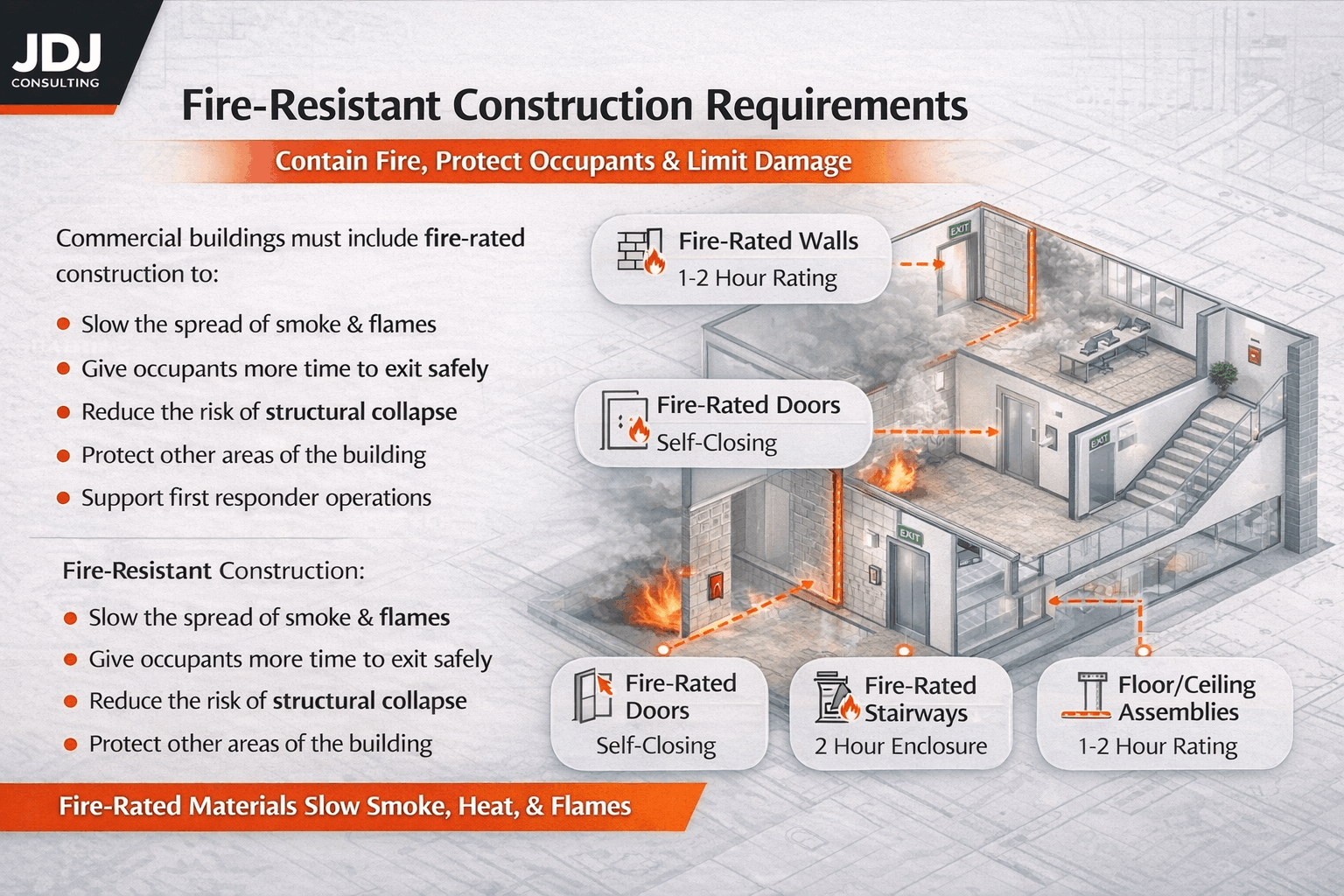
Fire-resistant construction helps slow down the spread of fire inside a building. It also protects the structure from early collapse. In commercial developments, fire-rated materials are often required in key areas. These include:
- Exit corridors
- Stair enclosures
- Elevator shafts
- Mechanical rooms
- Structural supports
These elements help contain fire within a limited area. This gives occupants more time to exit the building. Fire-resistant construction is reviewed during both plan approval and site inspection.
Fire-Rated Walls and Assemblies
Fire-rated walls are designed to resist fire for a set period of time. This is usually measured in hours. Common fire-resistance ratings include:
- 1-hour rating
- 2-hour rating
- 3-hour rating
These ratings apply to:
- Walls
- Floors
- Ceilings
- Structural columns
For example, stairway enclosures often require a 2-hour fire rating. This helps protect the exit path from smoke and flames.
Here is a general overview of fire-rated building elements:
| Building Element | Typical Fire Rating |
| Exit corridors | 1 hour |
| Stair enclosures | 2 hours |
| Elevator shafts | 2 hours |
| Structural frame | 1–3 hours |
Fire-rated assemblies must also include:
- Fire doors
- Rated glazing
- Sealed joints
If any part of the assembly is not installed correctly, the rating may not be valid.
Fireproofing Materials Used in Commercial Buildings
Several materials are used to improve fire resistance in commercial structures.
Common fireproofing options include:
- Spray-applied fire-resistive material
- Fire-rated gypsum board
- Concrete encasement
- Fire-resistant glass
These materials protect steel and other structural components from heat damage. In many cases, steel framing must be coated with fireproofing material. This helps maintain structural strength during a fire. Proper installation is important. If fireproofing is applied unevenly, the structure may lose protection in critical areas.
Opening Protection Requirements
Openings in fire-rated walls must also be protected.
This includes:
- Doors
- Windows
- Utility penetrations
- Ductwork
Fire doors must:
- Close automatically
- Have approved hardware
- Maintain the same rating as the wall
Unprotected openings can allow fire to spread between rooms or floors. During inspections, fire officials often check:
- Door seals
- Frame installation
- Penetration protection
- Joint sealing
If these features do not meet code, corrections may be required before approval.
Inspection, Testing, and Maintenance Requirements
Installing fire protection systems is only one part of compliance. These systems must also be inspected and tested on a regular basis.
Commercial buildings cannot receive final approval unless:
- Fire alarms are tested
- Sprinkler systems are verified
- Emergency lighting is functional
- Exit signs are operational
Local fire officials usually conduct these checks before issuing a Certificate of Occupancy. If any system fails inspection, your project may face delays.
Routine Fire Protection System Inspections
Fire protection systems must be inspected at different intervals. These inspections help confirm that systems will work during an emergency.
Common inspection tasks include:
- Sprinkler head checks
- Alarm panel testing
- Standpipe pressure testing
- Smoke detector sensitivity tests
- Battery backup verification
Below is a general inspection schedule used in commercial buildings:
| System Component | Inspection Frequency |
| Fire alarms | Monthly |
| Smoke detectors | Quarterly |
| Sprinkler systems | Annually |
| Emergency lighting | Monthly |
| Exit signage | Monthly |
Regular inspections reduce the risk of system failure. They also help maintain compliance with fire safety standards.
Documentation Requirements for Compliance
Fire officials often request records during inspections. These documents help verify that systems were installed and maintained properly.
Required documentation may include:
- Fire alarm test reports
- Sprinkler system certifications
- Inspection logs
- Maintenance records
- As-built drawings
Keeping these records organized can help speed up the approval process. In many cases, missing documentation leads to:
- Re-inspections
- Approval delays
- Additional service calls
Final System Testing Before Occupancy
Before your building can open, fire protection systems must pass a final test.
This may include:
- Alarm system activation
- Sprinkler flow testing
- Emergency lighting check
- Exit sign visibility review
Fire officials may also review:
- Fire door operation
- Monitoring system connection
- Backup power supply
If all systems meet code, your building may receive occupancy approval.
Fire Code Requirements for Renovations and Tenant Improvements
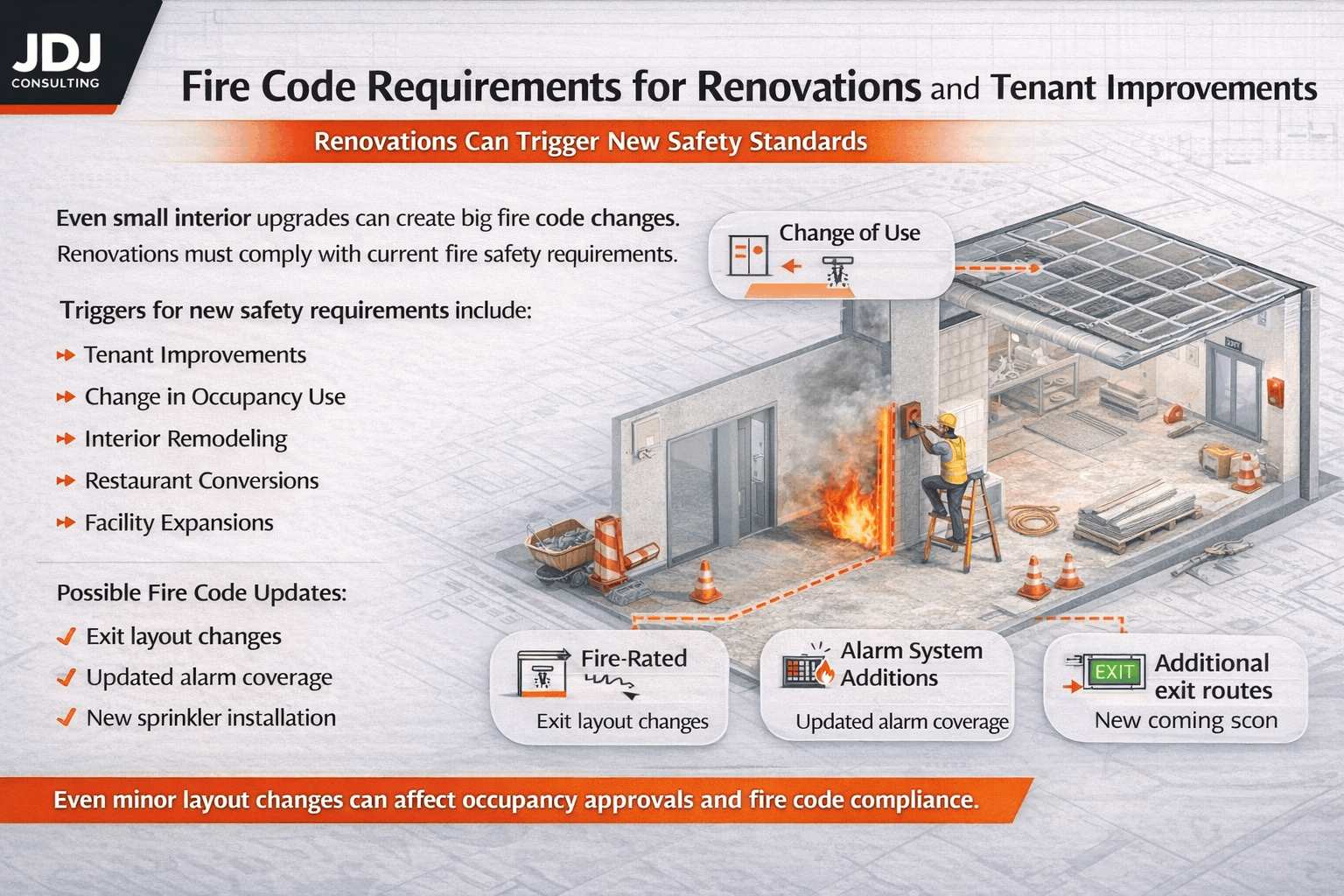
Fire code rules do not apply only to new buildings. They also apply when you renovate or modify an existing commercial space. Many developers assume that interior upgrades do not affect fire safety systems. However, even small layout changes can trigger code updates.
This includes:
- Tenant improvements
- Change of use
- Interior remodeling
- Equipment upgrades
- Space expansion
In some cases, older buildings must meet current fire code standards after renovation.
Change of Occupancy Triggers
A change in building use often leads to new fire protection requirements.
For example:
- Office space converted into a restaurant
- Retail space changed into a daycare
- Warehouse space used for assembly events
Each of these changes increases fire risk. As a result, the building may require:
- Additional exits
- Updated sprinkler coverage
- Fire alarm system upgrades
- Emergency lighting improvements
Below is a simple example of how occupancy changes may affect system requirements:
| Previous Use | New Use | Possible Fire Code Upgrade |
| Office | Restaurant | Kitchen suppression system |
| Retail | Assembly space | Voice evacuation system |
| Storage | Industrial | Higher sprinkler density |
Failure to address these changes may result in permit rejection.
Existing Building Compliance Challenges
Renovating older buildings often creates new challenges.
Some common issues include:
- Limited ceiling space for sprinkler piping
- Narrow exit corridors
- Outdated alarm systems
- Non-rated wall assemblies
Bringing these elements up to code may require design adjustments.
In some cases, developers may need to:
- Add fire-rated partitions
- Upgrade exit signage
- Install new detection systems
- Improve emergency lighting
Local authorities usually review renovation plans before work begins. If your project increases occupant load or fire hazard level, system upgrades may be required.
Coordination with Local Authorities
Working with local fire officials early in the renovation process can help prevent delays.
Plan reviews may confirm:
- Required fire alarm upgrades
- Exit layout changes
- Sprinkler system expansion
- Fire-rated construction needs
Early coordination often reduces the need for rework during construction.
Consequences of Failing a Fire Code Inspection
A failed fire inspection can affect more than your construction schedule. It can delay occupancy, increase project costs, and impact tenant agreements.
Most commercial buildings must pass a fire safety inspection before opening. This inspection confirms that all life safety systems meet code requirements.
If your building fails inspection, you may need to:
- Correct system installation issues
- Update alarm programming
- Adjust exit layouts
- Improve emergency lighting
- Replace non-rated materials
Each correction takes time. In some cases, construction crews must reopen finished areas to make changes.
Project Delays and Re-Inspection Costs
Re-inspections often come with added costs.
These may include:
- Additional contractor labor
- Consultant review fees
- Permit update charges
- System retesting
Even a small issue, such as a blocked exit sign or an untested alarm device, can require a follow-up inspection.
Common inspection failures include:
- Incomplete sprinkler coverage
- Fire doors not closing properly
- Alarm systems not connected to monitoring
- Missing documentation
- Exit paths blocked by equipment
Each delay can push back tenant move-in dates.
Impact on Occupancy Approval
Without passing your fire inspection, you cannot receive a Certificate of Occupancy.
This means:
- Tenants cannot move in
- Business operations cannot begin
- Leasing agreements may be affected
Delayed occupancy can lead to:
- Lost rental income
- Contract penalties
- Scheduling conflicts
In some cases, insurance providers may also review inspection results before issuing coverage.
Legal and Insurance Implications
Failure to meet fire code requirements may create long-term risks. If a fire occurs and your building does not comply with safety standards, you may face:
- Liability claims
- Insurance disputes
- Regulatory fines
Insurance providers often require proof that fire protection systems were tested and approved. Maintaining compliance helps protect both building occupants and project owners.
How Fire Code Consultants Help Commercial Developers
Fire code compliance involves many technical details. These include exit layouts, sprinkler coverage, alarm zones, and fire-rated assemblies.
For most commercial projects, these elements must be reviewed during the design stage. Waiting until construction begins can lead to costly changes. Fire code consultants help developers address safety requirements early in the process.
At JDJ Consulting, we often work with project teams before permit submission. This helps reduce the risk of failed plan reviews.
Design-Phase Code Review
During the planning stage, consultants review:
- Architectural layouts
- Occupancy classification
- Exit placement
- Alarm system design
- Sprinkler coverage
This early review helps identify issues before plans are submitted.
Common design problems include:
- Long exit travel distances
- Insufficient door width
- Improper stair enclosure ratings
- Incomplete fire alarm layouts
Fixing these issues early is usually easier and less expensive than making changes during construction.
Coordination with Authorities Having Jurisdiction
Local fire departments and building officials review fire safety plans before approval.
Consultants often assist with:
- Code interpretation
- Plan revisions
- Inspection preparation
- System testing coordination
Early coordination with the Authority Having Jurisdiction (AHJ) can help avoid delays.
Consultants may also respond to plan review comments. This helps move the approval process forward.
Performance-Based Fire Engineering Solutions
Some commercial projects have unique design challenges.
Examples include:
- Large open floor plans
- High-rise structures
- Mixed-use developments
- Industrial facilities
In these cases, standard fire code rules may not fit the design.
Performance-based solutions allow engineers to:
- Evaluate fire risk
- Model evacuation time
- Design alternate protection systems
These solutions must still meet safety goals. However, they offer more flexibility in building design.
Consultant support can help balance fire safety with project layout needs.
Final Checklist for Fire Code Compliance Before Project Approval
Before your commercial building is ready for occupancy, confirm that all fire protection systems are in place.
Here is a basic checklist to review:
- Occupancy classification verified
- Fire alarm system installed
- Sprinkler system tested
- Exit routes approved
- Emergency lighting operational
- Exit signage installed
- Fire-rated assemblies completed
- Inspection reports documented
Completing these steps can help support final approval.
Conclusion: Building Safer Commercial Spaces Starts with Fire Code Compliance
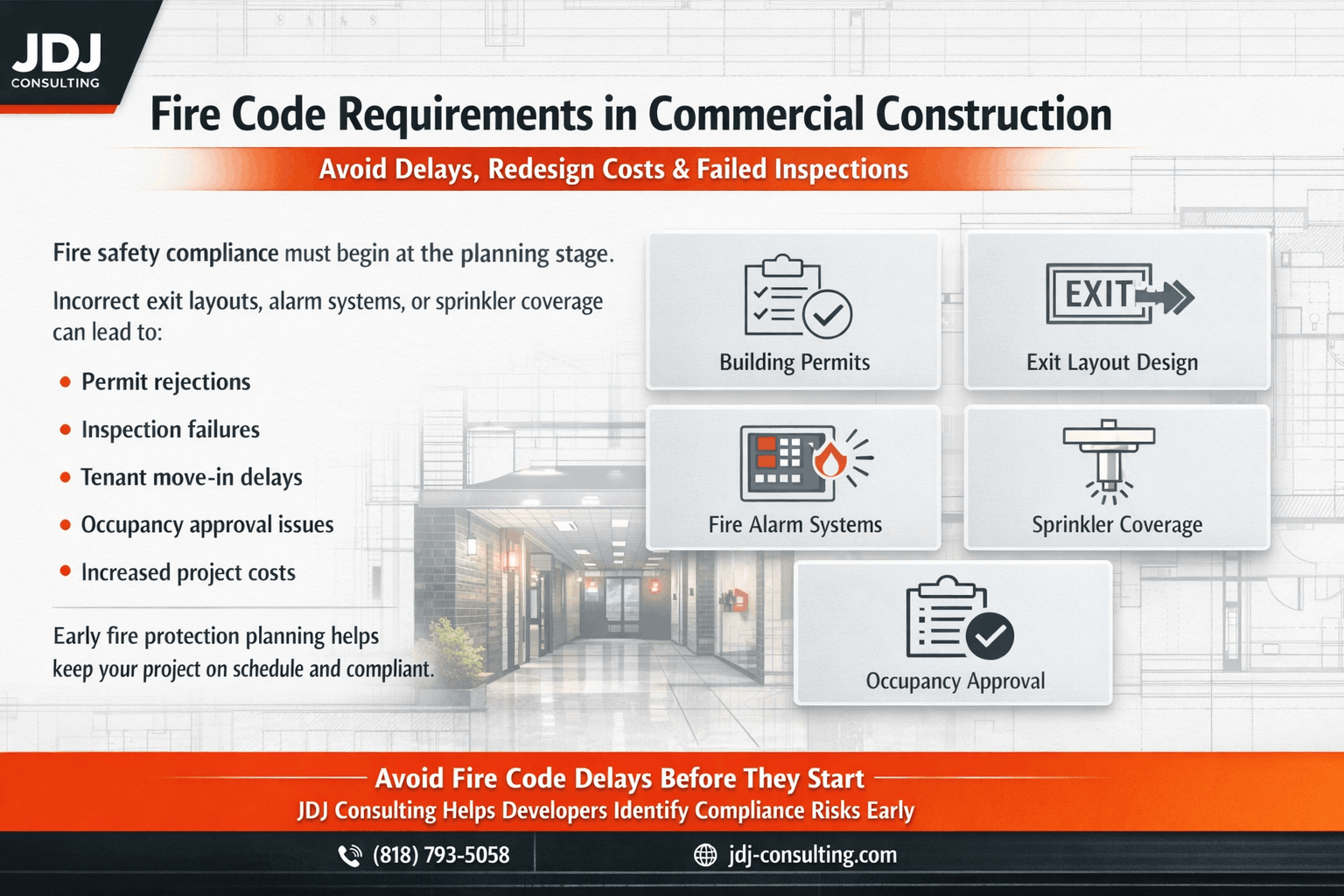
Fire safety should be part of your project from the start.
Proper planning helps:
- Reduce inspection delays
- Avoid redesign costs
- Support tenant move-in schedules
Commercial developments must meet fire code requirements before opening. Working with experienced consultants can help ensure that systems are designed, installed, and tested correctly. This approach supports both life safety and project success.