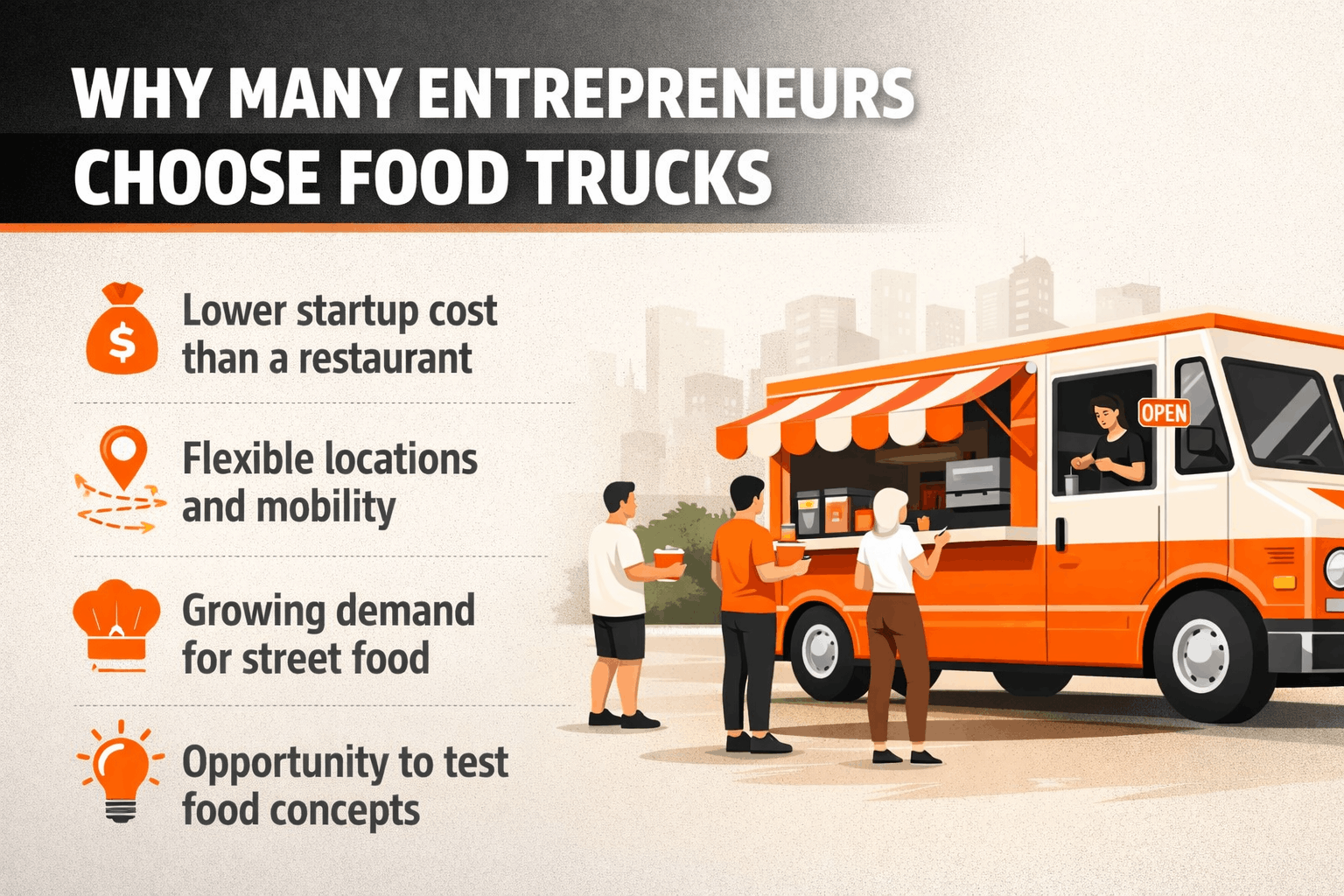
Starting a food truck is an exciting business idea. Many entrepreneurs choose it because the startup cost is often lower than opening a traditional restaurant. A mobile kitchen also allows owners to move to different locations and serve customers where demand is high.
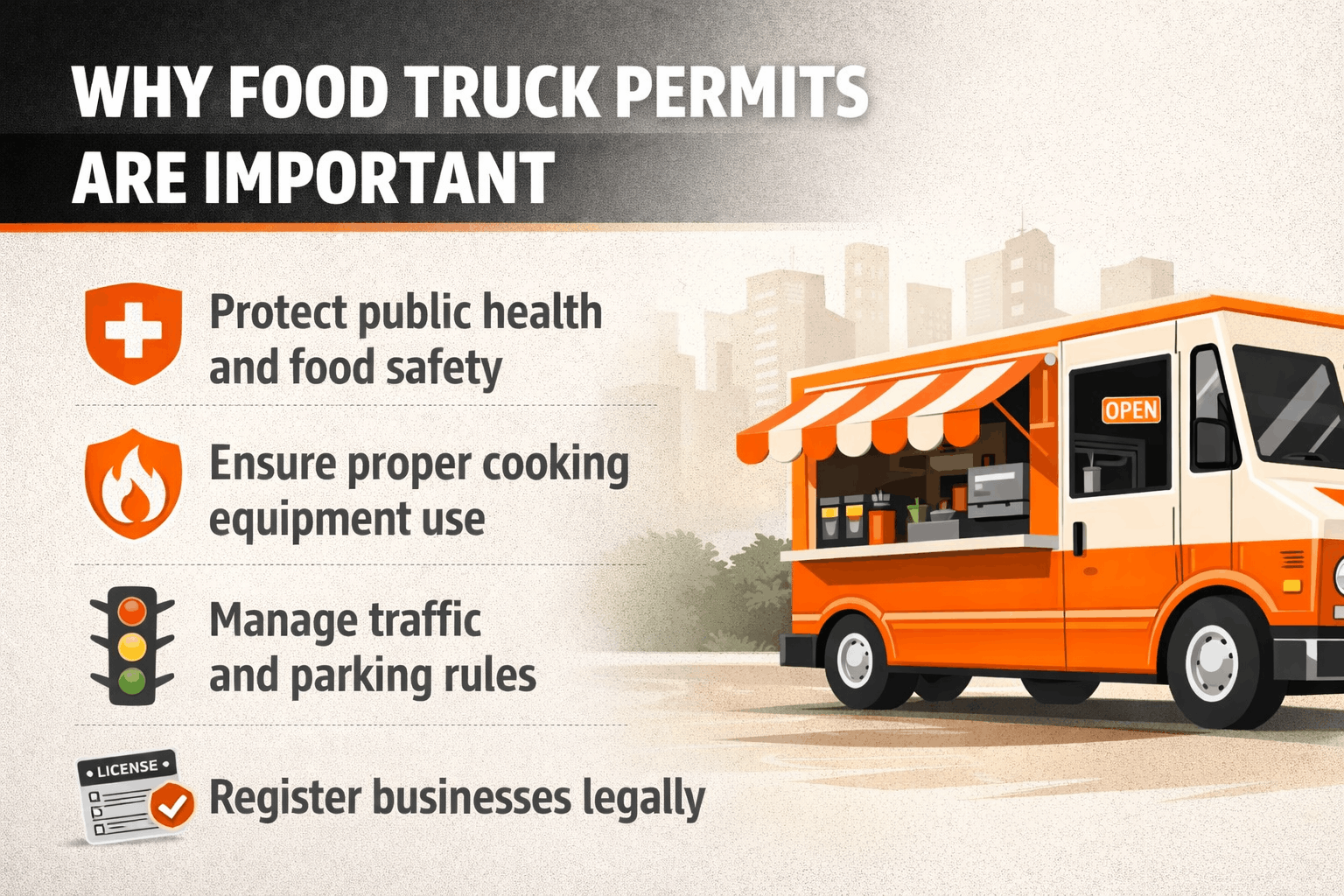
However, before serving your first customer, there is an important step to complete. You must obtain the proper permits and licenses. Cities and counties regulate food trucks to protect public health, manage traffic, and ensure businesses operate legally.
Many new food truck owners are surprised by how many approvals they need. A single truck may require permits from several departments, such as the health department, city licensing office, and fire marshal. Each agency reviews a different part of the business.
For example, the health department checks food safety. The fire department reviews cooking equipment. Local zoning offices determine where food trucks can park and operate.
Because of this, the process can feel confusing at first. Requirements also vary widely from city to city. What works in one location may not apply in another.
This guide explains the most common food truck permits and how the approval process works. You will learn what licenses are required, typical costs, and common issues applicants face. The goal is simple: help you understand the process before you begin your application.
Table of Contents
ToggleWhat Are Food Truck Permits?
Food truck permits are official approvals that allow a mobile food business to operate legally. These permits confirm that the truck meets health, safety, and local business regulations.
Most cities treat food trucks as mobile food establishments. Because they prepare and sell food to the public, they must follow the same safety standards as restaurants.
However, food trucks also operate on public streets or temporary locations. This adds another layer of regulations. Local governments need to control where trucks can park, how long they can stay, and how they manage waste.
As a result, food truck owners usually need permits from multiple agencies.
Definition of Food Truck Permits
A food truck permit is a legal authorization issued by a city, county, or state agency. It allows a mobile vendor to prepare and sell food from a vehicle.
These permits confirm that the business meets several requirements, including:
-
Safe food handling practices
-
Proper sanitation equipment
-
Approved cooking systems
-
Compliance with zoning and parking rules
In many cities, food trucks are classified under terms like:
-
Mobile food vendor
-
Mobile food unit
-
Mobile food facility
-
Street food vendor
While the terminology may change, the purpose remains the same. The permit ensures the business operates safely and legally.
Why Permits Are Required for Food Trucks
Food trucks interact directly with the public. Customers trust that the food they purchase is safe to eat and prepared in a clean environment. Permits help local authorities enforce these standards. Several factors explain why permits are required.
- Public health protection
Health departments must ensure that food is stored, prepared, and served safely. They review equipment, refrigeration systems, and sanitation procedures.
- Fire safety
Many food trucks use propane tanks, grills, fryers, and other cooking equipment. Fire departments inspect these systems to reduce fire risks.
- Traffic and public safety
Cities must manage where trucks operate. Without regulation, trucks could block streets, sidewalks, or emergency access points.
- Business accountability
Permits also confirm that the business is registered and paying the required taxes. Together, these rules create a structured system that protects both customers and business owners.
Who Needs a Food Truck Permit
Anyone selling food from a mobile vehicle typically needs a permit. The rules apply to more than just traditional food trucks.
Common businesses that require permits include:
-
Food trucks
-
Food trailers
-
Mobile snack carts
-
Coffee trucks
-
Ice cream trucks
-
Catering vehicles
Even businesses that operate only at festivals or temporary events usually need special event permits.
The specific permits required depend on several factors, including:
-
Type of food served
-
Cooking equipment used
-
Operating locations
-
Local regulations
Because of this, it is important to check city and county requirements before purchasing a truck or equipment.
Types of Food Truck Permits and Licenses You May Need
Most food truck businesses need several permits before they can begin operating. These approvals often come from different government agencies. While requirements vary by city, the permits below are among the most common.
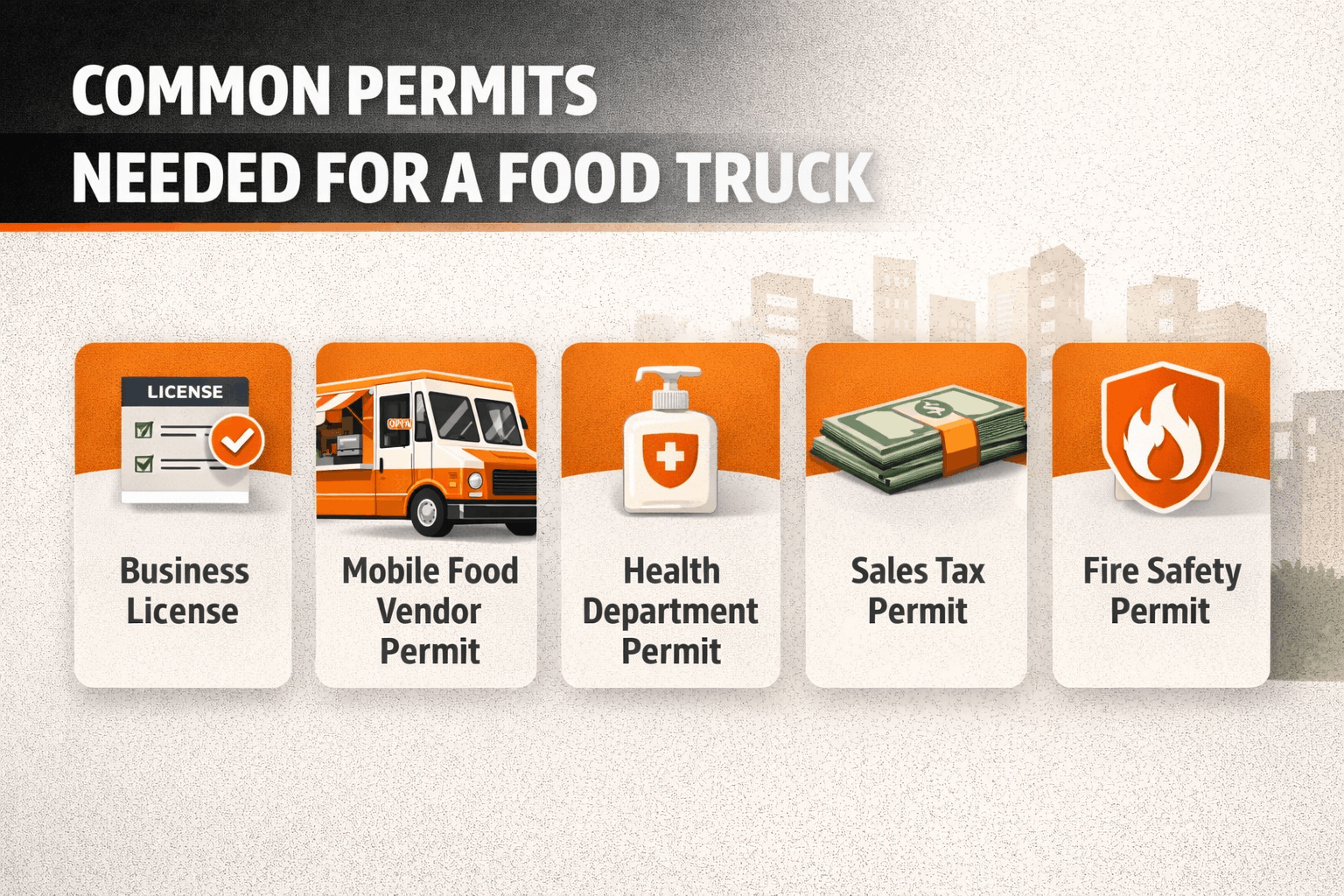
Business License
A business license registers your company with the local government. It confirms that your food truck operates as a legal business within the city or county.
The application usually requires basic information such as:
-
Business name
-
Owner information
-
Business address
-
Type of services offered
Many cities require this license before applying for other permits.
Mobile Food Vendor Permit
This is one of the most important permits for a food truck. It specifically allows a vehicle to sell food in public spaces. Local governments use this permit to control where mobile vendors operate. The permit may include rules about:
-
Operating hours
-
Approved locations
-
Distance from restaurants
-
Parking limits
In some cities, the number of vendor permits is limited. This means applicants may need to apply early or wait for available permits.
Health Department Permit
A health permit confirms that the food truck meets sanitation and food safety standards. During the approval process, inspectors review several aspects of the truck, including:
-
Food preparation surfaces
-
Refrigeration units
-
Water supply systems
-
Wastewater disposal
-
Handwashing stations
Once approved, health departments may conduct regular inspections.
Food Handler Certification
Many jurisdictions require food truck employees to complete a food safety course. This certification teaches workers how to handle food safely and prevent contamination.
Typical training topics include:
-
Safe food storage
-
Temperature control
-
Cross-contamination prevention
-
Proper cleaning procedures
Certificates usually remain valid for several years before renewal is required.
Sales Tax Permit
Food truck businesses must collect sales tax on the food they sell. A sales tax permit allows the business to collect and report these taxes to the state. Without this permit, the business cannot legally charge sales tax.
Fire Safety Permit
Food trucks that use cooking equipment must often pass a fire inspection.
Fire officials check:
-
Propane tank installation
-
Fire suppression systems
-
Emergency shut-off valves
-
Fire extinguishers
These inspections reduce the risk of kitchen fires in small mobile spaces.
Location or Parking Permit
Many cities control where food trucks can park and operate. A location permit may be required to serve food in specific zones. For example, some cities limit food trucks to certain districts or designated vending areas. Other regulations may include distance requirements from restaurants or schools.
Overview of Common Food Truck Permits
The table below shows several permits most food truck businesses must obtain.
| Permit Type | Purpose | Issuing Authority |
|---|---|---|
| Business License | Registers the business legally | City or county licensing office |
| Mobile Food Vendor Permit | Allows mobile food sales | City government |
| Health Department Permit | Ensures food safety compliance | Local health department |
| Food Handler Certification | Confirms staff food safety training | Health department or approved provider |
| Sales Tax Permit | Allows collection of sales tax | State tax agency |
| Fire Safety Permit | Reviews cooking equipment safety | Fire department |
Many food truck owners must obtain multiple permits before opening day. Each agency may have its own application process and review timeline.
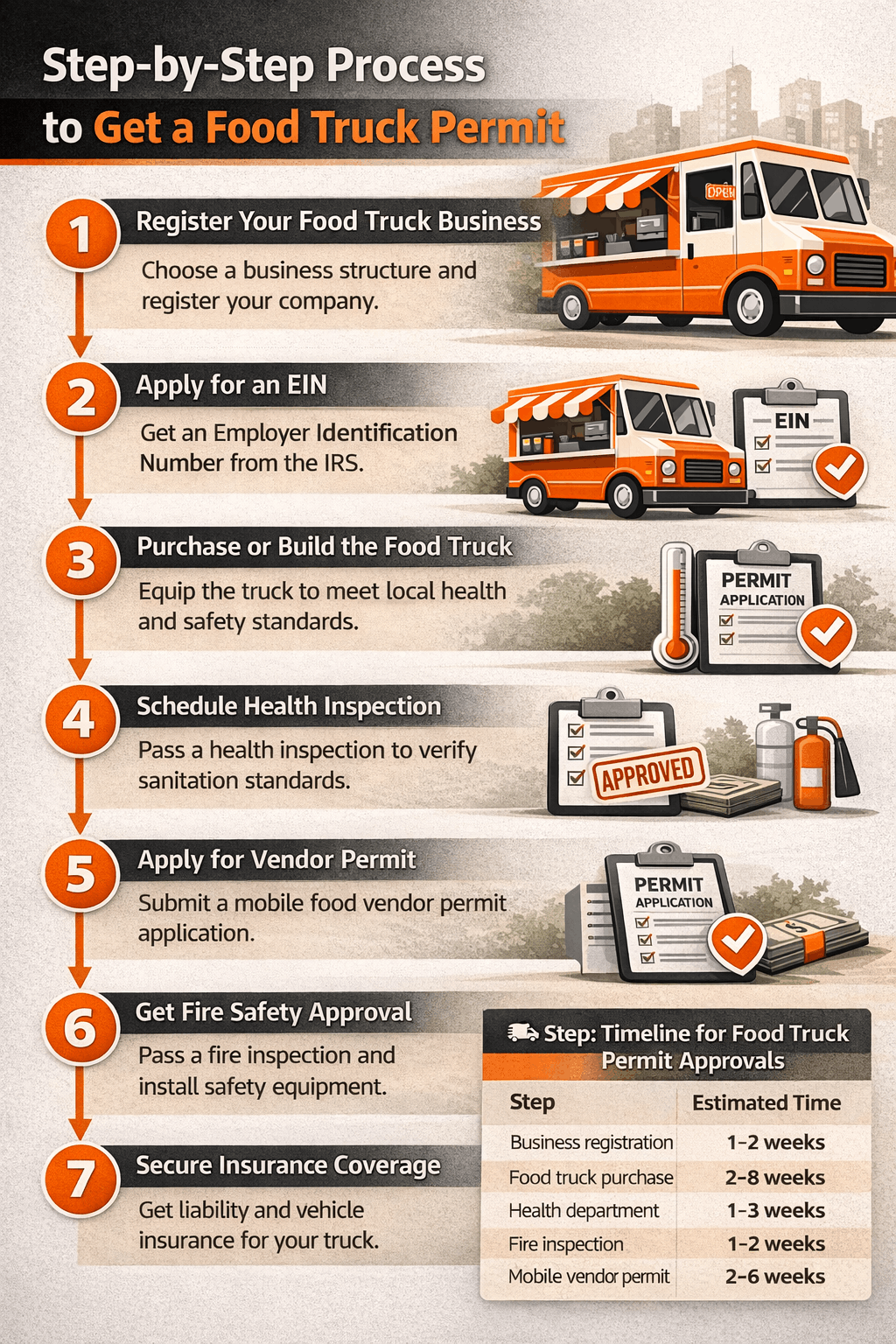
Step-by-Step Process to Get a Food Truck Permit
Applying for food truck permits usually involves several steps. While the order may vary by city, most applications follow a similar path. Understanding the process ahead of time can help prevent delays.
Step 1: Register Your Food Truck Business
The first step is to create a legal business entity. This may involve registering as:
-
A sole proprietorship
-
A limited liability company (LLC)
-
A corporation
You will also need to register your business name with the appropriate state or county office. Many cities require proof of business registration before issuing other permits.
Step 2: Apply for an Employer Identification Number (EIN)
An Employer Identification Number is issued by the Internal Revenue Service. Businesses use this number for tax reporting and payroll purposes. Even if the food truck has no employees initially, many owners still obtain an EIN for business banking and licensing applications.
Step 3: Purchase or Build the Food Truck
The vehicle must meet local health and safety requirements. Before buying a truck, check local regulations to confirm the design will be approved.
Food trucks usually need specific equipment such as:
-
Commercial cooking appliances
-
Refrigeration units
-
Handwashing sinks
-
Fresh water tanks
-
Wastewater tanks
If the truck does not meet these standards, inspectors may reject the permit application.
Step 4: Schedule a Health Department Inspection
After the truck is ready, the next step is a health inspection. Inspectors review the truck layout and food preparation systems. They confirm that the equipment meets sanitation requirements.
Common inspection points include:
-
Sink installation
-
Food storage areas
-
Cooking surfaces
-
Waste disposal systems
If the truck passes inspection, the health department will issue a permit.
Step 5: Apply for a Mobile Food Vendor Permit
Once the truck meets safety standards, the business can apply for a mobile vendor permit.
This permit allows the truck to sell food within the city limits. The application may require supporting documents such as:
-
Health permit approval
-
Business license
-
Vehicle registration
-
Insurance certificates
Processing times vary widely by city. Some approvals take a few weeks, while others may take several months.
Step 6: Obtain Fire Safety Approval
If the truck uses propane or open flame cooking equipment, a fire inspection is usually required.
Inspectors review:
-
Propane tank placement
-
Ventilation systems
-
Fire suppression equipment
-
Emergency shut-off controls
Once the truck passes inspection, the fire department issues a safety certificate.
Step 7: Secure Insurance Coverage
Most cities require proof of insurance before issuing permits.
Common policies include:
-
General liability insurance
-
Commercial vehicle insurance
-
Workers’ compensation (if employees are hired)
Insurance protects the business from accidents, property damage, or injury claims.
Example Timeline for Food Truck Permit Approvals
| Step | Estimated Time |
|---|---|
| Business registration | 1–2 weeks |
| Food truck purchase and setup | 2–8 weeks |
| Health department inspection | 1–3 weeks |
| Fire inspection | 1–2 weeks |
| Mobile vendor permit approval | 2–6 weeks |
Actual timelines vary depending on the city and how quickly applications are submitted. Planning ahead can help reduce delays and allow the food truck to begin operations sooner.
Food Truck Permit Requirements by State or City
Food truck regulations are not the same everywhere. Each city and county sets its own rules for mobile food vendors. Because of this, the permits required in one location may not apply in another.
Some cities require only a few permits. Others may require approvals from several departments before a truck can operate.
For example, a city might require permits from:
-
The city licensing office
-
The health department
-
The fire department
-
The zoning or planning office
In addition, some states require a state-level license for food businesses.
Understanding these local rules early can prevent delays. Many applicants face setbacks simply because they apply for permits in the wrong order or miss a required approval.
Examples of City-Specific Requirements
Cities regulate food trucks differently based on local policies, public safety concerns, and population density. For example, some cities require trucks to operate from a commissary kitchen, while others allow food trucks to prepare food entirely inside the vehicle.
Other cities limit the number of permits issued each year. When this happens, applicants may have to wait for the next permit cycle.
Below is a simplified example of how requirements may differ between cities.
| City Type | Common Permit Requirements |
|---|---|
| Small cities | Business license, health permit, mobile vendor permit |
| Mid-size cities | Business license, health permit, vendor permit, fire inspection |
| Large cities | Multiple permits including zoning approval, health inspections, parking permits, and fire safety certification |
Even within the same state, two nearby cities may have different application processes.
Zoning Restrictions
Zoning regulations control where food trucks can operate. These rules are designed to balance mobile vendors with existing businesses and pedestrian safety.
Some cities allow food trucks only in specific zones, such as:
-
Downtown commercial districts
-
Designated street vending areas
-
Private property with owner permission
-
Special event locations
In many areas, food trucks cannot park too close to brick-and-mortar restaurants. A common rule is maintaining a distance of 100 to 300 feet from restaurant entrances.
Cities may also restrict how long a truck can stay in one location. For example, a vendor might only be allowed to park for two or three hours before moving.
Health Department Rules
Health departments regulate how food is prepared, stored, and served from mobile kitchens. Although specific rules vary, most health departments review the same basic features.
These include:
-
Safe food storage temperatures
-
Proper refrigeration equipment
-
Handwashing sinks
-
Cleanable food preparation surfaces
-
Wastewater storage tanks
Food trucks must also keep detailed cleaning procedures and follow safe food handling practices. Inspectors may conduct routine checks during the year to ensure the truck continues meeting health standards.
Commissary Kitchen Requirements
Many cities require food trucks to operate from a commissary kitchen. A commissary is a licensed commercial kitchen where food trucks can prepare ingredients, store supplies, and dispose of waste. The commissary often serves several purposes.
Food truck operators may use it for:
-
Food preparation before service
-
Storage of ingredients and equipment
-
Cleaning utensils and containers
-
Refilling fresh water tanks
-
Disposing of wastewater
Some health departments require food trucks to return to the commissary at the end of each operating day.
Below is an example of common commissary functions.
| Commissary Function | Why It Is Required |
|---|---|
| Food preparation | Ensures safe cooking conditions |
| Ingredient storage | Keeps food in regulated refrigeration units |
| Equipment cleaning | Prevents contamination |
| Water refilling | Maintains sanitary water supply |
| Waste disposal | Prevents environmental hazards |
Before applying for permits, many cities require a signed commissary agreement showing where the truck will operate from.
Food Truck Permit Costs
Permit costs vary widely depending on the city and the number of approvals required. Some small towns charge only a few hundred dollars in total permit fees. In larger cities, the cost can be significantly higher.
Most food truck owners must pay several separate fees during the startup process.
These fees typically cover:
-
Permit applications
-
Health inspections
-
Fire inspections
-
Business registration
-
Annual renewals
Understanding these costs early helps business owners plan their startup budget.
Typical Permit Costs
While fees vary by location, the table below shows typical ranges seen in many cities.
| Permit Type | Typical Cost Range |
|---|---|
| Business license | $50 – $500 |
| Mobile food vendor permit | $100 – $1,000 |
| Health department permit | $100 – $500 |
| Fire safety inspection | $50 – $200 |
| Parking or location permit | $50 – $300 |
Some cities also charge additional application or processing fees. Because most permits must be renewed annually, owners should also budget for recurring costs.
Additional Startup Costs
Permits are only one part of the startup budget. Launching a food truck also involves several other expenses. Some of the most common startup costs include:
-
Purchasing or leasing a food truck
-
Installing kitchen equipment
-
Commercial refrigeration units
-
Initial food inventory
-
Insurance coverage
-
Branding and marketing
Food truck vehicles alone can range from $50,000 to over $150,000, depending on equipment and customization. Planning these costs carefully helps prevent financial surprises during the early stages of the business.
Annual Renewal Fees
Most food truck permits expire after one year. Owners must renew them to continue operating legally.
Renewal processes often include:
-
Updated applications
-
Fee payments
-
Health inspections
-
Fire safety inspections
Missing a renewal deadline can temporarily stop business operations. Because of this, many operators track permit expiration dates closely.
Health and Safety Regulations for Food Trucks
Food trucks must follow strict health and safety regulations. These rules protect customers from foodborne illnesses and unsafe cooking conditions. Even though the kitchen is inside a vehicle, health departments expect the same sanitation standards as traditional restaurants. Inspectors review equipment, storage systems, and cleaning procedures before issuing permits.
Food Storage Requirements
Proper food storage is essential for preventing contamination and food spoilage. Health departments require food trucks to maintain safe temperature ranges.
For example:
-
Cold foods must stay at 41°F (5°C) or below
-
Hot foods must remain at 135°F (57°C) or above
Food trucks typically install commercial refrigerators and warming units to maintain these temperatures. Operators must also store raw ingredients separately from cooked foods to prevent cross-contamination.
Sanitation and Waste Disposal
Maintaining a clean environment is critical in a small mobile kitchen. Most food trucks must include several sanitation features.
These often include:
-
Handwashing sinks with hot water
-
Separate sinks for dishwashing
-
Fresh water storage tanks
-
Wastewater tanks
Health departments also require proper waste disposal procedures. Trash must be stored safely and removed regularly. Some cities require trucks to dispose of wastewater only at approved commissary facilities.
Health Inspections
Before receiving a permit, food trucks usually undergo an initial inspection. During this inspection, officials check the truck’s equipment and layout. They also verify that all safety requirements are met. After approval, trucks may receive routine inspections throughout the year.
Inspectors often review:
-
Food storage temperatures
-
Cleanliness of surfaces and equipment
-
Proper labeling of ingredients
-
Employee hygiene practices
If violations are found, inspectors may issue warnings or temporary closures until problems are corrected. Following health regulations consistently helps food truck owners avoid fines and maintain a strong reputation with customers.
Zoning, Parking, and Location Rules for Food Trucks
Where a food truck operates is just as important as how it prepares food. Cities regulate mobile vendors to prevent traffic congestion, maintain pedestrian safety, and protect existing businesses. Because of this, food truck owners must follow zoning and parking rules before selecting operating locations.
Some areas may welcome food trucks and even create designated vendor zones. Other areas may have strict limits on where trucks can park or how long they can stay in one spot. Understanding these rules early helps avoid fines or permit violations.
Zoning Restrictions
Zoning laws determine which areas of a city allow food truck operations. These laws divide cities into zones such as residential, commercial, and industrial districts. Most cities allow food trucks only in commercial or mixed-use zones.
Common zoning rules may include:
-
Prohibiting food trucks in residential neighborhoods
-
Allowing vending only in designated commercial areas
-
Restricting operations near schools or hospitals
-
Limiting food trucks in high-traffic streets
Some cities also require food trucks to operate within designated vending districts. These zones are created specifically for street vendors.
Before choosing a location, owners should review the local zoning map or speak with the city planning department.
Parking Regulations
Parking rules control how food trucks use public streets and parking spaces. Because food trucks attract customers, cities must ensure trucks do not block sidewalks, bike lanes, or traffic lanes.
Common parking rules include:
-
Maximum time limits in one location
-
Minimum distance from intersections
-
Restrictions near fire hydrants
-
Required clearance for pedestrian walkways
In some cities, food trucks may only park in metered spaces or approved vendor spots.
Below is an example of common parking limitations.
| Parking Rule | Typical Requirement |
|---|---|
| Distance from intersections | 15–30 feet |
| Distance from restaurants | 100–300 feet |
| Maximum parking time | 2–4 hours |
| Clearance from fire hydrants | At least 15 feet |
Violating parking rules can lead to fines or permit suspension.
Private Property vs Public Property Rules
Food trucks can sometimes operate on private property instead of public streets.
Examples include:
-
Office complexes
-
Shopping centers
-
Breweries or entertainment venues
-
Event spaces
Operating on private property often requires permission from the property owner. Some cities also require an additional temporary vendor permit or zoning approval.
Private property locations are popular because they often have fewer parking restrictions. However, the truck must still comply with health and fire safety regulations.
Permits for Operating at Events
Food trucks frequently participate in events such as festivals, markets, and community gatherings. These events may require special permits separate from standard mobile vendor licenses.
Examples include:
-
Temporary food vendor permits
-
Event vendor registrations
-
Festival operation permits
Event organizers often coordinate these permits with the city. However, food truck owners are still responsible for maintaining valid health permits and safety certifications.
Participating in events can be a good way for new food truck businesses to build visibility and attract customers.
Common Challenges When Applying for Food Truck Permits
Applying for permits can be one of the most difficult parts of starting a food truck business. Many applicants face delays simply because the process involves several agencies and different types of approvals.
Understanding the most common challenges can help applicants prepare in advance.
Understanding Local Regulations
Local regulations are often detailed and technical. Food truck owners must review rules from several departments before submitting applications.
These may include:
-
Health department regulations
-
City business licensing requirements
-
Fire safety standards
-
Zoning restrictions
Because these rules vary widely between cities, researching local requirements is essential.
Multiple Agency Approvals
Unlike many other businesses, food trucks must often receive approvals from multiple agencies. Each department reviews a different part of the operation.
For example:
| Department | What They Review |
|---|---|
| Health department | Food preparation and sanitation |
| Fire department | Cooking equipment and propane systems |
| City licensing office | Business registration |
| Planning or zoning department | Operating locations |
Coordinating these approvals can take time, especially if applications must be submitted in a specific order.
Long Approval Timelines
Permit approvals rarely happen overnight. In many cities, the full process may take several weeks or even months. Several factors influence approval timelines.
These include:
-
Inspection schedules
-
Application review periods
-
Missing documentation
-
Seasonal demand for permits
Submitting complete applications early can reduce delays.
Incomplete Applications
One of the most common reasons for permit delays is incomplete paperwork. Applications may require several supporting documents, such as:
-
Vehicle registration
-
Insurance certificates
-
Food safety certifications
-
Equipment specifications
-
Commissary agreements
If any required document is missing, the application may be returned for corrections. Preparing a checklist before submitting applications can help prevent these issues.
How Permit Consulting Firms Help Food Truck Owners
Many food truck owners choose to work with permit consulting firms to simplify the application process. Permit consultants specialize in local regulations and approval procedures. Their role is to help applicants prepare documents, submit applications correctly, and communicate with city agencies.
This support can save time and reduce costly mistakes.
Navigating Complex Permit Requirements
Food truck permits involve several steps and multiple agencies. Consultants help business owners understand exactly which permits are required in their city. They also explain how different approvals connect with each other.
For example, a city may require a health permit before issuing a mobile vendor license. Understanding this sequence helps prevent delays.
Preparing Complete Applications
Permit consultants assist in organizing documents and preparing application forms.
They often help applicants gather materials such as:
-
Business registration documents
-
Health inspection paperwork
-
Equipment specifications
-
Insurance certificates
Submitting a complete application improves the chances of faster approval.
Coordinating With Local Agencies
Communication with government departments can sometimes be confusing for new applicants. Permit consultants often coordinate directly with city officials to clarify requirements or address application issues. This coordination helps resolve problems quickly.
Avoiding Delays and Rejections
Incomplete applications, missing inspections, or incorrect paperwork can delay approvals. Consultants review applications before submission to reduce these risks. By identifying issues early, they help applicants avoid common mistakes that could delay business operations.
Ensuring Compliance With Local Regulations
Food truck regulations can change over time. Permit consultants stay updated on local rules and policy updates. This helps ensure that the food truck meets current compliance requirements. For many business owners, this guidance provides peace of mind during the startup process.
Tips to Get Your Food Truck Permits Approved Faster
While the permit process can take time, there are several ways to improve approval timelines. Preparing ahead and staying organized can make a significant difference.
Start the Application Process Early
Many new food truck owners underestimate how long permit approvals may take. Starting early allows time for inspections, paperwork corrections, and scheduling delays. Some cities recommend beginning the permit process two to three months before opening day.
Check City-Specific Requirements
Permit requirements vary by location. Before purchasing equipment or modifying a truck, review local regulations carefully. Contact the city licensing office or health department to confirm the requirements. This step can prevent expensive design changes later.
Work With Local Permit Experts
Local consultants or permitting professionals understand how city departments operate. Their experience can help identify the fastest path through the approval process. In many cases, this guidance saves both time and money.
Keep Documentation Organized
Permit applications often require several supporting documents. Keeping everything organized can help avoid delays.
Common documents include:
-
Business registration records
-
Identification documents
-
Vehicle registration
-
Food safety certificates
-
Insurance policies
Maintaining a clear folder of these materials makes the application process easier.
Food Truck Permit Checklist
Before launching a food truck business, it is helpful to review a simple checklist. This ensures all required approvals are in place before beginning operations.
| Requirement | Status |
|---|---|
| Business license obtained | ☐ |
| Mobile food vendor permit approved | ☐ |
| Health department permit issued | ☐ |
| Food handler certification completed | ☐ |
| Fire safety inspection passed | ☐ |
| Parking or zoning approval confirmed | ☐ |
| Insurance coverage active | ☐ |
Reviewing this checklist before opening day can help prevent last-minute issues.
Final Thoughts on Food Truck Permits
Food trucks offer a flexible and exciting way to enter the food industry. However, operating a mobile food business requires careful attention to permits and local regulations.
Most food truck owners must obtain several approvals, including business licenses, health permits, fire inspections, and vendor permits. Cities also regulate where trucks can park and how they operate in public spaces.
Because requirements vary by location, the permit process can feel complex at first. Planning ahead and gathering the right documents early can help prevent delays.
Many business owners also work with permitting professionals to simplify the process and ensure applications meet local requirements.
With the proper permits in place, food truck operators can focus on what matters most—serving great food and building a successful mobile business.
Need Help With Food Truck Permits?
Getting the right permits can take time and involve several city departments. If you want to avoid delays and paperwork issues, JDJ Consulting can help.
- Phone: (818) 793-5058
- Email: sales@jdj-consulting.com
- Contact: https://jdj-consulting.com/contact-us/
Our team helps businesses prepare and submit permit applications so you can start operating faster.
Frequently Asked Questions About Food Truck Permits
What permits are required to start a food truck?
Starting a food truck usually requires several permits because the business involves food preparation, public sales, and vehicle operations. Requirements vary by city, but most operators need the following:
-
Business license from the city or county
-
Mobile food vendor permit
-
Health department permit
-
Food handler certification
-
Sales tax permit
-
Fire safety inspection approval
Local zoning rules may also require parking permits. Since regulations vary by location, it is important to check city and county requirements before beginning the application process.
How long does it take to get a food truck permit?
The timeline depends on the city and how quickly inspections are completed. In many locations, the full permit process takes four to eight weeks.
Several steps affect the timeline, including:
-
Health department inspections
-
Fire safety approval
-
Application processing by the city
-
Document verification
If applications are incomplete or inspections fail, approvals may take longer. Starting the process early and submitting complete documents can help reduce delays.
How much does a food truck permit cost?
Food truck permit costs vary depending on the city and the number of permits required. In most cases, owners pay several separate fees.
Typical costs include:
-
Business license: $50–$500
-
Mobile vendor permit: $100–$1,000
-
Health permit: $100–$500
-
Fire inspection: $50–$200
Some cities also charge application processing or annual renewal fees. Because costs differ widely by location, checking with the local licensing office is recommended before starting the application.
Do food trucks need health inspections?
Yes, most cities require food trucks to pass a health inspection before receiving a permit. Health departments inspect mobile kitchens to ensure they meet food safety standards.
Inspectors usually review:
-
Food storage temperatures
-
Handwashing stations
-
Refrigeration systems
-
Wastewater tanks
-
Clean preparation surfaces
After approval, trucks may receive routine inspections throughout the year. Maintaining proper sanitation and food handling practices helps ensure continued compliance.
What is a mobile food vendor permit?
A mobile food vendor permit allows a business to sell food from a vehicle in public areas. Cities use this permit to regulate where food trucks operate and ensure vendors follow local rules.
The permit often includes conditions such as:
-
Approved operating zones
-
Parking limits
-
Distance requirements from restaurants
-
Allowed operating hours
Without this permit, most cities will not allow food trucks to sell food on public streets.
Do food truck employees need food handler certification?
In many cities, employees who prepare or serve food must complete a food safety training program. This certification helps workers understand proper food handling practices.
Training typically covers:
-
Preventing cross-contamination
-
Safe food storage temperatures
-
Cleaning and sanitation procedures
-
Personal hygiene standards
Certificates usually remain valid for several years. Some jurisdictions require at least one certified food manager on duty during operating hours.
Can you operate a food truck without a permit?
Operating a food truck without proper permits is illegal in most jurisdictions. Cities regulate mobile food vendors to protect public health and maintain safe operating conditions.
If a truck operates without approval, authorities may issue:
-
Fines
-
Temporary shutdown orders
-
Permit violations
-
Business license suspension
Obtaining the proper permits before beginning operations helps avoid legal issues and ensures the business can operate safely.
Do food trucks need a commissary kitchen?
Many cities require food trucks to operate from a licensed commissary kitchen. A commissary is a commercial kitchen that supports mobile food operations.
Food trucks often use commissaries for:
-
Preparing ingredients
-
Storing food supplies
-
Cleaning equipment
-
Refilling water tanks
-
Disposing of wastewater
Some health departments require trucks to return to the commissary daily. A signed commissary agreement may be required during the permit application process.
What is a health department permit for food trucks?
A health department permit confirms that the food truck meets sanitation and food safety requirements. Inspectors evaluate the truck’s equipment, layout, and food preparation practices.
Typical inspection areas include:
-
Refrigeration systems
-
Cooking equipment
-
Sink installations
-
Water supply systems
-
Waste disposal methods
Once approved, the permit allows the food truck to legally prepare and sell food to the public.
Can a food truck operate in multiple cities?
Yes, food trucks can operate in multiple cities, but each location may require its own permits. Mobile vendors must follow the regulations of every jurisdiction where they operate.
This may involve obtaining:
-
Separate mobile vendor permits
-
Additional health department approvals
-
Event or temporary vendor permits
Because requirements vary by city, owners should research local rules before expanding operations to new locations.
Do food trucks need fire inspections?
Food trucks that use cooking equipment usually require fire department inspections. This review ensures that propane systems and cooking appliances meet safety standards.
Inspectors often check:
-
Propane tank installation
-
Fire suppression systems
-
Emergency shut-off valves
-
Fire extinguishers
Passing the fire inspection helps reduce the risk of kitchen fires and ensures the truck complies with local safety regulations.
What licenses are needed to run a food truck business?
Food truck owners often need several licenses to operate legally. While requirements vary by location, most businesses must obtain multiple approvals.
Common licenses include:
-
Business license
-
Mobile food vendor permit
-
Health department permit
-
Sales tax permit
-
Fire safety certification
Additional permits may apply for events or specific operating zones. Checking local requirements early helps ensure the correct licenses are obtained.
Do food trucks need insurance?
Yes, most cities require food truck businesses to carry insurance before receiving permits. Insurance protects both the business and the public from potential risks.
Common policies include:
-
General liability insurance
-
Commercial vehicle insurance
-
Workers’ compensation for employees
Some cities require proof of insurance during the permit application process. Maintaining proper coverage helps protect the business from accidents or property damage claims.
Where can food trucks legally park?
Food truck parking locations depend on local zoning and city regulations. Many cities restrict where mobile vendors can operate.
Typical permitted locations include:
-
Commercial districts
-
Designated vending areas
-
Private property with permission
-
Special events or festivals
Cities often enforce distance rules from restaurants and intersections. Checking local zoning rules helps ensure the truck parks in approved areas.
What zoning rules apply to food trucks?
Zoning laws determine where food trucks can operate within a city. These regulations help manage traffic, safety, and business activity.
Common zoning rules may include:
-
Limiting trucks to commercial districts
-
Restricting operations in residential areas
-
Setting minimum distance from restaurants
-
Allowing vending only in designated zones
Because zoning rules differ by city, food truck owners should review the local zoning map before choosing operating locations.
How often do food truck permits need to be renewed?
Most food truck permits require annual renewal. Renewal processes ensure the truck continues meeting health and safety standards.
Renewal may involve:
-
Paying renewal fees
-
Updating business information
-
Passing additional health inspections
-
Confirming insurance coverage
Missing renewal deadlines can temporarily stop business operations, so owners should track permit expiration dates carefully.
What documents are required for a food truck permit application?
Permit applications typically require several supporting documents. Preparing these materials ahead of time can help speed up the approval process.
Common documents include:
-
Business registration records
-
Vehicle registration
-
Insurance certificates
-
Equipment specifications
-
Commissary agreements
Some cities also require floor plans or photos of the truck’s kitchen layout.
Are food trucks allowed at events and festivals?
Yes, food trucks commonly operate at festivals, fairs, and community events. However, these events may require additional permits.
Event permits may include:
-
Temporary vendor permits
-
Festival food permits
-
Event registration approvals
Event organizers sometimes coordinate permits with the city, but food truck owners must still maintain valid health and safety certifications.
Why do food truck permits take so long to approve?
Food truck permits often take time because multiple departments review the application. Each agency focuses on a different aspect of the business.
Common review steps include:
-
Health department inspections
-
Fire safety evaluations
-
Business licensing review
-
Zoning approval
If documents are missing or inspections fail, the process may take longer. Submitting complete applications early helps improve approval timelines.
Can a permit consulting firm help with food truck permits?
Yes, permit consulting firms assist businesses with preparing and submitting permit applications. Their goal is to simplify the approval process and reduce delays.
Consultants often help with:
-
Identifying required permits
-
Preparing application documents
-
Coordinating inspections
-
Communicating with city agencies
Working with permit professionals can save time and help ensure applications meet local requirements.