When you plan a construction project, one question comes up early. Should you build from scratch, or improve what already exists?
This choice affects everything. It shapes your budget, timeline, design options, and long-term value. It also impacts how smoothly your project runs.
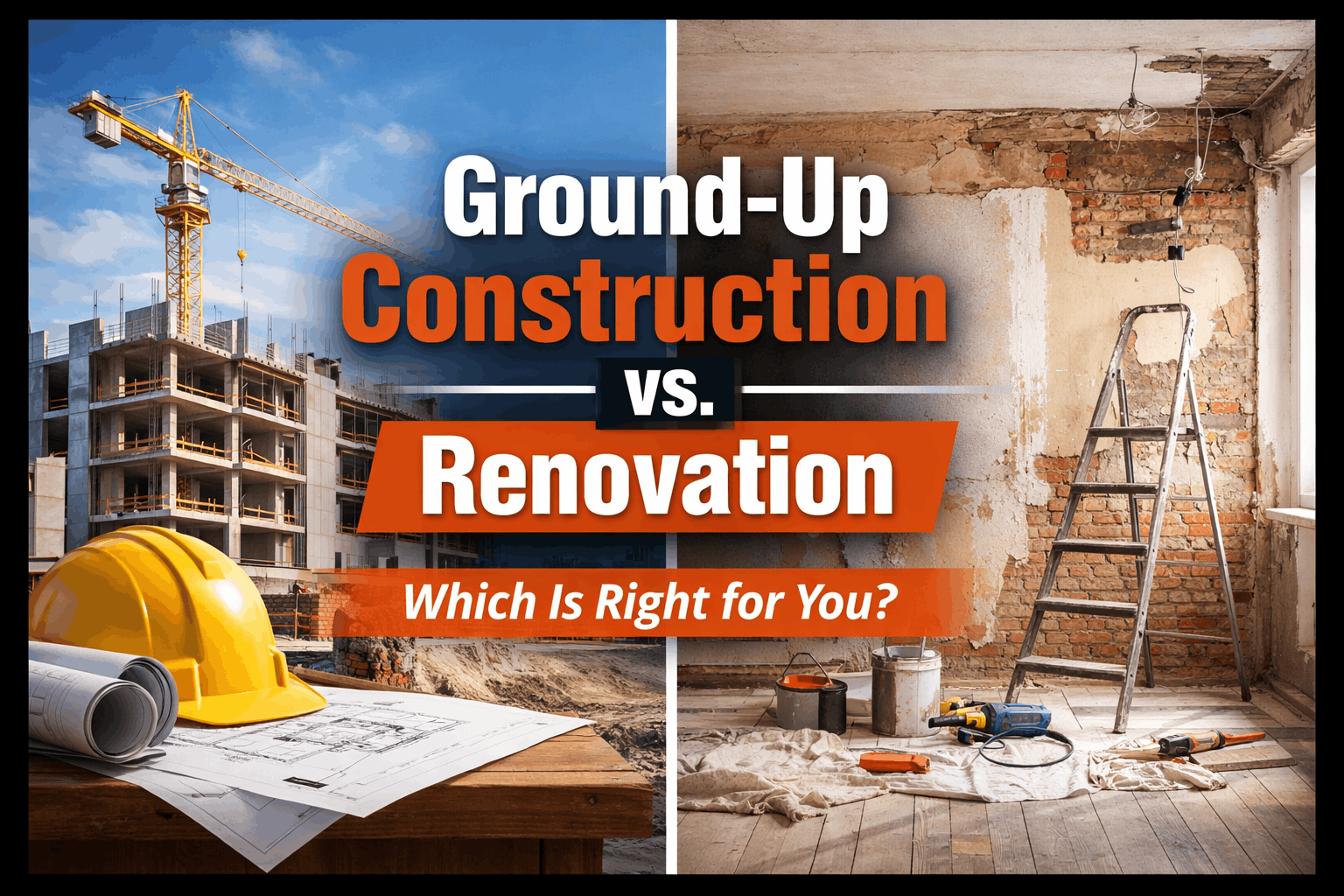
Ground-up construction means starting fresh. You build a new structure on an empty site. Renovation, on the other hand, improves or updates an existing building.
At first, renovation may seem easier and cheaper. In many cases, it is. However, new construction gives you full control. It often performs better over time.
So, which option is right for you? The answer depends on your goals. It also depends on your budget, timeline, and the condition of your current property.
In this guide, we will break everything down in simple terms. You will learn how each option works, where it fits best, and what to expect along the way.
What Is Ground-Up Construction?
Ground-up construction is exactly what it sounds like. You start with an empty piece of land and build a structure from the foundation up.
This approach gives you full control over every detail. You are not working around an existing structure. Instead, you create a building that fits your needs from day one.
Simple Definition of Ground-Up Construction
Ground-up construction refers to building a new structure on a vacant site.
It includes everything:
- Site preparation
- Foundation work
- Structural framing
- Mechanical, electrical, and plumbing systems
- Interior and exterior finishes
Because everything is new, there are fewer unknowns. That said, the process takes more time and planning.
Key Stages of Ground-Up Construction
Ground-up projects follow a clear sequence. Each stage builds on the previous one.
Here is a simple breakdown:
| Stage | What Happens |
|---|---|
| Pre-Construction | Planning, budgeting, permits, design |
| Site Preparation | Clearing land, grading, utilities setup |
| Foundation | Pouring concrete, base structure work |
| Structural Build | Framing walls, roof, core systems |
| Systems Installation | Electrical, plumbing, HVAC |
| Finishing | Interiors, flooring, fixtures, final touches |
Each phase requires coordination. Delays in one step can affect the rest. That is why planning is critical.
Common Types of Ground-Up Projects
Ground-up construction is common in several sectors.
You will often see it used for:
- Commercial office buildings
- Retail centers
- Industrial facilities
- Custom residential homes
These projects need specific layouts. They also require modern systems and long-term performance.
When Ground-Up Construction Is Typically Used
This option works best in certain situations.
For example:
- There is no existing structure on the site
- The current building cannot be saved
- You need full design flexibility
- You are planning for long-term use
It is also a strong choice when efficiency matters. New buildings often perform better. They use less energy and require less maintenance over time. Still, ground-up construction requires a higher upfront investment. It also takes longer to complete.
What Is Renovation? (And How It Differs from Remodeling)
Renovation focuses on improving what already exists. Instead of building from scratch, you update or upgrade a current structure. This approach can save time and money. However, it comes with some limits.
Simple Definition of Renovation
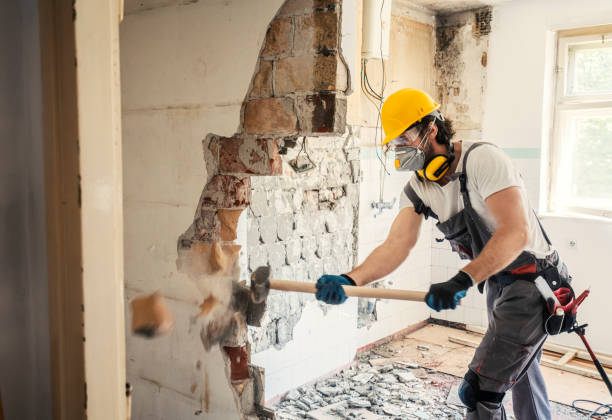
Renovation means restoring or upgrading an existing building. The goal is not to rebuild. Instead, you improve functionality, appearance, or safety.
This could include:
- Replacing outdated materials
- Upgrading systems
- Improving layout without major structural changes
In many cases, renovation keeps the original structure intact.
Types of Renovation Projects
Renovation can vary in scope. Some projects are small, while others are more complex.
Here are the main types:
1. Cosmetic Renovation
- Painting
- Flooring updates
- Fixtures and finishes
These are quick and cost-effective changes.
2. Structural Renovation
- Moving walls
- Reinforcing foundations
- Layout adjustments
These projects require more planning and permits.
3. System Upgrades
- Electrical upgrades
- Plumbing replacement
- HVAC improvements
These changes improve performance and safety.
Renovation vs Remodeling vs Reconstruction
Many people use these terms interchangeably. However, they are not the same.
Here is a simple comparison:
| Type | Scope | Example |
|---|---|---|
| Renovation | Improve existing space | Update office interior |
| Remodeling | Change layout or structure | Open floor plan |
| Reconstruction | Rebuild damaged areas | Restore after fire |
Understanding these differences helps you choose the right approach.
When Renovation Makes Sense
Renovation is often the better choice when:
- The building structure is still strong
- You want to reduce costs
- You need faster project completion
- The location is valuable
For example, upgrading an office in a prime area makes more sense than rebuilding it. However, renovation can come with surprises. Older buildings may have hidden issues. These can increase costs and extend timelines.
Ground-Up Construction vs Renovation: Key Differences Explained
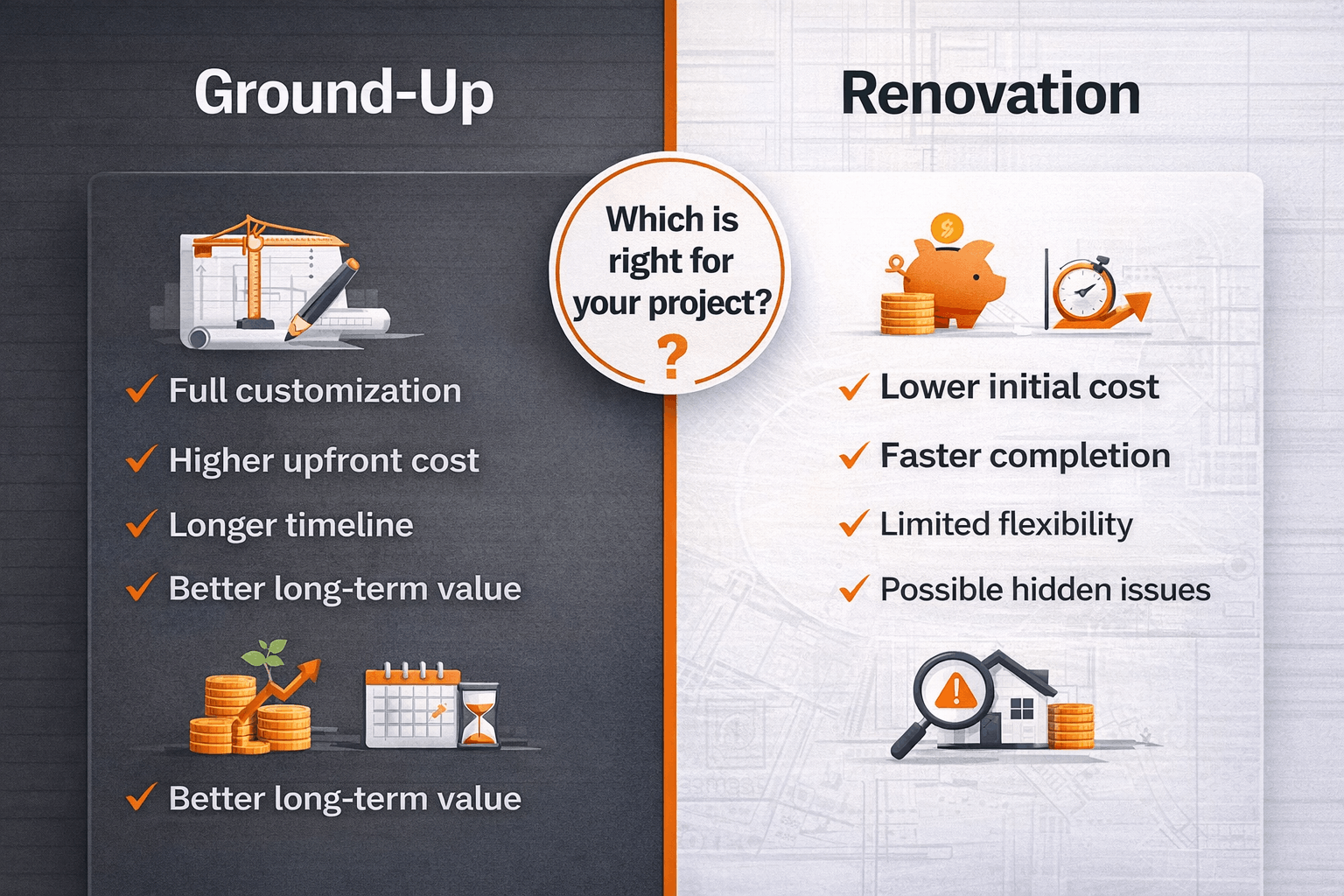
Now that you understand both options, let’s compare them directly. Each approach has strengths and trade-offs. The right choice depends on your priorities.
Side-by-Side Comparison Table
| Factor | Ground-Up Construction | Renovation |
|---|---|---|
| Initial Cost | Higher upfront cost | Lower upfront cost |
| Timeline | Longer (12–18+ months) | Shorter (weeks to months) |
| Design Flexibility | Full control | Limited by existing structure |
| Risk Level | More predictable | Hidden issues possible |
| Maintenance | Lower long-term costs | May require ongoing repairs |
This table highlights the core differences. However, your decision should go beyond these basics.
Cost Differences in Simple Terms
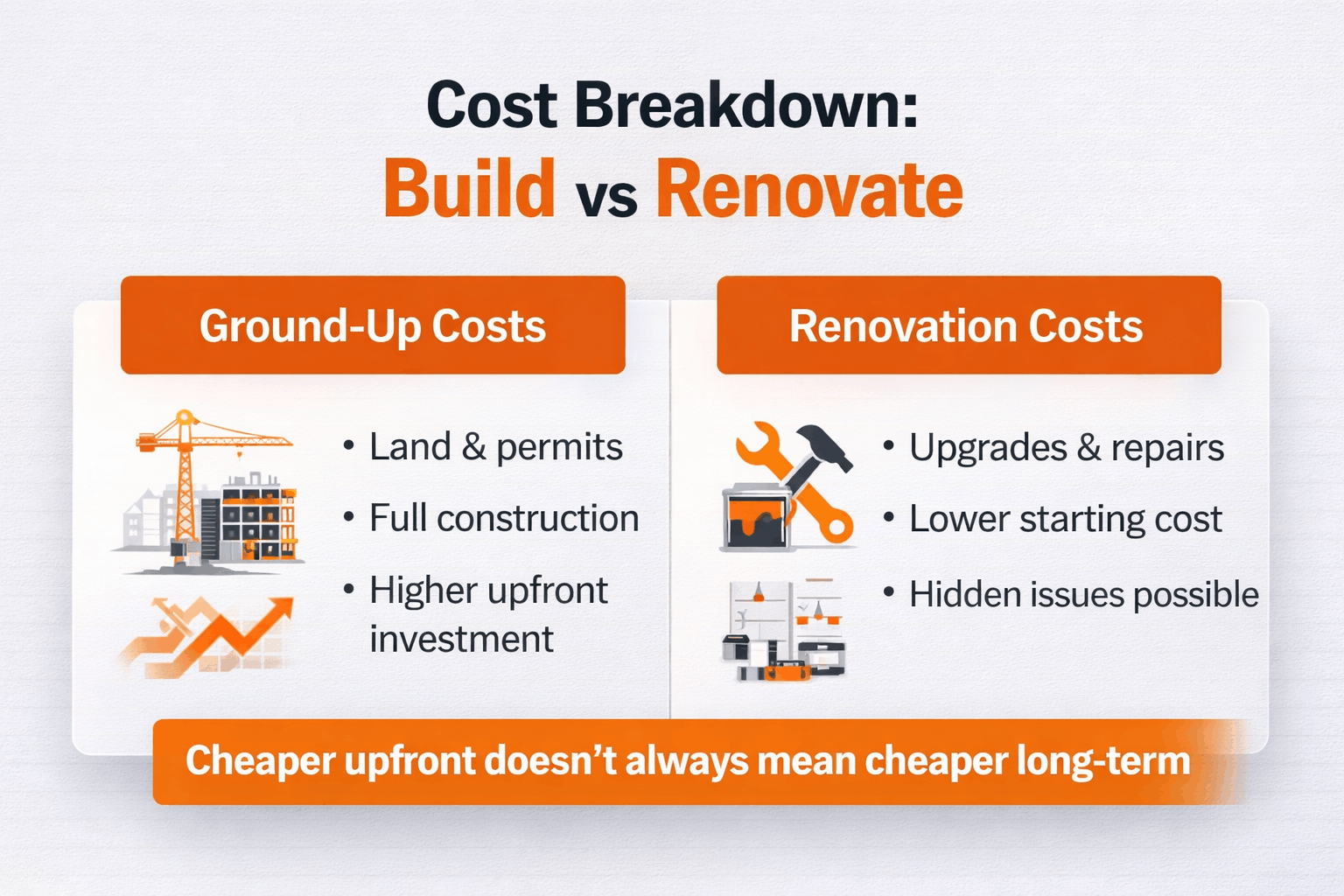
Ground-up construction costs more at the start. You pay for land development, materials, and full construction. Renovation costs less initially. However, unexpected repairs can increase the total cost. So, while renovation looks cheaper, it is not always the case in the long run.
Timeline and Project Speed
Renovation is usually faster. In many cases, projects finish within a few weeks or months. Ground-up construction takes longer. Planning, permits, and building all add time. If speed matters, renovation often wins.
Flexibility and Design Control
This is where ground-up construction stands out.
You can design everything:
- Layout
- Materials
- Systems
- Future expansion
Renovation limits your options. You must work within the existing structure.
Risk and Uncertainty
Ground-up projects are more predictable. You start fresh, so there are fewer surprises.
Renovation can reveal hidden problems. These may include:
- Old wiring
- Structural damage
- Code compliance issues
These risks can affect both budget and timeline.
Cost Comparison: Which Option Fits Your Budget?
Cost is often the deciding factor. However, it is not just about the upfront price. You also need to think about long-term expenses. Ground-up construction usually costs more at the start. Renovation often looks more affordable. Still, the full picture is more complex.
Upfront Costs Breakdown
Ground-up construction includes several major cost areas:
- Land preparation
- Permits and approvals
- Design and engineering
- Materials and labor
- Full system installation
Because everything is new, the initial investment is higher. Renovation, on the other hand, focuses on improving what exists. This reduces some major expenses.
Typical renovation costs include:
- Labor for upgrades
- Material replacements
- System improvements
- Minor structural changes
Here is a simple comparison:
| Cost Element | Ground-Up Construction | Renovation |
|---|---|---|
| Land Prep | Required | Not needed |
| Design | Full design required | Partial design |
| Materials | All new | Partial replacement |
| Labor | High | Moderate |
| Permits | Extensive | Limited to scope |
This table shows why renovation often appears more budget-friendly.
Hidden Costs to Watch Out For
Hidden costs are where many projects go off track.
In renovation, surprises are common. Older buildings may have:
- Outdated wiring
- Plumbing issues
- Structural damage
- Code violations
These problems are not always visible at the start. Once discovered, they increase both cost and time.
Ground-up construction has fewer hidden issues. Still, some risks remain:
- Soil problems
- Permit delays
- Material price changes
While these are easier to plan for, they still affect the budget.
Long-Term Cost Efficiency
Looking beyond the initial cost is important.
New buildings often perform better. They use modern systems and materials. This leads to:
- Lower energy costs
- Fewer repairs
- Better efficiency
Renovated buildings may still carry older components. Even after upgrades, some parts remain outdated. Over time, this can lead to higher maintenance costs.
Financing Considerations
Financing also plays a role in your decision. Renovation projects are usually easier to fund. They require smaller loans and shorter timelines.
Ground-up construction often needs:
- Larger capital investment
- Longer financing terms
- Detailed planning before approval
Because of this, many businesses choose renovation when cash flow is limited.
Timeline: Which Option Is Faster?
Time matters in any construction project. Delays can affect operations, revenue, and planning. In most cases, renovation is faster. Ground-up construction takes more time due to its complexity.
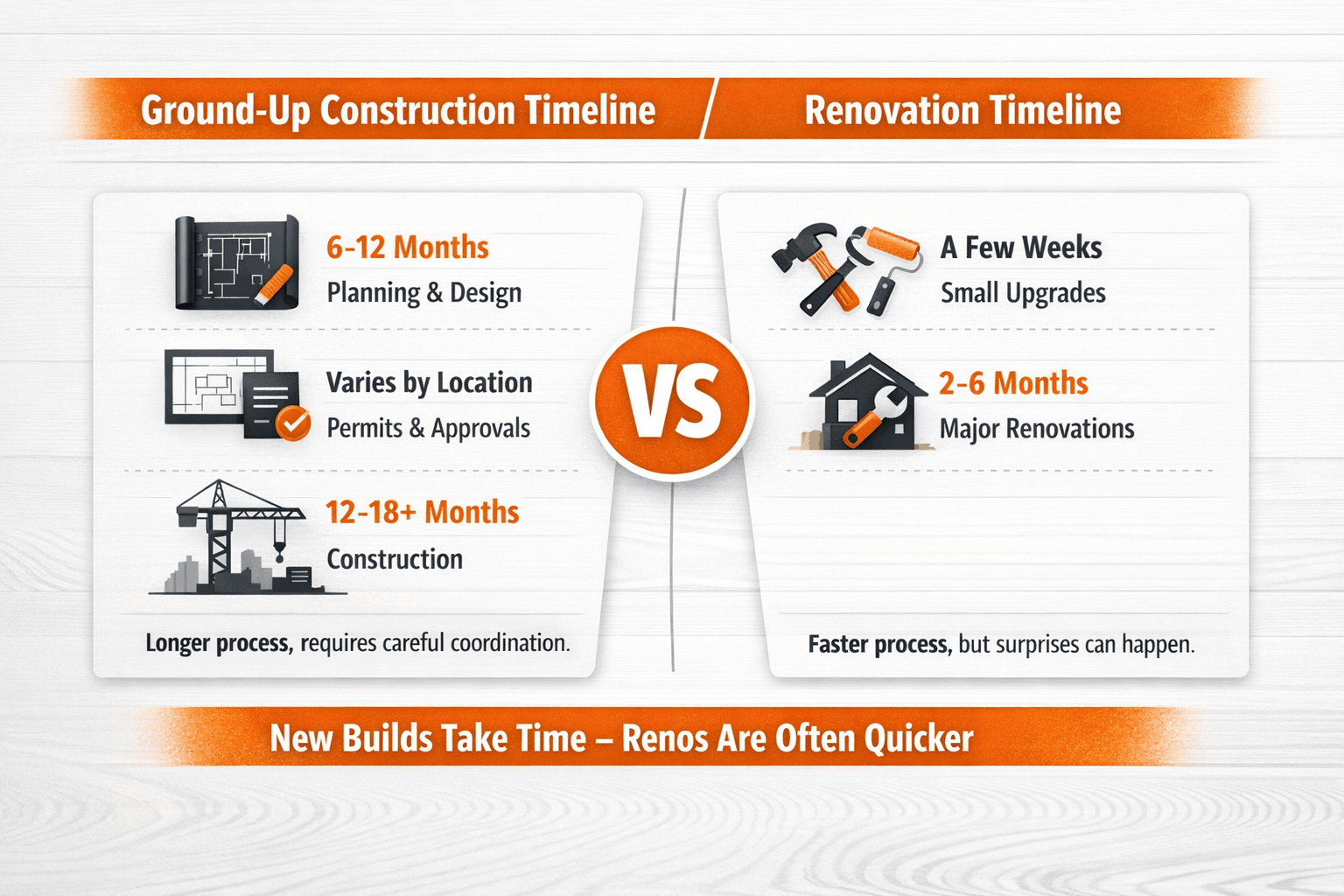
Ground-Up Construction Timeline
The ground-up projects follow a longer process.
Typical timeline:
- Planning and design: 6–12 months
- Permits and approvals: varies by location
- Construction: 12–18+ months
Each phase depends on the previous one. Delays in permits or materials can extend the schedule. Because of this, ground-up construction requires patience and careful coordination.
Renovation Timeline
Renovation projects are usually quicker.
Most projects fall within:
- A few weeks for small upgrades
- Several months for larger renovations
Since the structure already exists, there is less work to do. However, unexpected issues can still slow things down. For example, discovering structural damage may require additional repairs.
Impact on Business Operations
Your timeline also affects daily operations.
Renovation projects often happen while the building is in use. This can lead to:
- Noise and disruption
- Temporary closures
- Reduced productivity
Ground-up construction avoids this issue. Since the building is new, operations start after completion.
Here is a quick comparison:
| Factor | Ground-Up Construction | Renovation |
|---|---|---|
| Project Duration | Long | Short |
| Operational Disruption | None during build | Possible disruption |
| Move-In Time | Delayed | Faster |
Choosing the right option depends on how quickly you need the space.
Design Flexibility: How Much Control Do You Really Have?
Design flexibility is one of the biggest differences between these two options. If your project requires a specific layout or function, this section becomes critical.
Full Customization in Ground-Up Projects
Ground-up construction offers complete control.
You can design everything from the start:
- Floor plans
- Structural layout
- Electrical and mechanical systems
- Interior and exterior finishes
This allows you to create a space that fits your exact needs.
For example:
- Offices can be designed for workflow efficiency
- Retail spaces can improve customer experience
- Industrial buildings can support operations better
You are not limited by an existing structure.
Limitations of Renovation
Renovation comes with built-in constraints.
You must work within:
- Existing walls and structure
- Load-bearing elements
- Current building layout
While changes are possible, they often increase cost and complexity.
Some limitations include:
- Restricted layout changes
- Limited ceiling heights
- Older infrastructure
Because of this, renovation works best when only moderate changes are needed.
Balancing Creativity and Practical Limits
Even with limitations, renovation can still deliver strong results. In some cases, working within constraints leads to smarter design choices.
For example:
- Reusing structural elements saves cost
- Keeping layout reduces construction time
- Targeted upgrades improve performance
The key is to balance creativity with practicality.
ROI and Long-Term Value
Cost and timeline matter. However, long-term value is just as important. You want your investment to perform well over time. Both options can deliver strong returns. The difference lies in how and when that return happens.
Return on Investment for Ground-Up Construction
Ground-up construction focuses on long-term gains.
Because everything is new, the building performs better from day one. You benefit from:
- Modern systems and materials
- Better energy efficiency
- Lower maintenance costs
- Longer building lifespan
These factors reduce operating expenses over time. In addition, new buildings often attract higher-value tenants or buyers. This can increase rental income and resale value.
However, the return takes longer to realize. The higher upfront cost means it may take years to fully recover your investment.
ROI for Renovation Projects
Renovation offers faster returns.
Since the initial cost is lower, you can start seeing results sooner. This is especially true for:
- Commercial upgrades
- Office improvements
- Retail remodels
If the property is in a prime location, renovation can quickly increase its value. However, long-term performance depends on the quality of upgrades. If major systems remain outdated, maintenance costs may rise over time.
Property Value Comparison
Here is a simple way to compare long-term value:
| Factor | Ground-Up Construction | Renovation |
|---|---|---|
| Initial Investment | High | Moderate |
| Time to ROI | Longer | Shorter |
| Resale Value | High | Moderate to High |
| Maintenance Costs | Low | Medium to High |
| Energy Efficiency | High | Depends on upgrades |
This table shows a clear pattern. Ground-up construction wins in long-term value, while renovation delivers quicker returns.
Risks and Challenges You Need to Know
Every construction project carries risk. The key is understanding those risks early. This helps you plan better and avoid costly mistakes.
Risks in Ground-Up Construction
Ground-up construction is more structured, but it still has challenges.
Common risks include:
- Permit delays
- Zoning restrictions
- Budget overruns
- Supply chain issues
Since the project starts from scratch, approvals take time. Delays in permits can push the entire timeline. In addition, material prices may change during construction. This can increase overall costs.
Risks in Renovation Projects
Renovation often comes with more uncertainty.
Older buildings can hide serious problems. These may include:
- Structural weaknesses
- Outdated electrical systems
- Plumbing issues
- Code compliance gaps
These problems are not always visible during initial inspections.
Once discovered, they can:
- Increase costs
- Delay completion
- Require design changes
Because of this, renovation projects need careful planning.
How to Reduce Risk (Expert Tips)
You can reduce risk with the right approach.
Here are some practical steps:
- Conduct a detailed site inspection before starting
- Work with experienced consultants and engineers
- Build a contingency budget (10–20%)
- Review local codes and permit requirements early
Planning ahead makes a big difference. It helps keep your project on track.
Sustainability and Environmental Impact
Sustainability is becoming more important in construction. Many projects now focus on energy efficiency and environmental impact. Both options offer benefits, but in different ways.
Why Renovation Is More Eco-Friendly Initially
Renovation reuses existing structures. This reduces waste and limits the need for new materials.
Key benefits include:
- Less demolition waste
- Lower material consumption
- Reduced environmental impact at the start
Because of this, renovation is often seen as the greener short-term option.
Why New Construction Wins Long-Term
Ground-up construction allows you to build with efficiency in mind.
You can include:
- Energy-efficient HVAC systems
- Smart building technology
- High-performance insulation
- Sustainable materials
These features reduce energy use over time. Although the initial impact is higher, long-term sustainability is often better.
Green Building Considerations
Whether you build new or renovate, you can still focus on sustainability.
Some key considerations include:
- Energy-efficient lighting and systems
- Water-saving fixtures
- Use of recycled or low-impact materials
- Compliance with green building standards
Making these choices early improves both performance and value.
Compliance, Permits, and Regulations
Every construction project must meet local codes and regulations. This step is often overlooked, yet it can affect both cost and timeline. Understanding the approval process early helps avoid delays.
Permitting for Ground-Up Construction
Ground-up construction requires full approvals. Since you are building from scratch, every detail must meet current codes.
This usually includes:
- Zoning approvals
- Environmental checks
- Building permits
- Utility approvals
Because of this, the process can take time. Reviews may happen in stages, and each stage needs approval before moving forward. In many cases, design changes are required to meet code. This can impact both schedule and budget.
Renovation Compliance Challenges
Renovation projects may seem simpler, but they come with their own challenges.
Older buildings often do not meet current standards. When you renovate, you may need to upgrade:
- Electrical systems
- Fire safety systems
- Accessibility features (ADA compliance)
- Structural elements
These updates are not always optional. Local authorities may require them before approving your project.
This can increase both cost and scope.
Local Code Considerations
Building codes vary by location. What works in one city may not apply in another.
Key factors include:
- Safety regulations
- Energy efficiency standards
- Zoning restrictions
- Occupancy requirements
Because of this, working with a local expert is important. It ensures your project meets all requirements from the start.
When Should You Choose Ground-Up Construction?
Ground-up construction is not always the default choice. However, in the right situation, it offers clear advantages.
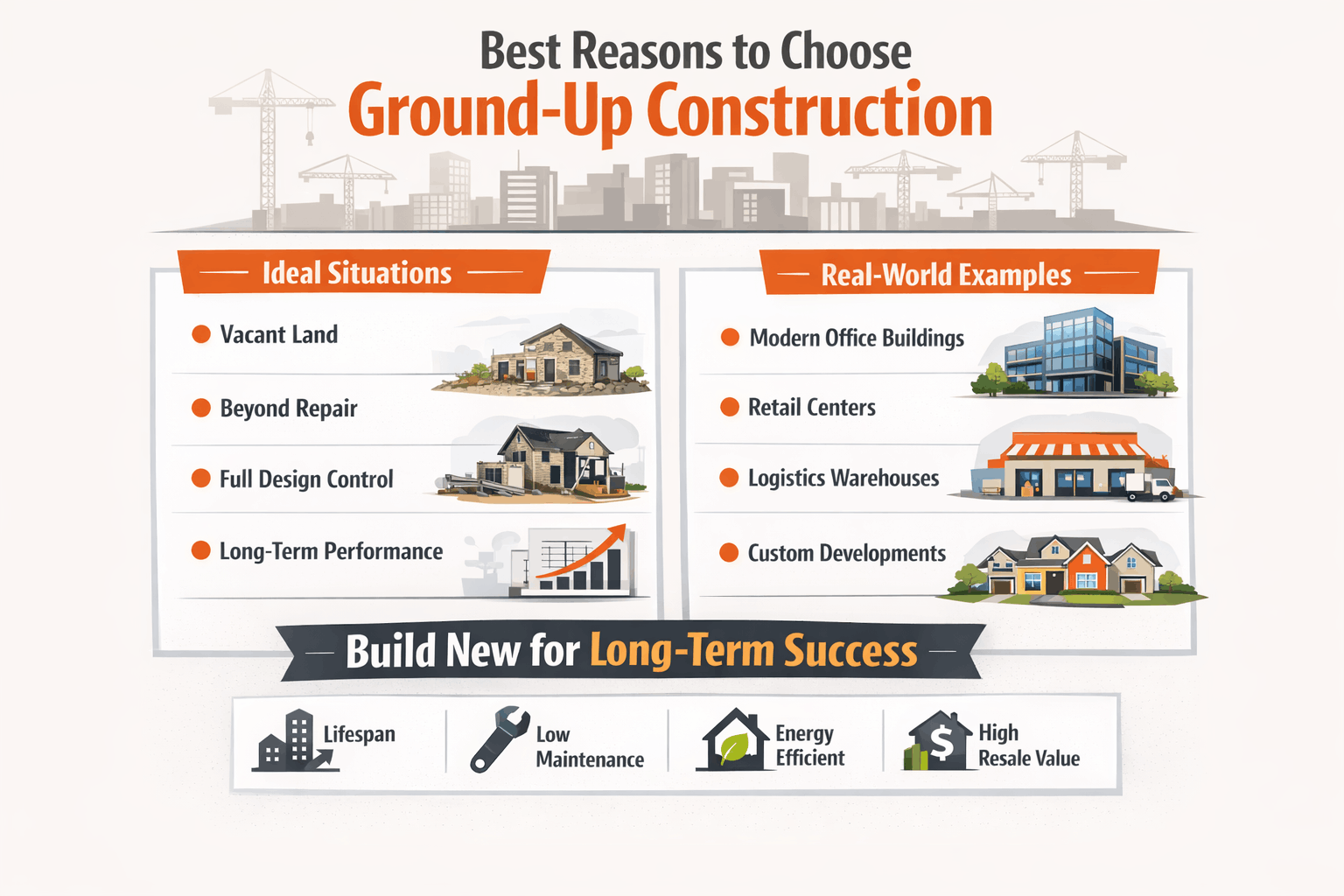
Best Scenarios for New Construction
You should consider ground-up construction when:
- The land is vacant
- The existing structure is beyond repair
- You need full design control
- Long-term performance is a priority
It is also ideal when your project has specific operational needs. For example, industrial facilities or large commercial spaces often require custom layouts.
Real-World Example Use Cases
Ground-up construction is commonly used for:
- Office buildings designed for modern workflows
- Retail centers with optimized layouts
- Warehouses built for efficiency and logistics
- Custom residential developments
In these cases, starting fresh allows better planning and performance.
Why It Works for Long-Term Goals
If you are planning for the future, ground-up construction offers strong benefits.
You get:
- A longer building lifespan
- Lower maintenance costs
- Better energy efficiency
- Higher resale value
While the upfront cost is higher, the long-term return often justifies the investment.
When Should You Choose Renovation?
Renovation is a practical choice in many situations. It works well when speed and cost are key priorities.
Best Scenarios for Renovation
Renovation is the better option when:
- The structure is still in good condition
- You have a limited budget
- You need faster project completion
- The location is highly valuable
For example, upgrading a building in a prime business area often makes more sense than rebuilding it.
Real-World Example Use Cases
Renovation is commonly used for:
- Office upgrades to improve functionality
- Retail remodels to enhance customer experience
- Restaurant updates to meet new standards
- Residential property improvements
These projects focus on improving value without starting from zero.
Why It Works for Short-Term Goals
Renovation delivers quicker results.
You can:
- Reduce upfront costs
- Complete projects faster
- Start using the space sooner
However, long-term performance depends on the quality of upgrades. If major systems are not updated, future costs may increase.
Hybrid Approach: Can You Combine Both?
In some cases, you do not have to choose one option. A hybrid approach combines elements of both. This can offer a balanced solution.
What Is a Hybrid Construction Strategy?
A hybrid project involves:
- Keeping part of the existing structure
- Rebuilding or expanding other sections
This approach allows you to improve functionality while controlling costs.
When Hybrid Makes Sense
A hybrid strategy works best when:
- The core structure is strong
- You need additional space
- Full demolition is not practical
- Budget and timeline need balance
For example, you might keep the main structure but add a new extension.
Benefits of Hybrid Projects
This approach offers several advantages:
- Lower cost than full new construction
- More flexibility than simple renovation
- Improved performance and usability
- Reduced construction waste
It is a practical option when both cost and customization matter.
Decision-Making Checklist (Quick and Practical)
Choosing between ground-up construction and renovation can feel overwhelming. A simple checklist can help you decide.
Quick Questions to Ask Yourself
Before making a decision, consider:
- What is my total budget?
- How quickly do I need the project completed?
- Is the existing structure usable?
- Do I need full design flexibility?
- Am I planning for short-term or long-term use?
These questions help clarify your priorities.
Simple Decision Table
| Situation | Best Choice |
|---|---|
| Tight budget | Renovation |
| Need full customization | Ground-Up Construction |
| Fast turnaround required | Renovation |
| Long-term investment focus | Ground-Up Construction |
| Existing structure in good shape | Renovation |
| Major structural issues present | Ground-Up Construction |
This table gives a quick direction. However, every project is unique, so expert guidance is always helpful.
Expert Tips to Choose the Right Option
Making the right decision requires careful planning. Small mistakes early can lead to bigger issues later.
Work With a Construction Consultant
A consultant helps you:
- Evaluate your options
- Estimate accurate costs
- Plan timelines
- Reduce risks
This is especially important for complex projects.
Evaluate Total Cost (Not Just Initial Cost)
Do not focus only on upfront expenses.
Instead, consider:
- Maintenance costs
- Energy efficiency
- Future upgrades
A cheaper option today may cost more later.
Think Long-Term, Not Just Short-Term
Your decision should match your long-term goals. If you plan to hold the property for years, investing in new construction may make sense. If you need quick results, renovation may be the better choice.
Why Choosing the Right Construction Partner Matters
No matter which option you choose, the right team makes a big difference.
Role of Construction Consultants
A strong construction partner helps with:
- Project planning
- Budget control
- Risk management
- Compliance and permits
They ensure your project runs smoothly from start to finish.
How JDJ Consulting Can Help
At JDJ Consulting, the focus is on practical solutions.
The team helps you:
- Plan your project clearly
- Control costs from the start
- Avoid delays and compliance issues
- Choose the best construction approach for your goals
This support reduces stress and improves project outcomes.
Final Verdict: Ground-Up vs Renovation
There is no single right answer. The best choice depends on your situation.
Key Takeaways
- Renovation is faster and more budget-friendly upfront
- Ground-up construction offers full control and long-term value
- Renovation works well for upgrades and short-term goals
- Ground-up construction is better for long-term investment and performance
In simple terms:
- Choose renovation if you want speed and lower cost
- Choose ground-up construction if you want flexibility and long-term benefits
Final Thought
Every project is different. The key is to align your decision with your goals, budget, and timeline. When you plan carefully and work with the right team, both options can deliver strong results.