Starting a construction or renovation project is exciting. You may want to move quickly and begin work right away. However, before any work starts, most projects must be approved by your local building department. That approval comes in the form of a building permit.
A permit is not just paperwork. It confirms that your project meets local safety rules, zoning laws, and construction codes. These requirements exist to protect your home, your investment, and the people who live or work on the property. Without the right permit, even a small project can lead to delays, penalties, or legal trouble later on.
For property owners and contractors, this is often the first step in the construction process. It is also where many projects slow down due to missing documents or incorrect applications.
That is why working with a permit consulting team like JDJ Consulting can help move your project forward with fewer issues from the start.
What a Building Permit Actually Approves
Many homeowners believe a permit only allows them to begin work. In reality, it does much more.
When a permit is issued, the city is confirming that:
Your plans meet building safety codes
The work follows zoning rules
Electrical or plumbing systems meet standards
Structural changes are safe
Fire safety rules are followed
It also allows the city to inspect the work at different stages. These inspections help confirm that the project is being completed safely. For example, if you are adding a room or changing a load-bearing wall, the permit ensures the structure will remain stable after construction.
If you are installing new wiring, the permit helps confirm that the electrical system will not create fire risks. In short, a permit protects both the property owner and future occupants.

Types of Projects That Require Property Permits
Permit requirements vary by location. Still, most cities require approval for common projects such as:
New home construction
Room additions
Garage conversions
Structural repairs
Roof replacements
Electrical upgrades
Plumbing changes
HVAC installations
Commercial tenant improvements
Even smaller updates, like replacing windows or building a deck, may require a permit in some areas. If the project affects safety, structure, or building systems, there is a good chance a permit is required. Many property owners are unsure about this step. As a result, they may begin work without approval and face delays later.
What Happens If You Start Work Without a Permit
Skipping the permit process may seem faster at first. However, it often causes serious problems down the line.
You may face:
Stop-work orders
Project shutdowns
Fines or penalties
Required demolition
Insurance claim issues
Trouble selling the property
Unpermitted work can also affect refinancing or future renovations. In some cases, you may need to apply for a retroactive permit. This process takes longer and often costs more than applying before construction begins.
Table of Contents
Who Is Legally Allowed to Pull a Building Permit?
Once you know a permit is required, the next question is simple:
Who should apply for it?
In most cases, permits can be pulled by:
A licensed contractor
A property owner acting as an owner-builder
A permit expediter working on behalf of either party
The correct choice depends on who is responsible for the work.
Homeowners Applying as Owner-Builders
A homeowner may choose to apply for the permit themselves. This is called acting as an owner-builder. In this role, the homeowner becomes responsible for:
Hiring subcontractors
Scheduling inspections
Following building codes
Managing project timelines
Ensuring work meets safety standards
The city sees the homeowner as the person in charge of the construction. This means the owner accepts legal and financial responsibility for the project.
Licensed Contractors Pulling Permits
When a licensed contractor is hired, they usually apply for the permit. In this case, the contractor:
Submits plans to the city
Manages required documents
Schedules inspections
Oversees code compliance
Coordinates with the building department
This approach shifts responsibility from the homeowner to the contractor. It also helps ensure that the permit application is complete and accurate before submission.
Role of Authorized Permit Expediters
Permit expediters work with both contractors and property owners. Their job is to:
Prepare application documents
Submit plans for review
Follow up with city departments
Help resolve plan check comments
Track approval timelines
JDJ Consulting provides this type of support. This service helps reduce delays that often occur due to incomplete forms or missing project details.
City Requirements for Permit Applications
Local building departments usually require:
Construction plans
Property details
Contractor license information
Project scope description
Application forms
Permit fees
If any part of the application is missing, the review process may pause. This is one of the main reasons permits take longer than expected. Working with a permit consultant helps confirm that documents are submitted correctly the first time.
What Is an Owner-Builder Permit?
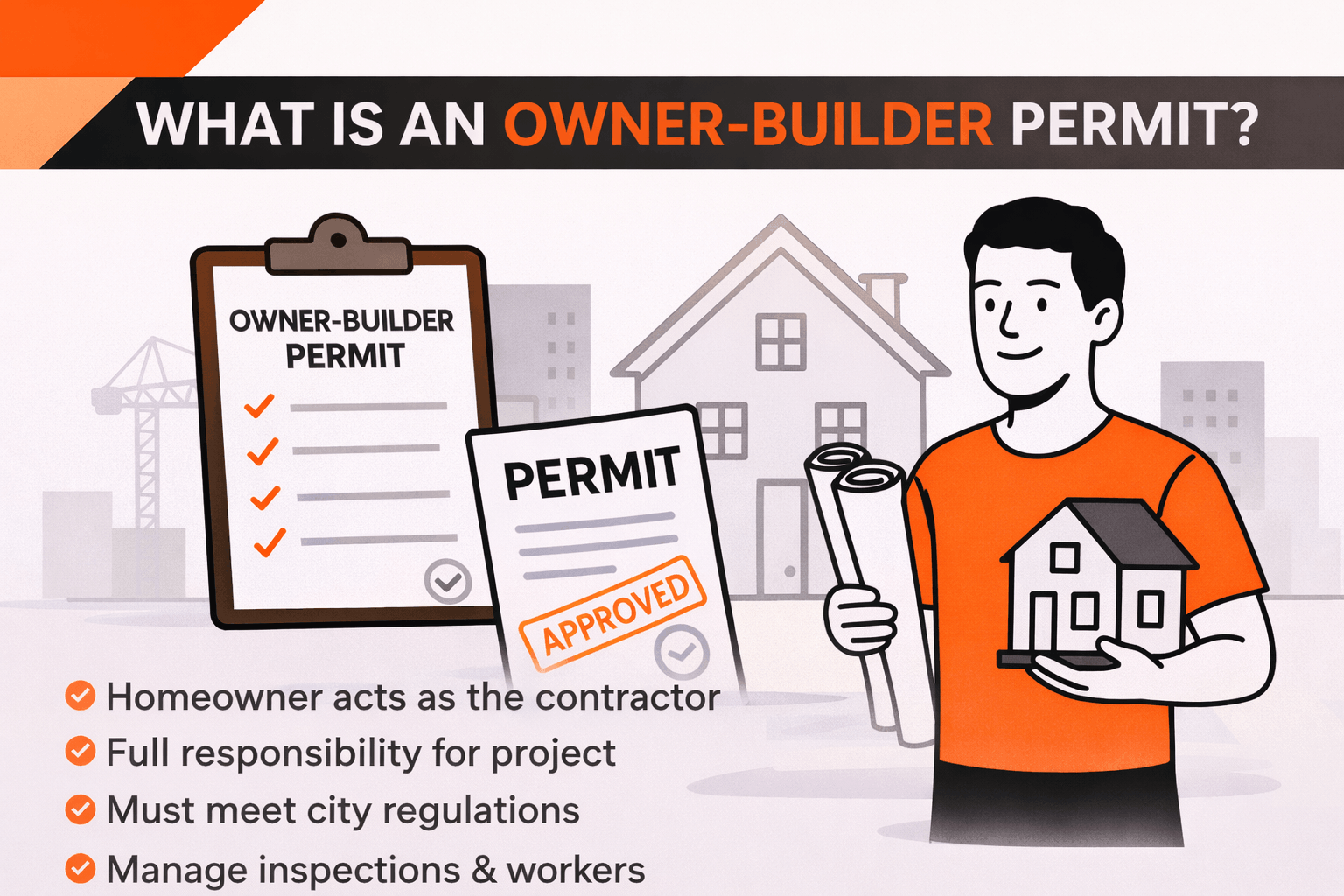
An owner-builder permit allows a homeowner to act as their own contractor for a construction project. Instead of hiring a general contractor to manage the work, the property owner takes on that responsibility. This option is often used for:
Home renovations
Small additions
Interior remodeling
Minor structural updates
However, it also comes with additional duties.
Definition of an Owner-Builder
An owner-builder is a property owner who:
Applies for the building permit
Supervises the construction work
Hires subcontractors
Manages project safety
Ensures code compliance
Even if licensed tradespeople are hired for certain tasks, the homeowner remains responsible for the project.
When Homeowners Can Act as Their Own Contractor
Homeowners may choose this option when:
They plan to complete work themselves
They want to manage subcontractors directly
They are familiar with construction processes
They want greater control over scheduling
Still, acting as an owner-builder requires time, planning, and attention to detail.
Owner-Builder Affidavit Requirements
Most cities require homeowners to sign an owner-builder affidavit. This document confirms that the owner understands:
Their legal responsibilities
Code compliance requirements
Inspection scheduling duties
Liability for workers on site
It also confirms that the owner is not building the property for resale.
Owner-Builder Permit Restrictions
Owner-builder permits may come with limits such as:
Personal supervision of work
Compliance with labor laws
Restrictions on resale timelines
Responsibility for project safety
These requirements exist to prevent misuse of the permit system.
Table: Owner-Builder vs Contractor Permit Overview
| Responsibility Area | Owner-Builder | Contractor |
|---|---|---|
| Permit Application | Homeowner | Contractor |
| Project Supervision | Homeowner | Contractor |
| Inspection Scheduling | Homeowner | Contractor |
| Code Compliance | Homeowner | Contractor |
| Worker Liability | Homeowner | Contractor |
| Application Accuracy | Varies | Higher |
| Approval Timeline | Slower | Faster |
Responsibilities of an Owner-Builder After Pulling a Permit
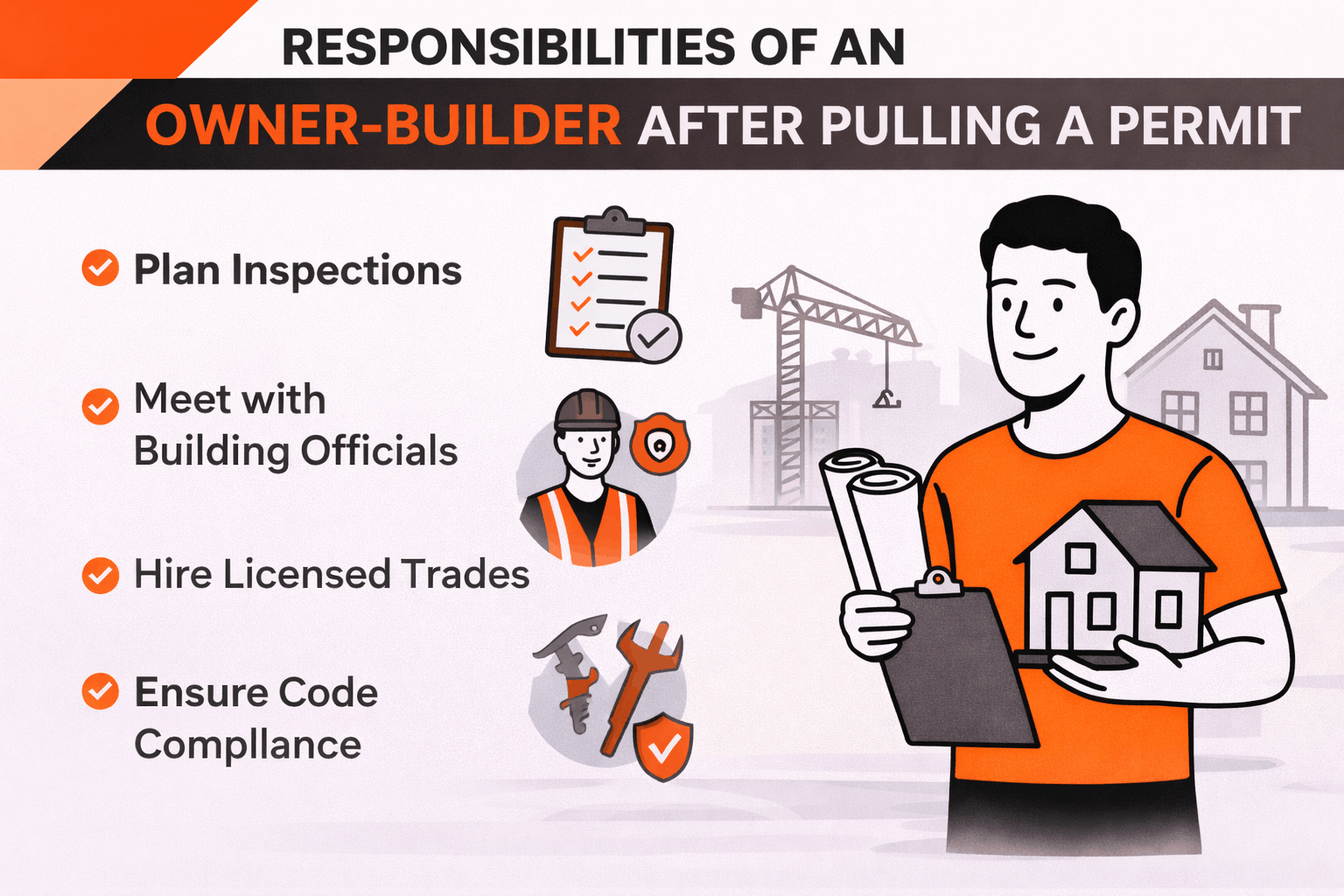
When a homeowner pulls a permit as an owner-builder, they take full responsibility for the project. This applies even if licensed subcontractors are hired for certain parts of the work.
In simple terms, the city views the homeowner as the contractor in charge. That means the owner must manage the job from start to finish. This responsibility goes beyond applying for the permit. It continues through construction and final inspection.
Managing Subcontractors
Owner-builders often hire licensed tradespeople for tasks such as:
Electrical work
Plumbing installation
Roofing
HVAC systems
Framing
However, even when subcontractors are involved, the homeowner remains responsible for:
Hiring qualified workers
Verifying licenses
Scheduling work
Confirming code compliance
If a subcontractor makes an error, the property owner may still be held responsible for correcting it.
Scheduling Required Inspections
Most permitted projects require inspections at different stages. These may include:
Foundation inspection
Framing inspection
Electrical inspection
Plumbing inspection
Final inspection
Owner-builders must:
Contact the city to schedule inspections
Confirm work is ready for review
Be present during inspections when required
Missing an inspection can delay the project. In some cases, work may need to be reopened for review.
Ensuring Code Compliance
Construction work must meet local building codes. These codes apply to:
Structural safety
Electrical systems
Plumbing systems
Fire protection
Ventilation
Owner-builders must confirm that all work meets these standards. If the project fails inspection, corrections must be made before approval. This can increase project costs and extend timelines.
Handling Materials and Documentation
Owner-builders are also responsible for:
Purchasing approved materials
Keeping project documents
Providing updated plans when needed
Tracking inspection reports
If plans change during construction, revised drawings may need to be submitted to the building department. Without proper documentation, the permit process may pause.
Worker Safety and Liability
Hiring workers brings added responsibility. Owner-builders may need to:
Confirm worker insurance coverage
Follow labor laws
Maintain a safe job site
Prevent construction hazards
If an injury occurs on site, the property owner could be held financially responsible. This is one of the most important risks associated with owner-builder permits.
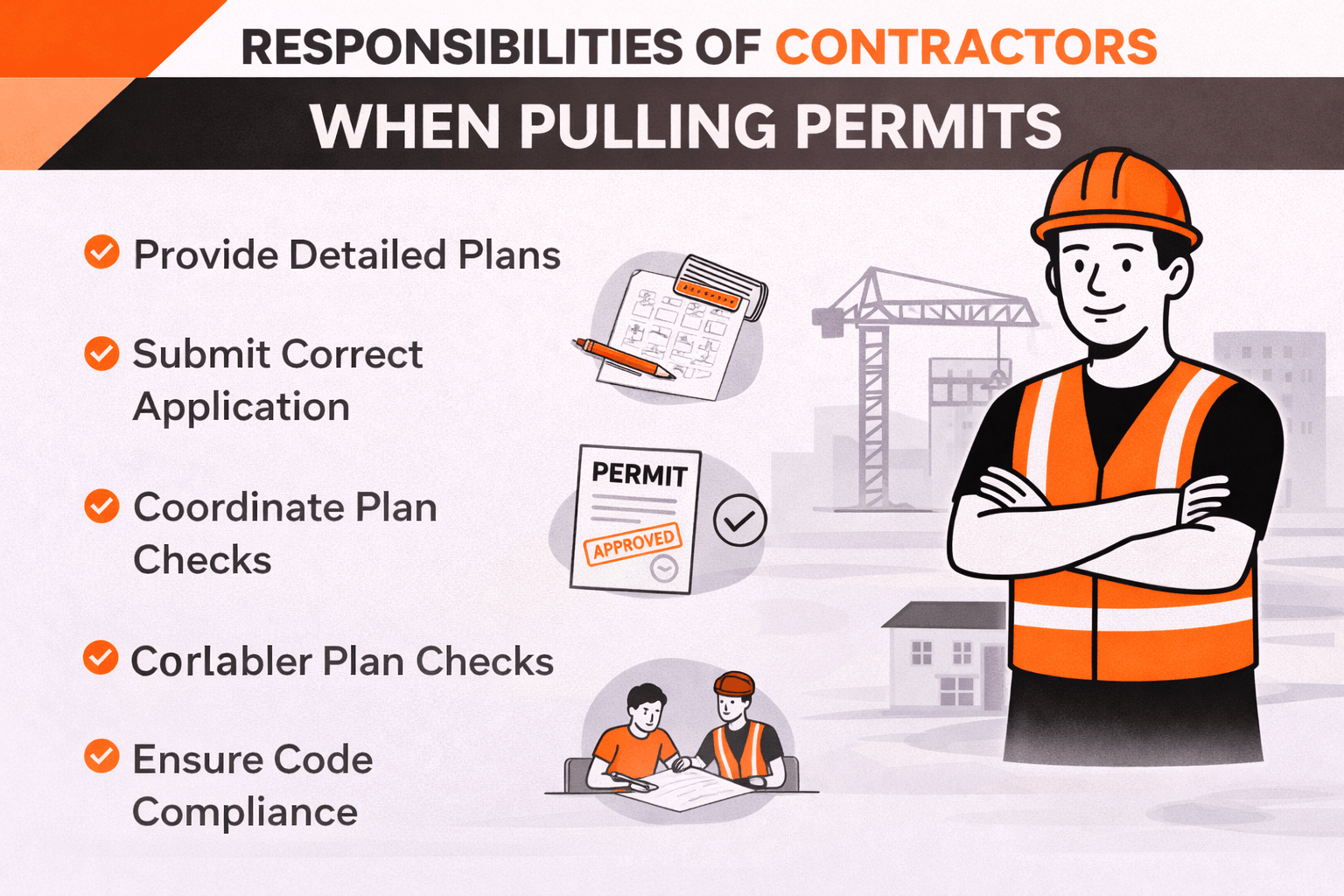
Responsibilities of Contractors When Pulling Permits
When a contractor pulls the permit, they become responsible for managing the construction process. This helps reduce the workload placed on the homeowner. It also allows experienced professionals to manage city requirements and project timelines.
Permit Application Process
Contractors usually handle:
Preparing permit applications
Submitting construction plans
Paying required fees
Communicating with city officials
Because contractors submit permits regularly, they are often familiar with local approval processes. This experience may help reduce application errors.
Compliance With Local Building Codes
Licensed contractors are expected to follow building codes at every stage of construction. This includes:
Using approved materials
Installing systems correctly
Meeting safety standards
Preparing for inspections
Contractors must address any correction notices issued by the city. This helps ensure the project meets all requirements before completion.
Managing Inspection Timelines
Contractors typically:
Schedule inspections
Prepare the job site for review
Confirm that work meets standards
Make corrections if needed
Because they manage the timeline, contractors can help keep the project on schedule. This is especially helpful for larger projects with multiple inspections.
Liability Coverage and Insurance
Licensed contractors usually carry:
General liability insurance
Workers’ compensation coverage
This helps protect both the contractor and the property owner from financial risk. If an issue occurs during construction, insurance coverage may help manage related costs.
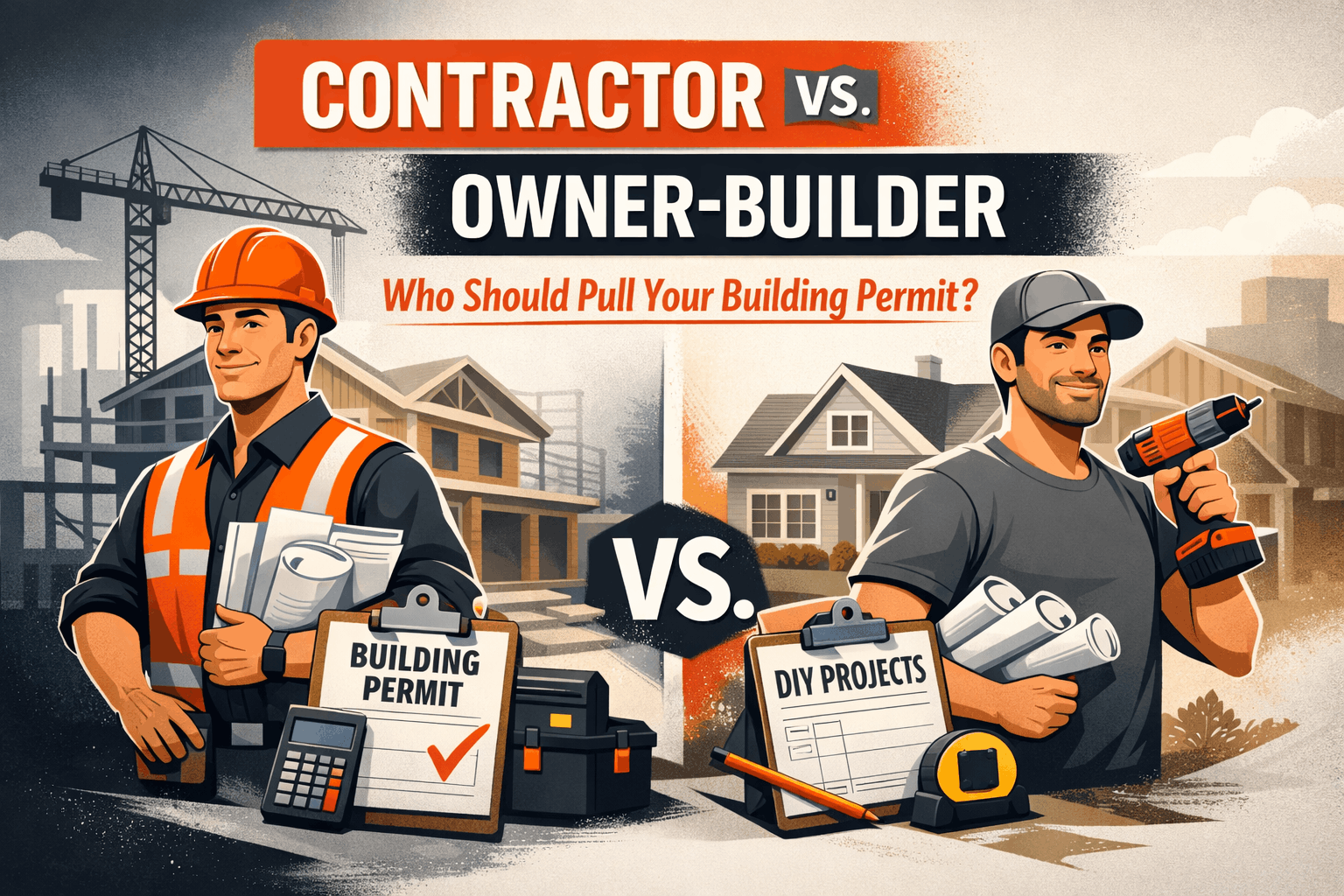
Contractor vs Owner-Builder — Key Differences
Choosing who should pull the permit depends on:
Project size
Construction experience
Timeline expectations
Risk tolerance
Understanding the differences between these options can help property owners make an informed decision.
Table: Permit Responsibility Comparison
| Project Factor | Contractor Permit | Owner-Builder Permit |
|---|---|---|
| Permit Application | Contractor submits | Owner submits |
| Project Management | Contractor manages | Owner manages |
| Inspection Scheduling | Contractor | Owner |
| Code Compliance | Contractor | Owner |
| Worker Liability | Contractor insurance | Owner responsibility |
| Application Accuracy | Higher | Varies |
| Approval Timeline | Often faster | May take longer |
| Legal Responsibility | Contractor | Homeowner |
Risk and Oversight
With a contractor-pulled permit:
The contractor supervises the project
Inspection coordination is handled
Compliance issues are addressed by the contractor
With an owner-builder permit:
The homeowner manages scheduling
Code compliance becomes their responsibility
Worker safety oversight falls on the owner
This is why many property owners seek permit consulting support when acting as owner-builders.
Pros and Cons of Pulling Your Own Permit
Some homeowners choose to apply for the building permit themselves. At first, this may seem like a simple way to stay in control of the project. It can also appear to reduce costs. However, acting as an owner-builder comes with both benefits and risks.
Benefits of Owner-Builder Permits
Pulling your own permit may offer:
More control over project decisions
Flexibility in hiring subcontractors
Direct communication with inspectors
Possible savings on contractor fees
Greater involvement in scheduling
For smaller projects, this approach may work well if the homeowner has time to manage the process. It can also help those who prefer to supervise construction work themselves.
Risks of Owner-Builder Permits
At the same time, owner-builder permits can create challenges. These may include:
Legal responsibility for construction work
Financial liability for worker injuries
Failed inspections due to code errors
Delays caused by incomplete applications
Difficulty understanding city requirements
Permit corrections often extend project timelines. If plans are rejected during review, revisions must be submitted again. This can delay approval by several weeks. Homeowners may also need to schedule multiple inspections. Missing one inspection can slow progress further.
Pros and Cons of Letting a Contractor Pull the Permit
Many property owners prefer to let a licensed contractor handle the permit process. This allows experienced professionals to manage documentation and approvals.
Advantages of Contractor-Pulled Permits
Contractor-applied permits often provide:
Better understanding of permit requirements
Accurate application submissions
Inspection scheduling support
Code-compliant construction
Reduced legal risk for homeowners
Contractors are familiar with local procedures. This may help avoid delays caused by missing information. In addition, contractors often manage communication with the building department. This helps keep the approval process moving.
Possible Downsides
There are still a few considerations. Contractor-pulled permits may involve:
Higher upfront project costs
Less direct homeowner oversight
Contractor-managed timelines
Even so, many property owners find that professional oversight helps reduce long-term project risks.
Common Permit Mistakes Owner-Builders Make
Applying for a permit without experience can lead to simple but costly errors. Some of the most common mistakes include:
Submitting incomplete applications
Using outdated construction plans
Hiring unlicensed subcontractors
Missing inspection deadlines
Failing to meet zoning requirements
Incorrect project descriptions
Not updating revised drawings
Each of these issues can delay approval. In some cases, the city may require additional documentation before continuing the review process.
Table: Common Permit Application Errors and Their Impact
| Application Issue | Possible Result |
|---|---|
| Missing documents | Application rejection |
| Incorrect plans | Plan review delays |
| Unlicensed subcontractor listed | Permit denial |
| Missed inspection | Work stoppage |
| Zoning mismatch | Project redesign |
| Unreported design change | Re-inspection required |
| Incomplete scope description | Review timeline extended |
Many of these problems can be avoided with proper application preparation. Permit consulting support from JDJ Consulting helps confirm that project documents are submitted correctly before review begins.
How Permit Delays Affect Construction Projects
Permit delays are one of the most common reasons construction projects fall behind schedule. Many property owners expect work to begin soon after submitting an application. In reality, approval timelines depend on document accuracy, plan review, and inspection scheduling. Even small errors can slow down the process. When a permit is delayed, it affects every part of the project.

Project Timeline Extensions
Most construction work cannot begin without permit approval. If the application is incomplete or under review, the project may remain on hold.
This can delay:
Material delivery
Subcontractor scheduling
Equipment rentals
Construction start dates
If corrections are required, the revised plans must be submitted again for review. Each revision may add several days or weeks to the timeline.
Increased Labor Costs
Permit delays often increase labor costs. Subcontractors may need to:
Reschedule work
Adjust timelines
Return at a later date
Some contractors charge additional fees for schedule changes. As a result, project expenses may rise before construction even begins.
Inspection Rescheduling Issues
After work begins, inspections must take place at different stages. If the permit approval process takes longer than expected, inspection appointments may also be delayed. Missing an inspection window can:
Stop progress
Require work to be reopened
Extend completion dates
In some cases, new inspections must be scheduled again.
Failed Plan Checks
Plan review is an important step in the permit process. During this stage, the city reviews:
Construction drawings
Project scope
Structural details
Safety compliance
If the plans do not meet requirements, corrections will be requested. Revisions must then be submitted before the application can move forward. This back-and-forth process is a common source of delay for owner-builders.
When Should Homeowners Pull Their Own Permits?
Owner-builder permits may be suitable for certain types of projects. This option is often used when:
The project is small in scope
The homeowner has construction knowledge
Licensed trades are hired for specific tasks
The timeline is flexible
Examples may include:
Interior remodeling
Minor non-structural changes
Cosmetic upgrades
Small accessory structures
Homeowners who choose this option should be prepared to manage:
Permit applications
Inspection scheduling
Code compliance
Acting as an owner-builder requires careful planning and ongoing supervision.
When Should Contractors Pull the Permit Instead?
For larger or more complex projects, contractor-applied permits may be the better choice. This is especially true when the work involves:
Structural changes
Electrical upgrades
Plumbing systems
Mechanical installations
Commercial tenant improvements
Multi-trade construction
Contractors can manage:
Permit documentation
Plan submissions
Inspection scheduling
Code compliance
This may help reduce approval delays and inspection issues.
Table: Estimated Permit Processing Time by Application Type
| Permit Application Type | Average Processing Time |
|---|---|
| Owner-Builder Application | 4–8 Weeks |
| Contractor Application | 2–4 Weeks |
| Expedited Permit Service | 1–3 Weeks |
Permit expediting services, such as those offered by JDJ Consulting, help both property owners and contractors reduce processing time by confirming that all documents are submitted correctly.
How Permit Expediters Help Both Contractors and Owner-Builders
Whether a permit is pulled by a contractor or a property owner, the approval process can still take time. Applications often move through:
Initial intake
Plan review
Department approvals
Inspection scheduling
Each step must be completed before construction can begin. Permit expediters help manage this process from start to finish.

Application Preparation
Permit applications must include:
Project scope details
Construction drawings
Property information
Contractor license data (if applicable)
Supporting documents
If any part of the application is incomplete, the review process may stop. Permit expediters review documents before submission. This helps reduce errors that may lead to rejection or delays.
Document Submission
Submitting permit documents is not always a one-step process. Some projects require approval from multiple departments, such as:
Zoning
Planning
Building safety
Fire prevention
Permit expediters help confirm that:
Plans are submitted to the correct department
Required forms are included
Supporting documents are attached
This helps keep the application moving through the review process.
Plan Check Coordination
During plan review, city officials may request corrections. These comments may relate to:
Structural details
Electrical systems
Mechanical layouts
Site plans
Permit expediters track these comments and help coordinate responses. Revised plans can then be submitted for continued review. This reduces back-and-forth delays that may extend approval timelines.
City Approval Follow-Ups
Permit approvals often depend on department workload. Applications may remain under review until updates are requested.
Permit expediters follow up with city staff to:
Check application status
Confirm review progress
Request updates when needed
This helps prevent unnecessary waiting periods. JDJ Consulting provides permit expediting support for both contractors and property owners. Their services help reduce delays caused by incomplete submissions or missed documentation.
Contractor vs Owner-Builder Permit Timeline Comparison
Permit timelines depend on:
Project size
Application accuracy
Plan review requirements
Inspection scheduling
Contractors are often familiar with local approval procedures. This may allow them to submit complete applications. Owner-builders may need more time to gather documents or revise plans.
Table: Permit Timeline Comparison
| Application Type | Typical Approval Time | Inspection Scheduling | Plan Revisions |
|---|---|---|---|
| Owner-Builder Permit | 4–8 Weeks | Owner Managed | May Require Resubmission |
| Contractor Permit | 2–4 Weeks | Contractor Managed | Contractor Coordinates |
| Expedited Permit Service | 1–3 Weeks | Coordinated Support | Faster Revisions |
Permit consulting services help both application types move forward more efficiently. By confirming document accuracy before submission, expediters reduce delays caused by missing or incorrect information.
Final Thoughts — Choosing the Right Permit Application Approach
Deciding who should pull the permit depends on:
Project complexity
Timeline expectations
Construction experience
Risk tolerance
Owner-builders may prefer direct project control. Contractors may provide professional oversight and manage compliance requirements. For either approach, proper application preparation is important. Incomplete submissions or missed inspections can delay construction and increase project costs.
Permit expediting support from JDJ Consulting helps:
Prepare required documents
Submit applications
Coordinate plan reviews
Follow up with city departments
This helps both contractors and property owners move forward with fewer delays.
Get Help With Your Building Permit Application
Applying for a building permit can take time. Missing documents or incorrect forms often delay approval before work even begins.
JDJ Consulting helps:
Homeowners acting as owner-builders
Licensed contractors
Property developers
Our team prepares and submits building permit applications, coordinates plan reviews, and follows up with city departments. This helps reduce delays caused by incomplete or incorrect submissions.
Learn more about our permit expediting services: https://jdj-consulting.com/services/
Starting with the right application helps keep your project on schedule.
FAQs: Owner-Builder vs Contractor
What is the difference between a contractor permit and an owner-builder permit?
A contractor permit is pulled by a licensed professional who manages the construction project. An owner-builder permit is pulled by the homeowner acting as their own contractor.
With a contractor permit:
The contractor handles code compliance
Inspections are scheduled professionally
Liability is often covered by insurance
With an owner-builder permit:
The homeowner supervises work
Subcontractors must be hired directly
The owner assumes legal responsibility
Choosing the right option depends on your experience, project size, and timeline.
Can a homeowner legally pull a building permit?
Yes, homeowners can legally apply for a building permit under an owner-builder permit.
However, doing so means the homeowner becomes responsible for:
Hiring subcontractors
Managing construction timelines
Scheduling inspections
Ensuring code compliance
The local building department will view the homeowner as the person in charge of the project. This includes legal and financial responsibility for the work performed on the property.
When should a contractor pull the building permit?
A contractor should usually pull the permit when the project involves:
Structural changes
Electrical upgrades
Plumbing systems
Commercial tenant improvements
Multi-trade construction
Licensed contractors are familiar with permit requirements and inspection processes. This may help reduce approval delays and compliance issues during construction.
Is it better for a contractor to pull permits?
In many cases, yes.
Contractors often:
Submit more accurate applications
Understand local building codes
Coordinate inspections efficiently
Address correction notices quickly
This helps reduce delays caused by incomplete documentation. It may also lower the risk of failed inspections later in the project.
What are the risks of pulling your own permit as an owner-builder?
Acting as an owner-builder can create additional responsibilities.
Risks may include:
Financial liability for worker injuries
Failed inspections
Construction delays
Permit corrections
Compliance errors
Homeowners must supervise the work and ensure that all construction meets safety and building code requirements.
Does pulling your own permit save money?
Pulling your own permit may reduce contractor management costs.
However, it may also:
Increase project timelines
Lead to application errors
Require plan revisions
Result in failed inspections
These factors can raise overall project expenses if corrections are needed before final approval.
Who is responsible for inspections under an owner-builder permit?
When a homeowner pulls the permit, they must:
Schedule inspections
Confirm work is ready for review
Be present when required
Missing an inspection may delay the project. In some cases, completed work may need to be reopened for city review.
What happens if work begins without a permit?
Starting work without a permit may result in:
Stop-work orders
Fines or penalties
Required demolition
Project delays
Insurance claim issues
Unpermitted work may also affect future property resale or refinancing.
How long does it take to get a building permit approved?
Permit approval timelines vary based on:
Project scope
Application accuracy
Plan review requirements
Department workload
Owner-builder permits may take longer if corrections are needed. Permit expediting services can help reduce processing time by preparing complete applications before submission.
What is an owner-builder affidavit?
An owner-builder affidavit is a document signed by the homeowner.
It confirms that the owner:
Understands permit responsibilities
Will supervise the project
Accepts legal liability
Will meet local code requirements
Most building departments require this form before issuing an owner-builder permit.
Can owner-builders hire subcontractors?
Yes, owner-builders may hire licensed subcontractors for tasks such as:
Electrical installation
Plumbing work
Roofing
HVAC systems
Even when subcontractors are hired, the homeowner remains responsible for code compliance and inspection scheduling.
Do contractors need permits for renovation projects?
Yes, permits are usually required for:
Structural modifications
Electrical upgrades
Plumbing changes
Commercial property improvements
Contractors typically apply for these permits before beginning work.
How do permit delays affect construction timelines?
Permit delays may:
Postpone project start dates
Affect material deliveries
Increase labor costs
Disrupt contractor schedules
In some cases, inspection appointments must be rescheduled, which can extend completion timelines.
What causes building permit delays?
Common causes include:
Incomplete applications
Incorrect construction plans
Missing documents
Zoning conflicts
Unlicensed subcontractors
Permit consulting services help reduce these issues before submission.
Are owner-builder permits suitable for large projects?
Owner-builder permits may work best for:
Minor renovations
Small additions
Interior remodeling
Large projects involving structural or mechanical work are often better managed by licensed contractors.
What is permit expediting?
Permit expediting involves:
Preparing application documents
Submitting plans for review
Coordinating corrections
Following up with city departments
This service helps reduce approval delays caused by missing information or application errors.
Can permit expediters work with both contractors and homeowners?
Yes, permit expediters support:
Licensed contractors
Owner-builders
Property developers
Commercial project managers
They help confirm that all documents are submitted correctly before review begins.
How can permit consulting help owner-builders?
Permit consultants assist by:
Reviewing application forms
Preparing project documentation
Coordinating plan reviews
Tracking approval timelines
This helps owner-builders move forward with fewer delays.
Do all construction projects require permits?
Not all projects require permits.
However, approval is usually needed for work involving:
Structural changes
Electrical systems
Plumbing installations
Mechanical equipment
Local building departments determine permit requirements.
Why should you use a permit expediting service?
Permit expediting services help:
Reduce approval delays
Prepare accurate applications
Coordinate inspections
Address correction notices
This helps both contractors and property owners keep construction projects on schedule.
Is it worth using a home builder or general contractor for a construction project?
In many cases, yes. Hiring a general contractor or home builder can make the construction process easier to manage. They handle project management, schedule subcontractors, and coordinate work with the building department.
A contractor also understands local safety regulations and the permitting process. This reduces the risk of permit mistakes or failed inspections.
Contractors usually manage:
permit applications with the local permitting agency
coordination with the planning department
hiring licensed tradesmen
material selection and labor hiring
scheduling inspections
How much money can owner-builders save compared to hiring a contractor?
Some homeowners choose an owner-builder permit to reduce contractor management fees. This approach can provide more cost control during construction.
Savings usually come from managing tasks yourself, such as:
labor hiring
subcontractor coordination
material selection
project scheduling
However, the savings vary. Owner-builders may also face extra costs if problems occur. Common issues include project delays, inspection failures, or permit corrections.
In some cases, mistakes during the permitting process can increase expenses instead of reducing them.
Should you act as an owner-builder even if a contractor is doing the work?
In most situations, this is not recommended. When you apply for an owner-builder permit, the building department considers you responsible for entire project.
Even if a contractor performs the construction, the homeowner may still be responsible for:
code compliance
inspection scheduling
worker safety on the construction site
permit documentation
Many states regulate this under contractor licensing laws and safety regulations.
What is the difference between a general contractor and a home builder?
Both professionals manage construction projects, but their roles can be slightly different.
A general contractor oversees many types of construction work, including renovations/ remodeling projects.
A home builder often focuses on building new residential structures such as:
custom homes
single-family residences
multi-unit residential properties
Should you list yourself as an owner-builder or use your contractor’s license?
If you hire a licensed contractor, it is usually better to have them pull the permit. This shifts legal responsibility for the construction work to the contractor.
When the contractor pulls the permit:
the contractor manages code compliance
inspections are scheduled professionally
liability insurance may apply
workers’ compensation coverage may protect workers
When you apply as an owner-builder, the building department sees you as the person responsible for the project.
Is it better to build a pool as an owner-builder or hire a company?
Building a pool as an owner-builder is possible, but it requires careful planning. The homeowner must handle the permitting process, hire licensed tradesmen, and coordinate inspections.
Pool construction may involve:
excavation work
electrical installations
plumbing systems
safety barrier requirements
Because of these safety regulations, many homeowners prefer hiring a licensed contractor. Pool contractors usually understand local permitting agency requirements and inspection schedules.
This can help prevent project delays and failed inspections.
What are the dangers of pulling an owner-builder permit?
An owner-builder permit comes with several responsibilities and risks. The homeowner becomes legally responsible for the construction project.
Potential risks include:
liability for injuries on the construction site
failed inspections due to code violations
project delays caused by permit corrections
responsibility for hiring licensed tradesmen
insurance coverage issues
If a worker is injured, the property owner may be responsible unless proper insurance policies are in place.
Owner-builder vs building company: which option is better?
The right option depends on the project size and the homeowner’s construction experience.
An owner-builder approach may work best for small home renovation projects where the owner has construction project experience.
A building company is usually better for:
custom home construction
structural renovations
multi-trade projects
tenant improvements
Building companies often have professional project management systems. They also work regularly with the building department and local permitting agencies.
This experience helps reduce errors in the permitting process and keeps construction on schedule.
What do you need to become an owner-builder?
To act as an owner-builder, you must usually be the property owner and apply for the permit through the building department.
Most cities require an owner-builder affidavit confirming that the owner understands their responsibilities.
Typical requirements include:
signing an Owner-Builder Affidavit of Exemption
submitting construction plans to the planning department
coordinating with the plans examiner during plan review
managing subcontractors and licensed tradesmen
scheduling inspections during construction
The homeowner must also follow all safety regulations and local building codes.