
Telecom networks keep the modern world connected. Every call, message, and internet request moves through telecom infrastructure. But before this infrastructure can be built, it must receive government approval. This approval process is called telecom permitting.
Telecom permits confirm that new infrastructure follows safety rules, zoning laws, and environmental regulations. Without permits, companies cannot legally install towers, antennas, or fiber lines.
The permitting process can take time. Many telecom projects require approvals from multiple departments. These may include city planning offices, building departments, and transportation agencies.
Because of this, planning ahead is important. Telecom companies must prepare engineering drawings, site plans, and compliance documents before applying for permits. When these steps are done correctly, projects move forward faster. When they are rushed or incomplete, delays happen.
This guide explains how telecom permitting works. It also covers the types of permits required and the steps involved in getting approvals. If you plan to build telecom infrastructure, understanding the permitting process will save time and reduce risk.
What Is Telecom Permitting?
Telecom permitting is the process of getting approval to install telecom infrastructure.
Cities and counties use permits to control how equipment is placed in public and private spaces. These rules help protect buildings, utilities, and nearby communities.
In simple terms, permits confirm that a telecom project is safe and allowed in that location. Most telecom projects require at least one permit. Larger projects often require several.
For example, installing a cell tower may require zoning approval, structural review, and building permits. Fiber installations may require right-of-way permits and traffic management plans.
Because telecom equipment affects public areas and utilities, government agencies must review each project carefully.

Definition of Telecom Permitting
Telecom permitting is the official approval required before building or upgrading telecom infrastructure. This process confirms that a project follows local laws and technical standards.
Permits are required for both new installations and equipment upgrades.
Common examples include:
-
Building a new cell tower
-
Installing antennas on rooftops
-
Deploying small cells on streetlights
-
Installing underground fiber cables
-
Adding telecom cabinets along streets
Before work begins, project plans must be submitted to local authorities. These plans explain how and where the equipment will be installed. Once the project meets all requirements, the permit is issued.
Why Telecom Permits Are Required
Telecom permits exist to protect communities and infrastructure. There are several reasons these permits are required.
First, safety.
Telecom towers and equipment must meet engineering standards. They must handle wind loads, weight limits, and electrical systems. Permits ensure the design is safe.
Second, zoning control.
Cities regulate where infrastructure can be built. Towers may have height limits or location restrictions. Permits allow cities to review these factors.
Third, environmental protection.
Some projects may affect wildlife areas or historic locations. Environmental reviews help prevent damage to protected sites.
Fourth, coordination with public utilities.
Telecom infrastructure often shares space with roads, power lines, and water systems. Permits ensure new installations do not interfere with existing utilities. Because of these reasons, telecom permitting is required before most telecom construction projects begin.
Types of Telecom Infrastructure That Require Permits
Many telecom systems require permits before installation. These systems support wireless communication and internet connectivity.
Common telecom infrastructure includes:
-
Cell towers
-
Small cell antennas
-
Fiber optic networks
-
Rooftop telecom equipment
-
Microwave relay antennas
-
Equipment cabinets and shelters
Each type of infrastructure has different permitting requirements.
For example, building a large tower may require zoning approval and environmental review. Installing fiber lines may require road permits and utility coordination.
The type of project usually determines how complex the permit process will be.
Types of Telecom Permits Required for Infrastructure Projects
Most telecom projects require more than one permit. Each permit focuses on a different part of the project. Some address land use, while others focus on safety or public space access.

Understanding these permits helps project managers plan the approval process.
Zoning and Land Use Permits
Zoning permits control where telecom infrastructure can be built. Cities divide land into different zones such as residential, commercial, and industrial areas.
Each zone has rules for construction projects.
These rules may include:
-
Tower height limits
-
Distance from nearby buildings
-
Setback requirements
-
Visual impact guidelines
-
Noise restrictions
For example, a telecom tower near a residential neighborhood may require additional review. Some cities also require public hearings before approval.
Because zoning reviews can take time, developers often begin this step early.
Building Permits
Building permits confirm that telecom structures meet construction standards.
These permits apply to physical structures such as:
-
Telecom towers
-
Antenna mounts
-
Equipment shelters
-
Concrete foundations
-
Rooftop mounting systems
To receive a building permit, developers must submit engineering drawings. These drawings show how the structure will be built and how it will support telecom equipment. Local building departments review the plans. If the design meets safety standards, the permit is issued.
Environmental Permits
Some telecom projects require environmental review. This is common when infrastructure is built near protected land or sensitive areas.
Environmental permits may include:
-
Environmental impact assessments
-
Wildlife protection reviews
-
Historic site evaluations
-
Wetland protection reviews
These reviews help ensure the project does not damage important natural or historic resources. Not every telecom project requires environmental permits. However, large towers or rural installations often do.
Right-of-Way (ROW) Permits
Right-of-way permits allow telecom work in public spaces.
These spaces include:
-
Roads
-
Sidewalks
-
Utility corridors
-
Public easements
Fiber optic projects often require these permits. Cables are usually installed underground along roads or highways. ROW permits help cities manage construction in public areas. They also ensure contractors avoid damaging existing utilities. Many cities also require traffic control plans when issuing these permits.
Small Cell Attachment Permits
Small cell systems help expand wireless coverage in dense areas. Unlike large towers, small cells are usually installed on existing structures.
Common locations include:
-
Streetlights
-
Utility poles
-
Traffic signal poles
-
Public buildings
Because these structures are often publicly owned, special permits are required. Cities review these applications to ensure equipment size and appearance meet local guidelines.
Some cities also require design standards so equipment blends with surrounding infrastructure. Small cell permitting has become more common as 5G networks expand.
Step-by-Step Telecom Permitting Process
Most telecom projects follow a similar permitting path. Each step prepares the project for the next stage of approval.
Step 1: Site Selection and Feasibility Analysis
The process begins with site selection. Engineers look for locations that provide strong network coverage. They also check zoning rules and land ownership.
Important factors include:
-
Network coverage needs
-
Distance from existing towers
-
Access to power and fiber
-
Zoning restrictions
If a site does not meet these requirements, developers choose another location.
Step 2: Land Lease or Site Acquisition
Once a suitable site is found, the next step is securing access to the property. Telecom companies often lease land from private owners.
These lease agreements usually include:
-
Lease length
-
Rental payments
-
Access rights
-
Maintenance responsibilities
In cities, rooftop leases are also common. Property owners allow telecom equipment on buildings in exchange for rent.
Step 3: Engineering and Design Planning
After the site is secured, engineers begin designing the installation. This step produces the technical documents required for permit applications.
Engineering plans may include:
-
Structural designs
-
Antenna placement diagrams
-
Electrical and grounding plans
-
Equipment cabinet layouts
These documents explain how the infrastructure will be built. Authorities use them to verify safety and compliance.
Step 4: Permit Application Submission
Next, developers submit permit applications. These applications include technical and legal documents.
Common requirements include:
-
Site plans
-
Engineering drawings
-
Structural reports
-
Environmental documents
-
Lease agreements
If documents are incomplete, the agency may request revisions.
Step 5: Government Review
After submission, government departments review the project.
They check several factors, including:
-
Safety compliance
-
Zoning rules
-
Environmental impact
-
Public space use
This stage can take several weeks or months depending on the location.
Step 6: Permit Approval and Construction
Once the project meets all requirements, permits are issued. Construction can then begin. However, inspections are often required during or after installation. Inspectors confirm the infrastructure matches the approved plans. If everything meets standards, the telecom system can begin operation.

Telecom Permitting Requirements and Documentation
Telecom permit applications require clear documentation. Cities and agencies review these documents to confirm the project meets safety and zoning rules.
If documents are incomplete, the review process slows down. Because of this, telecom companies prepare detailed reports before submitting applications.
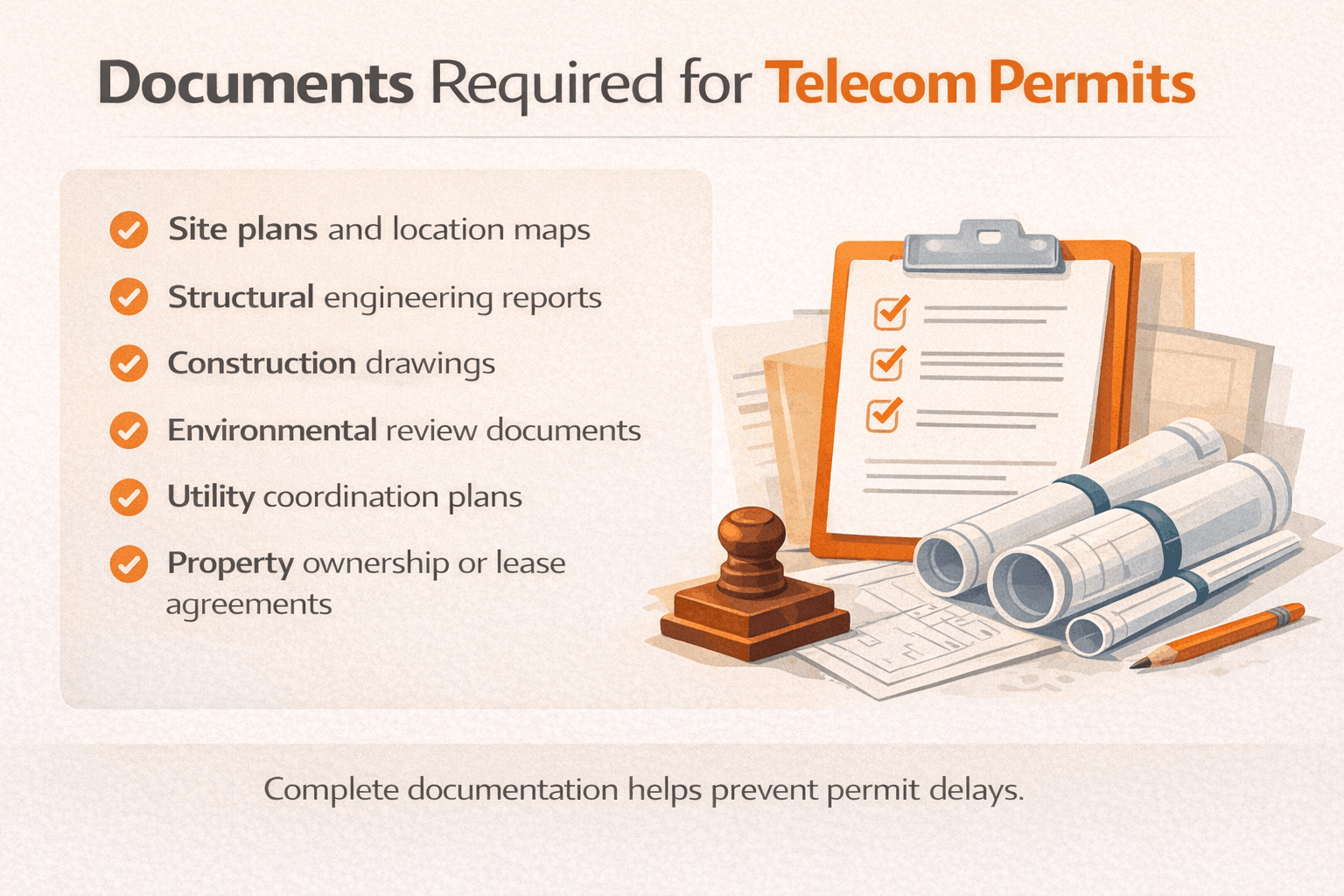
Most telecom permits require several technical and legal documents. These materials explain how the infrastructure will be installed and how it will affect the surrounding area.
Good documentation helps agencies review projects faster. It also reduces the chance of permit rejection.
Site Plans and Construction Drawings
Site plans show the exact location of the telecom infrastructure. These plans help agencies understand how the project fits within the surrounding property.
A typical telecom site plan includes:
-
Equipment location
-
Tower or antenna placement
-
Access roads
-
Fencing and safety barriers
-
Distance from nearby structures
Construction drawings provide additional technical details. These drawings explain how the equipment will be installed and supported. Most cities require stamped engineering drawings before approving telecom permits.
Structural Engineering Reports
Structural reports confirm that telecom structures can safely support equipment.
For example, a tower must support antennas, cables, and mounting hardware. Engineers must calculate the total load and verify the structure can handle it.
Structural reports may include:
-
Wind load analysis
-
Weight calculations
-
Structural reinforcement plans
-
Foundation design details
For rooftop installations, engineers must also confirm that the building can support telecom equipment. These reports are important because telecom equipment can be heavy and exposed to strong weather conditions.
Environmental and Safety Assessments
Some telecom projects require environmental review. These reviews evaluate how the project may affect the surrounding environment.
Environmental assessments may include:
-
Wildlife impact studies
-
Historic site reviews
-
Wetland protection analysis
-
Noise impact evaluation
Another important review involves radio frequency (RF) compliance. Telecom equipment emits radio signals. Agencies review RF exposure levels to ensure they meet safety guidelines. These assessments help confirm that telecom infrastructure will not create health or environmental risks.
Utility Coordination Documentation
Telecom projects often connect with existing utilities.
For example, telecom equipment may require electrical power and fiber connections. When infrastructure is installed near public utilities, coordination is required.
Utility documentation may include:
-
Electrical connection plans
-
Fiber backhaul routes
-
Utility clearance approvals
-
Underground utility surveys
These documents help prevent damage to existing infrastructure during construction.
Ownership and Lease Agreements
Telecom permits often require proof of site access. This proof usually comes from property ownership documents or lease agreements. Lease agreements allow telecom providers to install equipment on private property.
These agreements usually include:
-
Property owner authorization
-
Lease duration
-
Equipment access rights
-
Maintenance access terms
Without proper authorization, permit applications cannot move forward.
Common Challenges in Telecom Permitting
Telecom permitting can be complex. Projects often involve multiple agencies and strict regulations. Even small mistakes in documentation can delay approvals. Understanding the most common challenges helps developers prepare better applications.
Zoning Restrictions and Community Concerns
Zoning laws are one of the biggest challenges in telecom permitting. Cities regulate tower height, location, and appearance. These rules help protect residential areas and community spaces.
Sometimes local residents oppose telecom towers. Concerns may include:
-
Visual impact
-
Property value concerns
-
Equipment noise
-
Safety worries
In some cases, public meetings are required before permits are approved. Because of this, developers often choose locations carefully to reduce community concerns.
Multi-Agency Approval Delays
Telecom permits often require approvals from several departments.
These may include:
-
City planning departments
-
Building safety offices
-
Transportation agencies
-
Environmental authorities
Each department reviews different parts of the project. If one department requests changes, the application may return to earlier stages of review. This can extend the overall timeline.
Proper coordination helps reduce these delays.
Right-of-Way Conflicts
Right-of-way conflicts occur when telecom equipment shares space with other utilities.
Public corridors often contain many systems such as:
-
Water pipelines
-
Electrical cables
-
Gas lines
-
Sewer systems
When telecom infrastructure is added to these areas, careful planning is required. Utility mapping and underground surveys help prevent construction conflicts. Without proper coordination, projects may face unexpected delays during installation.
Incomplete Application Submissions
Incomplete applications are one of the most common reasons for permit delays. Missing documents can stop the review process completely.
Common missing items include:
-
Engineering drawings
-
Structural reports
-
Environmental documents
-
Lease agreements
Because of this, many telecom companies use permit consultants to manage the application process. These specialists help ensure applications include all required documentation.
Telecom Permitting for Different Infrastructure Types
Different telecom systems require different permits. A large telecom tower does not go through the same approval process as a fiber installation or rooftop antenna. Understanding these differences helps developers plan projects more efficiently.
Cell Tower Permitting
Cell towers are one of the most regulated telecom structures. These towers are tall and visible, so they usually require zoning approval.
Cell tower permits often include:
-
Zoning review
-
Structural engineering review
-
Environmental assessment
-
Building permits
Some cities also require visual impact studies. Because towers affect large areas, the approval process may take several months.
Small Cell Deployment Permitting
Small cells are smaller wireless units that improve coverage in dense areas. Instead of large towers, small cells are installed on existing structures.
Common installation points include:
-
Streetlights
-
Utility poles
-
Traffic signal poles
Permits for small cells usually focus on equipment size and placement. Cities often require that equipment blends with existing infrastructure. Small cell permits have become more common due to the expansion of 5G networks.
Fiber Optic Network Permitting
Fiber optic networks provide high-speed internet connectivity. These cables are usually installed underground along roads or utility corridors.
Fiber permits often include:
-
Trenching permits
-
Right-of-way approvals
-
Traffic management permits
Cities review these permits to ensure construction does not disrupt transportation or public utilities.
Rooftop Telecom Installations
Rooftop installations are common in urban areas. Instead of building new towers, telecom providers place antennas on buildings.
Rooftop permits usually require:
-
Structural analysis of the building
-
Building permits
-
Property owner approval
Because equipment is mounted on existing structures, these permits are often faster than tower approvals.

Timeline for Telecom Permitting Projects
Telecom permitting timelines vary depending on the project type and location. Large infrastructure projects usually take longer because they require more approvals. However, smaller installations such as rooftop antennas or small cells may move faster.
The table below shows a general timeline for telecom permitting stages.
| Project Stage | Typical Time Range |
|---|---|
| Site feasibility study | 2–4 weeks |
| Land lease negotiation | 1–3 months |
| Engineering design | 3–6 weeks |
| Permit application preparation | 1–2 weeks |
| Government review process | 4–12 weeks |
| Permit approval and issuance | 2–3 weeks |
These timelines are estimates. Some projects move faster, while others take longer due to zoning reviews or environmental assessments. Early planning helps reduce delays during the review process.