Starting a construction project in California can feel overwhelming at first. One of the biggest questions people ask is simple: where to get a construction permit?

In California, permits are not issued by one single office. Instead, they are handled locally by cities and counties. The exact place depends on where your property is located and what type of work you plan to do.

This guide is written for homeowners, developers, and property professionals. It explains the process in clear language, step by step. No jargon. No long sentences. Just practical help, aligned with how permitting really works in California.

What a Construction Permit Means in California

Before you apply, it helps to understand what a construction permit actually is in California and why it matters so much.

Simple Definition of a Construction Permit

A construction permit is a formal approval from your local building department. It allows you to legally start construction, remodeling, or structural work on a property.

The permit confirms that your plans follow:

Without this approval, most construction work is considered illegal.

California Construction Permit Process

Step 1
Define Project Scope
Step 2
Prepare Documents
Step 3
Submit Application
Step 4
Plan Review & Corrections
Step 5
Permit Approval & Inspections

Source: California Building Departments

Why Construction Permits Are Required in California

California has some of the strictest building standards in the country. Permits are required to protect people, property, and neighborhoods.

They help ensure:

  • Buildings are structurally safe

  • Electrical and plumbing systems meet code

  • Fire and seismic risks are addressed

  • Projects follow local zoning laws

Permits also create a clear inspection process. Inspectors review the work at different stages. This helps catch problems early.

What Happens If You Skip the Permit

Working without a permit can cause serious issues later. These problems often cost more than the permit itself.

Common consequences include:

  • Stop-work orders from the city

  • Fines and penalty fees

  • Required demolition of unapproved work

  • Problems selling or refinancing the property

In short, permits protect you as much as they protect the public.

Who Issues Construction Permits in California

One of the most confusing parts of the process is knowing which office handles your permit. In California, the answer depends on location.Who Issues Construction Permits in California
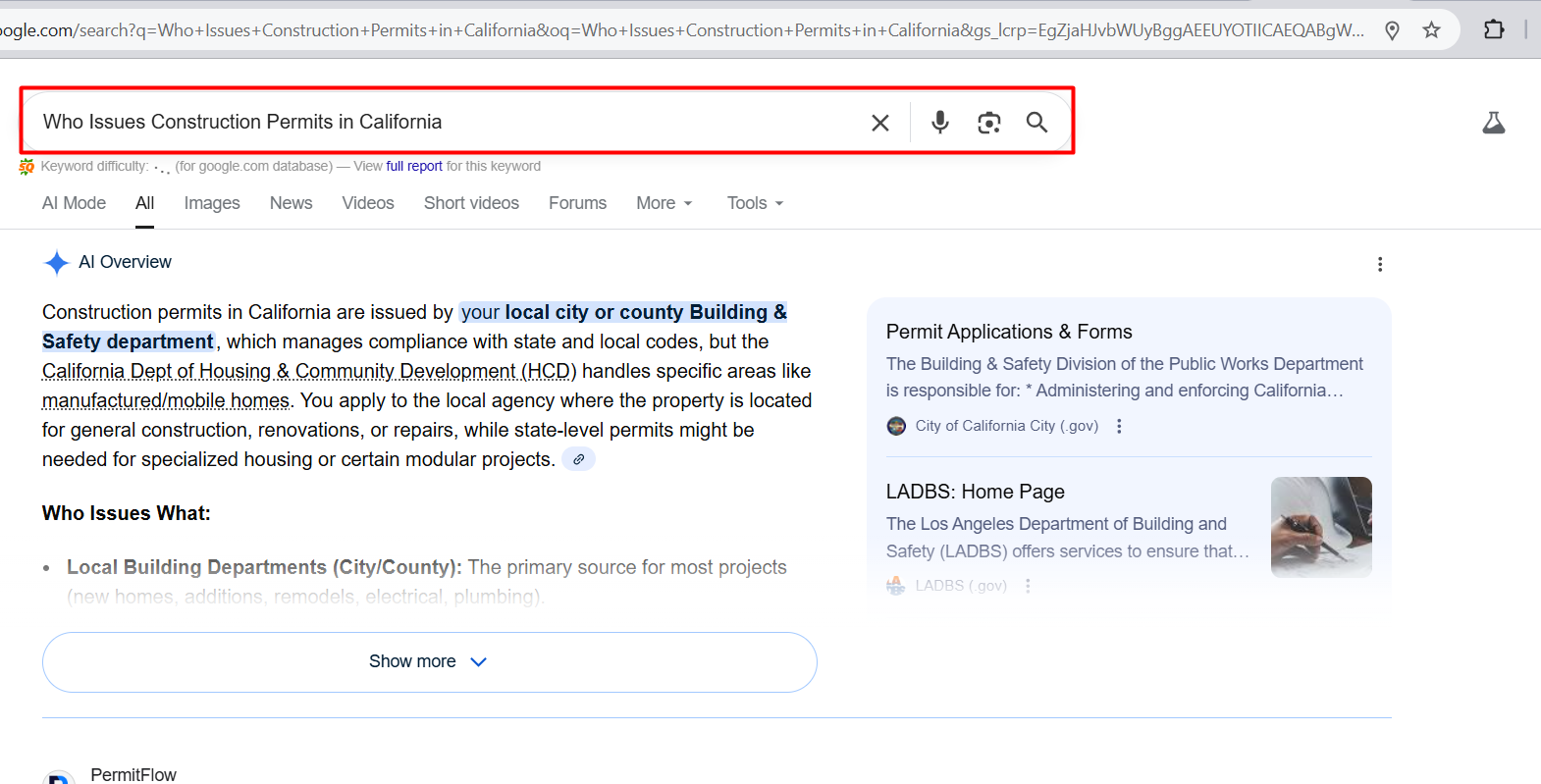
City Building or Development Services Departments

If your property is inside city limits, your permit usually comes from the city’s building department. This department may also be called:

  • Building & Safety

  • Development Services

  • Community Development

  • Planning & Building

These departments review plans, issue permits, collect fees, and schedule inspections.

They handle permits for:

  • New construction

  • Remodels and additions

  • ADUs

  • Garages, decks, and pools

  • Commercial projects

Most California cities now offer online permit portals. Some still require in-person visits for certain projects.

Examples of City Permit Authorities in California

CityPermit AuthoritySubmission Method
Los AngelesLA Department of Building and Safety (LADBS)Online + in person
San DiegoDevelopment Services DepartmentMostly online
San FranciscoDepartment of Building Inspection (DBI)Online + appointments
OaklandPlanning & Building DepartmentPlanning first, then building

Each city has its own process, timelines, and fee structure.

County Building Departments (Unincorporated Areas)

If your property is outside city boundaries, permits are issued by the county building department.

This applies to many rural areas and unincorporated communities.

Examples include:

  • Los Angeles County Department of Public Works

  • Santa Clara County Building Division

  • Riverside County Building and Safety

County offices follow state codes but apply their own local rules.

Planning and Zoning Approvals Come First

In many California jurisdictions, you may need planning approval before a building permit.

This is common when a project involves:

  • Changes to building size or height

  • Use changes (residential to mixed-use)

  • ADUs or multi-unit development

  • Variances or conditional use permits

Planning approval confirms the project is allowed on the property. The building permit confirms it is built safely.

Quick Comparison: City vs. County Permitting in California

FactorCity PermitCounty Permit
Property locationInside city limitsUnincorporated area
Review processOften faster for small projectsCan be slower, more reviews
Online portalsCommon in large citiesVaries by county
Planning approvalsFrequently requiredOften required

Understanding this difference early can save weeks of delay.

How to Find the Right Place to Apply for a Construction Permit in California

Once you know that permits are handled locally, the next step is figuring out exactly where to apply. This depends on your property’s location and the type of project you’re planning.

The good news is that California agencies are fairly transparent. With a few simple checks, you can find the right office without wasting time.

Start With Your Local City or County Website

The fastest way to find the correct permit office is through the official government website.
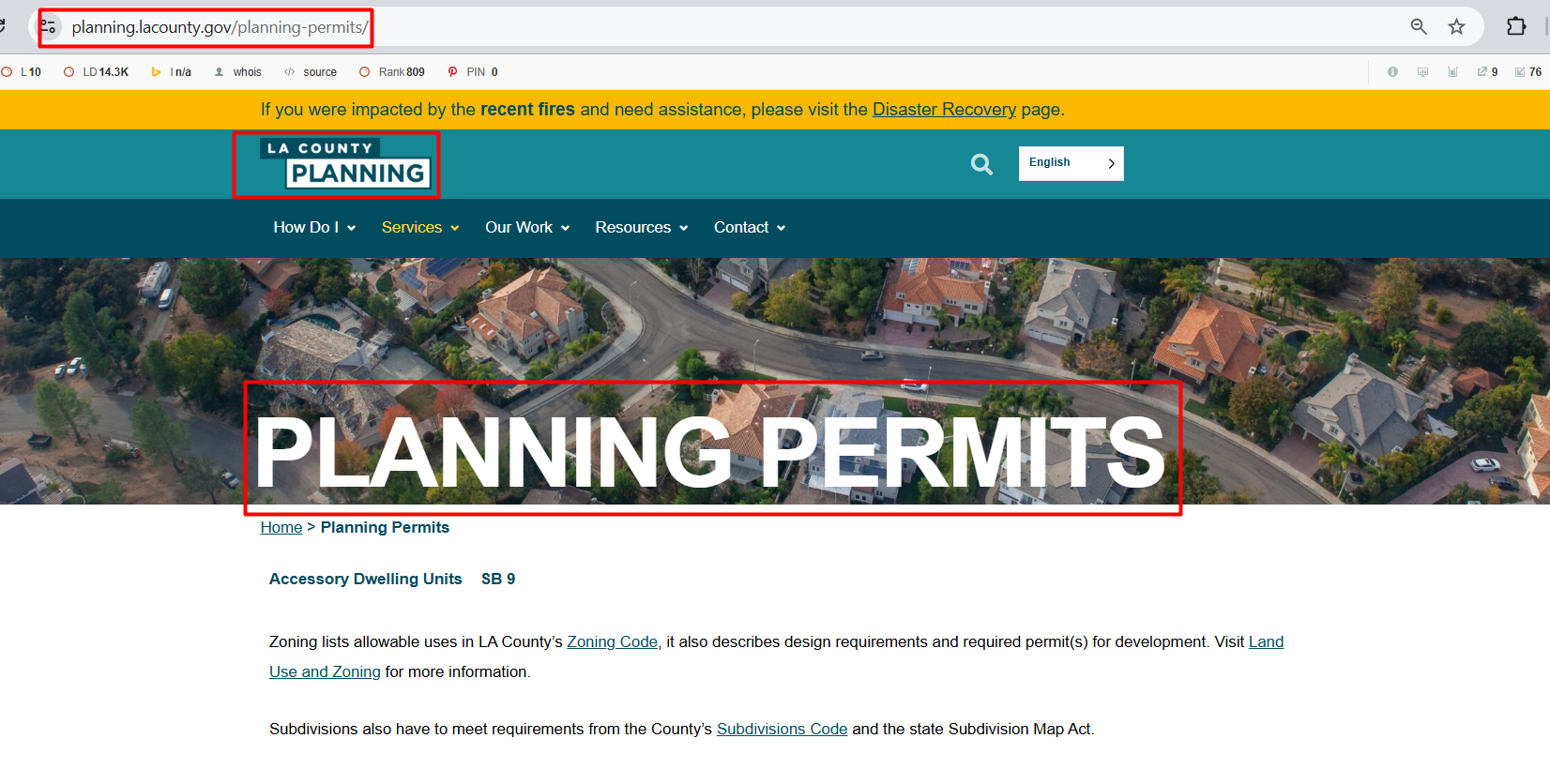
Los Angeles ADU permit

Use a simple search like:

  • “City of Pasadena building permit”

  • “Alameda County construction permit”

  • “Los Angeles ADU permit”

Look for pages labeled:

  • Building & Safety

  • Development Services

  • Planning & Building

These pages usually include:

  • Permit types

  • Application checklists

  • Online submission portals

  • Contact details

Most California cities now prefer online submittals, especially for residential work.

Permit Readiness Checklist

Check all items you have prepared before applying for a permit:


Confirm Whether Your Property Is Inside City Limits

This step is often overlooked, but it matters.

Two homes on the same street can fall under different authorities.

To confirm jurisdiction:

  • Check your property tax bill

  • Use the county assessor’s website

  • Call the city planning counter

If the property is inside city limits, apply through the city. If it is unincorporated, apply through the county. This small check can prevent weeks of delays.

Call the Permit Counter Before You Apply

Even with online systems, a short phone call helps.

Permit staff can quickly confirm:

  • Which permits you need

  • Whether planning approval is required first

  • If your project qualifies for over-the-counter approval

This is especially helpful for remodels, ADUs, and small additions.

Most California permit offices have dedicated phone hours. Use them.

Ask Your Contractor or Design Professional

Licensed contractors, architects, and permit consultants work with the same cities repeatedly. They already know:

  • Which department handles your project

  • How strict the local review process is

  • What reviewers usually flag

If you are working with a professional, ask them early. It can save revisions later.

Step-by-Step: How to Apply for a Construction Permit in California

While details vary by city, the overall permit process in California follows a consistent pattern. Understanding these steps helps you plan better and avoid surprises.

Front view of constructor reading plan

Step 1: Clearly Define Your Project Scope

Before applying, be clear about what you are building or changing.

This includes:

  • New construction

  • Remodel or interior alteration

  • Addition or expansion

  • ADU or garage conversion

  • Structural repair

Even small changes can trigger permit requirements in California. If you are unsure, assume a permit is required and confirm with the city.

Step 2: Prepare the Required Documents

Most California jurisdictions ask for similar documentation. Missing items are the most common cause of delays.

Typical requirements include:

  • Completed permit application form

  • Site plan showing property lines and structures

  • Construction drawings (architectural and structural)

  • Energy compliance documents (Title 24)

  • Contractor license or owner-builder declaration

Some cities require digital files only. Others still accept paper sets by appointment. Always follow the city’s checklist exactly.

Step 3: Submit the Application

You will submit your application either:

  • Through an online permit portal

  • In person at a permit center

Large cities often use platforms like eTRAKiT or custom systems. Smaller cities may require appointments. After submission, the project enters plan review.

Step 4: Plan Review and Corrections

During plan review, different departments check your plans. This may include:

  • Building and safety

  • Planning and zoning

  • Fire department

  • Public works

You may receive correction comments. This is normal. Respond clearly and completely. Partial responses slow everything down.

Step 5: Pay Fees and Receive the Permit

Once plans are approved, fees are finalized. These can include:

  • Building permit fees

  • Plan review fees

  • Impact or school fees

  • Inspection fees

After payment, the permit is issued. Construction can now legally begin.

Inspections, Timelines, and What Happens After Your Permit Is Issued

Once your permit is approved, the process is not over. In California, permits are closely tied to inspections and final sign-off. Understanding this phase helps you avoid delays and failed inspections.

Required Inspections During Construction

California building permits require inspections at key stages of construction. These inspections confirm that the work matches the approved plans and follows state and local codes.

Common inspection stages include:

  • Foundation or footing inspection

  • Framing inspection

  • Electrical, plumbing, and mechanical inspections

  • Insulation and energy compliance checks

  • Final inspection

You must schedule inspections through your city or county. Most agencies now offer online scheduling. Work should stop at each stage until the inspection is approved. Skipping inspections can lead to corrections or penalties.

Who Is Responsible for Scheduling Inspections

Responsibility depends on the project setup.

  • Licensed contractors usually schedule inspections

  • Owner-builders may schedule them directly

  • Permit consultants can coordinate inspections if authorized

Always confirm inspection approval before moving to the next phase of work.

Final Approval and Certificate of Occupancy

After all inspections pass, the city or county issues final approval.

For new construction or major remodels, this often includes a Certificate of Occupancy. This document confirms the building is safe to use.

Without final approval:

  • The project is not considered complete

  • The space may not be legally occupied

  • Future property transactions can be affected

Final sign-off is just as important as the permit itself.

How Long Construction Permits Take in California

Permit timelines vary widely across California. The size of the project and the city’s workload both matter.

Simple projects can move quickly. Larger developments take time.

Typical Permit Timeframes

Project TypeAverage Timeframe
Small remodel2–6 weeks
ADU or addition1–3 months
New single-family home3–6 months
Commercial project6+ months

Planning approvals, zoning issues, or incomplete plans can extend these timelines.

What Causes Permit Delays

Delays are common, but most are preventable.

Common reasons include:

  • Missing or unclear drawings

  • Zoning conflicts

  • Incomplete Title 24 documents

  • Late responses to correction comments

Clear plans and quick responses help keep reviews moving.

Common California Permit Mistakes to Avoid

Many permit issues come from simple errors. Avoiding these mistakes can save weeks of time.

Engineer young cute smart brunette girl civil worker in helmet and vest very tired

Starting Work Before Permit Approval

This is one of the most costly mistakes. Cities can issue stop-work orders and require work to be removed. Always wait for the permit to be issued and posted on site.

Ignoring Planning or Zoning Requirements

Some projects need planning approval before a building permit. Skipping this step often leads to rejections and resubmittals.

Submitting Incomplete Applications

Missing documents slow everything down.

Always double-check:

  • Application forms

  • Plan sets

  • Energy compliance reports

  • Professional signatures

Common Permit Mistakes in California

❌ Starting work before permit approval
❌ Missing documents in application
❌ Ignoring planning & zoning approvals
❌ Skipping inspections

Need Help with Your Construction Permit?

JDJ Consulting helps homeowners and developers streamline the permit process.

📞 Book a Consultation

Why California Permits Are More Complex Than Other States

California enforces stricter standards due to safety, climate, and environmental concerns.

Key factors include:

  • Seismic design requirements

  • Energy efficiency rules (Title 24)

  • Fire safety regulations in high-risk zones

  • Accessibility standards

These rules protect people and property, but they also increase review time and documentation.

When to Get Professional Help With Permits

Some projects are simple. Others are not.

You may want professional support if:

  • Your project involves zoning or planning review

  • You are building an ADU or multi-unit property

  • The city has issued multiple correction notices

  • Timelines are critical

Permit consultants and experienced professionals can help coordinate submissions, revisions, and approvals.

Final Thoughts on Getting a Construction Permit in California

Construction permits are a required part of building in California. They protect safety and ensure legal compliance.

The key steps are simple:

  • Identify the correct city or county

  • Confirm planning requirements early

  • Prepare complete and accurate plans

  • Respond quickly to corrections

With the right preparation, the process becomes manageable.

Ready to move your permit forward?

If you need help with a construction permit in California, JDJ Consulting is here to support you. We work with local cities and counties to help you understand requirements, prepare submissions, and avoid delays.

Learn more about what we do:

Get clear guidance and reliable support for your construction permit, from start to approval.

Get Expert Help with Your Permit

JDJ Consulting guides you through planning, applications, and inspections with fewer delays.

📞 Schedule Your Consultation

FAQs About Where to Get a Construction Permit

Do I need a construction permit in California for remodeling?

Yes, in most cases you do. California requires permits for any work that changes structure, safety systems, or use of a building.

This includes:

  • Structural changes

  • Electrical, plumbing, or HVAC work

  • Additions and conversions

Cosmetic work like painting or flooring may not require a permit, but it’s always best to confirm with your local building department before starting.

Where do I apply for a construction permit in California?

You apply through your local city or county building department, not the state.

  • City permit offices handle properties inside city limits

  • County offices handle unincorporated areas

Most California jurisdictions offer online permit portals, but some still require in-person submissions for certain projects.

How do I know if my property is in a city or county jurisdiction?

This is a common question in California.

You can check by:

  • Reviewing your property tax bill

  • Using the county assessor’s website

  • Calling the city or county planning counter

Two nearby properties can fall under different authorities, so confirming jurisdiction early avoids delays.

What documents are required to apply for a construction permit?

Requirements vary by city, but most California permit applications include:

  • Completed application form

  • Site plan with property lines

  • Construction drawings

  • Title 24 energy compliance forms

  • Contractor or owner-builder information

Missing documents are the most common reason permits get delayed.

How long does it take to get a construction permit in California?

Timelines depend on the project size and local workload.

  • Small remodels: 2–6 weeks

  • ADUs or additions: 1–3 months

  • New construction: 3–6 months or more

Planning approvals, corrections, and zoning issues can extend review times, especially in larger cities.

Can I start construction before my permit is approved?

No. Starting work without an issued permit is a serious violation in California.

Possible consequences include:

  • Stop-work orders

  • Fines and penalty fees

  • Required removal of completed work

Always wait until the permit is approved and posted at the job site.

What is plan review in the California permit process?

Plan review is when the city or county checks your drawings for compliance.

Reviewers look at:

  • Structural safety

  • Zoning and setbacks

  • Fire and energy requirements

  • Accessibility rules

Most projects receive correction comments. This is normal and part of the process.

Do I need planning approval before a building permit?

Sometimes, yes.

Planning approval is often required when:

  • The project changes building size or use

  • Zoning rules are affected

  • An ADU or multi-unit development is involved

Planning approval comes first. The building permit follows after planning clearance.

Are permit requirements the same across all California cities?

No. While all cities follow California building codes, local rules vary.

Differences include:

  • Submittal formats

  • Fee structures

  • Review timelines

  • Zoning interpretations

Always follow the checklist from your specific city or county.

How much does a construction permit cost in California?

Permit costs vary widely by location and project scope.

Fees may include:

  • Building permit fee

  • Plan review fee

  • Impact or school fees

  • Inspection fees

California permits are often more expensive than in other states, especially in major metro areas.

Average Permit Costs in California

Source: Local California city building departments

Who can apply for a construction permit?

Permits can be pulled by:

  • Licensed contractors

  • Property owners acting as owner-builders

  • Authorized permit consultants

Owner-builders take full responsibility for code compliance and inspections.

What inspections are required after a permit is issued?

Inspections occur at key construction stages.

Common inspections include:

  • Foundation

  • Framing

  • Electrical, plumbing, HVAC

  • Insulation and final inspection

You must pass each inspection before moving forward.

How do I schedule inspections in California?

Most cities allow inspections to be scheduled online or by phone.

  • Contractors usually schedule inspections

  • Owner-builders can schedule directly

  • Missed inspections can delay the project

Always confirm approval before continuing work.

What is a Certificate of Occupancy?

A Certificate of Occupancy confirms the building is safe to use.

It is typically required for:

  • New construction

  • Major remodels

  • Commercial projects

Without it, the property may not be legally occupied or sold.

What happens if my permit application is rejected?

Rejections usually come with correction comments.

Common reasons include:

  • Incomplete plans

  • Zoning conflicts

  • Missing energy documents

You can revise and resubmit. Clear responses help speed up approval.

Do ADUs require construction permits in California?

Yes. ADUs always require permits.

They often involve:

  • Planning review

  • Building permits

  • Utility approvals

California has streamlined ADU laws, but local rules still apply.

Are electrical and plumbing permits separate?

Often, yes.

Many cities require separate permits for:

  • Electrical work

  • Plumbing work

  • Mechanical systems

These permits may be pulled alongside the main building permit.

Can permit consultants help with the process?

Yes. Permit consultants help manage applications, revisions, and approvals.

They are useful when:

  • Projects are complex

  • Timelines are tight

  • Multiple departments are involved

They work directly with local agencies on your behalf.

Why are California permits more complex than other states?

California enforces stricter standards due to:

  • Earthquake safety

  • Energy efficiency requirements

  • Fire risk zones

  • Accessibility laws

These rules improve safety but add review steps.

What should I do before applying for a construction permit?

Before applying:

  • Confirm jurisdiction

  • Review zoning rules

  • Gather complete documents

  • Speak with the permit office if unsure

Preparation saves time and reduces corrections.

Where can I get help with construction permits in California?

You can get help from:

  • Local building departments

  • Licensed contractors

  • Permit consultants like JDJ Consulting

Professional support helps reduce delays and keeps projects moving.

Leave a Reply

Your email address will not be published. Required fields are marked *

This will close in 0 seconds