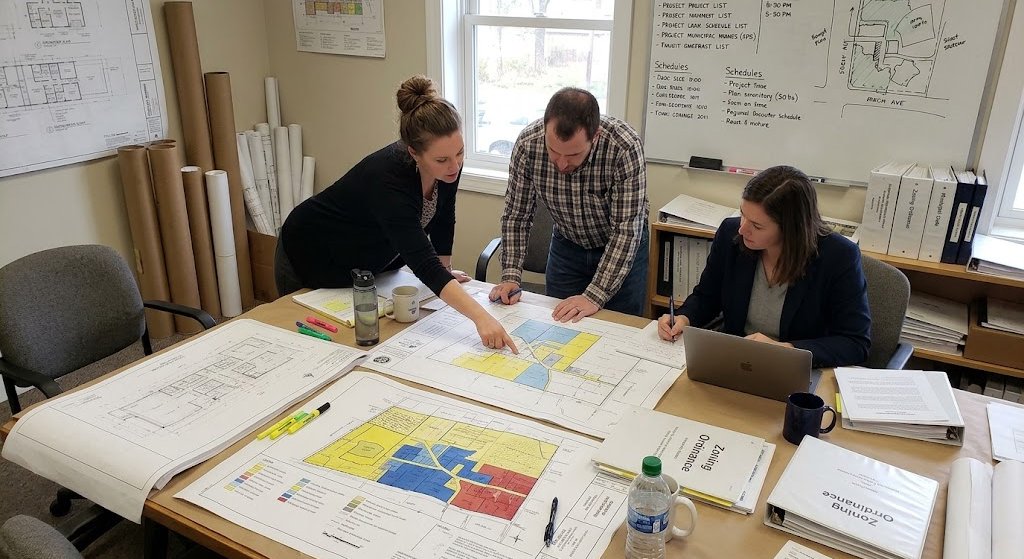

Commercial property value is about more than location or square footage. Sometimes, the rules that govern what you can build matter even more than what’s already there.
Table of Contents
Zoning and entitlements shape what is possible on a property, how much income it can generate, and how attractive it is to buyers and investors. They influence everything from building size and permitted use to development risk and market perception.
Whether you’re an investor, developer, or property owner, understanding these factors can make the difference between a good deal and a missed opportunity. This guide explores how zoning and entitlements affect commercial property valuation—and why paying attention early can save time, money, and frustration.
What Is Zoning and Why It Matters for Commercial Property Value
Zoning is a local government tool that controls land use. Every commercial property sits within a zoning district. That district sets rules for what can and cannot be done on the site. These rules affect value because they control future potential. If a property cannot legally support a higher-value use, its market price may be limited.

What Zoning Means in Commercial Real Estate
Zoning defines how land may be used and developed. For commercial properties, this often includes:
Allowed uses, such as office, retail, or industrial
Building height limits
Density or floor area limits
Parking requirements
Setbacks and open space rules
A property zoned for a single use usually has fewer buyers. A property with flexible zoning often attracts more interest. That difference shows up in valuation.
Common Commercial Zoning Categories
Commercial zoning labels vary by city, but most fall into a few common groups.
| Zoning Type | Typical Uses | Valuation Impact |
|---|---|---|
| General Commercial | Retail, offices, services | Stable demand, moderate value |
| Office / Business | Professional offices | Strong value in urban areas |
| Mixed-Use | Retail, office, residential | Often higher value due to flexibility |
| Industrial | Warehousing, manufacturing | Value tied to logistics and access |
Mixed-use zoning often supports stronger valuations. This is because it allows multiple income streams and adapts better to market changes.
How Zoning Controls Development Potential
Zoning does not just control use. It also limits size and scale. Key zoning limits that affect valuation include:
Floor Area Ratio (FAR): Caps how much space can be built
Height limits: Restrict vertical development
Lot coverage: Controls building footprint
Parking rules: Increase or reduce usable space
When zoning limits development size, it limits income. Appraisers and buyers factor this directly into property value.
💡 Key Tip
Understanding zoning and entitlements can significantly affect commercial property valuation. Always check local zoning laws before investing.
📌 Main Points
- Check local zoning regulations.
- Understand property entitlements.
- Evaluate potential for property value uplift.
What Are Entitlements and Why They Influence Valuation
Zoning sets the rules. Entitlements confirm what is actually approved. An entitlement is a formal approval from a city or county that allows a specific development or use. Without it, even a well-zoned property may carry uncertainty. That uncertainty affects value.
Understanding Entitlements in Simple Terms
Entitlements are approvals required to develop, change, or expand a property. They often include:
Site plan approval
Conditional use permits
Variances from zoning rules
Environmental or traffic approvals
These approvals confirm that a project can move forward under current regulations.
Zoning vs. Entitlements: Key Differences
Zoning shows what might be allowed. Entitlements show what has been approved.
| Aspect | Zoning | Entitlements |
|---|---|---|
| Purpose | Sets general rules | Grants project-specific approval |
| Flexibility | Broad | Specific |
| Risk level | Higher uncertainty | Lower uncertainty |
| Impact on value | Potential value | Confirmed value |
Buyers often pay more for entitled properties because the risk is lower.
Why Entitled Properties Often Appraise Higher
Entitlements reduce guesswork. They shorten timelines and limit planning risk. From a valuation standpoint, this matters because:
Financing becomes easier
Development costs are clearer
Market risk is lower
As a result, entitled commercial land often sells at a premium compared to similar unentitled sites.
What This Means for Property Owners and Investors
Zoning and entitlements shape more than design choices. They shape value. Before purchasing or marketing a commercial property, it is important to understand:
What the zoning allows today
What approvals are already in place
What changes would require city review
These details often influence price negotiations, project feasibility, and long-term returns.
📊 Property Value Trends
Source: JDJ Consulting Data
How Zoning Affects Commercial Property Valuation
Zoning has a direct effect on how commercial properties are priced. It shapes income potential, future use, and buyer demand. Appraisers, investors, and lenders all review zoning early. They do this because zoning controls what a property can realistically earn over time. When zoning is restrictive, value is often capped. When zoning is flexible, value tends to rise.
Zoning and Permitted Uses
The first question in valuation is simple. What is the property allowed to be used for? A site that supports multiple commercial uses attracts more buyers. More buyers usually lead to stronger pricing.
For example:
A retail-only zone limits tenant options
A mixed commercial zone supports retail, office, and service uses
A flexible zone adapts better to market changes
Properties with broader permitted uses are often easier to sell. That stability supports higher valuations.
Zoning’s Impact on Income Potential
Commercial valuation often relies on income. Zoning directly controls how much income a property can generate. Key zoning factors tied to income include:
Allowable building size
Number of units or suites
Type of commercial activity
Parking and access rules
If zoning limits size or use, income projections drop. When income drops, valuation follows.
Density, FAR, and Buildable Area
Density limits are among the strongest value drivers. Zoning rules such as FAR and height limits control how much space can be built. This affects rent potential and long-term returns.
| Zoning Control | What It Limits | Effect on Valuation |
|---|---|---|
| FAR | Total buildable area | Higher FAR often increases value |
| Height limit | Vertical growth | Lower height can reduce income |
| Lot coverage | Building footprint | Limits usable square footage |
| Parking rules | Space allocation | Reduces leasable area |
A property with unused development capacity may be worth more than a fully built site. Buyers often pay for future potential.
Zoning Restrictions That Limit Value
Not all zoning supports growth. Some rules place hard limits on development. Common value-limiting restrictions include:
Low height caps in high-demand areas
Use limitations that exclude high-rent tenants
Excessive parking requirements
Overlay zones with added restrictions
These limits can reduce interest from developers and investors. Lower demand often leads to lower valuation.
Rezoning and Its Effect on Property Value
Rezoning can change a property’s future. When successful, it often changes value as well. Upzoning allows more intensive use. This may include:
Higher density
Taller buildings
Additional commercial uses
These changes can support stronger income models. As a result, valuation often increases. Downzoning works the opposite way. It reduces future potential and may lower value, especially if income expectations change.
Market Perception and Zoning Flexibility
Zoning also affects how the market views a property. Flexible zoning is often seen as safer. It gives owners more options if market conditions shift. Restricted zoning may raise concerns about long-term adaptability. Buyers factor this risk into pricing. In valuation, perceived risk matters almost as much as actual income.
Why Zoning Analysis Matters Early
Zoning should be reviewed before buying, selling, or planning a project. Waiting too long can lead to unrealistic pricing or missed opportunities. A clear zoning review helps answer key questions:
Is the current value supported by zoning?
Is there room for future growth?
Are zoning limits holding value back?
These answers shape smarter decisions and stronger outcomes.
How Entitlements Directly Influence Commercial Property Valuation
Entitlements turn zoning potential into real approval. Without them, even well-zoned property carries risk. From a valuation standpoint, risk matters. The more uncertain a project is, the more value is discounted. That is why entitlements often have a clear and measurable impact on commercial property value.

Entitlements Reduce Development Uncertainty
Entitlements confirm what a property can legally support. They remove questions around use, size, and layout. For buyers and lenders, this certainty is critical.
When approvals are in place:
Timelines are clearer
Development costs are easier to estimate
Financing becomes more predictable
Lower uncertainty often leads to higher valuations.
Types of Entitlements That Affect Value
Not all entitlements carry the same weight. Some approvals influence value more than others.
Common value-impacting entitlements include:
Site plan approvals
Conditional use permits
Zoning variances
Environmental and traffic clearances
Each approval reduces a layer of risk. Together, they strengthen the property’s position in the market.
Entitled vs. Unentitled Property: Valuation Differences
Properties with full approvals often appraise higher than similar sites without them.
| Property Status | Risk Level | Typical Valuation Impact |
|---|---|---|
| Unentitled land | High | Discounted due to uncertainty |
| Partially entitled | Moderate | Mixed valuation outcomes |
| Fully entitled | Low | Often valued at a premium |
This difference becomes more noticeable in active or competitive markets.
Time and Cost Factors in Entitlement Valuation
Entitlements take time. They also cost money. Appraisers and investors consider both. Long approval timelines increase holding costs. They also expose projects to market shifts. These factors can reduce current value, even if future potential is strong.
Fully entitled properties avoid many of these delays. That efficiency often supports stronger pricing.
Entitlements and Buyer Confidence
Confidence plays a major role in valuation.
When approvals are secured:
Buyers feel more comfortable moving forward
Deals close faster
Fewer price adjustments occur late in the process
Properties without entitlements often face deeper due diligence. That can slow transactions and impact final sale prices.
When Entitlements Add the Most Value
Entitlements tend to add the most value when:
Zoning allows multiple development paths
Market demand is strong
Approval processes are complex or slow
In these cases, approved projects stand out. Buyers may pay more to avoid the uncertainty themselves.
Why Entitlement Strategy Matters
Entitlements are not just paperwork. They are a value driver. Understanding which approvals matter, and when to pursue them, can influence pricing and project success. For commercial property owners and investors, early entitlement planning often leads to clearer valuation outcomes.
The Appraisal Concept of Highest and Best Use (HBU)
Commercial property valuation is not based on current use alone. It is based on the most valuable use that is legally allowed. This idea is called highest and best use, often shortened to HBU. Appraisers rely on HBU to decide what a property is truly worth, both today and in the near future.
📈 Investment Histogram
Source: JDJ Consulting Data
What Highest and Best Use Means
Highest and best use is the most profitable use of a property that meets four tests:
Legally allowed
Physically possible
Financially feasible
Productive enough to support value
If a use fails any one of these tests, it cannot be considered in valuation. Zoning and entitlements define the first test. If a use is not allowed, it does not count.
How Zoning Shapes Highest and Best Use
Zoning limits which uses are legally permitted. This directly narrows HBU options.
For example:
A retail-zoned site cannot be valued as office space
A low-density zone limits development scale
Mixed-use zoning allows broader HBU scenarios
The more flexible the zoning, the more HBU options exist. More options often support higher value.
How Entitlements Influence HBU Outcomes
Entitlements confirm which HBU scenario is realistic. A property may be zoned for multiple uses, but only entitled for one. In that case, appraisers focus on the approved path. Entitlements remove speculation. They anchor value to what is approved, not what might happen.
The Four HBU Tests in Practice
| HBU Test | Role in Valuation | Impact |
|---|---|---|
| Legal | Zoning and approvals | Sets allowed uses |
| Physical | Size, access, layout | Limits design |
| Financial | Income and cost | Filters out weak uses |
| Productive | Return comparison | Selects best option |
Zoning and entitlements carry the most weight in the legal test. Without them, the remaining tests do not matter.
Current Use vs. Highest and Best Use
A property’s current use may not reflect its HBU.
For example:
A single-story retail building in a mixed-use zone
A warehouse on land zoned for higher-density commercial
In these cases, value may reflect future potential rather than existing improvements. Appraisers review zoning and approvals to determine how realistic that future use is.
Hypothetical Use in Appraisals
Sometimes appraisers consider future zoning changes. This is done carefully and with limits. Hypothetical assumptions are usually applied when:
Zoning changes are likely
Area plans support higher density
Similar rezonings have already occurred nearby
Even then, risk adjustments are applied. Speculation without planning support rarely increases value.
Why HBU Matters to Owners and Investors
Understanding HBU helps explain valuation outcomes. If zoning or entitlements restrict use, value may be lower than expected. If approvals support stronger use, value may increase. Knowing how HBU is determined helps property owners plan smarter and price more accurately.
Zoning Classes and Their Valuation Impacts
Not all commercial zoning is created equal. The type of zoning determines what can be built, how it can be used, and how much income it can generate. These factors directly influence property value.
Understanding zoning classes is essential for owners, investors, and developers. Different zoning categories can lead to very different valuations, even for similar properties in the same area.

Industrial vs. Commercial Zoning
Commercial and industrial zones are the most common for income-producing properties.
Commercial zoning usually includes:
Retail stores
Office buildings
Service businesses
Industrial zoning often covers:
Warehouses
Manufacturing facilities
Distribution centers
Impact on Valuation:
Commercial properties rely on foot traffic and lease income
Industrial properties rely on logistics, access, and operational efficiency
| Zoning Class | Typical Use | Key Valuation Driver |
|---|---|---|
| Commercial | Retail, office, mixed-use | Rent potential, market demand |
| Industrial | Warehouse, manufacturing | Operational efficiency, location access |
Investors often value commercial properties higher in dense urban areas, while industrial properties may perform better near transport hubs.
Mixed-Use Zoning
Mixed-use zoning allows multiple uses on one site. This can include:
Residential apartments
Retail shops
Offices or coworking spaces
Why it matters for value:
Multiple income streams reduce risk
Flexible uses attract more potential buyers
Market demand changes can be accommodated
Mixed-use properties often carry higher valuations than single-use properties of similar size. Buyers pay for versatility and income potential.
Overlay Zones: Incentives and Restrictions
Some properties fall under overlay zones. These are special designations that add rules or incentives.
Common overlay types include:
Historic preservation areas
Environmental protection zones
Valuation effects:
Restrictions can limit development and lower value
Incentives, like increased density, can raise value
Property value depends on whether the overlay helps or hinders development potential.
How Zoning Class Influences Investment Decisions
Investors consider zoning class early in their due diligence. Key questions include:
What can be built legally?
What uses generate the most income?
Are zoning restrictions likely to change soon?
The answers influence purchase price, projected returns, and risk assessment.
Practical Example
Consider two properties in the same city:
A commercial-zoned retail building in a busy district
A mixed-use property allowing retail, office, and apartments
Even if both properties are the same size, the mixed-use property usually commands a higher price. The flexible zoning allows more income streams and reduces risk for investors.
🧮 Property Value Calculator
Estimate potential value uplift for your commercial property:
Zoning Compliance Costs and Their Effect on Value
Zoning rules do more than dictate use and density. They also create costs for property owners. These costs can affect the overall value of a commercial property.
Appraisers and investors consider both the restrictions and the financial impact of meeting them. Compliance costs reduce net income and, in turn, may lower property value.
Types of Zoning Compliance Costs
Common costs that affect commercial valuation include:
Parking and infrastructure requirements – Additional spaces, access roads, or utilities
Landscaping and setbacks – Green space or buffer zones required by local codes
Building design modifications – Adhering to design guidelines or overlay zone rules
Environmental studies or permits – Wetlands, stormwater, or pollution management
Fees and impact charges – Developer or city fees for permitting and public improvements
These costs can be significant, especially for larger developments.
How Compliance Costs Affect Valuation
Compliance costs reduce the potential income from a property. They also increase development timelines. Both factors influence appraisers and investors.
For example:
A property with strict parking requirements may lose leasable space
Environmental restrictions may add delays and expenses
Design or historic guidelines can increase construction costs
All of these costs are typically deducted from projected income, lowering the property’s market value.
Risk of Non-Compliance
Properties that do not meet zoning rules carry risk.
Potential fines or penalties
Delays in obtaining approvals
Rework or redesign requirements
This risk is often discounted in valuation. Buyers pay less when there is uncertainty around compliance.
| Compliance Factor | Cost Type | Effect on Value |
|---|---|---|
| Parking / Infrastructure | Construction cost | Reduces leasable area, lowers income |
| Landscaping / Setbacks | Land use limitation | Reduces usable buildable space |
| Design Modifications | Design / construction cost | Higher development cost reduces net value |
| Environmental Permits | Time / money | Delays increase holding costs, lower value |
| Fees / Impact Charges | Direct cost | Reduces return on investment |
Planning for Compliance Costs
Understanding these costs early is key to accurate valuation. Investors and property owners should:
Review local zoning requirements
Estimate construction and development costs
Factor compliance costs into projected returns
By accounting for compliance costs, property owners avoid surprises and make more informed decisions about pricing and development.
📖 Case Study
JDJ Consulting helped a client increase their property value by 35% through proper zoning analysis and entitlement management.
Read full case study.Book a ConsultationLearn About Zoning & Entitlements
Zoning Changes: Upzoning, Downzoning & Variances
Zoning is not fixed. Cities often change zoning rules to respond to growth, planning goals, or market needs. These changes can have a big impact on commercial property value.
Understanding how upzoning, downzoning, and variances work helps property owners and investors evaluate risk and opportunity.
Upzoning and Its Effect on Value
Upzoning allows a property to support more intensive development than the current rules permit.
Examples include:
Increasing allowable building height
Allowing higher density or more units
Expanding permitted uses (e.g., from office-only to mixed-use)
Why it matters for value:
Upzoning increases potential income
More buildable space supports higher rent or sale prices
Buyers are willing to pay a premium for properties with expanded development potential
Upzoning can significantly raise a property’s market value, sometimes even before construction begins.
Downzoning and Its Impact
Downzoning restricts development potential compared to current rules.
Examples include:
Reducing allowable building height
Limiting density or square footage
Restricting permitted uses
Effect on valuation:
Limits future development and income
Reduces attractiveness to developers and investors
May lower property value, especially in high-demand areas
Downzoning can create uncertainty and negatively impact both current and future valuation.
Variances and Spot Zoning
Sometimes, property owners request exceptions to zoning rules. These are called variances or spot zoning.
Variance: Allows deviation from specific rules, such as setbacks or height limits
Spot zoning: Applies a unique zoning category to a specific parcel, different from surrounding areas
Impact on value:
Variances can increase value by enabling otherwise restricted development
Spot zoning may increase or decrease value depending on market perception and permitted use
| Zoning Change Type | What It Means | Typical Effect on Value |
|---|---|---|
| Upzoning | Allows more intensive use | Often increases value |
| Downzoning | Restricts development | Often decreases value |
| Variance | Exceptions to rules | Can increase value if it enables profitable use |
| Spot Zoning | Special zoning for a specific site | Effect depends on permitted uses and market perception |
Strategic Considerations
Upzoning often requires negotiation and city approval. Timing and political support are key.
Downzoning may be part of broader city plans, reducing flexibility for owners.
Variances provide opportunities but come with approval risk.
Understanding zoning changes is crucial for property owners, investors, and developers. Even small changes can significantly affect income potential and market value.
Zoning, Entitlements, and Risk in Commercial Real Estate
Commercial property value is not just about income. It is also about risk. Zoning and entitlements play a major role in shaping that risk.
Investors and appraisers often separate risk into two main types: planning risk and market risk. Understanding both helps explain how property value is determined.

Planning Risk vs. Market Risk
Planning risk is the uncertainty around approvals, permits, and zoning compliance.
Examples include:
Will the city approve the proposed development?
How long will the entitlement process take?
Are there restrictions or additional requirements?
Market risk is uncertainty about demand, rental rates, or resale value. Both types of risk reduce investor confidence. Properties with higher risk are often valued lower.
How Zoning Stability Influences Investment Confidence
Stable zoning reduces planning risk. Investors are more confident when:
Zoning rules are consistent
Future changes are unlikely
Approvals are straightforward
High confidence translates to higher property value. Uncertain zoning or frequent rule changes create hesitation and can depress value.
Risk Adjustments in Valuation
Appraisers often adjust valuations based on perceived risk.
Consider:
Unentitled land: Higher planning risk → discount applied to value
Partially entitled property: Moderate risk → smaller discount
Fully entitled property: Low risk → premium value
| Property Status | Risk Level | Typical Valuation Adjustment |
|---|---|---|
| Unentitled land | High | Value discounted due to uncertainty |
| Partially entitled | Moderate | Moderate adjustment for risk |
| Fully entitled | Low | Often valued at a premium |
These adjustments help buyers and lenders price properties realistically.
The Role of Timing
Planning risk is often tied to time.
Longer approval processes increase holding costs.
Market conditions may shift during delays.
Uncertainty about timing can reduce the property’s net present value.
Fully entitled properties or sites in stable zoning districts typically command higher prices because timing risk is minimized.
Why Risk Matters to Investors
Understanding zoning and entitlement risks allows investors to:
Assess realistic income potential
Negotiate better purchase prices
Avoid surprises during development
Properties with well-managed risk are easier to finance and sell. This certainty supports stronger valuation and smoother transactions.
Practical Implications for Investors and Developers
Zoning and entitlements are more than technical rules. They affect real decisions for investors, developers, and property owners. Understanding their impact helps plan projects, evaluate value, and manage risk.
Due Diligence: Reviewing Zoning and Entitlements
Before buying or developing a property, review its zoning and entitlement status. Key steps include:
Check the current zoning designation
Identify permitted uses and restrictions
Verify any entitlements or approvals in place
Understand overlay zones, environmental rules, or special regulations
Doing this early prevents costly surprises later. It also helps set realistic expectations for potential income and valuation.
Working with Planning Consultants and Appraisers
Professional guidance can make a big difference.
Planning consultants help:
Interpret zoning codes and local regulations
Assess development feasibility
Identify opportunities for upzoning, variances, or entitlements
Appraisers help:
Determine the current and potential value of the property
Incorporate zoning and entitlement risks into valuations
Provide realistic assessments for investors and lenders
Collaborating with both ensures informed decisions and accurate valuation.
Negotiating Purchase Price Based on Zoning Constraints
Zoning restrictions and entitlement status affect negotiations.
Properties with full entitlements often command a premium
Unentitled or restricted properties may sell at a discount
Knowledge of zoning limits can strengthen your bargaining position
Understanding the legal and approved potential helps investors make fair offers while minimizing risk.
Planning for Future Growth
Investors should consider both current rules and future changes.
Cities may upzone areas to encourage development
Downzoning may reduce future potential
Variances or special permits may create new opportunities
Factoring in potential changes allows better long-term planning and more accurate valuation modeling.
Key Takeaways for Investors and Developers
Early review of zoning and entitlements saves time and money
Professional guidance helps maximize property value and reduce risk
Strategic planning ensures projects align with both market demand and legal requirements
Negotiations are stronger when property limitations and opportunities are clear
By understanding zoning, entitlements, and associated risks, investors and developers can make smarter decisions, reduce surprises, and improve returns.
Conclusion
Zoning and entitlements are more than regulatory requirements—they are key drivers of commercial property value.
A property’s worth depends not only on its location or size but also on what the city allows you to build and what approvals are in place. Flexible zoning, full entitlements, and strategic planning reduce risk, increase income potential, and often result in higher market value.
Investors, developers, and property owners who understand these factors can make smarter decisions, set realistic expectations, and maximize returns. Ignoring zoning or entitlement risks can lead to delays, unexpected costs, and lower valuation.
JDJ Consulting – Your Trusted Real Estate Partner
If you want to ensure your commercial property is positioned for maximum value, JDJ Consulting Group can help.
Our real estate experts provide guidance on zoning, entitlements, and planning strategies to support informed investment decisions. We help clients understand opportunities, evaluate risk, and optimize property value.
Contact JDJ Consulting Group today to discuss your property and discover how strategic planning can improve both short-term and long-term value.
- Phone number (818) 793-5058
- Email: sales@jdj-consulting.com
- Contact page: https://jdj-consulting.com/contact-us/
FAQs: Commercial Property Valuation
What is zoning in commercial real estate?
Zoning refers to local laws that define how land can be used. It tells you what activities are allowed (like retail, office, or industrial) and sets rules like height limits, density, setbacks, and parking. Zoning aims to separate incompatible uses and ensure orderly development. Commercial zoning often has more flexible uses than residential zoning, which can increase potential income and property value. M&T
How do entitlements affect property value?
Entitlements are approvals that confirm what you can build or change on a site. They reduce uncertainty around development and often lead to higher market value because buyers know what is legally permitted. Properties with full entitlements typically sell faster and at higher prices than those without, as the risk of delays and denial is lower. Wernick & Co.
Why does zoning matter for commercial property valuation?
Zoning determines what you can build, how much you can build, and how the land can be used. These factors influence income potential, risk, and market appeal. Properties in zones that allow higher density or mixed use often attract more buyers and command higher values compared to restricted zones. HelloLandmark
What is the difference between zoning and entitlements?
Zoning: General rules that say what uses are allowed on a property.
Entitlements: Specific approvals for a project that confirm it can be built under zoning rules.
Zoning shows possibilities; entitlements show what has been approved. Entitlements reduce risk and support valuation.
Can zoning changes increase property value?
Yes. Changing zoning to allow more intensive use, greater height, or mixed uses often increases value. This is because it expands development opportunities and potential income. Upzoning can attract more buyers and supports higher valuations.
What is downzoning and how does it impact valuation?
Downzoning restricts development potential by lowering density, height, or permitted uses. This can reduce future income potential and make a property less attractive to investors, leading to lower valuation.
How does zoning influence rental income potential?
Zoning controls the scale and type of development. Higher density or mixed‑use zoning allows more leasable space and tenant types, often increasing rental income. More income usually leads to higher property valuations under income‑based appraisal methods.
Do zoning restrictions increase compliance costs?
Yes. Zoning can require parking, setbacks, green space, or design standards. Meeting these can increase development costs, reduce usable space, and lower income potential. These costs are considered in valuation and may reduce value.
What does “highest and best use” mean?
Highest and best use is the most profitable legal use of a property. Appraisers consider zoning, entitlements, physical site factors, and financial feasibility. The use that meets all these criteria and maximizes value becomes the basis for valuation.
How do entitlements reduce risk?
Entitlements confirm legal approval for specific uses or developments. This reduces uncertainty about whether a project will be approved, shortens development timelines, and lowers the risk of unexpected costs or delays. Lower risk generally leads to stronger valuation.
Can non‑conforming uses affect property value?
Yes. A non‑conforming use is one that was legal before current zoning but doesn’t match new rules. These uses may continue but may limit expansion or refinancing, and can add risk that reduces value.
Does zoning affect financing terms?
Yes. Lenders often assess zoning and entitlement status before financing. Properties with clear zoning and approvals typically get better loan terms because they carry less risk. AEI Consultants
Are entitlements transferable between buyers?
Sometimes yes, if the approvals are “vested” and tied to the land. This means a new buyer can use the existing entitlements. However, this depends on local rules and how approvals were granted.
How long do entitlement approvals usually take?
There’s no universal timeline. Entitlement processes can take months to years, depending on local requirements, complexity of the project, and hearings. Longer processes can increase holding costs and affect valuation.
How does zoning affect marketability of a property?
Flexible zoning that supports a range of uses makes a property appealing to more buyers. Restricted zoning narrows the buyer pool and can slow sales or reduce price. Broad use permissions often improve marketability.
Does zoning affect property taxes?
Yes. In some areas, commercial zoning can lead to higher assessed value and taxes compared to residential or agricultural zoning. Higher taxes may affect net income and influence valuation models.
Can a property be resold while entitlements are pending?
Yes, but pending entitlements add risk. Buyers may offer less until approvals are confirmed. Contracts often include contingencies based on entitlement outcomes to protect buyers.
What is a zoning variance?
A variance is a request to deviate from zoning rules where strict application creates hardship. Approvals depend on local boards. Variances can increase property value by allowing better use of the land, but may not always be granted.
Does zoning affect redevelopment projects?
Absolutely. Zoning controls what can be demolished, rebuilt, or expanded. Flexible zoning makes redevelopment easier and increases potential value, while tight restrictions can discourage redevelopment.
How do zoning and entitlements fit into a valuation model?
Valuation often uses income, cost, or sales comparison methods. Zoning and entitlements shape expected income (rent), development cost, and risk factors. They directly inform assumptions in these valuation approaches.