

An opinionated look at where smart money is quietly moving
Table of Contents
Florida has always been a magnet for real estate investors. Sunshine. No state income tax. Relentless population growth. The basics haven’t changed. What has changed is where the smartest rental investors are looking in 2025.
The old playbook—buy anywhere near the coast and wait—doesn’t work the way it used to. Prices are higher. Insurance is trickier. Overbuilding is real in some metros. And hurricanes are no longer a background risk. They are part of the calculation.
So let’s cut through the noise.
This is not a hype list. This is an opinionated breakdown of Florida cities that still make sense for long-term rental investors, especially those focused on existing single-family homes, not flashy new builds.
What Actually Matters for Florida Rental Investments in 2025
Before naming cities, it’s important to reset expectations. Not every “hot” Florida city is a good rental market anymore.
In 2025, strong rental investments share a few traits:
Steady population growth, not just seasonal demand
Job diversity beyond tourism
Rent growth that keeps pace with insurance and taxes
Limited land or zoning constraints that prevent endless sprawl
Lower hurricane exposure, or at least a manageable risk
If a city fails two or three of these tests, returns get thin fast.

Tampa–St. Petersburg: Still Strong, But No Longer Cheap
Why investors still like it
The Tampa Bay area remains one of Florida’s most balanced rental markets.
You get:
Solid job growth in healthcare, finance, and tech
A large renter population
Rents that remain high relative to purchase prices
Compared to Miami or Fort Lauderdale, Tampa still feels livable. That matters. People stay longer. Turnover is lower.
The downside
The easy deals are gone. Prices surged hard from 2020 to 2023. Investors buying today must be disciplined. Miss on price, and cash flow disappears.
Also:
Some neighborhoods are overbuilt
Insurance costs are climbing
Flood zones matter more than ever
Bottom line
Tampa works if you:
Buy below the median price
Focus on workforce housing
Avoid speculative appreciation plays
This is a cash-flow-first market now.
Jacksonville: Quietly One of Florida’s Best Rental Cities
Jacksonville doesn’t get the glamour headlines. That’s exactly why it works.
What makes Jacksonville different
Jacksonville is big. Sprawling. And still relatively affordable.
It benefits from:
A massive logistics and port economy
Military presence
Healthcare and finance employers
Consistent in-migration from higher-cost states
Rents have grown steadily without explosive pricing.
Why long-term rentals shine here
This is a city where:
Tenants stay longer
Rent-to-price ratios still make sense
Single-family rentals dominate
You can still find homes that cash flow without aggressive assumptions.
Risks to watch
Neighborhood selection matters more than city selection
Some pockets struggle with older housing stock
Certain areas lag in appreciation
Bottom line
Jacksonville is not exciting. It is reliable. For many investors, that’s better.
Orlando: Not Just a Tourism Market Anymore
Orlando has outgrown its reputation. Yes, tourism still matters. But it’s no longer the whole story.
Why Orlando still works for rentals
Orlando benefits from:
Massive population growth
Healthcare and education expansion
A young renter-heavy demographic
Strong demand for single-family homes
Even during market slowdowns, rental demand stays resilient.
Where investors get it wrong
Too many investors chase:
Short-term rentals
Vacation-heavy zones
New subdivisions far from job centers
Those plays are crowded.
Smarter Orlando strategy
Focus on:
Established suburbs
Areas near hospitals and universities
Long-term tenants, not tourists
Bottom line
Orlando is a long-term hold city. Buy boring. Let population growth do the work.
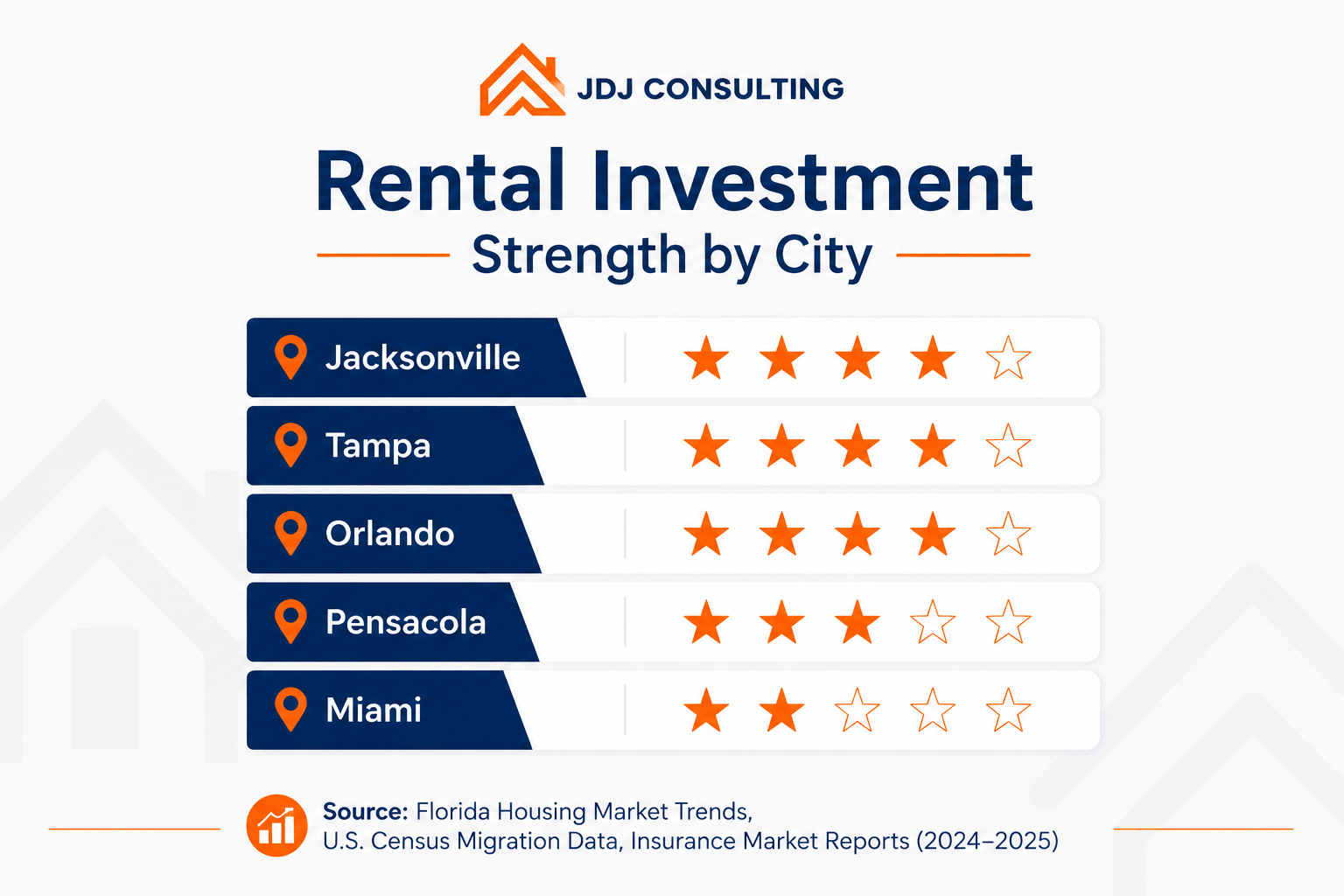
Source: Florida Housing Market Trends, U.S. Census Migration Data, Insurance Market Reports (2024–2025)
North Florida Military Towns: Underrated and Overlooked
This is where many experienced investors quietly park capital.
Why military markets work
Cities near military bases offer:
Built-in tenant turnover
Stable employment
Lower investor competition
Predictable demand cycles
Places like Pensacola stand out.
Pensacola’s advantage
Pensacola combines:
Military demand
A livable city feel
Lower prices than South Florida
Less speculative frenzy
It’s not immune to storms. But inland neighborhoods reduce exposure.
The tradeoff
Appreciation is slower
Markets feel “sleepy”
Liquidity can be lower
Bottom line
If you want steady rent checks, not headlines, North Florida military markets deliver.
Freeport & Walton County: Growth Before the Boom
This is a forward-looking play. Freeport sits north of some of Florida’s most expensive coastal areas. As prices exploded along the coast, workers moved inland. That migration isn’t reversing.

Why is this area changing fast
South Walton became unaffordable
Service workers moved north
Developers followed
Multi-family construction increased
This is classic spillover growth.
Why long-term rentals make sense
Strong renter demand
Limited single-family inventory
Long-term population expansion
The risk
Growth assumptions must be realistic
Some infrastructure is still catching up
Bottom line
Freeport isn’t as proven as Tampa or Jacksonville. But that’s the opportunity.
Sarasota & St. Petersburg: Premium Markets With Thin Margins
These cities look great on paper. They are desirable. Beautiful. Highly ranked. They are also expensive.
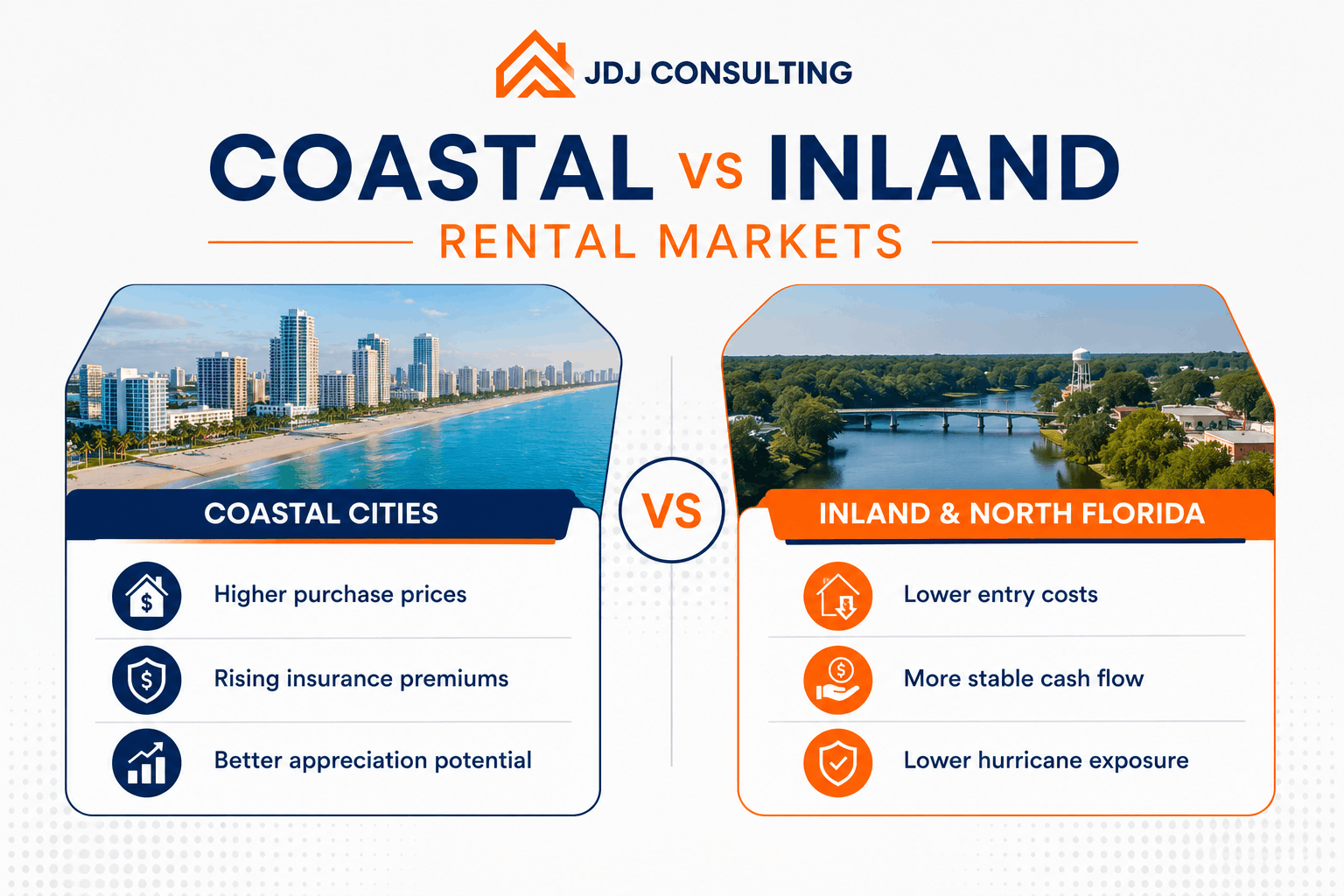
A comparison of Florida’s coastal and inland rental markets, highlighting differences in property prices, insurance costs, appreciation potential, cash flow, and hurricane risk to help investors evaluate market opportunities.
Why investors still consider them
High-quality tenants
Strong long-term appreciation
Limited land supply
The problem
Purchase prices are high
Insurance costs are brutal
Cash flow is tight
These are appreciation-driven markets now.
Bottom line
If you need cash flow, look elsewhere.
If you want:
Long-term wealth preservation
Premium tenants
Lower vacancy
These cities can still work—but only with strong capital.
Miami & Fort Lauderdale: Not Built for Traditional Rentals Anymore
Let’s be honest. Miami is no longer a traditional rental investor’s city.
What changed
Prices disconnected from rents
Insurance and HOA costs exploded
Regulation uncertainty increased
Short-term rentals distorted pricing. Long-term investors got squeezed.
Who Miami still works for
High-net-worth investors
Appreciation-focused buyers
Luxury niche players
Bottom line
For most long-term rental investors, Miami is a pass in 2025.
Hurricane Risk: The New Filter Investors Can’t Ignore
Hurricanes are not hypothetical anymore.
They influence:
Tenant demand
Holding costs
Long-term returns
Smart investors do this now
Favor inland neighborhoods
Avoid repeated-loss zones
Stress-test insurance increases
Factor downtime into returns
Ignoring this risk is no longer an option.
So, Where Is the Smart Money Going?
If you strip away hype and emotion, a pattern appears. Smart rental investors in Florida are choosing:
Jacksonville over Miami
Pensacola over Sarasota
Orlando suburbs over tourist zones
Inland growth corridors over beachfront prestige
It’s less glamorous. It’s more profitable.
The Best Florida Cities for Long-Term Rentals in 2025 (Opinionated Ranking)

Strongest Overall
Jacksonville
Tampa (select neighborhoods)
Orlando (non-tourist areas)
Best Underrated Picks
Pensacola
Freeport / Walton County
North Florida military towns
High Risk, High Cost
Miami
Fort Lauderdale
Luxury coastal Sarasota
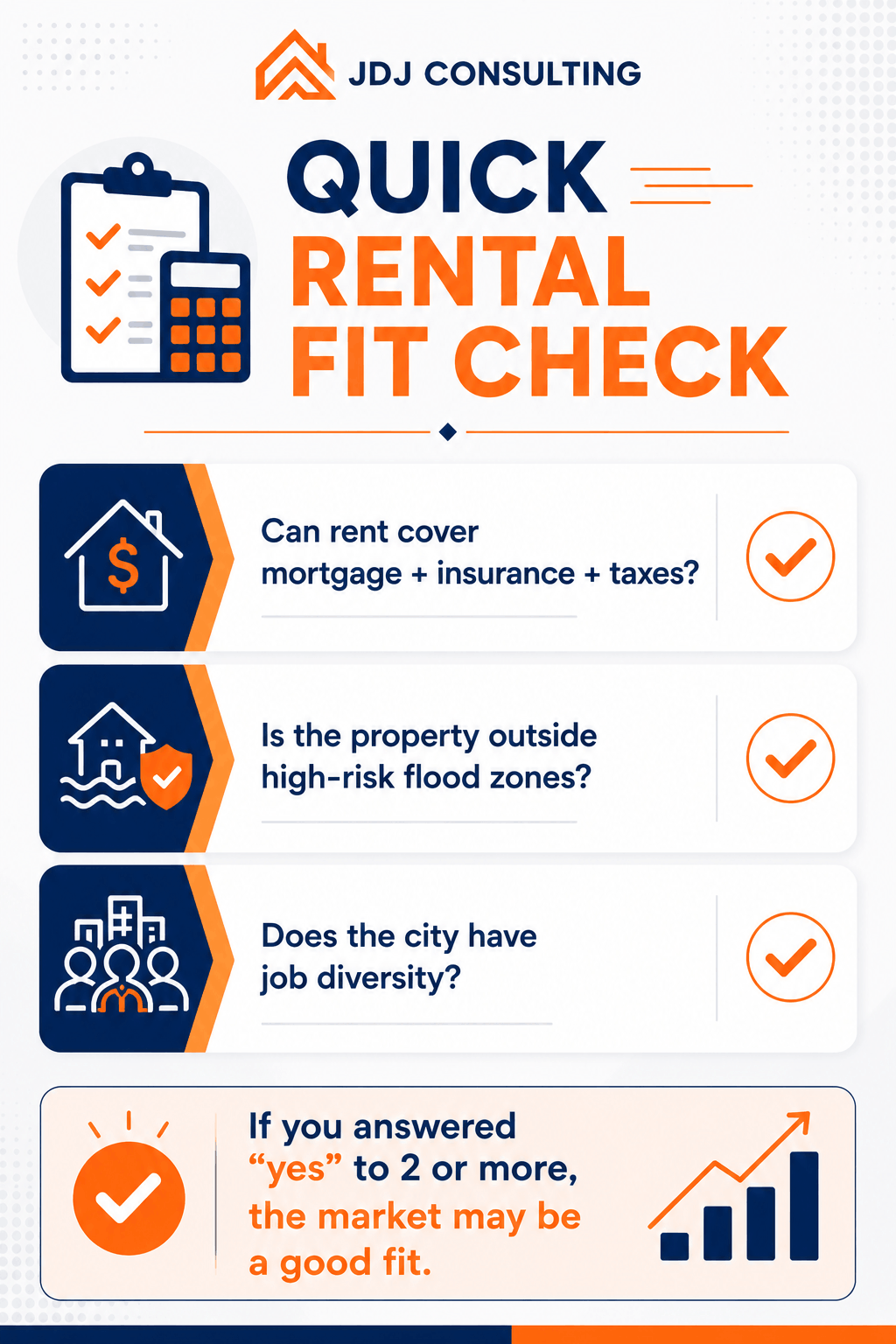
Use this quick rental fit checklist to evaluate whether a rental property market aligns with your investment goals. Consider affordability, flood risk, and local job diversity before making an investment decision.
Expert Tips for 2025
- Prioritize insurance-first underwriting
- Avoid overbuilt subdivisions
- Think long-term, not hype-driven
How to Choose the Right Florida Rental City
Step 1: Define your goal (cash flow vs appreciation)
Step 2: Analyze rent-to-price ratio
Step 3: Check insurance & flood zones
Step 4: Focus on job-driven demand
Step 5: Buy below the median when possible
Final Thoughts: Florida Is Still a Rental Goldmine—If You’re Selective
Florida is not “over.” But lazy investing is. The winners in 2025 are investors who:
Think long-term
Buy for fundamentals
Respect insurance and climate risk
Ignore social media hype
Rental success in Florida now comes from discipline, not excitement. If you can embrace that, the opportunities are still very real. Talk to our JDJ Consulting team today to discover which Florida rental markets align with your investment goals and long-term returns.
FAQs: Best Cities to Invest in Florida for Rental Properties (2025)
What are the best cities in Florida for long-term rental investments in 2025?
The strongest cities for long-term rentals in 2025 are those with steady population growth, diverse jobs, and reasonable home prices. Based on current market behavior, top picks include Jacksonville, Tampa (select neighborhoods), Orlando suburbs, and parts of North Florida like Pensacola.
These cities balance rent growth with affordability, making them better suited for consistent cash flow rather than speculative appreciation.
Strong renter demand
Less reliance on tourism
Better rent-to-price ratios
Is Florida still a good state for rental property investment?
Yes, Florida is still attractive for rental investors, but strategy matters more than ever. Population growth remains strong, and there is no state income tax.
However, rising insurance costs and overbuilding in some areas mean investors must be selective. Long-term rentals in inland or workforce-driven markets tend to perform better than coastal or luxury-focused areas.
Population inflow remains positive
Insurance and taxes must be factored carefully
Which Florida city offers the best cash flow for rental properties?
Jacksonville consistently stands out for cash flow. Home prices remain lower than South Florida, while rents have grown steadily. The city benefits from logistics, healthcare, military, and port-related jobs, creating year-round rental demand. While appreciation may be slower than coastal cities, the rent-to-price ratio often works better for long-term investors.
Lower entry prices
Stable tenant base
Less speculative volatility
Are coastal Florida cities still worth investing in for rentals?
Coastal cities like Miami, Fort Lauderdale, Sarasota, and St. Petersburg can still work, but mostly for well-capitalized investors. High purchase prices, insurance premiums, and flood risk often compress cash flow.
These markets are now more appreciation-driven than income-focused, making them less ideal for investors who rely on monthly rental returns.
Higher insurance exposure
Tighter margins
Better suited for long-term wealth holds
How does hurricane risk affect rental property investment in Florida?
Hurricane risk now plays a major role in investment decisions. It directly impacts insurance costs, vacancy risk, and long-term operating expenses.
Many investors favor inland neighborhoods or cities with fewer historical storm impacts. Evaluating flood zones, roof age, and insurance availability is just as important as analyzing rent and price.
Higher premiums in coastal zones
Potential downtime after storms
Increased due diligence required
Are military towns in Florida good for rental properties?
Yes, military towns like Pensacola offer stable and predictable rental demand. Frequent relocation cycles create consistent tenant turnover, and competition from investors is often lower than in South Florida.
While appreciation may be slower, these markets appeal to investors focused on steady income rather than rapid price growth.
Reliable tenant demand
Lower vacancy risk
Less speculative pricing
Is Orlando a good city for long-term rental investments?
Orlando remains a strong long-term rental market, especially outside tourist-heavy zones. The city has diversified beyond tourism, with growth in healthcare, education, and logistics.
Suburban neighborhoods near job centers tend to perform best for long-term rentals, offering stable tenants and lower regulatory risk than short-term rental areas.
Large renter population
Strong population growth
Avoid vacation-focused districts
What makes Jacksonville attractive compared to South Florida?
Jacksonville offers a better balance between affordability and rental demand than South Florida. Home prices are lower, insurance costs are often more manageable, and job growth is spread across multiple industries.
This combination makes it easier to achieve cash flow without relying heavily on appreciation or short-term rental strategies.
Larger geographic diversity
Less investor saturation
More predictable returns
Are emerging markets like Freeport and Walton County worth considering?
Emerging markets like Freeport can be attractive for investors willing to think long-term. Rising housing costs in nearby coastal areas have pushed workers inland, increasing rental demand.
While these areas are still developing, early investors may benefit from population growth and limited single-family inventory over time.
Spillover growth from coastal cities
Increasing rental demand
Infrastructure still developing
What type of rental strategy works best in Florida right now?
In 2025, long-term rentals focused on workforce housing perform best across most Florida markets. Existing single-family homes in established neighborhoods tend to be safer than new builds or short-term rentals.
Investors should prioritize cash flow, insurance resilience, and tenant stability over aggressive appreciation assumptions.
Long-term tenants over vacation renters
Inland and job-driven locations
Conservative financial projections
Content courtesy: Reddit thread