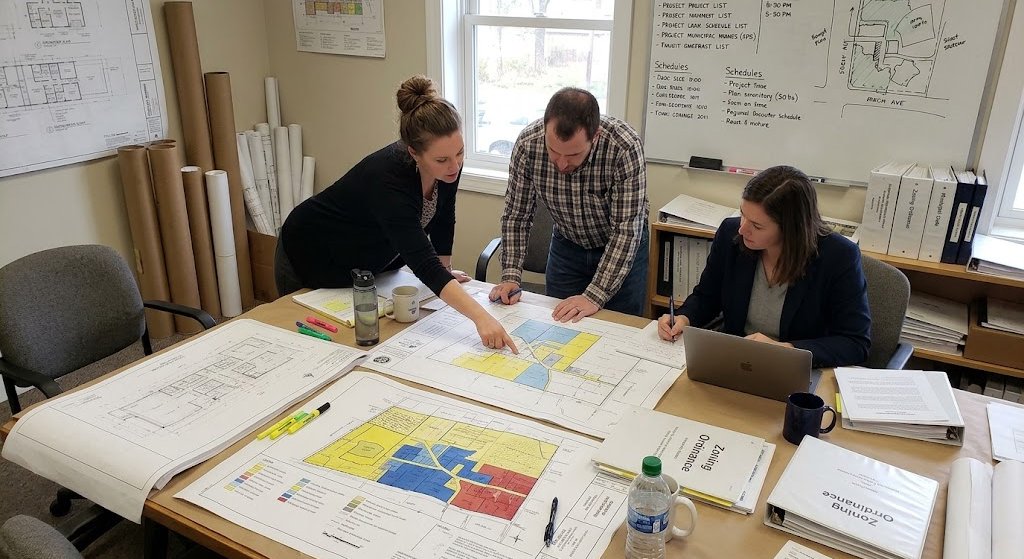
If you are buying, selling, renovating, or evaluating a property in Texas, permit history matters more than most people think. It tells you what work was legally approved, what inspections were completed, and whether a project was finalized by the city.
In Texas, building permits are handled at the local level. That means each city or county manages its own records. As a result, finding permit records can feel confusing at first.
However, once you understand how the system works, the process becomes much simpler. In this guide, we will break it down step by step. We will also explain what permit history includes, why it matters, and how Texas cities manage these records.
This information is especially helpful for:
Property owners
Real estate buyers
Investors
Contractors
Developers
Property managers
At JDJ Consulting, we often see projects delayed because someone skipped permit research. So let’s start with the basics.
Table of Contents
What Is Permit History and Why It Matters
Permit history refers to the official record of construction or improvement work that required approval from a city or county.
When someone builds a new structure, adds a room, upgrades electrical systems, or changes plumbing lines, they often must apply for a permit. Once approved, inspections follow. After passing inspection, the permit is finalized.
All of this creates a paper trail. That paper trail is the property’s permit history.
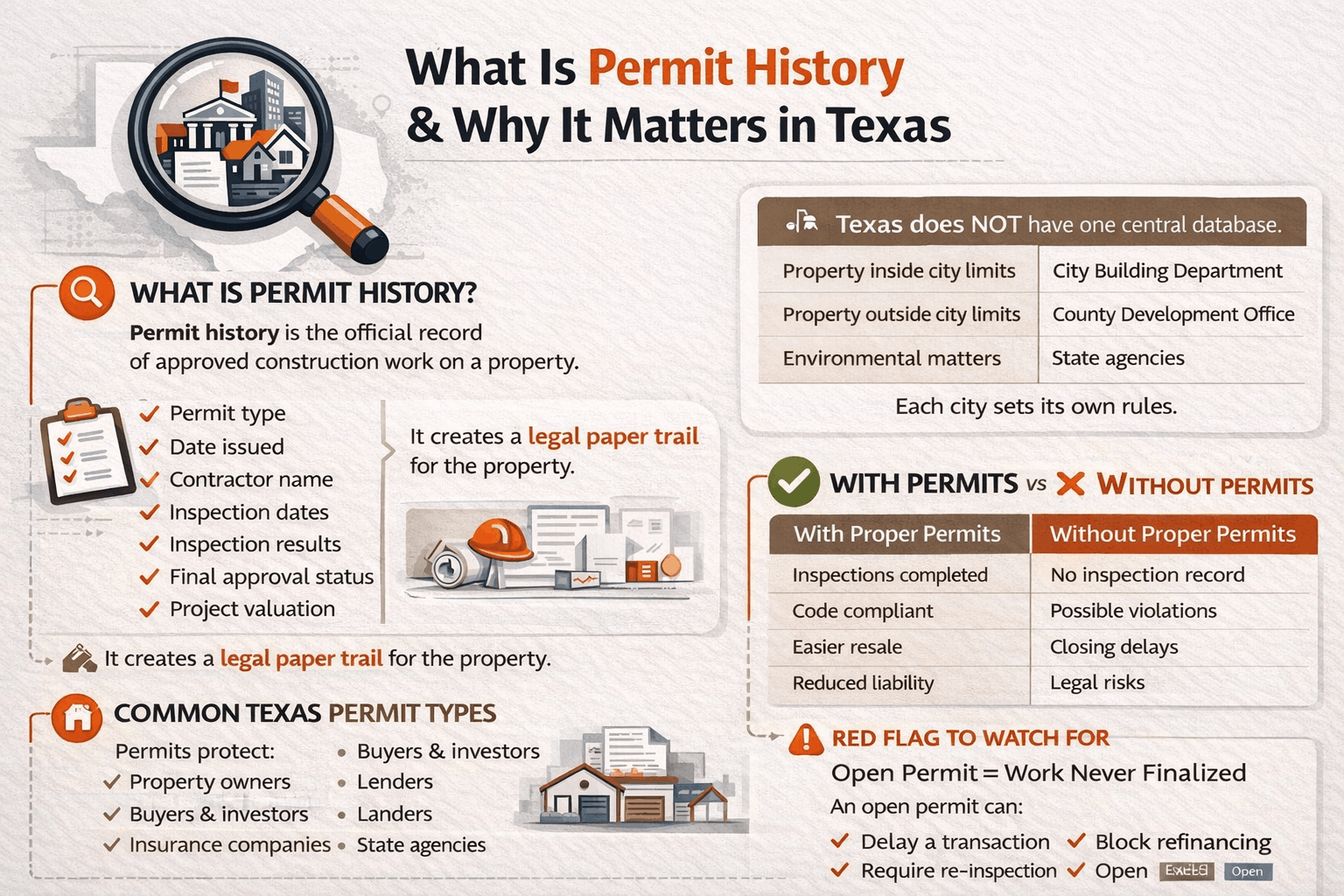
Understanding building permits: safety, compliance, and protecting your investment.
What “Permit History” Means
Permit history includes more than just a permit number. It usually contains:
Permit type (building, electrical, plumbing, mechanical)
Date issued
Contractor name
Inspection dates
Inspection results
Final approval status
Project valuation
Some cities also include plan review comments and correction notices.
In Texas, most permit records are maintained by:
County Development Offices
It is important to understand that permit records are public information in most cases. That means you can request them even if you do not own the property.
Below is a simple breakdown of common permit types you will see in Texas.
| Permit Type | What It Covers | Common Example |
|---|---|---|
| Building Permit | Structural changes or new construction | Room addition, garage conversion |
| Electrical Permit | Electrical system upgrades or installs | Panel upgrade, rewiring |
| Plumbing Permit | Water, sewer, or gas line work | Water heater replacement |
| Mechanical Permit | HVAC systems | New AC installation |
| Roofing Permit | Roof replacement (in many cities) | Full roof tear-off and replacement |
Understanding these categories helps you know what to search for when reviewing Texas permit records.
Why Permits Are Important for Property Owners
Many people assume permits are just paperwork. They are not. Permits protect property owners and future buyers.
Here’s why permit history matters:
First, it confirms that work was done according to local building codes. Texas cities enforce their own codes, often based on the International Building Code (IBC) and International Residential Code (IRC). Second, it protects resale value. If a buyer discovers unpermitted work, it may reduce the home’s value or delay closing. Third, lenders and insurance companies often review permit records. Missing permits can raise red flags. Fourth, it reduces liability. If an issue arises later, documented permits show the work passed inspection.
Let’s look at a quick comparison.
| With Proper Permits | Without Proper Permits |
|---|---|
| Inspections completed | No inspection record |
| Code-compliant work | Possible violations |
| Easier resale | Closing delays |
| Fewer legal risks | Fines or corrections required |
In our consulting work, we often see buyers surprised by open permits. An open permit means the job was never finalized. That can stop a transaction quickly.
Therefore, checking permit history early saves time and money.
Common Misconceptions About Permit Records
There are several misunderstandings about building permits in Texas. Let’s clear them up.
Misconception 1: All work requires a permit.
Not true. Minor cosmetic work usually does not require a permit. For example:
Painting
Cabinet replacement
Flooring changes (in many cities)
However, structural changes almost always require one.
Misconception 2: Permit records are always online.
Many large Texas cities have online databases. Smaller cities may not. Some older permits exist only on paper.
Misconception 3: If there is no permit record, the work was illegal.
Not always. The work may have been completed before digital systems were introduced. In some Texas cities, online data only goes back 10–20 years.
Misconception 4: Counties manage all permit records.
In Texas, incorporated cities handle most building permits. Counties mainly handle unincorporated areas. This distinction is important when researching a property.
Before moving forward, here is a quick reference chart.
| Situation | Who to Contact in Texas |
|---|---|
| Property inside city limits | City Building Department |
| Property outside city limits | County Development Office |
| Environmental permit issues | State agency (if applicable) |
| Older archived permits | City records department |
Understanding these basics makes the research process smoother.
The Texas Permit System — Local vs. State Records
Texas does not have one central permit database for all construction. Instead, authority is divided between local governments and certain state agencies.
This system can seem complex. However, once you know who regulates what, the process becomes clearer.
How Permit Records Are Managed in Texas
In most cases, cities control building permits.
For example:
Large cities maintain digital permit portals.
Mid-sized cities may offer partial online records.
Small towns may require in-person or email requests.
Each jurisdiction sets its own requirements. That means what requires a permit in one city may not in another.
Cities typically manage:
Residential building permits
Commercial construction permits
Electrical, plumbing, and mechanical permits
Inspection scheduling
Certificate of Occupancy records
Counties handle permits mainly for:
Unincorporated areas
Septic systems
Floodplain development
Certain infrastructure improvements
Here is a simplified overview.
| Authority Level | Handles What |
|---|---|
| City Government | Most building and trade permits |
| County Government | Unincorporated area development |
| State Agencies | Environmental and specialized permits |
Knowing the property’s exact jurisdiction is your first step when researching permit history in Texas.
Environmental and State-Level Permits
While cities manage most building permits, some projects fall under state oversight.
For example, environmental permits related to:
Air emissions
Waste disposal
Water systems
Industrial facilities
These are often regulated at the state level.
If you are researching a commercial or industrial property, checking state records may be necessary.
This is especially important for:
Warehouses
Manufacturing sites
Gas stations
Large-scale developments
Environmental compliance history can affect financing and liability.
For most residential property owners, state-level permits are not a concern. However, for developers and investors, they can be critical.
Step-by-Step: How to Research Permit History in Texas
Now that you understand how permit records are managed, let’s walk through the actual research process. This section is practical. It focuses on what you should do first, where to look, and how to avoid common delays. The steps below apply whether you are researching a home, commercial building, or development site in Texas.
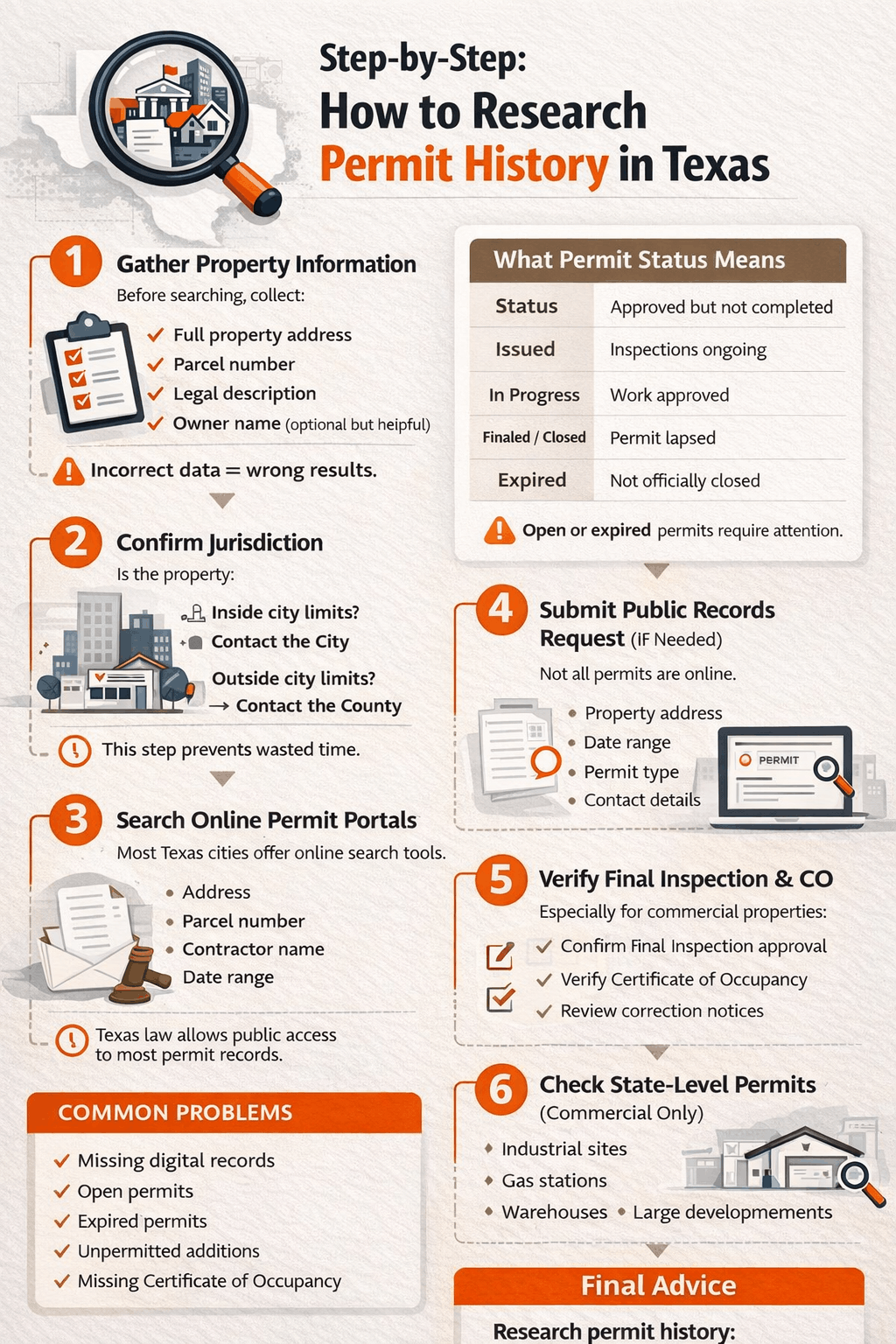
Step-by-step guide to researching permit history in Texas and avoiding costly delays.
Step 1 — Gather the Correct Property Information
Before searching any permit database, collect accurate property details. This saves time and prevents errors.
You will need:
Full property address (including unit number, if applicable)
Parcel number or Property ID (from the county appraisal district)
Legal description (if available)
Owner’s name (helpful but not required)
In Texas, many properties share similar street names. A missing unit number or incorrect ZIP code can lead to the wrong results. If you do not have the parcel number, check the county appraisal district website. Every Texas county maintains one.
Here is a quick checklist:
| Information Needed | Why It Matters |
|---|---|
| Full address | Primary search method in most portals |
| Parcel number | Helps confirm correct property |
| Legal description | Useful for older or rural properties |
| Owner name | Helps narrow search results |
Always double-check spelling and formatting before entering information into a city portal. Small mistakes can produce zero results.
Step 2 — Check If the Property Is Inside City Limits
This step is often skipped. However, it is critical. In Texas, incorporated cities issue most building permits. Counties handle permits only in unincorporated areas.
So first, confirm:
Is the property inside city limits?
Or is it in an unincorporated part of the county?
You can verify this by:
Checking the county appraisal district site
Using the city’s GIS map
Calling the city planning department
If the property is inside city limits, contact the city building department. If it is outside city limits, contact the county development office.
Here is a simple breakdown:
| Property Location | Where to Search |
|---|---|
| Inside city limits | City Building Department |
| Outside city limits | County Development Office |
| Large commercial site | City + possibly state agency |
This step prevents wasted time searching the wrong system.
Step 3 — Search the City or County Online Permit Portal
Many Texas cities now provide online permit search tools. Larger cities usually have searchable databases going back 10–20 years. Smaller cities may provide limited online access.
When using an online permit search system:
Search by full address first.
If no results appear, try parcel number.
Check different spelling variations if needed.
Most systems allow you to filter by:
Permit type
Status (open, closed, expired)
Date range
Contractor name
Focus on these key details when reviewing results:
Is the permit marked “Finaled” or “Closed”?
Is there an open permit?
Was the work inspected?
Does the scope match visible improvements?
If you see an “Open” permit from years ago, contact the department. Open permits can delay property sales or refinancing.
Here is what typical permit statuses mean:
| Status | Meaning |
|---|---|
| Issued | Permit approved but work may not be complete |
| In Progress | Inspections ongoing |
| Finaled / Closed | Work approved and completed |
| Expired | Permit lapsed before completion |
| Open | Not officially closed |
Take screenshots or download PDFs of any relevant permits. Save everything in a folder. This helps later if questions arise.
Step 4 — Submit an Open Records Request (If Needed)
Not all permit records are online. If you cannot find what you need, submit a public information request. Texas law allows access to most government records.
Your request should include:
Property address
Type of permits requested
Approximate date range
Your contact information
Be specific. A vague request may delay processing. Most cities respond within several business days. Some may charge a small fee for copying or scanning older records.
This step is common for:
Permits older than digital systems
Closed projects from 20+ years ago
Commercial projects with archived plans
Keep written records of all communications.
Step 5 — Verify Inspection and Certificate Records
Finding a permit is only part of the process. You must confirm it was finalized.
Look for:
Final inspection approval
Certificate of Occupancy (for new builds or commercial work)
Correction notices (if any)
A permit without final inspection approval may indicate unfinished compliance.
For commercial properties, confirm:
Certificate of Occupancy issuance date
Any temporary occupancy approvals
Fire inspection sign-off
This is especially important for retail, office, or industrial spaces.
Step 6 — Compare Permit History With the Physical Property
After reviewing records, compare them with what exists on site.
Ask yourself:
Is there a room addition not listed in permit history?
Was the garage converted without a permit?
Does the electrical panel upgrade match permit records?
Discrepancies do not always mean violations. However, they should be investigated.
If differences appear, you may need:
A licensed inspector
A contractor consultation
Direct clarification from the building department
Catching issues early prevents larger problems later.
Step 7 — Review State-Level Permits (If Applicable)
For residential homes, this step is rarely required. However, for commercial or industrial properties, check whether state-level permits apply.
This may include:
Environmental permits
Air quality permits
Waste disposal authorizations
Water system approvals
Developers and investors should confirm compliance history before closing a deal.

Common Problems When Researching Texas Permit Records
Even with a clear process, challenges arise. Let’s cover the most common ones.
Missing Digital Records
Many Texas cities digitized records in the early 2000s. Older permits may not appear online.
In this case:
Contact the records department directly.
Ask if microfilm or paper archives exist.
Be prepared for longer response times.
Patience helps here.
Incomplete Permit Information
Sometimes you may find only basic details:
Permit number
Issue date
No inspection history
If this happens, request the full permit file. That often includes inspection logs and notes.
Open or Expired Permits
Open permits can create serious transaction delays.
If you find one:
Call the building department.
Ask whether inspections were completed but not recorded.
Determine if re-inspection is required.
Expired permits may require reapplication. This depends on how much time has passed and whether codes have changed.
No Permit Found for Visible Work
If you see a room addition but find no permit record, consider these possibilities:
The work predates digital records.
The work was completed without a permit.
The permit was issued under a different address format.
When in doubt, speak with the building department directly.
How Permit History Affects Real Estate Transactions in Texas
Permit history plays a direct role in buying and selling property. It is not just a technical record. It can influence value, financing, timelines, and even legal exposure. Many deals in Texas slow down because someone checks permits too late. Therefore, reviewing records early is a smart move.
Let’s break this down from the buyer, seller, and investor perspective.
Due Diligence for Buyers
If you are purchasing property, checking permit history should be part of your due diligence process.
This applies to:
Single-family homes
Duplexes and small multifamily
Retail spaces
Office buildings
Industrial facilities
Buyers should confirm that major improvements were properly permitted and finalized.
For example, if a listing advertises:
A new roof
A recent room addition
An upgraded electrical panel
A new HVAC system
There should be permit records that support those claims.
Here are key items buyers should verify:
| Item to Review | Why It Matters |
|---|---|
| Permit status | Ensures work was finalized |
| Inspection results | Confirms code compliance |
| Open permits | Can delay closing |
| Certificate of Occupancy | Required for most commercial properties |
| Scope of work | Confirms what was actually approved |
If you find an open permit, do not ignore it. An open permit may require additional inspection before transfer of ownership. In some cases, lenders will request documentation before approving a loan.
It is also wise to compare permit history with the property disclosure provided by the seller. If they do not match, ask questions early.
Seller Responsibilities and Disclosure
Texas sellers are required to disclose known material issues with the property. While disclosure forms do not always require detailed permit history, sellers should be transparent about:
Unpermitted additions
Work that was never finalized
Ongoing code enforcement issues
Failure to disclose known issues can create legal disputes after closing.
If you are a seller, here are a few smart steps before listing:
Review permit records yourself.
Confirm old permits are closed.
Gather copies of final inspection approvals.
Address open permits before going to market.
Proactive review reduces surprises during buyer inspections.
Permit Issues That Can Delay Closing
Certain permit-related problems frequently delay transactions in Texas.
Here are the most common ones:
1. Open Permits
A permit marked “open” suggests work was never finalized. The city may require inspection before closing.
2. Expired Permits
If a permit expired mid-project, the buyer may need to reapply or bring work up to current code.
3. Unpermitted Additions
Room additions, garage conversions, or patio enclosures without permits raise concerns about safety and compliance.
4. Missing Certificate of Occupancy
For commercial buildings, a valid Certificate of Occupancy confirms approved use. Without it, tenants may not legally operate.
Here is a summary of how these issues impact deals:
| Issue | Possible Impact on Transaction |
|---|---|
| Open permit | Closing delay until inspection |
| Expired permit | Reapplication or corrective work |
| Unpermitted work | Price renegotiation or financing issues |
| Missing CO | Occupancy restrictions |
These issues are not always deal breakers. However, they must be addressed before closing.
Special Considerations for Residential vs. Commercial Properties
Permit research looks different depending on the property type.
Residential Permit Research
For homes, focus on:
Additions
Structural changes
Roof replacement
Electrical panel upgrades
HVAC installations
Plumbing modifications
Minor cosmetic updates usually do not appear in permit records. Buyers often cross-check permit history with home inspection findings. If the inspector identifies structural changes but no permits exist, further review may be necessary.
In some Texas cities, older neighborhoods may have incomplete digital records. In those cases, contacting the city directly is helpful.
Commercial Permit Research
Commercial properties require deeper review.
In addition to standard building permits, check for:
Tenant finish-out permits
Fire system approvals
Accessibility upgrades
Health department permits (for restaurants)
Environmental compliance history
Commercial buyers should also confirm:
Current Certificate of Occupancy classification
Any restrictions tied to prior permits
Pending code enforcement actions
Here is a comparison:
| Residential | Commercial |
|---|---|
| Focus on additions and systems | Focus on use, occupancy, and compliance |
| Fewer permit types | Multiple regulatory layers |
| Rare state involvement | Possible state agency oversight |
| Simpler review | More detailed due diligence |
Because commercial projects carry higher risk, permit research should be more thorough.
When to Involve a Consultant or Professional
While many property owners can research permit history themselves, some situations require professional help.
Consider expert support if:
The property has a long construction history.
Records are incomplete or conflicting.
There are open code violations.
The transaction involves commercial or mixed-use property.
You are developing or redeveloping the site.
A consultant can:
Identify jurisdictional authority.
Communicate with city departments.
Review compliance gaps.
Help resolve open permits.
This reduces risk and speeds up approvals.
Final Thoughts
Researching permit history in Texas is not complicated. However, it does require careful review and attention to jurisdiction.
- Start with accurate property details.
- Confirm whether the property falls under city or county authority.
- Search online portals first.
- Submit public information requests when needed.
- Always verify that permits were finalized.
Most importantly, complete this research early in the process. Whether you are buying, selling, or developing, early review prevents delays and unexpected costs.
In Texas real estate and construction, documentation matters. Permit history is part of that documentation.
Need Help Reviewing Permit History in Texas?
Permit research can feel simple at first. However, once you start dealing with multiple jurisdictions, open permits, or missing records, it quickly becomes time-consuming.
If you want expert guidance, our team at JDJ Consulting is ready to help. We assist property owners, investors, and developers with permit research, compliance review, and construction approvals across Texas.
Call us today at (818) 793-5058 to discuss your project. You can also email us at sales@jdj-consulting.com for direct assistance.
Prefer online contact? Visit our contact page here: https://jdj-consulting.com/contact-us/
Let’s make sure your project moves forward without delays.
FAQs: Research Permit History in Texas
Are building permits public record in the United States?
Yes, building permits are generally public record in the United States. Most cities and counties make building permits and inspection data available through online portals or by written request.
If you want to research permit history, you can usually access:
Permit type and description
Issue date
Inspection results
Final status
Record number
Some detailed building plans may have restricted access. However, basic Permit History and approval status are typically public documents. Always check with the local Planning and Development department for specific rules.
How can I find out when my house was built for free?
You can often find the construction year at no cost using public records. Start with your county appraisal district website. Search by address or tax parcel number.
You can also:
Review real property records
Check the Tax Roll
Search the city’s permit research tool
Request older building construction data
If digital records are limited, visit the records research office or local library archives. Older homes may require reviewing historical permits or archived ledger books.
Did you research permits before buying?
If you are buying property, you should always research permit history before closing. Many buyers skip this step, but it can prevent costly problems.
Before purchasing, review:
Closed and open building permits
Code Enforcement records
Certificate of Occupancy status
Inspection phase reports
This helps confirm that prior renovations were approved. It also protects you from inheriting expired permits or enforcement cases. Early Permit Research reduces risk during the transaction.
Anyone know a website or database to search builder’s permit history?
Most cities offer an online permit portal through their Planning and Development department. Search using the property address, owner’s name, or record number.
Look for:
Citizen Access Portal
Online Services section
Permit & Site History Research Tool
Keep in mind there is no single nationwide database. Permit History is managed locally. If online search results are limited, submit a records request for older historical permits.
How does a person research the history of their house?
To research the history of your house, combine permit research with property records. Start with building and land use permits issued by the city.
Then review:
Real property records
Tax parcel data
Planning documents
Historical identification files
If your property is older, ask about archived microfilm or Digital Reel collections. Permit research often reveals remodel dates, additions, and prior site plan approvals.
How to research my 100-year-old home’s history?
Older homes require deeper records research. Digital systems may not show early permits.
Here is a simple approach:
Search historical permits through city archives
Review Microfilm Library collections
Check building construction data from early tax records
Visit local historical societies
Some cities maintain card catalog index systems for older record numbers. Permit Research combined with tax roll history gives a clearer picture of the property owner timeline and major renovations.
Any tips for researching the history of my century home?
Yes. Century homes often have layered construction history. Start with the earliest available building permits. Then compare them with visible improvements.
Helpful tips include:
Review Code Enforcement case files
Check for grading permits or Public Works permit records
Confirm any Permit Modification history
Look at planning cases tied to the development site
Old properties may have incomplete data. Therefore, speak directly with city representatives if records are unclear.
How can I learn more about the history of my house?
Learning about your home’s history involves more than just checking the construction year. Combine Permit History, tax records, and planning documents.
You can:
Review inspection phase reports
Search enforcement case records
Check Certificate of Occupancy history
Request archived building plans
Permit Research often shows when additions, stormwater facilities, or utility upgrades were completed. Over time, this creates a clear timeline of improvements and ownership changes.
How do I research permit history for a property in Texas?
To research permit history in Texas, start with the city or county building department where the property is located. Most cities offer an online permit search by address or parcel number.
If records are not available online:
Submit a public information request
Contact the records department directly
Request archived or older files
Always confirm the permit status, inspection results, and whether the permit was finalized.
Are building permit records public in Texas?
Yes, building permit records are generally public under Texas public information laws. Most cities allow online searches, while others require written requests.
You can usually access:
Permit type
Issue date
Inspection history
Status (open or closed)
However, certain sensitive information, such as detailed plans, may have limited access.
How far back do Texas permit records go?
The availability of records depends on the city. Many larger cities have digital records going back 10 to 20 years. Older permits may only exist in paper or microfilm format.
If you need records from decades ago:
Contact the city’s records division
Ask about archived files
Expect longer response times
Older properties often require manual research.
How can I find out if a permit was closed or finalized?
When reviewing permit history, check the status column. A permit marked “Finaled” or “Closed” means inspections were completed and approved.
If the status says “Open” or “Expired”:
Contact the building department
Ask if additional inspection is required
Request clarification in writing
Final approval is important for resale and refinancing.
What happens if I find an open permit on a property?
An open permit means the work was not officially finalized. This can delay a real estate transaction.
You should:
Contact the issuing department
Confirm whether inspections were completed
Schedule re-inspection if required
In some cases, minor paperwork issues cause open status. In others, corrective work may be needed.
Do I need a permit for home renovations in Texas?
It depends on the type of work and the local city rules. Structural, electrical, plumbing, and HVAC changes usually require permits.
Cosmetic updates often do not require permits, such as:
Painting
Flooring replacement
Cabinet updates
Always confirm with the local building department before starting major work.
Can I research permit history for a property I do not own?
Yes, in most cases you can. Permit records are public information. You do not need to be the owner to request them.
This is common for:
Buyers conducting due diligence
Investors reviewing properties
Neighbors verifying nearby construction
However, detailed construction plans may have restricted access.
How do I check permit history for commercial property in Texas?
Start with the city building department. Then review additional records if applicable, such as:
Fire department inspections
Certificate of Occupancy
Environmental permits
Commercial properties often involve multiple approvals. Therefore, review permit scope, inspection reports, and occupancy classification carefully.
What is a Certificate of Occupancy in Texas?
A Certificate of Occupancy (CO) confirms that a building meets code requirements and is approved for use.
It typically applies to:
New construction
Change of use
Commercial tenant spaces
Without a valid CO, a building may not legally operate. Always verify its status during due diligence.
What if there is no permit record for visible construction work?
If visible work does not appear in permit history, consider several possibilities:
The work predates digital records
The permit was issued under a different address format
The work was completed without a permit
Contact the building department for clarification. Additional inspection may be required.
Are permit requirements the same across all Texas cities?
No, permit requirements vary by jurisdiction. Each city adopts and enforces building codes independently.
For example:
Roofing permits may be required in one city but not another
Fence height rules differ
Inspection processes vary
Always confirm requirements with the specific city or county.
How long does it take to receive permit records after requesting them?
Response times vary by city. Some online systems provide immediate access.
For formal record requests:
Smaller requests may take a few days
Archived or complex files may take longer
Fees may apply for copying or scanning
Submit clear and specific requests to avoid delays.
Can unpermitted work affect property value?
Yes, unpermitted work can reduce value or delay closing. Buyers and lenders may question safety or compliance.
Possible impacts include:
Price renegotiation
Required corrective work
Inspection delays
Proper documentation helps maintain property value and smooth transactions.
Do counties in Texas issue building permits?
Counties typically issue permits only in unincorporated areas. Within city limits, the city building department handles permits.
To determine jurisdiction:
Check the property’s appraisal district record
Confirm city boundary status
Contact local planning offices
Jurisdiction determines where you search for permit records.
What should I review in a permit record?
When reviewing permit history, look for:
Permit type and scope
Issue date
Contractor information
Inspection results
Final status
Make sure the permit description matches the actual improvements on the property.
Can expired permits be reopened?
In some cases, expired permits can be reactivated. However, this depends on how much time has passed and whether codes have changed.
The building department may require:
New application
Updated plans
Additional inspections
Contact the department directly for guidance.
How do permit records affect refinancing?
Lenders may review permit history during refinancing. Open permits or missing approvals can create delays.
To avoid issues:
Verify all permits are closed
Keep copies of final inspections
Address discrepancies early
Clear records improve lender confidence.
Are environmental permits part of property permit history?
For residential homes, usually not. However, commercial or industrial properties may require environmental approvals.
These may include permits related to:
Air quality
Waste disposal
Water systems
If researching commercial property, confirm whether state-level permits apply.
How do I submit a public information request for permit records?
Submit your request to the city or county records department. Include:
Property address
Date range
Type of permits requested
Your contact information
Clear requests speed up processing. Keep copies of all correspondence.
When should I hire a consultant to review permit history?
Consider professional help if:
The property has complex construction history
Records are incomplete
There are open code violations
The project involves commercial development
A consultant can communicate with city departments, review compliance issues, and help resolve open permits efficiently.