Site Plan Approval Services Texas

Get your Texas site plan approved faster with clear guidance, accurate plans, and stress-free coordination from start to finish.

Getting a site plan approved in Texas can feel overwhelming. Each city has its own rules. Requirements change. Reviews take time. And even a small mistake can delay your project for weeks.

That’s where professional support matters.

At JDJ Consulting, we help developers, builders, and property owners move through the approval process with fewer delays. We focus on clear plans, correct documentation, and smooth coordination with city departments.

In this guide, you’ll learn how site plan approval works in Texas, what’s required, and how to avoid common issues. Let’s start with the basics.

What Is Site Plan Approval in Texas?

Site plan approval is a formal review process. Before you build or develop land, your plan must meet local codes and standards. The city checks your design to ensure safety, compliance, and proper land use.

Without approval, you cannot move forward with permits or construction.

Definition of a Site Plan

A site plan is a detailed drawing of your property and proposed development. It shows how the land will be used and how different elements fit together.
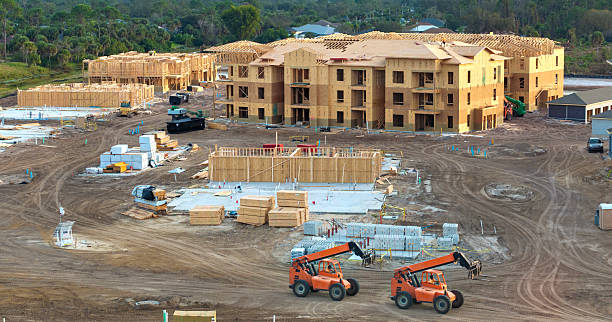
Development of residential housing in American suburbs. Unfinished frames of apartment condos with wooden roof beams under construction. Real estate market in the USA.

A typical site plan includes:

  • Property boundaries and dimensions

  • Building layout and placement

  • Parking areas and driveways

  • Utility connections (water, sewer, electric)

  • Drainage and grading design

  • Landscaping and open space

Each detail must align with city codes. Even small inconsistencies can trigger revisions.

Here’s a simple breakdown of what’s included:

ComponentPurpose
Building LayoutShows structure placement and size
Parking PlanEnsures adequate and compliant parking
Utility PlanConnects water, sewer, and power systems
Drainage PlanPrevents flooding and water issues
LandscapingMeets city green space requirements

A complete and accurate site plan improves your chances of faster approval.

Why Site Plan Approval Is Required

Cities in Texas require site plan approval to protect both the public and the developer. It ensures that projects are safe, functional, and aligned with long-term planning goals.

Here’s why it matters:

  • Safety: Proper access for fire trucks and emergency services

  • Traffic flow: Safe entry and exit points

  • Drainage control: Prevents flooding and water damage

  • Code compliance: Meets zoning and land use rules

Without this review, projects could create safety risks or legal issues later.

Also, approval reduces costly mistakes. Fixing issues during design is far cheaper than fixing them during construction.

Who Needs Site Plan Approval?

Not every project requires a site plan, but most commercial and large developments do.

You likely need site plan approval if you are:

  • Building a commercial property

  • Developing land for retail or office use

  • Planning a multi-family residential project

  • Constructing industrial facilities

  • Expanding an existing structure

Even smaller projects may require approval depending on the city and scope.

Here’s a quick reference:

Project TypeApproval Required
Commercial buildingsYes
Multi-family housingYes
Industrial projectsYes
Small residential homesUsually no (varies by city)
Major renovationsOften yes

When in doubt, it’s best to check early. A quick review can save weeks later.

Our Site Plan Approval Services in Texas

At JDJ Consulting, we provide complete support from start to finish. We don’t just prepare drawings. We manage the full approval process so you can focus on your project.

Our approach is simple. We keep plans clear, meet city requirements, and respond quickly to feedback.

Full-Service Site Plan Management

We handle the entire process for you.

This includes:

  • Initial consultation and feasibility review

  • Planning and design coordination

  • Submission and tracking

  • Communication with city officials

You don’t have to chase departments or manage paperwork. We take care of it.

Civil Engineering & Design

Strong engineering is the foundation of approval. Poor design leads to rejections.

Our team focuses on:

  • Grading and drainage plans

  • Utility layout and connections

  • ADA-compliant access

  • Parking and traffic flow design

We design with approval in mind. That reduces revisions and speeds up the process.

Permit & Documentation Preparation

Incomplete documents are one of the biggest causes of delays.

We prepare:

  • Full site plan sets

  • Engineering reports

  • Supporting calculations

  • Required application forms

Everything is organized and ready for submission. This helps reviewers process your plan faster.

City Coordination & Submittals

Each Texas city has its own process. Some are simple. Others are strict and detailed.

We manage:

  • Plan submission to the correct departments

  • Communication with reviewers

  • Tracking review timelines

  • Ensuring compliance with local codes

This step alone can save significant time.

Comment Response & Revisions

Most plans receive comments. That’s normal.

What matters is how fast and accurately those comments are addressed.

We:

  • Review feedback carefully

  • Make precise revisions

  • Resubmit without delays

Quick responses keep your project moving.
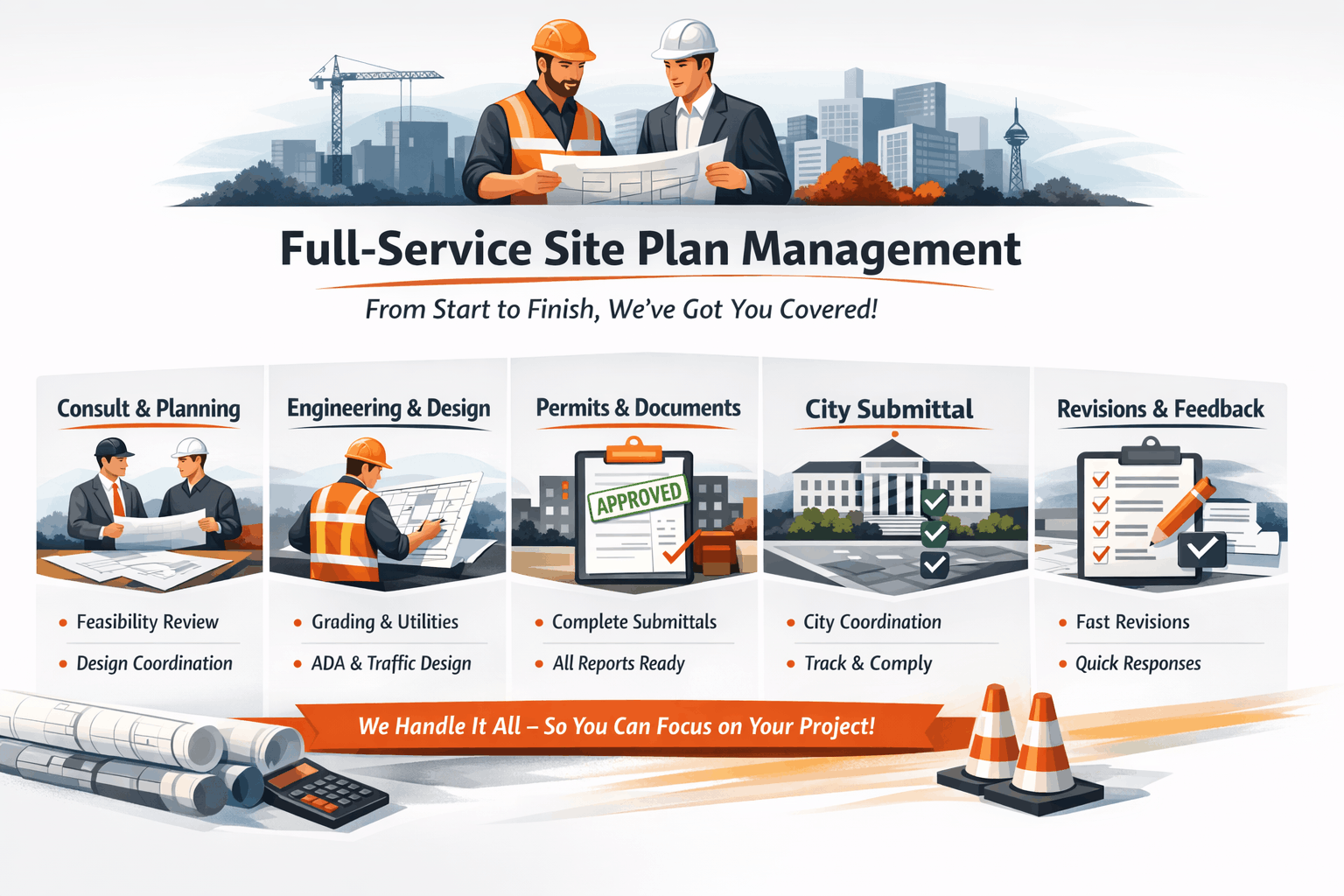
Infographic showing JDJ Consulting’s site plan approval process, including planning, engineering, permits, city submission, and revisions.

Step-by-Step Site Plan Approval Process in Texas

Understanding the process helps you plan better. While details vary by city, the general steps remain similar across Texas.

Step 1 – Site Evaluation & Feasibility Study

Before any design work begins, the site must be evaluated.

This includes:

  • Zoning regulations

  • Property restrictions and easements

  • Flood zones and drainage concerns

  • Utility availability

This step helps identify risks early. It also prevents costly redesign later.

Step 2 – Survey & Data Collection

Accurate data is critical.

A professional survey provides:

  • Exact property boundaries

  • Existing structures and features

  • Elevation data for grading

Without this, your design may be rejected.

Step 3 – Site Plan Design & Engineering

This is where your project takes shape.

The design includes:

  • Building placement

  • Parking layout

  • Drainage systems

  • Utility connections

Each element must meet city standards. Clear and compliant designs move faster through review.

Step 4 – Application Submission

Once the plan is ready, it is submitted to the city.

Typical submissions include:

  • Site plan drawings

  • Engineering reports

  • Application forms

  • Fees

A complete submission reduces back-and-forth communication.

Step 5 – Plan Review & Comments

City departments review your plan.

These may include:

  • Planning

  • Engineering

  • Fire department

  • Environmental services

You will likely receive comments. These must be addressed before approval.

Step 6 – Approval & Permits

After all comments are resolved, your plan is approved.

You can then:

  • Apply for building permits

  • Begin construction

At this point, your project is ready to move forward.

Site Plan Approval Requirements in Texas

Before your plan gets approved, it must meet a clear set of requirements. These vary by city, but the core elements stay consistent across Texas.

If your submission is missing key details, it will be delayed or rejected. That’s why it’s important to understand what cities expect.

Required Documents Checklist

Every site plan submission must include a complete set of documents. These help city reviewers evaluate your project quickly and accurately.

Here’s a simple checklist:

RequirementDescription
Site Plan DrawingsFull layout with buildings, parking, and access
Grading & Drainage PlansShows water flow and elevation changes
Utility PlansWater, sewer, and electrical connections
Landscape PlanTrees, green space, and buffers
Engineering ReportsDrainage studies, traffic analysis (if needed)
SurveyProperty boundaries and existing conditions
Application FormsCity-specific forms and details

Missing even one item can slow the process. A complete package improves approval speed.

Technical Requirements

Site plans must meet strict technical standards. These rules ensure safety and long-term performance.

Most Texas cities require:

  • Plans sealed by a licensed civil engineer

  • Accurate grading and drainage design

  • Compliance with stormwater regulations

  • Proper utility connections

  • ADA-compliant access and parking

Drainage is one of the most important factors. Poor drainage design is a common reason for rejection.

Also, plans must follow local development codes. These codes differ from city to city, so local experience matters.

Zoning & Land Use Compliance

Zoning rules define how land can be used. Your project must match these rules before approval.

Key zoning factors include:

  • Setbacks: Distance between buildings and property lines

  • Building height limits

  • Parking requirements

  • Land use type (commercial, residential, industrial)

If your plan doesn’t meet zoning requirements, you may need changes or special approval.

In some cases, a zoning variance may be required. This adds time to the process.

Texas Cities We Serve

Texas is not a one-size-fits-all state. Each city has its own approval process, timeline, and requirements.

That’s why local knowledge is critical.

Major Cities

We support projects across major Texas markets, including:

  • Houston

  • Dallas

  • Austin

  • San Antonio

These cities often have stricter requirements and longer review times. However, they also offer clear guidelines if handled correctly.

Local Jurisdiction Differences

Even though the process looks similar, small differences can cause delays.

For example:

  • One city may require additional drainage reports

  • Another may have stricter landscaping rules

  • Some cities review plans faster than others

Here’s a quick comparison:

CityReview TimeComplexity Level
HoustonModerateMedium
DallasModerate to FastMedium
AustinSlowerHigh
San AntonioModerateMedium

Understanding these differences helps avoid surprises.

Common Challenges in Site Plan Approval

Site plan approval is not always smooth. Many projects face delays due to avoidable issues. Knowing these challenges can help you stay ahead.

Incomplete Submissions

This is the most common problem.

Missing documents or unclear drawings lead to:

  • Immediate rejection

  • Requests for more information

  • Longer review cycles

A complete and organized submission saves time.

Zoning Conflicts

If your project doesn’t match zoning rules, approval becomes difficult.

Common issues include:

  • Incorrect land use

  • Insufficient parking

  • Building size limits exceeded

Fixing zoning issues often requires redesign or special approval.

Drainage & Stormwater Issues

Drainage problems are a major reason for delays.

Cities want to ensure:

  • No flooding risk

  • Proper water flow

  • Compliance with stormwater regulations

Poor drainage design can stop your project completely.

Multiple Agency Approvals

Your plan is reviewed by several departments, such as:

  • Planning

  • Engineering

  • Fire department

  • Environmental services

Each department may request changes. Managing all feedback can be time-consuming.

How We Help You Get Faster Approvals

At JDJ Consulting, we focus on reducing delays and keeping your project on track. Our process is built around accuracy, speed, and clear communication.

Pre-Submission Planning

We review your project before submission.

This helps:

  • Identify potential issues early

  • Ensure zoning compliance

  • Reduce revisions later

Early planning saves both time and cost.

Error-Free Documentation

We prepare complete and accurate plans.

This includes:

  • Clear drawings

  • Proper engineering details

  • All required documents

Well-prepared submissions move faster through review.

Direct City Coordination

We communicate directly with city departments.

This allows us to:

  • Clarify requirements quickly

  • Respond to feedback faster

  • Keep your project moving

You don’t have to manage multiple contacts.

Revision Management

Revisions are part of the process. What matters is how quickly they are handled.

We:

  • Review comments carefully

  • Make precise updates

  • Resubmit without delay

Fast revisions mean faster approvals.
CTA banner showing engineers reviewing site plans with message about faster approvals and expert support.

Timeline for Site Plan Approval in Texas

One of the most common questions is: how long does site plan approval take? The answer depends on the city, project size, and how complete your submission is. Still, most projects follow a similar timeline.

Typical Timeline Breakdown

Here’s a general estimate for site plan approval in Texas:

StageDuration
Initial Planning & Feasibility1–2 weeks
Survey & Data Collection1–2 weeks
Design & Engineering2–4 weeks
City Review3–6 weeks
Revisions & Resubmission1–3 weeks

In total, most projects take 4 to 10 weeks. Larger or more complex developments may take longer.

Factors That Affect Timeline

Not all projects move at the same speed. Several factors can slow things down or help move things faster.

Key factors include:

  • Project complexity – Larger sites need more detailed planning

  • City workload – Some cities have longer review queues

  • Submission quality – Incomplete plans lead to delays

  • Zoning issues – Conflicts add extra steps

  • Number of revisions – More comments = longer process

A well-prepared plan can cut weeks off your timeline.

How to Speed Up Approval

While you can’t control city timelines, you can control your preparation.

Here are simple ways to move faster:

  • Submit complete and accurate documents

  • Work with experienced engineers

  • Address zoning issues early

  • Respond quickly to review comments

Small improvements in preparation can make a big difference.

Cost of Site Plan Approval Services in Texas

Costs vary based on project size, location, and complexity. Understanding the cost structure helps you plan your budget better.

Factors That Affect Cost

No two projects are the same. Pricing depends on several factors:

  • Size of the property

  • Type of development (commercial, residential, industrial)

  • Engineering complexity

  • City requirements and fees

  • Number of revisions needed

More complex projects require more time and resources, which increases cost.

Typical Cost Breakdown

Here’s a general estimate of costs in Texas:

ServiceEstimated Cost
Civil Engineering Design$2,000 – $15,000+
Land Survey$1,000 – $5,000
Drainage Study$1,500 – $6,000
City Review Fees$400 – $3,000+
Revisions & UpdatesVaries

These are average ranges. Final costs depend on your specific project.

Cost vs. Value

It’s important to look beyond the upfront cost.

A low-cost plan that gets rejected can cost more in the long run. Delays, redesigns, and missed deadlines add up quickly.

Investing in proper planning and engineering helps:

  • Reduce revisions

  • Avoid compliance issues

  • Speed up approval

  • Prevent construction delays

In most cases, quality work saves money over time.

Types of Projects We Handle

At JDJ Consulting, we work on a wide range of development projects across Texas. Each project type has unique requirements, and we tailor our approach accordingly.

Commercial Developments

Commercial projects often have strict requirements. These include parking, traffic flow, and accessibility.

We handle:

  • Office buildings

  • Retail centers

  • Restaurants

  • Mixed-use developments

These projects require careful planning to meet city codes.

Residential Projects

Larger residential developments often require site plan approval.

We support:

  • Multi-family housing

  • Apartment complexes

  • Townhome developments

  • Subdivisions

Proper layout and utility planning are critical for approval.

Industrial Projects

Industrial sites have unique challenges. These include heavy vehicle access, drainage, and safety requirements.

We work on:

  • Warehouses

  • Manufacturing facilities

  • Distribution centers

These projects require detailed engineering and compliance with strict regulations.

Why Choose JDJ Consulting for Site Plan Approval?

Choosing the right partner can make a big difference in your project timeline and success. At JDJ Consulting, we focus on clear communication, accurate work, and faster approvals.

Texas Expertise

We understand Texas regulations and city-specific requirements.

This helps us:

  • Prepare compliant plans

  • Avoid common mistakes

  • Reduce approval time

Local knowledge matters in this process.

Faster Turnaround Times

Our process is built for efficiency.

We:

  • Plan ahead

  • Submit complete documents

  • Respond quickly to feedback

This helps keep your project moving without unnecessary delays.

End-to-End Support

We handle everything from start to finish.

You don’t need to manage multiple consultants. We take care of:

  • Planning

  • Engineering

  • Submissions

  • Revisions

This simplifies the entire process for you.

Proven Track Record

We have helped many clients secure approvals for different types of projects.

Our experience allows us to:

  • Identify issues early

  • Provide practical solutions

  • Deliver consistent results

Get Started with Site Plan Approval Today

If you’re planning a project in Texas, getting your site plan approved is the first major step. Delays can cost time and money. A well-prepared plan keeps everything on track.

At JDJ Consulting, we help you move through the process with confidence. Get in touch today to discuss your project and start your site plan approval process.

This will close in 0 seconds