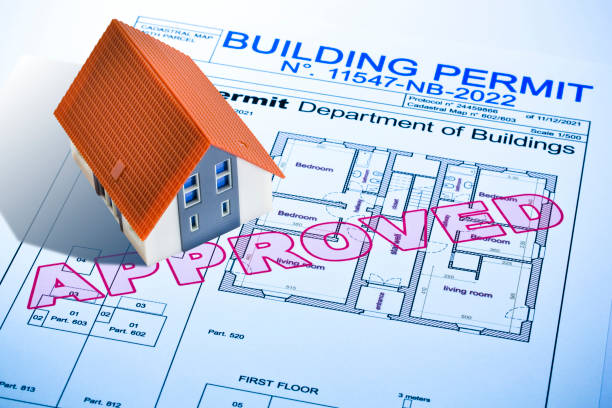
Site plan approval is one of the most important steps in real estate development across Texas. Before construction begins, local authorities must review and approve how a property will be used and developed. This process ensures that the project follows zoning rules, safety standards, and infrastructure requirements.
In simple terms, a site plan shows what you plan to build and how it will function on the land. It includes building placement, parking, access points, utilities, and drainage systems. The city reviews this plan to confirm that everything meets local regulations.
Definition of a Site Plan and Why It Matters
A site plan is a detailed drawing that outlines the physical layout of a property. It acts as a blueprint for how the land will be developed.
It typically includes:
Property boundaries
Building locations and dimensions
Parking areas and driveways
Landscaping and open spaces
Utility connections
Drainage systems
This document matters because it connects your idea to real-world feasibility. Without it, cities cannot evaluate whether your project is safe, functional, or compliant.
More importantly, a well-prepared site plan reduces delays. It shows reviewers that your project has already considered key technical and regulatory factors.
Role of Site Plan Approval in the Development Process
Site plan approval sits between early planning and construction. It comes after feasibility analysis but before building permits.
Here’s how it fits into the bigger process:
First, you assess whether the deal makes sense
Then, you confirm zoning and land use
After that, you prepare and submit a site plan
Once approved, you apply for building permits
This step acts as a checkpoint. It ensures that the project aligns with city goals, infrastructure capacity, and environmental standards. Without approval, construction cannot legally begin in most jurisdictions.
Legal Framework (Texas Local Government Context)
In Texas, site plan approval is governed at the local level, not the state level. Each city sets its own rules based on the Texas Local Government Code.
That means requirements can vary between cities like:
Austin
Houston
Dallas
Even though the rules differ, the goal remains the same. Cities want to ensure:
Safe access and traffic flow
Proper drainage and flood control
Adequate utilities
Compliance with zoning laws
Because of these variations, developers often work with consultants who understand local processes.
When Site Plan Approval Is Required vs. Exemptions
Not every project needs full site plan approval. However, most commercial and multi-family developments do.
You typically need approval when:
Constructing a new commercial building
Expanding an existing structure
Changing land use (for example, retail to residential)
Developing multi-unit housing
On the other hand, smaller projects may be exempt.
Table: When Site Plan Approval Is Required
| Project Type | Approval Required | Notes |
|---|---|---|
| Commercial development | Yes | Almost always required |
| Multi-family housing | Yes | Required for layout and utilities |
| Single-family home | Sometimes | Depends on subdivision rules |
| Minor renovations | No | If no major layout change |
| Interior-only changes | No | No site impact |
Understanding whether your project needs approval is the first step. Missing this can lead to costly delays later.
How the Site Plan Approval Process Works in Texas (Step-by-Step)
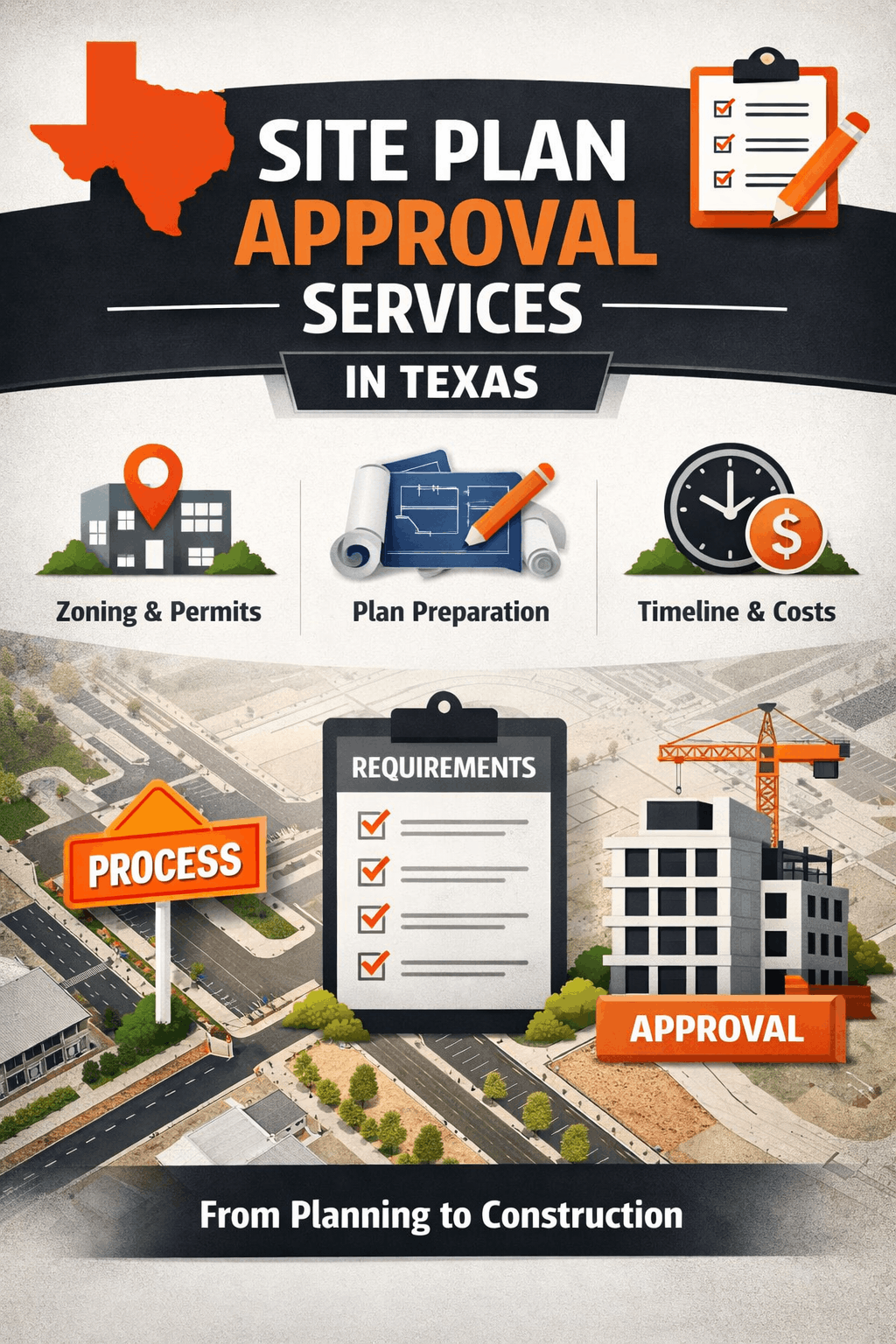
The site plan approval process in Texas follows a structured path. While each city has its own rules, the overall workflow remains similar. Breaking it into steps makes it easier to manage and plan ahead.
Step 1: Pre-Development & Feasibility Analysis
This is where every successful project begins.
Before designing anything, you evaluate:
Zoning regulations
Property constraints
Market demand
Utility availability
At this stage, you may also conduct:
Land surveys
Environmental assessments
Traffic studies
The goal is simple. You want to confirm that the project is viable before spending more time and money. Skipping this step often leads to redesigns later.
Step 2: Pre-Application Meeting with City Authorities
Most cities encourage early meetings with planning departments.
These meetings help you:
Clarify requirements
Identify potential issues
Understand timelines
It is a practical step that saves time. Instead of guessing what the city wants, you get direct feedback upfront. This also builds a smoother relationship with reviewers.
Step 3: Zoning & Land Use Review
Next, you confirm that your project aligns with local zoning laws. If the zoning does not match your plan, you may need:
Rezoning approval
Variances or special permits
This step can involve public hearings, especially in larger cities. Zoning is often the biggest hurdle. If it is not aligned early, the project can stall.
Step 4: Site Plan Preparation & Documentation
Once zoning is confirmed, the design phase begins.
Your team prepares detailed drawings, including:
Building layout
Parking and access
Drainage systems
Utility connections
Engineers, architects, and planners usually collaborate at this stage. Accuracy matters here. Even small errors can lead to rejection or revision requests.
Step 5: Application Submission & Completeness Check
After preparing the documents, you submit the application to the city. The city then performs a completeness check.
They review whether:
All required documents are included
Forms are correctly filled
Fees are paid
If anything is missing, the application is returned. This step may seem simple, but incomplete submissions are a common cause of delays.
Step 6: Technical Review by City Departments
Once accepted, the plan moves through multiple departments.
These may include:
Planning and zoning
Engineering
Utilities
Fire department
Environmental services
Each department reviews the plan based on its criteria.
Most projects go through multiple review cycles. Comments are issued, revisions are made, and the plan is resubmitted.
Step 7: Approval, Permits & Next Steps
After all departments approve the plan, the city issues site plan approval.
This allows you to:
Apply for building permits
Begin construction planning
Move forward with development
At this stage, the project transitions from planning to execution.
Table: Step-by-Step Site Plan Approval Process
| Step | Description | Key Outcome |
|---|---|---|
| Feasibility | Analyze site and risks | Go/no-go decision |
| Pre-meeting | Discuss with city | Early clarity |
| Zoning review | Confirm compliance | Legal alignment |
| Plan preparation | Create drawings | Submission-ready plan |
| Submission | File application | Enter review process |
| Technical review | Department checks | Revisions if needed |
| Approval | Final sign-off | Move to permits |
Key Components of a Site Plan (What Must Be Included)
A strong site plan is detailed, clear, and compliant. It must address both design and technical requirements. Each component plays a role in how the project functions.
Site Layout and Building Placement
This shows where structures will sit on the property.
It includes:
Building footprint
Setbacks from property lines
Orientation and spacing
Cities review this to ensure compliance with zoning rules. Proper placement also affects accessibility and safety.
Parking, Access, and Traffic Circulation
Access and movement are critical.
Your plan must show:
Parking spaces
Driveways and entrances
Internal roads
Pedestrian pathways
Traffic flow is carefully reviewed. Poor design can lead to congestion or safety risks.
Drainage and Stormwater Management
Texas cities place strong emphasis on drainage.
Your plan must demonstrate:
How water flows across the site
Stormwater detention systems
Flood prevention measures
Improper drainage can damage nearby properties and infrastructure. That is why this section often requires engineering input.
Utility Connections (Water, Sewer, Electric)
Every development must connect to essential utilities.
The site plan should show:
Water supply lines
Sewer connections
Electrical infrastructure
Gas lines (if applicable)
Cities verify that the existing infrastructure can support the project.
Landscaping and Environmental Compliance
Landscaping is not just aesthetic. It also supports environmental goals.
Plans may include:
Tree preservation
Green buffers
Irrigation systems
Some cities require a minimum percentage of green space. Environmental compliance may also involve erosion control measures.
Grading and Elevation Plans
Grading ensures that the land is level and functional.
This section includes:
Elevation changes
Slope adjustments
Earthwork details
It directly connects to drainage and structural stability.
Site Plan Approval vs. Other Land Development Approvals
Many developers confuse site plan approval with other approvals. While they are connected, each serves a different purpose. Understanding the differences helps you plan better and avoid delays.
Zoning vs. Site Plan Approval
Zoning defines what you can build on a property. Site plan approval defines how you will build it.
Zoning regulations control:
Land use (residential, commercial, industrial)
Building height limits
Density and lot coverage
Site plan approval, on the other hand, focuses on:
Layout and design
Access and circulation
Infrastructure and utilities
For example, a property in Austin may be zoned for commercial use. That means you can build a retail project. However, you still need site plan approval to show how that retail space will function on the land.
In short, zoning is the rulebook. The site plan is the execution.
Platting vs. Site Planning
Platting deals with subdividing land into lots. Site planning focuses on developing those lots.
Platting includes:
Dividing a large tract into smaller parcels
Defining lot boundaries
Creating public infrastructure like roads
Site planning begins after platting is complete. It deals with:
Building placement
Parking and utilities
Drainage systems
If you are developing a new subdivision, you may need both platting and site plan approval. They often run in sequence but serve different purposes.
Building Permits vs. Site Plan Approval
Building permits come after site plan approval.
A building permit allows you to:
Start construction
Follow approved construction drawings
Meet safety codes
However, you cannot get a building permit without an approved site plan in most Texas cities.
Think of it this way:
Site plan approval = approval of the overall design
Building permit = approval to build that design
Skipping site plan approval is not an option for most commercial projects.
Entitlements Explained (Big Picture)
All these approvals fall under a broader process called entitlements.
Entitlements include:
Zoning approvals
Platting
Site plan approval
Permits
This is the full legal pathway from raw land to a buildable project.
Table: Key Differences Between Approvals
| Approval Type | Purpose | When It Happens |
|---|---|---|
| Zoning | Defines land use | Early stage |
| Platting | Divides land | Before development |
| Site plan approval | Reviews layout and design | Mid-stage |
| Building permit | Allows construction | Final stage |
Understanding these differences helps you avoid confusion. It also ensures you move through the process in the correct order.
Timeline for Site Plan Approval in Texas
One of the most common questions developers ask is: How long does it take? The answer depends on the city, project size, and complexity. However, most site plan approvals in Texas follow a general timeline.
Typical Approval Timeline (3–9 Months)
For most commercial projects, the timeline ranges between three to nine months. Smaller or straightforward projects may move faster. Larger or more complex developments take longer due to:
Multiple review cycles
Additional studies (traffic, environmental)
Coordination across departments
Cities like Houston may process certain projects faster due to different zoning structures, while Dallas or Austin may require more detailed reviews.
Factors That Affect Approval Speed
Several factors influence how quickly your site plan gets approved.
Project complexity
Larger developments require more detailed reviews
Mixed-use projects often take longer
Jurisdiction requirements
Each city has different processes
Some require more documentation than others
Number of revisions
Most projects go through multiple review cycles
Each revision adds time
Consultant experience
Experienced teams submit more accurate plans
Fewer errors mean fewer delays
Infrastructure constraints
Limited utilities or road access can slow approvals
Table: Estimated Timeline Breakdown
| Phase | Duration |
|---|---|
| Feasibility & due diligence | 2–4 weeks |
| Plan preparation | 3–6 weeks |
| Initial city review | 3–4 weeks |
| Revisions & resubmissions | 4–8 weeks |
| Final approval | 2–4 weeks |
Why Timelines Often Extend
Even with good planning, delays can happen.
Common reasons include:
Incomplete submissions
Conflicts with zoning rules
Engineering corrections
Coordination issues between departments
Because of this, it is always smart to build buffer time into your project schedule.
Common Challenges in Texas Site Plan Approval
Site plan approval is not always straightforward. Many projects face challenges along the way. Knowing these early helps you prepare better.
Zoning Conflicts and Rezoning Delays
One of the biggest issues is zoning mismatch. If your project does not align with current zoning:
You may need rezoning approval
This can involve public hearings
The timeline can extend significantly
This is especially common in growing cities where land use is evolving.
Incomplete or Incorrect Documentation
Missing or incorrect documents are a frequent problem.
Common issues include:
Missing drawings
Incorrect measurements
Incomplete application forms
Even small mistakes can lead to rejection or delays. Clear and complete submissions reduce back-and-forth with the city.
Multiple Review Cycles
Most site plans are not approved on the first submission.
Instead, they go through:
Review
Comment
Revision
Resubmission
This cycle may repeat several times. Each round adds time, especially if changes are significant.
Utility and Infrastructure Constraints
Infrastructure limitations can slow down approvals.
For example:
Limited water or sewer capacity
Road access issues
Drainage concerns
Cities must ensure that existing systems can support your project. If upgrades are needed, the process becomes more complex.
Public Opposition and Hearings
Some projects require public input.
This is more common for:
Rezoning request
Large developments
Projects near residential areas
Public opposition can delay or even block approvals. Good planning and communication can reduce this risk.
Table: Common Challenges and Their Impact
| Challenge | Impact on Timeline |
|---|---|
| Zoning conflicts | High delay risk |
| Incomplete documents | Moderate delays |
| Review cycles | Adds weeks/months |
| Infrastructure issues | High complexity |
| Public opposition | Unpredictable delays |
These challenges are part of the process. However, most can be managed with proper planning and the right team.
How to Avoid Delays in Site Plan Approval
Delays in site plan approval are common, but most are preventable. A clear strategy, combined with early preparation, can keep your project on track. The goal is simple: reduce revisions, improve coordination, and meet city requirements from the start.
Conduct Thorough Due Diligence Early
Strong projects begin with strong research.
Before submitting anything, review:
Zoning regulations
Property constraints
Utility availability
Environmental risks
Early due diligence helps you identify issues before they become expensive problems. For example, confirming zoning in Dallas or Austin early can prevent a full redesign later. This step may feel slow, but it saves time overall.
Work with Experienced Consultants
Site plan approval involves multiple disciplines.
You may need:
Civil engineers
Land planners
Architects
Permitting consultants
Experienced teams understand local requirements. They know what cities expect and how to avoid common mistakes. This reduces review comments and speeds up approvals.
Ensure Complete and Accurate Submissions
Incomplete applications are one of the biggest causes of delay.
Before submission, double-check:
All required documents are included
Drawings are consistent and accurate
Forms are properly filled
Even small errors can trigger resubmissions. A clean submission signals professionalism and reduces back-and-forth with city reviewers.
Maintain Clear Communication with Authorities
Good communication can make a big difference.
Stay in touch with:
Planning departments
Review staff
Inspectors
Respond to comments quickly. Ask questions when something is unclear. This keeps the process moving and prevents misunderstandings.
Prepare for Revisions in Advance
Revisions are part of the process.
Instead of reacting late, plan for them early:
Build time into your schedule
Keep your design team ready for updates
Track review comments carefully
Projects that handle revisions efficiently move faster toward approval.
Table: Best Practices to Avoid Delays
| Strategy | Benefit |
|---|---|
| Early due diligence | Identifies risks upfront |
| Experienced consultants | Fewer errors and revisions |
| Complete submissions | Faster review cycles |
| Clear communication | Reduces confusion |
| Revision planning | Keeps timeline on track |
A proactive approach helps you stay ahead. It turns a complex process into a manageable one.
Costs Associated with Site Plan Approval in Texas
Site plan approval comes with several costs. Some are obvious, while others are often overlooked. Understanding these costs helps you plan your budget more accurately.
Application Fees
Every city charges application fees.
These fees vary depending on:
Project size
Property type
Location
In larger cities like Houston, fees may be higher due to project scale and review complexity. While application fees are usually a small portion of total costs, they are required upfront.
Consultant and Engineering Costs
This is often the largest expense category.
You may need to hire:
Civil engineers
Surveyors
Architects
Planning consultants
Costs depend on project complexity. A simple project may require basic drawings, while a larger development needs detailed engineering plans.
Permit and Inspection Fees
After site plan approval, you will apply for building permits.
These include:
Permit application fees
Inspection costs
Impact fees (in some areas)
These costs vary by city and project size. They are essential for moving from planning to construction.
Hidden Costs (Delays and Redesigns)
Some costs are not obvious at the start.
These include:
Redesign expenses due to revisions
Additional studies (traffic, environmental)
Delays in project timelines
Delays can increase holding costs, especially for large developments. That is why early planning is critical.
Table: Typical Cost Breakdown
| Cost Category | Estimated Range |
|---|---|
| Application fees | $500 – $5,000+ |
| Engineering & design | $5,000 – $50,000+ |
| Permits & inspections | Varies widely |
| Redesigns & delays | Variable |
Managing costs is not just about budgeting. It is about reducing unnecessary expenses through better planning.
Why You Need Professional Site Plan Approval Services
Site plan approval involves multiple steps, regulations, and technical details. Handling everything alone can be overwhelming, especially for complex projects. Professional services help simplify the process.
Expertise in Local Regulations
Each city in Texas has its own requirements.
Professionals understand:
Local zoning codes
Submission standards
Review expectations
This knowledge helps avoid mistakes that could delay approval.
Faster Approvals and Fewer Revisions
Experienced teams know how to prepare accurate plans.
They:
Submit complete applications
Address potential issues early
Reduce review comments
This leads to faster approvals and fewer revisions.
Risk Reduction and Compliance Assurance
Compliance is critical in development.
Professionals ensure that your project:
Meets all regulations
Avoids legal issues
Aligns with city standards
This reduces risk and protects your investment.
Coordination with Multiple Agencies
Site plan approval involves several departments.
Professionals manage coordination between:
Planning
Engineering
Utilities
Environmental services
This ensures that all parts of the process move smoothly. Working with experts does not just save time. It improves the overall quality of your project.
How JDJ Consulting Group Supports Site Plan Approvals
Site plan approval is rarely a straight line. It involves technical work, coordination, and constant follow-up. That is where the right consulting partner makes a difference.
JDJ Consulting Group supports developers through each phase of the approval process. The focus is simple: reduce delays, improve accuracy, and keep projects moving.
Pre-Acquisition Due Diligence
The process often begins before the land is even purchased.
JDJ helps evaluate:
Zoning compatibility
Site constraints
Utility access
Development risks
This early insight helps you decide whether a deal makes sense. It also prevents costly surprises later in the process.
Zoning and Entitlement Strategy
Zoning issues can slow down projects if not handled properly.
JDJ works on:
Confirming zoning compliance
Identifying rezoning needs
Preparing entitlement strategies
This ensures your project aligns with city requirements from the start. A clear strategy reduces delays and improves approval chances.
Site Plan Preparation and Coordination
Accurate plans are key to approval.
JDJ coordinates with:
Engineers
Architects
Surveyors
The goal is to produce a complete and compliant site plan. This reduces review comments and shortens approval timelines.
Permit Management and Expediting
Once the plan is submitted, the process does not stop.
JDJ helps:
Track application progress
Respond to city comments
Manage resubmissions
This keeps the process organized and efficient. Active follow-up often makes a noticeable difference in timelines.
End-to-End Development Support
From start to finish, JDJ provides continuous support.
This includes:
Early feasibility
Site plan approval
Permit coordination
Developers benefit from a single team managing the entire process.
Table: JDJ Consulting Support Breakdown
| Service Stage | What JDJ Provides |
|---|---|
| Pre-acquisition | Feasibility and risk analysis |
| Zoning | Compliance and entitlement strategy |
| Planning | Site plan preparation |
| Submission | Application management |
| Post-submission | Review coordination and revisions |
With the right support, site plan approval becomes more predictable and manageable.
Site Plan Approval Requirements by City (Texas Variations)
Site plan approval is not the same across all cities. Each jurisdiction in Texas has its own rules, timelines, and expectations. Understanding these differences helps you prepare better.

Austin Site Plan Requirements Overview
Austin has one of the more detailed review processes.
Key characteristics include:
Multiple review departments
Strong environmental regulations
Detailed drainage and landscaping requirements
Projects often go through several review cycles. Because of this, preparation and accuracy are critical.
Houston vs Dallas Approval Differences
Dallas and Houston follow different approaches.
Houston:
Less formal zoning structure
Faster approvals in some cases
Focus on development standards
Dallas:
Structured zoning system
Detailed plan reviews
More emphasis on compliance
These differences affect timelines and documentation requirements.
Small Cities vs Major Metro Areas
Smaller cities often have simpler processes.
They may offer:
Faster approvals
Fewer review layers
Less complex documentation
However, they may also have:
Limited infrastructure
Fewer resources for large projects
Larger metro areas, on the other hand, provide:
More robust infrastructure
Detailed review systems
Longer timelines
Choosing the right location can impact your project’s speed and cost.
Table: City-Level Differences in Site Plan Approval
| Factor | Major Cities | Smaller Cities |
|---|---|---|
| Review complexity | High | Moderate |
| Approval timeline | Longer | Shorter |
| Documentation | Detailed | Simpler |
| Infrastructure | Strong | Limited |
| Flexibility | Lower | Higher |
Because requirements vary, local expertise becomes essential. What works in one city may not work in another.
Final Thoughts: Simplifying Site Plan Approval in Texas
Site plan approval is a critical step in any development project in Texas. It ensures that your project meets zoning rules, safety standards, and infrastructure requirements.
While the process can seem complex, it becomes manageable with the right approach.
Key takeaways:
Start with strong due diligence
Understand zoning and local requirements
Prepare accurate and complete plans
Expect revisions and plan for them
Most importantly, working with experienced professionals can help you avoid delays and keep your project moving forward.
Need Help with Site Plan Approval in Texas?
If you are planning a development project, the right guidance can save time and reduce risk. JDJ Consulting Group supports developers at every stage, from feasibility to final approval.
Get expert support and move your project forward with confidence.
- Phone number: (818) 793-5058
- Email: sales@jdj-consulting.com
FAQs About Site Plan Approval Services
What is site plan approval in Texas?
Site Plan Approval is a review process conducted by the building department to ensure your site plan meets local zoning code, safety, and infrastructure requirements.
It typically evaluates:
Building placement and building footprint
Parking, access, and traffic flow
Drainage, utility lines, and infrastructure
Without approval, most construction projects cannot proceed to the building permit process.
How long does site plan approval take?
The site plan review timeline usually ranges from 3 to 9 months, depending on project complexity.
Key factors include:
Project size and scope of commercial site plans
Number of revision cycles
Local building department workload
Submitting a complete professional site plan can significantly reduce delays.
Is site plan approval required for all projects?
No, not all projects require full Site Plan Approval.
It is typically required for:
Commercial developments
Multi-family housing
Large-scale construction projects
Smaller projects may qualify for a Minor Site Plan or may not require approval at all.
What documents are needed for site plan approval?
A complete submission includes detailed design plans and technical drawings.
Common documents:
Site plan and survey plan prepared by a land surveyor
Engineering plans and drainage reports
Landscape plan and utility layouts
Supporting construction plans
Accurate documentation helps reduce revision cycles and speeds up approvals.
What is the difference between zoning and site plan approval?
Zoning and Site Plan Approval serve different purposes.
Zoning Ordinance → Defines permitted land use
Site plan review → Evaluates layout and design
If your project does not meet zoning codes, you may need a zoning variance or submit zoning applications before approval.
Can I apply for building permits without site plan approval?
In most cases, no.
Site Plan Approval must come first because it validates the overall layout.
Skipping this step can lead to:
Rejection of building permits
Delays in the building permit process
Compliance issues with local authorities
What happens if my site plan is rejected?
If your site plan is not approved, the city will provide comments.
You will need to:
Revise your professional site plan
Address all technical and zoning concerns
Resubmit for another site plan review
Most projects go through at least one revision cycle before final approval.
What is included in a site plan?
A site plan includes all major elements of your property layout.
Key components:
Building footprint and layout
Parking areas and access points
Drainage and Stormwater Management Plan
Utility lines and infrastructure
Landscaping and open spaces
These details help ensure compliance with zoning code and safety standards.
Do I need a professional for site plan preparation?
Yes, most cities require a professional site plan prepared by qualified experts.
This may include:
A land surveyor for accurate property data
Engineers for engineering plans
A drafting service for technical drawings
Professionally prepared plans reduce errors and improve approval chances.
What causes delays in site plan approval?
Common causes of delays include:
Incomplete or inaccurate site plans
Conflicts with zoning codes
Errors in engineering plans
Poor coordination with the building department
Using tools like GIS information or satellite imagery can help improve accuracy early.
Can zoning issues delay site plan approval?
Yes, zoning conflicts are a major cause of delays.
If your project does not meet the Zoning Ordinance:
You may need a zoning variance
Additional zoning applications may be required
Approval timelines can increase significantly
Early zoning verification is critical.
What is a conceptual site plan?
A Conceptual Site Plan is an early-stage layout used during planning.
It helps:
Visualize project design
Identify potential zoning issues
Support pre-application discussions
It is not final but helps guide the site plan review process.
What is a plot plan vs a site plan?
A Plot Plan is a simpler drawing showing property boundaries and basic layout.
A site plan is more detailed and includes:
Building footprint
Utilities and drainage
Landscaping and access
For most construction projects, a full professional site plan is required.
What role do utilities play in site plan approval?
Utilities are a critical part of Site Plan Approval.
Plans must show:
Existing and proposed utility lines
Water, sewer, and power connections
Potential issues like utility rerouting
Delays can occur due to coordination with utility providers or utility company delays.
How can I speed up site plan approval?
To speed up the site plan review process:
Submit complete and accurate construction plans
Ensure compliance with zoning code
Minimize errors in engineering plans
Respond quickly during revision cycles
Working with experienced professionals improves efficiency and reduces delays.
What happens after site plan approval?
After Site Plan Approval, you can move forward with development.
Next steps include:
Applying for building permits
Finalizing construction plans
Starting construction
Approval acts as the bridge between planning and execution in construction projects.
Are site plan requirements the same across cities?
No, requirements vary by jurisdiction.
Each city may have:
Different zoning codes
Unique submission standards
Specific site plan review procedures
Always confirm requirements with your local building department.