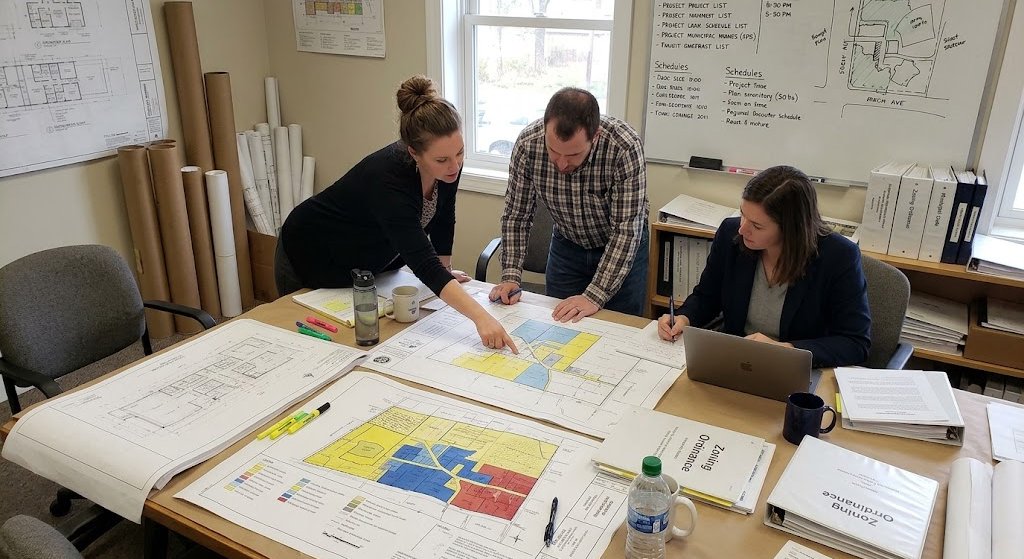

Understanding permit requirements is one of the most critical steps in any real estate development project. Yet, it is also one of the most misunderstood. Requirements vary widely across states, cities, and even neighborhoods. A process that takes 30 days in one state may take six months in another. This variation creates risk for developers, investors, and builders working across multiple markets.
Finding out these differences early helps avoid delays, cost overruns, and compliance issues. It also improves project timelines and investor confidence. Whether you are planning a residential build or a large mixed-use project, knowing what to expect in each state is essential.
This guide breaks down how permit requirements differ across the United States. It explains key factors, timelines, and strategies to help you move projects forward with fewer obstacles.
Table of Contents
Key Development & Permitting Statistics
Average residential permit approval takes 60–120 days nationwide
Zoning and permitting issues cause 30% of development delays
Large metro areas have 2–3x longer approval timelines than smaller cities
Permit errors lead to re-submissions in 25% of applications
These numbers show a clear pattern. Delays are common, costly, and often preventable with proper planning.
What “Permit Requirements” Mean Across States
Permit requirements refer to the approvals needed before starting construction or development. These approvals ensure projects meet zoning laws, safety standards, and environmental regulations. While the term sounds simple, it includes multiple layers of compliance.
At a basic level, most projects require:
Building permits for construction work
Zoning approvals for land use compliance
Environmental clearances where applicable
Utility and infrastructure approvals
Final occupancy permits after completion
However, the process becomes more complex due to overlapping authorities. Federal rules may apply to environmental factors. State laws influence building codes. Local governments control zoning and planning decisions. This layered system creates variation in how projects move forward.
For example, a commercial project in California may require detailed environmental impact reports. The same project in Texas might move faster due to fewer regulatory layers. This difference is not about better or worse systems. It reflects how each state balances development with public interest.
Another important factor is interpretation. Local agencies often apply the same rules differently. This means developers must understand not just the law, but how it is enforced in each jurisdiction.
In practice, permit requirements are not just a checklist. They are a process that involves coordination, documentation, and ongoing communication with agencies. Projects that succeed are those that treat permitting as a strategic phase, not an administrative task.
Key Factors That Change Permit Requirements by State
Zoning Regulations and Land Use Laws
Zoning laws define how land can be used. They control density, building height, setbacks, and property use. These rules vary significantly between states and cities.
In some states, zoning is strict and highly regulated. Developers may need variances or rezoning approvals before submitting permit applications. In others, zoning is more flexible, allowing faster approvals.
For example, urban areas often have layered zoning overlays. These can include historic preservation zones, transit-oriented development rules, or mixed-use designations. Each layer adds complexity and review time.
Understanding zoning early is critical. It determines whether a project is even feasible before permits are considered.
Environmental Regulations
Environmental rules play a major role in many states. Coastal regions, flood zones, and protected lands often require additional approvals.
States like California and Florida enforce strict environmental reviews. Projects may require impact studies, mitigation plans, and public hearings. These steps can add months to the timeline.
Other states have fewer environmental restrictions. However, federal laws still apply in certain cases, such as wetlands or endangered species protection. Ignoring environmental requirements is one of the most common causes of permit delays. Early assessment helps avoid costly redesigns later.
Building Codes and Safety Standards
Building codes ensure safety and structural integrity. Most states adopt versions of the International Building Code (IBC). However, many modify these codes based on local conditions.
For example:
California includes seismic requirements
Florida enforces hurricane-resistant standards
Northern states may emphasize snow load considerations
These variations affect design, materials, and construction methods. They also influence review timelines, as stricter codes often require more detailed documentation.
Developers must align plans with local codes before submission. Failure to do so often leads to rejections or revisions.
Local Government Authority
One of the biggest differences across states is how much control local governments have. Some states centralize approvals, while others rely heavily on city or county agencies.
In decentralized systems, each municipality sets its own process. This creates inconsistency even within the same state. A project approved quickly in one city may face delays in another.
Local authority also affects communication. Smaller jurisdictions may offer faster feedback but fewer digital tools. Larger cities may have structured systems but longer review cycles.
Understanding how decisions are made at the local level helps set realistic expectations.
State-by-State Permit Requirements Overview
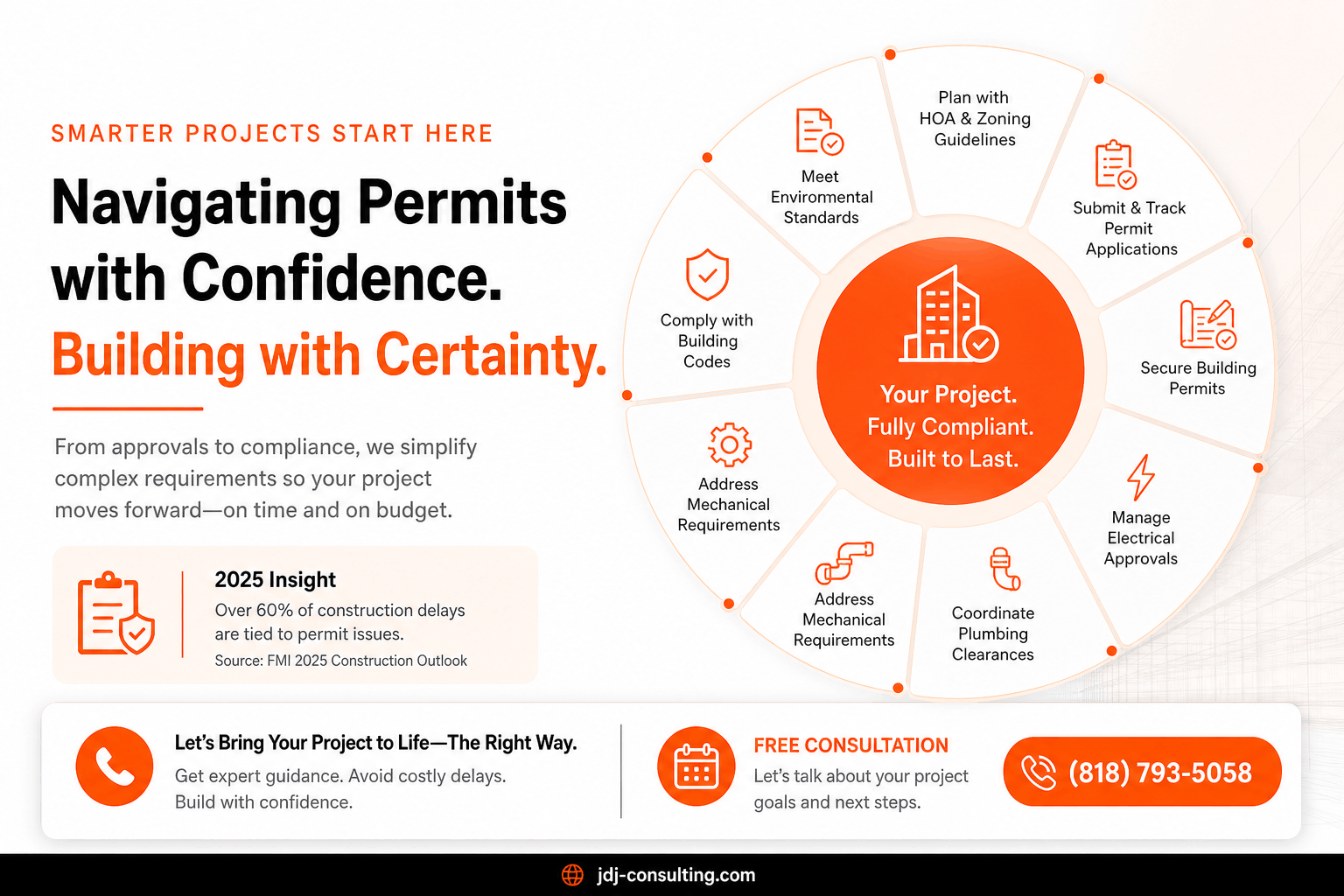
Permit requirements vary widely across major states. Below is a high-level overview of how key markets differ.
California Permit Requirements
California has one of the most complex permitting systems in the country. Environmental regulations play a major role, especially under the California Environmental Quality Act (CEQA).
Projects often require detailed studies and multiple approval stages. In cities like Los Angeles, timelines can extend beyond 180 days. Public hearings and community input are also common.
While the process is strict, it ensures compliance with environmental and safety standards. Developers must plan for longer timelines and higher costs.
Texas Permit Requirements
Texas offers a more flexible regulatory environment. Many areas have fewer zoning restrictions, especially outside major cities.
In cities like Austin, the process is more structured but still faster than coastal states. Approvals typically range from 30 to 90 days, depending on project complexity.
This efficiency makes Texas attractive for developers. However, local rules still vary, so due diligence remains important.
Florida Permit Requirements
Florida combines strict environmental regulations with strong building code requirements. Coastal development faces additional scrutiny due to hurricane risks.
Permitting timelines typically range from 60 to 120 days. Projects in Miami often involve multiple agencies, including environmental and coastal authorities.
Developers must address both structural safety and environmental impact. This dual focus adds complexity but improves long-term resilience.
New York Permit Requirements
New York has a highly regulated system, especially in urban areas. Zoning overlays, historic preservation rules, and density restrictions create multiple layers of approval.
Timelines often exceed 120 days. In New York City, the process includes detailed plan reviews and agency coordination.
While challenging, the system ensures compliance with urban planning goals. Developers must be prepared for extensive documentation and review cycles.
Illinois Permit Requirements
Illinois offers moderate complexity overall. However, Chicago has a more detailed permitting process compared to other parts of the state.
Approvals typically take 60 to 120 days. Zoning compliance and building code adherence are the main focus areas. Developers benefit from a balanced system, but local differences still matter.
Arizona Permit Requirements
Arizona is known for its streamlined permitting process. Many areas have fewer environmental constraints and faster approvals. Timelines often range from 30 to 60 days. This makes Arizona one of the more efficient states for development.
However, rapid growth in some cities is leading to more structured regulations. Developers should stay updated on local changes.
Comparison Table – Permit Requirements by State
Comparison of Permit Timelines, Complexity, and Key Challenges by State
| State | Avg Timeline | Complexity Level | Key Challenge |
|---|---|---|---|
| California | 120–180 days | High | Environmental reviews |
| Texas | 30–90 days | Medium | City-specific rules |
| Florida | 60–120 days | High | Coastal regulations |
| New York | 120+ days | High | Zoning overlays |
| Arizona | 30–60 days | Low | Limited constraints |
This comparison highlights a key insight. Faster approvals are often linked to simpler regulatory frameworks. However, each system reflects local priorities and risks.
Step-by-Step Permit Approval Process
The permit approval process follows a structured sequence. While details vary, the core steps remain consistent across most states. First, developers conduct a feasibility analysis. This step evaluates zoning, land use, and project viability. It helps identify potential issues before formal applications begin.
Next comes zoning verification. This confirms whether the proposed use aligns with local regulations. If not, developers may need a variance or rezoning approval. Pre-application meetings often follow. These meetings allow developers to discuss plans with local agencies. Early feedback helps reduce revisions later.
The formal submission stage includes detailed plans, reports, and supporting documents. Agencies then review the application for compliance. Most projects go through multiple review cycles. Agencies may request revisions or additional information. Each cycle adds time to the process.
Finally, once approvals are granted, developers receive permits and can begin construction. Inspections occur during and after construction to ensure compliance. A clear understanding of each step improves efficiency. It also reduces the risk of delays caused by incomplete or incorrect submissions.
Need help navigating permit requirements across states? Call (818) 793-5058 or email sales@jdj-consulting.com for a free consultation. We support permit expediting, feasibility studies, and entitlement strategy nationwide.
Common Challenges in State Permit Requirements
Even experienced developers face challenges when navigating permits across different states. The complexity comes from variation, interpretation, and coordination between agencies. Each of these factors can slow down a project if not handled properly.
One of the most common issues is inconsistency. Requirements change not only between states but also between cities within the same state. A process that works in one jurisdiction may not apply in another. This creates confusion and increases the risk of mistakes.
Another major challenge is incomplete or incorrect documentation. Many permit applications are delayed because plans do not meet local standards. Missing details, outdated drawings, or unclear reports often lead to re-submissions. Each revision cycle adds time and cost.
Zoning interpretation is another key obstacle. Regulations may seem clear on paper but are often applied differently by local officials. Developers may assume compliance, only to find that their interpretation does not align with the reviewing agency.
Community involvement also plays a role. In many areas, especially urban markets, projects require public hearings. Community opposition can delay approvals or force design changes. This adds uncertainty to timelines.
Common challenges include:
Conflicting requirements between agencies
Frequent code updates and regulatory changes
Limited transparency in approval timelines
Backlogs in high-demand cities
Miscommunication between project teams and officials
To manage these challenges, developers need a proactive approach. Early research, clear documentation, and consistent communication can significantly reduce delays.
Cost of Delays in Permit Approvals
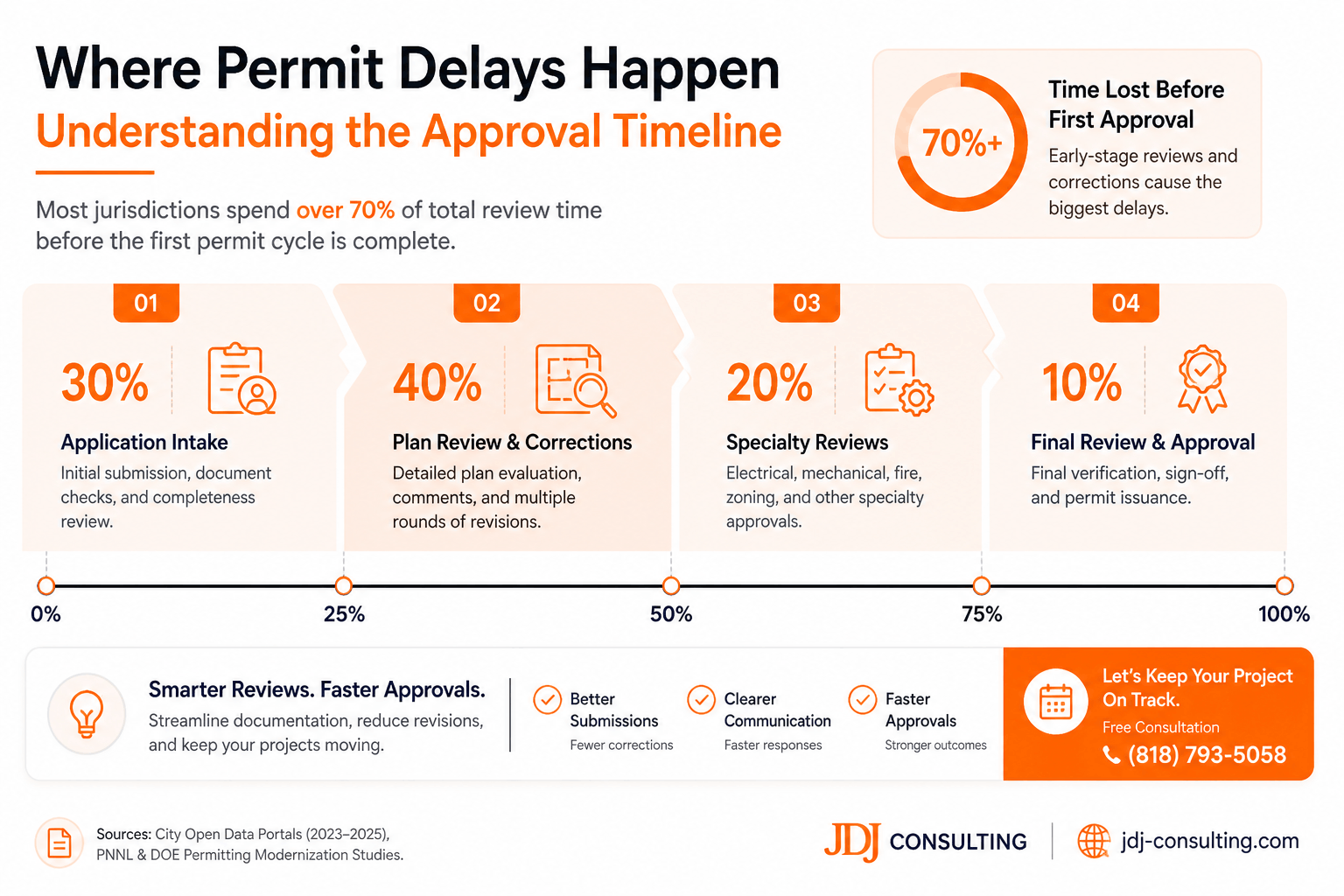
Permit delays are not just an inconvenience. They have direct financial consequences that can impact the entire project. Understanding these costs helps developers prioritize efficient permitting strategies.
The most immediate cost is holding expenses. These include land acquisition loans, property taxes, and insurance. When permits are delayed, these costs continue to accumulate without generating revenue.
Construction costs can also increase. Material prices and labor rates often rise over time. A delay of even a few months can lead to higher overall project expenses.
There is also the issue of opportunity cost. Capital tied up in one delayed project cannot be used elsewhere. This limits a developer’s ability to take on new opportunities or expand their portfolio.
Investor confidence is another critical factor. Delays can affect project credibility, especially in large developments. Investors may become hesitant if timelines are uncertain or repeatedly extended.
Key cost impacts include:
Increased financing and interest payments
Rising construction and material costs
Delayed revenue generation
Reduced return on investment (ROI)
Potential legal or compliance penalties
In some cases, delays can lead to redesigns or additional approvals. This further increases costs and extends timelines. The best way to control these risks is through early planning. Identifying potential permit challenges before submission helps avoid unexpected delays later.
How to Navigate Multi-State Permit Requirements
Managing projects across multiple states requires a structured and strategic approach. Each jurisdiction has its own rules, timelines, and expectations. Without a clear system, projects can quickly become difficult to manage.
The first step is standardizing your due diligence process. This includes reviewing zoning laws, environmental regulations, and building codes before acquiring a site. A consistent checklist helps identify risks early.
Working with local experts is also essential. Each market has unique requirements and review practices. Local consultants understand how agencies operate and can guide projects more efficiently.
Another key strategy is early engagement with authorities. Pre-application meetings provide valuable insights into expectations and potential issues. This reduces the likelihood of major revisions later.
Technology can also support better coordination. Digital tools help track submissions, revisions, and approvals across multiple locations. This improves communication within project teams.
Effective strategies include:
Conducting detailed feasibility analysis before acquisition
Engaging local consultants in each jurisdiction
Scheduling early meetings with planning departments
Maintaining organized and accurate documentation
Monitoring timelines and review cycles closely
Consistency is important, but flexibility is equally critical. Each state requires a tailored approach based on its regulatory environment. Developers who treat permitting as a strategic process, rather than a checklist, are more likely to succeed across multiple markets.
When to Hire a Permit Expediting Consultant
Not every project requires outside support. However, certain situations make it highly beneficial to bring in a permit expediting consultant. The right expertise can save time, reduce costs, and improve outcomes.
Multi-state developments are one of the clearest cases. Managing different regulations and agencies at once can overwhelm internal teams. A consultant helps coordinate efforts and maintain consistency.
Complex zoning or entitlement issues are another trigger. Projects that require variances, rezoning, or environmental approvals often involve multiple steps. A consultant can guide the process and avoid common pitfalls.
Tight timelines also make expediting services valuable. When projects have strict deadlines, delays can be costly. Consultants help streamline submissions and follow up with agencies.
Large-scale developments benefit as well. Commercial, mixed-use, and high-density projects typically require more approvals. This increases the risk of delays without expert oversight.
You should consider hiring a consultant if:
Your project spans multiple jurisdictions
You face complex zoning or environmental regulations
Your timeline is tight and delays are costly
Your team lacks local permitting expertise
You want to reduce risk and improve efficiency
A good consultant does more than submit applications. They act as a liaison between developers and agencies, ensuring clear communication and faster resolutions.
JDJ Consulting’s Approach to Permit Requirements
JDJ Consulting takes a strategic and hands-on approach to navigating permits. Since 2018, the firm has supported developers, investors, and builders across complex markets. Their experience spans Los Angeles, Austin, Miami, and other key regions.
The process begins with a detailed feasibility analysis. This step evaluates zoning, land use, and potential risks. It ensures that projects are aligned with local regulations before moving forward.
Next comes entitlement strategy. JDJ Consulting works with clients to secure necessary approvals, including zoning adjustments and variances. This stage focuses on minimizing delays and avoiding costly revisions.
Permit expediting is a core service. The team manages submissions, coordinates with agencies, and tracks progress. This reduces the burden on internal teams and improves efficiency.
Their approach also includes due diligence consulting. By identifying issues early, clients can make informed decisions and avoid unexpected challenges later.
Key services include:
Permit expediting
Entitlement strategy
Feasibility analysis
Due diligence consulting
Agency liaison support
What sets JDJ Consulting apart is their practical, results-driven approach. They focus on solving problems, not just identifying them. This helps clients move projects forward with confidence.
Real-World Example: Multi-State Development Challenge
Consider a developer expanding into California, Texas, and Florida. Each state presents unique challenges. California requires environmental reviews. Texas offers faster approvals but varies by city. Florida demands strict coastal compliance.
At the start, the developer faced inconsistent timelines and unclear requirements. Initial submissions led to revisions in multiple locations. This caused delays and increased costs.
A structured approach helped resolve these issues. The team conducted feasibility studies in each state. They engaged local experts to understand specific requirements. Pre-application meetings clarified expectations with agencies.
The developer also standardized documentation across all projects. This improved consistency and reduced errors. Regular communication with agencies helped address issues quickly.
As a result, approval timelines improved. Delays were reduced, and project costs were controlled. The developer gained confidence in managing multi-state projects.
This example highlights an important lesson. Success in permitting comes from preparation, coordination, and local expertise.
Future Trends in Permit Requirements
The permitting landscape is evolving. New technologies and policies are changing how approvals are managed. Developers who understand these trends can stay ahead of the curve.
One major trend is digital permitting systems. Many cities are moving applications online. This improves transparency and reduces processing time. It also allows developers to track progress in real time.
Artificial intelligence is also emerging in planning processes. Some jurisdictions are using AI tools to analyze zoning compliance and identify issues early. This can speed up initial reviews.
At the same time, environmental regulations are becoming stricter in many areas. Climate concerns are leading to more detailed reviews and sustainability requirements.
Growth-focused states are working to streamline approvals. Faster processes attract development and investment. However, this often comes with updated guidelines and new compliance standards.
Key trends include:
Expansion of online permitting platforms
Increased use of data and automation in reviews
Stronger environmental and sustainability regulations
Faster approvals in pro-development regions
Greater emphasis on transparency and accountability
Developers should stay informed about these changes. Adapting early can provide a competitive advantage and reduce future risks.
Conclusion
Understanding permit requirements across states is essential for successful development. Each jurisdiction has its own rules, timelines, and challenges. Without proper planning, these differences can lead to delays and increased costs.
A strategic approach makes a significant difference. Early research, accurate documentation, and expert guidance help streamline the process. Developers who invest in proper planning often see better outcomes and fewer obstacles.
Navigating permits is not just about compliance. It is about managing risk and improving efficiency. With the right strategy, projects can move forward with confidence and clarity.
Planning a project? Talk to JDJ Consulting at (818) 793-5058 or sales@jdj-consulting.com for a free consultation. We simplify permit requirements and guide your project from feasibility to approval.
FAQs About State-by-State Permit Requirements Guides
What are permit requirements in real estate development?
Permit requirements are the approvals needed before starting construction or development. These include building permits, zoning approvals, and sometimes environmental clearances. Each approval ensures that the project complies with local laws and safety standards.
The exact requirements depend on location. Some states require detailed environmental reviews, while others focus more on zoning compliance. Local governments often control the process, which means rules can vary even within the same state.
To navigate this, developers must understand both regulations and how they are enforced. A clear plan and proper documentation help avoid delays and rejections.
How long does it take to get permits approved?
The timeline for permit approval varies widely. On average, residential permits take 60 to 120 days. However, complex projects can take much longer.
Several factors influence timelines:
Project size and complexity
Local government workload
Zoning or environmental requirements
Accuracy of submitted documents
Urban areas often have longer timelines due to higher demand and stricter regulations. Smaller cities may process permits more quickly. Developers can reduce delays by preparing complete applications and engaging with agencies early in the process.
Which states have the strictest permit requirements?
States like California, New York, and Florida are known for strict permitting processes. These states have detailed zoning laws and strong environmental regulations.
For example, California requires environmental impact reviews for many projects. New York has complex zoning overlays and historical preservation rules. Florida enforces strict building codes due to hurricane risks.
These requirements increase complexity but also improve safety and sustainability. Developers must plan for longer timelines and higher compliance standards in these states.
Can permit requirements vary within the same state?
Yes, permit requirements often vary within the same state. Local governments usually control zoning and permitting decisions. This means each city or county can have its own process.
For example, a project in one city may be approved quickly, while the same project in another city faces delays. Differences can include documentation standards, review timelines, and approval steps.
Understanding local rules is essential. Developers should research each jurisdiction carefully and work with local experts when needed.
What happens if you build without permits?
Building without permits can lead to serious legal and financial consequences. Local authorities enforce strict compliance, and violations are often discovered during inspections, complaints, or property transactions.
If a project proceeds without approval, agencies may issue stop-work orders immediately. This halts construction and delays the entire timeline. In many cases, developers must also pay fines or penalties, which can increase depending on the severity of the violation.
Beyond fines, unpermitted work may require removal or reconstruction. This means tearing down completed sections to meet code requirements. It significantly increases costs and can impact structural integrity if not handled properly.
Other risks include:
Difficulty selling or refinancing the property
Issues with insurance coverage or claims
Legal disputes with local authorities
Reduced property value due to non-compliance
In some cases, developers can apply for retroactive permits. However, this process is often more complex and expensive than obtaining approvals upfront.
The safest approach is always to follow proper permitting procedures. It protects your investment and ensures long-term project stability.
How can developers speed up permit approvals?
While some delays are unavoidable, there are practical ways to speed up permit approvals. The key is preparation and proactive communication.
One of the most effective strategies is submitting complete and accurate documentation. Incomplete applications are a leading cause of delays. Ensuring that all plans meet local requirements reduces the need for revisions.
Early engagement with planning departments also helps. Pre-application meetings allow developers to clarify expectations and address potential issues before submission.
Working with experienced consultants can further improve efficiency. They understand local processes and can navigate agency requirements more effectively.
Developers can speed up approvals by:
Conducting thorough feasibility studies before submission
Aligning designs with local zoning and building codes
Responding quickly to agency feedback
Maintaining organized project documentation
Using digital permitting platforms where available
Consistency and attention to detail are critical. Small mistakes can lead to major delays, so a structured approach is essential.
What is permit expediting?
Permit expediting is a specialized service that helps streamline the approval process. It involves managing submissions, coordinating with agencies, and tracking progress to reduce delays.
An expeditor acts as a liaison between the developer and local authorities. They ensure that applications meet all requirements and follow up on reviews. This helps keep the process moving forward.
Permit expediting is especially useful for complex or time-sensitive projects. It reduces the burden on internal teams and improves communication with agencies.
Key benefits include:
Faster approval timelines
Reduced risk of errors or rejections
Better coordination between stakeholders
Improved visibility into the approval process
While not required for every project, expediting services can provide significant value. They are particularly helpful in highly regulated markets or multi-state developments.
Are environmental permits required everywhere?
Environmental permits are not required for every project, but they are common in many locations. The need for these permits depends on the site and the scope of development.
Projects in coastal areas, wetlands, or protected zones often require environmental reviews. These reviews assess the potential impact on ecosystems, water quality, and surrounding communities.
In some states, environmental regulations are strict and involve detailed studies. In others, requirements are more limited. However, federal laws still apply in certain cases, regardless of state regulations.
Common triggers for environmental permits include:
Development near water bodies or flood zones
Projects affecting protected habitats
Large-scale construction with significant impact
Land use changes in sensitive areas
Developers should evaluate environmental factors early. This helps avoid unexpected delays and ensures compliance with all applicable laws.
How much do permits cost?
Permit costs vary depending on the type, size, and location of the project. There is no fixed price, as each jurisdiction sets its own fee structure.
For residential projects, permit fees may range from a few hundred to several thousand dollars. Larger commercial developments can incur significantly higher costs.
Fees typically include:
Application and review fees
Inspection charges
Impact or development fees
Utility connection costs
In high-demand urban areas, fees tend to be higher due to increased administrative complexity. Environmental permits and zoning approvals can also add to the total cost.
It is important to include permit costs in the early budgeting phase. Underestimating these expenses can affect project feasibility and financial planning.
What is zoning vs permitting?
Zoning and permitting are closely related but serve different purposes. Zoning defines how land can be used, while permitting ensures that construction follows approved plans and regulations.
The zoning regulations determine whether a project is allowed on a specific site. They control factors such as land use, density, and building height. If a project does not meet zoning requirements, developers may need to seek approvals like variances or rezoning.
Permitting comes after zoning compliance is confirmed. It involves reviewing construction plans to ensure they meet building codes and safety standards.
In simple terms:
Zoning answers “Can you build this here?”
Permitting answers “How will you build it safely?”
Both steps are essential. Skipping or misunderstanding either can lead to delays or project failure.
Do small projects need permits?
Many small projects still require permits, even if they seem minor. The need for permits depends on the type of work and local regulations.
Common examples of projects that often require permits include:
Structural changes to a building
Electrical or plumbing work
Additions or expansions
Significant renovations
Some minor work, such as cosmetic updates, may not require permits. However, rules vary by location, so it is important to verify requirements with local authorities.
Failing to obtain permits for small projects can still result in fines or complications during property sales. It is always better to confirm requirements before starting work.
How do I check permit requirements in my state?
Checking permit requirements involves researching local regulations and contacting relevant agencies. Most cities and counties provide information through their planning or building departments.
Many jurisdictions now offer online portals where developers can access guidelines, submit applications, and track progress. These platforms improve transparency and make it easier to understand requirements.
To check permit requirements:
Visit local planning or building department websites
Review zoning maps and land use regulations
Contact officials for clarification
Schedule pre-application meetings if needed
Because rules vary widely, relying on general information is not enough. Local verification is essential for accurate planning.
What documents are required for permits?
Permit applications require detailed documentation to ensure compliance with regulations. The exact requirements depend on the project type and location.
Most applications include:
Site plans showing property boundaries and layout
Architectural drawings with design details
Engineering reports for structural systems
Environmental assessments if required
Utility and infrastructure plans
Incomplete or unclear documentation is a common cause of delays. Agencies need detailed information to review projects effectively.
Preparing accurate and comprehensive documents improves approval chances. It also reduces the need for revisions and additional review cycles.
Why do permits get rejected?
Permit applications are rejected for several reasons, most of which are preventable. Understanding these causes helps developers avoid delays.
Common reasons for rejection include:
Non-compliance with zoning regulations
Incomplete or inaccurate documentation
Failure to meet building code requirements
Missing environmental approvals
Design conflicts with local guidelines
Rejections often lead to revisions and resubmissions, which extend timelines. In some cases, significant changes may be required before approval is granted.
The best way to avoid rejection is through careful preparation. Reviewing requirements, consulting with experts, and verifying details before submission can significantly improve outcomes.
Should I hire a consultant for permits?
Hiring a consultant can be a valuable decision, especially for complex projects. While smaller projects may be manageable in-house, larger developments often benefit from expert guidance.
Consultants bring experience and local knowledge. They understand how agencies operate and can navigate requirements more efficiently. This reduces the risk of errors and delays.
Situations where hiring a consultant makes sense include:
Multi-state or multi-city projects
Complex zoning or entitlement issues
Tight timelines or high financial risk
Limited internal expertise
While there is an upfront cost, the long-term benefits often outweigh it. Faster approvals and reduced delays can lead to significant savings