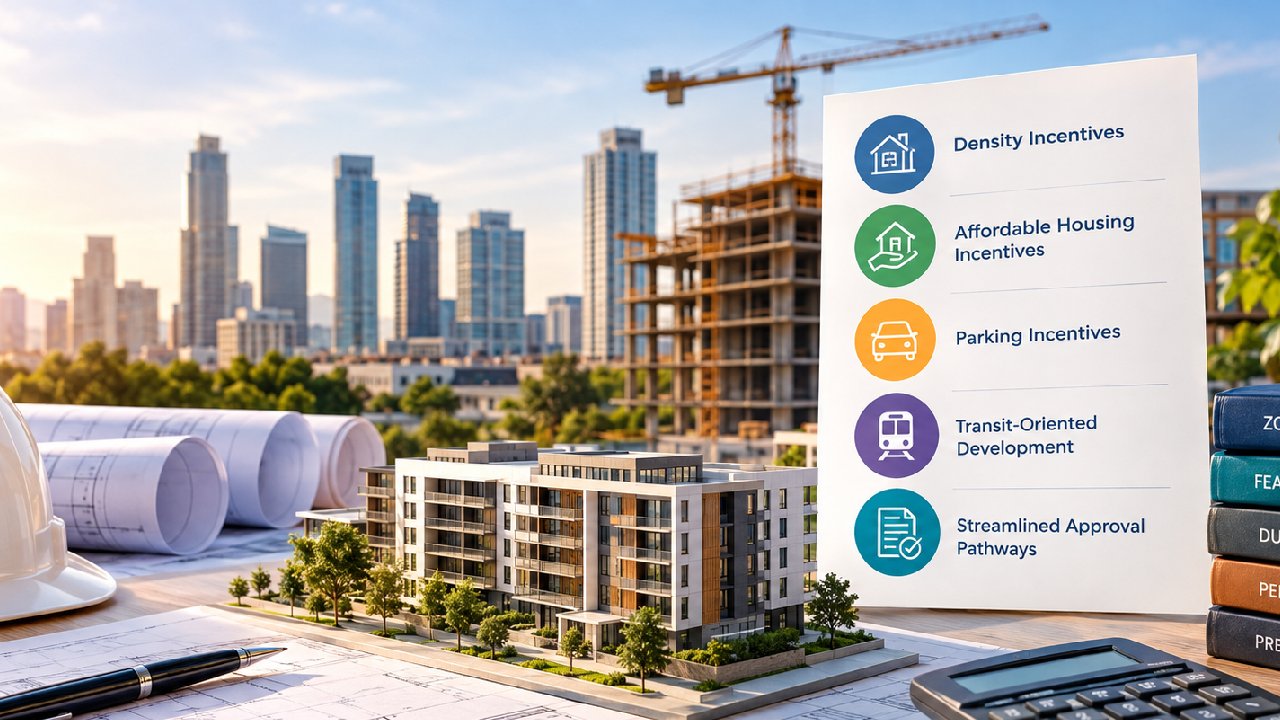

Housing affordability is still a major issue in the U.S. market. In 2026, buyers and renters face high costs and limited options. Even though some conditions have improved, housing remains difficult to afford for many households. This is due to a mix of high mortgage rates, low supply, and slow income growth.
Housing affordability is not just about home prices anymore. It now depends on total monthly costs. These include loan payments, taxes, insurance, and utilities. Many buyers can qualify for a loan but still struggle with the full cost. Renters face the same issue, with rising rents and limited savings.
This article explains what is happening in the market. It breaks down the data, key trends, and what to expect next. It also looks at how development, zoning, and permits affect supply and affordability. The goal is to give clear, practical insights for buyers, renters, and developers.
Table of Contents
Key Development & Permitting Statistics
U.S. homeowners with mortgages saw median monthly costs reach $2,035 in 2024.
Nearly half of renter households were cost-burdened in 2023.
- Realtor.com projects 2026 mortgage rates to average about 6.3%.
NAR reported March 2026 inventory at 4.1 months, with a $408,800 median price.
What Housing Affordability Means in 2026
Housing affordability means how easily people can pay for housing. A common rule is that housing should cost no more than 30% of income. If it goes higher, the household becomes cost-burdened. This reduces savings and limits financial flexibility.
In 2026, affordability is more complex than before. Home price alone is no longer the main factor. Monthly cost is what matters most. Even if prices stop rising, payments can stay high due to interest rates. Insurance and taxes have also increased in many areas.
Renters face similar pressure. Many renters spend a large share of income on housing. This makes it hard to save or invest. It also delays homeownership for many people. As a result, affordability affects both renters and buyers.
Another key factor is supply. When there are not enough homes, prices stay high. This problem is linked to zoning rules and permit delays. In many cities, it takes a long time to approve new projects. This slows down construction and keeps supply low.
Why Housing Affordability Is Still Tight
Housing affordability remains tight because several problems exist at the same time. These issues are connected and reinforce each other.
Mortgage rates are still high compared to past years. Even a small increase in rates raises monthly payments. This reduces how much buyers can afford. Many first-time buyers are priced out because of this.
Supply is also limited. There are not enough homes on the market. Many owners are not selling because they have low-rate mortgages. This keeps inventory low and prices stable. Buyers have fewer options and face strong competition.
Income growth has not kept up with housing costs. Wages have increased in some sectors, but not enough. Housing costs have grown faster than incomes. This gap makes it harder for households to afford housing.
Development delays also play a role. Zoning rules can limit what can be built. Entitlement processes take time and add uncertainty. Permit approvals can slow projects even further. These delays increase costs for developers and reduce new supply.
All these factors create a cycle. Low supply leads to high prices. High prices reduce affordability. Slow development prevents supply from improving. This cycle keeps the market under pressure.
Need help evaluating a project in Los Angeles, Austin, or Miami? Call (818) 793-5058 or email sales@jdj-consulting.com for a free consultation on feasibility, permits, entitlement strategy, and due diligence.
2026 Market Outlook
The market outlook for 2026 shows slow improvement. Conditions are stabilizing, but affordability is still limited.
Buyers may see some relief. Mortgage rates are expected to stay steady. Home prices are not rising as fast as before. This gives buyers more time to make decisions. However, monthly costs are still high, so affordability remains a concern.
Renters may also see small changes. New housing supply is entering some markets. This can reduce rent growth in certain areas. Still, demand remains strong, so rent levels will not drop significantly.
Developers face a more complex market. Demand is strong, but costs are high. Financing is more expensive, and approvals take time. Developers must plan carefully to ensure projects remain viable.
Regional differences are important. Some cities have faster approvals and flexible zoning. These markets may improve more quickly. Others, with strict rules, may continue to face supply shortages. Overall, 2026 is a transition year. The market is moving toward balance, but progress is slow.
The Data Behind the Affordability Story
To understand where the market is heading, it helps to look at the numbers. Data shows why affordability remains tight, even as some trends improve. When you break it down, the issue is not just price. It is the full cost of living in a home.
Homeowner costs have risen in a steady way. The average monthly cost now includes more than just a mortgage. Buyers must also pay for taxes, insurance, and utilities. These added costs can push total payments higher than expected. Even when home prices slow down, these extra expenses keep pressure on budgets.
Renters face a similar challenge. Many renters now spend more than 30% of their income on housing. This means they are cost-burdened. In some cities, the share is even higher. Rent growth has slowed in a few areas, but it still remains high overall. This makes it hard for renters to save money or plan for ownership.
The supply shortage explains much of this pressure. The U.S. still lacks millions of housing units. This shortage did not happen overnight. It is the result of years of underbuilding. As demand grew, supply could not keep up. This imbalance continues to drive prices and rents higher.
Inventory levels also remain low. A balanced market usually has about six months of supply. In 2026, inventory is closer to four months. This means fewer choices for buyers. It also means sellers still have some control over pricing. As long as inventory stays low, affordability will improve slowly.
Below is a simple breakdown of the key data:
Table: Key Housing Affordability Indicators (2026)
| Indicator | Current Level | Impact on Affordability |
|---|---|---|
| Mortgage Rates | ~6.3% | Higher payments reduce buying power |
| Median Home Price | ~$408,800 | Keeps entry costs high |
| Housing Shortage | 3.7 million units | Sustains long-term price pressure |
| Cost-Burdened Renters | ~50% | Limits savings and mobility |
| Inventory Level | 4.1 months | Reduces available options |
Each of these factors connects to the others. Higher rates raise payments. Low supply keeps prices high. At the same time, income growth is slower than housing cost growth. This is why affordability remains a challenge across the country.
What This Means for Developers and Property Teams
For developers, affordability is not just a market trend. It affects every stage of a project. From land purchase to final delivery, each decision matters more in today’s conditions.
Feasibility is the first step. Developers must study zoning, density, and site limits before moving forward. A project that looks good on paper may not work in reality. Early analysis helps avoid costly mistakes. It also shows whether a project can meet market demand.
Entitlement strategy is just as important. Approvals can take months or even years. Delays increase holding costs and reduce profit margins. A clear plan helps move projects through the process faster. This is especially important in cities with complex regulations.
Permit timelines also impact project success. Slow approvals can delay construction. This adds to financing costs, especially when interest rates are high. Faster permit processing helps control these costs and keeps projects on track.
Due diligence is another key step. Developers need to review zoning rules, environmental risks, and site conditions early. This reduces uncertainty and helps avoid surprises. A strong due diligence process leads to better planning and smoother execution.
Here is a simple process developers should follow:
Review zoning and land-use rules before purchase
Conduct feasibility and cost analysis early
Plan entitlement strategy with clear timelines
Identify permit requirements in advance
Monitor approvals and resolve issues quickly
In 2026, project success depends on efficiency. Developers who plan ahead and move quickly have a clear advantage.
How JDJ Consulting Fits the Story
In a complex market, developers need clear guidance. JDJ Consulting Group focuses on helping clients move projects forward with fewer delays and better outcomes.
Land-use and entitlement strategy is a core service. JDJ helps clients understand zoning rules and approval paths. This reduces risk and improves decision-making. It also helps projects move forward without unnecessary delays.
Feasibility studies are another key area. These studies test whether a project is viable. They look at site conditions, costs, and market demand. This step helps clients avoid investing in projects that may not work.
Permit expediting is critical in today’s market. JDJ works with agencies to speed up approvals. This keeps projects on schedule and reduces holding costs. Faster approvals can make a big difference in project success.
JDJ also supports agency coordination. Many projects involve multiple departments and stakeholders. Clear communication helps prevent delays and confusion. JDJ acts as a link between clients and agencies to keep the process smooth.
In a market where timing and planning matter, this kind of support can improve both speed and results.
Conclusion
Housing affordability in 2026 is improving slowly, but challenges remain. High costs, limited supply, and slow approvals continue to shape the market. Buyers and renters still face pressure, even as conditions stabilize.
For developers, the focus is on efficiency and planning. Projects must align with demand and move quickly through approvals. Delays and poor planning can reduce viability in today’s environment.
Housing affordability will not improve overnight. It depends on better supply, faster processes, and balanced market conditions. Understanding these factors helps both individuals and developers make better decisions.
If you are planning a project in Los Angeles, Austin, or Miami, call (818) 793-5058 or email sales@jdj-consulting.com for a free consultation on feasibility, permit expediting, entitlement strategy, and due diligence.
FAQs About Housing Affordability
Will housing affordability improve in 2026?
Housing affordability may improve slightly in 2026, but changes will be gradual. Mortgage rates are expected to remain stable, which gives buyers more predictability. Home prices are also growing at a slower pace compared to past years.
However, affordability is still limited by high monthly costs. These include loan payments, taxes, and insurance. Many households still spend a large share of income on housing.
Key factors that affect improvement include:
Stable but elevated mortgage rates
Limited housing inventory
Slow income growth
Because of these conditions, affordability gains will vary by market. Some cities may improve faster than others.
Why is affordability still weak even if prices stabilize?
Even when prices stop rising, affordability can remain weak. The main reason is that monthly costs stay high. Mortgage rates still affect how much buyers pay each month.
In addition, other costs continue to rise:
Property taxes
Insurance premiums
Maintenance and utilities
These added expenses increase the total cost of housing. As a result, buyers may still struggle to afford homes, even if prices are stable.
How does the housing shortage affect affordability?
The housing shortage plays a major role in affordability. When supply is low, prices tend to stay high. Buyers compete for fewer homes, which increases costs.
The shortage also affects renters. Limited supply leads to higher rents. This makes it harder for renters to save for a home.
Main effects of the shortage include:
Higher home prices
Increased rent levels
Reduced housing options
Until supply increases, affordability will remain under pressure.
Are renters more burdened than homeowners?
Renters are often more burdened than homeowners. Many renters spend over 30% of income on housing. Some spend even more, which is considered severe burden.
Homeowners may have fixed mortgage payments. This gives them more stability over time. Renters, on the other hand, face changing rent prices.
Because of this, renters often struggle to save money. This makes it harder to move into homeownership.
What matters more in 2026: home prices or mortgage rates?
In 2026, mortgage rates often matter more than home prices. This is because affordability is based on monthly payments, not just purchase price. Even if home prices stop rising, higher interest rates can still increase total costs.
For example, a small rise in rates can add hundreds of dollars to a monthly payment. This reduces how much buyers can afford to borrow. As a result, many buyers are priced out even when prices remain stable.
Key points to understand:
Rates directly affect monthly payments
Small rate changes have large cost impacts
Buyers qualify based on payment, not price alone
In simple terms, stable prices do not guarantee better affordability. Lower rates are often needed to make a real difference.
Which markets are most affected by affordability pressure?
Affordability pressure is strongest in high-demand urban markets. Cities like Los Angeles, Austin, and Miami often face limited supply and strong demand. This combination keeps prices and rents elevated.
These markets also tend to have stricter zoning rules and longer approval timelines. This slows down new development and limits supply growth. As a result, affordability improves more slowly in these areas.
Factors that increase pressure in these markets include:
Limited available land for new housing
High demand from population growth
Complex zoning and entitlement processes
Slower permit approvals
In contrast, markets with more flexible regulations may see faster improvements. Local policy plays a key role in shaping affordability outcomes.
How can developers respond to affordability constraints?
Developers can respond by focusing on efficiency and planning. In today’s market, careful preparation is essential for project success.
The first step is strong feasibility analysis. This ensures the project makes sense financially and aligns with zoning rules. Developers should also plan their entitlement strategy early to avoid delays.
Key actions include:
Conduct detailed feasibility studies before acquisition
Align project design with zoning and land-use rules
Plan entitlement timelines in advance
Identify permit requirements early
Monitor approvals closely to avoid delays
Developers should also focus on cost control and efficient design. Projects that move quickly and meet market demand are more likely to succeed.
Does zoning really affect housing affordability?
Yes, zoning has a direct impact on affordability. It controls what can be built, where it can be built, and how dense a project can be. These rules shape the total housing supply in a market.
When zoning is restrictive, fewer homes can be built. This limits supply and keeps prices high. Even when demand is strong, new housing cannot be added quickly.
Zoning also affects project timelines. Rezoning or variance approvals can take time. This delays construction and increases costs for developers.
Key impacts of zoning include:
Limits on building density
Restrictions on land use
Longer approval timelines
Higher development costs
Because of this, zoning reform is often discussed as part of the solution. However, changes must also be paired with faster approvals to have real impact.
What should investors watch in 2026?
Investors should focus on key indicators that shape affordability and demand. These factors help determine where opportunities may exist.
Important trends to monitor include:
Mortgage rate stability and future changes
Housing supply levels and new construction
Rent growth in key markets
Local zoning and policy changes
Investors should also pay attention to project-level details. Feasibility, approval timelines, and cost structure all affect returns. In a complex market, careful analysis is more important than ever.
When should someone hire a consulting team?
Hiring a consulting team early in the process can prevent major issues later. The best time is before land acquisition or design finalization. Early guidance helps identify risks and improve planning.
Consultants can assist with:
Feasibility analysis and site evaluation
Zoning and entitlement strategy
Permit planning and expediting
Due diligence and risk assessment
Bringing in experts early helps reduce delays and unexpected costs. It also improves the chances of project success. In today’s market, early planning is a key advantage.