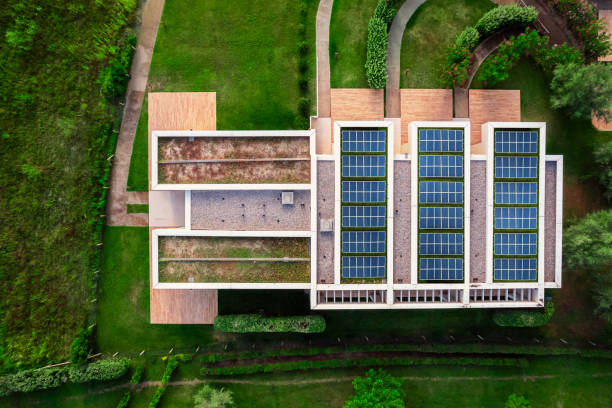
Understanding the green building code in Texas is essential for developers, investors, and builders working in a fast-growing market. Texas continues to see strong population growth and construction demand. At the same time, cities are adopting stricter sustainability standards. These rules affect design, permitting, and long-term project performance.
Unlike some states, Texas does not follow one uniform green building code. Instead, requirements vary by city. Austin, Dallas, and Houston each apply different standards. This creates both opportunity and complexity for project teams. Developers must align early with local rules to avoid delays and added costs.
Green building standards focus on energy efficiency, water conservation, indoor air quality, and sustainable materials. These factors directly impact operating costs and asset value. Many tenants and investors now expect sustainable features. As a result, compliance is no longer optional in many markets.
From a development perspective, the challenge is not just meeting the code. It is understanding how green requirements affect zoning, entitlements, and permitting timelines. Early planning is critical. A well-prepared strategy can streamline approvals and improve project outcomes.
JDJ Consulting Group works with developers to navigate these requirements. Our advisory approach helps clients align sustainability goals with real-world permitting and entitlement processes.
Table of Contents
What is the Green Building Code in Texas
Green building codes in Texas refer to a mix of mandatory regulations and voluntary programs. These rules guide how buildings are designed, constructed, and operated. The goal is to reduce environmental impact while improving efficiency and occupant health.
At the core, most cities rely on the International Energy Conservation Code (IECC). This serves as a baseline for energy performance. However, each city can modify and expand these standards. This is where complexity begins.
There are two main categories developers must understand:
Mandatory codes
Energy efficiency requirements
Building envelope standards
Mechanical system performance
Voluntary or incentive-based programs
LEED certification
ENERGY STAR ratings
Local green building programs
In cities like Austin, voluntary programs often become mandatory for certain projects. For example, commercial developments may need to meet specific sustainability ratings to receive approval. This shifts green building from a “nice-to-have” to a regulatory requirement.
Another key distinction is enforcement. Some cities strictly enforce compliance through inspections and documentation. Others provide guidelines but allow flexibility. This variation affects both cost and timeline.
From a planning perspective, green building codes influence several stages:
Site selection and feasibility
Design and engineering decisions
Permit submission requirements
Final inspections and approvals
Developers who treat green requirements as a late-stage checklist often face delays. Instead, successful projects integrate sustainability early. This approach reduces redesign costs and speeds up approvals.
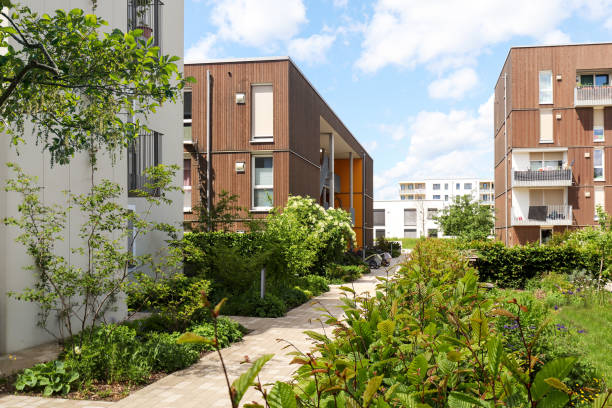
Texas State-Level Green Building Requirements
At the state level, Texas provides a framework rather than a unified green building code. The state adopts baseline standards but allows cities to implement stricter rules. This decentralized system gives flexibility but requires careful navigation.
The primary statewide requirement is the adoption of energy codes. Texas follows versions of the International Energy Conservation Code. These standards regulate insulation, lighting, HVAC systems, and overall energy performance. Compliance is mandatory for most new construction.
In addition to energy codes, the state addresses water conservation. This includes plumbing standards and efficiency requirements. While not always labeled as “green building,” these rules contribute to sustainability goals.
Public buildings often face stricter requirements. State-funded projects may need to meet higher efficiency standards or achieve certifications like LEED. This sets a benchmark that influences private development practices.
Key elements at the state level include:
Minimum energy efficiency thresholds
Water usage regulations
Air quality and ventilation standards
Requirements for public and institutional buildings
However, the limitation is clear. Texas does not enforce a single, comprehensive green building code across all cities. This creates inconsistency. A project compliant in one city may not meet requirements in another.
For developers, this means state-level compliance is only the starting point. Local regulations often go further. Ignoring these differences can lead to costly revisions during permitting.
Another important factor is enforcement. The state provides guidance, but local jurisdictions handle inspections and approvals. This makes local expertise essential when planning a project.
From a strategic standpoint, developers should view state requirements as a baseline. The real challenge lies in aligning with city-specific rules. Early coordination between design teams and consultants can prevent misalignment.
City-Specific Green Building Code Requirements for Texas
Austin Green Building Requirements
Austin leads Texas in green building regulations. The Austin Energy Green Building (AEGB) program is one of the most established systems in the country. It applies to both residential and commercial developments.
Most projects must meet a star rating system. This rating evaluates energy use, water efficiency, materials, and indoor air quality. The higher the rating, the better the building performs.
Key features include:
Mandatory participation in many developments
Integration with permitting and inspections
Incentives for higher performance levels
Austin also promotes renewable energy. Solar installations and energy-efficient systems often receive support. This aligns with the city’s long-term sustainability goals.
For developers, Austin requires careful planning. The AEGB program affects design decisions from the start. Late adjustments can lead to delays and increased costs.
Houston Green Building Requirements
Houston takes a more flexible approach. The city does not enforce a single mandatory green building code for all projects. However, sustainability still plays a role in development.
City-funded buildings must meet LEED standards. This ensures high performance for public projects. Private developments are encouraged to follow similar practices but are not always required.
Houston also promotes sustainability through programs like the Green Office Challenge. These initiatives focus on reducing energy and water use in existing buildings.
Developers should note:
LEED may be required for certain project types
Incentives exist for sustainable design
Flexibility allows for customized approaches
While Houston offers more freedom, this can create uncertainty. Developers must understand when and where green standards apply.
Dallas Green Building Requirements
Dallas adopts a structured approach through its Green Construction Code. This code integrates energy efficiency and sustainability into building regulations.
Projects must meet specific performance standards. These include energy use, water efficiency, and material selection. The city also aligns with updated energy codes.
Key aspects include:
Mandatory compliance for many new developments
Integration with building permits
Focus on measurable performance metrics
Dallas strikes a balance between Austin’s strict system and Houston’s flexibility. Developers must still plan carefully, but requirements are more predictable.
Key Takeaway Comparison Table
Table Caption: Texas City Green Code Comparison
| City | Mandatory Program | Certification Type | Enforcement Level |
|---|---|---|---|
| Austin | Yes | AEGB | High |
| Houston | Partial | LEED-based | Moderate |
| Dallas | Yes | Green Code | Moderate |
Core Green Building Code Requirements Texas Developers Must Meet
Across Texas cities, several core requirements remain consistent. These form the foundation of sustainable construction. Understanding them helps developers plan effectively.
Energy efficiency is the most critical factor. Buildings must meet strict standards for insulation, lighting, and HVAC systems. These elements reduce energy consumption and operating costs.
Water conservation is another key area. Low-flow fixtures, efficient irrigation systems, and water reuse strategies are often required. These measures support long-term sustainability.
Material selection also plays a role. Many codes encourage or require the use of sustainable materials. This includes recycled content and low-emission products.
Indoor environmental quality is increasingly important. Ventilation, air filtration, and natural lighting improve occupant health. These features also enhance property value.
Common requirements include:
High-performance building envelopes
Efficient HVAC and lighting systems
Water-saving plumbing fixtures
Sustainable material usage
Waste management during construction
Stormwater and site sustainability planning
Compliance involves more than meeting minimum standards. Documentation is critical. Developers must provide detailed plans and reports during permitting.
Inspection is another key stage. Projects are reviewed during construction to ensure compliance. Final approval often depends on meeting all sustainability criteria.
From a practical perspective, integrating these requirements early is essential. Design teams must align with code requirements from the beginning. This reduces rework and speeds up approvals.
Step-by-Step Compliance Process for Developers
Meeting sustainability standards in Texas requires a structured approach. Green compliance is not a single step. It is a process that begins early and continues through construction. Developers who follow a clear sequence reduce risk and avoid costly redesigns.
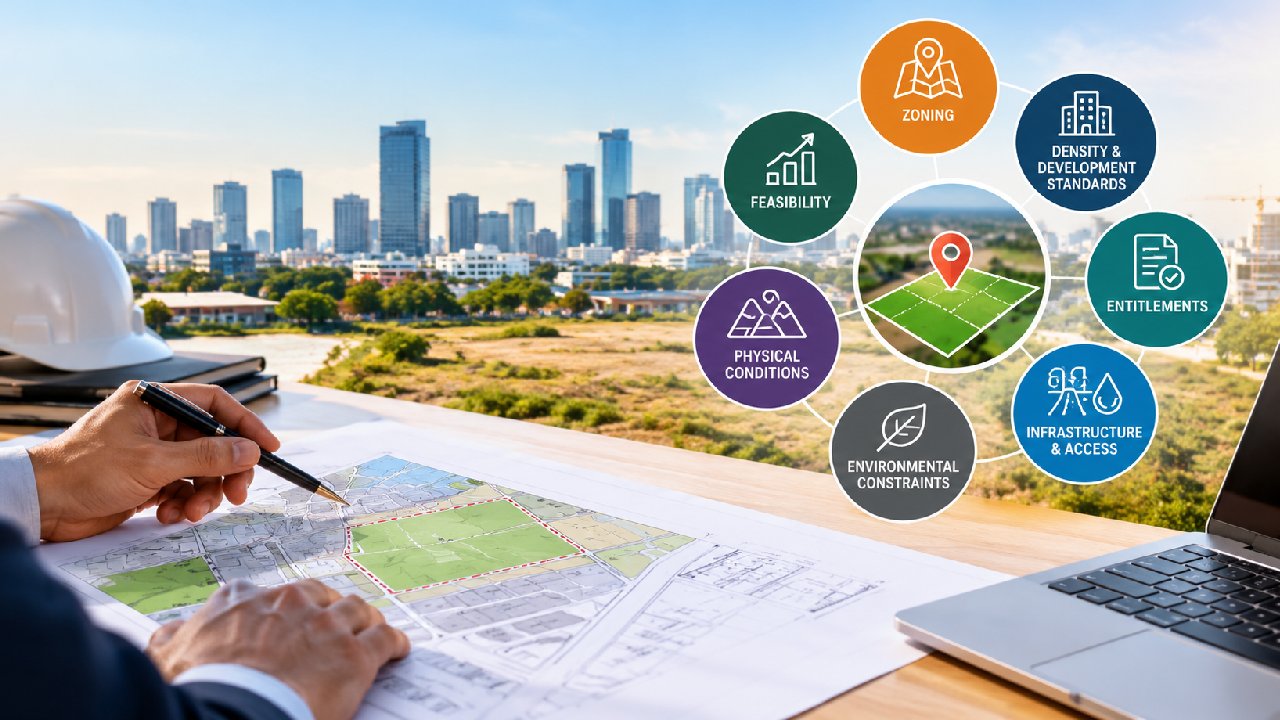
The process typically starts with feasibility analysis. This stage evaluates whether a site can support green building requirements. Zoning, infrastructure, and environmental constraints all play a role. Early findings help shape realistic project goals.
Next comes the design phase. Architects and engineers must integrate energy efficiency, water systems, and material selection into the plans. Waiting until later stages often leads to conflicts with code requirements.
The permitting phase is where many projects face delays. Cities require detailed documentation showing compliance with green standards. Missing or incomplete submissions can slow approvals significantly.
A typical compliance workflow includes:
Feasibility and site analysis
Evaluate zoning and environmental factors
Identify applicable green standards
Pre-design coordination
Align sustainability goals with the budget
Select certification or compliance path
Design development
Integrate energy, water, and material strategies
Coordinate across all disciplines
Permit submission
Provide documentation and calculations
Demonstrate compliance clearly
Construction and inspections
Follow approved plans
Address issues during site inspections
Final certification or approval
Submit final reports
Receive occupancy approval
Each step depends on the previous one. Skipping early coordination often leads to delays later. Developers who treat compliance as part of the design process, not an afterthought, achieve smoother approvals.
Cost Implications of Green Building Compliance
Green building often raises concerns about cost. While upfront expenses can be higher, the long-term financial benefits are significant. Developers must evaluate both sides to make informed decisions.
Upfront Costs
Initial costs usually increase due to design and material upgrades. High-performance systems require more planning and specialized equipment. Certification programs may also include fees.
Common upfront cost drivers include:
Advanced HVAC and energy systems
Improved insulation and building envelope
Sustainable material sourcing
Certification and documentation costs
These costs vary by project size and location. In most cases, green features add 2% to 8% to construction costs. However, this range depends on the level of performance required.
Long-Term Savings
The real value of green building appears over time. Lower energy and water use reduces operating expenses. This improves net operating income for investors.
Additional benefits include:
Reduced utility costs
Higher property value
Increased tenant demand
Lower maintenance expenses
Buildings with strong sustainability features often attract premium tenants. This leads to higher occupancy rates and rental income.
Cost vs ROI Table
Table Caption: Green Building Cost vs Return
| Factor | Short-Term Cost | Long-Term Benefit |
|---|---|---|
| Energy Systems | High | High savings |
| Water Efficiency | Medium | Moderate savings |
| Certification | Medium | Market value |
From a development perspective, the key is balance. Investing in the right features delivers measurable returns. Over-investing without a strategy can reduce profitability.
Common Challenges in Green Building Compliance
Despite the benefits, many projects face challenges during compliance. These issues often arise from poor planning or lack of coordination. Understanding common problems helps developers avoid them.
One major challenge is regulatory variation. Each Texas city applies different rules. A strategy that works in Austin may not apply in Houston or Dallas. This requires localized expertise.
Documentation is another common issue. Permitting agencies require detailed reports and calculations. Missing information can delay approvals. In some cases, projects must resubmit plans, adding weeks to timelines.
Design misalignment also creates problems. If sustainability goals are not integrated early, conflicts appear during review. This leads to redesign costs and schedule delays.
Frequent challenges include:
Conflicting local regulations
Incomplete or unclear permit submissions
Late-stage design changes
Budget overruns from unexpected requirements
Lack of coordination between teams
Another overlooked issue is contractor understanding. Construction teams must follow green requirements precisely. Miscommunication can lead to compliance failures during inspection.
From a practical standpoint, the best way to avoid these challenges is early planning. Developers should align all stakeholders before design begins. This ensures consistency throughout the project.
Feasibility & Entitlement Strategy for Green Projects
Feasibility and entitlement planning are critical for green building success. These stages determine whether a project can move forward efficiently. They also influence cost, timeline, and compliance outcomes.
A feasibility study evaluates site conditions, zoning rules, and environmental factors. For green projects, this includes assessing energy potential, water availability, and infrastructure capacity. These factors shape the design strategy.
Entitlement strategy focuses on approvals. This includes zoning changes, variances, and permits. Green building requirements often intersect with these processes. For example, certain sustainability features may affect height limits or site layout.
Key considerations include:
Zoning compatibility with green design
Environmental constraints
Infrastructure capacity
Local incentives or requirements
Early alignment between feasibility and sustainability goals reduces risk. It also improves communication with city agencies. Projects that demonstrate clear compliance often receive smoother approvals.
Developers should also consider how green features impact project value. In many cases, sustainability increases long-term returns. However, this must be balanced with upfront costs.
Internal Link Opportunity:
Feasibility Studies
Entitlement Strategy Services
Permit Timelines and Approval Process in Texas
Permit timelines in Texas vary widely by city and project type. Green building requirements can influence these timelines. In some cases, they add complexity. In others, they may speed up approvals.
Austin typically has longer review periods due to strict requirements. Projects must meet AEGB standards and provide detailed documentation. This can extend timelines but results in predictable outcomes.

Houston often processes permits faster. However, the lack of uniform requirements can create uncertainty. Developers must confirm applicable standards early.
Dallas falls in between. The city enforces structured codes but maintains efficient review processes.
Typical timelines include:
Initial plan review: 4–8 weeks
Revisions and resubmissions: 2–6 weeks
Final approval: 2–4 weeks
Green compliance may add additional review steps. Inspectors must verify energy systems, materials, and construction practices. This increases coordination requirements.
To reduce delays, developers should:
Submit complete and accurate documentation
Coordinate with consultants early
Address comments quickly during review
A proactive approach helps keep projects on schedule. Waiting until issues arise often leads to costly delays.
Cost of Delays in Green Building Projects
Delays can significantly impact project profitability. In green building projects, delays often result from compliance issues. These can occur during design, permitting, or construction.
Financial impacts include increased holding costs. Developers must continue paying for land, financing, and overhead. These costs add up quickly over time.
Other consequences include:
Contractor rescheduling costs
Material price fluctuations
Lost revenue from delayed occupancy
For example, a three-month delay on a large project can increase costs by hundreds of thousands of dollars. This reduces the overall return on investment. Green compliance delays often stem from documentation gaps or design conflicts. These issues are preventable with proper planning.
From a strategic perspective, time is as important as cost. Developers should treat compliance as a timeline factor, not just a regulatory requirement.
When to Hire a Green Building Consultant
Hiring a consultant can simplify the compliance process. While not always required, expert guidance often saves time and money. This is especially true for complex projects.
Consultants help align design, permitting, and construction. They ensure that all requirements are met from the beginning. This reduces the risk of delays and redesigns.
You should consider hiring a consultant if:
The project involves multiple jurisdictions
Sustainability requirements are complex
Fast approvals are critical
The investment value is high
Consultants also provide strategic insights. They help developers choose the right level of sustainability. This ensures a balance between cost and performance.
Need help navigating green building requirements in Texas? Call (818) 793-5058 or email sales@jdj-consulting.com for a free consultation. We support feasibility, permitting, and entitlement strategy nationwide.
Real-World Example of Green Building Compliance
Consider a mixed-use development in Austin. The project required compliance with the AEGB program. Early in the process, the developer faced challenges aligning design with sustainability standards.
The initial design did not meet energy efficiency targets. This required revisions, which delayed permitting. The team then engaged consultants to restructure the approach.
Key actions included:
Upgrading HVAC systems
Improving insulation and building envelope
Integrating water-saving fixtures
These changes increased upfront costs but improved long-term performance. The project ultimately achieved compliance and received approval.
The outcome included faster final inspections and strong market demand. Tenants valued the building’s sustainability features. This supported higher occupancy rates. This example highlights the importance of early planning. Addressing green requirements at the start leads to better results.
Future Trends in Green Building Code in Texas
Green building requirements in Texas are evolving quickly. Cities are moving beyond basic energy efficiency toward broader sustainability goals. Developers should expect stricter standards and more integrated systems in the coming years.
One major trend is the push toward net-zero buildings. These projects produce as much energy as they consume. While not yet mandatory in most Texas cities, the shift is already influencing design expectations. Early adopters are gaining a competitive advantage.
Electrification is another key development. Cities are encouraging the use of electric systems over gas. This includes HVAC, water heating, and cooking systems. Electrification supports renewable energy integration and reduces emissions.
Smart building technology is also becoming standard. Sensors and automation systems improve energy efficiency and occupant comfort. These systems allow real-time monitoring and adjustments, which enhance performance over time.
Key trends shaping the future include:
Net-zero and low-carbon building targets
Increased electrification of building systems
Smart energy management technologies
Stricter energy code updates
Expanded water conservation requirements
Another important shift is regulatory alignment. Cities are refining their codes to reduce confusion and improve enforcement. While Texas will likely remain decentralized, developers can expect clearer guidelines.
From a practical standpoint, staying ahead of these trends reduces long-term risk. Projects designed for future standards are more resilient. They also attract higher-value tenants and investors.
Conclusion
Navigating sustainability requirements in Texas requires a clear and strategic approach. The green building code landscape is complex because it varies by city. Austin, Dallas, and Houston each apply different standards, and developers must adapt accordingly.
Understanding these differences early is essential. Green building requirements affect design, permitting, and long-term performance. Projects that integrate sustainability from the start achieve smoother approvals and better financial outcomes.
Beyond compliance, green building delivers real value. Lower operating costs, higher tenant demand, and stronger asset performance all contribute to long-term success. However, these benefits depend on proper planning and execution.
Developers should treat sustainability as part of their core strategy, not a regulatory burden. Aligning feasibility, entitlement, and design decisions with green standards reduces risk and improves efficiency.
Planning a project in Texas? Speak with our experts at (818) 793-5058 or sales@jdj-consulting.com for a free consultation on permitting, feasibility, and green compliance strategy.
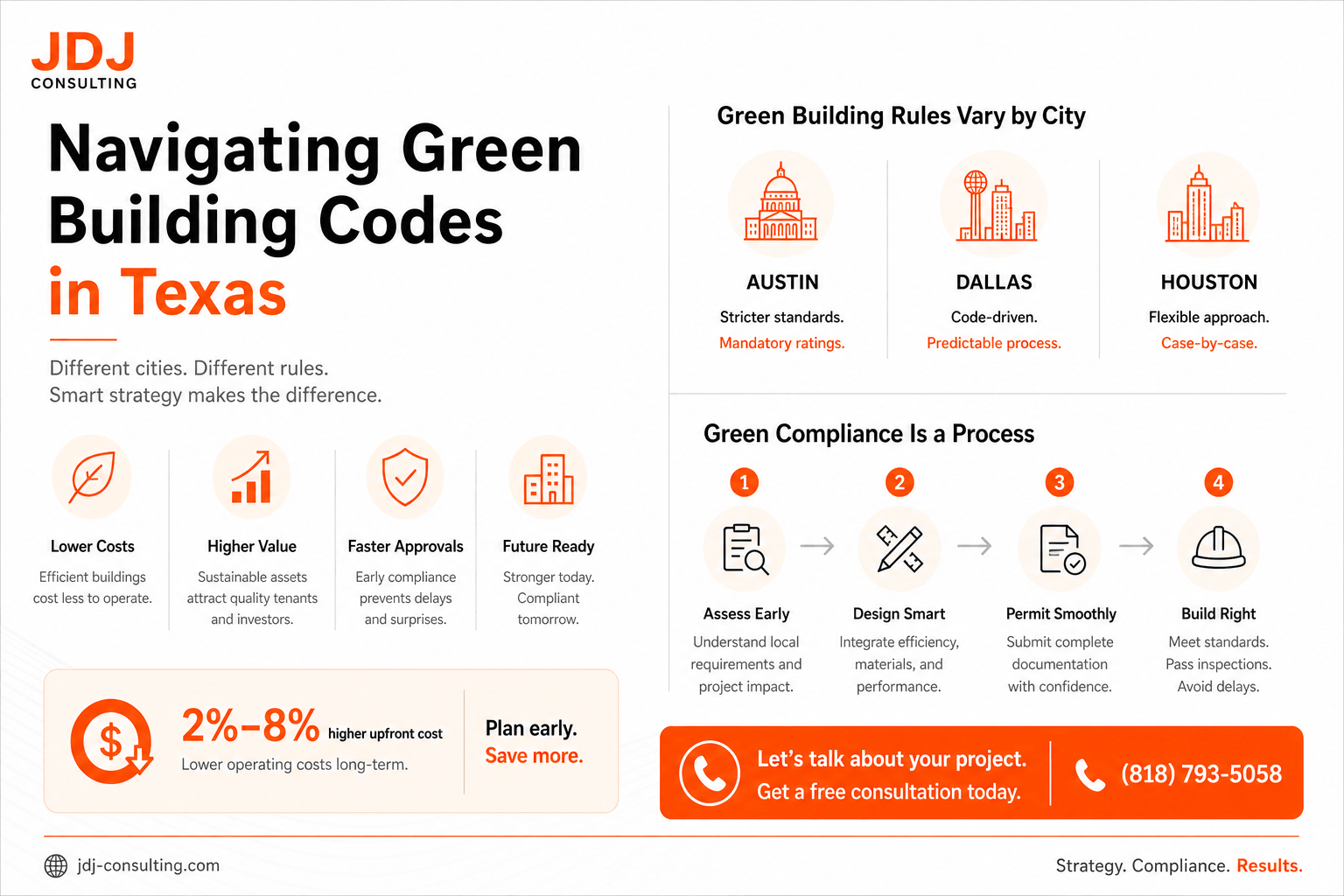
FAQs About Green Building Code
What is the Green Building Code in Texas?
Green building code in Texas refers to a combination of state-level energy standards and city-specific sustainability regulations. There is no single statewide green code. Instead, cities like Austin, Dallas, and Houston implement their own requirements based on frameworks such as the International Energy Conservation Code.
These codes focus on improving energy efficiency, reducing water usage, and promoting sustainable materials. Developers must comply with both state and local rules, depending on the project location. For example, Austin enforces a structured rating system, while Houston applies more flexible guidelines.
Understanding this decentralized system is critical. Developers should review local regulations early in the planning process. This helps avoid delays and ensures compliance during permitting and construction.
Is green building mandatory in Texas?
Green building is partially mandatory in Texas, depending on the city and project type. At the state level, energy efficiency standards are required for most new construction. However, broader sustainability requirements vary by municipality.
In Austin, many developments must comply with the Austin Energy Green Building program. This makes sustainability a mandatory part of the approval process. In Dallas, the Green Construction Code sets clear performance standards for new buildings.
Houston offers more flexibility. While green building is encouraged, it is not always required for private projects. However, city-funded developments must meet LEED standards.
Developers should always verify local requirements. Assuming that green building is optional can lead to compliance issues and delays.
What is the Austin Energy Green Building Program?
The Austin Energy Green Building (AEGB) program is one of the most comprehensive sustainability systems in Texas. It applies to both residential and commercial developments and uses a rating system to measure performance.
Projects are evaluated based on energy use, water efficiency, materials, and indoor air quality. Developers must achieve a minimum rating to receive approval. Higher ratings often qualify for incentives.
The program is integrated into the permitting process. This means compliance is reviewed alongside standard building requirements. Documentation and inspections are required at multiple stages.
For developers, AEGB requires early planning. Design decisions must align with program criteria from the start. This ensures a smoother approval process and reduces the risk of delays.
How does LEED apply in Texas projects?
LEED, developed by the U.S. Green Building Council, is a widely recognized certification system. In Texas, it is often used as a benchmark for sustainability, especially in large or public projects.
While LEED is not always mandatory, some cities require it for government-funded buildings. Houston, for example, uses LEED standards for certain projects. Private developers may also pursue certification to increase market value.
LEED evaluates buildings across several categories:
Energy efficiency
Water usage
Materials and resources
Indoor environmental quality
Achieving certification can improve tenant appeal and long-term performance. However, it also requires additional documentation and planning. Developers should weigh the benefits against the costs when deciding to pursue LEED.
What permits are needed for green buildings?
Green buildings require the same base permits as traditional construction, along with additional documentation for sustainability compliance. These permits typically include building permits, mechanical permits, and environmental approvals.
The key difference lies in the level of detail required. Developers must provide documentation showing how the project meets energy and sustainability standards. This may include:
Energy modeling reports
Water efficiency calculations
Material specifications
In cities like Austin and Dallas, these requirements are integrated into the permitting process. Inspectors review compliance during both plan review and construction.
Submitting complete and accurate documentation is critical. Missing information can delay approvals and lead to resubmissions.
How much does green compliance cost?
The cost of green building compliance varies based on project size, location, and performance level. On average, developers can expect an increase of 2% to 8% in construction costs.
Upfront costs include design upgrades, energy-efficient systems, and certification fees. However, these costs are often offset by long-term savings.
Benefits include:
Lower utility expenses
Reduced maintenance costs
Higher property value
Developers should evaluate both short-term and long-term impacts. Investing in the right features can improve overall project returns. Poor planning, however, can lead to unnecessary expenses.
Does green building speed up approvals?
Green building can sometimes speed up approvals, but this depends on the city and project type. Some municipalities offer incentives or expedited processes for sustainable projects.
For example, projects that exceed minimum requirements may receive faster reviews or reduced fees. However, this is not guaranteed.
In many cases, green compliance adds additional review steps. Inspectors must verify documentation and performance standards. This can extend timelines if not managed properly.
The key factor is preparation. Well-documented projects with clear compliance strategies often move through the approval process more efficiently.
What are common compliance mistakes?
Developers often encounter issues due to poor planning or lack of coordination. One of the most common mistakes is treating green building as a late-stage requirement. This leads to design conflicts and delays.
Other frequent mistakes include:
Incomplete permit submissions
Misalignment between design and code requirements
Underestimating costs
Poor communication between teams
These issues can result in resubmissions, increased costs, and extended timelines. The best way to avoid them is early coordination and expert guidance.
How long does approval take in Texas?
Approval timelines in Texas vary by city and project complexity. On average, developers can expect the process to take 8 to 16 weeks.
This includes:
Initial plan review
Revisions and resubmissions
Final approval
Green building requirements can add additional time, especially if documentation is incomplete. Cities like Austin may take longer due to stricter standards.
Developers should plan for potential delays. Building extra time into the schedule helps manage risk and avoid financial impacts.
Are incentives available for green buildings?
Yes, many Texas cities offer incentives for sustainable development. These incentives are designed to encourage higher performance and reduce environmental impact.
Common incentives include:
Tax credits
Utility rebates
Expedited permitting
Austin, for example, provides incentives through its AEGB program. Other cities may offer financial or procedural benefits for projects that exceed minimum standards.
Developers should research available programs early. Taking advantage of incentives can improve project feasibility and return on investment.
Can small projects benefit from green codes?
Small projects can benefit significantly from green building practices. While compliance requirements may be less complex, the advantages remain strong.
Energy-efficient systems reduce operating costs. This is especially important for smaller developments with tighter budgets. Sustainable features can also improve marketability.
Even when not required, adopting green practices can provide long-term value. Developers should consider these benefits when planning smaller projects.
What role do consultants play?
Consultants play a key role in navigating green building requirements. They provide expertise in design, permitting, and compliance. This helps developers avoid common pitfalls.
Their responsibilities often include:
Coordinating with design teams
Preparing documentation
Managing permit submissions
Consultants also help align sustainability goals with project budgets. This ensures that investments deliver measurable returns.
For complex projects, their involvement can significantly reduce risk and improve efficiency.