
Table of Contents
The real estate market in 2025 feels different. It is no longer driven by rapid growth or easy financing. Instead, it is shaped by careful planning and informed decisions. Over the past few years, developers faced rising interest rates, high construction costs, and slower approvals. As a result, many projects were delayed or redesigned. Now, the market is settling. However, it is not becoming easier. It is becoming more structured.
In this environment, success depends on how well a project is planned before construction even begins.
Today, developers must focus on three key areas:
Land use strategy
Entitlement approvals
Permitting timelines
These are no longer just early steps. They define whether a project moves forward or stalls.
For example, a strong project idea is not enough anymore. If zoning does not allow it, or approvals take too long, the entire investment can be at risk. Because of this, early-stage planning has become more valuable than ever.
At the same time, cities are tightening regulations. Community involvement is also increasing. This means projects must align not only with market demand but also with local rules and expectations.
Here is a simple comparison of how the development approach has changed:
| Factor | Past Approach | 2025 Approach |
|---|---|---|
| Project Planning | After land purchase | Before land purchase |
| Entitlements | Basic requirement | Strategic advantage |
| Permitting | Routine process | Critical timeline factor |
| Risk Management | Reactive | Proactive |
As shown above, developers are now shifting from reactive decisions to proactive planning.
Another important shift is how time is viewed. In the past, delays were frustrating but manageable. In 2025, delays directly affect costs, financing, and returns. Because of this, every step must be clearly planned from the start.
This is where professional guidance becomes important. Developers, architects, and investors are increasingly relying on experts who understand city processes, zoning rules, and approval pathways.
In simple terms, 2025 is not about building faster. It is about building smarter.
2025 Real Estate Market Overview (Developer-Focused)
The real estate market in 2025 is steady but cautious. Growth is still happening, but it is more controlled. Developers are taking fewer risks and focusing on projects that are well-supported by data and approvals.
One of the biggest changes is how capital is being used. Financing is still available, but lenders are more selective. They prefer projects that show clear feasibility and minimal regulatory risk.
Because of this, early planning has become a key factor in securing funding.
Market Stabilization After Volatility
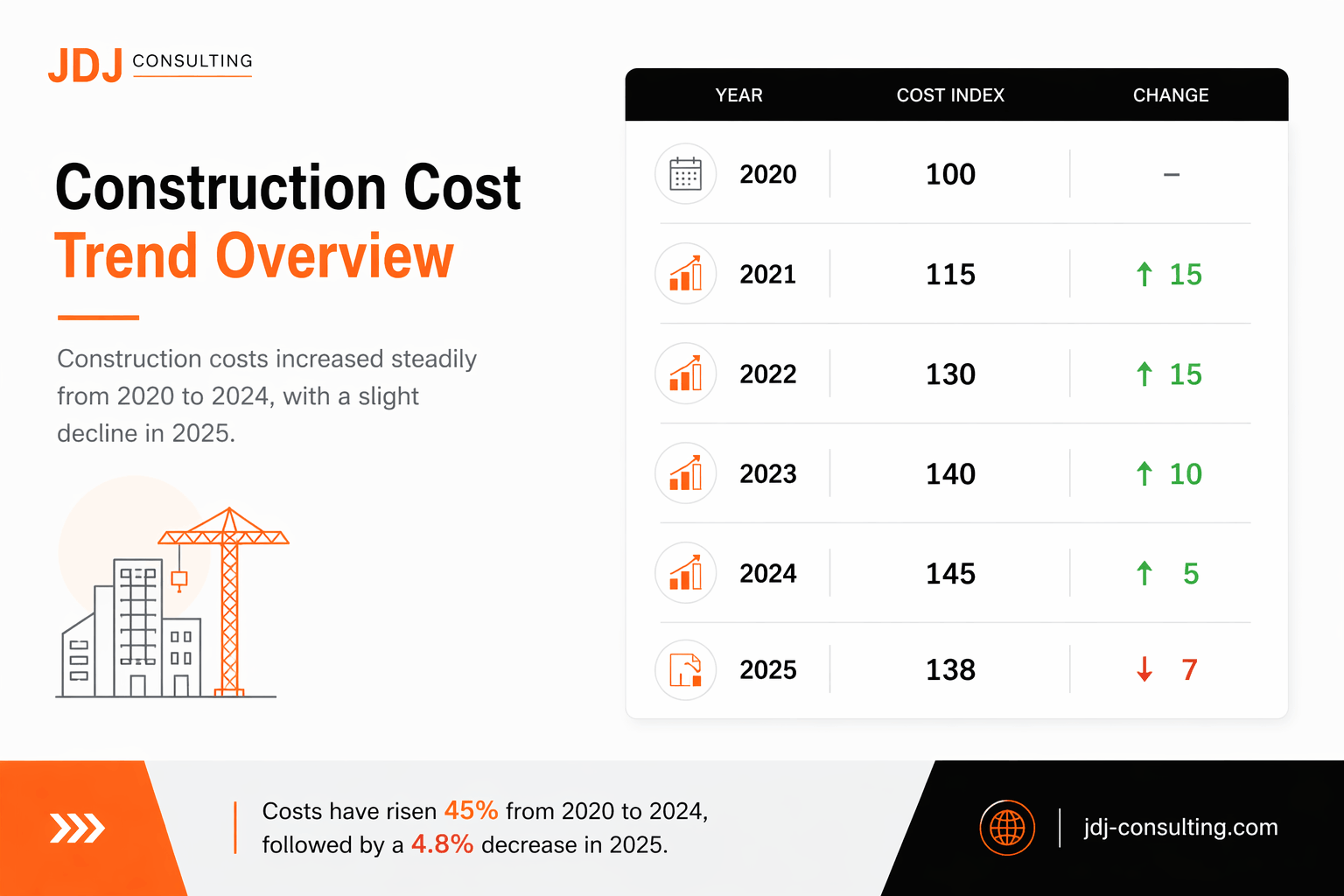
After years of uncertainty, the market is beginning to stabilize. Interest rates are no longer rising sharply. Construction costs are also showing signs of leveling out. However, this does not mean conditions are easy. Instead, it means developers can plan with more clarity.
Projects that were paused in earlier years are now being reconsidered. At the same time, new projects are being evaluated more carefully.
Supply Constraints and Project Delays
Despite stabilization, supply remains tight in many markets. This is not only due to demand. It is also because of delays in development.
Common causes of delays include:
Long permitting timelines
Complex zoning requirements
Labor shortages
Rising compliance standards
These factors slow down project delivery. As a result, fewer units reach the market on time.
Here is a quick look at how delays impact development:
| Issue | Impact on Project |
|---|---|
| Permit delays | Extended timelines |
| Zoning conflicts | Redesign costs |
| Labor shortages | Slower construction |
| Approval backlogs | Financing pressure |
Because of these challenges, developers must plan for longer timelines and higher holding costs.
Why Entitlements Are Now a Critical Advantage
In today’s market, entitlements are more than a requirement. They are a competitive advantage. A project with approved entitlements is far more valuable than one without them. It reduces uncertainty and makes financing easier to secure. On the other hand, projects without clear entitlement pathways often face delays or rejection.
For this reason, developers are now focusing on the entitlement strategy at the very beginning. They are asking questions such as:
What does zoning allow on this site?
Are changes or approvals required?
How long will the process take?
By answering these questions early, developers can avoid costly surprises later. Overall, the 2025 market rewards preparation. It favors projects that are well-planned, well-documented, and aligned with local regulations.
Land Use and Entitlement Trends in 2025
Land use and entitlements are now at the center of real estate development. They shape what can be built, how long it takes, and how profitable a project can be. In 2025, these processes are becoming more detailed and more important.
Zoning Challenges Are Increasing Across Major Cities
Cities such as Austin, Miami, and Los Angeles each have their own zoning rules. These rules are becoming stricter in many areas.
For example:
Density limits are being reviewed
Height restrictions are enforced more closely
Land use categories are more defined
Because of this, developers cannot assume that a site will support their project vision. Every project must be checked against local zoning codes.
If zoning does not align, changes may be required. These can include:
Zone changes
Variances
Conditional use permits
Each of these adds time and complexity.
General Plan Amendments and Zone Changes on the Rise
As cities grow, many projects require adjustments to existing plans. This is why general plan amendments and zone changes are becoming more common.
Developers are seeking flexibility to:
Increase density
Allow mixed-use development
Adapt to market demand
However, these changes require approvals from multiple departments. They may also involve public hearings. Because of this, the process must be carefully managed.
Entitlement Timelines Are Getting Longer
One of the biggest challenges in 2025 is time.
Entitlement approvals now take longer than before. This is due to:
Increased review requirements
Environmental considerations
Community feedback
In some cases, approvals can take months or even years. This creates pressure on project budgets and timelines. It also increases risk for developers.
Strategic Entitlement Planning as a Competitive Edge
To manage these challenges, developers are focusing on strategy.
Instead of reacting to issues, they are planning ahead. This includes:
Studying zoning before acquisition
Identifying approval requirements early
Coordinating with city departments
This approach reduces delays and improves project outcomes. In simple terms, entitlement planning is no longer optional. It is a key part of development success. Projects that invest in this stage early are more likely to move forward smoothly. Those who skip it often face delays, redesigns, or financial losses.
Permitting Trends and Approval Bottlenecks
Permitting has become one of the most time-sensitive parts of development in 2025. It is no longer a simple step that follows design. Instead, it plays a major role in project timelines and overall cost.
Many developers now see permitting as a key risk factor. If approvals take longer than expected, the entire schedule can shift. This affects financing, construction, and delivery.
Because of this, developers are paying closer attention to how permits are handled from the start.

Why Permitting Delays Are Slowing Projects
Permitting delays are common across major cities. Even well-prepared projects can face long wait times.
Some of the main reasons include:
High volume of applications
Limited staff in city departments
Multiple layers of review
Changes in building codes
These factors create backlogs. As a result, projects often sit in review longer than planned. In addition, different departments may review the same project. This adds more time and coordination.
Here is how delays affect development:
| Permitting Issue | Result for Developers |
|---|---|
| Long review times | Project timeline extends |
| Multiple corrections | Higher design costs |
| Agency coordination gaps | Confusion and delays |
| Code compliance issues | Rejections or revisions |
Because of these challenges, developers must plan for delays instead of assuming quick approvals.
Common Issues During Plan Review
Plan review is where many projects slow down. Even small errors can lead to major delays.
Some common issues include:
Missing documents
Incomplete drawings
Code compliance gaps
Conflicting information in plans
When these issues appear, the city sends comments. The design team must then revise and resubmit. This cycle can repeat several times. Each round adds more time to the project. To avoid this, developers need clear and accurate submissions from the beginning.
Role of Permit Expediting in 2025
Permit expediting has become more important in today’s market. It helps reduce delays and keeps projects moving.
Expediting teams handle tasks such as:
Submitting applications correctly
Tracking progress with departments
Responding to plan check comments
Coordinating between agencies
This saves time for developers and design teams. More importantly, it reduces the number of revision cycles. When submissions are handled properly, approvals move faster.
How Developers Can Stay on Schedule
Staying on schedule requires planning and coordination.
Here are a few simple strategies:
Start permitting discussions early
Submit complete and accurate plans
Track application progress regularly
Respond to comments quickly
When these steps are followed, delays can be reduced. In 2025, permitting is not just a process. It is a strategy. Developers who manage it well gain a clear advantage.
Feasibility and Highest-and-Best-Use in Today’s Market
Before starting any project, developers must answer one key question: Is this project worth building? This is where feasibility and highest-and-best-use studies come in.
In 2025, these studies are more important than ever. Rising costs and tighter regulations mean that mistakes can be expensive. A strong feasibility study helps reduce that risk.
Why Feasibility Studies Matter More in 2025
The market is no longer forgiving. Poor planning can lead to major losses.
Feasibility studies help developers understand:
What can be built on a site
How much will it cost
What returns to expect
Without this information, decisions are based on assumptions. In today’s market, that approach is risky.
Key Factors in Highest-and-Best-Use Analysis
Highest-and-best-use means finding the most profitable and practical use of a property.
This analysis looks at several factors:
Zoning regulations
Market demand
Site conditions
Financial performance
All of these must align for a project to succeed. For example, a site may allow high-density housing. However, if the market demand is low, the project may not perform well. On the other hand, a smaller project that matches demand may be more profitable.
Common Mistakes Developers Make Without Feasibility Studies
Skipping feasibility analysis can lead to serious issues.
Some common mistakes include:
Buying land without checking zoning
Overestimating rental or sales values
Ignoring construction costs
Underestimating approval timelines
These mistakes often result in redesigns or delays. In some cases, projects may not move forward at all.
Aligning Market Demand with City Regulations
A successful project must meet both market and regulatory requirements.
This means:
Building what people need
Staying within zoning rules
Planning for approval timelines
Balancing these factors is not always easy. However, it is necessary. Developers who take time to align these elements early often see better results. In simple terms, feasibility is about clarity. It helps developers move forward with confidence instead of guesswork.
Due Diligence in a Complex Regulatory Environment
Due diligence is the foundation of any real estate project. It helps developers understand what they are buying and what risks may exist. In 2025, due diligence has become more detailed. Regulations are stricter, and hidden issues are more common. Because of this, early review is critical.
What Due Diligence Includes in 2025
Modern due diligence covers several key areas:
Zoning verification
Property records
Permit history
Land restrictions
Each of these provides important information about the site. For example, zoning tells you what can be built. Permit history shows past issues. Property records reveal legal details. Together, they create a clear picture of the site.
Hidden Risks in Real Estate Development
Not all risks are visible at first.
Some common hidden issues include:
Easements that limit development
Unresolved code violations
Environmental restrictions
Title conflicts
If these are not identified early, they can delay or stop a project.
Here is a simple breakdown:
| Risk Type | Potential Impact |
|---|---|
| Zoning mismatch | Project redesign |
| Easements | Reduced buildable area |
| Code violations | Approval delays |
| Title issues | Legal complications |
These risks highlight the importance of thorough review.
How Early Due Diligence Saves Time and Money
The earlier due diligence is completed, the better.
Early review helps developers:
Avoid unsuitable properties
Plan projects correctly
Reduce unexpected costs
It also supports better decision-making. Instead of reacting to problems later, developers can address them upfront. This leads to smoother approvals and more predictable timelines. In today’s market, due diligence is not optional. It is a necessary step that protects both time and investment.
Agency Coordination and Stakeholder Engagement Trends
In 2025, approvals are not only about meeting technical requirements. They also depend on communication. Projects often involve multiple departments, agencies, and community groups. Because of this, coordination has become a key part of development. If communication is weak, delays increase. If it is strong, projects move forward more smoothly.
Why Community and Agency Support Matters More Than Ever
Cities are placing more focus on public input. Communities want to understand how projects will affect them.
As a result, developers must consider:
Neighborhood concerns
Environmental impact
Traffic and infrastructure
If these issues are ignored, projects may face opposition. This can lead to delays or even rejection. On the other hand, early engagement can build support and reduce resistance.
Navigating City Departments and Approval Bodies
Most projects require approvals from several departments. Each has its own process and timeline.
Common departments include:
Planning department
Building and safety
Public works
Environmental agencies
Each department reviews a different part of the project. Coordination between them is essential. If information is inconsistent, approvals can slow down.
Effective Stakeholder Outreach Strategies
Strong outreach helps keep projects on track.
Some effective approaches include:
Engaging agencies early in the process
Providing clear and complete project details
Addressing concerns before formal reviews
Maintaining regular communication
These steps help avoid surprises during approvals. In simple terms, good coordination saves time. It also builds trust, which is important for long-term success.
Residential Development Trends (2025)
Residential development continues to evolve in 2025. Demand is still strong, but it is changing in form and location. Developers are adjusting their strategies to match these shifts.
Shift Toward Multifamily and Build-to-Rent
Multifamily housing remains a major focus. Many people prefer renting due to affordability challenges. At the same time, build-to-rent communities are growing. These offer single-family homes designed for renters.
This trend is driven by:
High home prices
Flexible living preferences
Population growth in key markets
As a result, developers are exploring new housing formats.
Affordable Housing and Policy Pressure
Affordability is a major issue in many cities. Governments are responding with new policies.
These may include:
Inclusionary zoning requirements
Density bonuses for affordable units
Incentives for mixed-income housing
While these policies create opportunities, they also add complexity. Developers must balance financial returns with regulatory requirements.
Urban Infill vs Suburban Expansion
Land availability is shaping where projects are built. In urban areas, space is limited. This leads to infill development, where existing sites are reused or redeveloped. In suburban areas, more land is available. This supports larger projects and new communities.
Here is a simple comparison:
| Development Type | Key Advantage | Key Challenge |
|---|---|---|
| Urban Infill | Prime location | Limited space |
| Suburban Expansion | More land availability | Infrastructure needs |
Both approaches have value. The right choice depends on market demand and site conditions.
Commercial Development Trends (2025)
Commercial real estate is also shifting. Some sectors are slowing, while others are growing. Developers are adapting by focusing on flexible and mixed-use projects.
Office-to-Residential Conversions
Office space demand has changed. Many buildings now have higher vacancy rates. Because of this, developers are converting office buildings into residential units.
This approach offers several benefits:
Reuse of existing structures
Faster development timelines
Support for housing demand
However, conversions require careful planning. Not all buildings are suitable for this change.
Industrial and Logistics Growth
Industrial real estate remains strong. Demand for warehouses and distribution centers continues to grow.
This is driven by:
E-commerce expansion
Supply chain adjustments
Need for faster delivery systems
As a result, industrial development is one of the most active sectors in 2025.
Mixed-Use Developments Leading the Market
Mixed-use projects are becoming more common. These combine residential, retail, and office spaces in one location.
They offer several advantages:
Better land use efficiency
Increased convenience for residents
Stronger long-term value
Cities also support mixed-use projects because they create more active communities. In today’s market, flexibility is key. Projects that serve multiple purposes are often more resilient.
Construction and Development Challenges in 2025
Even with strong demand, development is not without challenges. Costs, regulations, and financing all affect project outcomes. Understanding these challenges helps developers plan better.
Rising Construction Costs
Construction costs remain high, even though they are stabilizing.
Key cost drivers include:
Labor shortages
Material pricing
Transportation expenses
These costs affect project budgets and feasibility. Developers must plan carefully to maintain profitability.
Financing and Capital Constraints
Financing is available, but lenders are cautious. They prefer projects with clear approvals and strong feasibility.
This means:
More detailed project reviews
Higher expectations for documentation
Slower funding processes
Projects with uncertainty may struggle to secure financing.
Regulatory Complexity Slowing Development
Regulations continue to grow more complex.
Developers must deal with:
Zoning requirements
Environmental reviews
Building codes
Each of these adds time and effort.
Here is a quick summary:
| Challenge | Impact on Development |
|---|---|
| High costs | Reduced profit margins |
| Tight financing | Slower project starts |
| Complex regulations | Longer approval timelines |
These challenges highlight the need for strong planning and expert support.
Regional Insights: Austin, Miami, and Los Angeles
Real estate trends can vary by location. While national patterns provide direction, local regulations and demand shape actual development decisions. For developers working in Austin, Miami, and Los Angeles, understanding local conditions is essential.
Austin, Texas
Austin continues to grow at a steady pace. Population growth and business expansion are driving demand for both residential and mixed-use projects.
However, development is not always straightforward.
Key factors in Austin include:
Zoning updates to manage rapid growth
Increased demand for density in urban areas
Infrastructure planning challenges
Because of this, entitlement strategy is important. Developers must align projects with city plans and growth policies.
Miami, Florida
Miami remains a strong market, especially for multifamily and mixed-use developments.
Demand is supported by:
Migration from other states
Strong rental market
Continued investment interest
At the same time, regulations play a major role.
Developers must consider:
Coastal and environmental regulations
Flood zone requirements
Building code standards
Projects that address these factors early tend to move faster through approvals.
Los Angeles, California
Los Angeles is one of the most complex markets for development. It offers strong demand but also strict regulations.
Key challenges include:
Detailed zoning codes
Long entitlement timelines
Community involvement in approvals
Because of this, planning must be detailed and proactive.
Here is a quick comparison of the three markets:
| City | Key Opportunity | Key Challenge |
|---|---|---|
| Austin | Rapid growth | Zoning adjustments |
| Miami | Strong demand | Environmental rules |
| Los Angeles | High value projects | Complex approvals |
Understanding these differences helps developers choose the right approach for each market.
Opportunities for Developers in 2025
Despite challenges, there are strong opportunities in 2025. The key is to focus on projects that align with both market demand and city requirements.
Value-Add and Redevelopment Projects
Many properties are underutilized. These sites offer opportunities for redevelopment.
Examples include:
Older commercial buildings
Low-density properties in high-demand areas
Vacant or unused land
With the right planning, these sites can deliver strong returns.
Adaptive Reuse Projects
Adaptive reuse is becoming more common. It involves converting existing buildings into new uses.
For example:
Office to residential conversions
Retail to mixed-use developments
This approach can reduce construction time and cost.
However, it requires careful review of zoning and building codes.
Strategic Land Acquisition
In 2025, buying land is not just about location. It is about potential.
Developers are now asking:
What can be built here?
How long will approvals take?
Is the project financially viable?
Land with clear entitlement potential is more valuable than land with uncertainty.
How JDJ Consulting Supports Real Estate Development
In a complex market, developers need support at every stage. This is where JDJ Consulting plays a key role. Their services are designed to reduce risk, save time, and improve project outcomes.
Land-Use & Entitlement Strategy
JDJ helps developers understand what is possible on a site.
This includes:
Zoning analysis
Approval strategies
Planning for entitlement processes
With a clear strategy, projects move forward with fewer delays.
Permit Expediting
Permitting can slow down even strong projects. JDJ manages this process to keep things on track.
Their work includes:
Handling submissions
Coordinating with departments
Resolving plan check comments
This reduces approval time and keeps schedules intact.
Feasibility & Highest-and-Best-Use Studies
Before investing, developers need clarity. JDJ provides detailed studies that help answer key questions:
What should be built?
Is the project financially viable?
What risks are involved?
This supports better decision-making from the start.
Due Diligence Consulting
JDJ reviews all critical details before development begins.
This includes:
Property records
Zoning conditions
Permit history
Early review helps avoid costly surprises later.
Agency Liaison & Stakeholder Outreach
Approvals often depend on communication.
JDJ works with:
City departments
Agencies
Community stakeholders
This helps build support and reduce delays.
Step-by-Step Development Process in 2025
A clear process helps developers manage risk and stay on schedule.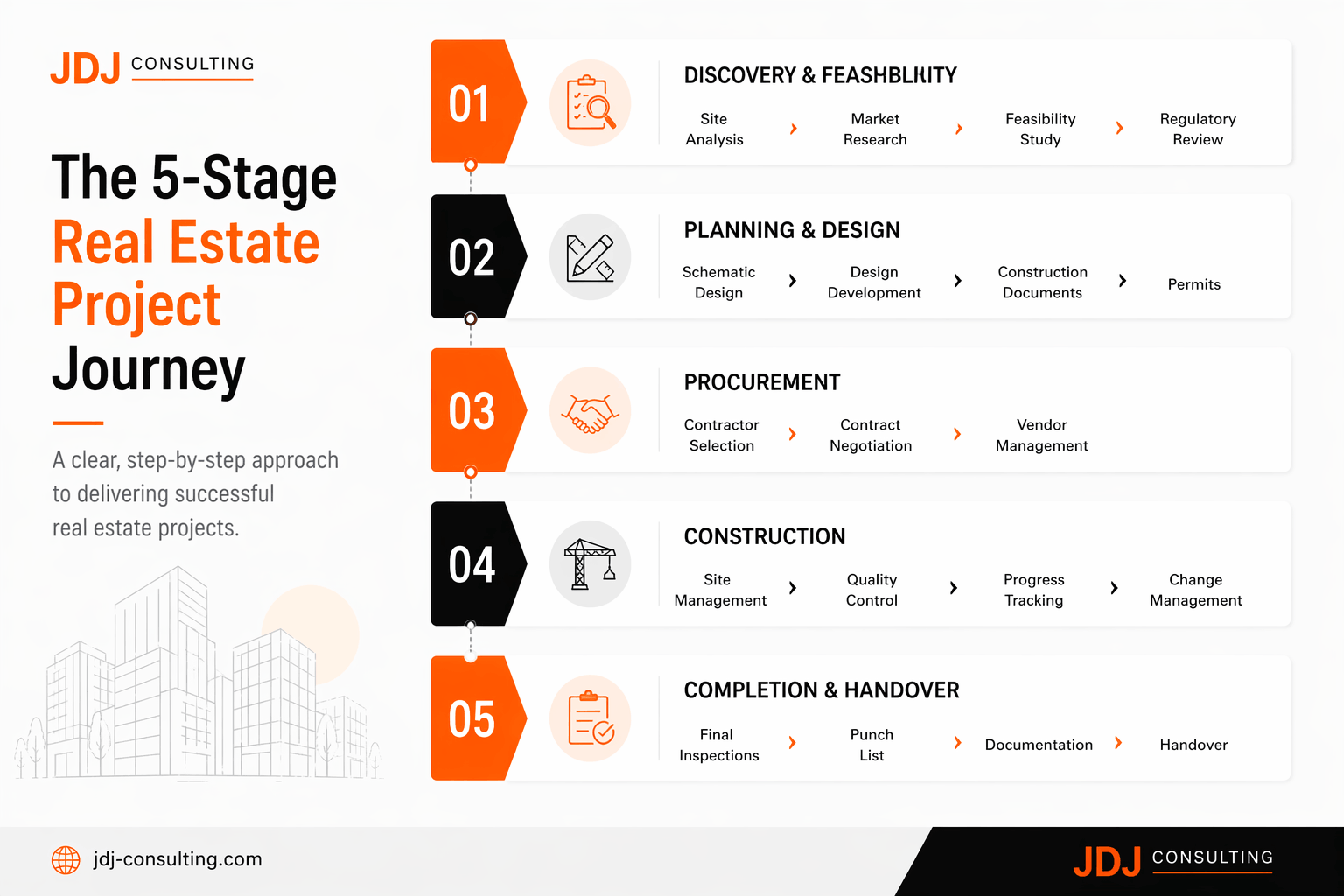
1st Step: Site Selection and Due Diligence
Review zoning and property details
Identify risks early
2nd Step: Feasibility Analysis
Study market demand
Evaluate financial performance
3rd Step: Entitlements and Approvals
Secure zoning approvals
Address city requirements
4th Step: Permitting and Plan Checks
Submit plans
Respond to comments
5th Step: Construction and Delivery
Begin construction
Complete the project and deliver to the market
Each step builds on the previous one. Skipping steps often leads to delays.
Key Strategies to Succeed in 2025 Real Estate Development
Success in 2025 depends on preparation and timing.
Here are some practical strategies:
Start entitlement planning early
Invest in feasibility studies
Keep permitting organized and tracked
Engage with agencies and communities early
Work with experienced consultants
These steps help reduce uncertainty and improve outcomes.
Conclusion: Development Success in a Complex Market
The real estate market in 2025 is steady but demanding. Projects require more planning, more coordination, and more clarity than before. Quick decisions are no longer enough. Instead, success comes from careful preparation.
Developers who focus on land use, entitlements, and permitting are better positioned to move forward without delays.
At the same time, the right support can make a major difference. With proper guidance, challenges can be managed, and opportunities can be fully realized. In simple terms, 2025 is about building with purpose.
Plan Your Next Project with Confidence
If you are planning a project in Austin, Miami, or Los Angeles, the right strategy matters from day one.
JDJ Consulting provides support in:
Land use and entitlement strategy
Permit expediting
Feasibility studies
Due diligence
Agency coordination
Get expert guidance to move your project forward with clarity and confidence.
If you’d like to talk through your project, you can take the next step in a way that works best for you:
- Fill out our pre-consultation form
- Call us directly at (818) 793-5058
- Or email us at sales@jdj-consulting.com
FAQs About Real Estate Market Report (2025 Insights)
What is a real estate market report and why is it important in 2025?
A real estate market report explains current trends, risks, and opportunities in the property market. In 2025, it helps developers make informed decisions before investing.
It highlights pricing, demand, and supply trends
It shows how regulations affect development
It helps reduce uncertainty in planning
By using market data, developers can plan projects that align with both demand and city requirements.
Why are land use and entitlements critical for real estate development?
Land use and entitlements determine what you can legally build on a property. Without proper approvals, a project cannot move forward.
They help developers:
Understand zoning restrictions
Secure necessary approvals
Avoid redesigns and delays
In 2025, these steps are more complex, so early planning is essential to keep projects on track.
What is the difference between zoning and entitlements?
Zoning defines what is allowed on a property, while entitlements are approvals that allow a specific project to proceed.
Zoning sets the rules (use, height, density)
Entitlements grant permission for your project
Both work together. Even if zoning allows a project, entitlements may still be required for final approval.
How long do entitlements typically take in 2025?
Entitlement timelines vary by city and project type. In many cases, they can take several months to over a year.
Factors that affect timing include:
Project complexity
City review processes
Community feedback
Planning early and working with experienced consultants can help reduce delays.
What is permit expediting and how does it help?
Permit expediting is the process of managing and speeding up permit approvals.
It involves:
Submitting complete applications
Coordinating with city departments
Responding to plan check comments
This helps reduce delays and keeps projects moving forward, especially in cities with heavy backlogs.
Why are permitting delays so common in real estate projects?
Permitting delays are often caused by high application volumes and strict review standards.
Common reasons include:
Incomplete submissions
Code compliance issues
Multiple department reviews
Because of this, developers must plan for longer timelines and ensure accuracy in their submissions.
What is a feasibility study in real estate development?
A feasibility study evaluates whether a project is financially and legally viable.
It typically includes:
Market demand analysis
Cost estimates
Zoning review
This helps developers decide if a project is worth pursuing before making large investments.
What does highest-and-best-use mean in real estate?
Highest-and-best-use refers to the most profitable and legally allowed use of a property.
It considers:
Zoning regulations
Market demand
Financial returns
The goal is to identify a project that offers the best value while meeting all legal requirements.
Why is due diligence important before buying land?
Due diligence helps identify risks before purchasing a property.
It includes reviewing:
Zoning details
Property records
Permit history
This process helps avoid unexpected issues that could delay or stop a project later.
What are common risks found during due diligence?
Some risks are not obvious at first but can affect development.
These include:
Easements that limit construction
Unresolved code violations
Title or ownership issues
Identifying these early helps developers make better decisions and avoid costly problems.
How does stakeholder engagement impact project approvals?
Stakeholder engagement helps build support for a project.
It involves:
Communicating with city departments
Addressing community concerns
Providing clear project information
Strong engagement reduces opposition and improves the chances of faster approvals.
What are the biggest real estate development challenges in 2025?
Developers are facing several challenges in 2025.
Rising construction costs
Longer approval timelines
Tight financing conditions
These factors make planning more important. Projects must be well-prepared to succeed in this environment.
How are construction costs affecting real estate projects?
Construction costs remain high, which impacts project budgets.
This affects developers by:
Reducing profit margins
Increasing financial risk
Limiting project scale
Careful budgeting and feasibility analysis help manage these challenges.
What types of real estate projects are growing in 2025?
Several project types are gaining attention in 2025.
Multifamily housing
Build-to-rent communities
Mixed-use developments
These projects align with current market demand and offer flexibility for developers.
What is adaptive reuse in real estate development?
Adaptive reuse involves converting existing buildings into new uses.
Examples include:
Office buildings converted into housing
Retail spaces turned into mixed-use developments
This approach can save time and reduce construction costs, but it requires careful planning.
Why is zoning becoming more complex in major cities?
Cities are updating zoning rules to manage growth and community needs.
This leads to:
More detailed regulations
Increased review requirements
Greater public involvement
As a result, developers must spend more time understanding and planning around these rules.
How can developers reduce project delays in 2025?
Reducing delays requires early planning and coordination.
Some effective steps include:
Starting entitlement work early
Submitting accurate plans
Tracking approvals closely
Working with experienced consultants also helps keep projects on schedule.
What role do consultants play in real estate development?
Consultants help manage complex processes such as zoning, permitting, and feasibility.
They support developers by:
Providing expert guidance
Coordinating with agencies
Reducing risks and delays
This allows developers to focus on project execution.
Why are mixed-use developments popular in 2025?
Mixed-use projects combine residential, retail, and office spaces.
They are popular because they:
Maximize land use
Create active communities
Offer long-term value
Cities often support these developments due to their economic and social benefits.
How can I get started with a real estate development project?
Getting started requires a clear plan and proper research.
Begin with:
Site selection and due diligence
Feasibility analysis
Understanding zoning requirements
Once these steps are complete, you can move into entitlements and permitting with more confidence.