Table of Contents
Whether you’re renovating your kitchen, building an addition, developing a commercial property, or managing several construction projects, you’ll likely need a building permit before work can begin.
For many people, permits feel like an annoying extra step. They add paperwork, reviews, and waiting periods before construction can start. However, permits are an important part of the building process, especially in a fast-growing city like Austin.
Austin has one of the more complex permitting systems in Texas. The city continues to grow rapidly, and new developments are happening across residential and commercial areas. To manage that growth, Austin relies on detailed zoning regulations, development standards, and building codes.
Because of these requirements, even relatively simple projects can involve reviews from multiple departments. Depending on the project, plans may be reviewed by building, zoning, electrical, plumbing, mechanical, fire, transportation, and environmental staff.
That’s why understanding the permit process before you start a project can save a significant amount of time and money. A mistake during the application process can delay construction, increase costs, and create unnecessary complications.
This guide explains how Austin’s building permit system works in 2026, including when permits are required, the different permit types, expected costs, review timelines, and ways to avoid common delays.
Key Takeaways
Most construction projects in Austin require permits before work begins.
Permit approvals depend on zoning, building code compliance, and project scope.
Incomplete plans are one of the most common causes of permit delays.
The City of Austin uses the AB+C Portal for permit applications and reviews.
Professional permit expediting can help reduce delays and administrative issues.
Why Building Permits Matter in Austin
A lot of property owners view permits as government red tape. While permits can sometimes feel frustrating, they exist for a good reason. When Austin issues a building permit, the city is confirming that a project meets established safety, health, and construction standards. These requirements are based on the International Building Code (IBC) and local Austin amendments. The purpose is simple: make sure buildings are safe for the people who use them.
Permits help verify that structural work, electrical systems, plumbing installations, and mechanical equipment are installed correctly. Without inspections and permit reviews, there would be no reliable way to confirm that construction meets current safety standards. Skipping a required permit can create serious problems.
If city officials discover unpermitted work, they can issue a stop-work order and require construction to stop immediately. Property owners may also face fines or penalties. In some situations, completed work must be removed and rebuilt to meet code requirements. The impact can continue long after construction is finished.
When a property is sold, buyers, lenders, and title companies often review permit records. Unpermitted work can delay transactions, reduce buyer confidence, and create additional costs that must be addressed before closing. In most cases, obtaining permits upfront is far less expensive than correcting permit violations later.
Do You Need a Permit?
Not every project requires a permit, but many people are surprised by how often permits are needed. In Austin, permits are generally required whenever a project affects a building’s structure, utility systems, or safety features.
Projects that usually require permits include:
New residential construction
New commercial construction
Home additions
Building expansions
Major structural modifications
Electrical panel upgrades
Installation of new circuits
Plumbing additions
Plumbing rerouting
HVAC replacements
New mechanical systems
Deck construction
Covered patios
Demolition projects
Certain fence installations
Solar panel systems
Some projects may not require permits, including:
Painting
Flooring replacement
Cabinet hardware replacement
Minor cosmetic repairs
Small detached structures below specific size limits
The important word here is “may.” Austin’s requirements can vary depending on zoning, overlay districts, environmental restrictions, and property-specific conditions. A project that is exempt in one neighborhood may require a full review somewhere else. If you’re unsure, it’s always best to check with the Development Services Department (DSD) before starting work.
Types of Building Permits in Austin
Austin divides permits into several categories based on the type of work being performed. Many projects require multiple permits rather than a single approval.
Residential Permits
The residential permits cover work involving:
Single-family homes
Duplexes
Home remodels
Home additions
Accessory dwelling units
New residential construction
Residential plan reviews typically take between 10 and 21 business days for an initial review. Some projects may qualify for Austin’s Express Permitting program, which can reduce review times to approximately five business days. While faster reviews are appealing, only certain project types qualify for Express Permitting.
Commercial Permits
The commercial permits apply to:
Office buildings
Retail stores
Restaurants
Multifamily developments
Mixed-use properties
Commercial renovations
Commercial reviews are generally more complex than residential reviews because several departments evaluate plans at the same time. Initial reviews often take between 15 and 25 business days. Larger developments frequently take longer because reviewers may request revisions, additional documents, or supplemental studies.
Projects located within overlay districts may face additional review requirements. For example, developments within portions of downtown Austin can require design-related reviews that add extra time to the approval process.
Trade Permits
Trade permits are required for specialized work performed by licensed professionals.
Electrical Permits
Electrical permits are typically required for:
Service upgrades
Panel replacements
New circuits
Significant wiring changes
Mechanical Permits
Mechanical permits cover:
HVAC systems
Ventilation systems
Heating equipment
Gas piping
Plumbing Permits
Plumbing permits apply to:
Water supply systems
Drainage systems
Waste lines
New plumbing fixtures
Many property owners assume a building permit automatically covers all trade work. In most cases, it does not. Separate permits are often required for electrical, plumbing, and mechanical work, even when a building permit has already been issued.
Site Development Permits
Site development permits are usually required when projects involve:
Grading
Drainage improvements
Parking areas
Utility infrastructure
Environmental impacts
These permits are common for commercial developments, multifamily projects, and larger residential projects. Properties located near floodplains, protected trees, or steep slopes often require additional review before approval.
Specialty Permits
Austin also issues permits for specific project types, including:
Exterior signs
Solar energy systems
Water connections
Wastewater connections
Septic systems
Subdivision applications
Each permit type follows its own review process and fee schedule.
How Permit Costs Are Calculated
Permit costs vary depending on the size, value, and complexity of a project.
Austin typically calculates fees using factors such as:
Project valuation
Square footage
Construction type
Required reviews
Trade permits involved
The city’s fee schedule is updated regularly. The FY 2025–26 fee schedule became effective on October 1, 2025.
Here are a few examples of common permit costs:
Bathroom remodel valued at $15,000: approximately $687
Kitchen remodel valued at $25,000: approximately $604 before additional review fees
Deck project valued at $12,000: approximately $626
Electrical panel upgrade: starting around $167
Plumbing permit: starting around $67
Mechanical permit: starting around $67
Commercial project costs can increase quickly.
Once site development fees, impact fees, utility fees, transportation fees, and parkland dedication requirements are added, permit-related expenses can reach tens of thousands of dollars.
One of the most common mistakes developers make is waiting until design work is complete before calculating permit costs. By that point, financing decisions may already be finalized.
Impact fees alone can significantly affect a project’s budget and profitability. For that reason, permit costs should be included during the planning and feasibility stage, not after design is finished.
The AB+C Portal: Austin’s Online Permitting System
Today, almost all permit applications in Austin are submitted through the Austin Build + Connect (AB+C) Portal. The portal acts as the city’s central platform for permit-related activities. Property owners, contractors, architects, and developers use it to submit applications, upload plans, pay fees, schedule inspections, and track permit status.
Austin introduced the AB+C Portal to replace its older AMANDA system. The newer platform is designed to make the process more organized and user-friendly. When submitting an application, users are guided through a series of questions based on the type of project. The system then requests the documents and information needed for that specific permit.
One of the biggest advantages of the portal is visibility. Instead of waiting for phone calls or emails, applicants can log in and check the status of their permit at any time.
Austin also introduced a new feature in 2026 called AI Pre-Check. This beta program, powered by Archistar, helps eligible residential applicants identify potential issues before they officially submit plans for review.
The goal is simple: catch common mistakes early and reduce the number of revision cycles later. For people who prefer face-to-face assistance, in-person services are still available at the Permitting and Development Center on Wilhelmina Delco Drive.
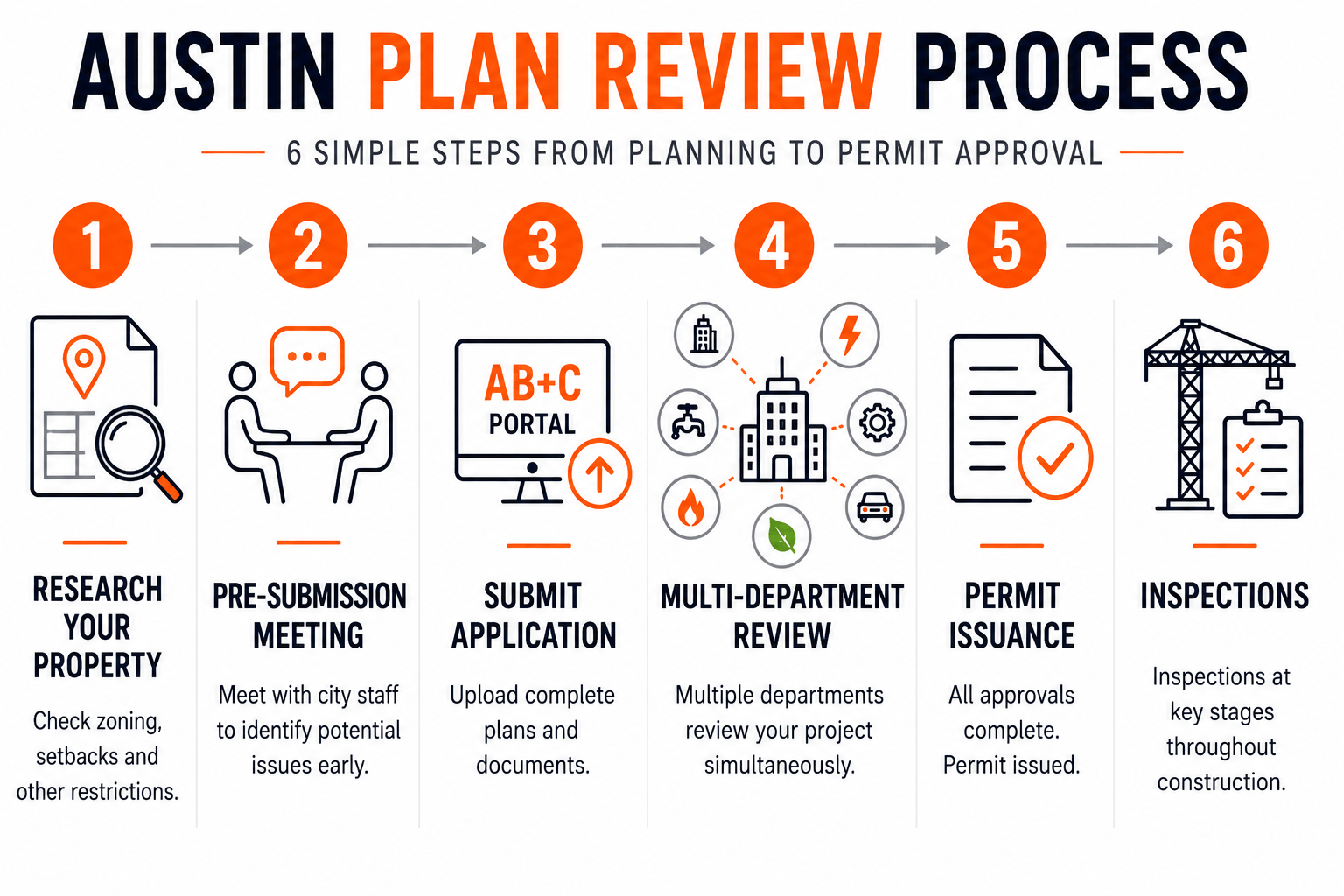
Understanding the Plan Review Process
Many permit delays happen because applicants don’t fully understand how Austin reviews construction plans. A common misconception is that someone simply reviews a set of drawings and approves them. In reality, multiple departments evaluate the project at the same time.
Depending on the scope of work, reviews may involve:
Building reviewers
Electrical reviewers
Plumbing reviewers
Mechanical reviewers
Zoning staff
Fire reviewers
Transportation staff
Environmental reviewers
Each department focuses on a different part of the project. Understanding how the review process works can help applicants avoid unnecessary delays.
Step 1: Research Before You Apply
Before submitting anything, it’s important to understand the property’s restrictions and requirements.
This includes checking:
Zoning classifications
Overlay districts
Setback requirements
Environmental restrictions
Deed restrictions
Tree protection requirements
Austin’s Property Profile tool is often the fastest way to find this information. Skipping this step can create problems later if a project conflicts with zoning regulations or development standards.
Step 2: Schedule a Pre-Submission Meeting
Austin offers optional pre-submission meetings with Development Services Department staff. These meetings can be held virtually or in person. While not required, they can be extremely helpful for larger or more complicated projects. Staff members can identify potential issues before the formal review process begins. Many experienced permit consultants recommend these meetings because they often reduce future revisions and save time.
Step 3: Submit Your Application
Once plans are ready, applicants submit everything through the AB+C Portal. One of the biggest mistakes people make is submitting incomplete information just to get into the review queue faster. This strategy usually backfires.
If important documents are missing, reviewers will immediately flag the application and request corrections. Instead of speeding things up, incomplete submissions often create additional delays. Before submitting, make sure all plans, reports, and supporting documents are complete and properly organized.
Step 4: Plan Review
After the application is accepted, it enters the review queue. Reviewers compare the submitted plans against building codes, zoning regulations, safety requirements, and other applicable standards.
If issues are found, applicants receive comments explaining what needs to be corrected. At that point, revised plans must be submitted for another review. Projects with complete and accurate submissions generally move through the process much faster than projects that require multiple rounds of revisions.
Step 5: Permit Issuance
Once all reviewing departments approve the project, the permit can be issued. For many projects, this is the milestone everyone is waiting for because construction can officially begin.
Austin also allows registered general contractors to activate certain permits in person. If a permit expires, the city may allow a one-time reactivation depending on the circumstances.
Step 6: Inspections
Receiving a permit does not mean the process is finished. Inspections are required throughout construction to verify that work matches approved plans and complies with applicable codes.
Different inspections occur at different stages of construction.
For example:
Foundation inspections
Framing inspections
Electrical inspections
Plumbing inspections
Mechanical inspections
Final inspections
Failing to schedule required inspections can create serious problems. If work is covered before inspection, such as drywall being installed before framing is inspected, contractors may be required to remove finished materials so inspectors can verify compliance.
Common Mistakes That Delay Austin Building Permits
Many permit delays are preventable. Understanding the most common issues can help property owners, developers, and contractors move through the review process more efficiently.
1. Incomplete Construction Plans
Missing elevations, site plans, engineering details, or supporting documentation often result in review comments and resubmissions.
2. Zoning Compliance Issues
Setbacks, height restrictions, lot coverage limits, and land-use requirements can trigger additional reviews if not addressed before submission.
3. Delayed Responses to Review Comments
Review cycles often stall when applicants take too long to respond to correction requests or provide updated plans.
4. Missing Engineering Documentation
Structural, civil, mechanical, electrical, and plumbing requirements may require stamped drawings depending on project scope.
5. Starting Construction Before Approval
Beginning work before permits are issued can lead to stop-work orders, additional inspections, and project delays.
What’s New in Austin Permitting in 2026?
Austin has continued working to improve review times and modernize the permitting process. Several notable changes were introduced in 2026.
Faster Plan Reviews
The city launched new initiatives designed to reduce initial review timelines and improve overall efficiency.
AI Pre-Check Program
The AI Pre-Check beta program allows eligible residential applicants to receive automated feedback before entering the official review process.
The goal is to identify errors early and reduce revision requests later.
Small Tree Fee Credit Program
Introduced in June 2026, this program encourages property owners and developers to preserve smaller trees during construction.
Updated Fee Schedule
The FY 2025–26 fee schedule remains in effect.
Because fees can change over time, applicants should always verify current costs before finalizing budgets or project estimates.
Why Some Projects Benefit From Permit Expediting Services
For a homeowner completing a one-time renovation, handling the permit process yourself may be manageable. With enough patience and attention to detail, many residential projects can move through the system without major issues. Commercial projects are different.
Developers, contractors, and business owners often work under strict deadlines. Construction loans, lease agreements, labor costs, and project schedules all depend on permits being approved on time. Every day a project sits in review can cost money.
For example, a retail business waiting to open may continue paying rent without generating revenue. Developers may continue paying financing costs while construction is delayed. Even a single round of revisions can push a project back by several weeks. This is one reason many companies hire permit expediting and consulting firms.
A permit expediter understands Austin’s review process and knows how to identify potential issues before plans are submitted. Their goal is to reduce delays and help projects move through the system more efficiently.
An experienced permit consultant can:
Identify zoning issues before design work is finalized
Spot potential setback violations early
Review plans for completeness before submission
Help reduce revision cycles
Coordinate with multiple city departments
Monitor application status
Respond quickly to reviewer comments
Assist with complicated projects involving overlay districts, tree regulations, or permit reactivations
While hiring a permit consultant is an additional expense, many developers view it as an investment. In some cases, avoiding just one major delay can save significantly more money than the consultant’s fee.
At the end of the day, successful permitting often comes down to preparation. Projects that enter the review process with complete and accurate information generally move faster than projects that require repeated corrections.
Bottom Line
Austin’s permitting process is detailed, and in many cases, it can feel overwhelming. Between zoning rules, development standards, environmental regulations, and multiple review departments, there are plenty of opportunities for delays if a project is not properly prepared. The good news is that most permit problems can be avoided.
Taking the time to understand permit requirements, researching property restrictions, preparing complete plan sets, and responding quickly to reviewer comments can make a significant difference in how smoothly a project moves through the system.
Whether you’re planning a home addition, renovating a commercial space, building an ADU, or developing a large mixed-use project, preparation is one of the most valuable investments you can make. The projects that stay on schedule are usually the ones that begin with a clear understanding of the permitting process.
Instead of reacting to problems after they appear, successful property owners, contractors, and developers work to identify potential issues before plans are submitted. That approach saves time, reduces costs, and helps projects move from concept to construction with fewer surprises along the way.
Final Note
The information in this guide reflects Austin Development Services Department procedures and requirements as of June 2026. Permit fees, review timelines, building codes, and development regulations can change over time. Before starting any project, verify current requirements with the City of Austin or consult a qualified permit professional for guidance specific to your property and project.