
Getting a building permit in Texas can feel slow and confusing. Many people expect a quick approval. In reality, timelines vary a lot. Some permits take a few days. Others take several months.
So, what affects the timeline? It depends on the city, the project type, and how well your plans are prepared. For example, a small home repair may get approved in days. But a commercial project can take months due to multiple reviews.
Also, every Texas city has its own process. Dallas, Austin, and Fort Worth all follow different timelines. This makes planning even more important.
In this guide, you will learn how long permits usually take in Texas. We will also break down each step in simple terms. Most importantly, you will see how to avoid delays and keep your project moving.
Table of Contents
What Is a Building Permit and Why It Matters in Texas
A building permit is official approval from a city. It allows you to start construction or renovation work. Without it, your project is not legal.
In Texas, permits are handled at the city level. That means rules can change depending on where you build. Still, the goal is the same everywhere—safe and code-compliant construction.
Definition of a Building Permit
A building permit is a document issued by a local authority. It confirms that your project meets building codes and zoning rules.
It usually applies to:
New construction
Home additions
Structural changes
Electrical, plumbing, and HVAC work
In simple terms, it protects both property owners and the public.
Legal Requirements in Texas Municipalities
Texas does not have a statewide permit system. Instead, each city sets its own rules.
However, most cities require permits for:
Structural changes
New buildings
Major renovations
Utility work
Failing to get a permit can lead to serious problems. You may face fines or be forced to stop work.
Risks of Building Without Permits
Skipping permits might seem faster, but it often leads to bigger issues.
Here’s what can happen:
Stop-work orders from the city
Heavy fines and penalties
Problems when selling the property
Safety risks due to unverified work
In many cases, you may also need to redo the work to meet code standards.
Types of Permits in Texas
Not all permits are the same. The type depends on your project.
Here’s a simple breakdown:
| Permit Type | Description | Typical Use |
|---|---|---|
| Residential Permit | For homes and small projects | Additions, remodels |
| Commercial Permit | For business properties | Offices, retail spaces |
| Trade Permits | For specific systems | Electrical, plumbing, HVAC |
| Specialty Permits | For unique work | Signs, grading, fire systems |
Each permit has its own review process. That is why timelines can vary so much.
Average Building Permit Timeline in Texas (2026 Overview)
Permit timelines in Texas are not fixed. They change based on several factors. Still, we can look at common averages to set expectations.
Typical Statewide Timelines
Across Texas, most permits fall within a broad range.
Simple permits: same day to 2 weeks
Standard residential projects: 2 to 6 weeks
New construction: 3 to 8 weeks
Commercial projects: 4 weeks to 6+ months
These are general estimates. Actual timelines depend on the city and project details.
Timeline by Project Type
Different projects follow different paths. Here’s a clear comparison:
| Project Type | Estimated Timeline | Complexity Level |
|---|---|---|
| Minor repairs | Same day – 10 days | Low |
| Interior remodel | 2 – 6 weeks | Medium |
| New home construction | 3 – 8 weeks | Medium–High |
| Commercial development | 1 – 6+ months | High |
As you can see, complexity plays a major role. The more reviews required, the longer it takes.
Fastest vs Slowest Permit Scenarios
Some permits move quickly. Others take much longer.
Fast approvals usually happen when:
The project is small
Plans are complete and clear
No zoning issues exist
Delays happen when:
Plans are incomplete
Multiple departments must review
Corrections are needed
For example, a simple kitchen remodel may be approved within days. But a large commercial building may take months due to detailed reviews.
Why Timelines Vary So Much
Permit timelines are not random. Several key factors affect them:
City workload and staffing
Project size and complexity
Quality of submitted plans
Number of review cycles
Local regulations
Even the time of year can impact approvals. Busy construction seasons often slow things down.
Building Permit Timeline by Major Texas Cities
Not all Texas cities process permits at the same speed. Some are faster due to better systems. Others take longer due to higher demand. Understanding city-specific timelines helps you plan better.
Dallas Permit Timeline
Dallas has improved its permit process in recent years.
Residential permits: about 1–4 weeks (in many cases)
Complex projects: up to 60–90 days
The city now uses digital systems, which has reduced wait times.
Austin Permit Timeline
Austin is known for stricter reviews. This can increase timelines.
Residential review: 10–20 business days
Commercial review: 3–6 weeks or more
Austin also offers expedited review options, which can help reduce delays.
Fort Worth Permit Timeline
Fort Worth is relatively faster compared to other major cities.
Typical review time: around 5–10 business days
However, larger projects still take longer due to multiple approvals.
Other Texas Cities
Smaller cities often process permits faster.
Garland: 7–14 days
Terrell: 2–4 weeks
These cities usually have lower workloads, which speeds up approvals.
City Comparison Table
Here’s a quick comparison to help you understand the differences:
| City | Residential Timeline | Commercial Timeline | Speed Level |
|---|---|---|---|
| Dallas | 1–4 weeks | 1–3 months | Medium |
| Austin | 2–4 weeks | 1–2+ months | Slow–Medium |
| Fort Worth | 5–10 days | 2–6 weeks | Fast |
| Smaller Cities | 1–3 weeks | 3–6 weeks | Fast |
Why Timelines Differ by City
Each city has its own system. That’s why timelines vary.
Key reasons include:
Staffing levels
Permit volume
Technology and online systems
Local building codes
For example, cities with digital portals often process permits faster. On the other hand, high-growth cities may face delays due to demand.
Step-by-Step Building Permit Process in Texas
Understanding the permit process makes everything easier. Many delays happen because people don’t know what comes next. So, let’s break it down step by step. Each stage has its own timeline. Some move quickly. Others take longer, especially if revisions are needed.
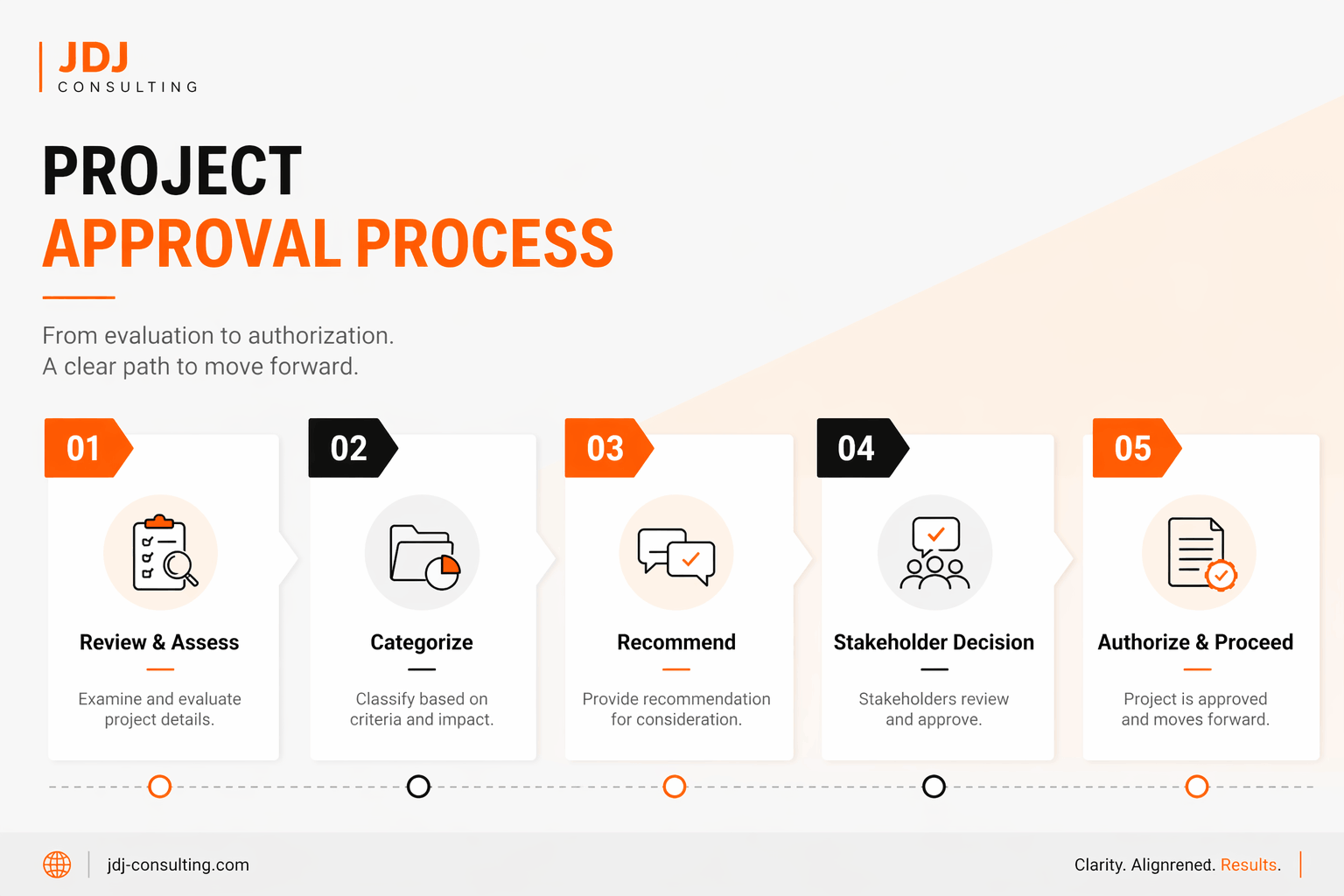
Step 1 – Pre-Design and Zoning Check
Before you design anything, check zoning rules. This step is often skipped, but it matters a lot.
Zoning tells you:
What you can build
How tall it can be
Where it can sit on the lot
If your plan does not meet zoning rules, your permit will not get approved.
So, it’s better to confirm this early. Many cities offer pre-application meetings. These can save weeks later.
Step 2 – Preparing Construction Documents
This step takes time, but it is critical. Your permit depends on the quality of your plans.
Typical documents include:
Architectural drawings
Structural plans
Electrical layouts
Plumbing details
Energy compliance reports
Clear and complete drawings speed up review. Poor plans cause delays.
Here’s a quick checklist:
| Document Type | Required for | Importance |
|---|---|---|
| Site Plan | All projects | Shows layout and zoning compliance |
| Floor Plans | Residential & commercial | Defines structure and use |
| Structural Drawings | Major projects | Ensures safety |
| MEP Plans | Most projects | Covers systems (mechanical, electrical, plumbing) |
Step 3 – Application Submission
Once your plans are ready, you submit them to the city. Most Texas cities now use online portals. This makes submission faster.
At this stage, you will:
Upload plans
Fill out application forms
Pay initial fees
Make sure everything is complete. Missing details can delay your application right away.
Step 4 – Completeness Check
After submission, the city reviews your application for completeness. This is not a full review yet. It’s just a basic check.
They look for:
Missing documents
Incorrect forms
Incomplete information
If something is missing, your application will be put on hold.
This step usually takes:
3–10 business days
Step 5 – Plan Review Process
Now comes the main review phase. This is where most time is spent.
Your plans go through multiple departments, such as:
Building department
Fire department
Zoning department
Environmental review
Each department checks for code compliance.
Here’s how it works:
| Department | What They Review |
|---|---|
| Building | Structural safety and codes |
| Fire | Fire safety and exits |
| Zoning | Land use and setbacks |
| Utilities | Water, sewer, drainage |
If everything meets code, your project moves forward. If not, you will receive comments.
Step 6 – Corrections and Resubmittals
Most projects do not pass on the first review. That’s normal.
You will receive comments or required changes. Then, you must:
Update your plans
Resubmit documents
Wait for another review
This cycle may repeat 1–3 times.
Common correction issues include:
Missing details
Code violations
Design conflicts
Quick responses can save weeks here.
Step 7 – Permit Approval and Issuance
Once all comments are resolved, your permit gets approved.
At this stage, you will:
Pay final fees
Receive official permit documents
Now, you are allowed to start construction.
Step 8 – Inspections During Construction
Getting the permit is not the final step. Inspections happen during construction.
Inspectors check work at different stages, such as:
Foundation
Framing
Electrical
Final completion
You must pass all inspections before project completion.
Detailed Timeline Breakdown (Week-by-Week)
Now that you understand the steps, let’s look at how they fit into a real timeline. This will help you plan your project more clearly.
Week 1–2: Application and Intake
This is the starting phase.
During this time:
Plans are submitted
Application is reviewed for completeness
If everything is correct, your project moves forward quickly. If not, delays start here.
Week 2–6: Initial Plan Review
This is the longest phase for most projects. Departments review your plans in detail. They check safety, zoning, and compliance. Some Texas regulations aim for review within 30–45 days, but actual timelines vary.
Week 6–10: Revisions and Resubmissions
If corrections are needed, you enter this phase.
Time depends on:
How fast you respond
How complex the changes are
Fast responses can shorten this stage significantly.
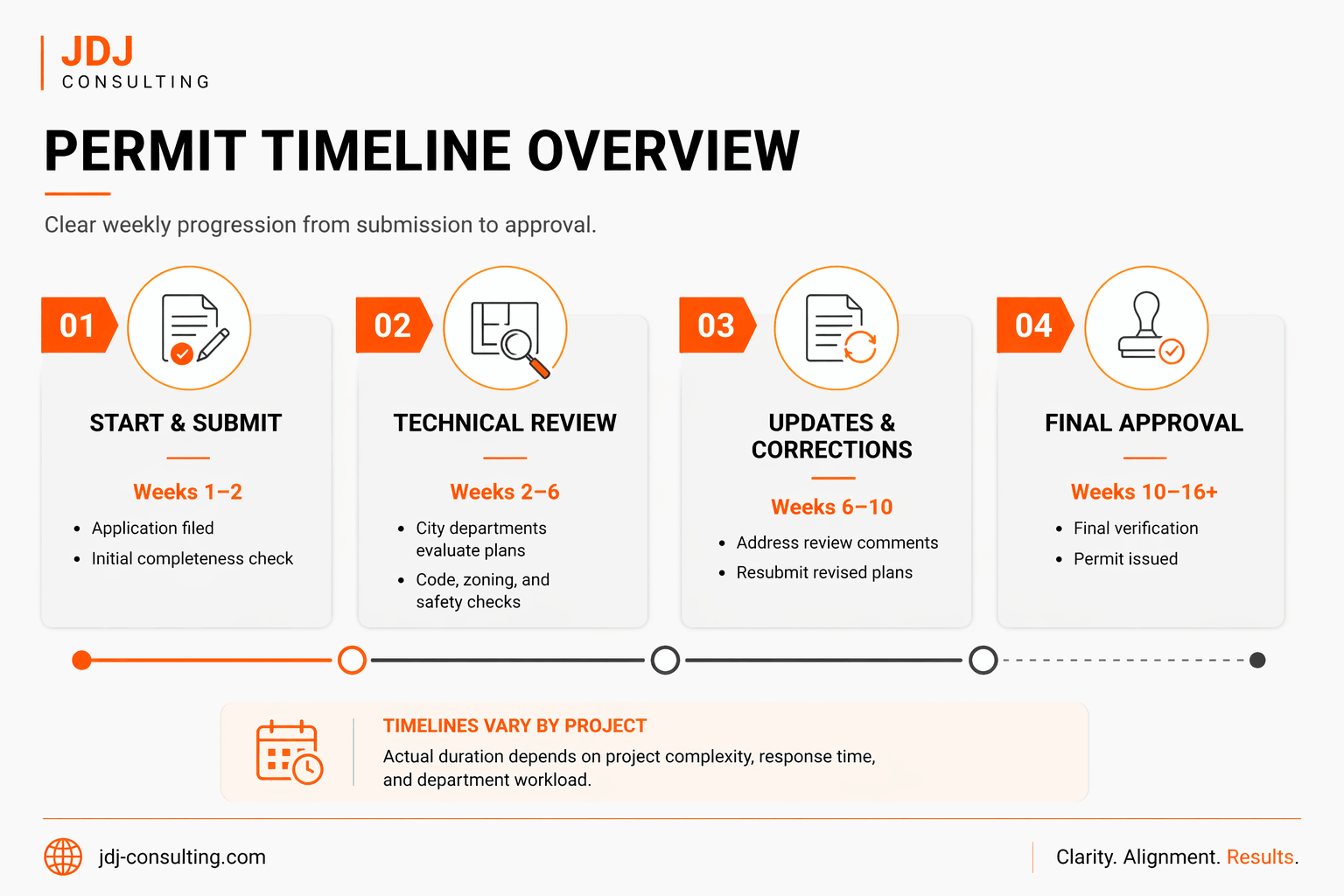
Week 10–16+: Final Approval
For larger or complex projects, approval may take longer. Commercial projects often fall into this category.
Here’s a simple timeline view:
| Phase | Time Range | Key Activity |
|---|---|---|
| Submission | Week 1–2 | Application + intake |
| Review | Week 2–6 | Department checks |
| Revisions | Week 6–10 | Fixing comments |
| Approval | Week 10–16+ | Final permit issued |
Factors That Affect Building Permit Timelines in Texas
Permit timelines are not fixed. Several factors can speed things up or slow them down. Understanding these helps you avoid delays.
Project Complexity
Simple projects move faster. Complex projects take longer.
For example:
Small remodel → quick approval
Multi-story building → longer review
More complexity means more checks.
Quality of Submitted Plans
This is one of the biggest factors.
Clear, complete plans:
Reduce review time
Avoid repeated corrections
Poor plans:
Lead to multiple revisions
Increase delays
Zoning and Land Use Issues
If your project does not match zoning rules, it will face delays.
You may need:
Variances
Special approvals
These add time to your timeline.
City Backlog and Staffing
Some cities process permits faster than others.
Busy cities may have:
High application volumes
Limited staff
This can slow down approvals.
Number of Review Cycles
Each revision cycle adds time. Projects with multiple corrections may take weeks longer.
Seasonal Demand
Construction activity changes throughout the year.
During peak seasons:
More applications are submitted
Review times increase
Planning ahead helps avoid this.
Common Reasons for Permit Delays
Delays are common in Texas permitting. Even simple projects can slow down if small details are missed. The good news is that most delays are preventable. Let’s look at the most common issues and how they affect timelines.
Incomplete Applications
This is the number one reason for delays. If your application is missing documents, the city will not move forward. Instead, they will pause your file until everything is submitted.
Common missing items include:
Site plans
Engineering details
Required forms
Contractor information
Even one missing file can stop the process.
Code Compliance Issues
Every city follows building codes. If your plans do not meet those codes, you will receive correction comments.
This often leads to:
Plan revisions
Resubmissions
Extra review cycles
Some common code issues:
Incorrect structural details
Fire safety violations
Improper electrical layouts
Fixing these takes time, especially for complex projects.
Missing Professional Seals
Many projects require licensed professionals.
For example:
Engineers
Architects
If drawings are not stamped or signed, the city may reject them. This is a simple issue, but it can cause major delays.
Design Changes During Review
Changing your design mid-process is risky.
Every change may trigger:
New reviews
Additional comments
Timeline resets
Even small changes can affect multiple departments.
Poor Communication with City Officials
Clear communication helps move things faster.
Delays often happen when:
Comments are misunderstood
Responses are incomplete
Follow-ups are slow
Staying in touch with reviewers can prevent unnecessary delays.
Environmental or Utility Approvals
Some projects need extra approvals.
These may include:
Drainage review
Utility connections
Environmental checks
These steps add time, especially for large developments.
How to Speed Up the Building Permit Process in Texas
While delays are common, you can still move faster with the right approach. Planning ahead makes a big difference. Here are practical ways to reduce your permit timeline.
Hire a Permit Expeditor
A permit expeditor understands the local system. They know how to avoid common mistakes.
Benefits include:
Faster approvals
Fewer revisions
Better communication with city staff
This is especially useful for commercial projects.
Submit Complete and Code-Compliant Plans
This step cannot be ignored.
Before submitting, make sure:
All drawings are complete
Codes are followed
Documents are organized
A clean submission reduces review time.
Pre-Consult with City Officials
Many cities offer pre-review meetings.
These meetings help you:
Identify issues early
Confirm requirements
Avoid major revisions later
This step can save weeks.
Use Expedited Review Programs
Some Texas cities offer faster review options.
These programs:
Reduce review time
Prioritize your application
However, they often come with extra fees.
Respond Quickly to Review Comments
Speed matters during revisions.
Try to:
Respond within 24–48 hours
Address all comments clearly
Avoid partial updates
Quick responses keep your project moving.
Coordinate All Disciplines Early
Your architect, engineer, and contractor should work together from the start.
Poor coordination often leads to:
Conflicting designs
Revisions
Delays
Strong teamwork reduces errors.
Quick Tips to Avoid Delays
Double-check all documents before submission
Avoid last-minute design changes
Track your application regularly
Keep communication clear and simple
Expedited Permitting in Texas (Fast-Track Options)
If time is critical, expedited permitting can help. Many cities in Texas now offer fast-track review programs. These are designed for projects that need quicker approvals.
What Is Expedited Permitting?
Expedited permitting is a faster review process. Your application is given priority over standard submissions.
This means:
Shorter review times
Faster feedback
Quicker approvals
However, not all projects qualify.
Cities Offering Expedited Review
Several Texas cities provide this option, including:
Dallas
Austin
Houston
Fort Worth
Each city has its own rules and fees.
Costs vs Time Savings
Expedited review usually costs more. Fees vary based on project size and city policies.
Here’s a simple comparison:
| Option | Cost | Timeline | Best For |
|---|---|---|---|
| Standard Review | Lower | Longer | Flexible timelines |
| Expedited Review | Higher | Faster | Time-sensitive projects |
While it costs more, it can save weeks or even months.
When Expedited Review Makes Sense
Not every project needs fast-track approval.
It works best when:
You have strict deadlines
Construction must start quickly
Delays will increase costs
For example, commercial developments often benefit from expedited review.
Things to Keep in Mind
Your plans still need to be complete
Expedited review does not guarantee approval
Corrections can still cause delays
So, even with fast-track options, preparation is key.
Residential vs Commercial Permit Timelines
Not all permits follow the same path. Residential and commercial projects move at different speeds. The main reason is complexity. Residential permits are usually simpler. Commercial permits involve more rules and more departments.
Residential Permit Timelines
Residential permits are faster in most Texas cities.
Typical timelines:
Minor repairs: same day to 1 week
Remodels: 2 to 6 weeks
New homes: 3 to 8 weeks
These projects are easier to review. They also require fewer approvals.
Common residential projects:
Kitchen or bathroom remodels
Room additions
Single-family homes
Since fewer systems are involved, reviews move quicker.
Commercial Permit Timelines
Commercial projects take longer. They involve more safety checks and stricter codes.
Typical timelines:
Small commercial projects: 4 to 8 weeks
Medium projects: 2 to 4 months
Large developments: 4 to 6+ months
These projects often require:
Fire safety review
Accessibility compliance
Environmental checks
Each review adds time.
Key Differences Between Residential and Commercial Permits
Here’s a clear comparison:
| Factor | Residential | Commercial |
|---|---|---|
| Review Time | Short | Longer |
| Complexity | Low–Medium | High |
| Departments Involved | Few | Many |
| Cost | Lower | Higher |
| Approval Steps | Simple | Detailed |
In short, commercial permits take longer because they are more detailed and regulated.
Permit Costs in Texas (What to Expect)
Permit costs vary across Texas. There is no fixed statewide fee. Each city sets its own pricing.
Costs depend on:
Project size
Type of construction
Property value
Understanding costs early helps with budgeting.

Residential Permit Costs
Residential permits are generally affordable.
Typical costs:
Small projects: $50 – $500
Remodels: $500 – $2,000
New homes: $1,000 – $5,000+
Some cities calculate fees based on project value.
Commercial Permit Costs
Commercial permits cost more due to complexity.
Typical costs:
Small commercial: $1,000 – $5,000
Medium projects: $5,000 – $25,000
Large developments: $25,000+
These costs may include:
Plan review fees
Inspection fees
Impact fees
Impact Fees and Hidden Costs
Permit fees are not the only cost.
You may also pay for:
Utility connection fees
Development impact fees
Reinspection fees
These can add up quickly, especially for large projects.
Cost Breakdown Table
| Cost Type | Residential | Commercial |
|---|---|---|
| Permit Fee | Low | High |
| Plan Review Fee | Moderate | High |
| Inspection Fee | Low–Moderate | Moderate–High |
| Impact Fees | Sometimes | Common |
Planning for these costs early avoids surprises later.
Texas Laws Affecting Permit Timelines
Texas has laws that guide how permits are reviewed. These rules help keep timelines reasonable. However, cities still control their own processes.
45-Day Review Requirement
Texas law sets a general guideline for permit reviews.
In many cases:
Cities aim to review applications within 30–45 days
This does not mean automatic approval. It simply sets expectations for review timelines.
Local Government Authority
Each city has the power to manage its own permit process.
This includes:
Setting review timelines
Defining permit requirements
Charging fees
That is why timelines vary across Texas.
Permit Expiration Rules
Permits do not last forever.
In most Texas cities:
Permits expire if work does not start within 180 days
If a permit expires:
You may need to reapply
Additional fees may apply
Why These Laws Matter
These rules help create structure in the process.
They:
Prevent long delays
Set expectations for applicants
Encourage timely reviews
Still, your timeline depends on preparation and project complexity.
Real-World Timeline Examples
Looking at real examples helps set realistic expectations. Every project is different, but these scenarios show common timelines.
Small Home Remodel Timeline
A simple remodel moves quickly.
Example:
Kitchen remodel permit
Timeline: same day to 2 weeks
Why it’s fast:
Limited structural changes
Fewer reviews required
New Custom Home Timeline
New homes take longer due to detailed reviews.
Example:
Single-family home
Timeline: 3 to 8 weeks
Steps involved:
Plan review
Zoning check
Structural approval
Commercial Project Timeline
Commercial projects require multiple approvals.
Example:
Office building
Timeline: 2 to 6 months or more
Why it takes longer:
Fire and safety reviews
Accessibility compliance
Utility coordination
Timeline Comparison Table
| Project Type | Estimated Timeline | Key Reason |
|---|---|---|
| Remodel | Same day – 2 weeks | Simple scope |
| New Home | 3 – 8 weeks | Detailed plans |
| Commercial | 2 – 6+ months | Multiple reviews |
These examples show a clear pattern. Simpler projects move faster. Complex ones take more time.
Building Permit Timeline vs Construction Timeline
Many people confuse permit timelines with construction timelines. They are not the same. In fact, permitting is only one part of the full project schedule. Understanding the difference helps you plan better and avoid delays.
Pre-Construction Phase
Before construction starts, several steps must be completed.
These include:
Site selection
Zoning checks
Design and planning
Permit approval
This phase can take 1 to 4 months, depending on the project. Permitting sits right in the middle of this phase. If it gets delayed, everything else shifts.
How Permitting Fits Into the Overall Timeline
Here’s a simple breakdown:
| Phase | Timeline | Key Activities |
|---|---|---|
| Planning | 2–6 weeks | Design, zoning checks |
| Permitting | 2–12+ weeks | Review and approval |
| Construction | 3–12+ months | Building and inspections |
As you can see, permitting directly impacts when construction begins.
Why Permit Delays Affect Your Project
Permit delays can cause a chain reaction.
They can:
Push back contractor schedules
Increase labor costs
Delay material orders
Affect financing timelines
For developers, delays can also impact return on investment.
How to Align Permit and Construction Schedules
To avoid issues, align both timelines early.
You should:
Start permit planning during design
Submit applications as early as possible
Build buffer time into your schedule
Good planning keeps everything on track.
Checklist: How to Get Your Permit Approved Faster
A clear checklist helps you stay organized. It also reduces the chances of delays. Use this before and during your permit process.
Pre-Submission Checklist
Confirm zoning compliance
Prepare complete architectural plans
Include all required documents
Verify professional stamps and signatures
Review local city requirements
Submission Checklist
Upload all files correctly
Double-check application forms
Pay required fees
Keep copies of all documents
Post-Submission Checklist
Track your application status regularly
Respond to comments within 24–48 hours
Submit revisions clearly and completely
Stay in contact with city reviewers
Quick Reference Table
| Stage | Action | Benefit |
|---|---|---|
| Before Submission | Complete plans | Fewer revisions |
| During Submission | Accurate application | Faster intake |
| After Submission | Quick responses | Shorter timeline |
Following this checklist can reduce delays and help you move faster.
Why Work with a Permit Consulting Firm in Texas
Handling permits alone can be challenging. Each city has its own process. Requirements can change, and small mistakes can lead to delays. This is where a permit consulting firm can help.
Benefits of Professional Permit Management
Working with experts offers several advantages:
Faster approvals due to experience
Fewer revisions and corrections
Better communication with city departments
Clear understanding of local regulations
This can save both time and money.
Faster Approvals and Fewer Delays
Consultants know what cities expect. They help prepare complete and compliant submissions.
This reduces:
Back-and-forth revisions
Missed requirements
Approval delays
Local Expertise Matters
Every Texas city works differently.
A local consultant understands:
City-specific rules
Review processes
Key contacts
This insight helps move projects forward smoothly.
When to Consider Hiring a Consultant
You should consider professional help if:
Your project is complex
You are on a tight schedule
You are unfamiliar with local regulations
Even small projects can benefit from expert guidance.
Final Thoughts: Planning Your Project Timeline in Texas
Building permits are a key part of any construction project in Texas. While timelines vary, most delays come from avoidable issues.
Good planning makes a big difference.
Focus on:
Complete and accurate submissions
Early coordination
Clear communication with city officials
If you take the right steps, you can reduce delays and keep your project on schedule. For complex or time-sensitive projects, working with experienced professionals can help you move faster and avoid costly mistakes.
Ready to Move Your Project Forward?
Permits don’t have to slow you down. If you want a smoother process and fewer delays, our team at JDJ Consulting is here to help.
Let’s talk about your project and find the best way to get your permit approved faster.
Call us: (818) 793-5058
Email: sales@jdj-consulting.com
You can fill out a quick pre-consultation form or schedule a call with our consultants. We’ll guide you through the next steps—simple and clear.
FAQs – Building Permit Timeline Texas
How long does it take to get a building permit in Texas?
In most Texas cities, a building permit takes 2 to 8 weeks, but the timeline depends on your project type and how complete your submission is. Smaller projects may move faster, while larger developments take longer due to multiple reviews.
Minor work: a few days to 2 weeks
New homes: 3 to 8 weeks
Commercial: 1 to 6+ months
If your plans are clear and meet code, approvals usually move quicker.
Can I get a building permit approved in one day?
Yes, but this only applies to very small projects. Some cities allow same-day permits for simple work that does not require detailed review.
Minor repairs or replacements
Basic electrical or plumbing work
However, most projects need plan review. That means at least a few days or weeks for approval in typical cases.
What is the fastest way to get a permit in Texas?
The fastest way is to submit a complete, code-compliant application from the start. Many delays happen because of missing details.
To speed things up:
Provide clear and detailed drawings
Follow city codes closely
Respond quickly to review comments
You can also use expedited review programs if your project qualifies.
Why do building permits get delayed?
Permit delays are usually caused by avoidable issues. Even small errors can slow down the process.
Common reasons include:
Incomplete applications
Missing documents or details
Code violations in plans
Slow responses to city comments
Fixing these early helps reduce review cycles and keeps your project moving.
Do all construction projects require a permit in Texas?
Not all projects require permits, but many do. It depends on the type of work and whether it affects safety or structure.
Projects that usually require permits:
Structural changes
New construction
Electrical, plumbing, or HVAC work
Minor cosmetic work, like painting or flooring, often does not require approval.
What happens if I build without a permit?
Building without a permit can create serious problems later. Cities enforce permit rules to ensure safety and compliance.
Possible consequences include:
Stop-work orders
Fines or penalties
Issues when selling the property
In some cases, you may need to redo the work to meet code standards.
How long does a commercial building permit take in Texas?
Commercial permits take longer because they involve more detailed reviews and stricter codes.
Typical timelines:
Small projects: 4 to 8 weeks
Medium projects: 2 to 4 months
Large developments: 4 to 6+ months
Multiple departments review these projects, which adds time but ensures safety and compliance.
How long does a residential permit take in Texas?
Residential permits are generally faster because they are less complex.
Typical timelines:
Minor repairs: same day to 1 week
Remodels: 2 to 6 weeks
New homes: 3 to 8 weeks
Fewer departments are involved, which helps speed up the process.
What affects building permit timelines the most?
Several factors influence timelines, but preparation is the most important.
Key factors include:
Project complexity
Quality of submitted plans
City workload and staffing
Number of review cycles
Well-prepared applications usually move faster through the system.
Can I speed up the permit approval process?
Yes, you can reduce delays by planning ahead and staying organized.
Helpful steps:
Submit complete and accurate plans
Respond to comments quickly
Avoid design changes during review
You can also explore expedited review options if available in your city.
What is expedited permitting in Texas?
Expedited permitting is a faster review option offered by some cities. Your application is prioritized over standard submissions.
Shorter review time
Faster feedback from departments
Additional fees required
It works best for projects with tight deadlines, but plans still need to meet all requirements.
How many review cycles are normal for permits?
Most projects go through 1 to 3 review cycles before approval.
First review: initial feedback
Second review: corrections checked
Third review: final approval (if needed)
Fewer cycles mean faster approvals, which depends on how complete your plans are.
Do permit timelines vary by city in Texas?
Yes, timelines can vary widely between cities. Each city manages its own permit system.
Smaller cities: often faster approvals
Larger cities: longer timelines due to higher demand
Factors like staffing, technology, and workload all affect processing speed.
What documents are required for a building permit?
The required documents depend on your project, but most applications include several key items.
Site plans
Architectural drawings
Structural details
Mechanical, electrical, and plumbing plans
Providing complete and organized documents helps reduce delays during review.
How can I check my permit status in Texas?
Most cities offer online portals where you can track your permit status in real time.
You can:
Check review progress
View comments from reviewers
Upload revisions
Regular tracking helps you respond quickly and keep the process moving.
What happens after a permit is approved?
After approval, you can begin construction. However, inspections are still required throughout the project.
Typical steps include:
Scheduling inspections at key stages
Passing each inspection
Completing final approval
All work must follow the approved plans.
How long are building permits valid in Texas?
Most permits are valid for about 180 days from the issue date.
Work must begin within this time
Extensions may be available
If the permit expires, you may need to reapply and pay additional fees.
Are permit fees the same across Texas?
No, permit fees vary by city and project type. Each municipality sets its own fee structure.
Residential projects: lower fees
Commercial projects: higher fees
Fees are often based on project value and size.
Do I need an architect or engineer for permits?
Many projects require licensed professionals to prepare and approve plans.
Engineers handle structural design
Architects manage layout and compliance
Their involvement ensures your plans meet safety and code requirements.
Is hiring a permit consultant worth it?
For many projects, hiring a consultant can save time and reduce stress. They understand local processes and requirements.
Benefits include:
Faster approvals
Fewer revisions
Better coordination with city officials
This is especially helpful for complex or time-sensitive projects.