Before starting a construction project in California, you may need a building permit. Permits help ensure that the work meets local building codes, safety standards, and zoning requirements. Understanding the permit process can help avoid delays, unexpected costs, and compliance issues. Below is a step-by-step guide to the California building permit process.
What Is a Building Permit?
A building permit is an official approval issued by a local city or county building department. It authorizes construction, alteration, repair, demolition, or installation work on a property.
Permits ensure that construction complies with California building codes, safety regulations, zoning, and environmental standards.
In California, building permits are issued by local jurisdictions, including city and county building departments. Projects located in unincorporated areas are typically regulated by the county building department.
Projects That Typically Require a Building Permit in California
Most construction activities require a permit under California’s Building Standards Code (Title 24), including:
New residential construction
New commercial construction
Home additions
Garage conversions
Structural modifications
Foundation work
Roof structure alterations
Decks and patios (depending on size and design)
Retaining walls
Swimming pools and spas
Demolition projects
Electrical system installations or upgrades
Plumbing installations or modifications
HVAC system installations or replacements
Solar energy systems
Major grading and land disturbance activities
Common Exceptions
Some minor work may not require permits, such as:
Interior painting
Flooring replacement
Cabinet replacement
Minor cosmetic repairs
Certain fence repairs
Similar non-structural maintenance work
Requirements vary by jurisdiction, so property owners should always verify local regulations before starting work.
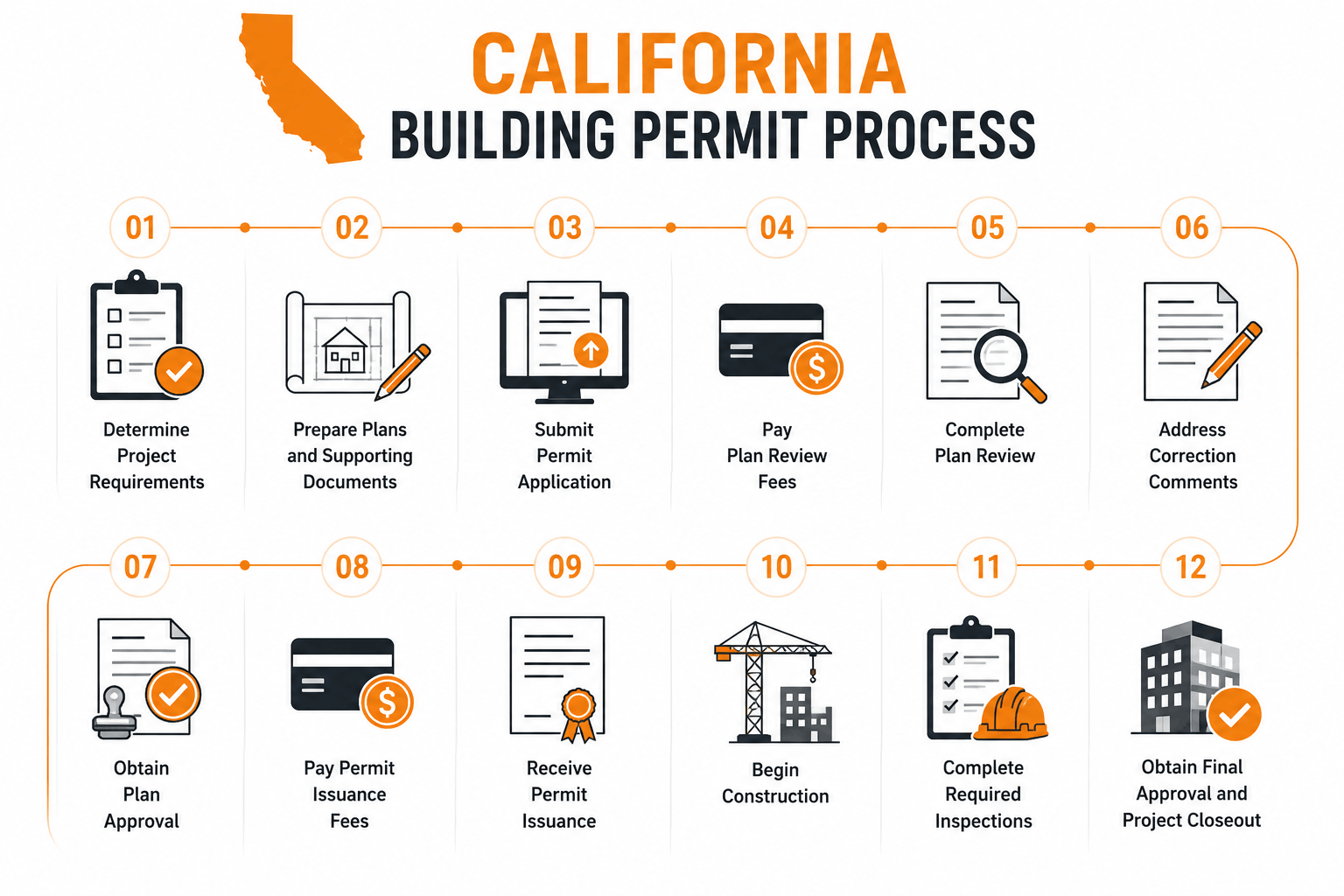
Steps Involved in the California Building Permit Process
Step 1: Determine Project Requirements
The first step is identifying all requirements applicable to the project.
This includes reviewing:
Local zoning regulations
Building code requirements
Fire department requirements
Flood zone restrictions
Environmental regulations
Historic preservation requirements
Utility agency requirements
Homeowners Association (HOA) restrictions, if applicable
During this stage, applicants should confirm:
Whether a permit is required
Which permits are required
Whether additional approvals are needed
Applicable construction standards
Required inspections
Many jurisdictions offer pre-application consultations to help applicants understand project requirements before submission.
Key Note: Failing to identify requirements early often results in plan revisions, permit delays, and additional costs later in the process.
Step 2: Prepare Construction Documents
Permit applications require detailed documentation demonstrating compliance with building regulations. Typical documents required include:
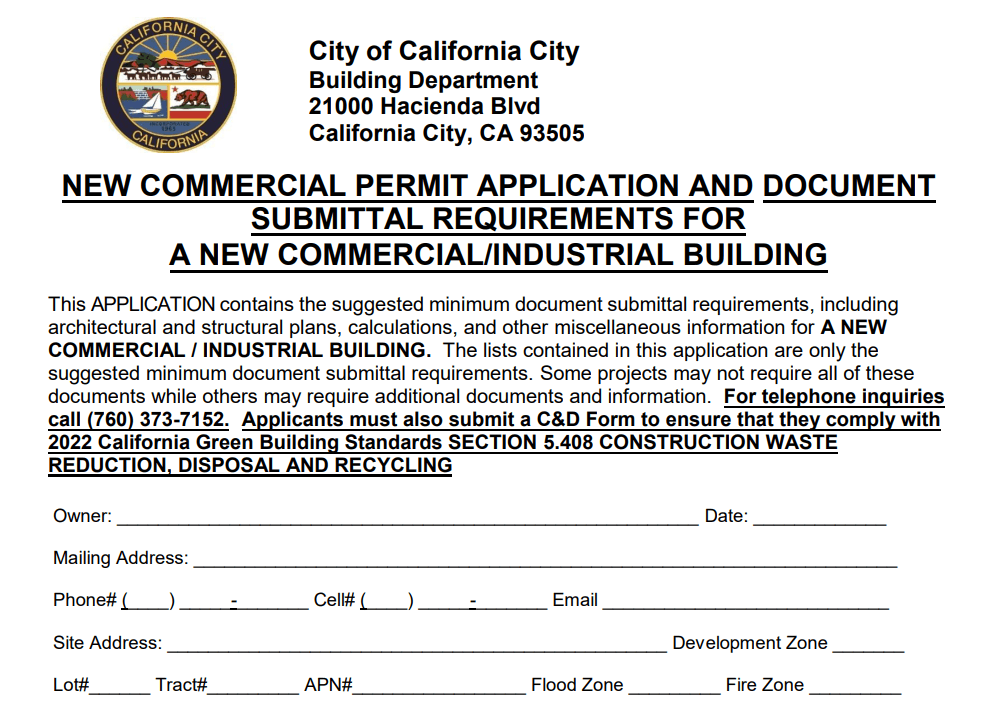
Permit Application
The application generally includes:
Property address
Owner information
Contractor information
Project description
Estimated project valuation
Download and submit the building permit application here.
Site Plan
The site plan typically shows:
Property boundaries
Existing structures
Proposed construction
Setbacks
Easements
Driveways
Utility locations
Architectural Plans
Architectural drawings may include:
Floor plans
Elevations
Building sections
Roof plans
Door and window schedules
Structural Documents
When required, structural documentation may include:
Structural calculations
Foundation plans
Framing plans
Engineering reports
Title 24 Energy Compliance Documents
California requires energy efficiency compliance documentation for many projects under Title 24 Energy Standards.
Additional Supporting Documents
Depending on the project, applicants may also need:
Stormwater management plans
Fire protection plans
Accessibility compliance documents
Environmental reports
Key Note: Complex projects often require plans prepared by licensed architects or professional engineers. Certain California projects require CEQA review to assess environmental impacts before approvals and permits can move forward. Learn more about the Environmental Impact Assessment Report here.
Step 3: Submit the Permit Application
Most California jurisdictions now use electronic permit submission systems.
Applicants generally must:
Create an online account.
Complete the permit application.
Upload all required plans and documents.
Submit supporting reports.
Pay initial plan review fees.
Some jurisdictions still allow limited in-person submissions, but online submission has become the standard process.
Common Submission Errors
Missing drawings
Incomplete applications
Incorrect project valuation
Missing signatures
Unclear plans
Missing energy compliance documents
These issues frequently result in application rejection or delays.
Step 4: Pay Plan Review Fees
Before the review begins, applicants typically pay plan review fees.
Fees vary by:
Project type
Project valuation
Building size
Local jurisdiction
Additional fees may apply for:
Fire review
Public works review
Grading review
Environmental review
Planning review
Plan review generally does not begin until required fees are paid.
Step 5: Plan Review Process
After submission, the building department reviews the plans for code compliance. Commonly included departments are:
Building Division
Reviews:
Structural design
Life safety requirements
Occupancy classifications
Building code compliance
Planning Department
Reviews:
Zoning compliance
Height restrictions
Land use regulations
Fire Department
Reviews:
Fire access requirements
Fire protection systems
Emergency access
Fire safety regulations
Public Works Department
Reviews:
Drainage
Utilities
Grading
Infrastructure impacts
Environmental Agencies
When applicable, agencies review:
Environmental impacts
Stormwater requirements
Habitat protection requirements
Typical Review Time
Review times vary by jurisdiction and project complexity.
General timelines include:
Minor residential projects: 2–6 weeks
ADUs and additions: 4–12 weeks
Large residential projects: several months
Commercial developments: several months or longer
Step 6: Respond to Corrections
Most projects receive correction comments during review.
Reviewers may request:
Revised drawings
Additional calculations
Clarification of design details
Missing documentation
Applicants must:
Address all correction comments.
Revise plans as necessary.
Resubmit updated documents.
Provide written responses to reviewer comments.
Several review cycles may be required before approval.
Key Note: Fast and complete responses significantly reduce permit processing times.
Step 7: Obtain Plan Approval
Once all review comments are resolved, the plans receive approval. Approved plans become the official construction documents that must be followed throughout the project. Construction must match the approved plans unless modifications receive additional approval.
Step 8: Pay Permit Issuance Fees
After approval, applicants must pay the remaining permit fees before permit issuance.
Fees may include:
Building permit fees
Inspection fees
Impact fees
Utility connection fees
School fees
Affordable housing fees
Environmental fees
Technology fees
Development fees
Fee structures vary by local jurisdiction.
Step 9: Permit Issuance
After all fees are paid, the building department issues the permit. The permit package generally includes:
Building permit
Approved plans
Inspection requirements
Permit conditions
At this stage, construction may legally begin.
Key Note: Work performed before permit issuance can result in penalties, stop-work orders, and additional fees.
Step 10: Begin Construction
Construction must follow:
Approved plans
California Building Standards Code
Local amendments
Permit conditions
Any substantial design changes may require revised plans and additional approvals.
Step 11: Schedule Required Inspections
Inspections occur throughout construction to verify compliance. Required inspections vary by project. Common inspection stages are:
Foundation Inspection
Conducted before concrete placement to verify:
Excavation
Reinforcement
Footings
Foundation preparation
Underground Utilities Inspection
Reviews:
Plumbing lines
Sewer lines
Electrical conduits
Before they are covered.
Framing Inspection
Reviews:
Structural framing
Roof framing
Shear walls
Connections
Rough Electrical Inspection
Verifies:
Wiring
Panels
Circuits
Electrical installations
Rough Plumbing Inspection
Verifies:
Water lines
Drain lines
Vent systems
Mechanical Inspection
Reviews:
HVAC systems
Ductwork
Ventilation systems
Insulation Inspection
Confirms energy code compliance requirements.
Drywall Inspection
Required in some jurisdictions before wall finishes are completed.
Final Inspection
Conducted after all work is complete.
The inspector verifies:
Code compliance
Approved plan compliance
Life safety systems
Occupancy readiness
Key Note: Construction cannot proceed beyond certain stages until required inspections are approved.
Step 12: Final Approval and Project Closeout
Once all inspections are passed, the building department closes the permit. For new buildings or major projects, the jurisdiction may issue a Certificate of Occupancy (CO).
The Certificate of Occupancy confirms:
The building complies with applicable codes.
Required inspections have been completed.
The structure is approved for occupancy and use.
Important California-Specific Requirements
Title 24 Energy Compliance
Many construction and remodeling projects in California must meet Title 24 energy requirements. These standards help improve energy efficiency and may apply to insulation, heating and cooling systems, lighting, and solar-ready features.
CALGreen Compliance
Many projects must also follow California’s CALGreen Code. These requirements focus on reducing water use, limiting construction waste, improving indoor air quality, and promoting environmentally friendly building practices.
California Environmental Quality Act (CEQA)
Some projects may require a CEQA review before approval. This review looks at the project’s potential environmental impacts and may require studies or mitigation measures. If CEQA applies, it can increase the time needed to obtain a building permit.
Permit Expiration
Building permits can expire if work does not start within the required timeframe, construction is stopped for too long, or required inspections are not completed. Permit holders may be able to request an extension, depending on local regulations.
Conclusion
The California building permit process can seem complex. However, understanding the required steps can help you avoid delays and keep your project on track. From planning and permit applications to inspections and final approval, following the process correctly is essential for a successful project.
Need Help with Permitting?
JDJ Consulting Group provides permit expediting, land-use consulting, entitlement strategy, and development support across California, Texas, and Florida. If you need help in the permit process, our team of certified consultants is ready to assist. Reach out to us at:
- Phone: (818) 793-5058
- Email: sales@jdj-consulting.com
- Address: 12925 Riverside Dr, Suite 302, Sherman Oaks, CA 91423
Resources
- PermitFlow – California Building Permit Resources
- Sacramento County Official Website
- Solano County – Building Permit Process
- City of California Gov Website – Building Permit Application