People often use “land use” and “entitlements” as if they mean the same thing. We understand why. The two are closely connected in real estate development. However, they are not the same thing, and the difference matters more than ever right now.
Land use refers to what a property can legally be used for. Entitlements are the approvals required to move a project from concept to construction. These approvals can include rezonings, specific use permits, site plans, plats, and variances. In simple terms, land use answers the question, “What can I build here?” Entitlements answer the question, “What approvals do I need before I can build it?”
You can have one without the other. A property may support a use in theory but still lack the approvals needed to move forward. Many developers, investors, and property owners have discovered this after spending significant time and money on a project.
In Dallas-Fort Worth, the entitlement landscape changed dramatically about a year ago. A new state law altered how many multifamily and mixed-use projects are approved in the region’s largest cities. At the same time, the traditional entitlement process remains fully intact for many other projects.
As a result, one of the most important questions during pre-development is determining which approval path applies to your project.
If you choose the wrong path, you may spend months pursuing approvals you never needed. In other cases, developers assume a shortcut applies to their site when it does not. Either mistake can create delays, increase costs, and put deals at risk.
What “Entitlements” Actually Means
An entitlement is any administrative or discretionary approval required before construction can begin. The exact approvals depend on the project, location, and city. In DFW, common entitlements include:
-
Rezoning
Rezoning changes a property’s base zoning classification. This allows a different use, density, or development pattern than the current zoning permits.
-
Specific Use Permits (SUPs)
Specific Use Permits allow uses that are not permitted by right under existing zoning. These are common for religious facilities, entertainment venues, certain commercial operations, and other specialized uses.
-
Planned Development (PD) District Approval
Planned Development districts create customized development standards for a specific property. Both Dallas and Fort Worth use PD districts extensively, especially for larger projects and mixed-use developments.
-
Plat Approval
A plat legally creates, combines, or reconfigures lots. New construction projects and lot splits often require plat approval before development can move forward.
-
Variances
Variances provide relief from a zoning standard such as setback requirements, height limits, landscaping requirements, or parking regulations. These requests typically go before a Board of Adjustment.
-
Site Plan Approval
Site plan approval confirms that a proposed development meets local design and development standards. In some cities, site plan review is a separate process. In others, it is bundled into broader development approvals.
One point often gets overlooked. Entitlements come before permits. Many people assume that once architectural drawings are complete, they can move directly into permitting. In reality, zoning and entitlement issues can stop a project long before permit review begins.
We have seen projects arrive with complete architectural plans, detailed engineering work, and substantial investment already committed. Yet the project could not move forward because the underlying zoning never supported the proposed use.
That is why entitlement risk is not simply a paperwork issue. It is a financial issue. The entitlement process determines whether a project can proceed, how long it will take, and how much uncertainty exists before construction begins.

The Major Change: SB 840
In September 2025, Texas Senate Bill 840 became law. For many development professionals, SB 840 represents one of the most significant entitlement changes Texas cities have faced in recent years.
If you are working on multifamily or mixed-use development in DFW and have not fully evaluated the impact of SB 840, you may be operating with outdated assumptions.
The law requires municipalities with populations above 150,000 located in counties with populations above 300,000 to allow qualifying multifamily and mixed-use residential projects in certain commercial and mixed-use zoning districts without requiring rezoning, variances, or other discretionary approvals.
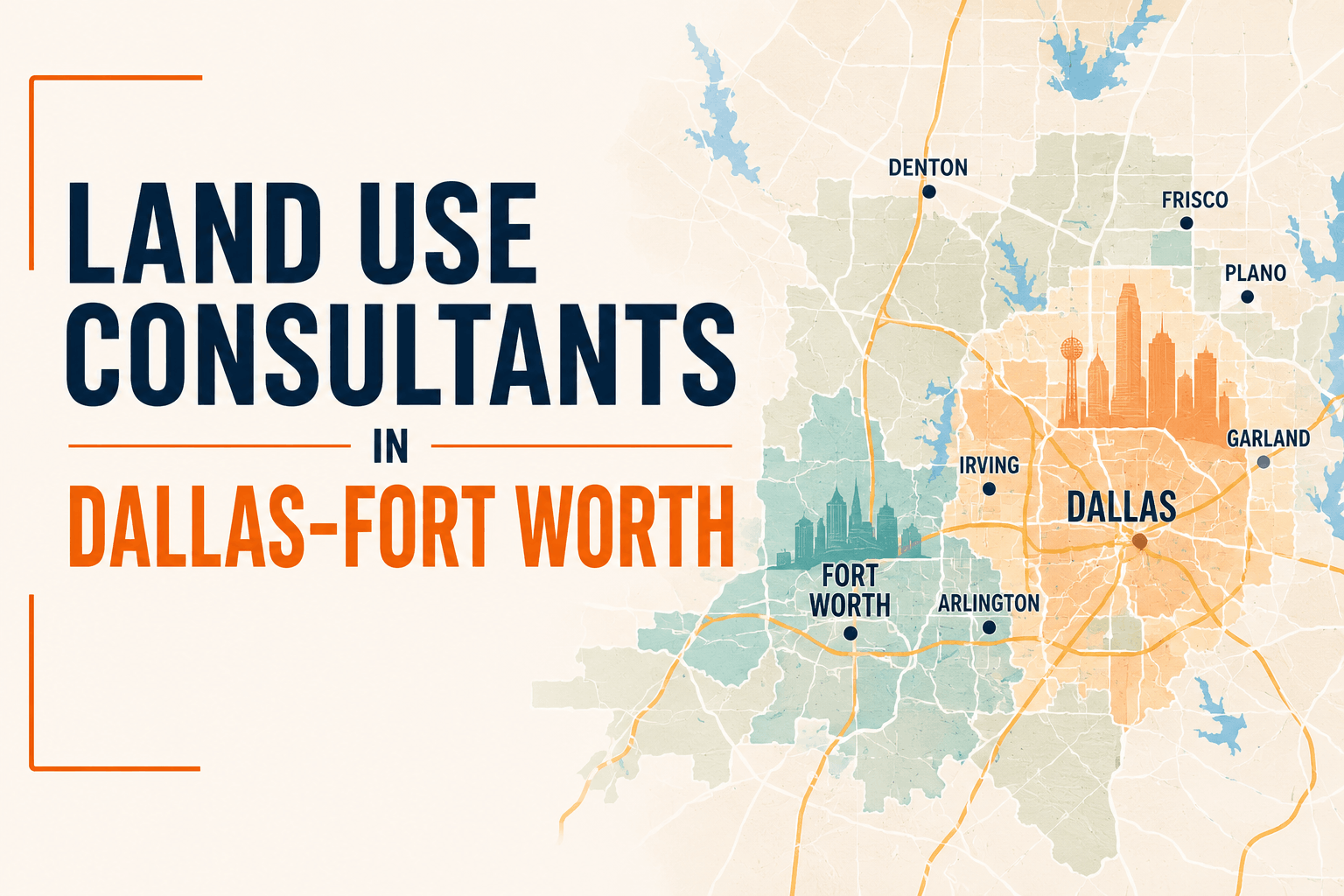
This includes major DFW cities such as Dallas, Fort Worth, Arlington, Plano, Frisco, and Irving.
To qualify, projects generally must include three or more dwelling units. Mixed-use projects must dedicate at least 65 percent of the total floor area to residential use. For projects that meet these requirements, the impact can be substantial.
The traditional approval process often includes:
-
Application preparation
-
Staff review
-
Public notices
-
Planning commission hearings
-
City council hearings
-
Additional revisions and resubmittals
These steps can add months to a project schedule. Under SB 840, qualifying projects may avoid much of that process. Instead of pursuing rezoning or other discretionary approvals, developers can move through an administrative review process.
That reduction in approval time can significantly improve project economics. However, SB 840 is not a universal shortcut. Many developers hear about the law and assume qualification is straightforward. In practice, several important limitations still apply.
Private Restrictions Still Matter
Private covenants remain enforceable. Overlay districts remain enforceable. Planned Unit Development (PUD) agreements remain enforceable. The statute affects zoning approvals. It does not eliminate private restrictions or previously adopted development controls. A site may qualify under SB 840 and still face limitations from recorded agreements or other legal restrictions.
Location-Based Exclusions Apply
The statute excludes certain locations from eligibility.
These include:
-
Heavy industrial zoning districts
-
Sites within 1,000 feet of existing heavy industrial uses
-
Sites within 3,000 feet of airports
-
Sites within 3,000 feet of military bases
-
Sites within designated accident potential zones
DFW contains extensive industrial, aviation, and transportation infrastructure. Many sites that appear attractive for redevelopment may fall within one of these exclusion areas.
Cities Are Responding Differently
Another important factor is local implementation. Cities across DFW are not responding to SB 840 in the same way. Dallas established a process that allows developers to seek advanced zoning consultation and obtain written guidance regarding SB 840 eligibility.
Fort Worth has taken a different approach. The city currently offers pre-development conferences but has not established the same type of confirmation process. Other cities have adopted ordinance changes designed to reduce the practical impact of the law within their jurisdictions.
This matters because SB 840 establishes a statewide framework, but local administration still plays a major role in how projects move through the process. As of mid-2026, implementation continues to evolve.
Developers should be cautious when relying on assumptions from six months ago. Policies, procedures, and interpretations continue to change. Anyone claiming complete certainty about how every city will apply SB 840 a year from now is making a prediction, not stating a fact. The full statutory language is available through Texas Legislature Online and should always be reviewed alongside city-specific guidance.
Why Entitlements Are Really a Financial Issue
Developers often think about entitlements as a regulatory requirement. In reality, entitlements directly affect project economics. The entitlement stage determines risk, timing, financing, and overall feasibility.
-
Financing Depends on Entitlements
Many lenders require specific entitlement milestones before releasing funds. Construction loans often include entitlement conditions. If approvals are delayed, financing timelines may also be delayed. Lenders generally prefer certainty. Extended approval timelines can create additional challenges during underwriting and closing.
-
Land Contracts Have Deadlines
Development contracts frequently include due diligence periods and entitlement contingency deadlines. Those deadlines do not automatically adjust because approvals take longer than expected. If the entitlement process extends beyond the original timeline, developers may need to negotiate extensions or reconsider the transaction entirely.
-
Delays Create Real Costs
Holding costs continue while entitlement reviews are underway. Property taxes continue. Interest payments continue. Insurance costs continue. Opportunity costs continue.
For multifamily and commercial projects, delayed approvals can also affect lease-up schedules, sale timelines, and investor expectations. Each additional month of review can have measurable financial consequences.
-
SB 840 Qualification Is Not Always Obvious
Many sites appear eligible at first glance. The zoning may fit. The project size may fit, and the use mix may fit.
Yet hidden restrictions can still create obstacles. Recorded deed restrictions, overlay requirements, and Planned Development standards may limit what can actually be built. For that reason, developers should treat SB 840 eligibility as a question that must be verified, not as an assumption.
What an Entitlement Consultant Actually Does
In today’s DFW market, entitlement consulting is largely about reducing uncertainty. The goal is to identify the correct approval path as early as possible and then guide the project through that process efficiently.
That work often includes:
-
Determining whether a project truly qualifies for SB 840
-
Evaluating density and use-mix requirements
-
Identifying statutory exclusions
-
Reviewing recorded covenants and deed restrictions
-
Analyzing overlay district requirements
-
Interpreting existing PD and PUD regulations
-
Preparing rezoning applications
-
Managing SUP applications
-
Coordinating variance requests
-
Supporting plat approvals
-
Attending pre-development meetings
-
Tracking city-specific implementation changes
-
Coordinating entitlement schedules with financing and acquisition deadlines
This work has become increasingly important because the regulatory environment continues to evolve. The standards, interpretations, and procedures surrounding SB 840 are still developing. What was accurate six months ago may no longer reflect current practice. Developers who rely on outdated information expose themselves to unnecessary risk.

A Practical Checklist Before Committing to a Site
Before purchasing or committing significant resources to a development site, consider the following checklist.
-
Confirm Current Zoning
Verify the property’s current zoning classification. Determine whether the zoning category falls within the areas affected by SB 840.
-
Review Statutory Exclusions
Check for proximity to:
-
Heavy industrial uses
-
Airports
-
Military facilities
-
Accident potential zones
Any of these factors may eliminate eligibility.
-
Review Title Documents
Obtain and review recorded documents, including:
-
Covenants
-
Easements
-
Restrictions
-
Planned Development requirements
These documents may limit development rights regardless of zoning.
-
Understand City Implementation
Research how the specific municipality is responding to SB 840. Implementation varies across the metroplex. Some cities have established formal procedures. Others continue to adjust their processes.
-
Build Realistic Timelines
Do not assume entitlement timelines are fixed.
Instead, incorporate potential delays into:
-
Financing negotiations
-
Purchase contracts
-
Development schedules
-
Investor projections
A flexible timeline is often more realistic than an aggressive one.
For additional insight into how zoning and development regulations differ throughout the metroplex, see our companion guide on land use consulting in Dallas-Fort Worth.
Moving Forward With a Clear Understanding of Risk
The DFW entitlement environment is in a period of transition. A major state law changed the approval process for many residential and mixed-use projects. Cities continue to respond to those changes. Policies continue to evolve. Interpretations continue to develop. As a result, entitlement risk depends heavily on the location of a specific site and the details of a specific project.
For developers, investors, and property owners, obtaining a clear understanding of that risk before making major financial commitments is no longer optional. It is essential.
The difference between a successful project and a delayed project often comes down to understanding the approval path before money is spent.
If you are evaluating a site in Dallas-Fort Worth and need a clear assessment of entitlement requirements, SB 840 eligibility, or the likely timeline for traditional approvals, an early review can help identify risks before they become expensive problems.
Information in this guide reflects Texas SB 840 and DFW-area entitlement frameworks as of June 2026. Municipal implementation of SB 840 continues to evolve. Requirements vary by city, project type, and site conditions. Always verify current requirements with the appropriate planning department or consult a qualified land use attorney or entitlement professional before making development decisions.