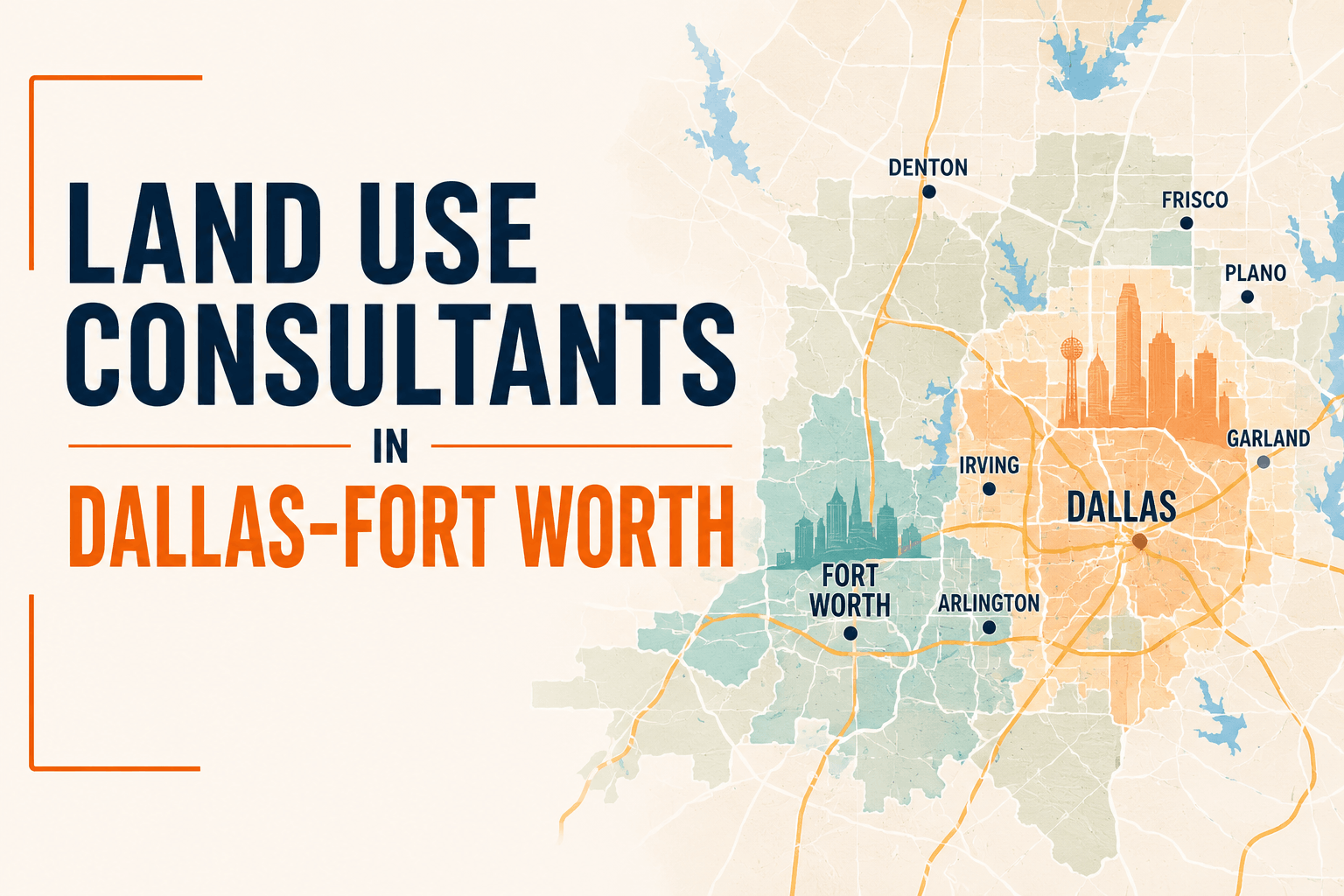
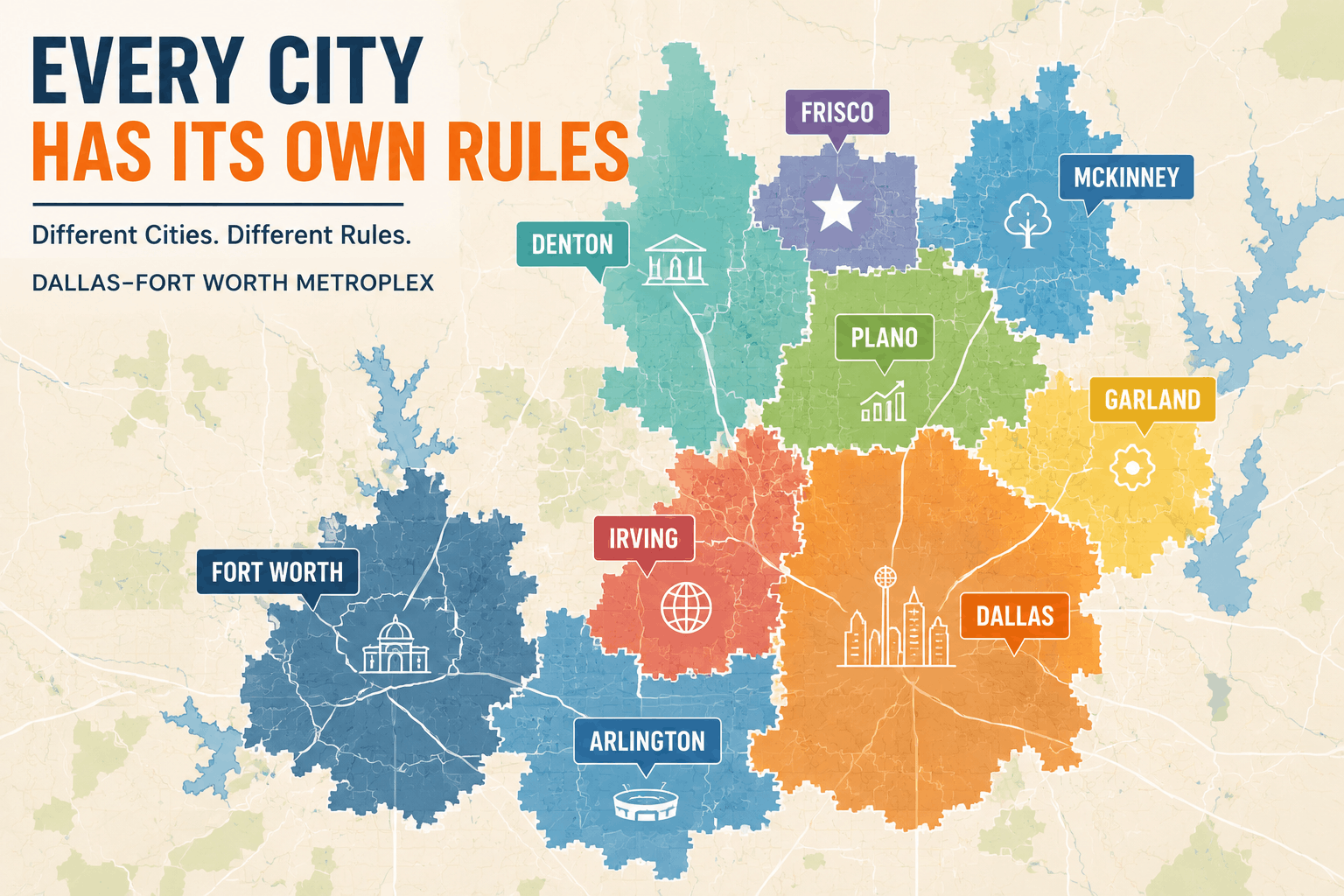
Many people think Dallas-Fort Worth is one market with one set of development rules. In reality, it works very differently. The DFW metroplex includes dozens of cities. Each city has its own zoning code, review process, planning department, and approval requirements. A project that works in Dallas may face completely different rules in Fort Worth, Plano, Frisco, Arlington, or Irving.
This often surprises developers, investors, and business owners. Everything may look similar on a map, but the approval process can change dramatically from one city to the next.
This guide explains why land use planning in DFW can be challenging, where projects commonly run into delays, and how a land use consultant helps move projects through the approval process.
Why Land Use Planning Is More Complicated in DFW
Dallas-Fort Worth is one of the fastest-growing regions in the United States. That growth creates opportunities, but it also creates complexity. Unlike a single-city market, DFW is made up of many independent cities. Each city controls its own zoning regulations, development standards, and approval procedures. Several factors make the process more challenging.
Every City Has Its Own Rules
The metroplex includes cities such as:
Dallas
Fort Worth
Plano
Frisco
Arlington
Irving
Garland
McKinney
Each city operates its own planning and zoning department. A project allowed by right in one city may require a zoning change, variance, or special permit in another city.
Zoning Codes Are Different
Dallas and Fort Worth use completely different zoning systems. Dallas relies on Chapter 51A of the Dallas Development Code. Fort Worth uses its own zoning ordinance with different district names, review procedures, and development standards. Even when two properties look similar, the approval process may be very different depending on the city.
Approval Timelines Vary
Each city has its own:
Planning Commission
Zoning Commission
Board of Adjustment
Review staff
Meeting schedule
As a result, a project may receive approval in weeks in one city and take months in another.
Overlay Districts Add More Complexity
Many cities use additional regulations through:
Historic districts
Design districts
Floodplain overlays
Corridor overlays
These requirements are not standardized across DFW. What applies in one city may not exist in another. Because of these differences, a zoning strategy that works for one property often cannot be copied to another site nearby.
Who Can Benefit From a Land Use Consultant?
Many people assume land use consultants only work with large commercial developers. In reality, they help a wide range of property owners and businesses.
Developers
Developers comparing sites across DFW need separate zoning reviews for every property. A parcel in Dallas may have very different development opportunities than one in Plano or Fort Worth.
Investors
Before buying land or buildings, investors should verify what uses are actually allowed. Relying on assumptions from a seller or broker can create expensive surprises after closing.
Business Owners
Businesses planning a new location often encounter issues related to:
Occupancy requirements
Parking regulations
Signage rules
Permitted uses
A zoning review before signing a lease can prevent costly delays.
Homeowners and Small Builders
Smaller projects can face zoning challenges, too.
Examples include:
Home additions
Accessory structures
Lot splits
Garage conversions
Each city has its own requirements.
Contractors
Contractors working in multiple DFW cities must manage different approval processes at the same time. Missing a local requirement can affect project schedules and inspections.
Common Reasons Projects Get Delayed
Most land use challenges fall into a few common categories.
Zoning Doesn’t Match the Planned Use
Sometimes the property’s zoning does not allow the intended use.
This can require:
Rezoning
Variances
Special use permits
Each approval adds additional review time and public hearings.
Confusion About Jurisdiction
Properties near city boundaries or within an Extraterritorial Jurisdiction (ETJ) may follow different rules than expected. Determining which authority controls a property is one of the first steps in any zoning review.
Planned Development District Challenges
Dallas and Fort Worth both use Planned Development (PD) districts. These districts often contain custom development standards that go beyond standard zoning rules. Understanding these requirements requires careful review of the adopted ordinance.
Public Hearing Timelines
Many approvals require hearings before:
Planning Commissions
Zoning Commissions
City Councils
Notice periods and meeting schedules can add weeks or months to a project timeline.
Overlay District Requirements
Projects inside historic districts or special overlay districts often face additional reviews and design requirements. These rules can significantly affect project schedules and development options.
What Does a Land Use Consultant Do?
A land use consultant helps property owners understand the rules that apply to a site and create a realistic path to approval.
Typical services include:
Confirming zoning classifications
Determining jurisdictional authority
Identifying permit and entitlement requirements
Evaluating whether rezoning is needed
Reviewing overlay district requirements
Coordinating with planning staff
Managing public hearing processes
Developing approval timelines
Their experience often helps identify issues before they become major project delays.
Important Checks Before You Invest in a Site
Before spending money on design or engineering, consider these steps:
Confirm whether the property is inside city limits or within an ETJ.
Verify the actual zoning classification.
Review any Planned Development requirements.
Check for overlay districts or historic designations.
Allow extra time for projects requiring public hearings.
Taking these steps early can help avoid costly surprises later.
Understanding the DFW Development Landscape
Dallas-Fort Worth offers tremendous development opportunities. However, successful projects usually begin with a clear understanding of local regulations. The biggest mistake is assuming every city follows the same rules.
Each municipality has its own zoning code, review process, timelines, and approval requirements. Treating each city as a separate jurisdiction can help reduce risk and improve project outcomes.
For developers, investors, business owners, and property owners evaluating opportunities across DFW, understanding these differences early can save both time and money.
Information in this guide reflects general zoning and land use practices across the Dallas-Fort Worth region as of June 2026. Regulations, approval procedures, and zoning classifications vary by municipality and may change over time. Always confirm current requirements with the appropriate city planning department before moving forward with a project.