Warehouses play a key role in logistics, e-commerce, and industrial growth. However, before construction starts or operations begin, you must meet local warehouse permit requirements. These approvals protect public safety, confirm zoning compliance, and ensure your building meets code.
If you are planning a new warehouse project or converting an existing building, this guide will explain the first essential steps. We will cover what a warehouse permit is, why it matters, and the types of permits you may need.
The goal is simple: help you understand the process clearly so you can avoid delays, costly corrections, and compliance risks.
What Is a Warehouse Permit?
A warehouse permit is official approval from a city or county agency that allows you to build or operate a warehouse legally.
In most areas, you cannot break ground or start operations without proper authorization. Even minor tenant improvements may require permits.
Permits confirm that your warehouse meets:
Zoning regulations
Fire safety standards
Environmental requirements
Accessibility laws
Without approval, you may face stop-work orders, fines, or project shutdowns. In some cases, lenders will not release funding until permits are secured.
In simple terms, permits prove that your project is safe, compliant, and ready for occupancy.
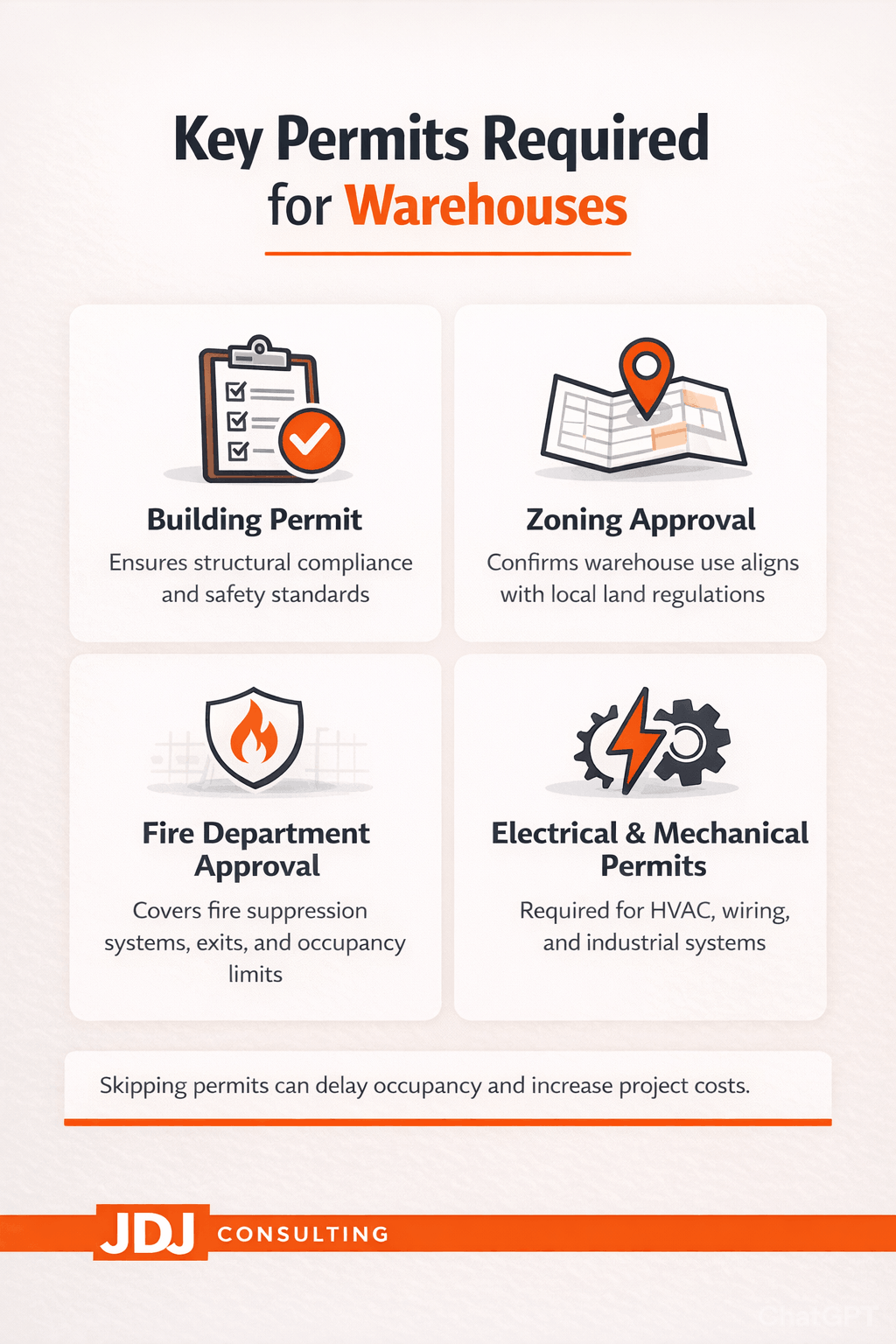
Why Warehouse Permits Matter
Warehouse facilities are large structures. They store inventory, machinery, and sometimes hazardous materials. Because of this, local governments closely regulate them.
Permits serve several important purposes:
They protect workers and the public
They prevent unsafe construction
They ensure proper land use
They reduce environmental impact
They control traffic and infrastructure strain
For example, a distribution warehouse with heavy truck traffic may require traffic studies. A cold storage warehouse may require mechanical system approvals. A chemical storage facility may need environmental clearance.
Each requirement exists to reduce risk and maintain community safety.
Who Needs a Warehouse Permit?
You typically need permits if you are:
Building a new warehouse
Expanding an existing facility
Changing the building’s use
Upgrading structural components
Installing new fire suppression systems
Modifying electrical or mechanical systems
Even interior changes, such as adding mezzanines or racking systems, can require review. Many jurisdictions treat high-pile storage as a fire code issue that must be approved.
Below is a quick overview of when permits are usually required:
| Project Type | Permit Typically Required? | Notes |
|---|---|---|
| New warehouse construction | Yes | Full building permit required |
| Interior tenant improvements | Often | Depends on scope of work |
| Change of occupancy | Yes | Requires zoning and safety review |
| Minor cosmetic upgrades | Usually no | Paint and flooring may not require permits |
| Installing high-pile storage racks | Yes | Fire department review likely |
Because requirements vary by city and county, early research is critical.
Types of Warehouse Permits You May Need
Warehouse development often requires multiple approvals. It is rarely a single permit. Instead, it is a coordinated process across departments.
Below are the most common permit categories for warehouse projects.
Building and Construction Permits
This is the foundation of your approval process.
A building permit confirms that your warehouse design meets structural, mechanical, plumbing, and electrical codes. Local building departments review construction drawings to ensure compliance.
Typically, you must submit:
Architectural drawings
Structural engineering plans
Mechanical and electrical layouts
Site plans
Energy compliance reports
Plan review may involve several rounds of comments. Revisions are common.
Construction cannot begin until the permit is issued. After approval, inspectors will visit the site at different stages, including foundation, framing, and final completion.
Zoning and Land Use Approvals
Zoning determines whether warehouse use is allowed on a property.
Even if you own the land, you must confirm it is zoned for industrial or warehouse use. Some areas limit:
Distribution centers
Outdoor storage
Truck loading areas
24-hour operations
If zoning does not permit your proposed use, you may need:
A rezoning application
These approvals often require public hearings. Therefore, timelines may extend beyond standard building permits. Developers often address zoning early to avoid costly redesigns later.
Fire Department Permits
Warehouses store large quantities of goods. Fire risk is a serious concern.
Fire departments review:
Sprinkler systems
Fire alarms
Emergency exits
High-pile storage plans
Hazardous material storage
If your warehouse stores flammable or hazardous materials, additional permits may apply.
High-pile storage is common in logistics centers. However, rack height and storage type affect sprinkler design. Fire code compliance is critical before occupancy.
Environmental and Operational Permits
Some warehouse operations trigger environmental review. This depends on location and use.
You may need environmental approvals if your project includes:
Hazardous material storage
Refrigeration systems with regulated chemicals
Waste handling
Large truck fleets
Stormwater discharge
Environmental agencies may require impact studies. These studies evaluate air quality, traffic, noise, and drainage. Operational permits may also include business licenses or occupancy certificates after inspections pass.
Here is a simplified comparison of common warehouse permit categories:
| Permit Type | Issuing Authority | When Required | Key Focus |
|---|---|---|---|
| Building Permit | City/County Building Dept. | New construction or structural changes | Code compliance |
| Zoning Approval | Planning Department | Change of use or new development | Land use compliance |
| Fire Permit | Fire Department | High-pile storage or hazardous materials | Life safety |
| Environmental Permit | Environmental Agency | Special materials or high impact use | Environmental protection |
| Certificate of Occupancy | Building Dept. | After final inspection | Safe occupancy approval |
Because each department reviews different elements, coordination is important. Missing one approval can delay the entire project.
Common Documentation Required for Warehouse Permit Applications
Strong documentation speeds up review. Incomplete submissions cause delays. Cities expect detailed plans and reports before issuing permits.
Below are the most common documents required for warehouse approvals.
Site Plans
A site plan shows how the warehouse fits on the property.
It typically includes:
Property boundaries
Building footprint
Parking layout
Truck loading areas
Access roads
Landscaping
Utility connections
Reviewers check setbacks, traffic flow, and emergency access. If your site includes heavy truck activity, additional circulation studies may be required.
Architectural and Engineering Drawings
These are technical construction documents prepared by licensed professionals.
They usually include:
Floor plans
Elevations
Structural framing details
Roof design
Electrical layouts
Plumbing systems
HVAC systems
For large distribution centers, structural engineering is critical due to clear span requirements and heavy loads. Accuracy matters. Even small discrepancies can result in correction notices.
Fire Protection Plans
Fire safety documentation is essential for warehouse projects.
You may need:
Sprinkler system drawings
Fire alarm layouts
Exit path diagrams
High-pile storage plans
Hazardous material inventory statements
Fire officials review these plans carefully. If storage height exceeds certain limits, sprinkler upgrades may be required.
Environmental and Compliance Reports
Depending on the project scope, agencies may request:
Environmental impact assessments
Stormwater management plans
Air quality reports
Traffic impact studies
These reports are often prepared by consultants. They help agencies determine whether your project affects surrounding communities.
Additional Supporting Documents
Some jurisdictions may also request:
Proof of ownership
Lease agreements
Contractor licenses
Insurance certificates
Permit application forms and fees
Preparing these documents in advance reduces review time. Below is a summary of typical documentation requirements:
| Document Type | Purpose | Prepared By |
|---|---|---|
| Site Plan | Shows property layout and access | Civil Engineer or Architect |
| Architectural Plans | Defines building design | Architect |
| Structural Drawings | Confirms building safety | Structural Engineer |
| Fire Protection Plans | Ensures life safety compliance | Fire Protection Engineer |
| Environmental Reports | Evaluates environmental impact | Environmental Consultant |
Early coordination between your design team and permitting authority can prevent repeated revisions.
The Warehouse Permit Application Process: Step-by-Step
Once you understand the types of permits and required documents, the next step is the approval process itself.
Many developers assume permits are simple. In reality, warehouse permitting involves multiple reviews. Each department checks different aspects of the project.
However, when you break it down into steps, the process becomes much clearer. Below is a practical roadmap used in most cities and counties.
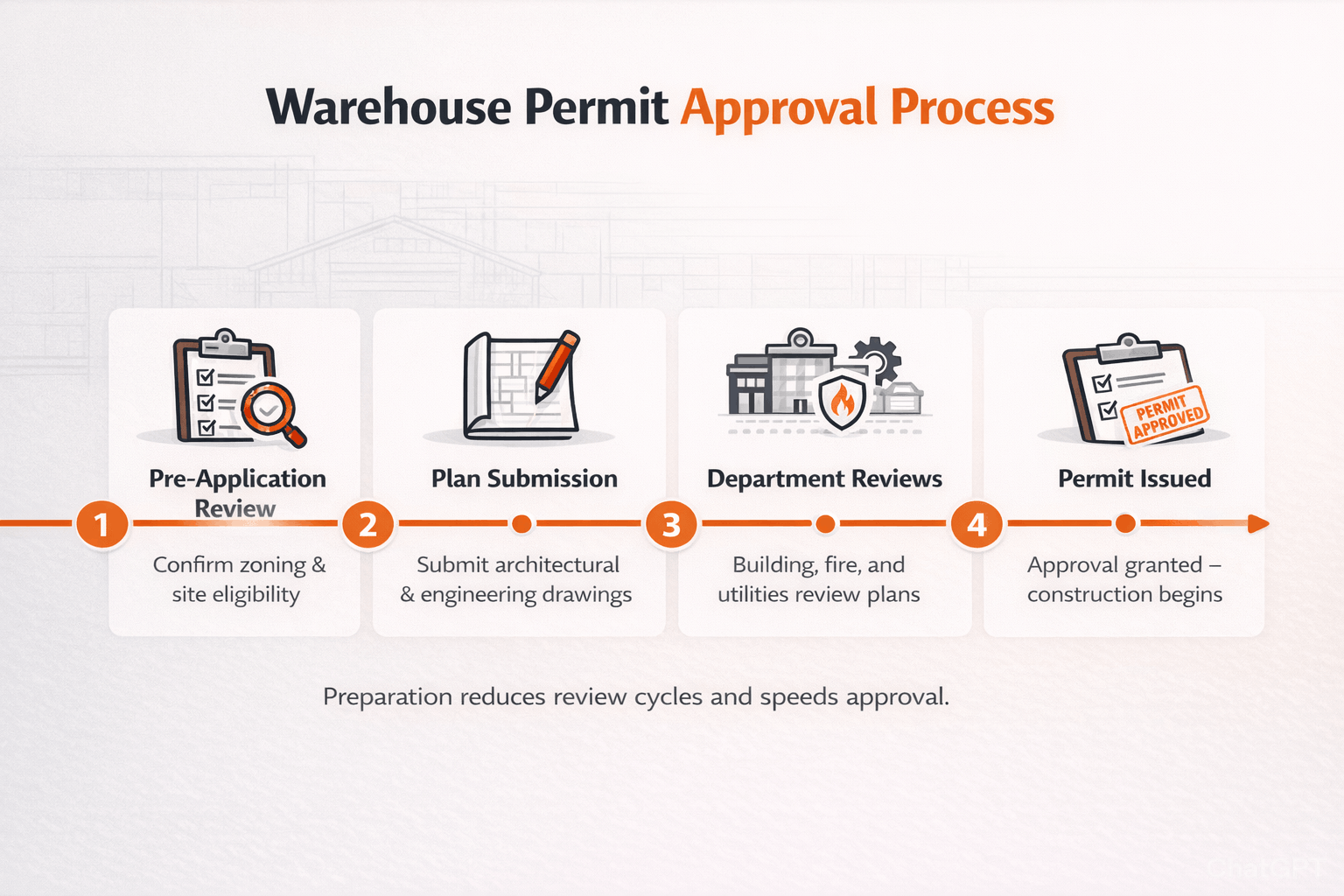
Step 1: Confirm Zoning and Land Use Compliance
Before preparing full construction drawings, confirm that warehouse use is allowed on the property. This step prevents major setbacks later.
You should verify:
The property zoning classification
Whether distribution or storage use is permitted
Height and setback restrictions
Parking and loading requirements
Any conditional use requirements
If warehouse use is not allowed by right, you may need:
A conditional use permit
A zoning variance
A rezoning application
These approvals may require public hearings. Because of that, timelines can extend by several months. For this reason, zoning review should always come first.
Step 2: Prepare Complete Construction and Compliance Documents
Once zoning is confirmed, your design team prepares technical drawings and reports. Accuracy is critical at this stage. Incomplete submissions are the most common cause of delays.
Typical submission packages include:
Architectural plans
Structural engineering calculations
Mechanical, electrical, and plumbing plans
Fire protection drawings
Site and grading plans
Environmental reports, if required
It is also important to coordinate between consultants. For example, sprinkler design must align with rack layout and ceiling height. Early coordination reduces correction cycles.
Step 3: Submit Permit Applications to the Correct Agencies
Warehouse projects often require submission to multiple departments. These may include:
Building department
Planning and zoning department
Fire department
Public works
Environmental services
Some cities use online portals. Others require in-person or hybrid submissions. Application fees are typically based on project valuation or square footage. Once submitted, your project enters formal plan review.
Step 4: Plan Review and Agency Comments
During plan review, agencies check compliance with:
Building codes
Fire codes
Accessibility standards
Energy regulations
Zoning ordinances
Environmental laws
Reviewers issue written comments if corrections are needed. Do not be alarmed if you receive comments. This is normal. Most projects go through at least one revision cycle. Responding quickly and clearly to comments keeps the process moving.
Below is a simplified timeline overview:
| Stage | Typical Duration | What Happens |
|---|---|---|
| Zoning verification | 1–4 weeks | Land use review |
| Plan preparation | 4–12 weeks | Drawings and reports finalized |
| Initial plan review | 3–8 weeks | Agency comments issued |
| Revisions and resubmittal | 2–6 weeks | Corrections addressed |
| Final approval | 1–3 weeks | Permit issued |
Timelines vary by jurisdiction and project complexity. Large distribution centers may take longer.
Step 5: Permit Issuance and Construction Inspections
Once plans are approved, the building department issues the permit. However, approval on paper is not the end. Construction inspections follow.
Inspectors typically review:
Foundation work
Structural framing
Electrical installation
Plumbing systems
Fire sprinkler installation
Final building completion
Each inspection must pass before moving to the next phase. If deficiencies are found, corrections must be made before approval. Keeping detailed records helps avoid confusion during inspections.
Step 6: Final Inspection and Certificate of Occupancy
After construction is complete, a final inspection is scheduled. If the warehouse meets all requirements, the city issues a Certificate of Occupancy (CO).
The CO confirms:
The building complies with approved plans
Fire protection systems are operational
Life safety systems meet code
The structure is safe for occupancy
Without a Certificate of Occupancy, you cannot legally operate the warehouse. This document is often required by lenders, tenants, and insurance providers.
Common Challenges in Warehouse Permit Approvals
Warehouse permitting can be complex. While most projects move forward successfully, delays are common. Understanding common obstacles helps you prepare in advance.
Incomplete or Inconsistent Drawings
This is the most frequent issue.
For example:
Structural plans do not match architectural drawings
Fire sprinkler layouts conflict with rack height
Mechanical loads exceed electrical capacity
These inconsistencies lead to correction notices. Careful coordination between consultants reduces this risk.
Zoning Conflicts and Community Concerns
Distribution warehouses often generate heavy truck traffic.
Neighbors may raise concerns about:
Noise
Traffic congestion
Operating hours
Environmental impact
If public hearings are required, approvals may take longer. Early community engagement can help reduce opposition.
Fire Code and High-Pile Storage Issues
High-pile storage is common in logistics centers. However, fire codes regulate storage height and sprinkler design.
Common issues include:
Inadequate sprinkler density
Improper rack spacing
Insufficient exit access
Hazardous material misclassification
Fire departments review warehouse projects carefully because safety risks are higher in large storage facilities.
Environmental Review Delays
Projects near sensitive areas may require environmental studies.
Delays can occur due to:
Incomplete traffic impact reports
Stormwater drainage concernsAir quality analysis
Hazardous material storage plans
Environmental review often runs parallel to building review. However, unresolved environmental concerns can pause approvals.
Inspection Failures During Construction
Even after plan approval, field inspections can cause delays.
Common issues include:
Work completed without inspection
Installation not matching approved plans
Improper fire system installation
Accessibility compliance gaps
Keeping inspectors informed and scheduling inspections early helps avoid setbacks.
Tips to Speed Up Warehouse Permit Approvals
While every jurisdiction has its own process, certain best practices apply everywhere. Below are practical strategies that improve approval timelines.
Confirm zoning before investing in full design
Hire experienced architects and engineers
Conduct pre-application meetings with agencies
Submit complete, coordinated drawings
Respond to plan review comments quickly
Maintain open communication with reviewers
Schedule inspections early
Track permit status regularly
Many delays happen due to avoidable paperwork issues. Organized documentation and proactive follow-up make a significant difference.
For complex warehouse developments, professional permit expediting and consulting services can reduce review cycles and coordinate across agencies.
Renewals and Ongoing Compliance After Permit Approval
Receiving your building permit and Certificate of Occupancy is a major milestone. However, compliance does not end there.
Warehouse operations must continue meeting safety, zoning, and environmental standards long after construction is complete.
Failing to maintain compliance can result in fines, permit suspension, or operational shutdown. Therefore, it is important to understand ongoing obligations.
Annual Permit Renewals and Business Licenses
Many jurisdictions require annual renewals for certain permits. These may include:
Business operation licenses
Fire department permits
Hazardous material storage permits
Stormwater discharge permits
Renewal periods vary by city. Some expire annually, while others renew every two or three years. Missing renewal deadlines can trigger penalties. It may also cause temporary suspension of operations.
Keeping a compliance calendar helps track expiration dates.
Fire Safety Inspections and Storage Compliance
Warehouses are subject to periodic fire inspections.
Inspectors check for:
Proper sprinkler maintenance
Clear exit paths
Safe rack spacing
Updated hazardous material inventory
Functioning fire alarms
If your facility uses high-pile storage, compliance must remain consistent with approved plans. For example, increasing rack height without approval may violate fire code. Even small layout changes can require review.
Routine internal safety audits can prevent costly corrections during inspections.
Environmental and Operational Monitoring
Some warehouse operations must submit ongoing reports to environmental agencies.
These may include:
Air quality compliance reports
Stormwater management logs
Hazardous waste tracking forms
Refrigerant system inspections
Cold storage facilities and distribution centers with large fleets may face stricter reporting standards. Staying organized with documentation reduces risk during audits.
Below is a summary of common ongoing compliance requirements:
| Compliance Area | Frequency | Key Responsibility |
|---|---|---|
| Business License Renewal | Annual | Operations Manager |
| Fire Inspection | Annual or Semi-Annual | Facility Manager |
| Hazardous Material Reporting | Annual | Safety Officer |
| Stormwater Reporting | Annual or Quarterly | Environmental Consultant |
| Sprinkler System Testing | Quarterly or Annual | Fire Protection Contractor |
Regular internal reviews help ensure smooth inspections and avoid violations.
Special Considerations for Different Types of Warehouses
Not all warehouses operate the same way. Requirements vary depending on the type of facility and goods stored. Understanding these differences helps prevent compliance issues.
Distribution and E-Commerce Fulfillment Centers
Large distribution centers often require additional review due to:
High truck traffic
Extended operating hours
Large employee counts
Automation systems
Traffic impact studies are often required during permitting. Parking and loading design must meet local planning standards. Automation systems may also trigger electrical and mechanical review.
Cold Storage Warehouses
Cold storage facilities involve complex refrigeration systems.
These systems may require:
Mechanical permits
Refrigerant compliance documentation
Environmental reporting
Energy code review
Because refrigeration systems use regulated chemicals, agencies often review them closely. Routine system inspections are also required after occupancy.
Hazardous Material Storage Warehouses
Facilities that store chemicals, fuels, or flammable goods face strict oversight.
Additional approvals may include:
Hazardous material handling permits
Fire department operational permits
Environmental impact assessments
Secondary containment requirements
Failure to disclose stored materials accurately can result in severe penalties. Always update agencies if storage type changes.
Bonded and Customs Warehouses
If you plan to store imported goods under bond, customs authorization may be required. Bonded warehouses allow duty deferral until goods are released. However, they require:
Federal authorization
Security controls
Inventory tracking systems
Periodic audits
These facilities must meet both local building codes and federal customs requirements.
Final Thoughts on Warehouse Permit Requirements
Warehouse development involves more than construction. It requires careful coordination across zoning, building, fire, and environmental agencies.
While the process may seem complex, breaking it into steps makes it manageable.
Start with zoning verification. Prepare complete and accurate documents. Respond quickly to agency comments. Maintain compliance after occupancy.
When handled correctly, permits protect your project, reduce liability, and ensure safe operations.
For large or complex warehouse developments, working with experienced permit consultants and development advisors can reduce review cycles and help coordinate approvals across departments.
Proper planning today prevents costly delays tomorrow.