Zoning laws shape how land can be used across Florida. They affect where homes are built, how businesses operate, and what developers can legally construct. If you own property, plan to invest, or want to build in Florida, zoning rules matter from day one.
This guide explains Florida zoning laws in plain language. It is written for property owners, developers, investors, and professionals who want clear answers without legal jargon. The focus stays practical, local, and easy to follow—aligned with how JDJ Consulting supports land use and development projects across Florida.
What Are Zoning Laws in Florida?
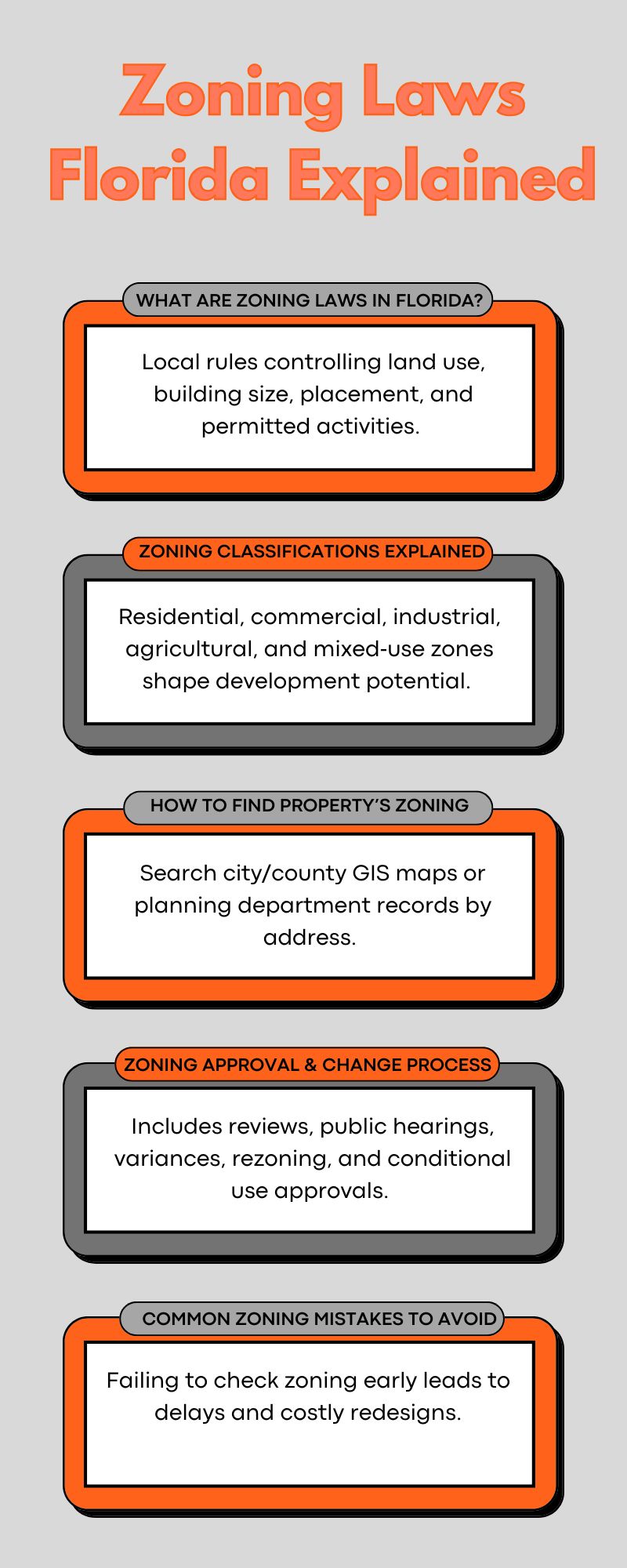
Zoning laws are local rules that control how land can be used. Each city and county in Florida adopts its own zoning code. These codes divide land into zones and assign rules to each zone.
Zoning tells you what you can build, how big it can be, and how the property can be used. It also controls setbacks, height limits, parking, and density.
In Florida, zoning works at the local level. The state sets planning standards, but cities and counties enforce the details.
What Zoning Really Means in Simple Terms
Zoning answers basic land use questions, such as:
Can this property be used for housing or business?
How many units can be built?
How tall can the building be?
How close can it sit to the street or neighbors?
Each zoning district has its own rules. A property zoned for single-family homes cannot be used for retail unless the zoning changes or an exception is granted.
Zoning is not optional. Even small projects must follow zoning rules.

Why Zoning Laws Matter to Property Owners and Developers
Zoning affects value, risk, and project timelines. A property that looks perfect on paper may not work once zoning limits are reviewed.
Zoning laws help:
Protect property values
Separate incompatible land uses
Control growth and density
Reduce conflicts between neighbors
At the same time, zoning can slow projects if not reviewed early. Many delays happen because zoning was checked too late.
This is why zoning due diligence matters before buying or designing a project.
Who Controls Zoning in Florida?
Zoning authority rests with local governments. This includes:
Cities
Counties
Special planning districts
Each local government adopts:
A Comprehensive Plan (long-term land use vision)
A Zoning Code (day-to-day development rules)
The zoning code must align with the comprehensive plan. If it does not, changes may be required before development can move forward.
Florida Zoning Law Basics You Should Know
Florida zoning laws follow a structured system. While details vary by location, the core rules are consistent across the state.
Understanding these basics helps avoid common mistakes.
Common Zoning Rules You Will See
Most zoning codes regulate the same core elements.
These include:
Permitted land uses
Minimum lot size
Building height limits
Front, side, and rear setbacks
Lot coverage limits
Parking requirements
Density or unit limits
Each rule exists to manage space, traffic, and safety.
Here is a simple overview of how zoning rules work in practice.
| Zoning Rule | What It Controls | Why It Matters |
|---|---|---|
| Permitted Uses | What activities are allowed | Prevents incompatible uses |
| Setbacks | Distance from property lines | Protects light and privacy |
| Height Limits | Maximum building height | Controls scale and views |
| Density | Units per acre | Manages growth |
| Parking | Required parking spaces | Reduces congestion |
Even if a use is allowed, all other rules must still be met.
Zoning vs Building Codes in Florida
Zoning laws and building codes are often confused. They serve different purposes.
Zoning laws focus on land use and layout. Building codes focus on construction safety.
- Zoning answers: “Can you build this here?”
- Building codes answer: “How must it be built safely?”
Both must be approved before construction begins.
The Legal Framework Behind Florida Zoning
Florida zoning operates under state planning law. Local governments must adopt zoning rules that match their comprehensive plans. If a zoning rule conflicts with the plan, it can be challenged.
This balance allows local control while keeping development consistent with long-term growth goals.
Zoning Classifications in Florida Explained
Florida uses several common zoning categories. Each category groups similar land uses together. Knowing these classifications helps you quickly assess a property’s potential.
Residential Zoning Categories
Residential zoning covers housing uses. These zones vary by density and structure type.

Common residential zones include:
Single-family residential
Multi-family residential
Townhomes and duplexes
Rules often limit unit count, height, and lot coverage.
Here is a general comparison.
| Residential Zone Type | Typical Use | Density Level |
|---|---|---|
| Single-Family | Detached homes | Low |
| Duplex / Townhome | Attached units | Medium |
| Multi-Family | Apartments | Higher |
Even within residential zones, restrictions can differ block by block.
Commercial Zoning Categories
Commercial zoning allows business activity. These zones support offices, retail, and services.
Examples include:
Neighborhood commercial
General commercial
Office professional
Mixed commercial
Commercial zones often have strict parking, access, and signage rules.
Traffic impact is a major review factor in these zones.
Industrial and Agricultural Zoning
Industrial zoning supports manufacturing, storage, and logistics. These zones are usually separated from residential areas. Agricultural zoning allows farming and rural uses. It may also permit limited residential development.
Both zones tend to have large lot requirements and use-specific limits.
Mixed-Use and Special Zoning Districts
Mixed-use zoning allows residential, commercial, and sometimes office uses on the same site.
Special zoning districts may include:
Overlay districts
Transit-oriented zones
These districts offer flexibility but often require detailed approvals.
How to Find Your Property’s Zoning in Florida
Before buying land or planning a project, you should confirm the zoning. This step saves time, money, and stress later. Zoning details are public records. Most Florida cities and counties make this information easy to access online.
How to Check Zoning Using City or County Websites
Start with the local government website where the property is located. Look for sections labeled:
Planning and Zoning
Land Development
GIS or Zoning Maps
Most sites allow you to search by address or parcel number. Once you find the property, note the zoning code listed. This code links to the zoning rules that apply to the site. If the website feels confusing, do not guess. Zoning terms can look simple but carry strict limits.
Understanding Zoning Codes and Labels
Zoning codes often use short letters and numbers. For example, codes like R-1, RM-2, or C-3 are common.
Each code points to a specific zoning district with its own rules.
Here is a basic example of how codes are often used.
| Zoning Code Example | General Meaning | Typical Use |
|---|---|---|
| R-1 | Low-density residential | Single-family homes |
| RM | Residential multi-family | Apartments |
| C-1 | Neighborhood commercial | Small retail |
| I | Industrial | Warehouses |
Always review the full zoning description, not just the label.
Reading Zoning Maps the Right Way
Zoning maps show how land is divided into districts. Colors and patterns identify each zone.
When reviewing a zoning map, pay attention to:
Property boundaries
Adjacent zoning districts
Overlay zones
Future land use designations
Nearby zoning matters. A commercial zone next to your site can affect noise, traffic, and design limits.
When to Call the Local Planning Department
Online tools are helpful, but they do not replace human confirmation.
Contact the local planning or zoning office when:
The zoning code is unclear
Multiple zones apply to one parcel
You plan a complex or mixed-use project
A variance or rezoning may be needed
Planners can confirm rules and flag issues early. This step often prevents costly redesigns.
The Florida Zoning and Approval Process
Zoning approval is not one-size-fits-all. The process depends on the project type and the local code. Some projects move fast. Others require public hearings and multiple reviews.

Zoning Review Before You Buy or Build
Zoning review should happen before:
Purchasing land
Signing development contracts
Finalizing building plans
Early review helps confirm:
Allowed uses
Density limits
Parking needs
Height and setback rules
Skipping this step is one of the most common development mistakes.
Rezoning in Florida: What It Means
Rezoning changes the zoning district of a property. It is needed when the current zoning does not allow the intended use.
Rezoning usually involves:
A formal application
Staff review
Public hearings
Approval by a local board or commission
Rezoning is not guaranteed. Decisions are based on planning goals, compatibility, and public input.
Variances and Special Exceptions
Some projects do not need full rezoning. Instead, they may qualify for limited relief.
Common options include:
Variances – minor adjustments to zoning rules
Conditional uses – uses allowed under specific conditions
Special exceptions – case-by-case approvals
These approvals still require justification and review. They are not automatic.
Florida Zoning Laws and Recent Policy Changes
Florida zoning rules continue to evolve. Recent state laws have influenced how local governments handle development. Understanding these changes helps property owners plan smarter.
State-Level Influence on Local Zoning
Florida law requires local zoning codes to follow adopted comprehensive plans. The state also sets limits on how restrictive local governments can be in certain areas. Housing, density, and land supply have become major policy topics. Local zoning codes are being updated more often as a result.
The Live Local Act and Zoning Flexibility
Recent legislation has encouraged higher-density residential development in certain areas. In some cases, residential uses may be allowed in commercial zones, especially for housing projects that meet specific criteria. These changes can open new opportunities but also add complexity. Projects must still meet local standards and review requirements.
Zoning in Practice: Real-World Florida Examples
Zoning rules feel abstract until they affect a real project. In practice, zoning shapes design, cost, and approval timelines. When you understand how zoning applies on the ground, planning becomes easier.
Below are common Florida scenarios that show how zoning works in everyday development.
Building a Residential Home in Florida
Home construction must match the zoning district. Even small details matter.
A typical residential zoning review looks at:
Minimum lot size
Front, side, and rear setbacks
Maximum building height
Lot coverage limits
Allowed unit count
For example, a single-family zone may allow only one home per lot. Adding a second unit or guest house could require special approval.
Because of this, many design changes happen after zoning review. Early checks prevent redesigns later.
Commercial Development and Zoning Limits
Commercial projects face more review than residential ones. Local governments focus on traffic, access, and compatibility.
A commercial zoning review often includes:
Parking count and layout
Driveway access points
Loading and service areas
Signage limits
Operating hours
For instance, a retail store may fit the zoning, but parking shortages can delay approval. Planners may also require traffic studies. As a result, commercial zoning review often takes longer.
Mixed-Use Projects in Growing Florida Cities
Mixed-use zoning allows housing, retail, and offices on one site. Cities use these zones to support walkable areas.
Mixed-use projects often benefit from:
Flexible use standards
Higher density allowances
Reduced parking requirements
However, these projects still require careful coordination. Developers must meet design standards and public space rules. Because of the complexity, mixed-use zoning works best with early planning support.
Zoning Compliance and Enforcement in Florida
Once a project receives zoning approval, compliance does not stop. Local governments monitor projects during construction and use. Failure to follow zoning rules leads to penalties and delays.

What Happens When a Project Violates Zoning Rules
Zoning violations trigger enforcement action. Cities and counties respond quickly once they spot an issue.
Common violations include:
Using property for an unapproved purpose
Building beyond height or setback limits
Adding structures without approval
Operating a business in a residential zone
Local governments may issue stop-work orders or fines. In some cases, they require removal of non-compliant structures. Because enforcement costs time and money, prevention matters.
How Local Governments Enforce Zoning
Zoning enforcement usually begins with a complaint or inspection. After that, the process moves through clear steps.
Most enforcement actions include:
Written notice of violation
A deadline to correct the issue
Fines for continued non-compliance
Legal action if the issue continues
Property owners can often resolve issues by correcting the violation or applying for approval.
Appealing Zoning Decisions in Florida
If a zoning decision feels incorrect, appeal options exist. Appeals follow local procedures and strict deadlines.
Appeals may involve:
Zoning boards
Planning commissions
Local governing bodies
Strong appeals rely on facts, zoning language, and consistency with planning goals. Emotional arguments rarely succeed.
Common Zoning Mistakes and How to Avoid Them
Many zoning problems happen because of simple oversights. Awareness reduces risk.
Buying Property Without Checking Zoning
Some buyers assume zoning allows their planned use. That assumption often causes delays.
Always confirm:
Zoning district
Permitted uses
Future land use designation
This step should happen before closing.
Relying Only on Online Maps
Online maps help, but they do not replace confirmation. Map data can lag behind recent changes. A quick call or email to the planning department confirms accuracy.
Waiting Too Long to Ask for Help
Zoning issues grow more expensive over time. Early advice saves redesign costs and lost time. Land use professionals help interpret codes and coordinate with local officials.
Final Thoughts on Florida Zoning Laws
Zoning laws guide growth across Florida. They affect every stage of land use, from purchase to construction to daily operation. Clear zoning review leads to smoother approvals. Early planning reduces risk. Local knowledge makes a difference. For property owners and developers, zoning should never be an afterthought. It should be part of the first conversation.
FAQs: Zoning Laws Florida
What are zoning laws in Florida?
Florida zoning laws are local rules that control how land and property can be used. Cities and counties divide land into zoning districts, such as residential or commercial, and assign development standards to each. These rules cover building height, density, setbacks, and permitted uses. While Florida state law sets planning guidelines, local governments create and enforce zoning codes. This local control means zoning rules can vary widely from one city or county to another.
Who regulates zoning in Florida?
Zoning in Florida is regulated by local governments, not a single statewide agency. Cities, towns, and counties adopt zoning ordinances and enforce them through planning and zoning departments. These local rules must align with the community’s comprehensive plan, which outlines long-term land use goals. State law provides oversight, but daily zoning decisions, approvals, and enforcement happen at the local level.
How do zoning laws affect property owners?
Zoning laws determine what you can and cannot do with your property. They affect whether you can build, expand, rent, or change how the property is used. For example, zoning may limit the number of units, building height, or business activities. Property owners who ignore zoning rules risk fines, delays, or denial of permits. Reviewing zoning early helps avoid costly surprises.
How can I find the zoning for my property in Florida?
You can find zoning information through your city or county’s planning department. Most local governments offer online zoning maps or GIS tools where you can search by address. These tools show the zoning district and often link to the full zoning code. For confirmation, contacting the planning office directly is recommended, especially for complex or high-value projects.
What is the difference between zoning and land use?
Land use refers to how land is planned at a broad level, while zoning sets detailed development rules. In Florida, land use designations come from the comprehensive plan and guide long-term growth. Zoning implements that plan through specific regulations. A property’s land use category may allow certain activities, but zoning controls how those activities are developed on the site.
What are the most common zoning categories in Florida?
Florida zoning categories typically include:
Residential zoning for single-family and multi-family housing
Commercial zoning for retail, office, and service uses
Industrial zoning for manufacturing and warehousing
Agricultural or rural zoning
Mixed-use or planned development zoning
Each category has different standards for density, height, parking, and allowed uses, which are defined in local zoning codes.
Can zoning laws change over time?
Yes, zoning laws can change. Local governments update zoning codes to respond to growth, housing demand, and policy changes. Property owners can also request zoning changes through rezoning applications. However, all changes must align with the comprehensive plan and usually require public hearings. Zoning changes take time and approval is never guaranteed.
What is rezoning in Florida?
Rezoning is the process of changing a property’s zoning classification. It is required when the current zoning does not allow the intended use or development. The process includes an application, staff review, public hearings, and approval by local decision-makers. Rezoning decisions consider compatibility, long-term planning goals, and community impact.
What is a zoning variance?
A zoning variance allows limited relief from specific zoning rules, such as setbacks or height limits. Variances apply only when strict enforcement creates a hardship due to unique property conditions. They do not change the zoning district. Approval requires proof that the request will not harm nearby properties or conflict with zoning intent.
What are conditional uses or special exceptions?
Conditional uses, sometimes called special exceptions, are uses allowed only after additional review. The zoning code lists these uses and sets approval criteria. Local boards review each request to ensure compatibility with surrounding areas. Conditions may be added to reduce impacts such as traffic, noise, or parking issues.
How long does the zoning approval process take?
The timeline depends on the type of request. Basic zoning confirmations may take a few days, while rezoning or conditional use approvals can take several months. Public hearings, staff review, and revisions add time. Starting early and submitting complete applications helps reduce delays.
What happens if I violate zoning laws?
Zoning violations can trigger enforcement actions by the city or county. Common responses include notices of violation, fines, or stop-work orders. Continued violations may lead to legal action or required removal of non-compliant structures. Many issues can be resolved through corrections or approvals if addressed early.
Are zoning laws the same across all Florida cities?
No, zoning laws vary by location. Each city and county adopts its own zoning code. While the structure is similar statewide, specific rules, definitions, and approval processes differ. This local variation makes it important to review zoning rules for the exact jurisdiction where the property is located.
How does zoning affect property value?
Zoning directly affects property value by limiting or expanding development potential. Flexible zoning can increase value, while restrictive zoning may limit future use. Buyers, investors, and lenders review zoning closely because it impacts long-term income potential and redevelopment options.
What is mixed-use zoning in Florida?
Mixed-use zoning allows residential, commercial, and sometimes office uses on the same site. Florida cities use mixed-use zoning to support walkable areas and efficient land use. These zones offer flexibility but often include detailed design standards to manage density, traffic, and community character.
Do I need zoning approval before buying property?
Zoning approval is not required to buy property, but zoning review should happen before closing. Buyers should confirm that the zoning allows their intended use. Purchasing land without zoning review can lead to unexpected limits, delays, or the need for rezoning.
How do Florida zoning laws impact housing development?
Zoning laws control density, unit count, and building design, which directly affect housing supply. Recent policy changes support higher-density housing in certain areas. Still, local zoning standards apply, and projects must meet design, parking, and compatibility requirements.
Can zoning decisions be appealed in Florida?
Yes, zoning decisions can be appealed through local appeal procedures. Appeals usually go to zoning boards or local governing bodies. Deadlines are strict, and appeals must rely on zoning rules and planning standards rather than personal opinions.
What role do public hearings play in zoning decisions?
Public hearings allow residents and stakeholders to comment on rezoning, variances, and conditional uses. Local boards consider public input along with staff recommendations. While public opinion matters, final decisions must follow zoning rules and adopted planning policies.
When should I work with a zoning consultant?
You should work with a zoning consultant when buying land, planning development, or facing zoning challenges. Consultants help interpret zoning codes, identify risks, and coordinate with local agencies. Early involvement improves approval outcomes and helps projects move forward with fewer delays.
Resources
Florida Statutes – Community Planning Act: Governs comprehensive planning, zoning authority, and land use regulation in Florida.
Florida Department of Economic Opportunity (DEO) – Community Planning:
https://www.floridajobs.org/community-planning-and-development
Provides state-level guidance on land use planning and growth management.City and County Planning & Zoning Departments
Access local zoning maps, zoning codes, and land development regulations through individual city or county websites.Municipal Land Development Regulations (LDRs)
Example resource hub: https://library.municode.com. Hosts zoning codes and ordinances for many Florida cities and counties.Local Planning & Zoning Boards
Information on hearings, rezoning, variances, and conditional uses is typically found on city or county government sites.