How Building Codes Are Structured in San Antonio
San Antonio organizes building codes into a clear framework. Understanding this structure helps homeowners, contractors, and developers follow rules without confusion.
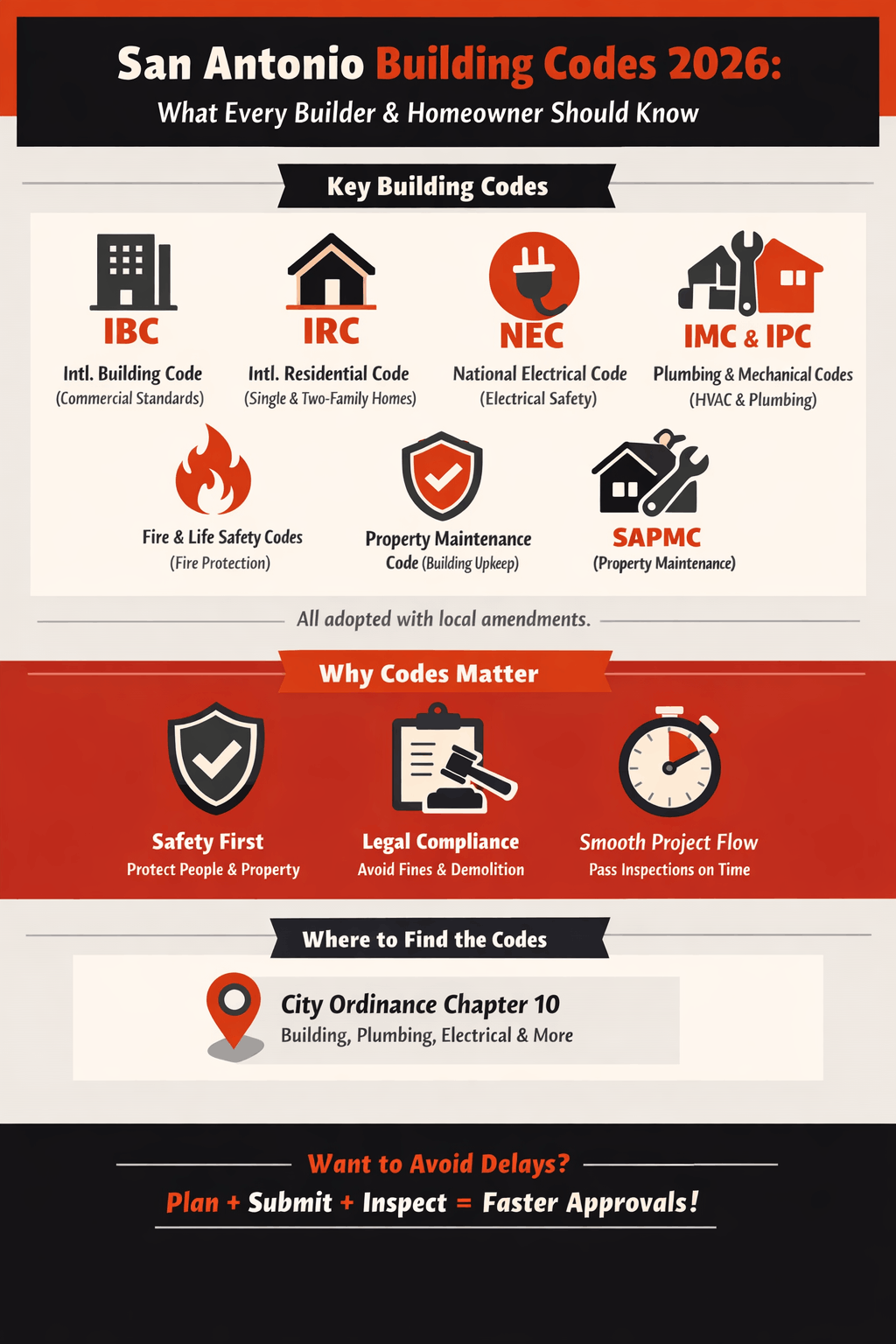
The codes are mostly found in Chapter 10 of the City’s ordinances, which outlines:
Building regulations
Mechanical, plumbing, and electrical codes
Energy and fire safety requirements
Property maintenance rules
Think of it as a roadmap: each chapter focuses on a different aspect of construction and property safety. Knowing where to look saves time during planning, permits, and inspections.
What’s in Chapter 10 of the Ordinances
Chapter 10 is the backbone of San Antonio’s building regulations. Here’s a simple breakdown:
| Section | Focus Area | Key Points |
|---|---|---|
| 10.1 | Administration | Permit process, inspections, definitions |
| 10.2 | Building Code | Structural safety, materials, design |
| 10.3 | Mechanical Code | HVAC installation and ventilation |
| 10.4 | Plumbing Code | Water supply, waste, sanitation |
| 10.5 | Electrical Code | Wiring, outlets, circuit safety |
| 10.6 | Energy Code | Efficiency standards for buildings |
| 10.7 | Fire Prevention | Sprinklers, alarms, exits |
| 10.8 | Property Maintenance | Occupied & vacant property standards |
This table makes it easy to see which part of the code applies to each stage of construction or renovation.
Key Terms Explained (Quick Glossary)
Even if you’re not a builder, you’ll encounter these terms when dealing with codes:
Permit – Official approval to start a project
Inspection – A city official checks work for compliance
Certificate of Occupancy (CO) – Proof a building meets safety requirements
Building Official – City staff responsible for code enforcement
Trade Permits – Approvals for specific systems like electrical or plumbing
Knowing these terms helps reduce confusion and ensures your project moves smoothly.
Permit Requirements — Residential & Commercial
Permits are the foundation of legal construction. No matter the project size, certain work requires approval from San Antonio’s Development Services.
When a Permit Is Required (Residential)
For homeowners, a permit is needed for most major changes. Small projects like painting or minor repairs usually do not need approval.
Common residential projects that require permits:
Building a new home
Adding a second story or large addition
Decks and porches over a certain size
Installing HVAC, plumbing, or electrical systems
Significant roof replacements
A simple yes/no guide helps homeowners decide if a permit is needed:
| Project Type | Permit Required? | Notes |
|---|---|---|
| New home construction | Yes | All sizes |
| Bathroom/kitchen remodel | Yes | Includes plumbing & electrical |
| Deck under 200 sqft | No | If not attached to house |
| Fence under 8 ft | No | Heights over 8 ft require permit |
| Roof replacement | Yes | Even if only shingles |
This table helps homeowners avoid common mistakes that delay projects.
Commercial Permits Explained
Commercial projects usually have more requirements than residential ones. Types of permits include:
Building permits – Overall structure
Trade permits – Electrical, mechanical, plumbing
Sign permits – For business signage
Temporary permits – For construction trailers or temporary structures
Commercial permits ensure safety for employees, customers, and the public.
Step-by-Step Permit Process
Getting a permit in San Antonio is straightforward, but following the steps carefully saves time:
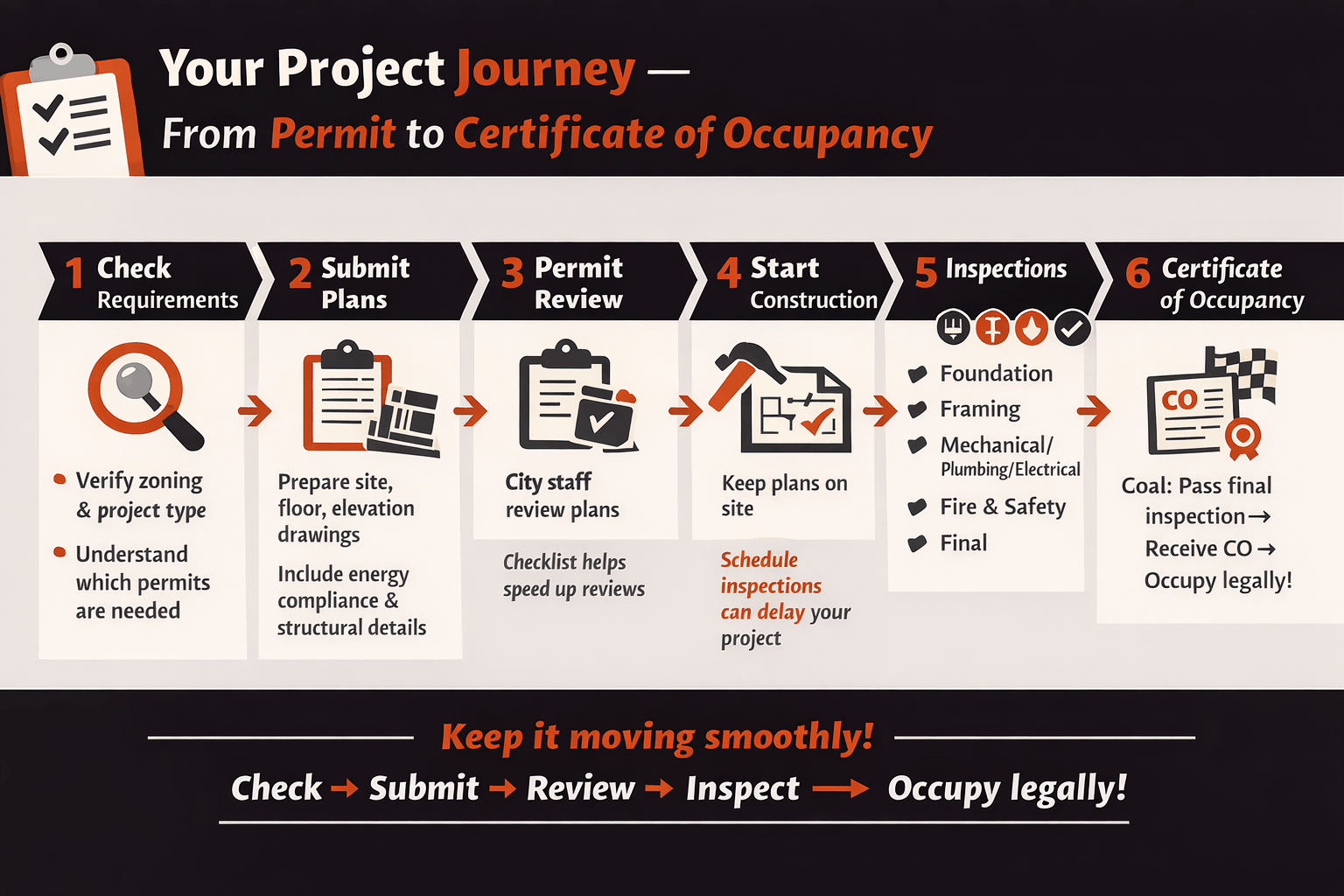
Check zoning rules – Confirm your project is allowed in your area.
Prepare plans – Drawings, site plans, and energy compliance forms.
Submit application – Online or at Development Services.
Pay fees – Based on project type and size.
Review by city staff – They may request revisions.
Receive permit – Once approved, work can begin.
Schedule inspections – At various stages of construction.
Final inspection & Certificate of Occupancy – Confirms project meets all codes.
Following this sequence reduces the chance of unexpected delays.
Plan Review — What the City Looks For
Before any construction begins, San Antonio requires a plan review. This ensures your project meets building codes, safety standards, and zoning requirements.
Residential Plan Review Checklist
Here’s a simple checklist for homeowners and builders:
Site plans – Shows property boundaries and setbacks
Floor plans – Layout of rooms, doors, and windows
Elevation drawings – Exterior views of the building
Energy compliance reports – Insulation, HVAC efficiency
Structural details – Footings, framing, load-bearing walls
Having these ready speeds up approvals and reduces back-and-forth with city reviewers.
What Reviewers Inspect
City staff focus on key areas, including:
Zoning compliance – Ensures the project fits land use rules
Floodplain status – Checks if construction is in a flood zone
Historic preservation concerns – For designated properties
Utilities layout – Electrical, plumbing, and HVAC plans
Fire safety – Exits, sprinklers, and alarms
By understanding what they look for, homeowners and contractors can anticipate questions and make changes before submission.
Inspections — What Happens and When
Once your permit is approved, inspections are the next critical step. Inspections ensure your project follows all building codes and is safe for use. They are not meant to slow your progress—they help avoid problems down the road.
Inspections are required at different stages of construction, and missing one can result in fines, work stoppages, or failed final approval.
Key Inspection Types
San Antonio organizes inspections by project phase. Here are the main ones:
| Inspection Type | Purpose | Typical Timing |
|---|---|---|
| Foundation/Footing | Checks footing size, depth, and reinforcement | Before pouring concrete |
| Underground / Utilities | Ensures plumbing, electrical, and gas lines meet code | After trenches are dug, before backfilling |
| Framing / Rough-In | Verifies walls, roofs, beams, and structural elements | After framing, before insulation |
| Mechanical / Plumbing / Electrical | Confirms correct installation of systems | Rough-in and final stages |
| Fire / Safety | Sprinklers, alarms, smoke detectors, exits | Mid-construction or prior to CO |
| Final Inspection | Confirms project is complete and compliant | Before occupancy |
Scheduling inspections early and keeping clear records helps projects stay on track and reduces stress.
Common Inspection Mistakes & How to Avoid Them
Even experienced builders make mistakes that can delay inspections. Here are some tips:
Incomplete plans – Ensure all required drawings are submitted.
Incorrect materials – Only use approved building materials.
Missed staging inspections – Don’t skip footings, rough-in, or framing checks.
Unsafe sites – Keep work areas clear and accessible for inspectors.
Lack of communication – Ask the inspector questions if unsure about requirements.
Following these steps increases the chances of passing inspections the first time.
Code Exceptions, Appeals & Variances
Sometimes, a project may not perfectly fit existing building codes. San Antonio provides options for exceptions and appeals, which help projects stay compliant without unnecessary delays.
When You Can Request an Exception
Exceptions may be requested when:
The project conflicts with a specific code due to unique site conditions.
Certain safety measures are already addressed differently in the design.
Local ordinances allow administrative modifications.
Requests must include documentation and a clear explanation of why the exception is needed.
How Appeals Work
If a permit or inspection is denied, you can appeal the decision. The main options include:
Building-Related & Fire Codes Appeals Board (BRFCAB) – Reviews disputes about code interpretation.
Planning & Zoning Appeals – Handles variances related to land use and setbacks.
Administrative Appeals – Minor adjustments reviewed by Development Services staff.
The appeal process is formal but fair, and proper documentation increases success chances.
Key Tips for Exceptions & Appeals
File early—don’t wait until construction is underway.
Provide detailed plans and explanations.
Keep communication professional and clear with city officials.
Understand the board’s timeline and decision rules.
Handling exceptions correctly saves time, money, and frustration.
Property Maintenance Codes
Building codes don’t end when a structure is complete. San Antonio also enforces Property Maintenance Codes (SAPMC) to ensure properties remain safe, clean, and habitable over time.
Keeping Your Building Safe & Legal
Maintenance codes cover both occupied and vacant properties. Key areas include:
Structural integrity – Roofs, foundations, walls
Plumbing & electrical – Safe operation and compliance
Fire safety – Working alarms, clear exits
Sanitation & pest control – Cleanliness and waste management
Exterior conditions – Landscaping, fences, and walkways
Property owners must regularly inspect and maintain their buildings to avoid violations.
Consequences of Violations
Failing to comply with property maintenance codes can lead to:
Fines and penalties
Required repairs under city supervision
Legal action for unsafe conditions
Reduced property value
Property maintenance is not just a legal requirement—it protects residents and preserves neighborhood quality.
Quick Property Maintenance Checklist
| Area | What to Check | Frequency |
|---|---|---|
| Roof & Structure | No leaks, cracks, or damaged beams | Twice a year |
| Electrical & Plumbing | Functioning outlets, pipes, and fixtures | Annually |
| Fire Safety | Smoke detectors, alarms, fire extinguishers | Every 6 months |
| Exterior | Fences, walkways, landscaping | Seasonally |
| Sanitation | Trash storage, pest control | Monthly |
Following a checklist like this helps avoid city fines and maintain safety.
Code Changes & Updates
Building codes are not static—they change regularly to reflect new safety standards, materials, and environmental requirements. San Antonio adopts updates from the International Code Council (ICC), usually every three years, and sometimes adds local amendments.
Staying updated helps prevent costly delays, failed inspections, and legal issues.
What’s New in 2025 (and Beyond)
Here are the most significant updates affecting residential and commercial construction:
Energy efficiency improvements – Higher insulation standards, energy-rated windows, and efficient HVAC systems.
Fire safety enhancements – Updated sprinkler and alarm requirements for both residential and commercial buildings.
Accessibility adjustments – New rules to improve access for people with disabilities, especially in public buildings.
Structural updates – Revised load calculations and materials standards to better withstand wind, storms, and other environmental factors.
These changes mean that even small renovations may require updated plans to comply with the newest codes.
Why Staying Updated Matters
Avoid fines or work stoppages due to outdated plans.
Reduce inspection delays by submitting compliant designs.
Protect the safety and durability of the building.
Maintain resale value by following current standards.
Regularly check the City of San Antonio Development Services website or consult a professional to remain compliant.
Tips for Working With San Antonio Building Codes
Following building codes does not have to be complicated. Here are practical tips to help homeowners and contractors:
Best Practices for Homeowners
Verify permit requirements before starting any project.
Hire licensed professionals for electrical, plumbing, and HVAC work.
Keep copies of all approvals and inspections.
Plan ahead to reduce delays and unexpected costs.
Communicate with your contractor about code compliance.
Advice for Contractors & Builders
Submit complete plans with all drawings and documentation.
Schedule inspections in advance and track progress.
Use approved materials to meet code standards.
Document exceptions and variances if needed.
Stay informed about code updates and local amendments.
Simple Workflow for Smooth Compliance
| Step | Action | Notes |
|---|---|---|
| Planning | Determine permits & review code requirements | Consult city or professional |
| Documentation | Prepare plans, energy reports, and site drawings | Double-check details |
| Submission | Apply for permits | Include all required documents |
| Construction | Follow approved plans | Schedule inspections per stage |
| Inspection | Complete each inspection | Fix any issues promptly |
| Completion | Obtain Certificate of Occupancy | Ensure final compliance |
Using a workflow like this helps projects move efficiently and avoids surprises.
Conclusion: Simplifying the Code Process
San Antonio building codes may seem complicated at first, but understanding their structure, requirements, and updates makes the process much simpler.
Key takeaways:
Codes exist to protect people, property, and communities.
Permits, plan reviews, inspections, and maintenance are all critical steps in compliance.
Staying informed about updates and local amendments prevents delays and fines.
Clear communication, professional assistance, and proper documentation streamline construction projects.
Need help with San Antonio building codes or permits? Our experts can guide you every step of the way.
- Call us: (818) 793-5058
- Email: sales@jdj-consulting.com
- Contact us: https://jdj-consulting.com/contact-us/
- Visit our home page: https://jdj-consulting.com/
We’re here to make your construction process safe, smooth, and stress-free.