Permitting often feels like paperwork. Forms. Reviews. Waiting.
However, inefficient permitting is much more than an administrative step. It directly affects your project timeline, your budget, and your client relationships.
In construction and development, time equals money. When permits are delayed or mishandled, costs increase quietly. At first, the impact seems small. A few extra weeks. Likewise, a few revisions and some missing documents.
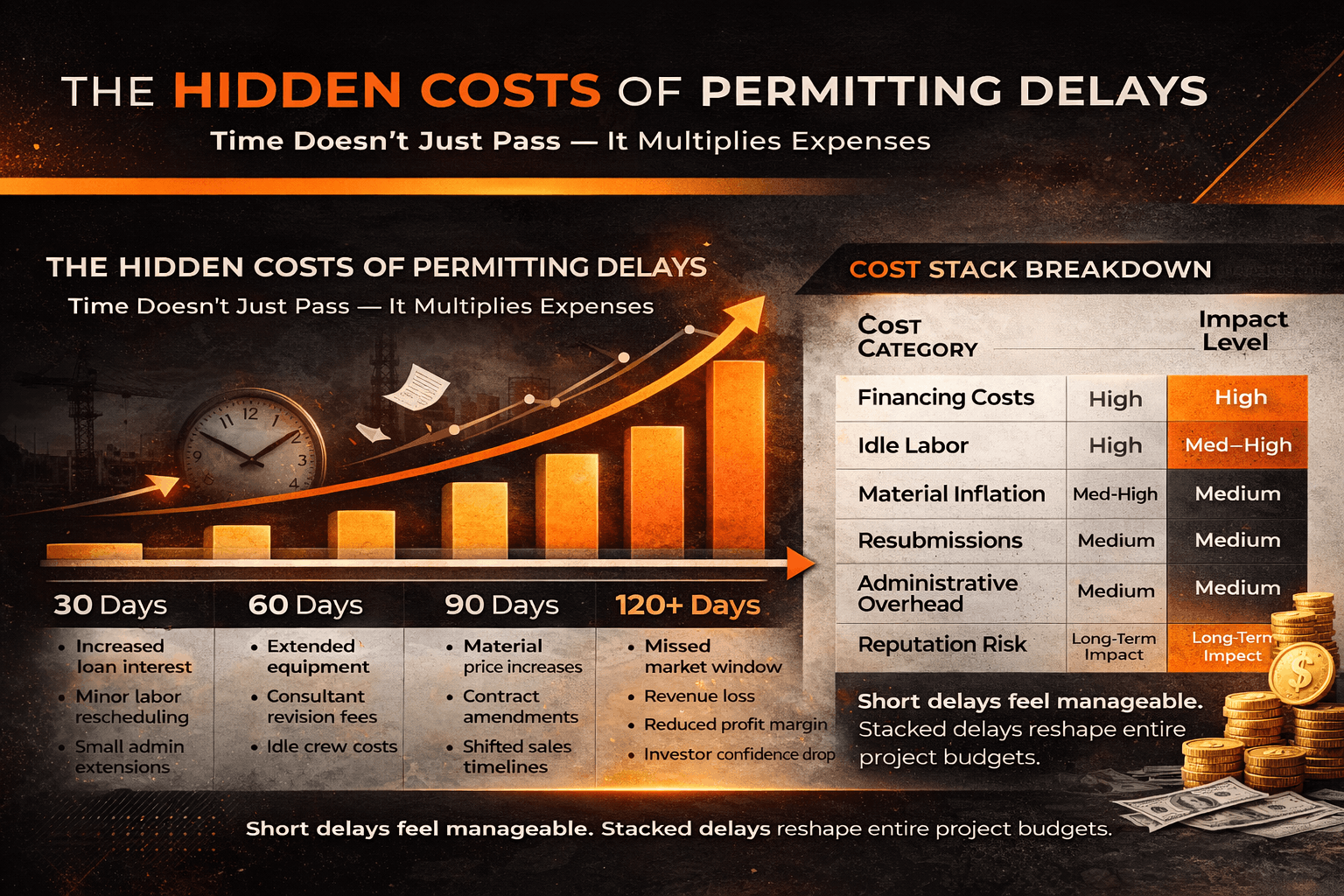
But over time, these delays stack up. Projects stall. Crews sit idle. Equipment rentals extend. Loan interest grows. Clients grow frustrated.
For growing markets like Miami and other fast-moving cities, permitting inefficiencies can slow down entire developments. That affects not just one builder, but investors, contractors, and even future buyers.
In this article, we will break down:
What permitting really involves
What inefficient permitting looks like
The hidden financial and operational costs
Why it happens
And how to reduce risk before delays start
Let’s start with the basics.
Table of Contents
What Is Permitting? A Quick, Simple Overview
Before we talk about hidden costs, we need to understand what permitting actually means in real-world projects. At its core, permitting is official approval from local authorities. It allows you to begin construction legally and safely.
It may seem routine. But it is one of the most critical phases of any project.
Breaking Down Permits — What They Are and Why We Need Them
A permit is formal approval issued by a city or county. It confirms that your plans meet local building codes, zoning laws, and safety rules.
Different projects require different permits. Some of the most common include:
Building permits
Electrical permits
Plumbing permits
Mechanical permits
Zoning approvals
Environmental clearances
Each permit exists for a reason.
Local governments use them to:
Protect public safety
Ensure structural integrity
Maintain zoning standards
Reduce environmental impact
Prevent unsafe construction
Without permits, a project can face stop-work orders, fines, or legal action. In some cases, completed work must be removed. That alone shows why permitting is not optional. It is foundational.
How the Permitting Process Typically Works
Although every jurisdiction differs, the general process follows similar steps.
Here is a simplified view:
Project design is completed
Plans are submitted to the city or county
Review departments evaluate compliance
Comments or revisions are issued
Plans are resubmitted if needed
Final approval is granted
Inspections occur during construction
At first glance, this seems straightforward. However, real-world permitting rarely moves this smoothly.
There are often multiple review departments involved. These may include:
Zoning review
Fire department
Utilities review
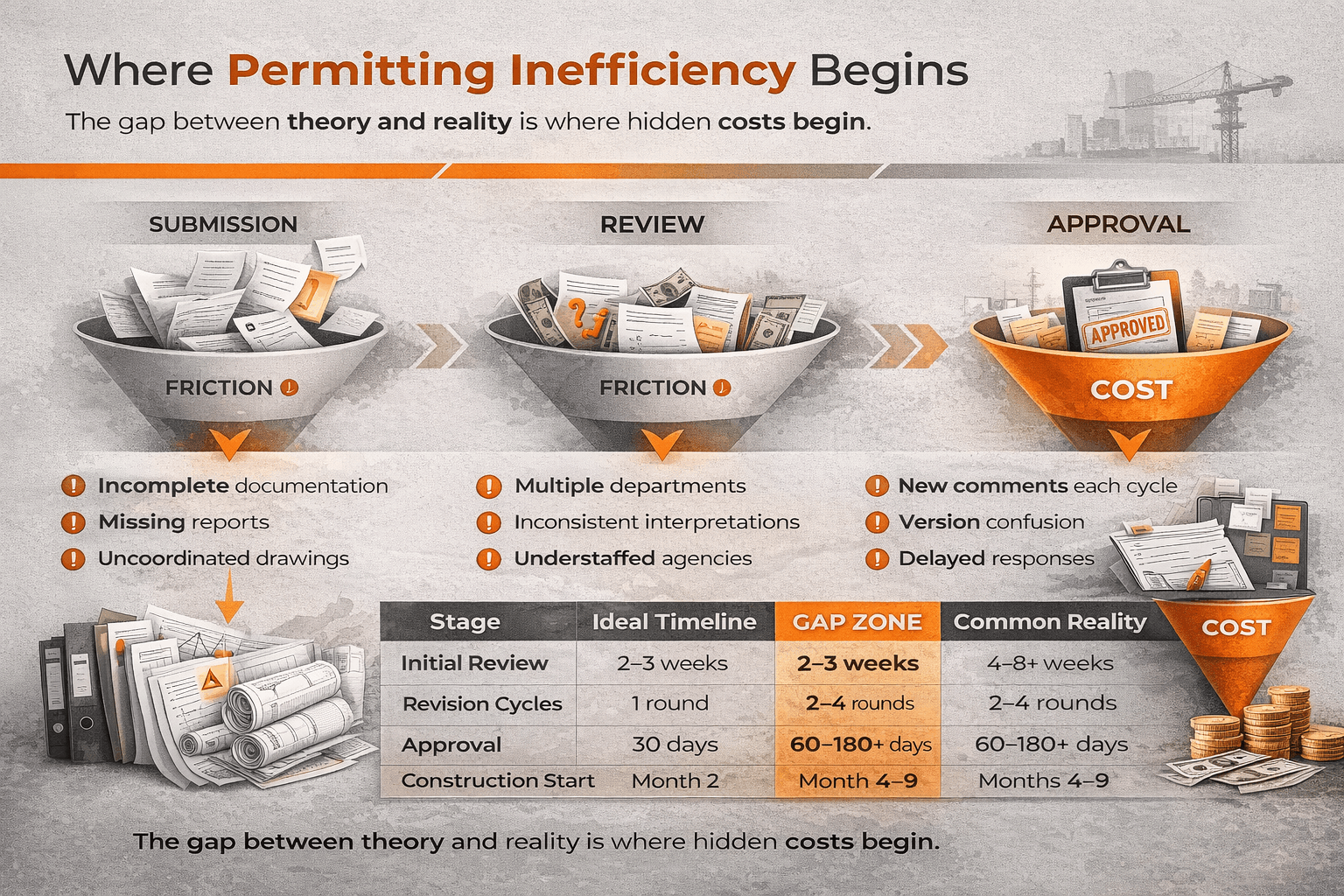
Each department can issue comments. Each comment can trigger revisions. And each revision adds time. Below is a simple comparison of how the process looks in theory versus reality.
| Stage | Ideal Timeline | Common Real-World Scenario |
|---|---|---|
| Plan Submission | Day 1 | Day 1 |
| Initial Review | 2–3 weeks | 4–8 weeks |
| Revision Cycle | 1 round | 2–4 rounds |
| Final Approval | Within 30 days | 60–180+ days |
| Construction Start | Month 2 | Month 4–9 |
The difference is significant. And this gap is where hidden costs begin.
The Many Faces of Permitting Inefficiency
Inefficiency does not always look dramatic. Sometimes it is subtle. A missing form, small plan detail overlooked. An unclear zoning interpretation. But small issues can create large delays.
Inefficient permitting doesn’t just slow projects—it compounds costs across labor, financing, compliance, and inspections, shrinking margins before construction even begins.
What Does “Inefficient Permitting” Look Like?
Inefficient permitting can appear in several ways. First, there may be a lack of transparency. Applicants submit plans but receive little visibility into status updates. Second, communication can be unclear. Comments may be vague or inconsistent across departments. Third, outdated systems slow everything down. Some jurisdictions still rely on:
Paper submissions
Manual routing between departments
Email-based approvals
Physical stamps and signatures
These methods increase the chance of error. They also increase review time.
Another common issue is repeated revision cycles. A project may receive comments, respond to them, and then receive new comments that could have been addressed earlier.
This back-and-forth adds weeks or even months.
Why Inefficiency Happens
Permitting delays are rarely caused by one factor. Instead, they stem from a mix of structural and operational issues.
Here are common causes:
Complex and changing building codes
Different interpretations between reviewers
Understaffed permitting offices
Rapid population growth in high-demand cities
Poor coordination between architects and consultants
Incomplete or inaccurate plan submissions
Fast-growing areas often struggle the most. Development increases, but staffing levels do not always keep pace. This creates backlogs.
In addition, many project teams underestimate permitting complexity. They treat it as a final step instead of an early priority. That mistake is costly.
Early Warning Signs of a Problem
It helps to recognize red flags early.
Watch for these signals:
Multiple correction letters with new comments each round
Long response times with no updates
Requests for documents already submitted
Conflicting feedback from departments
Unclear next steps
If these signs appear, delays are likely growing behind the scenes.
Unseen Consequences — The Hidden Financial Costs
Now we move to the most important question. What does inefficient permitting actually cost? The answer is more than most project owners expect.
Direct Monetary Impacts
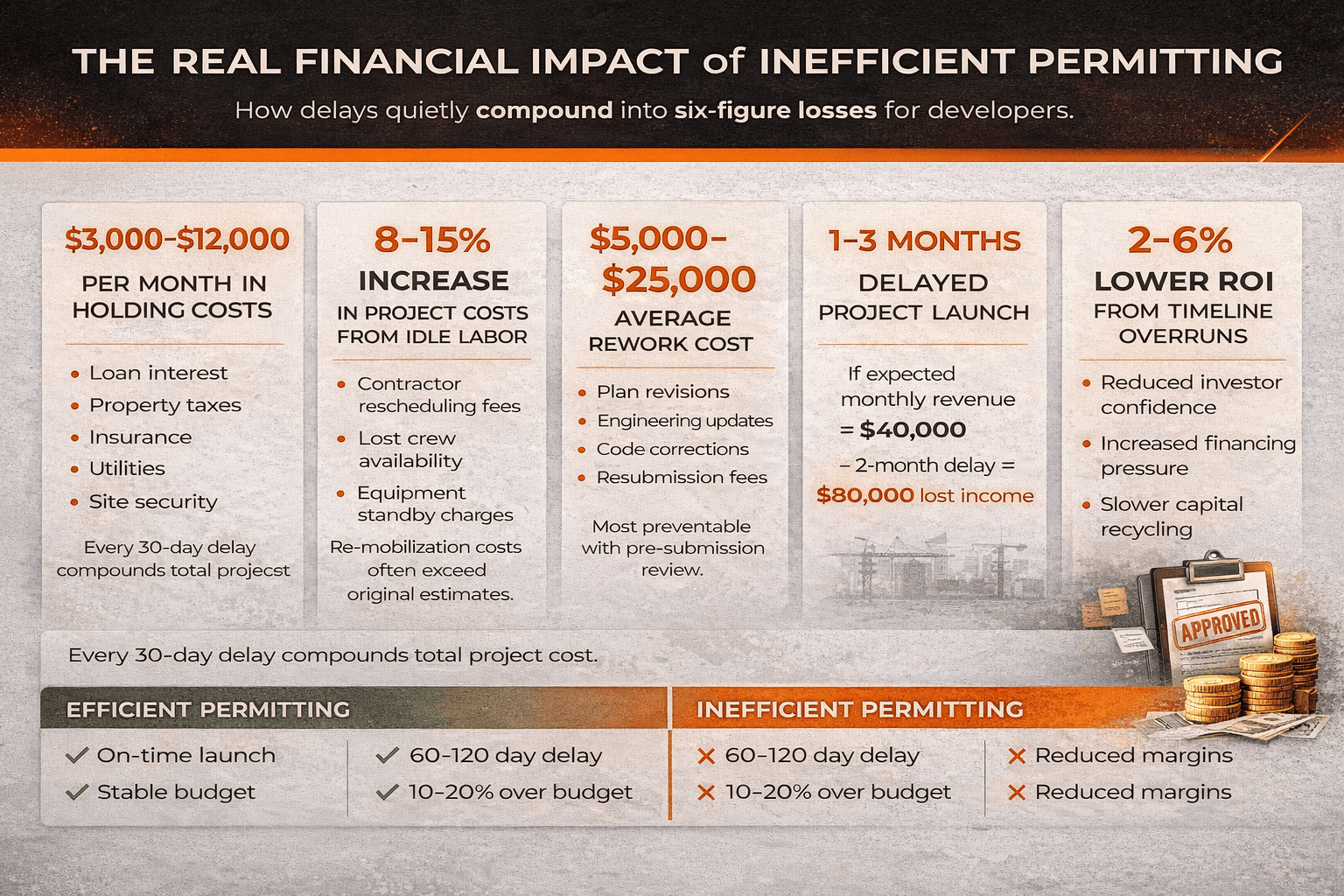
Some costs are obvious. When permits are delayed, labor schedules shift. Crews may be reassigned. Equipment may sit unused.
These direct costs include:
Extended equipment rentals
Idle labor expenses
Additional consultant fees
Resubmission and redesign costs
Extended project management time
Financing costs also increase. Construction loans accrue interest daily. The longer the delay, the higher the carrying cost. Even a 60-day delay can significantly affect total project cost.
Indirect and Long-Term Financial Impacts
Other costs are less visible but equally serious.
For example:
Delayed sales or leasing revenue
Missed market timing
Increased material prices due to inflation
Reduced investor confidence
Strained contractor relationships
If a project misses peak selling season, revenue projections shift. If material costs rise during delays, budgets stretch. Over time, these indirect costs may exceed direct permitting expenses.
Below is a breakdown of common hidden costs and how they accumulate.
| Hidden Cost Category | Example Impact | Long-Term Effect |
|---|---|---|
| Financing Costs | Loan interest during delay | Reduced profit margin |
| Labor Rescheduling | Crew downtime | Higher labor rates |
| Material Inflation | Price increases during wait | Budget overruns |
| Lost Revenue | Delayed occupancy | Cash flow strain |
| Reputation Impact | Client frustration | Fewer referrals |
Each category compounds the others. A short delay may seem manageable. But several short delays together create major financial pressure.
The Compounding Effect of Time
Time multiplies cost.
For example:
A 30-day delay increases loan interest.
A 60-day delay may trigger contract extensions.
A 90-day delay could push the project into a new pricing cycle.
At that point, what started as a permitting issue becomes a full project risk. This is why efficient permitting is not just a regulatory step. It is a financial strategy.