Opening a restaurant is exciting, but it comes with many responsibilities. One of the most important steps is getting the right permits and licenses. These are not just bureaucratic hurdles—they protect your business, employees, and customers. Without them, you risk fines, closures, and legal issues.
In this guide, we will explain the permits every restaurant needs. We will also discuss how to get them and why they matter. By the end, you will understand the restaurant permitting process and be ready to plan your business legally and efficiently.
What Is Restaurant Permitting?
Restaurant permitting is the process of obtaining official approvals to operate a food business legally. Every city and state has its own rules. Some permits apply at the local level, while others are state or federal requirements.
Permits cover various aspects: food safety, building standards, fire regulations, employee health, and sometimes alcohol sales. They ensure your restaurant operates safely and meets all legal obligations.
For new restaurant owners, the permitting process can feel overwhelming. But breaking it into steps makes it manageable. Think of it as building a strong foundation for your business. Each permit protects a part of your operations—from food handling to customer safety.
Some key reasons permits are critical:
Legal compliance: Operating without permits can result in fines or shutdowns.
Customer trust: Proper licensing reassures customers about hygiene and safety.
Smooth operations: Early permitting prevents delays during construction or opening.
Table 1: Key Benefits of Restaurant Permits
| Benefit | Why It Matters |
|---|---|
| Legal protection | Avoid fines, legal disputes, or forced closure |
| Health & safety | Ensure food safety and workplace safety standards |
| Operational readiness | Helps schedule inspections and opening dates smoothly |
| Public trust | Customers feel confident in your restaurant |
Understanding these basics helps you plan the permitting process along with your business plan. Now, let’s see how permitting fits into the broader restaurant startup journey.
How Permitting Fits Into Your Restaurant Startup Journey
Permitting is not a last-minute task. It should start in the planning phase and continue through construction and operations. Many owners underestimate the time needed for permits. This can cause delays, extra costs, or frustration.
Permitting as a Planning Milestone
Permits are milestones in your restaurant’s timeline. Before opening day, you must secure the right approvals. Missing any step can halt your progress.
Consider permitting as part of your business plan. Include timelines for health inspections, building permits, and alcohol licenses if needed. Factor these into your budget and project schedule.
Key Stakeholders You’ll Be Working With
Getting permits involves several authorities. Knowing who they are makes the process smoother:
Local health department: Oversees food safety, sanitation, and inspections.
Building and zoning department: Checks compliance with construction and land use rules.
Fire marshal: Reviews fire safety systems and emergency exits.
Alcohol control board: Issues liquor licenses if you serve alcohol.
These stakeholders will review your plans, inspect your premises, and approve your applications. Staying organized and proactive helps you avoid repeated inspections or delays.
Table 2: Permit Stakeholders and Roles
| Stakeholder | Role in Restaurant Permitting |
|---|---|
| Health Department | Inspects food safety, sanitation, and hygiene |
| Building/Zoning | Ensures construction follows codes and land-use laws |
| Fire Marshal | Confirms fire safety compliance, emergency exits, and equipment |
| Alcohol Control Board | Approves liquor licenses and checks compliance with alcohol laws |
By mapping out these stakeholders early, you can schedule inspections efficiently and prevent overlapping delays. Next, let’s dive into the core permits and licenses every restaurant must secure.
Core Permits and Licenses Every Restaurant Needs
Every restaurant requires several essential permits to operate legally. These permits cover food safety, business registration, building compliance, and more. Some are mandatory for all restaurants, while others depend on your location or services.
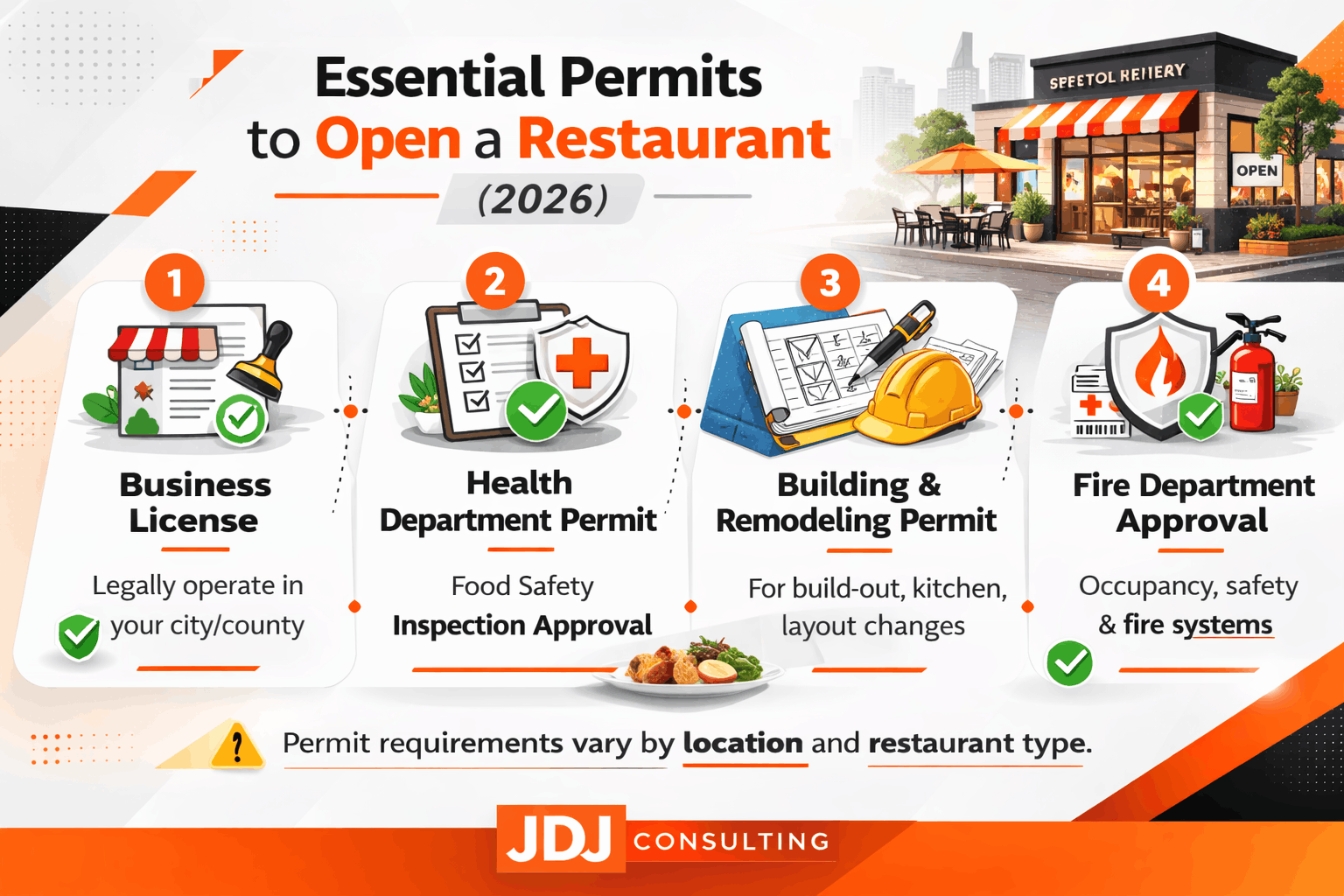
1. Business License
A business license registers your restaurant with the local city or county. It makes your business legal and allows you to pay taxes. Most cities require this license before any operations begin. Annual renewal is typically required.
2. Food Service/Health Permit
The health permit ensures your restaurant follows food safety standards. Health inspectors check the kitchen, storage, and service areas for compliance. Inspections continue even after opening to maintain food safety.
3. Food Handler and Employee Health Permits
Staff who handle food often need personal food handler permits. These certificates show they understand safe food handling practices. Training reduces the risk of contamination and protects customers.
4. Certificate of Occupancy (COO)
A COO confirms your building is safe for public use. Inspectors check structural, electrical, plumbing, and fire compliance. You cannot legally open without this certificate.
5. Building and Zoning Permits
If you construct or modify your restaurant space, building and zoning permits are required. They ensure your space meets code and local land-use laws.
6. Fire Safety and Inspection Approval
Fire safety permits are crucial for kitchens and public areas. Inspectors check fire suppression systems, fire extinguishers, and emergency exits.
7. Liquor and Alcohol Licenses (If Applicable)
If you serve alcohol, you need a separate license. Alcohol licenses often require background checks, public notices, and additional fees. Rules vary by state and municipality.
These core permits are the backbone of legal restaurant operation. Obtaining them early saves headaches later and ensures smooth opening.
Other Optional But Important Permits
Some permits are not required for every restaurant, but they can be essential depending on your services, location, or plans. These optional permits help you stay fully compliant and avoid fines later.
Sign Permits
If you plan to display outdoor signs, most cities require a sign permit. Local regulations often dictate:
Size and height of signs
Placement and visibility
Type of lighting
Even small errors can result in fines, so it is best to check with your city planning office before creating signage.
Music or Entertainment Licenses
If your restaurant plays music or hosts live entertainment, you may need a performance or music license. This ensures that all music played in public spaces is properly licensed.
Covers both live performances and recorded music
May involve fees for royalty payments
Helps avoid legal issues with copyright holders
Health and Environmental Certificates
Some areas require environmental health certifications or waste management approvals, especially for restaurants that:
Produce large amounts of waste or grease
Use commercial kitchen equipment with potential emissions
Handle environmentally sensitive products
Obtaining these certificates can prevent fines and maintain your reputation with the community.
Quick Tip: Even if these permits are optional, check your local rules. Laws vary by city and state, and some optional permits may be mandatory in certain locations.
Permit Application Process: Step by Step
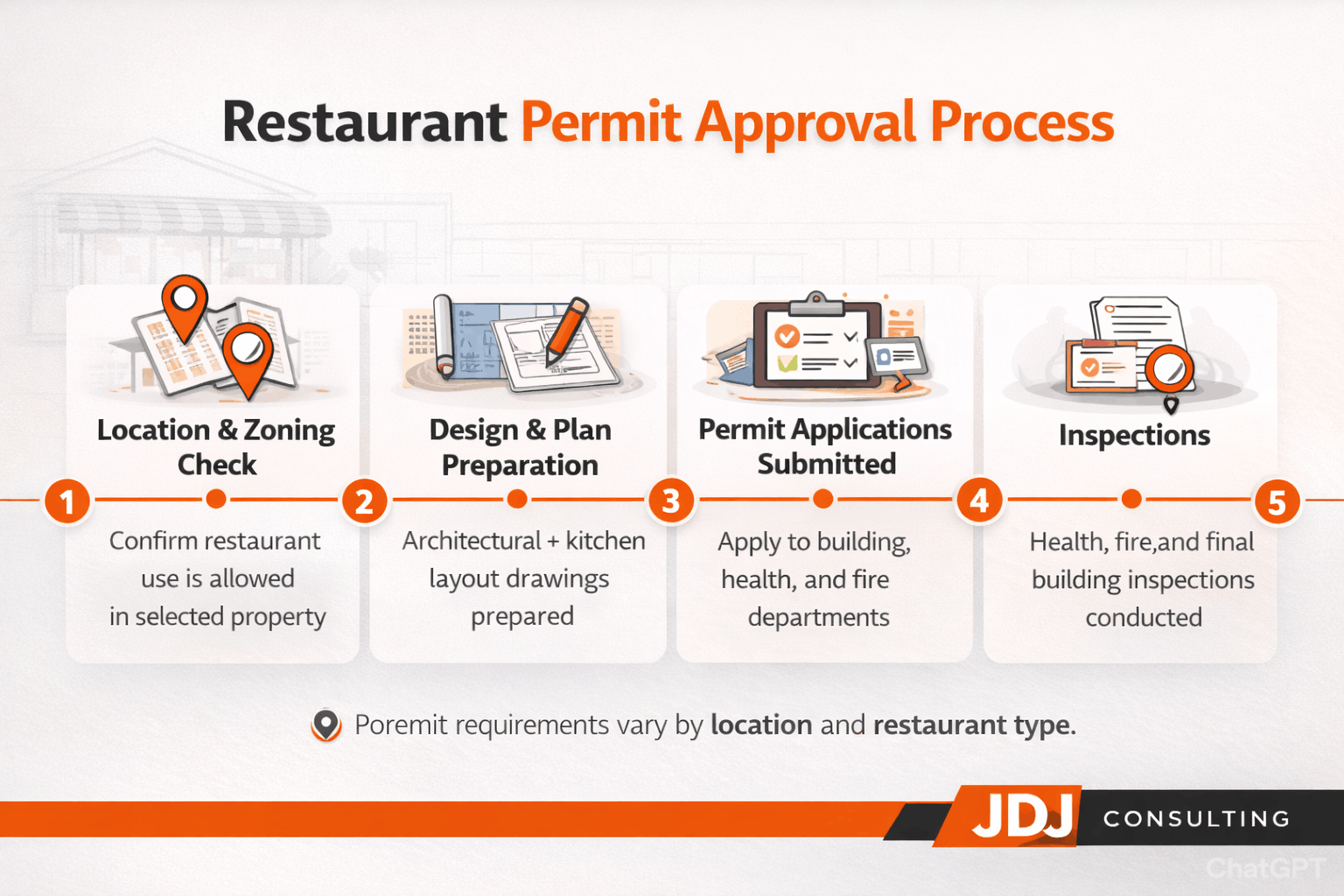
Applying for restaurant permits may seem daunting at first. Breaking it into steps simplifies the process and ensures nothing is missed.
Step 1 – Pre‑Application Preparation
Before submitting applications, gather all necessary documents. Preparation reduces delays and improves your chances of passing inspections. Typical documents include:
Floor plans and kitchen layout
Menu type and food handling processes
Equipment list (refrigerators, ovens, fryers)
Proof of business registration
Talk to local code officials early. They can advise on specific local requirements and help avoid rejections.
Step 2 – Submit Applications
Applications are usually submitted at city or county offices. Some jurisdictions allow online submissions. Key tips:
Double-check all forms for completeness
Include any fees required at submission
Keep a copy of every document for your records
Processing times vary, but starting early is crucial.
Step 3 – Inspections and Corrections
After submission, your restaurant will undergo several inspections. These typically include:
Health inspection: Ensures food safety, cleanliness, and proper storage
Building and fire inspection: Confirms code compliance, safety measures, and fire systems
Inspectors may request corrections. Addressing them promptly speeds up approval.
Step 4 – Final Approval and Permits Issued
Once inspections are complete and corrections made, permits are issued. You may receive:
Physical certificates to display in your restaurant
Electronic confirmation for your records
Renewal dates and compliance requirements
Pro Tip: Keep a folder with all permits, approvals, and inspection reports. This helps during future inspections and renewals.
Timeline, Fees & Common Delays
Understanding timelines and costs helps you plan your opening efficiently. Each permit has its own schedule and fees.
Typical Permit Timelines
Business license: 1–4 weeks
Health permit: 2–6 weeks (varies with inspection scheduling)
Building permit: 3–8 weeks depending on construction complexity
Alcohol license: 6–12 weeks (state-dependent)
Fees You Should Budget For
Permit costs vary widely depending on location and restaurant size. Budgeting for them avoids surprises:
Table 1: Sample Permit Fees
| Permit | Typical Cost | Notes |
|---|---|---|
| Business license | $50–$500 | Depends on city and business size |
| Health permit | $100–$1,000 | Annual or one-time, varies by inspection |
| Building permit | $200–$5,000 | Based on construction or remodel scope |
| Fire inspection | $50–$300 | Usually one-time |
| Alcohol license | $300–$14,000 | Depends on type and state regulations |
Common Permit Roadblocks
Even with preparation, some issues can cause delays:
Missing or incomplete documents
Failing to meet health or building codes initially
Not checking zoning or land-use requirements before application
Overlapping inspections or scheduling conflicts
Quick Tip: Communicate regularly with inspectors and keep copies of every document. Proactive communication often prevents delays.
By understanding the optional permits, step-by-step application process, and expected fees, restaurant owners can avoid common pitfalls. It also ensures a smoother path to opening day.
Tips to Make the Permit Process Easier
Getting all your restaurant permits can feel overwhelming. But a few practical strategies make the process smoother and faster.
Start Early
Permits can take weeks to months to process. Starting early prevents delays and last-minute stress. Begin gathering documents as soon as you finalize your business plan.
Stay Organized
Keep a dedicated folder—digital or physical—for all permit documents. Include:
Application forms
Floor plans
Inspection reports
Receipts for fees paid
Being organized helps during inspections and renewals.
Consult Experts When Needed
Some permits, like building or alcohol licenses, can be complex. Hiring a consultant or lawyer familiar with local regulations can save time and prevent costly mistakes.
Coordinate Inspections
Whenever possible, schedule inspections close together. This reduces downtime between approvals and helps you address corrections promptly.
Communicate Clearly
Respond quickly to any requests from inspectors or officials. Clear communication often prevents repeated inspections or misunderstandings.
Keep Records for Future Use
Permits often need renewal or verification later. Maintain a log of all approvals and expiration dates. This ensures your restaurant stays compliant over time.
Quick Tip: Many successful restaurant owners create a checklist with each permit, submission date, inspection date, and renewal timeline. This visual guide keeps the process on track.
Conclusion: The Value of Doing Permitting Right
Restaurant permitting may seem like extra work, but it is essential for long-term success. Proper permitting:
Protects your business from fines or shutdowns
Ensures a safe environment for staff and customers
Builds trust with your community
Planning ahead and understanding the permitting process helps you open smoothly. With careful preparation, organization, and communication, your restaurant can meet all regulatory requirements without unnecessary stress.
Table 2: Restaurant Permit Checklist
| Permit/License | Issuing Authority | Typical Cost | Renewal Frequency | Notes |
|---|---|---|---|---|
| Business License | City/County | $50–$500 | Annual | Required before opening |
| Health Permit | Local Health Dept | $100–$1,000 | Annual | Inspections continue after opening |
| Food Handler Permits | Health Dept/State | $10–$50 | Varies | Required for staff handling food |
| Certificate of Occupancy | City Building Dept | $100–$500 | One-time | Confirms building is safe for public use |
| Building/Zoning Permit | City/County | $200–$5,000 | One-time | Required for new construction or remodel |
| Fire Inspection | Fire Dept | $50–$300 | Varies | Ensures kitchen and public area safety |
| Liquor/Alcohol License | State Alcohol Board | $300–$14,000 | Annual | Required if serving alcohol |
| Sign Permit | City Planning Dept | $50–$500 | Varies | Needed for outdoor signage |
| Music/Entertainment License | Performing Rights Organizations | $50–$500+ | Annual | Required for playing licensed music |
Using a checklist like this helps you track all required and optional permits. Keep it updated to ensure ongoing compliance and avoid surprises.
Need Help With Your Restaurant Permits?
We know opening a restaurant can feel overwhelming. Permits, inspections, and regulations—there’s a lot to manage. That’s where we come in.
At JDJ Consulting, we guide restaurant owners every step of the way. Whether it’s health permits, building approvals, or alcohol licenses, we make the process simple and stress-free. You focus on your food and customers—we’ll handle the paperwork.
We’re ready to answer your questions, help you plan, and make sure your restaurant opens on time—without surprises. Don’t wait, let’s make this journey easier together!
FAQs About Restaurant Permitting
What is a restaurant permit and why is it necessary?
A restaurant permit is an official approval that allows you to legally operate a food business. Permits ensure your restaurant meets local regulations, protects public health, and complies with safety codes. They help:
Maintain hygiene standards in the kitchen
Ensure fire safety and proper building use
Avoid fines or legal penalties
Without the right permits, your restaurant can face closure or financial penalties.
How do I know which permits my restaurant needs?
Permit requirements vary by city, state, and the type of restaurant. Generally, you need permits for:
Business registration
Food handling and health safety
Building occupancy and fire safety
Alcohol licenses (if applicable)
It’s best to consult your local health department or a restaurant consultant to ensure you cover all mandatory and optional permits.
How long does it take to get restaurant permits?
The timeline depends on the permit type and local regulations:
Business licenses: 1–4 weeks
Health permits: 2–6 weeks
Alcohol licenses: 6–12 weeks
Building permits: 3–8 weeks
Starting early and preparing documents in advance can help speed up the process.
Can I open my restaurant before getting permits?
No. Operating without required permits is illegal and can result in fines, forced closure, or legal action. Even if your restaurant is ready to open, inspections and approvals must be completed first. Securing permits ensures your business is compliant and safe for customers.
What is a health permit for a restaurant?
A health permit ensures your restaurant meets food safety standards. Health inspectors check:
Food storage and handling
Kitchen sanitation and equipment
Pest control
Employee hygiene practices
This permit protects both your customers and your business from health risks and legal penalties.
Do all staff members need food handler permits?
Yes, staff who handle food usually need a personal food handler certificate. Requirements may vary by state, but these permits confirm employees:
Understand safe food handling practices
Reduce risks of contamination
Follow hygiene and sanitation standards
It’s often a simple course followed by a short exam.
What is a Certificate of Occupancy (COO)?
A COO confirms your restaurant building is safe for public use. Inspectors check:
Structural integrity
Electrical and plumbing systems
Fire safety measures
You cannot legally open without this certificate. It ensures your customers and staff are safe in the premises.
When do I need a building or zoning permit?
Building and zoning permits are required if you:
Construct a new restaurant
Remodel or expand an existing space
Change the use of the building
They ensure compliance with local building codes, land-use laws, and safety standards.
Do I need a fire safety permit?
Yes. Fire permits are mandatory for restaurants to confirm safety in kitchens and public areas. Inspectors check:
Fire extinguishers and suppression systems
Emergency exits and signage
Occupancy limits
This helps protect your staff, customers, and property in case of emergencies.
Are liquor or alcohol licenses required?
If your restaurant plans to serve alcohol, a separate license is required. These licenses often include:
Background checks
Public notice periods
Fees depending on state and license type
Serving alcohol without a license can result in fines or closure.
Are sign permits necessary for outdoor signage?
Yes. Many cities require a sign permit to ensure signs meet:
Size and height restrictions
Lighting and visibility regulations
Placement guidelines
Obtaining a permit prevents fines and ensures your signage complies with local laws.
Do I need special permits for outdoor dining?
Often yes. Patios, sidewalks, or street seating may require additional permits. Local regulations may cover:
Safety barriers
Accessibility requirements
Hours of operation
Checking with your city before setting up outdoor seating is essential.
How often do restaurant permits need renewal?
Most permits are renewed annually, but some may vary:
Health permits: often annual inspections
Food handler certificates: may need renewal every 2–3 years
Liquor licenses: usually annual renewal
Keeping track of renewal dates prevents lapses and fines.
What are common reasons permits are denied?
Permits can be delayed or denied due to:
Incomplete or incorrect applications
Failing health or fire inspections
Building code violations
Zoning conflicts
Proper preparation and consulting local officials can prevent most issues.
Can I apply for multiple permits at the same time?
Yes, in most cases. Coordinating applications saves time and allows inspections to happen close together. This reduces delays and ensures you can open your restaurant faster.
Are there optional permits I should consider?
Some permits are optional but helpful:
Entertainment or music licenses
Environmental health certifications
Waste disposal permits
Even if optional, obtaining them ensures smooth operations and compliance with local rules.
How much do restaurant permits cost?
Costs vary by location and permit type. Typical ranges include:
Business license: $50–$500
Health permit: $100–$1,000
Building permit: $200–$5,000
Alcohol license: $300–$14,000
Budgeting for fees upfront prevents surprises.
Who can help me with restaurant permits?
You can get help from:
Local health and building departments
Restaurant consultants like JDJ Consulting
Lawyers specializing in business licensing
Professional guidance helps prevent mistakes and speeds up the process.
What happens if I ignore restaurant permitting requirements?
Ignoring permits can lead to:
Fines or penalties
Forced closure of your restaurant
Legal action or lawsuits
Damage to reputation and customer trust
Securing permits is essential for legal, safe, and sustainable operations.
How can I stay updated on changing permit regulations?
Permit rules can change frequently. To stay current:
Subscribe to local health and building department newsletters
Join local restaurant associations
Regularly check city or state websites
Staying informed helps avoid compliance issues and ensures smooth operations.