
You look at your monthly electricity bill and wonder why it keeps going up. Maybe your business is trying to control operating costs. Or maybe you just want more control over your energy use. At some point, solar panels come up in conversation. You hear about long-term savings, tax incentives, and energy independence. It sounds like a smart move.
So you begin planning your solar installation. You speak with an installer, review panel options and compare system sizes. Everything seems straightforward — until someone mentions permits.
That is where most solar projects in Texas slow down.
Many property owners assume installing solar panels is just a construction project. In reality, it is also a compliance process. Building departments and zoning offices must approve your installation before work can begin.
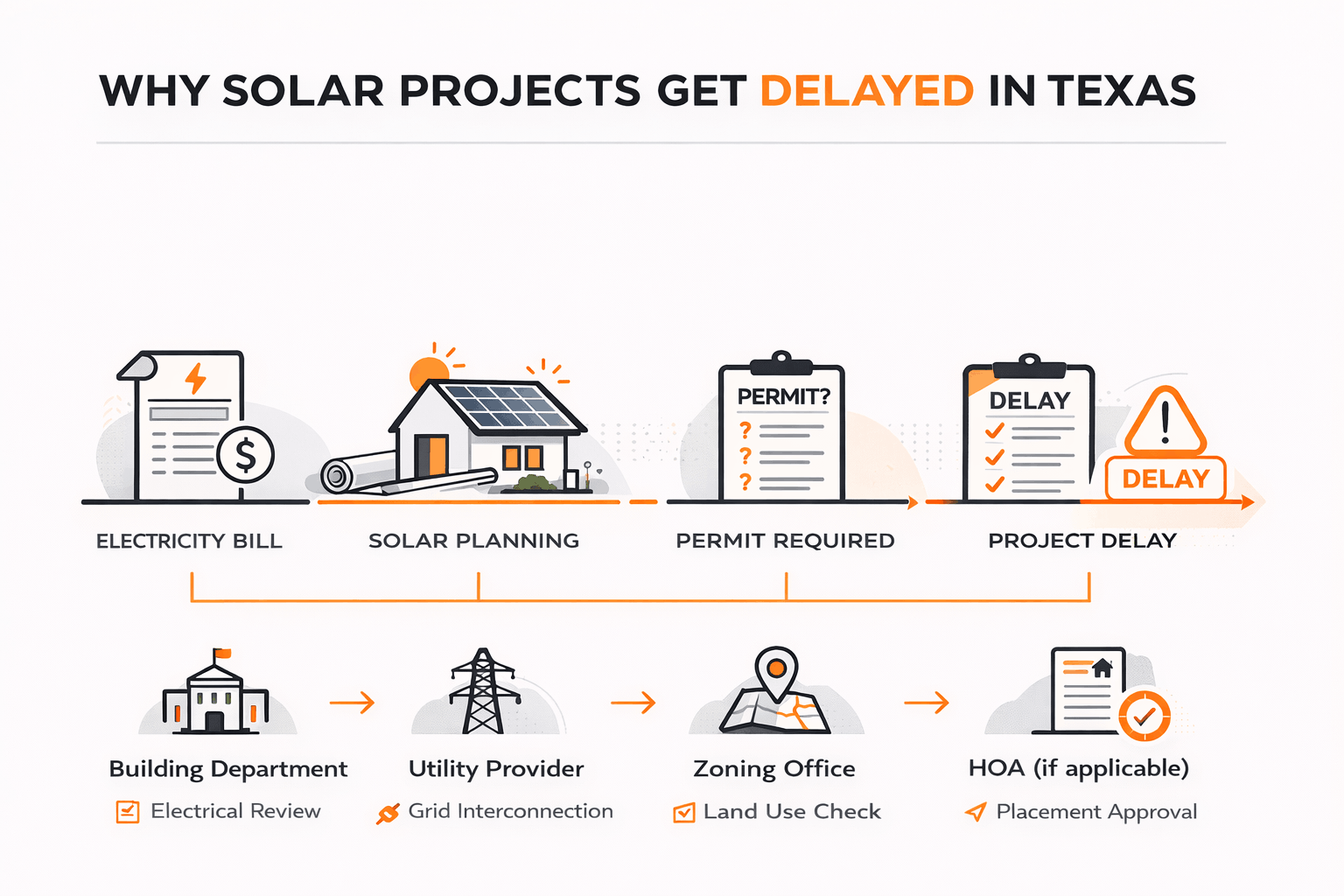
Each authority reviews a different part of your system. One checks electrical wiring. Another reviews roof load capacity. Your utility provider studies how your system will interact with the power grid. Even your HOA may have placement guidelines that affect panel layout.
Missing just one approval can delay installation for weeks.
Sometimes, projects fail inspection because permit documents were incomplete or submitted incorrectly. Others stall during utility interconnection because zoning clearance was never finalized. These delays are common across both residential and commercial solar installations in Texas.
The truth is, the technology behind solar panels is no longer the biggest challenge. The real hurdle is understanding how the solar installation permit process works in Texas.
This guide explains details solar installation permits Texas. It explains what approvals you need, how the process works, and how to prepare your project for a smooth installation.
Table of Contents
Do You Need a Permit to Install Solar Panels in Texas?
Yes. In most cases, you need a permit before installing solar panels in Texas. This applies to both residential and commercial grid-tied systems.
Local building departments require permits to confirm that:
Your roof can support the solar panel load
The electrical system meets National Electrical Code (NEC) standards
Mounting equipment follows fire safety setbacks
Wiring and inverter connections are installed safely
Even small rooftop solar setups must go through local approval. Skipping permits can lead to project shutdowns, fines, or failed inspections later.
Below is a simple overview of when permits are usually required:
| Solar Installation Type | Permit Required? | Notes |
|---|---|---|
| Residential Grid-Tied System | Yes | Electrical + Building Permit |
| Commercial Solar System | Yes | Engineering Review Needed |
| Ground-Mounted System | Yes | Zoning Approval Required |
| Off-Grid Residential | Usually | Electrical Inspection May Apply |
| Solar Battery Storage | Yes | Fire Code Compliance Required |
In Texas, permit rules vary by city and county. For example, Houston and Dallas often require full structural plan reviews. Smaller municipalities may only request a basic electrical permit for standard rooftop systems.
Residential vs Commercial Solar Permit Requirements
Residential solar permits are usually easier to obtain than commercial permits. However, homeowners still need the right documents before the city or county approves the project. Local building departments review the system design to make sure the installation is safe and follows electrical codes.
Most home solar systems are small and connect to the existing electrical panel. Because of this, the review process is often quicker. Still, the drawings and equipment details must be clear and complete. Missing information can slow down the approval.
Typical residential permit requirements include:
Roof layout showing panel placement
Electrical single-line diagram
Equipment specification sheets
Mounting system details
Commercial solar permits are more complex. These systems are larger and use more electricity. Many commercial systems also send extra power back to the grid. Because of this, the project must go through a deeper technical review. Officials check the structure, electrical load, and safety plans. Engineers often need to confirm that the design meets local codes.
Commercial projects may require:
Professional Engineer (PE) stamped drawings
Load calculations
Service panel upgrade plans
Site development review
Because of these extra steps, commercial solar permits usually take longer to approve. In many cases, the process can take twice as long as a residential permit.
Here is a comparison:
| Requirement | Residential Solar | Commercial Solar |
|---|---|---|
| Electrical Permit | Required | Required |
| Structural Review | Sometimes | Required |
| Engineering Stamp | Rare | Often Required |
| Zoning Review | Sometimes | Required |
| Utility Study | Basic | Detailed |
Planning for these differences early reduces unexpected approval delays in the project timeline.
Off-Grid Solar System Permit Requirements
Off-grid solar systems do not connect to a utility grid. Still, that does not mean they are exempt from permits. Most Texas jurisdictions require:
Electrical safety inspection
Mounting system approval
Battery storage compliance review
Some counties may waive zoning review for rural properties. However, building permits are still needed to confirm structural safety.
If your off-grid system includes battery storage, fire safety setbacks may also apply. These rules help protect both property owners and emergency responders.
Types of Solar Permits Required in Texas
Solar installation projects in Texas usually involve more than one permit. Each permit covers a different part of the system design or installation process.
Local AHJs often request the following approvals:
Electrical permit
Building permit
Zoning or land-use permit
Understanding how each one works can help you prepare documents correctly before submission.
Electrical Permit for Solar Installations
The electrical permit confirms that your solar power system meets safety standards under the National Electrical Code.
This permit covers:
Inverter wiring connections
AC and DC disconnect switches
Grounding and bonding methods
Service panel integration
Inspectors review electrical diagrams to ensure your system will operate safely when connected to the grid. Without this permit, utility companies may refuse to approve your interconnection agreement.
Building Permit for Structural Integrity
A building permit checks whether your roof or mounting surface can safely hold solar panels. Local reviewers assess:
Roof load capacity
Mount spacing
Wind uplift resistance
Fire access pathways
Zoning & Land-Use Permit
Zoning permits apply when solar installations affect property layout or visibility. You may need zoning approval if:
Your property is in a historic district
You are installing ground-mounted panels
The system extends beyond roofline limits
Commercial site development plans are required
Setback rules often determine how far ground-mounted systems must sit from property boundaries. Failing to meet zoning requirements can delay installation, even if electrical permits are already approved.
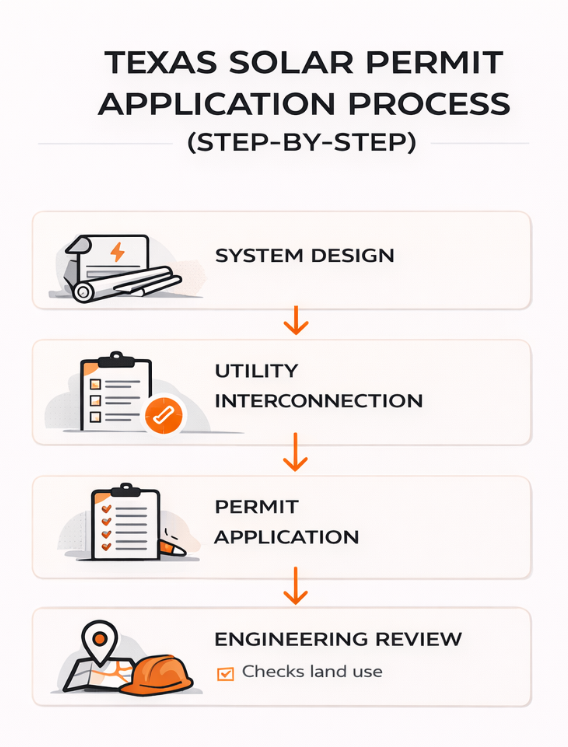
Texas Solar Permit Application Process (Step-by-Step)
Once your system design is complete, the permit process begins. In Texas, this process involves both local building departments and utility providers. Each authority reviews a different part of your installation plan.
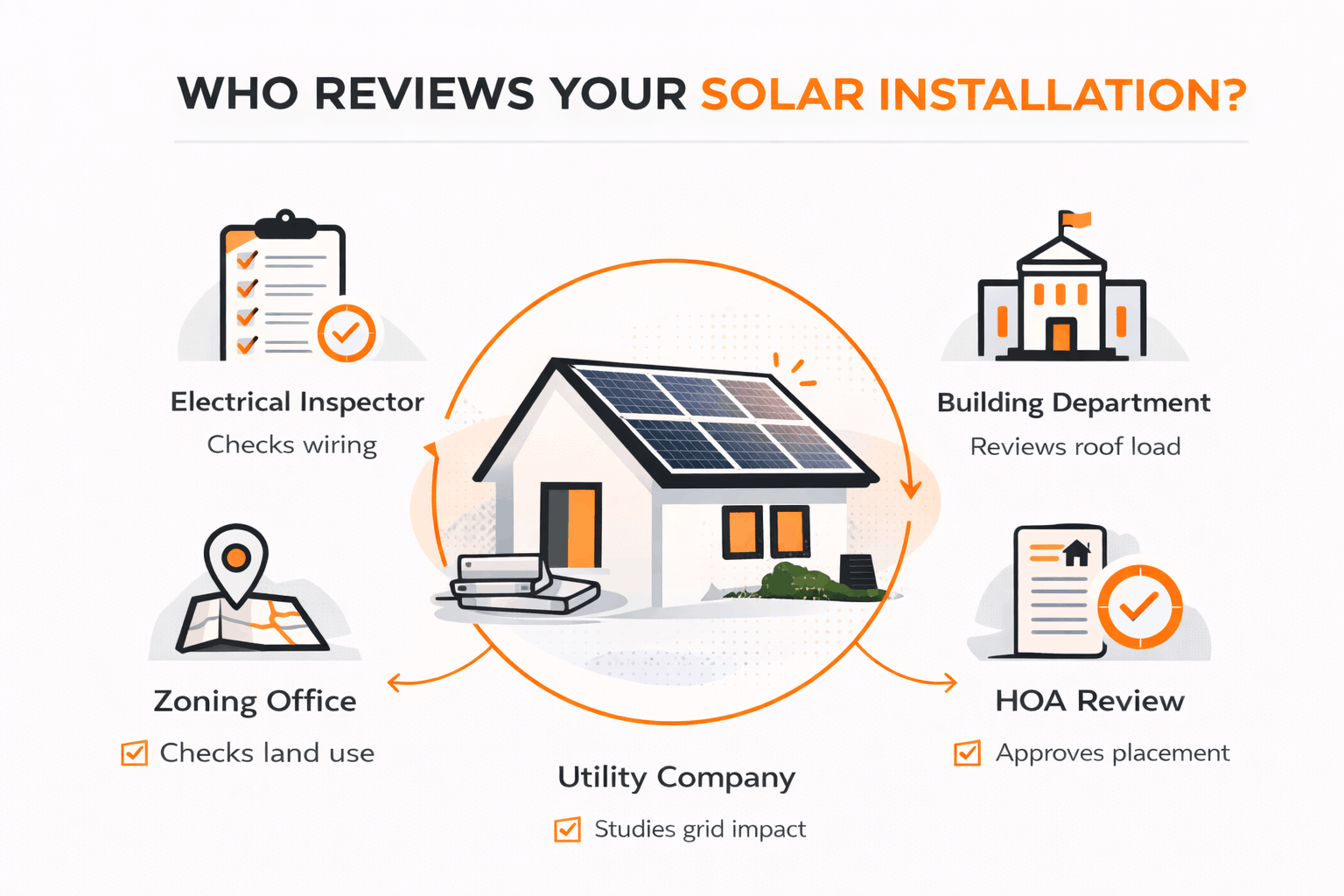
While steps may vary by city, most solar permit approvals follow the same general process.
Step 1: Prepare Solar System Design Documents
Your permit application must include detailed technical drawings. These documents help reviewers understand how your system will be installed and connected.
Most Texas AHJs request:
Site plan showing panel layout
Roof plan with mounting locations
Electrical single-line diagram
Equipment specification sheets
Inverter installation details
Structural load calculations
Commercial projects often require additional engineering reports. If your system exceeds 10kW, stamped drawings from a licensed Professional Engineer (PE) may also be needed.
Incomplete documentation is one of the most common reasons permit applications get rejected. It is best to review your design package carefully before submission.
Step 2: Submit Utility Interconnection Application
If your solar system connects to the power grid, you must apply for utility interconnection approval. This agreement allows your system to:
Send excess power back to the grid
Operate in parallel with utility supply
Receive net metering credits (if available)
Utilities typically request the following details:
| Utility Requirement | Why It Matters |
|---|---|
| System Size (kW) | Determines grid impact |
| Inverter Type | Confirms safety compliance |
| Expected Completion Date | Helps inspection planning |
| Equipment Certifications | Confirms approved hardware |
| Liability Insurance | Required for grid protection |
Processing times vary by provider. In some Texas service areas, interconnection review alone can take several weeks. Submitting this application early helps prevent delays later in the installation phase.
Step 3: Apply for Local Building & Electrical Permits
After preparing your design documents, you must submit them to your local Authority Having Jurisdiction (AHJ). This may include:
City building department
County planning office
Municipal utility authority
Permit reviewers check for:
NEC electrical code compliance
Structural safety
Fire access setbacks
Zoning alignment
Here is a general timeline for solar permit approvals in Texas:
| Project Type | Typical Approval Time |
|---|---|
| Residential Rooftop System | 2 – 4 Weeks |
| Commercial Solar Project | 4 – 8 Weeks |
| Ground-Mounted System | 3 – 6 Weeks |
| Large Commercial Array | 6 – 12 Weeks |
Approval times depend on document quality and reviewer workload. Some cities may request corrections or revisions before granting final approval.
Step 4: Engineering Review (If Required)
Not all solar installations require structural review. However, engineering approval is often mandatory for:
Commercial rooftop systems
Ground-mounted solar arrays
Installations above 10kW capacity
Systems installed on older buildings
Engineering teams review:
Roof load limits
Wind uplift factors
Mounting rail strength
Attachment methods
Once approved, these stamped drawings become part of your final permit file.
Step 5: Installation Inspection & Final Approval
After installation is complete, your system must pass inspection before it can operate.
Inspectors check:
Wiring connections
Inverter installation
Panel mounting
Disconnect switches
Grounding methods
Some utility providers may also perform a witness test before issuing Permission to Operate (PTO). Without final inspection approval, your system cannot legally connect to the grid.
Solar Installation Permit Costs in Texas
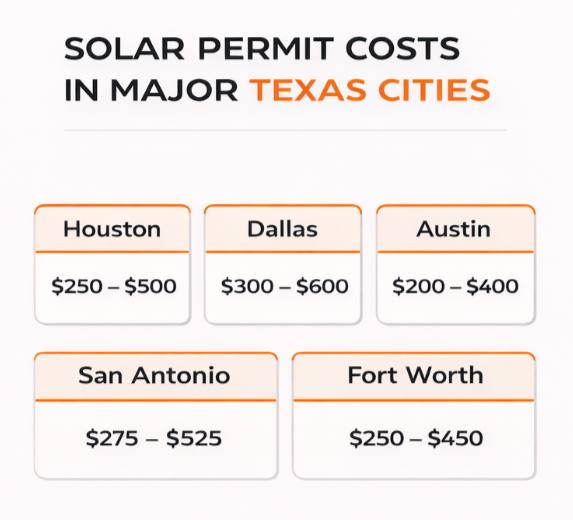
Permit costs vary across cities and counties in Texas. Each municipality sets its own fees. Because of this, the price can change depending on the project location. Residential solar permits are usually affordable. Most local governments treat them as standard electrical permits. The review process is also simple in most cases. As a result, homeowners often face lower approval costs.
In most residential projects, permit fees usually fall between $50 and $500. The final amount depends on the city, system size, and inspection requirements.
Commercial solar permits often cost more. These systems are larger and require deeper review. Local authorities may charge extra fees for technical evaluations and additional inspections. Because of this, the total permit cost can increase during the review process.
Commercial installations may include additional charges for:
Engineering review
Structural analysis
Site plan approval
Inspection scheduling
Ground-mounted solar systems may also require zoning approval. In some areas, this includes a separate zoning application fee. Planning for these costs early helps avoid budget surprises during the project. It also helps developers keep the solar project on schedule.
Here is a general cost range for solar installation permits in major Texas cities:
Texas Solar Laws & HOA Approval Rules
Texas law supports the use of solar energy. However, homeowners associations (HOAs) can still influence how systems are installed. State law protects a homeowner’s right to install solar panels, but it also allows HOAs to enforce certain design rules. These rules usually focus on appearance, safety, and proper placement. Because of this, homeowners often need HOA approval before starting installation.
Under Texas Property Code Section 202.010, an HOA cannot fully ban solar panels. Still, the association may apply reasonable guidelines about where and how the system is installed. These rules are meant to keep the neighborhood appearance consistent while allowing solar energy use.
HOAs may request:
Architectural Review Committee (ARC) approval
Panel placement away from street view when possible
Flush-mounted rooftop systems
Compliance with roofline height limits
In some situations, an HOA may deny an installation request. This usually happens when the system creates safety risks or violates property rules.
An HOA may deny installation if:
Panels create safety concerns
Installation damages roofing materials
The system extends beyond allowed property boundaries
Contractor Licensing Requirements for Solar Installers in Texas
In Texas, solar panel installation is treated as electrical work. Because of this, installers must meet state licensing rules before pulling permits or starting any installation.
Solar systems connect directly to your building’s electrical panel. If installed incorrectly, they can create fire risks or equipment failure. Licensing rules are in place to prevent these issues.
Most solar projects require a contractor with a:
Licensed Master Electrician on record
State-registered business entity
The licensed contractor is usually responsible for:
Submitting permit applications
Coordinating inspections
Meeting NEC compliance standards
Managing utility interconnection requests
If a system is installed by an unlicensed contractor, local authorities may reject the permit application. In some cases, you may be required to remove installed equipment until a licensed electrician completes the work.
Here is a quick overview of installer responsibilities in Texas:
| Installation Task | Licensed Contractor Required? |
|---|---|
| Solar Panel Mounting | Yes |
| Inverter Installation | Yes |
| Electrical Wiring | Yes |
| Battery Storage Setup | Yes |
| Grid Interconnection | Yes |
Working with a licensed installer from the beginning helps avoid inspection failures later in the process.
For commercial solar installations, some AHJs may also request engineering supervision. Larger systems often require stamped drawings or project oversight from a Professional Engineer (PE).
Solar Inspection Requirements in Texas
After installation, your solar energy system must pass inspection before it can operate legally. Inspection confirms that your system meets:
Electrical safety standards
Structural stability guidelines
Local fire code requirements
Zoning placement rules
Most Texas jurisdictions conduct inspections in stages.
Rough Electrical Inspection
This inspection happens before final system activation.
Inspectors review:
Wiring placement
Conduit routing
Disconnect switch installation
Inverter mounting
If any wiring does not meet NEC standards, corrections must be made before the next inspection step.
Structural Inspection
Structural review confirms that your mounting system is secure.
Inspectors check:
Roof attachment points
Rail alignment
Load distribution
Wind uplift resistance
Ground-mounted systems may also be inspected for foundation depth and anchoring strength.
Final AHJ Inspection
Once installation is complete, a final inspection is scheduled. During this visit, officials verify:
Panel placement
Electrical connections
Grounding systems
Labeling requirements
Emergency shut-off access
If the system passes inspection, the AHJ issues approval for utility connection.
Utility Witness Test
Some utility providers require a final on-site check before granting Permission to Operate (PTO).
This test confirms:
System output levels
Anti-islanding protection
Grid synchronization safety
Only after PTO is issued can your system begin exporting energy to the grid. Inspection timelines can vary by city.
| Inspection Type | Typical Scheduling Time |
|---|---|
| Residential System | 1 – 2 Weeks |
| Commercial Project | 2 – 4 Weeks |
| Ground-Mounted System | 2 – 3 Weeks |
| Large Commercial Array | 3 – 6 Weeks |
Planning inspections early helps prevent installation downtime.
Common Solar Permitting Delays (And How to Avoid Them)
Even well-designed solar projects can face approval delays. Most issues occur during documentation review or zoning approval stages. Below are some common reasons solar permits get delayed in Texas.
Incomplete Documentation
Missing site plans or electrical diagrams can lead to rejected applications.
Always include:
Mounting layout
Equipment specification sheets
Electrical single-line diagrams
Structural calculations
Double-checking documents before submission can reduce revision requests.
HOA Approval Delays
Some HOAs require separate architectural review before installation begins. If this step is skipped, permit approval may be placed on hold until HOA clearance is provided. Submitting ARC requests early helps prevent delays later.
Utility Interconnection Backlogs
Utilities may take several weeks to review grid connection requests. Applying for interconnection approval at the same time as your permit submission can shorten project timelines.
Engineering Stamp Requirements
Commercial installations often require stamped drawings from a licensed Professional Engineer. If this documentation is missing, permit reviewers may request revisions before approval.
Local Municipality Code Differences
Each Texas city follows its own solar installation guidelines. Setback requirements, fire access pathways, and zoning rules may differ between municipalities. Reviewing local code requirements early in your planning phase can help keep your project on schedule.
2025–2026 Updates to Texas Solar Consumer Protection Laws
Texas has added new rules to protect solar customers. These rules focus on clear information and honest sales practices. The goal is to help property owners understand the system before they sign a contract. Many people install solar for the first time, so clear details are important. The new rules also improve how projects are planned and documented. As a result, homeowners and businesses can make better decisions.
The updates focus on several key areas:
Solar retailer registration
Clear contract disclosures
Utility-provided consumer information
Transparent interconnection steps
Solar installers must now give a realistic estimate of system performance before a contract is signed. This estimate shows how much energy the system may produce. It also explains limits that affect production. For example, roof size, sunlight, and panel capacity all affect output. Clear estimates help prevent confusion later.
Solar retailers must also explain important parts of the project, such as:
Installation timeline
Financing terms
Warranty coverage
Maintenance responsibility
Missing details can cause problems later. In some cases, poor documentation may delay permits or inspections. Clear paperwork helps local officials review the project faster. It also helps installers, utilities, and property owners stay on the same page.
These updates also help commercial property owners by improving project organization. They support:
Better documentation tracking
Easier permit coordination
Clear communication with utilities
Understanding these rules helps property owners avoid issues during the permit process. It also helps solar projects move forward with fewer delays.
Commercial Solar Permit Considerations in Texas
Commercial solar projects follow a more detailed approval process than residential systems. These systems are larger and produce more power. Because of this, local officials review them more carefully. They check safety, electrical capacity, and building structure. The goal is to make sure the system will work safely with the local power grid. As a result, commercial permits often need more documents and longer review times.
Permit reviewers may ask for several technical documents, including:
Electrical load calculations
Grid export estimates
Service panel upgrade plans
Structural engineering reports
Site development review documents
Large commercial solar systems may also trigger zoning review. This usually happens when the installation changes how the property is used. For example, ground-mounted systems may affect land use. In other cases, the panels may extend above allowed roof height limits. When this happens, the local planning department may review the project.
Zoning review may be required if:
Panels exceed roofline height limits
Ground-mounted systems affect land use
Installation changes the property layout
Commercial solar projects also require coordination between several groups. These groups review safety plans, electrical design, and grid impact. Clear communication between them helps keep the project moving.
Commercial installations often involve coordination with:
City planning departments
Utility providers
Fire safety authorities
Engineering consultants
Because many groups are involved, commercial solar permits usually take longer to approve than residential permits. Good planning and clear documents can help speed up the approval process.
Below is a general checklist used for commercial solar permit applications:
| Commercial Permit Requirement | Purpose |
|---|---|
| Load Calculation Report | Determines system capacity |
| Site Plan Approval | Confirms layout compliance |
| Engineering Stamp | Verifies structural safety |
| Utility Interconnection Study | Reviews grid impact |
| Zoning Clearance | Ensures land-use compliance |
Planning these documents early can shorten review timelines.
How JDJ Consulting Helps Simplify Texas Solar Permitting
Permit applications often involve several departments. Managing these requirements can be time-consuming, especially for large commercial installations.
At JDJ Consulting, we help clients move through the solar permitting process with fewer delays. Permits can involve many steps and several local authorities. Because of this, clear documents and proper coordination are important. Our team works with clients from the early planning stage to final approval. This helps keep the project organized and on schedule.
We support clients with several key tasks, including:
Permit document preparation
AHJ coordination
Utility interconnection filing
Engineering review management
Inspection scheduling
Our team works closely with local permitting offices and utilities. Before submitting an application, we review the documents to make sure they meet code requirements. This step helps reduce the chance of revision requests during the review process. Fewer revisions often mean faster approvals.
When permits are handled correctly from the start, projects move forward more smoothly. Installations can begin sooner, and the risk of unexpected delays becomes much lower.
Final Checklist Before Applying for a Solar Permit in Texas
Before submitting a solar permit application, it helps to review all required documents. Many permit delays happen because something is missing. A simple checklist can help confirm that the project is ready for review. When documents are complete, the approval process is usually faster. It also helps inspectors review the system without issues later.
Use this checklist before submitting your solar permit:
Site plan completed
Panel layout finalized
Structural calculations approved
Equipment specification sheets included
Electrical single-line diagram prepared
Utility interconnection request submitted
HOA approval obtained (if required)
Engineering stamp included (for commercial projects)
Taking time to check these items can prevent delays during permit review. It can also help avoid problems during inspections. Good preparation helps ensure the solar system meets Texas safety and building standards.
Conclusion
Understanding the Solar Installation Permits Texas Guide early can prevent many common problems. Solar projects often involve permits, engineering checks, and inspections. If these steps are not planned well, delays and extra costs can happen. Clear preparation helps keep the project moving on schedule.
Both residential and commercial solar systems must follow local rules. This may include engineering reviews, utility approvals, and HOA permissions. Each step plays an important role in making sure the system is safe and compliant.
If you are planning a solar project, working with an experienced permitting team can save time and reduce stress.
At JDJ Consulting, we assist clients with:
Solar permit document preparation
AHJ coordination
Utility interconnection filing
Engineering review management
Inspection scheduling
Our goal is to make the permitting process simple and organized. This helps solar projects move smoothly from approval to final activation.
If you are planning a solar installation in Texas and need help with permits, you can contact JDJ Consulting.
Solar Installation Permits Texas FAQs
What permits are required to install solar panels in Texas?
Most solar installations in Texas require more than one permit before work can begin. These approvals confirm that your system meets safety and building code standards.
You may need:
Electrical permit for wiring and inverter setup
Building permit for roof load capacity
Zoning approval for ground-mounted systems
HOA approval (if applicable)
Local Authorities Having Jurisdiction (AHJs) review these documents before installation begins. Without proper permits, your project may fail inspection or face delays during the utility interconnection phase.
Do I need a permit for residential solar panel installation in Texas?
Yes, residential solar systems usually require permits in Texas. Even small rooftop installations must be reviewed by the local building department.
Permit applications typically include:
Panel layout design
Electrical single-line diagram
Equipment specification sheets
Roof attachment details
These documents confirm that the system meets electrical and fire safety standards. Submitting complete paperwork early helps reduce approval delays during project review.
How long does it take to get solar permits approved in Texas?
Solar permit approval timelines vary by city and system size. Residential rooftop systems are often approved faster than commercial projects.
Typical timelines include:
Residential systems: 2 to 4 weeks
Commercial projects: 4 to 8 weeks
Ground-mounted installations: 3 to 6 weeks
Large commercial arrays: up to 12 weeks
Incomplete documentation or zoning conflicts may extend these timelines. Preparing accurate design plans can speed up the approval process.
How much does a solar installation permit cost in Texas?
Permit fees depend on your project type and local municipality. Residential solar permit costs are usually lower than commercial installation fees.
Common cost ranges include:
Residential systems: $50 to $500
Commercial projects: $300 to $1,000+
Engineering review fees
Inspection scheduling charges
Ground-mounted systems may also require zoning application fees. Planning for permit costs early helps prevent budget issues during installation.
Do off-grid solar systems require permits in Texas?
Off-grid systems often require permits, even if they do not connect to the utility grid.
Local authorities may request:
Electrical safety inspection
Structural mounting approval
Battery storage compliance review
These steps ensure that the system meets fire safety and installation standards. Skipping permits may result in failed inspections later in the process.
Can a homeowners association (HOA) deny solar panel installation in Texas?
Texas law protects homeowners’ rights to install solar panels. However, HOAs may still enforce placement guidelines.
They may require:
Architectural Review Committee (ARC) approval
Panels installed away from street view
Flush-mounted rooftop placement
Roofline height compliance
HOAs cannot fully prohibit solar installations. Still, failing to follow placement rules may delay permit approval.
What is a solar interconnection agreement?
A solar interconnection agreement allows your system to connect to the local utility grid safely.
This agreement covers:
System size and capacity
Equipment certification
Grid safety compliance
Parallel operation approval
Utilities review this application before issuing Permission to Operate (PTO). Submitting this request early helps prevent project delays.
Is an engineering stamp required for solar permits in Texas?
Engineering approval may be required for larger solar installations.
Stamped drawings are usually needed for:
Commercial rooftop systems
Ground-mounted solar arrays
Installations above 10kW
Older building structures
Professional Engineers review structural load capacity and mounting methods before approving the design.
What happens during a solar inspection in Texas?
Solar inspections confirm that your system is installed safely and meets building codes.
Inspectors check:
Wiring connections
Panel mounting
Inverter placement
Grounding methods
Disconnect switches
Some utilities may also perform a witness test before issuing Permission to Operate.
Who applies for solar installation permits in Texas?
In most cases, your licensed contractor submits permit applications on your behalf.
Installers are responsible for:
Preparing design documents
Coordinating inspections
Meeting NEC compliance
Managing interconnection requests
Working with a licensed installer helps ensure your permit application meets local requirements.
Do commercial solar installations require additional permits?
Yes, commercial solar systems often require extra documentation before approval.
Permit reviewers may request:
Load calculations
Site development plans
Engineering reports
Grid export estimates
Zoning clearance
These steps help confirm that larger systems will not impact grid safety or structural integrity.
What is Permission to Operate (PTO)?
Permission to Operate is issued by your utility provider after inspection approval.
PTO confirms that:
Installation meets electrical standards
Grid connection is safe
System output is within approved limits
Without PTO, your system cannot legally export energy to the grid.
Can I install solar panels without an electrical license in Texas?
Solar panel installation must be performed by a licensed electrical contractor in Texas.
Licensed installers handle:
Electrical wiring
Inverter integration
Grid interconnection
Permit coordination
Unlicensed installations may result in permit rejection or required equipment removal.
What documents are needed for solar permit approval?
Permit applications typically include several design documents.
Most AHJs request:
Site plan
Panel layout
Electrical diagram
Equipment specification sheets
Structural calculations
Incomplete submissions are one of the most common causes of approval delays.
Do ground-mounted solar systems need zoning approval?
Yes, ground-mounted systems often require zoning review before installation.
Local authorities may check:
Property setbacks
Land-use compliance
System height limits
Installation location
Meeting zoning requirements early can help prevent permit delays later.
Can solar permits be rejected in Texas?
Yes, permit applications may be rejected if documentation is incomplete.
Common reasons include:
Missing engineering calculations
Incorrect electrical diagrams
HOA approval gaps
Zoning conflicts
Reviewing documents carefully before submission can reduce revision requests.
Are battery storage systems included in solar permits?
Battery storage installations often require additional approval.
Authorities may review:
Fire safety setbacks
Electrical integration
Mounting method
Emergency shut-off access
Including battery details in your permit application helps avoid inspection delays.
How do local building codes affect solar installation permits?
Each Texas municipality follows its own installation guidelines.
Codes may vary based on:
Fire access pathways
Roof attachment rules
Wind load requirements
Electrical safety standards
Checking local code requirements early can help keep your project on schedule.
What is an AHJ in solar permitting?
AHJ stands for Authority Having Jurisdiction.
This may include:
City building department
County planning office
Municipal utility authority
AHJs review permit applications to ensure installations meet safety and zoning standards.
Can permit delays affect solar installation timelines?
Yes, permit delays can postpone installation and inspection scheduling.
Delays often occur due to:
Incomplete documentation
Utility review backlogs
HOA approval issues
Engineering review requests
Submitting accurate documents early can help prevent timeline disruptions.
Do I need a permit if I DIY a solar system with battery storage?
Yes, in most cases you still need a permit. Installing a solar energy system yourself does not remove local permit requirements. If your project includes solar panels or a battery backup system, approval is usually required before installation.
The local building department reviews the project to confirm it meets building codes and electrical standards. Officials usually conduct a plan review before issuing permits.
During this review, they examine several parts of the system, including:
the electrical plan
electrical diagrams and system layout
mounting systems and attachment details
equipment specification sheets
A DIY solar permit application also requires several technical documents. These drawings help officials understand how the system will connect to your building’s electrical system.
Most applications include:
roof layout showing panel placement
equipment specification sheets
single-line diagrams for the electrical system
details of the mounting system
After installation, inspectors perform safety checks before approving the system. They typically review:
electrical wiring connections
grounding and bonding
inverter installation
other electrical components
If the installation meets code requirements, the project receives inspection certification or final approval.
What happens if solar panels are installed without a permit?
Installing solar panels without a permit can create serious problems. Local governments require permits to confirm that solar photovoltaic systems meet building codes and electrical safety standards.
If a system is installed without approval, the local building department may issue a stop-work order. In some situations, the property owner may even be required to remove the system until proper permits are obtained.
There can also be financial consequences. Many cities charge additional fees when work begins without approval.
These may include:
extra permitting fees
city penalties or administrative charges
higher inspection costs
Another major issue involves the utility grid connection. Utility companies usually require several documents before allowing a solar system to connect to the grid.
These often include:
a valid building permit number
approved inspection reports
utility interconnection approval
Without these approvals, the system cannot legally send electricity to the utility grid.
Do I need a city permit for installing an off-grid solar panel for my cabin in the USA?
In many parts of the United States, the answer is yes. Even off-grid solar systems often require permits.
An off-grid solar energy system does not connect to the utility grid. However, it still includes electrical components such as inverters, batteries, and wiring. Because of this, local governments may still require permits before installation begins.
Officials may examine:
electrical diagrams and system layout
mounting systems and structural attachments
equipment specifications and wiring plans
Permit applications often include several design documents, such as:
roof layout showing panel placement
equipment specification sheets
electrical plans or diagrams
system design details
After installation, a final inspection may still be required. Inspectors confirm that the system meets building codes and safety standards before approving.
Is it possible to install a residential solar roof without hiring an installation company?
Yes, it is possible in some areas. Some local governments allow homeowners to apply for owner-builder permits and install their own solar system.
However, the project must still follow all local building codes and electrical standards. Solar photovoltaic systems involve both structural installation and electrical work, which makes the process more complex than many home projects.
Permit applications often require technical documents such as:
engineered plans
electrical diagrams
equipment specification sheets
roof layout and system design details
The local building department reviews these documents during the plan review process.
Even if homeowners install the panels themselves, inspections are still required. Inspectors usually review:
mounting systems and roof attachments
electrical wiring and grounding
inverter installation
safety labeling and disconnect switches
The system must pass inspection before it can operate.
Is it possible to install solar panels without professional help in Texas?
Texas allows homeowners to complete certain types of construction work on their own property. However, solar installations often involve licensed electrical work.
Solar photovoltaic systems connect to the building’s electrical panel and may interact with the utility grid. Because of this, many Texas cities require a licensed electrical contractor to complete the installation.
Permit applications also require technical documents that explain the system design.
These usually include:
roof layout showing panel placement
electrical diagrams of the system
single-line diagrams for the electrical connections
equipment specification sheets
After installation is completed, inspectors check several parts of the system, including:
wiring and grounding
mounting hardware and roof attachments
inverter installation
safety labels and disconnect switches
Only after the system passes inspection can the utility provider approve grid connection and net metering.
References
Texas Property Code Section 202.010 (Solar Energy Device Regulations)
National Electrical Code (NEC) Solar Installation Standards
Go Solar Texas – Permitting and Consumer Protection Resources
Solar Energy Industries Association (SEIA) Installation Guidelines
Local Authority Having Jurisdiction (AHJ) Building Code Requirements