Sustainability is becoming a major part of real estate development. In many cities, it is no longer just a design goal. It is now part of the approval process. Local governments are adopting climate policies to reduce carbon emissions.
As a result, developers are facing new requirements during planning, entitlements, and permitting. Many projects must now show how they will reduce their environmental impact before receiving approval. This is where the concept of a carbon neutral building becomes important.
A carbon neutral building is designed to lower carbon emissions as much as possible. Any remaining emissions are then balanced through renewable energy, carbon offsets, or other approved methods. While the idea may sound simple, it can affect many parts of a development project.
For example, sustainability requirements may influence site planning, building design, construction materials, energy systems, and permit applications. In some cases, they can even affect approval timelines.
At the same time, cities are becoming more focused on climate goals. Planning departments often review projects through both a development and environmental lens. Because of this, sustainability performance is receiving more attention than ever before.
For developers, investors, architects, and builders, early planning is critical. Understanding carbon neutral building standards can help reduce delays, avoid costly revisions, and strengthen approval applications.
This article explains how carbon neutral building standards affect development approvals. It also covers common requirements, potential challenges, and ways to prepare for a smoother approval process.
Table of Contents
What Is a Carbon Neutral Building?
A carbon neutral building is designed to reduce carbon emissions as much as possible. Any remaining emissions are then balanced through renewable energy, carbon offsets, or other approved methods. The goal is simple. The building should have little to no net impact on the climate.
To achieve this, developers focus on two main areas:
Operational carbon
Embodied carbon
Both can affect project planning and development approvals.
Definition of a Carbon Neutral Building
Operational carbon comes from the building’s day-to-day use.
Common sources include:
Heating systems
Cooling systems
Lighting
Ventilation equipment
Electricity use
Developers reduce these emissions through energy-efficient design and equipment.
Common solutions include:
Better insulation
High-efficiency HVAC systems
LED lighting
Building automation systems
Solar power
Embodied carbon is different. It comes from the materials and construction process.
Examples include:
Concrete production
Steel manufacturing
Material transportation
Construction activities
Many cities now pay closer attention to embodied carbon because it can represent a large share of a building’s total emissions. A project moves closer to carbon neutrality when it addresses both operational and embodied carbon.
How Carbon Neutral Buildings Differ From Traditional Buildings
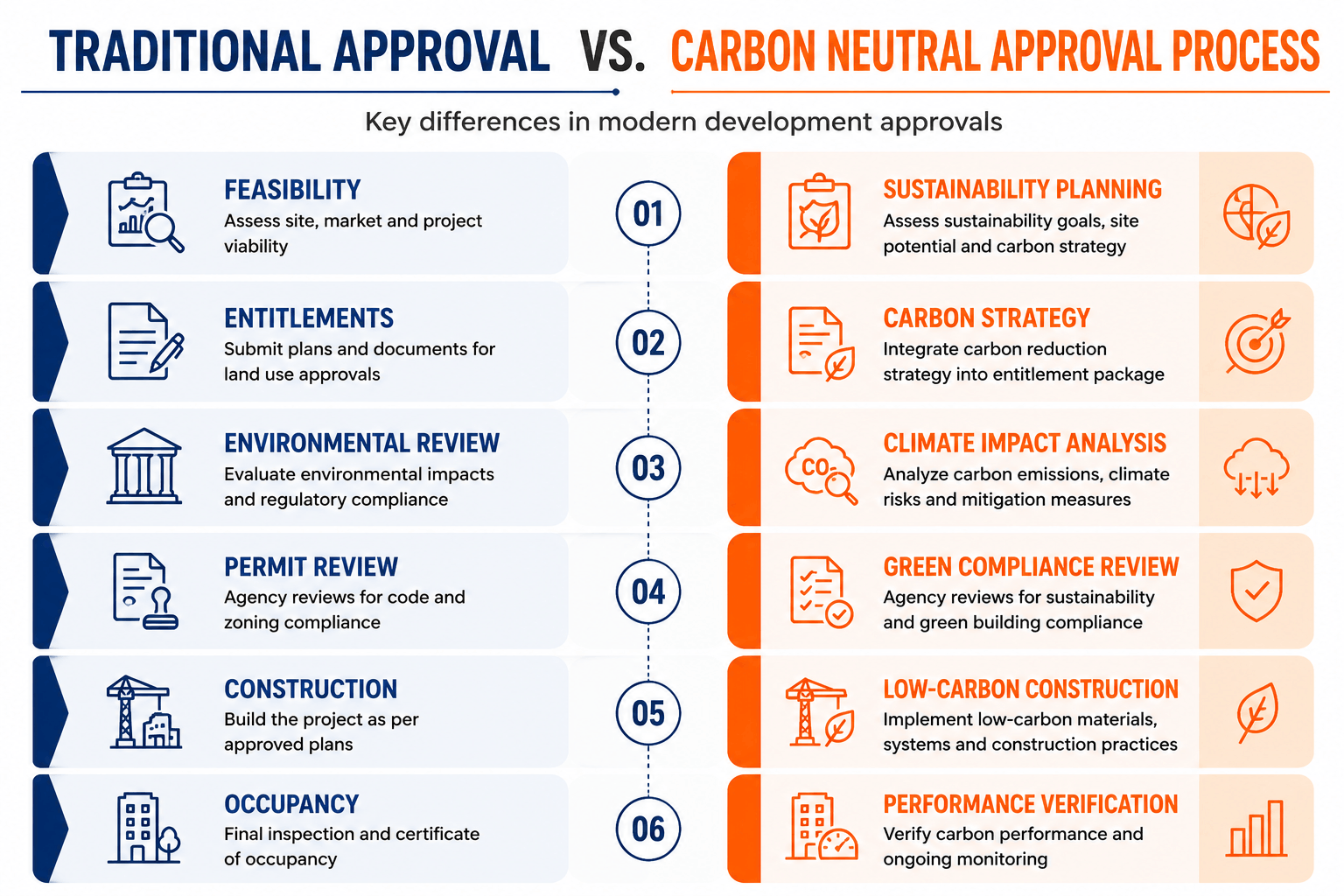
Traditional buildings are usually designed to meet building codes and project budgets. Carbon neutral buildings must do more. They focus on reducing emissions over the entire life of the building.
This often affects design decisions from the start. Because of these differences, carbon-neutral projects often require more planning before permit applications are submitted.
Common Carbon Neutral Building Standards
Several building standards help developers measure and improve sustainability performance. These standards provide clear benchmarks. They also help agencies review projects more consistently.
LEED
LEED stands for Leadership in Energy and Environmental Design. It is one of the most recognized green building programs in the United States.
Projects can earn credits for:
Energy efficiency
Water conservation
Sustainable materials
Indoor environmental quality
Site design
Many local governments support or encourage LEED-certified projects.
CALGreen
CALGreen is California’s green building code.
It includes requirements for:
Energy performance
Water efficiency
Construction waste reduction
Indoor environmental quality
Developers working in California often encounter CALGreen requirements during project approvals.
International Green Construction Code (IGCC)
The International Green Construction Code focuses on sustainable building practices.
It addresses areas such as:
Resource conservation
Energy efficiency
Environmental impact
Building performance
Some cities use portions of the code when creating local sustainability rules.
National Green Building Standard
The National Green Building Standard is commonly used for residential projects.
The standard focuses on:
Energy efficiency
Water savings
Material selection
Indoor environmental quality
It helps builders create homes and communities with lower environmental impacts.
Why These Standards Matter
Building standards create a common framework for sustainability. For developers, they provide clear goals and performance targets. For local agencies, they provide a consistent way to evaluate projects.
As climate policies continue to expand, these standards are becoming more important during entitlement reviews, environmental assessments, and permit approvals. Projects that address sustainability early are often better prepared for today’s development review process.
Why Carbon Neutral Building Standards Matter in Development Approvals
Carbon-neutral building standards are becoming more important during development reviews.
In the past, most agencies focused on zoning, density, traffic, and site design. Those factors still matter today. However, sustainability is now part of the conversation in many jurisdictions.
Cities are under pressure to reduce emissions and meet climate goals. Because of this, planning departments are looking more closely at how new developments affect the environment.
For developers, this means carbon reduction measures can influence approvals from the earliest stages of a project.

Sustainability Requirements Are Becoming Part of Approval Reviews
Many cities have adopted sustainability policies that affect new development.
These policies may include requirements related to:
Energy efficiency
Building electrification
Renewable energy systems
Water conservation
Low-carbon construction materials
In some cases, applicants must provide studies or reports showing how the project will meet local sustainability goals. As a result, sustainability planning often begins long before permit applications are submitted.
Cities Are Linking Climate Goals to New Development
Many local governments have adopted climate action plans.
These plans often include targets for:
Lower greenhouse gas emissions
Reduced energy consumption
Increased renewable energy use
Sustainable growth strategies
New development plays a major role in reaching those goals. Because of this, agencies may review projects through both a planning and environmental perspective. Developments that support local climate objectives are often viewed more favorably during the review process.
How Environmental Performance Influences Agency Decisions
Environmental performance is becoming a larger factor in project evaluations.
Agencies may review:
Building energy use
Carbon emissions
Construction materials
Stormwater management
Long-term sustainability performance
This does not mean a project must achieve perfect carbon neutrality. However, projects that demonstrate strong environmental performance are often better positioned during agency reviews. For larger developments, sustainability commitments can become part of approval conditions.
Growing Expectations From Communities and Planning Commissions
Community expectations have changed over the last decade. Residents are paying closer attention to environmental issues and long-term development impacts.
During public hearings, community members may raise questions about:
Energy consumption
Sustainability measures
Climate impacts
Environmental responsibility
Planning commissions often consider these concerns when reviewing projects. A strong sustainability strategy can help developers address questions early and build support during the entitlement process.
Sustainability Is Becoming a Competitive Advantage
Carbon-neutral building standards are no longer limited to a small group of projects. Many developers now view sustainability as a business advantage.
Projects that address carbon reduction early may benefit from:
Stronger approval applications
Fewer redesigns
Better stakeholder support
Reduced regulatory risks
Greater long-term market appeal
As regulations continue to evolve, sustainability planning is becoming an important part of successful project delivery. Developers who prepare early are often better equipped to meet agency expectations and keep projects moving forward.
How Carbon Neutral Building Standards Impact Development Approvals
Carbon neutral building standards can affect nearly every stage of the development process.
Their impact often starts before a project application is submitted. It can continue through entitlement reviews, permitting, construction, and final inspections.
For some projects, the impact is minor. For others, it can shape major design and planning decisions. The key is understanding these requirements early.
Early Project Planning Requirements
Carbon neutrality cannot be treated as a last-minute addition. Many sustainability decisions must be made during the earliest planning stages.
Developers often evaluate:
Site orientation
Building massing
Energy systems
Material selection
Solar opportunities
Water conservation measures
Making these decisions early can prevent costly redesigns later. It can also help create a stronger development application. Projects that wait until permit review to address sustainability issues often face delays and additional costs.
Additional Documentation During Entitlement Review
Many jurisdictions now require more documentation related to sustainability.
Depending on the project, agencies may request:
Energy modeling reports
Sustainability plans
Green building checklists
Carbon reduction strategies
Environmental studies
These documents help agencies understand how the project aligns with local goals. Incomplete documentation is a common reason applications require revisions. This can add weeks or even months to the approval process.
Environmental Review Considerations
Environmental reviews have become more detailed in many markets. Carbon emissions are increasingly part of these evaluations.
Review agencies may consider:
Energy consumption
Transportation impacts
Construction emissions
Long-term building performance
Climate resilience measures
For larger projects, sustainability commitments can help address environmental concerns before they become approval obstacles. Developers who prepare strong environmental documentation often experience a smoother review process.
Design Modifications Required for Compliance
Carbon neutral goals often lead to design changes. Some changes are minor. Others can affect the overall project design.
Common modifications include:
Improved building insulation
Energy-efficient glazing
Electrified building systems
Solar panel integration
Reduced parking ratios
Bicycle facilities
Green roofs
These changes may increase planning requirements. However, they can also improve project performance and support approval objectives. The earlier these adjustments are considered, the easier they are to implement.
Carbon Reporting and Performance Verification
Many jurisdictions want measurable results. Because of this, developers may need to demonstrate how carbon reduction targets will be achieved.
This can involve:
Energy calculations
Carbon emission estimates
Building performance projections
Sustainability certifications
Agencies often prefer data-driven applications. Clear performance metrics can strengthen project reviews and reduce uncertainty.
Increased Coordination Between Consultants and Agencies
Carbon neutral projects usually involve more stakeholders.
A project team may include:
Architects
Engineers
Sustainability consultants
Environmental specialists
Land-use consultants
Permit expeditors
Each professional contributes information needed for approvals. Strong coordination becomes essential. When consultants work independently, conflicts can arise.
For example, a design change that improves energy performance may create zoning issues. Likewise, a site planning adjustment may affect sustainability goals. Early coordination helps avoid these problems.
Traditional Approval Process vs Carbon Neutral Approval Process
The approval path for a carbon neutral project often includes additional review steps. The exact process varies by jurisdiction, but the comparison below shows common differences.
| Approval Stage | Traditional Development Process | Carbon Neutral Development Process |
|---|---|---|
| Feasibility Study | Basic site and financial analysis | Includes sustainability feasibility analysis |
| Project Planning | Site planning and design | Site planning plus carbon reduction strategy |
| Entitlement Review | Land use and zoning review | Land use, zoning, and sustainability review |
| Environmental Review | Standard environmental assessment | Enhanced climate and carbon impact analysis |
| Permit Submission | Standard construction documents | Additional energy and sustainability documentation |
| Agency Review | Planning and building departments | Multiple agencies and sustainability review teams |
| Design Review | Building code compliance | Building code plus carbon performance requirements |
| Construction Phase | Standard inspections | Additional sustainability inspections and verification |
| Final Approval | Certificate of occupancy | Occupancy approval plus sustainability compliance verification |
Carbon Neutral Standards Can Affect Approval Timelines
One of the most common questions developers ask is whether carbon neutral requirements slow approvals. The answer depends on preparation.
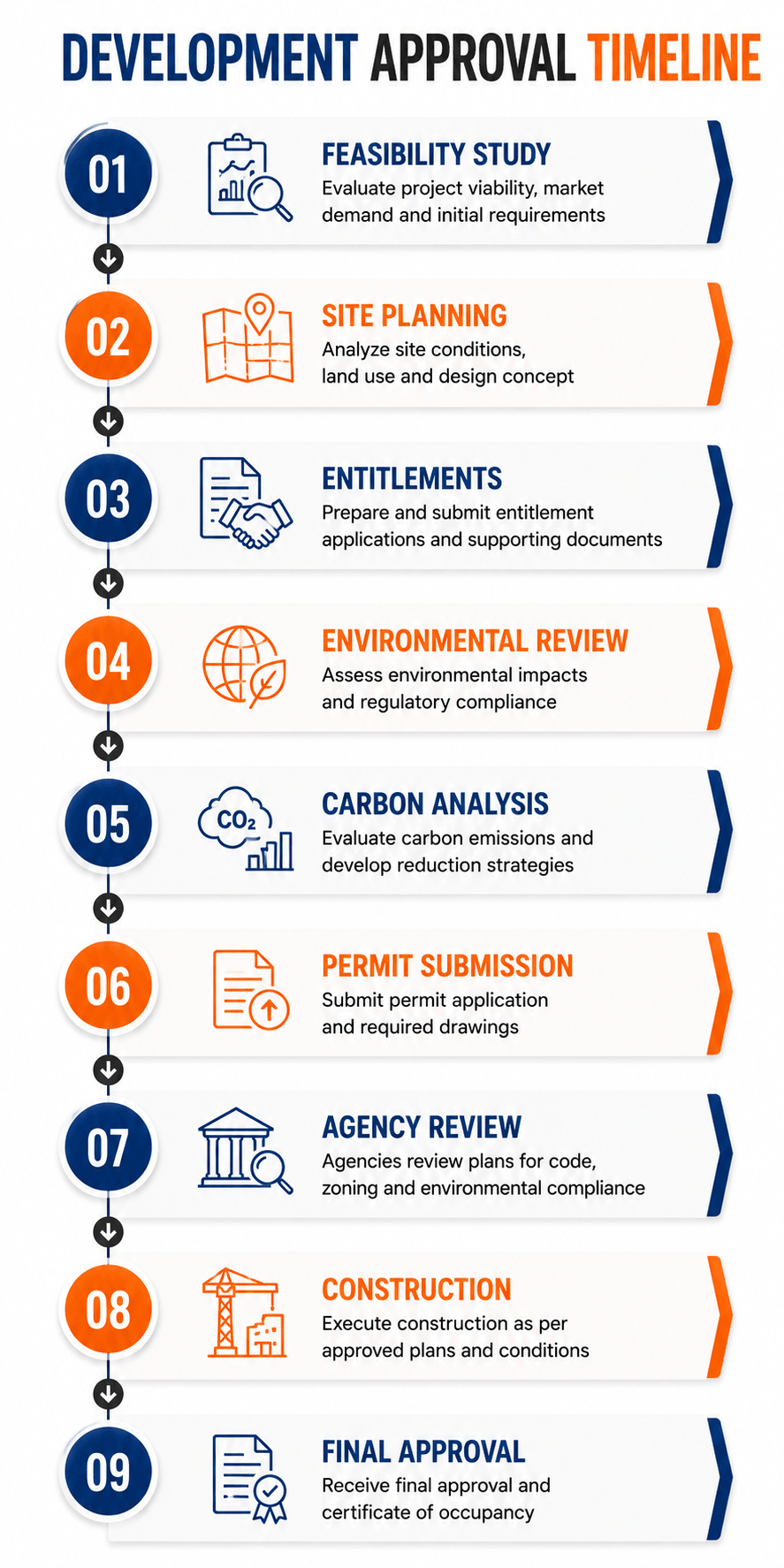
Projects that address sustainability early often move through reviews more efficiently. Projects that ignore sustainability requirements frequently encounter:
Additional agency comments
Design revisions
Supplemental reports
Resubmittals
Longer review periods
In many cases, the issue is not the standard itself. The problem is late planning. A well-prepared project can often satisfy sustainability requirements without major delays.
Carbon Neutral Planning Is Becoming Part of Risk Management
Development projects face many risks.
Common examples include:
Zoning challenges
Permit delays
Community opposition
Construction cost increases
Today, sustainability compliance is becoming another risk factor. Developers who understand carbon neutral expectations early can reduce uncertainty throughout the approval process.
This is one reason many project teams now include sustainability planning during feasibility studies and entitlement strategy discussions.
As cities continue to strengthen climate policies, carbon neutral building standards will likely become an even larger part of development approvals. Projects that prepare for these changes today are often better positioned for long-term success.
Working on a project with sustainability or carbon-neutral requirements? JDJ Consulting Group helps with entitlement strategy, permit expediting, feasibility studies, due diligence, and agency coordination. Call (818) 793-5058 or email sales@jdj-consulting.com for a free consultation.
Carbon Neutral Building Requirements During the Entitlement Process
The entitlement process determines whether a project can move forward under local land-use regulations. For many developments, this is one of the most important approval stages.
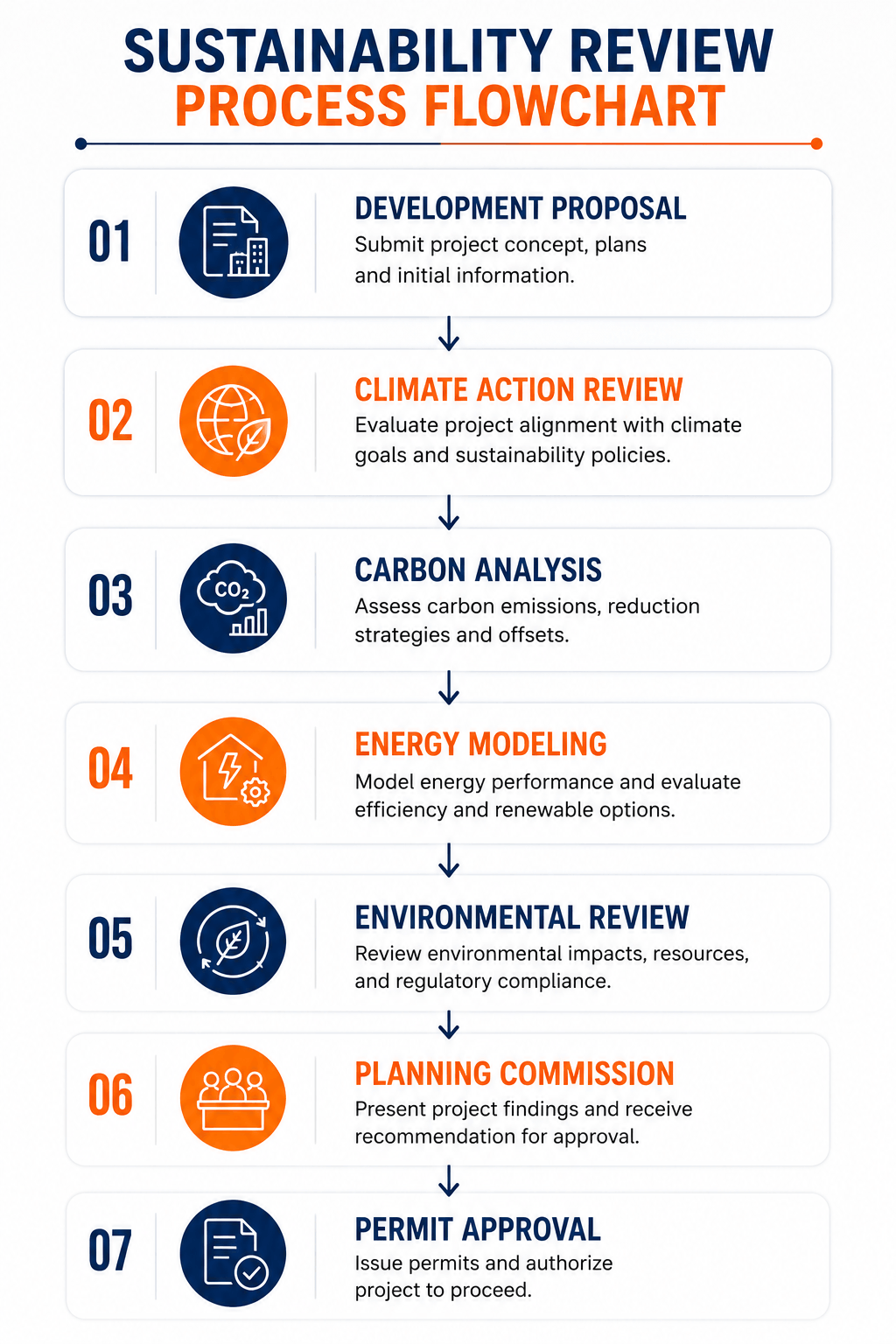
As cities place more emphasis on sustainability, carbon neutral building standards are becoming part of entitlement discussions. Planning departments, commissions, and public agencies may review how a project supports environmental goals before granting approvals. Developers who address these issues early often face fewer surprises later.
Land Use Compatibility Reviews
The first step in most entitlement reviews is determining whether a project fits the surrounding area.
Traditionally, agencies focused on factors such as:
Land use
Density
Building height
Parking
Traffic impacts
Today, sustainability may also be part of the conversation. Reviewers may evaluate whether the project supports local climate action plans and long-term environmental objectives.
For example, a city may encourage:
Energy-efficient buildings
Transit-oriented development
Walkable communities
Reduced vehicle dependence
Projects that align with these goals often have a stronger foundation during entitlement reviews.
Sustainability Commitments in Development Applications
Many jurisdictions now expect applicants to explain their sustainability strategy.
This information may appear in:
Project narratives
Development applications
Environmental documents
Design packages
Developers may be asked to identify:
Planned energy-saving measures
Renewable energy systems
Water conservation features
Electrification strategies
Green building certifications
Providing this information early helps agencies understand the project’s environmental performance. It also demonstrates that sustainability was considered from the beginning rather than added later.
Planning Commission Expectations
Planning commissions play an important role in many entitlement decisions. Commissioners often review projects from both a development and community perspective.
In addition to traditional planning issues, commissioners may ask questions about:
Energy efficiency
Carbon reduction measures
Building performance
Environmental impacts
Long-term sustainability
Developers who arrive prepared with clear answers are often better positioned during public hearings. A well-documented sustainability strategy can help reduce concerns and strengthen confidence in the project.
Conditions of Approval Related to Sustainability
In some jurisdictions, sustainability commitments become part of the approval itself. These requirements are known as conditions of approval.
Examples may include:
Meeting specific green building standards
Installing renewable energy systems
Providing electric vehicle infrastructure
Achieving energy efficiency targets
Completing sustainability reporting
These conditions are typically reviewed during permitting and construction. Developers should understand them early because they can affect budgets, schedules, and project design.
Public Hearing Considerations
Public hearings are often one of the most visible parts of the entitlement process. Community members frequently comment on how a project may affect the surrounding area. Environmental concerns have become more common during these discussions.
Residents may ask about:
Energy consumption
Carbon emissions
Traffic impacts
Air quality
Sustainability measures
A strong carbon reduction strategy can help address these concerns. It can also demonstrate that the project supports broader community goals.
Sustainability Can Help Build Community Support
Community support is not guaranteed. However, sustainability features often create positive discussion during project reviews.
Many residents support development that includes:
Energy-efficient design
Renewable energy systems
Reduced environmental impacts
Improved walkability
Modern sustainability practices
While these features do not guarantee approval, they can help create a more favorable perception of the project. This may become especially valuable during public hearings and commission reviews.
Why Early Entitlement Strategy Matters
Many approval delays occur because sustainability issues are addressed too late.
When developers wait until permit review to consider carbon neutral requirements, they often face:
Design revisions
Additional studies
Agency comments
Resubmittals
Extended timelines
A proactive entitlement strategy can reduce these risks.
By evaluating sustainability goals early, project teams can align land-use planning, environmental compliance, and development objectives from the start. As carbon neutral building standards continue to expand, sustainability planning is becoming an essential part of successful entitlement applications.
Need help with entitlement approvals, sustainability planning, or permit expediting? JDJ Consulting Group assists developers with feasibility studies, land-use strategy, due diligence, and agency coordination. Call (818) 793-5058 or email sales@jdj-consulting.com for a free consultation.
How Carbon Neutral Standards Affect Building Permits
After entitlements are approved, a project moves into the permitting phase. This stage focuses on technical compliance. Agencies review building plans, engineering documents, and construction details before issuing permits.
For carbon neutral developments, permitting reviews often become more detailed. The goal is to verify that sustainability commitments made during planning are reflected in the final construction documents.
Projects that address these requirements early are usually easier to review and approve.
Energy Efficiency Documentation
Energy efficiency is one of the most closely reviewed areas during permitting. Many jurisdictions require detailed calculations showing how the building will perform.
Reviewers may examine:
Building envelope performance
HVAC efficiency
Lighting systems
Energy consumption estimates
Insulation specifications
The purpose is to confirm that the project meets local energy codes and sustainability goals. Missing or inaccurate information can lead to permit comments and resubmittals.
Building Material Requirements
Some cities now consider the environmental impact of construction materials. This is especially true in jurisdictions with aggressive climate policies.
Review agencies may request information about:
Concrete mixes
Steel content
Recycled materials
Sustainable products
Material sourcing
The focus is often on reducing embodied carbon. Although requirements vary by location, material selection is becoming a larger part of permit reviews.
Mechanical and Electrical System Reviews
Mechanical and electrical systems play a major role in carbon reduction.
Permit reviewers commonly evaluate:
Heating systems
Cooling systems
Ventilation equipment
Electrical infrastructure
Energy management systems
Many carbon neutral projects rely on electrification rather than fossil fuel-powered equipment. As a result, agencies often review these systems carefully to ensure compliance with local requirements.
Developers who coordinate with engineers early can avoid many common permit issues.
Renewable Energy Integration
Renewable energy systems are often included in carbon neutral projects. Solar power remains the most common solution.
Permit reviews may examine:
Solar panel locations
Structural support systems
Electrical connections
Battery storage systems
Safety requirements
Agencies want to ensure these systems meet both building and electrical codes. Proper coordination between architects, engineers, and contractors helps streamline this review process.
Inspection and Compliance Verification
Permit approval is not the final step. During construction, inspectors verify that approved plans are being followed.
Common inspection areas include:
Building insulation
HVAC installation
Electrical systems
Energy-efficient equipment
Renewable energy systems
If field conditions differ from approved plans, additional reviews may be required. This can lead to delays if changes are not properly documented. Regular communication between the project team and inspectors can help avoid these problems.
Final Occupancy Approval Requirements
Before a building can be occupied, agencies typically conduct final reviews. These reviews confirm that all permit conditions have been satisfied.
For carbon neutral developments, agencies may verify:
Installed equipment
Energy performance measures
Sustainability commitments
Required certifications
Final inspection results
Projects that fail to meet approved requirements may face delays in receiving occupancy approval. This is one reason why documentation and quality control are so important throughout construction.
Carbon Neutral Requirements Can Increase Permit Complexity
Carbon neutral projects often involve more documentation than traditional developments. That does not necessarily mean approvals take longer. In many cases, delays occur because project teams underestimate the level of detail required.
Common permit challenges include:
Incomplete energy calculations
Missing sustainability documents
Design inconsistencies
Late project revisions
Coordination gaps between consultants
Most of these issues can be avoided through early planning.
Permit Review Comparison
The table below highlights some common differences between standard permit reviews and reviews for carbon neutral developments.
| Review Area | Standard Permit Review | Carbon Neutral Permit Review |
|---|---|---|
| Energy Analysis | Basic code compliance | Detailed energy modeling |
| Building Materials | Structural requirements only | Embodied carbon assessment |
| HVAC Systems | Standard efficiency review | High-efficiency and electrification review |
| Renewable Energy | Usually optional | Often required or encouraged |
| Documentation | Standard permit package | Additional sustainability reports |
| Agency Review | Single discipline focus | Multi-department sustainability review |
| Inspections | Standard building inspections | Additional performance verification |
| Approval Timeline | Typically predictable | Depends on sustainability compliance |
Why Preparation Matters
Permit reviews are often where project schedules face the greatest risk. A missing report or design conflict can create weeks of delay. Carbon neutral developments require even more coordination because multiple systems must work together to meet sustainability goals.
Developers who involve architects, engineers, sustainability specialists, and permit consultants early are often better prepared for agency reviews. As building codes continue to evolve, carbon neutral requirements will likely become a routine part of permit approvals across many markets. Projects that plan ahead can reduce delays, control costs, and move through the permitting process more efficiently.
Approval Benefits of Carbon Neutral Building Standards
Many developers focus on the costs and requirements of carbon neutral building standards. However, these standards can also provide important advantages during the approval process.
As sustainability becomes a larger priority for cities and agencies, projects that support environmental goals are often viewed more favorably. While benefits vary by jurisdiction, many developers find that sustainability planning can strengthen applications and reduce approval risks.
Potential for Faster Agency Reviews
Some jurisdictions encourage sustainable development through streamlined review programs.
In certain cases, projects that exceed minimum environmental requirements may qualify for:
Priority review programs
Expedited permitting
Green building incentives
Sustainability-based development programs
Not every city offers these benefits. However, many local governments are actively looking for ways to encourage environmentally responsible development. Projects that already align with local sustainability goals may require fewer revisions during review. This can help keep approvals on schedule.
Access to Incentive Programs
Many cities, counties, and utility providers offer incentives for sustainable construction.
Depending on the location, developers may benefit from:
Permit fee reductions
Utility rebates
Tax incentives
Energy efficiency grants
Green building assistance programs
These programs can help offset some of the costs associated with carbon reduction measures. Because incentive requirements vary, developers should research available programs during the early planning stages.
Improved Community Support
Public support can play an important role in the entitlement process. Residents often want to see development that benefits the community while minimizing environmental impacts.
Carbon neutral projects frequently include features that appeal to local stakeholders, such as:
Energy-efficient buildings
Reduced emissions
Renewable energy systems
Improved walkability
Sustainable site design
These features may help create a more positive perception of the project. Although community support does not guarantee approval, it can reduce opposition during public hearings and planning commission meetings.
Stronger Environmental Review Outcomes
Environmental reviews often examine how a project affects the surrounding area. A strong sustainability strategy can help address concerns before they become major obstacles.
For example, carbon reduction measures may help demonstrate efforts to:
Reduce energy consumption
Lower emissions
Improve building performance
Support climate action goals
When environmental concerns are addressed early, agencies may have fewer questions during the review process. This can reduce the need for additional studies or revisions.
Better Alignment With Local Policies
Many cities now have long-term sustainability plans. These plans often influence development decisions. Projects that support local objectives are generally easier for agencies to justify and approve.
Common policy goals include:
Carbon reduction
Energy efficiency
Building electrification
Renewable energy adoption
Sustainable growth
When a development aligns with these goals, it often fits more naturally within the city’s broader vision.
Long-Term Market Advantages
The benefits of carbon neutral buildings extend beyond approvals. Many developers view sustainability as a long-term investment.
Carbon neutral buildings may offer:
Lower operating costs
Improved tenant appeal
Higher property values
Reduced regulatory risk
Better market positioning
As environmental regulations continue to evolve, buildings designed for future standards may require fewer upgrades later. This can create additional value over the life of the property.
Potential Approval Advantages for Carbon Neutral Projects
While every project is different, the table below highlights several ways sustainability initiatives may support approvals.
| Sustainability Feature | Potential Approval Benefit |
|---|---|
| Energy-Efficient Design | May reduce agency review comments |
| Renewable Energy Systems | Supports local climate goals |
| Building Electrification | Improves regulatory compliance |
| Green Building Certification | Strengthens approval applications |
| Sustainable Materials | Supports environmental reviews |
| Water Conservation Measures | Aligns with sustainability policies |
| Carbon Reduction Strategies | Demonstrates environmental responsibility |
| Climate Resilience Features | Improves long-term project viability |
| Transit-Oriented Design | Supports smart growth objectives |
| Early Sustainability Planning | Helps avoid redesigns and delays |
Sustainability Is Becoming Part of Good Development Planning
Carbon neutral building standards are no longer viewed as a niche concept. In many markets, they are becoming part of standard development practice. Developers who plan for sustainability early often gain more flexibility during approvals.
They can identify challenges sooner, coordinate consultants more effectively, and present stronger applications to reviewing agencies. As cities continue to strengthen environmental policies, carbon neutral strategies will likely become even more valuable during the development process.
For many projects, sustainability is no longer just an environmental goal. It is becoming an important part of securing approvals and reducing long-term development risk.
Need help evaluating sustainability requirements before submitting your project? JDJ Consulting Group provides entitlement strategy, permit expediting, feasibility studies, due diligence, and agency coordination. Call (818) 793-5058 or email sales@jdj-consulting.com for a free consultation serving Los Angeles, Austin, Miami, and projects nationwide.
Carbon Neutral Building Standards in Los Angeles, Austin, and Miami
Carbon neutral building standards are growing across the United States. However, each market approaches sustainability differently. Local regulations, climate goals, and development priorities all influence how projects are reviewed.
For developers working in multiple regions, understanding these differences can help reduce approval risks and improve project planning.
Los Angeles, Austin, and Miami are among the country’s most active development markets. They are also placing greater emphasis on sustainability and environmental performance.
Los Angeles Sustainability and Development Trends
Los Angeles has some of the most ambitious environmental goals in the country.
The city continues to promote:
Building electrification
Energy efficiency
Renewable energy adoption
Green building practices
Carbon reduction initiatives
Developers often encounter sustainability requirements during both entitlement and permitting reviews.
Environmental considerations can influence:
Site planning
Building design
Energy systems
Construction methods
Because regulations continue to evolve, early planning is especially important for projects in Los Angeles. Developers who address sustainability requirements from the beginning often avoid costly revisions later.
Austin’s Climate and Green Building Priorities
Austin has built a strong reputation for sustainable development.
The city encourages projects that support:
Energy-efficient design
Renewable energy systems
Water conservation
Sustainable growth
As Austin continues to grow, local officials are balancing development needs with environmental goals. Many projects are reviewed for their long-term environmental performance as well as their compliance with local development regulations.
Developers pursuing large residential, commercial, or mixed-use projects may benefit from integrating sustainability measures early in the planning process.
Miami’s Resilience and Sustainability Focus
Miami faces unique environmental challenges. Rising sea levels, flooding concerns, and climate resilience have become major planning considerations.
As a result, sustainability discussions often focus on:
Resilient building design
Energy efficiency
Stormwater management
Infrastructure durability
Long-term environmental performance
Developers are increasingly expected to consider how projects will perform under future environmental conditions. Projects that address resilience and sustainability together are often better aligned with local planning objectives.
Similarities Across All Three Markets
While each city has its own priorities, several trends appear across Los Angeles, Austin, and Miami.
These include:
Stronger sustainability policies
Greater emphasis on energy efficiency
Increased focus on carbon reduction
Growing support for electrification
More detailed environmental reviews
Developers should expect sustainability considerations to become a routine part of project approvals in all three markets.
What Developers Can Learn From These Markets
Los Angeles, Austin, and Miami often serve as indicators of broader industry trends. Policies introduced in major growth markets frequently influence development practices elsewhere.
Developers who prepare for carbon neutral building standards today may find it easier to adapt to future regulations. This is especially true as cities continue to strengthen climate action plans and sustainability requirements.
Sustainability Planning Is Becoming a National Trend
Carbon neutral building standards are no longer limited to a handful of cities. Across the country, planning agencies are placing greater emphasis on environmental performance. While the specific requirements vary, the overall direction is clear.
Developers are increasingly expected to demonstrate how projects reduce emissions, improve efficiency, and support long-term sustainability goals. Projects that incorporate these considerations early are often better prepared for today’s approval environment and future regulatory changes.
Planning a project in Los Angeles, Austin, Miami, or another growing market? JDJ Consulting Group helps developers with entitlement strategy, permit expediting, due diligence, feasibility studies, and agency coordination. Call (818) 793-5058 or email sales@jdj-consulting.com for a free consultation.
Common Mistakes That Delay Carbon Neutral Development Approvals
Many approval delays are preventable. In most cases, the problem is not the carbon neutral standard itself. The issue is how the project team prepares for the approval process. Developers who understand common mistakes can reduce risk, avoid unnecessary costs, and improve approval timelines. The earlier these issues are addressed, the easier they are to manage.
Waiting Too Long to Address Sustainability Requirements
One of the most common mistakes is delaying sustainability planning. Some developers focus on zoning, design, and budgeting first. They plan to address carbon reduction requirements later.
This approach often creates problems. By the time sustainability requirements are reviewed, major design decisions may already be complete.
As a result, teams may need to:
Revise plans
Update engineering documents
Modify building systems
Prepare additional studies
These changes can add time and expense to the project. Early planning is usually more efficient.
Underestimating Embodied Carbon Impacts
Many project teams focus heavily on operational energy use. While operational performance is important, embodied carbon is receiving increased attention from regulators.
Embodied carbon comes from:
Concrete production
Steel manufacturing
Material transportation
Construction activities
Some jurisdictions now evaluate material choices as part of sustainability reviews. Developers who overlook embodied carbon may face unexpected questions during approvals.
Incomplete Permit Packages
Incomplete applications are a major cause of delays. Review agencies cannot approve documents that are missing critical information.
Common omissions include:
Energy calculations
Sustainability reports
Technical studies
Engineering details
Supporting documentation
Each missing item can trigger agency comments and additional review cycles. A complete submission package often saves significant time.
Poor Agency Communication
Strong communication is essential during approvals. Some project teams only communicate with agencies when issues arise. This can create misunderstandings and delays.
Regular communication helps:
Clarify requirements
Resolve questions early
Address concerns quickly
Improve review efficiency
Developers who maintain open communication often experience smoother approval processes.
Lack of Entitlement Strategy
Many projects move into the entitlement process without a clear strategy.
This can lead to:
Unnecessary revisions
Public hearing challenges
Regulatory conflicts
Longer review periods
A strong entitlement strategy helps align project goals with local requirements from the beginning. It also helps identify potential obstacles before they become major issues.
Failure to Align Consultants Early
Carbon neutral projects often involve several specialists.
These may include:
Architects
Engineers
Sustainability consultants
Environmental experts
Permit consultants
Problems occur when team members work independently. A design decision made by one consultant may affect another discipline.
For example:
Energy goals may affect building design.
Building design may affect zoning compliance.
Material choices may affect sustainability targets.
Early coordination helps prevent these conflicts.
Ignoring Future Regulatory Changes
Regulations continue to evolve. Some developers focus only on current requirements. While this may satisfy today’s standards, it can create challenges later.
Projects with long development timelines should consider:
Upcoming code updates
Climate action policies
Electrification requirements
Future sustainability standards
Planning ahead can reduce the risk of unexpected changes during approvals.
Focusing Only on Initial Costs
Cost is always an important consideration. However, focusing only on short-term expenses can create long-term problems.
Lower-cost solutions may:
Increase operating expenses
Reduce energy performance
Require future upgrades
Create compliance risks
Many developers now evaluate both upfront costs and long-term performance when making project decisions.
Mistakes That Commonly Delay Approvals
Preparation Is the Best Solution
Most approval delays are not caused by regulations alone. They are often caused by poor preparation. Projects that plan early, coordinate effectively, and address sustainability requirements from the beginning are usually better positioned for success.
As carbon neutral building standards become more common, preparation will continue to be one of the most effective ways to reduce approval risks and keep projects moving forward.
When Developers Should Hire a Development Consultant
Carbon neutral building standards are becoming more complex. At the same time, approval processes continue to evolve. Developers must often manage zoning requirements, environmental reviews, permit applications, sustainability goals, and public agency coordination.
For smaller projects, the development team may handle these responsibilities internally. However, larger or more complicated projects often benefit from professional guidance. A development consultant helps bring structure to the approval process and reduces the risk of costly mistakes.
Large Mixed-Use Projects
Mixed-use developments typically involve multiple approval layers.
These projects may include:
Residential units
Retail space
Office space
Parking structures
Public improvements
Because of their scale, mixed-use projects often receive greater scrutiny from reviewing agencies. A development consultant can help coordinate approvals, manage timelines, and identify potential issues before they create delays.
Projects Requiring Entitlements
Many developments cannot move forward without entitlement approvals.
Examples include:
Zone changes
Conditional use permits
Variances
Site plan approvals
Development agreements
Entitlement reviews often involve multiple departments and public hearings. A consultant can help prepare applications, coordinate responses, and support agency communication throughout the process.
Carbon Neutral Developments in Complex Jurisdictions
Some cities have more extensive sustainability requirements than others.
Projects located in highly regulated markets may face additional reviews related to:
Energy performance
Electrification
Environmental compliance
Climate action goals
Carbon reduction measures
A consultant can help interpret requirements and align project plans with agency expectations. This often reduces uncertainty during approvals.
Multi-Agency Approval Processes
Many developments require approvals from more than one agency.
For example, a project may involve:
Planning departments
Building departments
Public works agencies
Utility providers
Environmental agencies
Managing these reviews can become time-consuming. A development consultant helps coordinate communication and keeps approvals moving forward.
Projects Facing Tight Timelines
Time is often one of the most valuable project resources. Delays can increase carrying costs, affect financing, and impact construction schedules. Projects operating under tight deadlines often benefit from additional support.
Consultants help by:
Tracking approvals
Managing submissions
Coordinating agencies
Identifying risks early
Reducing review delays
This can improve schedule certainty and reduce project stress.
The Right Guidance Can Reduce Approval Risks
Development approvals are becoming more detailed. Carbon neutral building standards add another layer of complexity to an already challenging process.
Developers who seek professional guidance early often avoid common mistakes, improve application quality, and create more predictable project schedules.
For many projects, expert support is not simply about speeding up approvals. It is about reducing risk and making better decisions throughout the development process.
Conclusion
Carbon neutral building standards are having a growing impact on development approvals across the United States. What was once considered an optional sustainability goal is increasingly becoming part of the approval process itself.
Planning departments, environmental agencies, and local governments are paying closer attention to how projects affect energy use, emissions, and long-term environmental performance. As a result, developers must think about sustainability much earlier than in the past.
Carbon neutral considerations can influence:
Entitlements
Environmental reviews
Permit approvals
Project design
Construction planning
The good news is that most challenges can be managed through early preparation. Developers who invest in feasibility studies, due diligence, entitlement strategy, and sustainability planning are often better positioned for successful approvals. As climate policies continue to evolve, carbon neutral building standards will likely become even more important in the years ahead.
Projects that prepare today will be better equipped to meet future requirements while reducing approval risks and avoiding unnecessary delays.
Planning a development project with sustainability requirements? JDJ Consulting Group helps developers with entitlement strategy, feasibility studies, due diligence, permit expediting, construction management support, and agency coordination.
Call (818) 793-5058 or email sales@jdj-consulting.com for a free consultation serving Los Angeles, Austin, Miami, and projects nationwide.