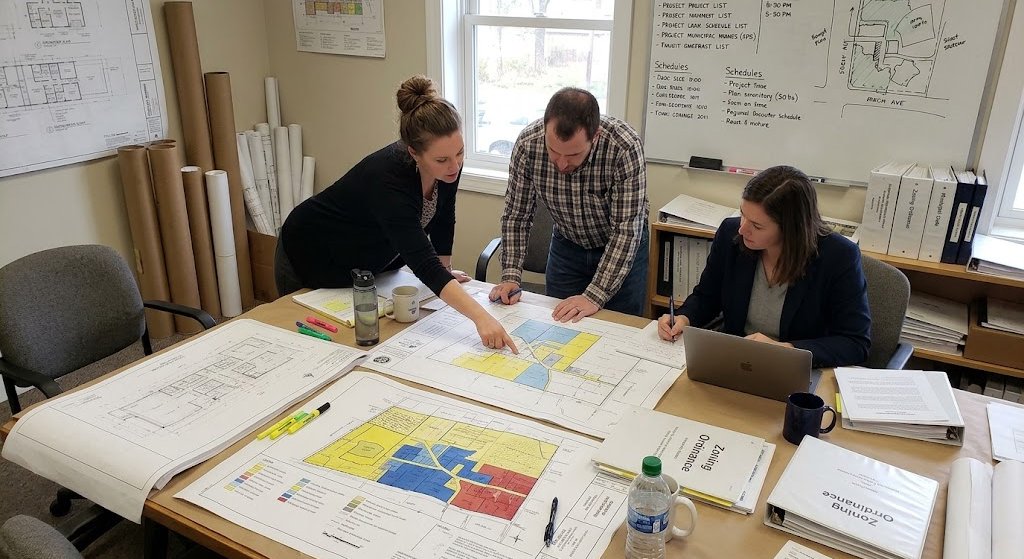
Tenant improvements, often called TI or build-outs, are a key part of commercial real estate in Texas. Whether you are opening a retail store, setting up an office, or remodeling a leased space, you will likely need to make changes to fit your business.
These changes are not just about design. They involve permits, building codes, lease terms, and costs. Many tenants assume they can start construction right away. In reality, Texas cities require proper approvals before any work begins.
This guide explains everything in simple terms. You will learn what tenant improvements are, what rules apply in Texas, and how to plan your project the right way.
If you are working with a consulting firm like JDJ Consulting, this process becomes much easier. Still, understanding the basics helps you avoid delays and costly mistakes.
Table of Contents
What Are Tenant Improvements (TI) in Commercial Real Estate?
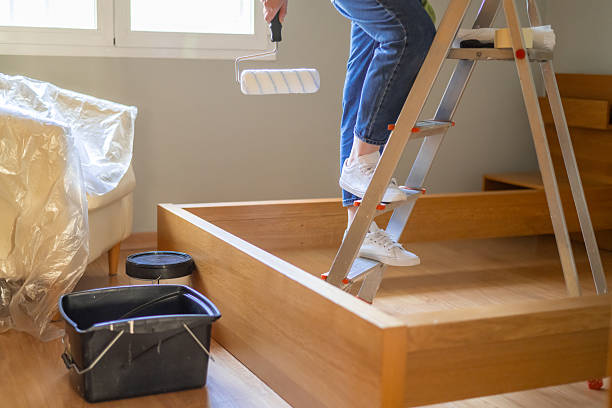
Tenant improvements are changes made to a leased commercial space so it fits the tenant’s needs. These changes can be small or large, depending on the business type. Some projects involve simple updates like painting walls. Others include major work such as adding plumbing or changing layouts.
Simple Definition of Tenant Improvements
Tenant improvements refer to any modification made inside a leased property. These changes help the space match the tenant’s operations.
For example, a new office tenant may need:
- Private offices
- Meeting rooms
- Updated lighting
- New flooring
At the same time, a restaurant may need:
- Kitchen installation
- Ventilation systems
- Plumbing upgrades
In both cases, the goal is the same. The space must support the business.
Tenant Improvement vs Build-Out vs Finish-Out
You may hear different terms in Texas commercial real estate. While they sound similar, they have slightly different meanings.
- Tenant Improvement (TI) is the general term. It includes all changes made for a tenant.
- Build-Out refers to constructing or modifying a space from a basic condition.
- Finish-Out is commonly used in Texas. It usually means completing an interior space that was left unfinished by the landlord.
Here is a simple comparison:
| Term | Meaning | When It’s Used |
|---|---|---|
| Tenant Improvement | Any change made for tenant needs | General use |
| Build-Out | Construction or major modifications | New or empty spaces |
| Finish-Out | Interior completion of shell space | Very common in Texas |
Even though the terms differ, the approval process is often the same. Permits and code compliance still apply.
Common Types of Tenant Improvements
Tenant improvements vary based on the scope of work. Some are simple, while others involve structural changes.
Here are the most common types:
Cosmetic Improvements
- Painting
- Flooring replacement
- Ceiling updates
Functional Changes
- Adding or removing walls
- Changing layouts
- Installing partitions
System Upgrades
- Electrical work
- HVAC systems
- Plumbing updates
Each type may require different permits. Even small changes can trigger inspections in Texas cities.
Examples of Tenant Improvements by Industry
Different industries have different needs. This affects both cost and approval requirements.
Office Spaces
- Cubicles and private offices
- Conference rooms
- Data cabling
Retail Stores
- Display shelving
- Lighting design
- Storage areas
Restaurants
- Commercial kitchens
- Grease traps
- Exhaust systems
Medical Offices
- Specialized rooms
- Plumbing for equipment
- Strict code compliance
Because of these differences, planning is important. A restaurant project, for example, will take longer than a basic office setup.
Texas Tenant Improvement Requirements Overview
Tenant improvements in Texas are not controlled by one single rule. Instead, they are regulated at the local level. Each city has its own process, but the general requirements are similar. Understanding these rules early helps you avoid delays.
Are Tenant Improvements Regulated in Texas?
Yes, tenant improvements are regulated. However, the rules come from local authorities, not just the state. Most cities in Texas follow versions of the International Building Code (IBC). They also add local amendments.
This means:
- You must follow city-specific codes
- Permits are required before starting work
- Inspections are mandatory
Even small projects may need approval. It depends on the type of work.
Key Authorities Involved
Several departments are involved in tenant improvement projects. Each one reviews a different part of your plan.
Here is a breakdown:
| Authority | Role in TI Projects |
|---|---|
| Building Department | Reviews construction plans |
| Fire Marshal | Checks fire safety compliance |
| Zoning Department | Confirms allowed land use |
| Health Department | Required for food or medical spaces |
You may need approvals from all of these, depending on your project.
When Tenant Improvements Are Required
Tenant improvements are needed in several situations. Many tenants assume they only apply to new spaces, but that is not true.
You may need TI work when:
- Moving into a new commercial space
- Renovating an existing space
- Changing how the space is used
For example, converting a retail store into a restaurant will require major upgrades. This includes plumbing, ventilation, and fire safety systems.
Why Requirements Vary by City
Texas cities like Houston, Dallas, and Austin each have their own rules. While they follow similar codes, the approval process can differ. Some cities offer faster permitting. Others require more detailed reviews.
Because of this, working with local experts can save time. They understand city-specific requirements and can help avoid common mistakes.
Permit Requirements for Tenant Improvements in Texas
Permits are one of the most important parts of any tenant improvement project. Without them, you cannot legally start construction. Skipping permits can lead to fines, delays, or even project shutdowns.
Do You Need a Permit for Tenant Improvements?
In most cases, yes. Tenant improvements require permits before work begins.
Permits ensure that:
- The design meets safety standards
- Systems are installed correctly
- The building complies with local codes
Even minor changes, such as electrical updates, may require approval.
Types of Permits Required
The type of permit depends on your project scope. Many TI projects require multiple permits.
Common permit types include:
- Building permit
- Electrical permit
- Plumbing permit
- Mechanical permit
Each permit covers a specific system. If your project involves all systems, you will need all four.
Small vs Large Tenant Improvement Projects
Not all projects follow the same process. Cities often divide projects into small and large categories.
Small Projects
- Minor layout changes
- Limited system upgrades
- Faster approval process
Large Projects
- Structural changes
- Full system installations
- Detailed plan review required
The size of your project affects both cost and timeline.
Permit Application Requirements Checklist
Before applying, you need to prepare several documents. Missing items can delay approval.
Here is a simple checklist:
| Requirement | Description |
|---|---|
| Application Form | Basic project details |
| Construction Plans | Layout and design drawings |
| MEP Plans | Mechanical, electrical, plumbing details |
| Code Compliance Notes | ADA and safety requirements |
| Contractor Details | Licensed professionals |
| Permit Fees | Based on project size |
Submitting a complete application helps speed up the process.
What Happens After You Apply
Once you submit your permit application, the city will review your plans. This step may take a few days or several weeks.
After approval:
- You can start construction
- Inspections will be scheduled
- Corrections may be required
Finally, you will need a Certificate of Occupancy before opening your business.
Building Codes and Compliance Requirements in Texas
Building codes play a major role in tenant improvement projects. They ensure that your space is safe, functional, and compliant with local laws. In Texas, most cities follow standard codes, but each city may add its own rules.
If you ignore these requirements, your project may face delays or failed inspections. That is why it is important to understand the basics before you begin.
Texas Building Code Basics
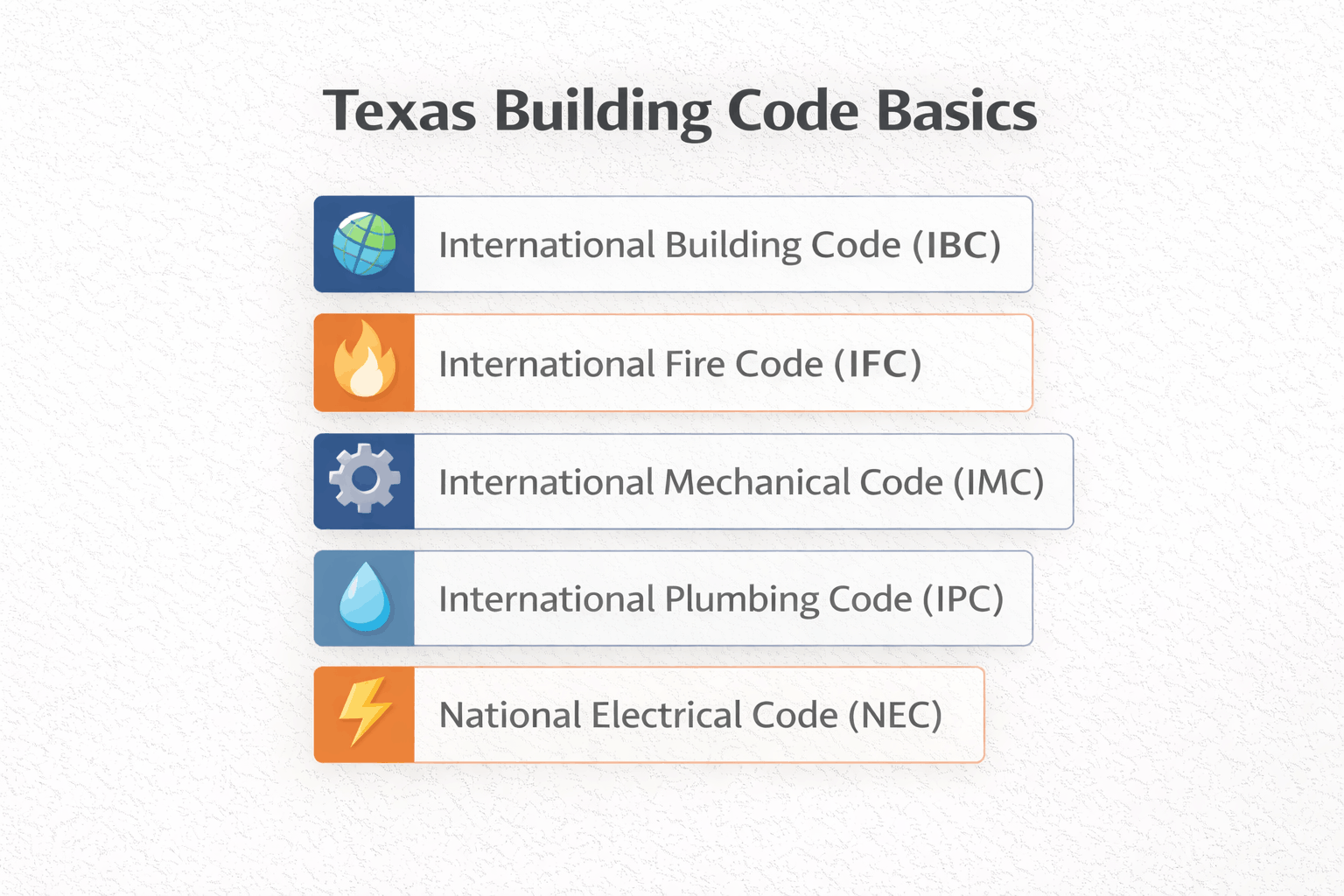
Texas does not use a single statewide building code for all cities. Instead, most cities adopt versions of the International Building Code (IBC) along with other related codes.
These usually include:
- International Building Code (IBC)
- International Fire Code (IFC)
- International Mechanical Code (IMC)
- International Plumbing Code (IPC)
- National Electrical Code (NEC)
Each city may adjust these codes slightly. For example, Houston and Dallas may have different local amendments. This means you must always check with the local building department before starting your project.
Fire Safety Requirements
Fire safety is one of the most strictly enforced parts of any tenant improvement project. The fire marshal will review your plans and inspect the space before approval.
Common fire safety requirements include:
- Fire sprinkler systems (if required by occupancy type)
- Clearly marked exits
- Emergency lighting
- Fire alarms and detection systems
- Proper exit distances
If your layout changes, you may need to redesign exit paths. This is common in offices and retail stores.
ADA Compliance for Tenant Improvements
ADA (Americans with Disabilities Act) compliance is required for most commercial spaces. This ensures that your space is accessible to everyone.
Key ADA requirements include:
- Accessible entrances
- Proper door widths
- Wheelchair-accessible restrooms
- Clear pathways inside the space
Even small renovations can trigger ADA upgrades. For example, changing a restroom may require full accessibility updates.
Electrical, HVAC, and Plumbing Code Requirements
Any changes to building systems must meet current codes. Even if the building is old, new work must follow modern standards.
Here is a simple overview:
| System | Key Requirements |
|---|---|
| Electrical | Safe wiring, panel capacity, proper grounding |
| HVAC | Ventilation, energy efficiency, air quality |
| Plumbing | Proper piping, drainage, water efficiency |
Inspections are required at different stages. If something does not meet code, you will need to fix it before moving forward.
Zoning and Occupancy Requirements
Zoning and occupancy rules determine how a space can be used. These rules are set by local governments and must be followed before any tenant improvement work begins. Many projects get delayed because tenants overlook zoning requirements.
Understanding Zoning Laws in Texas
Zoning laws control what type of business can operate in a specific area. For example, a retail store may not be allowed in an industrial zone.
Before signing a lease, you should confirm:
- The property’s zoning classification
- Whether your business is allowed
- Any restrictions that apply
This step is critical. If your business is not permitted, you may not get approval for tenant improvements.
Change of Occupancy Rules
A change of occupancy happens when the use of a space changes. This is a major factor in tenant improvement projects.
For example:
- Office → Restaurant
- Retail → Medical clinic
- Warehouse → Office
When this happens, the city may require:
- New permits
- Full code review
- Upgrades to meet current standards
These upgrades can increase both cost and timeline.
Occupancy Classification Types
Each building is assigned an occupancy classification. This helps determine safety requirements and code standards.
Here are common classifications:
| Occupancy Type | Description |
|---|---|
| Business (B) | Offices, professional services |
| Mercantile (M) | Retail stores |
| Assembly (A) | Restaurants, event spaces |
| Industrial (I) | Manufacturing or production |
| Storage (S) | Warehouses |
Your tenant improvement plans must match the correct classification. If not, your application may be rejected.
Why Zoning and Occupancy Matter
Zoning and occupancy rules affect:
- Permit approval
- Construction requirements
- Fire safety standards
- Parking requirements
Because of this, it is best to verify these details early. It saves time and prevents costly changes later.
Tenant Improvement Process in Texas (Step-by-Step)
Tenant improvement projects follow a clear process. While details may vary by city, the overall steps remain similar. Understanding this process helps you plan better and avoid delays.
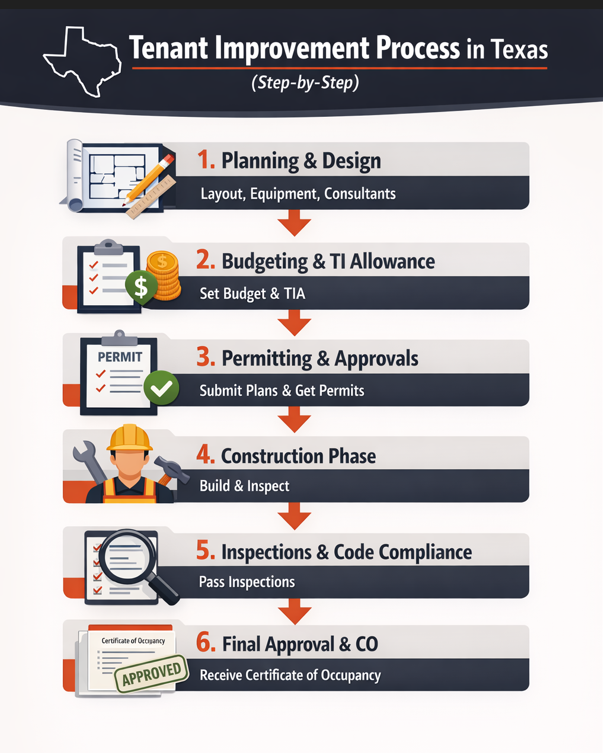
Step-by-step tenant improvement process in Texas, from initial planning to final approval and certificate of occupancy.
Step 1: Planning and Design
Every project starts with a plan. You need to define what your business requires from the space.
This includes:
- Layout design
- Equipment needs
- Customer flow
Most tenants work with:
- Architects
- Designers
- Consultants
A well-prepared design reduces issues later in the process.
Step 2: Budgeting and TI Allowance
Next, you need to set a budget. This includes construction costs, permits, and design fees. Many leases include a Tenant Improvement Allowance (TIA). This is money provided by the landlord to help cover costs. However, the allowance may not cover everything. You should plan for additional expenses.
Step 3: Permitting and Approvals
Once your plans are ready, you submit them for approval. This step is handled by the local building department.
During this stage:
- Plans are reviewed for code compliance
- Corrections may be requested
- Permits are issued after approval
This process can take anywhere from a few weeks to a few months.
Step 4: Construction Phase
After permits are approved, construction begins. This is when your design becomes a real space.
During construction:
- Contractors complete the work
- Inspections are scheduled
- Adjustments may be required
Good communication with your contractor is important during this stage.
Step 5: Inspections and Code Compliance
Inspections happen at different stages of the project. Each system must be checked before moving forward.
Common inspections include:
- Electrical inspection
- Plumbing inspection
- Mechanical inspection
- Final building inspection
If an issue is found, it must be fixed before approval.
Step 6: Final Approval and Certificate of Occupancy
The final step is getting a Certificate of Occupancy (CO). This document allows you to legally use the space.
Without a CO:
- You cannot open your business
- You may face penalties
Once approved, your space is ready for use.
Typical Tenant Improvement Timeline
Here is a general timeline for most TI projects in Texas:
| Phase | Estimated Time |
|---|---|
| Planning & Design | 2–4 weeks |
| Permitting | 2–8 weeks |
| Construction | 4–16 weeks |
| Inspections & Approval | 1–3 weeks |
Timelines vary based on project size and city requirements. Larger or more complex projects will take longer.
Tenant Improvement Allowance (TIA) in Texas
Tenant improvement allowance, often called TIA, is one of the most important parts of a commercial lease. It directly affects your budget and how much you need to invest upfront. Many tenants misunderstand how TIA works. As a result, they end up paying more than expected.

What Is Tenant Improvement Allowance?
Tenant improvement allowance is the amount of money a landlord agrees to provide for build-out work. It is usually offered as part of the lease agreement.
This allowance helps cover costs such as:
- Construction work
- Materials
- Design fees
In most cases, the landlord does not give cash directly. Instead, the amount is reimbursed or applied during construction.
How TI Allowance Works
TIA is usually structured in one of two ways:
- Per square foot (e.g., $20 per sq. ft.)
- Lump sum amount (fixed budget)
For example, if you lease 2,000 sq. ft. and receive $25 per sq. ft., your total allowance would be $50,000.
However, there are conditions:
- Funds may only cover approved work
- Deadlines may apply for using the allowance
- Unused funds may not be refundable
Who Pays for Tenant Improvements?
Tenant improvements are usually shared between the landlord and the tenant.
Here is a simple breakdown:
| Cost Type | Typically Paid By |
|---|---|
| Basic build-out | Landlord (via TIA) |
| Custom upgrades | Tenant |
| Over-budget costs | Tenant |
| Permit fees | Often tenant |
The final split depends on lease negotiation. Strong negotiation can reduce your upfront costs.
Hidden Costs Beyond TIA
Many tenants assume the allowance will cover everything. In reality, several costs fall outside TIA.
Common hidden costs include:
- Permit and inspection fees
- Architectural and engineering fees
- Project management costs
- Unexpected construction changes
- Delays that increase labor costs
Because of this, it is wise to keep a contingency budget of at least 5–10%.
Cost of Tenant Improvements in Texas
Tenant improvement costs vary widely across Texas. The final cost depends on location, scope, and building condition. Understanding these costs helps you plan better and avoid surprises.
Average TI Costs Per Square Foot
Costs are usually calculated per square foot. While prices change over time, general ranges are:
- Basic office build-out: $15–$40 per sq. ft.
- Mid-range commercial space: $40–$80 per sq. ft.
- Specialized spaces (restaurants, medical): $100+ per sq. ft.
Large cities like Austin and Dallas often have higher costs due to labor and demand.
Cost Breakdown of Tenant Improvements
Tenant improvement budgets are usually divided into key categories.
| Category | Percentage of Total Cost |
|---|---|
| Construction | 70–80% |
| Design & Engineering | 5–10% |
| Permits & Fees | 2–5% |
| Contingency | 5–10% |
Construction takes the largest share. However, design and permits are also important and should not be overlooked.
Factors That Affect TI Costs
Several factors influence the total cost of your project.
1. Location: Urban areas tend to have higher labor and material costs.
2. Scope of Work: A simple office setup costs much less than a restaurant build-out.
3. Existing Building Condition: Older buildings may require upgrades to meet current codes.
4. Material Selection: High-end finishes increase overall costs.
5. Timeline: Faster projects may cost more due to rush work.
How to Control Tenant Improvement Costs
Managing costs is possible with proper planning.
Here are a few practical tips:
- Define your scope clearly before starting
- Avoid frequent design changes
- Get multiple contractor bids
- Track expenses during construction
- Keep a contingency budget
Small decisions early in the project can make a big difference later.
Legal Requirements and Lease Considerations
Legal terms in your lease play a major role in tenant improvements. Many tenants focus only on design and costs, but lease clauses can impact the entire project. Understanding these terms helps protect your investment.
Lease Clauses That Impact Tenant Improvements
Commercial leases often include specific clauses related to improvements.
Key clauses to review include:
- Tenant Improvement Allowance clause
- Approval requirements for construction
- Ownership of improvements
- Restoration clause (returning space to original condition)
Some leases require landlord approval before any work begins. Others may limit the type of changes allowed.
Compliance Responsibilities
In most cases, the tenant is responsible for ensuring compliance with all laws and codes.
This includes:
- Building codes
- Safety regulations
- Permit requirements
Even if the landlord owns the property, the tenant must follow all rules during construction.
Insurance and Liability Requirements
Tenant improvement projects involve risk. Because of this, insurance is often required.
Common requirements include:
- General liability insurance
- Workers’ compensation coverage
- Builder’s risk insurance (for larger projects)
These policies protect both the tenant and the landlord during construction.
Why Legal Planning Matters
Ignoring lease terms can lead to serious issues, such as:
- Project delays
- Extra costs
- Disputes with the landlord
Before starting your project, it is a good idea to review your lease carefully. In many cases, consulting a professional can help clarify responsibilities.
Hiring Contractors for Tenant Improvements in Texas
Choosing the right contractor is one of the most important steps in a tenant improvement project. A good contractor keeps the project on track, meets code requirements, and avoids costly mistakes. On the other hand, the wrong choice can lead to delays, failed inspections, and budget overruns.

Do You Need a Licensed Contractor?
Yes, in most cases, you need a licensed contractor for commercial tenant improvements in Texas.
Licensed contractors:
- Understand local building codes
- Handle permits and inspections
- Follow safety standards
Some cities also require contractors to register locally before starting work.
If your project involves electrical, plumbing, or HVAC work, licensed specialists are required. You cannot legally complete this work without them.
How to Choose the Right Contractor
Not all contractors have experience with tenant improvements. It is important to choose one who understands commercial projects.
Here are a few key things to look for:
- Experience with similar TI projects
- Knowledge of local Texas regulations
- Proper licensing and insurance
- Strong references or past work
- Clear communication and timelines
Before hiring, ask for detailed estimates. This helps you compare costs and avoid hidden charges.
Role of Architects and Engineers
Contractors are not the only professionals involved. Many projects also require architects and engineers.
Architects handle:
- Space planning
- Layout design
- Code compliance in drawings
Engineers handle:
- Structural design
- Electrical systems
- Mechanical systems
For larger projects, these professionals are required for permit approval. Their plans must be submitted to the city before construction begins.
Why the Right Team Matters
A strong team helps you:
- Avoid permit issues
- Reduce delays
- Stay within budget
- Pass inspections smoothly
Working with experienced professionals can save both time and money in the long run.
Common Mistakes to Avoid in Tenant Improvements
Many tenant improvement projects run into problems due to simple mistakes. Most of these issues can be avoided with proper planning.
Skipping Permits
Some tenants try to save time by skipping permits. This often leads to serious problems.
Without permits:
- Work may be stopped by the city
- Fines may be issued
- You may need to redo completed work
It is always better to follow the proper process from the start.
Underestimating Costs
Budgeting errors are very common in TI projects. Many tenants focus only on construction costs and forget other expenses.
Costs that are often missed include:
- Design fees
- Permit fees
- Inspection costs
- Unexpected repairs
This is why a contingency budget is important.
Ignoring Code Requirements
Building codes are strict, especially for commercial spaces. Ignoring them can lead to failed inspections.
Common issues include:
- Improper electrical work
- Poor ventilation systems
- Inadequate fire safety measures
Fixing these issues later can be expensive.
Poor Lease Negotiation
Some tenants accept lease terms without reviewing TI clauses carefully.
This can lead to:
- Limited improvement options
- Low tenant improvement allowance
- Unexpected restoration costs
Negotiating the lease properly can reduce long-term expenses.
Rushing the Planning Phase
Starting construction too quickly can cause delays later.
Good planning helps you:
- Define clear goals
- Avoid design changes
- Reduce unexpected costs
Taking extra time in the beginning often saves time during construction.
Timeline for Tenant Improvement Projects in Texas
Understanding the timeline helps you plan your business opening. Many tenants expect projects to finish quickly, but delays are common without proper planning.
Typical Project Timeline
Here is a general timeline for tenant improvement projects:
| Phase | Duration |
|---|---|
| Planning & Design | 2–4 weeks |
| Permitting | 2–8 weeks |
| Construction | 4–16 weeks |
| Final Inspections | 1–3 weeks |
This timeline varies based on project size and city requirements.
Factors That Delay Projects
Several factors can extend your timeline. Knowing these helps you prepare better.
Common causes of delays include:
- Permit approval delays
- Incomplete application documents
- Design changes during construction
- Contractor scheduling issues
- Inspection failures
Even small delays can affect your opening date. That is why planning ahead is important.
How to Keep Your Project on Schedule
You can reduce delays by following a few simple steps:
- Submit complete permit applications
- Finalize designs before construction
- Hire experienced contractors
- Schedule inspections early
- Monitor progress regularly
Clear communication between all parties also helps keep the project moving smoothly.
Why Timeline Planning Matters
Your timeline affects more than just construction. It also impacts:
- Lease start dates
- Rent payments
- Business launch plans
Delays can increase costs if you are paying rent without operating your business. Because of this, it is important to set realistic expectations from the start.
Benefits of Tenant Improvements for Businesses
Tenant improvements are not just about meeting requirements. They also improve how your business operates. A well-designed space can support daily work and create a better experience for customers.
Improved Workflow Efficiency
A good layout makes daily tasks easier. Employees can move freely, and work areas stay organized.
For example:
- Offices with clear layouts improve team communication
- Retail stores with smart design improve customer flow
- Restaurants with proper kitchen setup reduce delays
When the space matches your operations, productivity improves.
Better Customer Experience
Customers notice the environment as soon as they enter your space. Clean design and proper layout create a positive impression.
Tenant improvements help you:
- Create a welcoming atmosphere
- Improve navigation inside the space
- Highlight products or services
A better customer experience often leads to higher sales.
Higher Employee Productivity
Employees perform better in a well-designed space. Lighting, ventilation, and layout all affect comfort.
Simple upgrades can make a difference:
- Better lighting reduces strain
- Proper HVAC improves air quality
- Organized layouts reduce clutter
When employees feel comfortable, they work more efficiently.
Increased Property Value
Tenant improvements can also increase the value of the space. Even though the tenant pays for many upgrades, the property benefits in the long term.
Well-maintained and upgraded spaces:
- Attract future tenants
- Support higher rental rates
- Require fewer repairs later
This creates value for both tenants and landlords.
Texas-Specific Tips for Successful Tenant Improvements
Tenant improvement projects in Texas follow general rules, but local factors still matter. Each city has its own process, and understanding these differences helps you avoid delays.
Understand Local City Regulations
Cities like Houston, Dallas, and Austin have different permit systems. While the codes are similar, the process may vary.
Before starting:
- Check city-specific requirements
- Confirm permit timelines
- Understand local inspection processes
This step helps you avoid unexpected issues.
Plan for Inspections Early
Inspections are required at different stages of the project. Missing an inspection can delay your timeline.
To stay on track:
- Schedule inspections in advance
- Coordinate with your contractor
- Prepare for corrections if needed
Planning ahead reduces last-minute problems.
Work with Local Experts
Local professionals understand city requirements better than anyone else. This includes contractors, consultants, and designers.
Working with local experts helps you:
- Speed up approvals
- Avoid common mistakes
- Improve project efficiency
Their experience can save both time and money.
Document Everything
Keeping records is important during a tenant improvement project.
You should document:
- Permits and approvals
- Contracts and agreements
- Inspection reports
- Change orders
Clear documentation helps resolve issues quickly if they arise.
Final Thoughts: Tenant Improvement Requirements in Texas
Tenant improvement projects in Texas involve more than just design and construction. They require careful planning, proper permits, and full compliance with local codes.
To summarize:
- Always check local requirements before starting
- Secure permits and approvals early
- Plan your budget, including hidden costs
- Work with experienced professionals
- Follow your lease terms carefully
When done correctly, tenant improvements can support your business growth and create a space that works for your needs. Taking the time to plan each step helps you avoid delays and extra costs. It also ensures your project runs smoothly from start to finish.
Permits don’t have to be stressful. At JDJ Consulting, we help you avoid delays and get approvals faster—without the hassle.
Let’s get your project moving
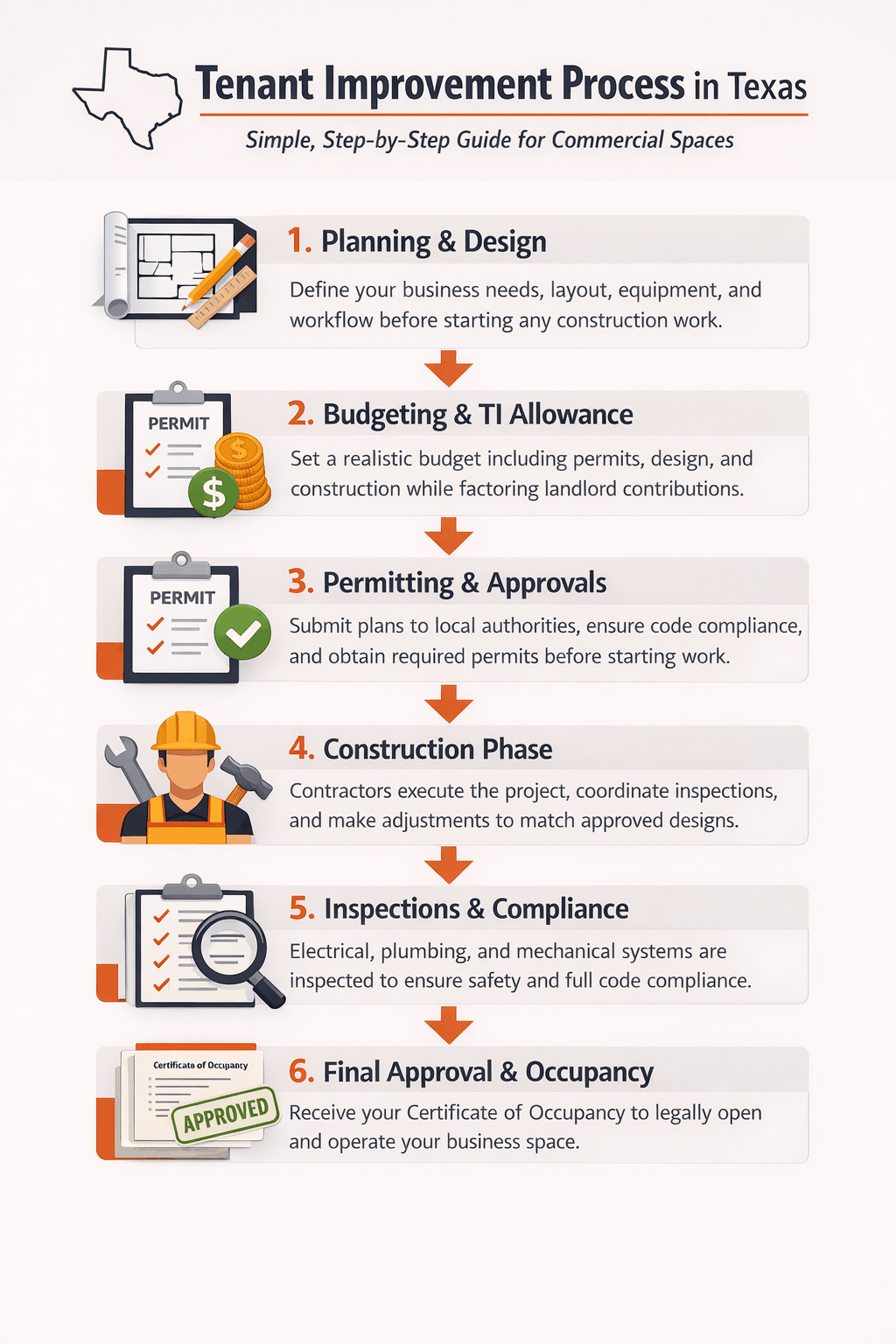
Tenant improvement process in Texas explained in six clear steps, from planning and permits to construction and final certificate of occupancy.
FAQs About Tenant Improvement Requirements in Texas
Here are some common questions tenants ask before starting a project.
Do tenant improvements require building permits?
Yes, most tenant improvements require building permits, especially when the work involves structural changes, electrical systems, or plumbing.
Typical examples include:
Changes to the floor plan or office layout
Upgrades to mechanical or electrical systems
Modifications affecting occupant load or safety
A Tenant Improvement Permit (TI permit) ensures the project complies with local building codes and regulatory requirements.
What is a Tenant Improvement Permit (TI permit)?
A Tenant Improvement Permit is a type of building permit required for modifying an existing commercial space.
It applies to:
Interior renovations or leasehold improvements
Changes to construction plans or layouts
Upgrades to systems like HVAC, plumbing, or fire sprinklers
This permit ensures your commercial tenant improvement meets building code, ADA requirements, and safety standards.
What documents are required for tenant improvement permits?
A complete permit application for tenant improvements requires detailed construction documents.
Common documents include:
Architectural and construction plans
Floor plan, ceiling plan, and reflected ceiling plans
Structural and MEP (mechanical, electrical, plumbing) drawings
Site plan (if exterior work is involved)
Accurate documentation helps speed up building permits approval and reduces revision cycles.
What codes apply to tenant improvements?
All tenant improvements must comply with local building codes, including safety and accessibility standards.
Key requirements include:
Building code and structural safety
Energy code compliance
Americans with Disabilities Act (ADA) accessibility
Fire safety systems like fire protection and fire sprinklers
Failure to meet these codes can delay approvals or require design changes.
Do I need Health Department approval for tenant improvements?
Yes, certain commercial tenant improvement projects require approval from the Health Department, especially for:
Restaurants and food service spaces
Facilities with grease interceptors
Projects affecting sanitation or water systems
These approvals are part of broader regulatory requirements and may run alongside building permits.
What is included in the tenant improvement process?
The Tenant Improvement Process includes several stages from planning to final approval.
Typical steps include:
Space planning and floor plan development
Preparing construction documents
Submitting for building permits
Completing the construction phase
Passing the Final Building Inspection
Each step ensures compliance with building codes and smooth project execution.
What are trade permits in tenant improvements?
In addition to a Tenant Improvement Permit, you may need separate trade permits for specific systems.
These include:
Electrical permits
Plumbing permits
Mechanical permits
Each trade permit ensures that specialized work meets building code and safety standards.
How long does a tenant improvement permit take?
The timeline for building permits depends on project size and complexity.
Typical ranges:
Small projects: 2–4 weeks
Larger commercial projects: 4–8+ weeks
Delays can occur due to incomplete construction documents or revisions required for building code compliance.
What is a tenant improvement allowance?
A tenant improvement allowance is a budget provided by the landlord in commercial leases to cover renovation costs.
It may be used for:
Interior upgrades and leasehold improvements
New layouts or floor plan changes
System upgrades (lighting, HVAC, etc.)
This allowance helps reduce upfront construction costs for tenants.
What happens during the final inspection?
The Final Building Inspection ensures that all tenant improvements meet approved plans and building codes.
Inspectors will check:
Completed construction plans vs. actual work
Safety systems like fire sprinklers
Compliance with ADA requirements
Once approved, you may receive a Certificate of Occupancy, allowing the space to be used legally.
Can tenant improvements affect occupancy or use?
Yes, changes to a space can impact occupant load and building classification.
For example:
Converting office space into a restaurant
Increasing seating capacity
Changing use type under building code
These changes may require additional building permits and approvals.
Do tenant improvements include structural changes?
Some tenant improvements involve structural changes, while others are limited to interior updates.
Structural work may include:
Modifying load-bearing walls
Adding new openings
Reinforcing structures
These changes require detailed structural plans and stricter building code review.
What is the difference between a shell permit and a TI permit?
A shell permit covers the base building (structure, exterior, core systems), while a TI permit covers interior tenant improvements.
Key differences:
Shell permit → Base building work
Tenant Improvement Permit → Interior build-out
Both permits are often required for new commercial tenant improvement projects.
Can I start tenant improvements before permit approval?
No, starting work without building permits can lead to penalties.
Possible consequences:
Stop-work orders
Fines and delays
Required removal of completed work
Always wait for permit approval before starting the construction phase.
How can I speed up tenant improvement permits?
To speed up building permits for tenant improvements:
Submit complete and accurate construction documents
Ensure compliance with building codes and energy code
Work with experienced permitting services or consultants
Respond quickly to review comments
Proper preparation reduces delays and improves approval timelines.
Do tenant improvements require ADA compliance?
Yes, all tenant improvements must meet ADA requirements under the Americans with Disabilities Act.
This includes:
Accessible entrances and paths
ADA-compliant restrooms
Proper spacing based on occupant load
Non-compliance can delay approvals and require costly corrections.
What is a Certificate of Occupancy for tenant improvements?
A Certificate of Occupancy is issued after final approval of the tenant improvement project.
It confirms:
Compliance with building codes
Completion of inspections
Approval for legal occupancy
Without it, the space cannot be used for business operations.