Table of Contents
Construction projects and property investments often require inspections. These inspections help confirm that buildings meet safety rules and construction standards. In Texas, properties can be far apart. Inspectors may need to travel long distances to reach each site. Because of this, visiting every property is not always practical.
Remote building inspections help solve this problem. A remote inspection allows an inspector to review a building through live video. Instead of traveling to the property, the inspector connects online and guides the inspection.
Someone at the property walks through the building with a smartphone or tablet. The inspector watches the video in real time and asks to see important areas of the building. This process saves time and reduces travel delays. It also allows investors and project owners to review properties from almost anywhere.
Today, many developers, lenders, and property managers use remote inspections to review projects. These inspections help confirm construction progress, identify possible problems, and support project decisions.
JDJ Consulting Group provides remote building inspection services across Texas. The company works with developers and owners who need reliable project oversight remotely.
In this guide, we explain how remote building inspections work in Texas. We also cover the benefits, limitations, and common uses in construction and real estate projects.
What Are Remote Building Inspections?
A remote building inspection is a property inspection done through video technology. The inspector does not travel to the site. Instead, they inspect the building using live video and photos.
Someone at the property walks through the building with a smartphone or tablet. The inspector watches the video and guides the process. They may ask the person on site to stop, zoom in, or move closer to certain areas.
This allows the inspector to examine key parts of the building. These may include the roof, walls, electrical panels, plumbing systems, and structural areas.
The inspector records notes during the inspection. Photos and videos may also be saved. After the inspection, the inspector prepares a digital report. This report explains the condition of the property and lists any issues that need attention.
Remote inspections are useful when travel is difficult or unnecessary. They work well for many routine inspections.
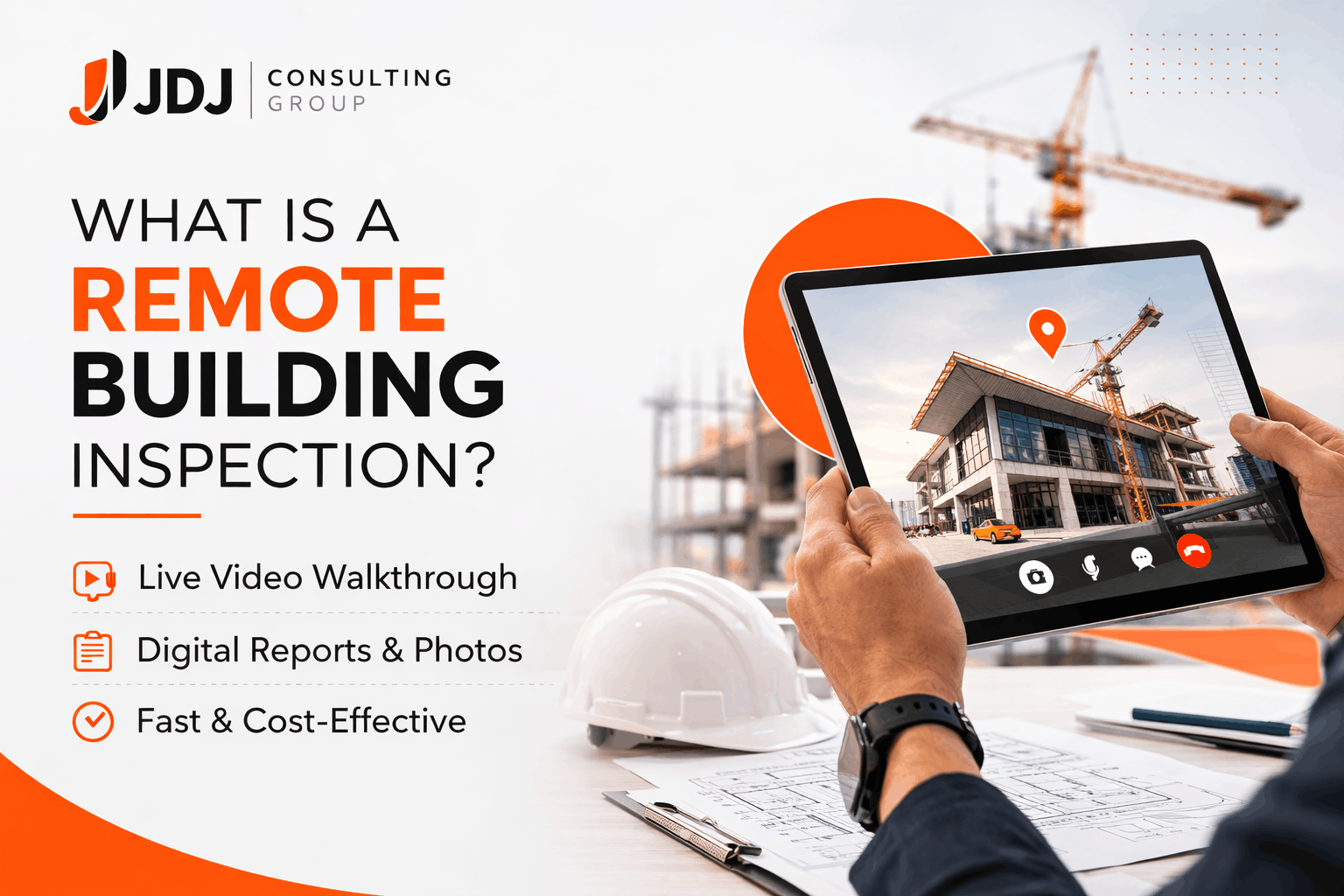
Definition of Remote Building Inspections
A remote building inspection is a professional evaluation of a property done through video communication. The inspector connects to the property through a video call. Someone on site walks through the building with a mobile device.
During the inspection, the inspector directs the walkthrough. They may ask to see areas such as:
Electrical panels
Plumbing fixtures
Roof surfaces
HVAC systems
Structural components
The inspector watches carefully and records their observations. Photos may be taken during the call. These images help support the final inspection report.
Once the inspection is complete, the inspector prepares a digital report. The report often includes notes, images, and recommendations. This process allows inspections to happen quickly, even when the inspector is far away.
How Remote Inspections Differ From Traditional Inspections
Traditional inspections require the inspector to visit the property. The inspector walks through the building and checks the systems in person. Remote inspections work in a different way. The inspector does not travel to the site. Instead, they watch the property through a live video call.
Someone at the property walks through the building with a phone or tablet. The inspector guides the walkthrough and gives instructions during the inspection. Both methods aim to evaluate the condition of the property. However, the process and scheduling are often different. Remote inspections are usually easier to schedule because travel is not required.
| Feature | Traditional Inspection | Remote Inspection |
|---|---|---|
| Inspector location | At the property | Remote location |
| Travel required | Yes | No |
| Scheduling | Depends on travel time | Usually faster |
| Inspection tools | Physical inspection tools | Video, photos, and apps |
| Reporting | Written report | Digital report with media |
Because travel is not required, remote inspections are often easier to schedule. This makes them useful for projects that need quick progress.
Why Remote Inspections Are Growing in Texas
Remote inspections are becoming more common across Texas. Several factors are driving this change. First, Texas covers a large area. Inspectors often need to travel long distances between properties. Remote inspections reduce this travel time. Second, many investors buy property in Texas from other states. They cannot always visit the property quickly. Remote inspections help them review buildings from anywhere.
Construction companies also benefit from remote inspections. Large projects often involve several experts. These experts may work in different locations. A remote inspection allows them to join the walkthrough without traveling.
Other reasons for the growth of remote inspections include:
Faster scheduling
Lower travel costs
Easier property reviews for investors
Better use of digital tools
Faster construction progress checks
Technology also plays a big role. Smartphones now have high-quality cameras. Video calls allow inspectors to see details clearly. Because of these improvements, remote inspections are now part of many construction and property workflows in Texas.
How Remote Building Inspections Work
A remote building inspection follows a clear process. Even though the inspector is not on site, the inspection still follows professional standards. The goal is to review the property carefully and record accurate information.
Most inspections use live video. The inspector watches the walkthrough while guiding the person at the property. The inspector may ask for closer views of certain areas. They may also request photos during the inspection. Once the walkthrough is complete, the inspector reviews the information and prepares a report.
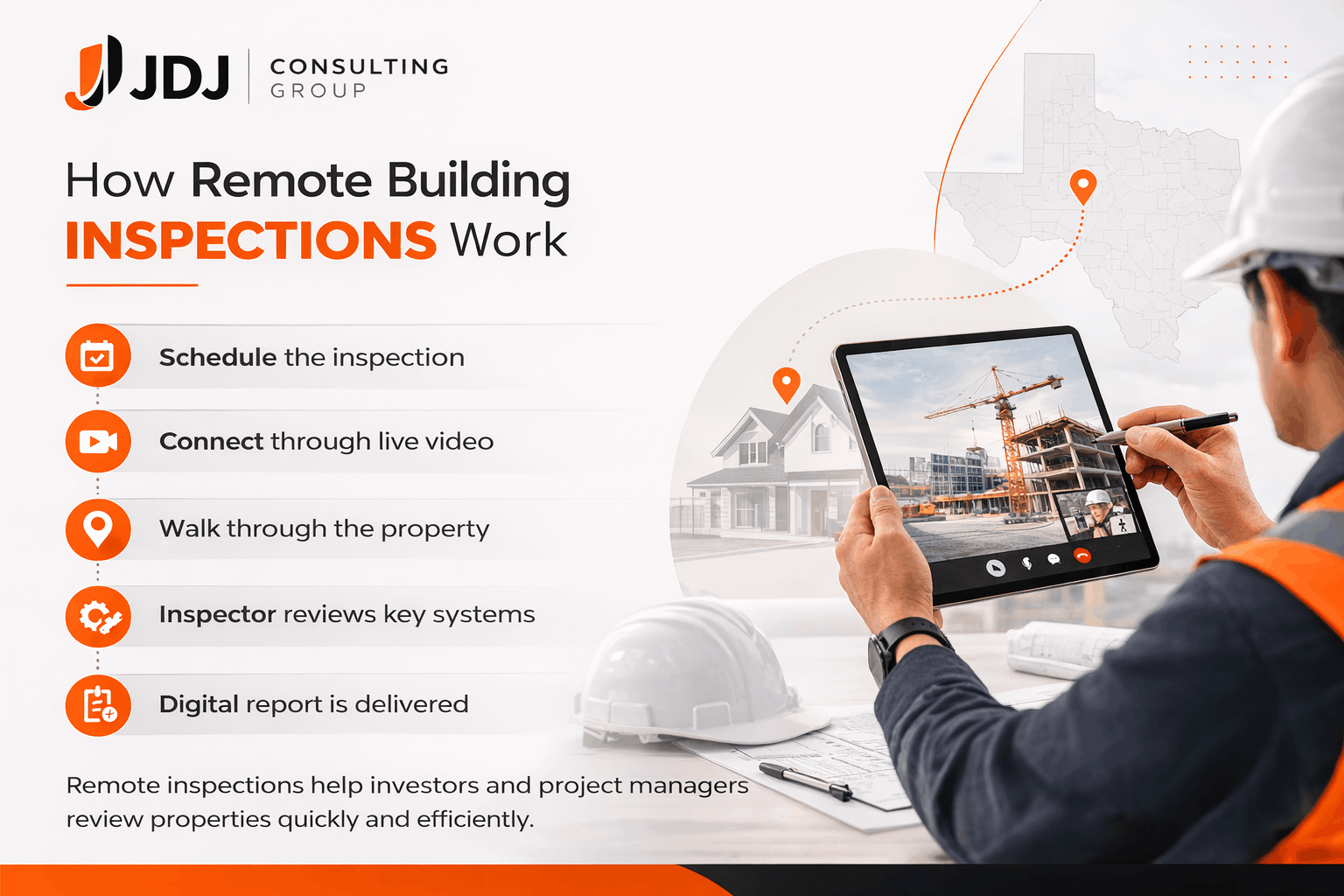
Step-by-Step Process of a Remote Inspection
Remote inspections usually follow a simple process. First, the inspection is scheduled. The inspector confirms the date, time, and technology needed. Next, the person at the property prepares a mobile device. The device must have a working camera and a stable internet connection.
At the scheduled time, the video session begins. The person at the site walks through the building while the inspector watches. The inspector may ask to see specific areas such as:
The electrical panel
Plumbing connections
The roof or attic
HVAC equipment
Exterior walls and foundation
The inspector records notes during the inspection. Photos or short videos may also be saved to support the report. After the inspection ends, the inspector reviews the information. They then prepare a digital inspection report. This report explains the condition of the property and identifies any concerns.
Technologies Used in Remote Inspections
Remote inspections rely on several digital tools. These tools allow inspectors to view and record the condition of a building. Most inspections use simple and widely available technology.
Common tools include:
Smartphones or tablets
Video call platforms
Inspection reporting software
Digital photo storage
Cloud reporting systems
Some inspections may also use advanced tools. For example, large commercial properties may use drones or 360-degree cameras. These tools help inspectors review large spaces or exterior areas.
The following table shows common technology used during remote inspections.
| Technology | Purpose |
|---|---|
| Smartphone or tablet | Shows live video of the property |
| Video call software | Allows communication with the inspector |
| Inspection apps | Record notes and photos |
| Cloud reporting tools | Store and share reports |
| 360-degree cameras | Capture large interior areas |
These tools help inspectors gather clear and organized information.
Devices Needed for Remote Building Inspections
Most remote inspections require only basic equipment. A smartphone with a good camera is usually enough. However, a few additional items can make the inspection easier.
Common equipment includes:
Smartphone or tablet with camera
Stable internet connection
Flashlight for dark areas
Ladder for roof or attic access when safe
Measuring tape if measurements are needed
Lighting is very important during the inspection. Dark areas make it harder for the inspector to see details. The person holding the camera should also move slowly. This helps the inspector observe the building clearly.
When the video is steady and the lighting is good, the inspection becomes much more accurate. Remote inspections work best when the walkthrough is calm, clear, and well guided.
Types of Remote Building Inspections in Texas
Remote inspections can serve many types of properties. They are used in residential homes, commercial buildings, and construction projects. The inspection method may change slightly depending on the property type.
In Texas, many builders, investors, and property managers now use remote inspections to review property conditions. These inspections help them track projects and identify issues early.
Each type of inspection focuses on different building systems and concerns. Below are the most common types of remote building inspections used across Texas.
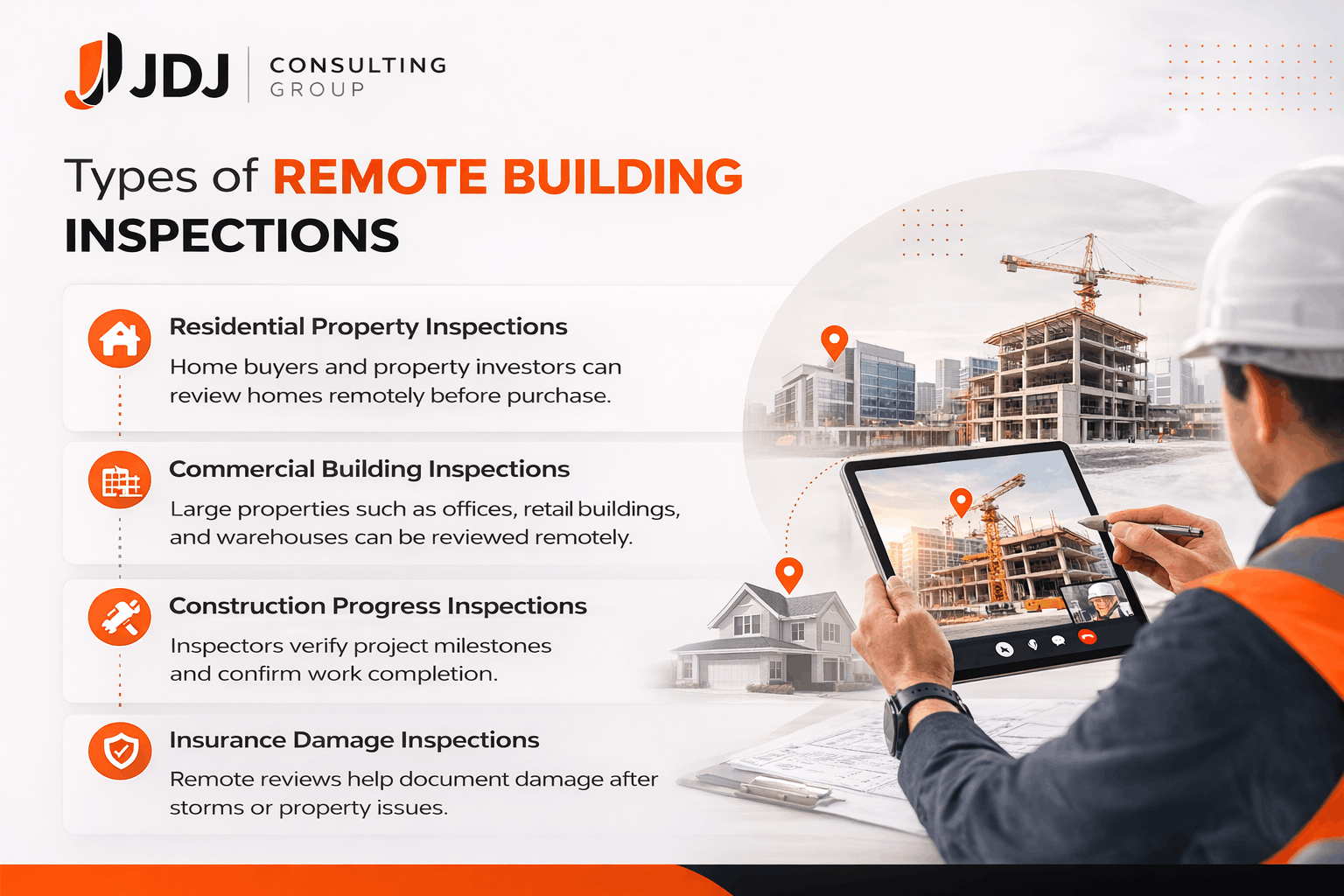
Residential Property Inspections
Residential inspections are one of the most common uses of remote inspection services. These inspections focus on houses, townhomes, and small residential buildings.
Many home buyers now purchase property without visiting the site first. A remote inspection helps them understand the condition of the home before closing. During a residential inspection, the inspector may review:
Roof condition
Exterior walls and siding
Windows and doors
Plumbing fixtures
Electrical panels
HVAC systems
Attics and crawl spaces
The inspector watches the walkthrough and asks the person on site to show key areas. They may ask for close-up views of damage, leaks, or electrical components.
After the inspection, the inspector prepares a report that explains the findings. This report helps buyers understand the condition of the property and any repairs that may be needed.
Commercial Building Inspections
Commercial buildings often need detailed inspections. These buildings are usually larger than homes. They may include offices, retail stores, warehouses, and mixed-use properties.
Remote inspections help owners and investors review these buildings without traveling. The inspector connects through a live video call. Someone at the property walks through the building with a phone or tablet.
During the inspection, the inspector may review major building systems, such as:
Electrical systems
Mechanical equipment
Roof areas
Fire safety equipment
Structural components
Commercial properties often require clear records of their condition. These records may be needed for insurance, loans, or property sales. Because these buildings are large, the inspection may take more than one walkthrough. Each session may focus on a different part of the building. For example, one walkthrough may review mechanical systems. Another may focus on structural areas or exterior conditions.
Construction Progress Inspections
Construction progress inspections help track building projects. Lenders, developers, and investors often request them during construction. The goal is simple. The inspector confirms that work is moving forward as planned. Remote inspections make this process faster. The inspector does not need to travel to the job site. Instead, the inspection happens through live video.
During the walkthrough, the inspector may review several stages of the project, including:
Foundation work
Framing progress
Roofing installation
Electrical rough-in
Plumbing systems
Interior finishing work
These inspections help confirm that contractors completed the required work. They are often used before the next payment stage of a construction loan.
Progress inspections are also helpful for investors. Many investors fund projects in different cities. Remote inspections allow them to review construction without visiting the site.
Insurance and Damage Assessment Inspections
Remote inspections can also help with insurance reviews. Insurance companies may request inspections after storms, leaks, or other property damage. A remote inspection allows an inspector to review the damage quickly.
During the inspection, the inspector may ask the person on site to show areas such as:
Roof damage
Water leaks
Broken windows
Structural cracks
Electrical damage
Photos and short videos are often recorded during the inspection. These images show the condition of the property. The inspection report can help support an insurance claim.
Texas often experiences strong storms and severe weather. Because of this, quick damage inspections are important. Remote inspections help property owners begin the claims process sooner.
Benefits of Remote Building Inspections
Remote building inspections offer several advantages. They help property owners save time and manage projects more efficiently. In a large state like Texas, travel can slow down inspections. Remote inspections remove this delay.
They also allow multiple people to review a property at the same time. This is helpful for investors, engineers, contractors, and property managers.
Faster Inspection Scheduling
Scheduling an inspection can take time when travel is involved. Inspectors may need to drive several hours to reach the property. Remote inspections remove this issue.
Because the inspector does not need to travel, inspections can often happen sooner. This helps projects move forward faster. Builders can keep construction schedules on track. Property buyers can also complete due diligence more quickly.
Lower Costs for Property Owners
Travel costs often increase the price of inspections. Inspectors may charge extra for long distances or overnight travel. Remote inspections usually cost less because travel is not required.
This can reduce the overall inspection cost for property owners. Some additional cost benefits include:
No travel expenses
Faster scheduling
Reduced project delays
Lower overall inspection fees
These savings can make a noticeable difference, especially for large projects or multiple properties.
Better Project Oversight
Remote inspections allow more people to join the inspection. For example, a developer in another city can join the video call while the inspector performs the review.
This allows stakeholders to see the property at the same time. It also allows them to ask questions during the inspection. This type of collaboration helps projects run more smoothly.
Safer Inspection Process
Some construction sites can be difficult or unsafe to access. Remote inspections can reduce risk in certain situations. For example, an inspector may not need to climb a roof if a contractor can safely show the area through video.
This approach reduces unnecessary exposure to hazards. Of course, some inspections still require in-person visits. However, remote inspections can reduce risk in many routine cases.
Easier Access to Specialists
Some projects require input from specialists. For example, a structural engineer may need to review part of a building. Remote inspections make it easier for experts to join the inspection without traveling. This allows property owners to access specialized knowledge more quickly.
The following table compares the advantages of remote inspections and traditional inspections.
| Factor | Remote Inspection | Traditional Inspection |
|---|---|---|
| Travel required | No | Yes |
| Scheduling speed | Faster | Slower |
| Cost | Often lower | Often higher |
| Expert participation | Easy to include remotely | Requires travel |
| Collaboration | Multiple participants online | Usually limited |
Because of these benefits, many companies now include remote inspections in their property management and construction processes.
When Remote Inspections Are the Best Option
Remote inspections are not ideal for every situation. However, they work well for many property reviews. They are especially useful when travel is difficult or when quick inspections are needed. Below are several situations where remote inspections are often the best choice.
Real Estate Investors Buying Property in Texas
Many investors purchase property in Texas from other states. Traveling to inspect every property is not always practical. Remote inspections allow investors to review properties quickly. The inspector guides the walkthrough and explains the building condition. This helps investors understand potential repair costs before making a purchase.
Construction Projects in Multiple Cities
Large construction companies often manage projects across several cities. Sending inspectors to every location can slow down the project timeline. Remote inspections allow project managers to review sites quickly. Contractors can walk through the building while the inspector observes remotely. This helps confirm progress without delays.
Property Management and Routine Inspections
Property managers often need to inspect rental units and buildings. Routine inspections help identify maintenance issues before they become larger problems. Remote inspections allow managers to review properties without traveling. A maintenance worker or tenant can show the property during the inspection. This approach saves time and allows faster maintenance decisions.
Insurance and Damage Assessments
When damage occurs, property owners need quick inspections. Remote inspections allow inspectors to review the property soon after the issue is reported. This helps property owners begin repairs sooner. It also helps insurance companies review damage quickly.
Early Project Reviews
Remote inspections are useful during early project stages. For example, an inspector may review a construction site to confirm that work has started correctly. If any issues appear, contractors can fix them early. This prevents small problems from becoming larger and more expensive.
Limitations of Remote Building Inspections
Remote inspections are useful in many situations. However, they do have some limits. Some inspections still require an in-person visit. Inspectors must be able to see the property clearly. If the video quality is poor or access is limited, the inspection may not be complete. Understanding these limits helps property owners choose the right type of inspection.
Situations That May Require In-Person Inspections
Certain building issues are difficult to evaluate through video. Structural damage, hidden problems, or complex systems often require a physical inspection. For example, inspectors may need to touch materials, test equipment, or use specialized tools.
Situations that often require an in-person inspection include:
Structural foundation concerns
Major roof damage
Complex electrical system testing
Engineering evaluations
Safety hazards at the site
In these cases, the inspector must visit the property to perform a full assessment. Remote inspections can still be helpful for an initial review. However, a physical inspection may follow if serious issues appear.
Technology Limitations
Remote inspections depend on technology. If the connection is poor, the inspection may be difficult. A weak internet signal can interrupt the video call. Low camera quality can also make details hard to see.
Other technical challenges may include:
Poor lighting in inspection areas
Slow internet connection
Camera movement or blurry video
Difficulty accessing certain building areas
Limited Physical Testing
During a traditional inspection, the inspector may test equipment directly. For example, they may check outlets with electrical tools or measure moisture levels in walls.
Remote inspections cannot always perform these tests. Instead, the inspector relies on visual information. Because of this, some inspections may need additional follow-up checks.
Understanding these limits helps property owners decide when a remote inspection is appropriate.
Preparing for a Remote Building Inspection
Preparation helps the inspection run smoothly. A few simple steps can make the process easier for both the inspector and the person on site. When the property is ready and the equipment works properly, the inspection becomes more accurate.
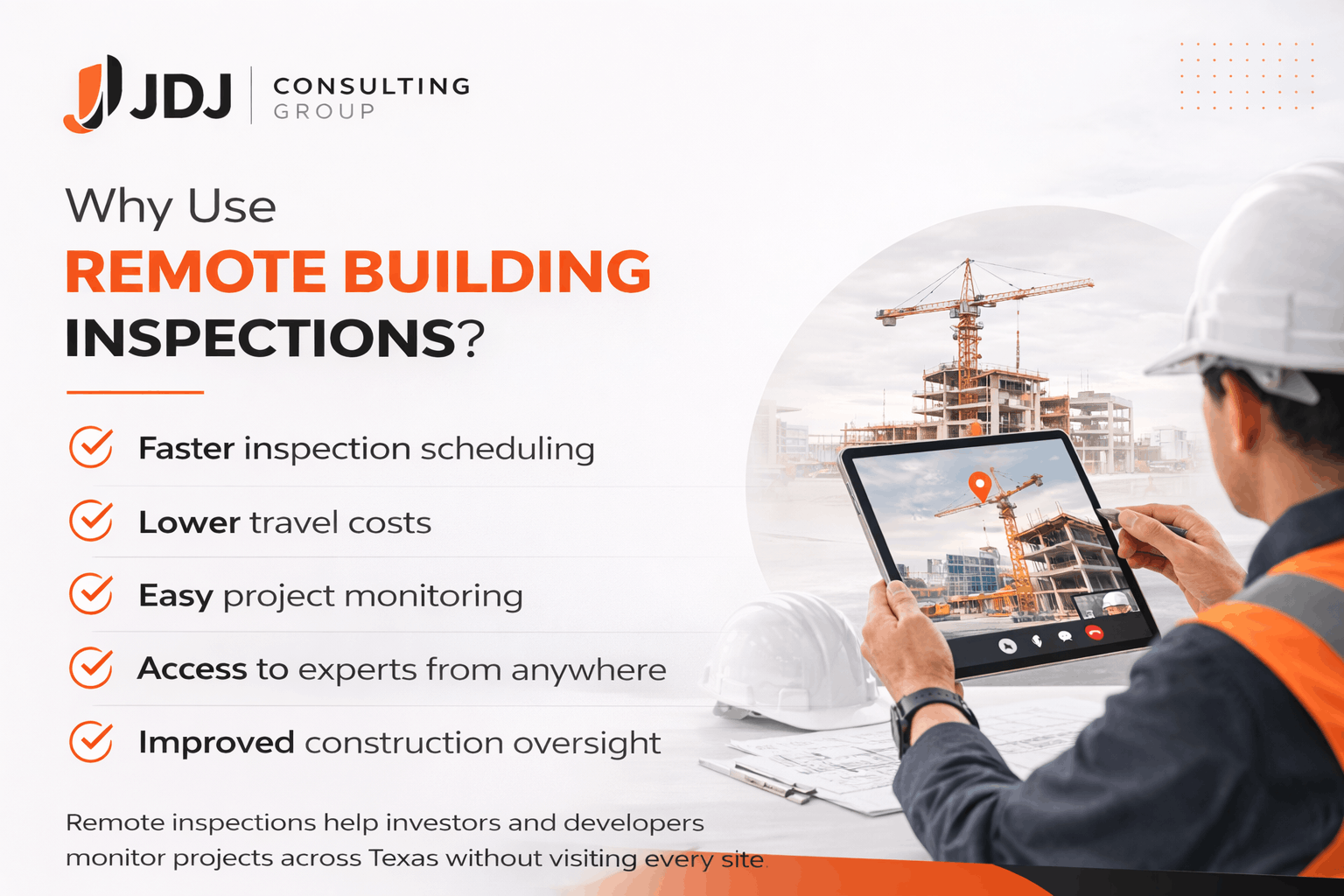
Basic Inspection Preparation Checklist
Before the inspection begins, the person on site should prepare the building and equipment. A simple checklist can help prevent delays.
Preparation steps may include:
Charge the phone or tablet fully
Test the internet connection
Clean areas that will be inspected
Ensure safe access to key areas
Prepare a flashlight for dark spaces
Have building plans or documents ready
These steps help the inspector view the property clearly.
Documents That May Be Needed
Some inspections require documents that explain the building structure or construction work. These documents help the inspector understand the property.
Common documents include:
| Document | Purpose |
|---|---|
| Building plans | Show the structure and layout |
| Construction permits | Confirm code compliance |
| Contractor reports | Track completed work |
| Maintenance records | Show previous repairs |
| Inspection history | Provide past inspection data |
Providing these documents during the inspection helps the inspector evaluate the property more accurately.
Preparing the Property for Inspection
The property should be easy to access during the inspection. Areas that are blocked or poorly lit can make the inspection difficult. Before the inspection, the person on site should:
Turn on lights in each room
Clear access to electrical panels
Open attic or crawl space access points
Unlock mechanical rooms if needed
If the property is under construction, workers should ensure safe access to the inspected areas. Good preparation helps the inspector complete the inspection without delays.
Remote Inspection Tools and Software
Technology is very important in remote building inspections. It allows inspectors to review a property without visiting the site.
Several tools help inspectors watch the building and record information. Many inspections use simple devices such as smartphones or tablets. These devices already include cameras and video call features. Because of this, they work well for remote walkthroughs.
Inspection software also helps organize notes, photos, and reports. This makes it easier to share information with property owners and project teams.
Video Communication Platforms
Live video is the most important part of a remote inspection. The inspector must see the property clearly during the walkthrough. The person at the site walks through the building while holding a phone or tablet. The inspector watches the video and gives instructions.
Most remote inspections use common video platforms such as:
Zoom
Microsoft Teams
Google Meet
Mobile video call apps
These platforms allow real-time communication. The inspector can ask questions and request close-up views of certain areas. This helps the inspector review the building more carefully.
Digital Reporting Software
After the inspection, the inspector prepares a report. This report explains the condition of the building. Inspection software helps organize the information collected during the walkthrough.
The software allows inspectors to:
Record inspection notes
Add photos and short videos
Create structured reports
Share reports with clients
Most reports are delivered as digital files. Property owners can review them on a computer, tablet, or phone. Digital reports also make it easier to store inspection records for future reference.
Advanced Inspection Technology
Some projects use advanced tools to improve inspection accuracy. These tools are often used for large buildings or complex construction sites.
Common examples include:
360-degree cameras
Drone photography
Thermal imaging cameras
Construction monitoring platforms
These tools help inspectors review large spaces and exterior areas. They also help capture detailed images that support the inspection report. The table below shows common inspection tools and how they are used.
| Tool | Use in Remote Inspections |
|---|---|
| Smartphone camera | Live property walkthrough |
| Video conferencing software | Real-time communication |
| Inspection reporting apps | Recording notes and images |
| Cloud storage systems | Sharing reports and photos |
| 360-degree cameras | Viewing large interior spaces |
These technologies allow remote inspections to provide clear and organized documentation.
Texas Regulations and Compliance for Building Inspections
Building inspections in Texas must follow local rules and building codes. Cities and counties enforce these rules to make sure buildings are safe.
Remote inspections must follow the same regulations as in-person inspections. Inspectors still review the building to confirm it meets required standards.
Because rules can vary by city, property owners should always check local requirements.
Building Codes Used in Texas
Most cities in Texas follow versions of national building codes. These codes help ensure buildings meet safety standards. Common codes used in Texas include:
Local governments may adjust these codes to meet regional needs. Inspectors review buildings to confirm they follow these standards.
Permit and Inspection Requirements
Construction projects usually require permits. These permits ensure that work meets building regulations. During construction, several inspections may be required.
Typical construction inspections include:
Foundation inspection
Framing inspection
Electrical inspection
Plumbing inspection
Final building inspection
Remote inspections may be used for some of these stages depending on local policies.
When Cities Allow Remote Inspections
Some Texas municipalities allow remote inspections in specific situations. These programs often use live video inspections. Contractors or property owners show the work through a mobile device while the inspector observes.
Remote inspections are often allowed for:
Minor repairs
Re-inspections
Simple residential inspections
Certain construction stages
However, more complex inspections may still require in-person visits. Property owners should check local building department guidelines before scheduling a remote inspection.
Choosing a Remote Building Inspection Service in Texas
Choosing the right inspection service is important. A reliable inspector helps property owners understand the true condition of a building. Remote inspections still require professional experience. The inspector must know building systems, construction practices, and local regulations.
Before hiring an inspection company, property owners should review their qualifications and services.
What to Look for in an Inspection Company
Not every inspection company offers remote inspection services. Some inspectors specialize in traditional inspections only.
When choosing a remote inspection service, look for companies with experience in digital inspections and building evaluations.
Important factors to consider include:
Experience with residential and commercial inspections
Knowledge of Texas building codes
Clear and detailed inspection reports
Reliable video inspection process
Good communication with clients
Professional inspectors should also explain the inspection process before the appointment. This helps property owners understand what will be reviewed and how the inspection will work.
Questions to Ask Before Hiring an Inspector
Before scheduling an inspection, it is helpful to ask a few questions. These questions help confirm that the inspector is qualified and experienced.
Common questions include:
Do you offer live remote inspections?
What technology do you use during inspections?
How detailed are your inspection reports?
Can multiple people join the inspection call?
How long does the inspection usually take?
Clear answers to these questions help property owners feel confident about the inspection process.
Cost of Remote Building Inspections in Texas
Inspection costs vary depending on the property type and inspection scope. Remote inspections are often less expensive than traditional inspections because travel is not required. However, the price still depends on the size of the property and the level of detail needed.
The table below shows typical price ranges.
| Property Type | Estimated Inspection Cost |
|---|---|
| Small residential property | $150 – $300 |
| Large home | $300 – $600 |
| Small commercial property | $400 – $900 |
| Large commercial building | $900 – $2,000+ |
Complex projects may require additional inspection time or multiple walkthroughs. Property owners should request a clear price estimate before scheduling the inspection.
Future of Remote Building Inspections
Remote inspections are becoming more common. New technology is helping inspectors review buildings faster and more easily. Today, many construction and real estate professionals use digital tools to manage projects. These tools help teams track progress and review properties without traveling.
As technology improves, remote inspections will likely become even more efficient.
Artificial Intelligence in Property Inspections
Artificial intelligence is starting to help inspectors review buildings.
Some software can analyze photos and highlight possible issues. For example, AI tools may detect cracks in walls, water damage, or roof wear. These tools do not replace professional inspectors. However, they can help inspectors review information more quickly.
AI may also help inspectors organize photos and prepare reports. This can make inspection reports clearer and more detailed.
Drone Inspections
Drones are another useful tool for building inspections. They are especially helpful for large buildings or areas that are hard to reach. For example, inspectors may use drones to review roofs or tall building exteriors.
Drones can capture clear images and video from above. These images allow inspectors to see details that may be difficult to view from the ground.
Digital Construction Monitoring
Many construction companies now use digital monitoring systems. These tools allow project managers to track work from a distance. With these systems, teams can review construction progress without visiting the job site.
Remote inspections often work together with these monitoring tools. Inspectors can review project milestones and confirm that work follows building plans. This also helps lenders and investors monitor projects more easily.
Conclusion
Remote building inspections are becoming an important part of the real estate industries.
They allow inspectors to review buildings through live video and digital reports. This process helps reduce travel time and allows inspections to happen more quickly. For property owners, remote inspections make it easier to review buildings without visiting the site.
Investors can use them to evaluate properties in different cities. Builders can use them to track construction progress. Property managers can use them to review maintenance issues.
Remote inspections do have some limits. However, they offer many advantages for routine inspections and project monitoring. As technology continues to improve, remote inspections will likely become even more common.
Working with an experienced inspection professional helps ensure that the inspection process runs smoothly.
How JDJ Group Supports Remote Building Inspections Texas
Remote inspections work best when experienced construction professionals lead the process. Inspectors must understand building systems, construction methods, and project documents.
JDJ Consulting Group helps clients review properties and construction projects across Texas. The team provides remote building inspections as part of its construction consulting services.
These inspections help clients understand the condition of a property. They also help confirm that construction work is moving forward as planned.
Remote inspections are especially useful when the project site is far away. Instead of traveling to the property, clients can review the inspection through live video and detailed reports.
JDJ Consulting Group works with several types of clients, including:
Real estate investors
Property developers
Construction lenders
Project managers
Property owners
Remote inspections allow these clients to monitor projects across Texas without frequent travel.
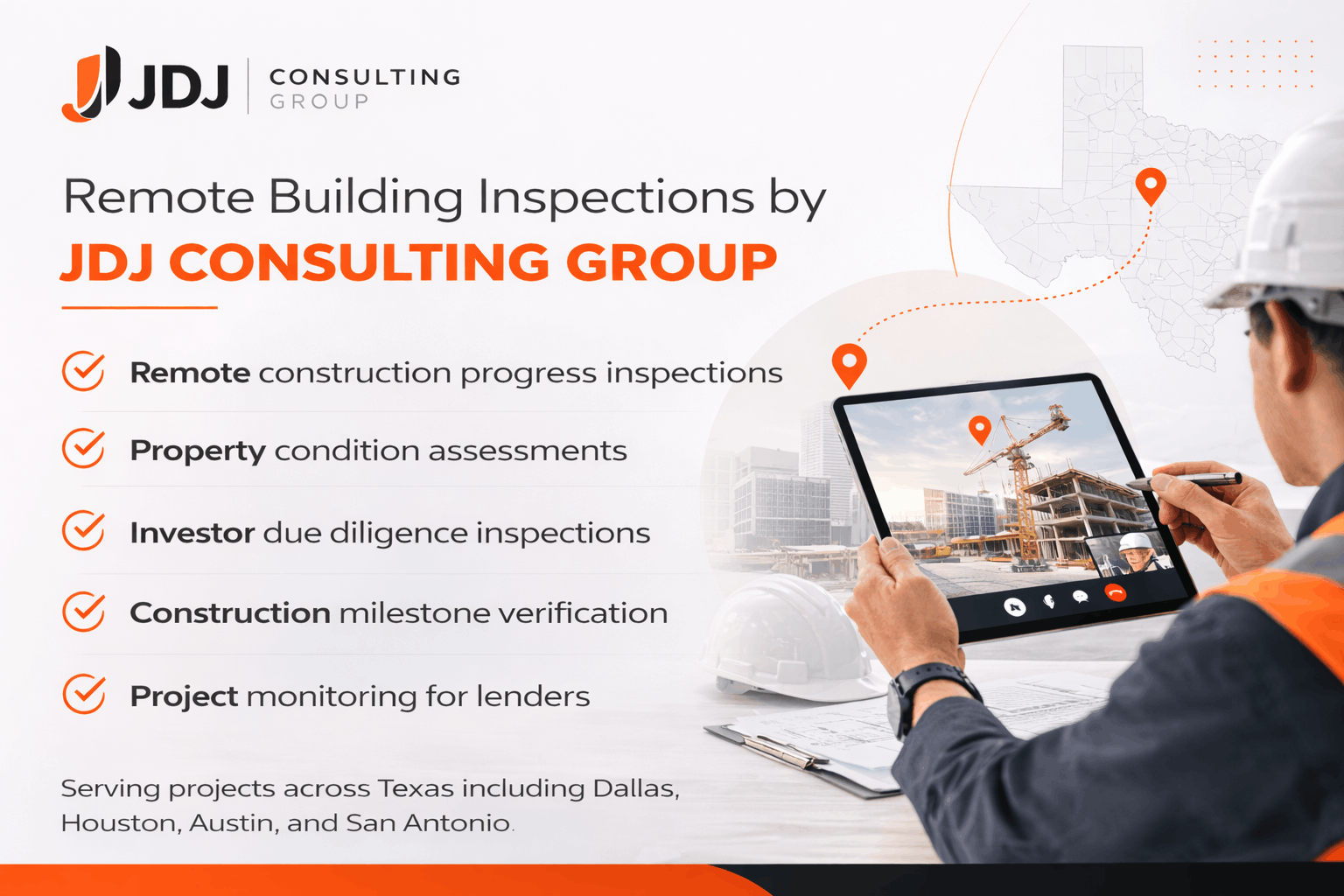
Remote Inspection Services Offered
JDJ Consulting Group offers several remote inspection services that support construction.
Common services include:
Remote construction progress inspections
Property condition assessments
Investor due diligence inspections
Construction milestone verification
Project monitoring for lenders
Remote property walkthroughs
These services help confirm that construction work follows the project plans and industry standards.
Clients can review inspection findings through clear reports, photos, and video documentation. This makes it easier to track project progress and address issues early.
Construction Oversight for Texas Projects
Construction projects move through several stages. Each stage requires careful review before work continues. Remote inspections help project teams review these stages without visiting the job site every time.
For example, inspections may review:
Foundation progress
Structural framing
Roofing installation
Mechanical system installation
Interior construction progress
These inspections help confirm that contractors complete each stage correctly before moving forward. JDJ Group supports projects across major Texas markets, including Dallas, Houston, and Austin. If you need help with remote building inspections in Texas, JDJ Consulting Group can help.
Call (818) 793-5058 or email sales@jdj-consulting.com to schedule your free consultation with our consultants.
FAQs About Remote Building Inspections Texas
What is a remote building inspection?
A remote building inspection allows an inspector to review a property without visiting the site in person. Instead, the inspection happens through a live video call while someone at the property walks through the building with a smartphone or tablet.
The inspector observes the property in real time and asks to see specific areas. These may include:
Electrical panels
Plumbing systems
Roofing and exterior walls
Structural components
After the walkthrough, the inspector prepares a digital report that explains the building’s condition and identifies any issues that need attention.
Are remote building inspections allowed in Texas?
Yes, remote inspections are allowed in many parts of Texas. Several cities and counties permit remote video inspections for certain types of projects.
However, local regulations may vary. Some municipalities allow remote inspections for:
Residential re-inspections
Minor repairs
Certain construction stages
More complex inspections, such as structural evaluations or final approvals, may still require an in-person visit. Property owners should confirm the rules with the local building department before scheduling a remote inspection.
How does a remote building inspection work?
A remote inspection typically follows a simple process. The inspector schedules a video session and connects with someone at the property.
During the inspection:
The person on site walks through the property with a phone or tablet.
The inspector guides the walkthrough and asks to see important areas.
Photos or video clips may be captured for documentation.
Once the inspection ends, the inspector prepares a report with observations and recommendations about the building condition.
What equipment is needed for a remote building inspection?
Most remote inspections require only basic equipment. A smartphone or tablet with a camera is usually enough.
Other helpful items may include:
Stable internet connection or mobile data
Flashlight for dark spaces
Ladder for attic or roof access when safe
Measuring tape if dimensions are needed
Clear video and good lighting help the inspector review the building more accurately.
Are remote inspections as accurate as in-person inspections?
Remote inspections can be accurate when the video quality is clear and the inspector is experienced. The inspector guides the walkthrough and asks for close-up views of specific areas.
However, remote inspections rely on visual information. Because of this, some issues may require an in-person visit. These inspections work best for routine reviews, progress inspections, and general property evaluations.
How long does a remote building inspection take?
The time required depends on the property size and the inspection scope.
For example:
Small residential properties may take 30–60 minutes.
Larger homes may take 60–90 minutes.
Commercial properties may require multiple walkthroughs.
The inspector may also request additional photos after the inspection to confirm certain details before preparing the final report.
What types of properties can be inspected remotely?
Remote inspections can be used for many types of buildings. These inspections are common in both residential and commercial real estate.
Properties often inspected remotely include:
Single-family homes
Rental properties
Office buildings
Retail spaces
Warehouses
Large commercial projects may require additional documentation or multiple walkthroughs to review the entire property.
Can remote inspections be used during construction projects?
Yes, remote inspections are commonly used during construction projects. They help project managers and investors monitor progress without visiting the job site.
These inspections may review construction stages such as:
Foundation work
Framing progress
Roofing installation
Mechanical system installation
This helps confirm that work is progressing according to project plans before moving to the next construction phase.
What are the benefits of remote building inspections?
Remote inspections offer several advantages for property owners and project teams.
Key benefits include:
Faster inspection scheduling
Reduced travel costs
Easier participation for remote stakeholders
Faster project progress reviews
They also allow investors and property managers to review buildings located in different cities without needing to travel frequently.
When should a traditional in-person inspection be used instead?
Some inspections require physical testing or closer examination of building systems.
In-person inspections may be necessary for:
Structural engineering evaluations
Complex electrical testing
Major roof damage assessments
Foundation problems
In these situations, inspectors must visit the property to perform a full evaluation and ensure safety standards are met.
Who typically requests remote building inspections?
Several types of clients request remote inspections.
Common clients include:
Real estate investors
Property developers
Construction lenders
Project managers
Property owners
These inspections help them monitor construction projects or evaluate properties when they cannot visit the site themselves.
Can multiple people join a remote inspection?
Yes, many remote inspections allow multiple participants to join the video call. This can be helpful for projects that involve several stakeholders.
Participants may include:
Property owners
Investors
Contractors
Engineers
Project managers
This allows everyone involved in the project to view the property and ask questions during the inspection.
What happens after the remote inspection?
After the inspection is complete, the inspector prepares a detailed inspection report.
The report usually includes:
Observations about the property condition
Photos captured during the inspection
Notes about potential concerns
Recommendations for repairs or further evaluation
This report helps property owners understand the building’s condition and make informed decisions.
How much does a remote building inspection cost in Texas?
The cost of a remote inspection varies depending on the property type and inspection scope.
Typical price ranges may include:
Small residential property: $150–$300
Larger homes: $300–$600
Commercial buildings: $500–$2,000+
Prices may change depending on the size of the property and the complexity of the inspection.
Do remote inspections help real estate investors?
Yes, remote inspections are very helpful for real estate investors. Many investors purchase properties located in different cities or states.
Remote inspections allow them to review properties without traveling. Investors can observe the walkthrough, ask questions, and review the inspection report before making a purchase decision.
This process helps investors complete due diligence faster.
Can remote inspections identify major property issues?
Remote inspections can identify many visible problems within a building.
Inspectors may detect issues such as:
Roof damage
Plumbing leaks
Electrical concerns
Structural cracks
Exterior deterioration
However, hidden issues inside walls or underground systems may require further testing or an in-person inspection.
Are remote inspections useful for property management?
Yes, property managers often use remote inspections to monitor rental properties. Routine inspections can help identify maintenance issues early.
Examples include:
Plumbing leaks
Appliance problems
Exterior damage
HVAC system concerns
Remote inspections allow managers to review properties quickly and schedule repairs before small problems become larger ones.
Can remote inspections help with insurance claims?
Remote inspections can help document property damage after storms or accidents.
During the inspection, the inspector may capture photos or video showing damage to the property. These images can help support insurance claims.
However, insurance companies may still require an additional inspection depending on the type of damage.
Are remote building inspections secure and reliable?
Yes, most remote inspections use secure video platforms and digital reporting systems.
Inspection data such as photos and reports are usually stored in cloud-based systems. These systems help organize inspection records and allow clients to review reports easily.
Using professional inspection software also improves documentation accuracy.
How do I schedule a remote building inspection in Texas?
Scheduling a remote inspection usually begins by contacting an inspection provider.
The process typically includes:
Scheduling the inspection date and time
Confirming the equipment needed
Preparing the property for the walkthrough
Joining the live video inspection
After the inspection, the inspector sends a digital report explaining the findings.