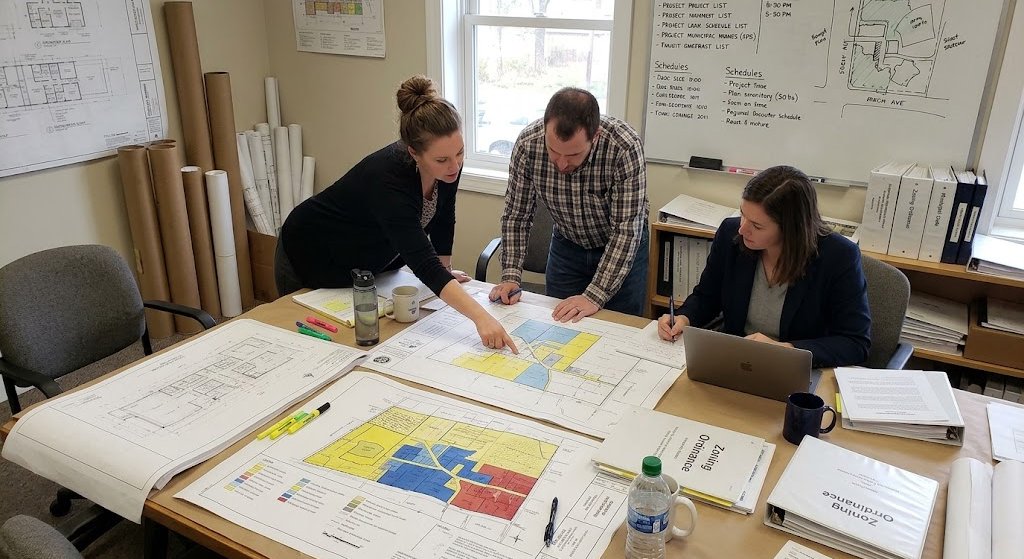
Opening a healthcare facility is not the same as opening a normal business. Medical facilities must follow strict rules before they can begin treating patients. These rules protect patient safety and public health.
Because of this, healthcare facilities must obtain several permits and licenses before opening. These permits confirm that the building is safe, the services meet medical standards, and the facility follows local laws.
Different government agencies review different parts of the project. Local authorities check zoning and building safety. State health departments review healthcare licensing. Some federal rules also apply to certain medical services.
For healthcare developers, physicians, and investors, the permit process can feel complicated. Each approval has its own requirements and timeline. A missing permit can delay construction or stop operations completely.
Good planning helps avoid these problems. When permits are handled early, projects move faster and costs stay under control.
This guide explains the main permit requirements for healthcare facilities. It covers licensing rules, facility types, and the agencies involved in approvals. Whether you plan to open a clinic, build a hospital, or start a diagnostic center, understanding these requirements is essential.
Table of Contents
Why Healthcare Facilities Require Specialized Permits and Licenses
Healthcare facilities care for people during illness or emergencies. Because patients depend on these services, governments require strict oversight.
Permits and licenses confirm that a facility meets health, safety, and building standards. They also ensure that qualified professionals provide care.
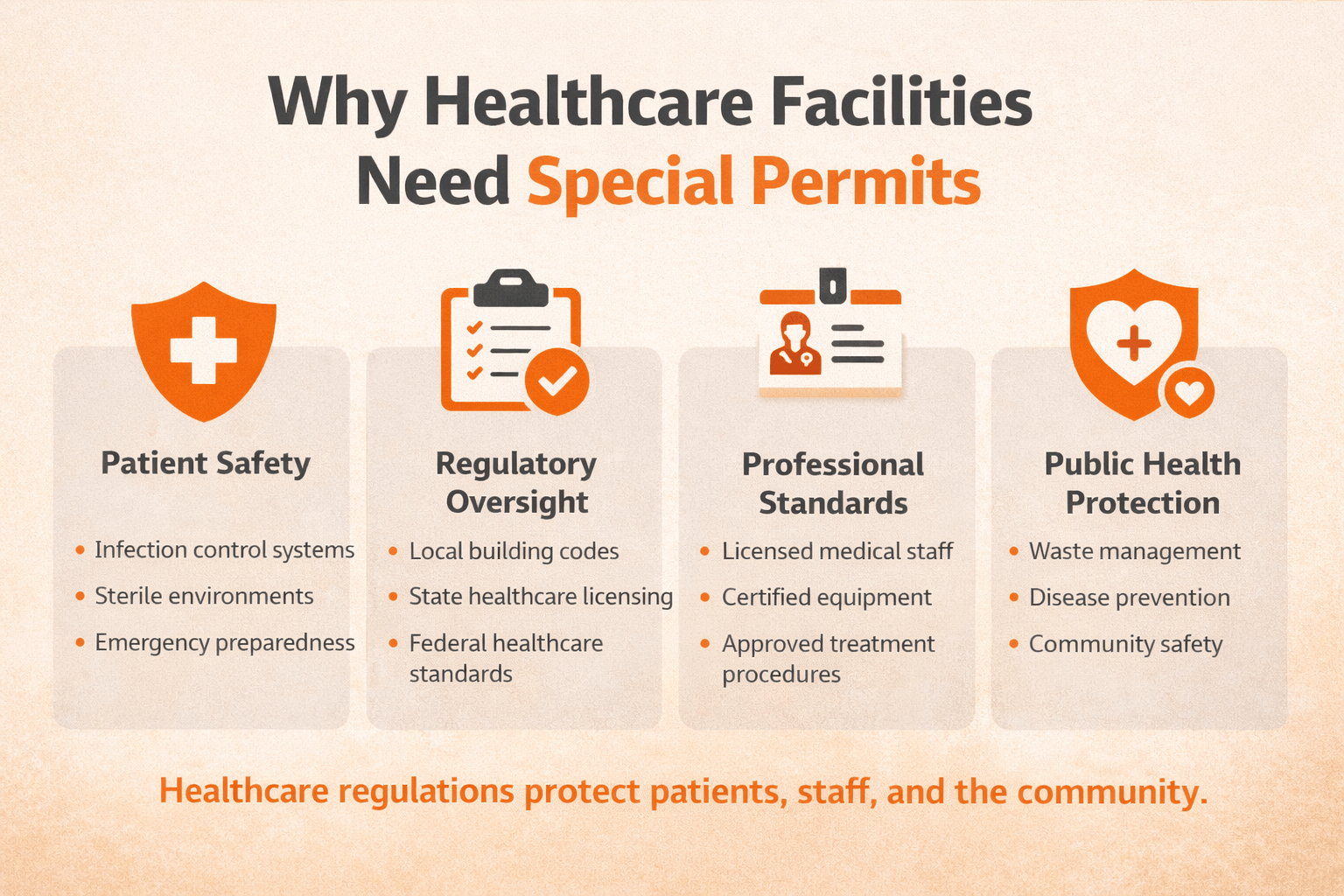
These rules protect patients, staff, and the community.
Protecting Patient Safety Through Regulation
Patient safety is the main reason healthcare permits exist. Before a facility opens, regulators review several safety systems.
They often examine:
Infection control procedures
Sterilization methods
Medical waste disposal
Emergency preparedness plans
Patient privacy protections
For example, hospitals and surgery centers must have proper ventilation systems. These systems help reduce airborne infections and keep sterile areas safe.
Backup power systems are also important. Medical equipment must continue running during power outages. Fire safety systems, emergency exits, and alarm systems must also meet strict standards. These checks happen before permits are approved. If the facility fails inspection, it must correct the issue before opening.
Federal, State, and Local Oversight in Healthcare
Healthcare regulation happens at several levels of government. Each level focuses on different responsibilities.
Local governments usually manage zoning and building permits. They make sure the facility can legally operate in that location and that the building meets safety codes.
State health departments handle healthcare licensing. They review facility design, staff qualifications, and clinical services. Federal agencies focus on national healthcare standards and certain programs.
Because multiple authorities are involved, healthcare projects often require several approvals before construction and before opening.
The table below shows how regulatory responsibilities are usually divided.
| Regulatory Level | Main Responsibilities |
|---|---|
| Local Government | Zoning approvals, building permits, fire safety inspections |
| State Health Department | Healthcare facility licensing and operational oversight |
| Federal Agencies | National healthcare standards and program regulations |
| Accreditation Organizations | Quality standards and patient safety reviews |
Each level helps ensure that healthcare facilities operate safely and responsibly.
Differences Between Healthcare Licensing and Business Permits
Many new healthcare owners think a business license is enough to start operations. In reality, healthcare facilities require additional permits. A business license simply allows a company to operate in a city or county. A healthcare facility license, however, allows the business to provide medical services.
These licenses review several important factors:
Medical services offered
Equipment used in treatment
Staff credentials and training
Safety procedures and protocols
Construction approvals are also separate from healthcare licenses. A building may pass construction inspections but still require healthcare approval before patient services begin.
The table below explains the difference between common permits.
| Permit Type | Purpose | Issuing Authority |
|---|---|---|
| Business License | Allows a company to operate legally | City or county government |
| Healthcare Facility License | Authorizes delivery of medical services | State health department |
| Building Permit | Approves construction or renovations | Local building authority |
| Fire Safety Permit | Confirms compliance with fire safety codes | Local fire department |
Understanding these differences helps healthcare developers plan the correct order for approvals.
What Happens If a Healthcare Facility Operates Without Proper Permits
Operating without the correct permits can lead to serious consequences. Authorities may issue fines or order the facility to stop operations. In some cases, the facility must close until all requirements are met.
Other risks include:
Legal penalties
Insurance problems
Delays in accreditation
Damage to professional reputation
Even small compliance problems can cause delays. For example, failing a fire safety inspection may require changes to the building before the facility can open.
Because healthcare projects often involve large investments, these delays can become costly. This is why most healthcare developers start the permit process early.
Types of Healthcare Facilities That Require Permits
Healthcare services are delivered through many types of facilities. Each type has its own regulatory requirements. Some facilities provide inpatient care, while others focus on outpatient services or specialized treatments.
Because services vary, permit requirements also change. However, most healthcare facilities must obtain licensing, construction permits, and safety inspections before opening.
Below are common healthcare facility types that require permits.

Hospitals and Medical Centers
Hospitals provide a wide range of medical services. These include emergency care, surgeries, inpatient treatment, and specialized procedures. Because hospitals handle complex medical care, they face strict regulatory review.
Authorities often examine:
Facility size and capacity
Surgical department design
Emergency response systems
Intensive care units
Patient safety procedures
Hospital construction projects usually require detailed architectural reviews. Regulators study building plans to ensure they meet healthcare design standards. Hospitals must also meet strict fire safety and emergency preparedness requirements.
Outpatient Clinics and Physician Offices
Outpatient clinics provide medical services without overnight patient stays. These facilities include primary care clinics, urgent care centers, and specialty physician offices. Although clinics are smaller than hospitals, they still require permits before opening.
Typical approvals include:
Healthcare facility licensing
Zoning approval
Building occupancy permits
Fire safety inspections
Some clinics may also require additional licensing depending on the services they provide. For example, clinics that perform minor procedures must follow additional safety standards.
Ambulatory Surgery Centers
Ambulatory surgery centers perform surgical procedures that do not require overnight hospital stays. Because surgery is involved, these facilities must meet strict medical and building regulations.
Regulators review several factors before approving permits.
These often include:
Surgical room layout
Sterilization areas
Recovery rooms
Emergency equipment availability
Many jurisdictions also require specialized ventilation systems for operating rooms. These systems help maintain sterile environments and reduce infection risks.
Diagnostic Laboratories and Imaging Centers
Diagnostic centers perform tests that help doctors diagnose medical conditions. These facilities include laboratories, imaging centers, and pathology labs. Because these centers handle sensitive medical testing, regulators review several operational standards.
These may include:
Laboratory equipment certification
Radiation safety procedures
Staff qualifications and training
Sample handling protocols
Some diagnostic laboratories must also meet federal certification standards before operating.
Long-Term Care Facilities and Nursing Homes
Long-term care facilities provide ongoing medical and personal support for patients who cannot live independently. These facilities include nursing homes, assisted living centers, and rehabilitation facilities. Because residents live in these facilities for extended periods, regulators closely monitor safety and care standards.
Permit reviews often examine:
Resident safety systems
Staffing requirements
Medication management policies
Accessibility features for patients
Long-term care facilities must also undergo regular inspections after opening.
Telehealth and Specialty Care Facilities
Healthcare services continue to evolve. Telehealth and specialty treatment centers are becoming more common. Although telehealth services require fewer building permits, providers still need proper healthcare licensing.
Specialty facilities may include:
Dialysis centers
Mental health treatment facilities
Rehabilitation centers
Pain management clinics
Each specialty may have its own licensing requirements depending on the services offered. Understanding the type of healthcare facility you plan to operate is the first step in determining the permits required.
Core Permits Required to Open a Healthcare Facility
Before a healthcare facility can begin operations, it must obtain several permits and approvals. These permits confirm that the building is safe, the services meet healthcare regulations, and the facility follows local laws.
The exact requirements vary by state and facility type. However, most healthcare facilities must complete several common approvals before opening. Starting this process early helps avoid delays during construction or licensing.
Healthcare Facility License
The healthcare facility license is one of the most important approvals. This license allows a facility to legally provide medical services.
State health departments usually issue this license. Before approval, the department reviews several parts of the project.
These reviews often include:
The type of medical services offered
Facility layout and design
Medical equipment used
Staff credentials and qualifications
Patient safety procedures
Health departments may also conduct inspections before granting the license. If the facility fails the inspection, corrections must be made before approval. Many healthcare facilities cannot begin treating patients until this license is issued.
Medical Practice License
In addition to the facility license, medical professionals must also hold valid licenses.
Physicians, nurses, and other healthcare providers must receive licensing from their state medical boards. These licenses confirm that the provider has completed the required education and training.
Some facilities must also register the practice itself with state medical boards or healthcare authorities. For example, certain states require registration for clinics that provide specialized services. This step ensures that only qualified professionals deliver medical care.
General Business License
Most cities and counties require a general business license for any operating business. Healthcare facilities are no exception. A business license allows the facility to operate within the local jurisdiction.
This permit is usually issued by the city or county government. The process is often simpler than healthcare licensing but still necessary.
The business license typically requires:
Business registration information
Ownership details
Business location information
Although it does not authorize medical services, it is still required for legal operation.
Zoning and Land Use Permits
Healthcare facilities must operate in areas approved for medical use. Local zoning regulations determine where different types of businesses can operate.
Before construction begins, developers must confirm that the property allows healthcare services. Local planning departments review zoning applications to ensure the facility fits within land-use regulations.
In some cases, developers must apply for special approvals. For example, a large hospital project may require additional planning review or public hearings.
Zoning approval usually happens early in the development process.
Building and Construction Permits
Healthcare facilities must meet strict building codes. These codes ensure the structure is safe for patients, staff, and visitors. Building permits are required for new construction and major renovations.
Local building departments review construction plans before issuing permits. They check structural safety, electrical systems, plumbing, and other technical elements.
Healthcare buildings often require additional review because of specialized equipment and safety requirements. Construction inspections also occur throughout the project.
Inspectors may review:
Structural framework
Electrical systems
Plumbing installations
Mechanical systems
These inspections ensure the building meets approved design plans.
Environmental Health Permits
Healthcare facilities must manage waste and sanitation carefully. Environmental health permits ensure that facilities follow proper health standards.
These permits often address:
Medical waste disposal
Water safety
Sanitation procedures
Hazardous material handling
Local health departments or environmental agencies usually issue these permits. Proper waste management is especially important for facilities that handle biological materials.

Fire and Life Safety Permits
Fire safety is critical in healthcare environments. Patients may have limited mobility, which makes emergency planning even more important.
Fire departments review healthcare facilities to ensure they meet safety standards.
Inspections often check:
Fire alarm systems
Sprinkler systems
Emergency exits
Evacuation routes
Hospitals and nursing homes may also need specialized fire protection systems. These inspections usually occur before the facility opens and periodically afterward.
Certificate of Occupancy
A certificate of occupancy confirms that a building is safe for its intended use. Local authorities issue this certificate after construction inspections are complete.
Before granting approval, officials confirm that the building meets:
Construction codes
Fire safety regulations
Accessibility requirements
Zoning approvals
Without this certificate, the building cannot legally be occupied. For healthcare facilities, the certificate of occupancy is often one of the final approvals before opening.
Common Healthcare Facility Permits
The table below summarizes several permits most healthcare facilities must obtain.
| Permit | Purpose | Issuing Authority |
|---|---|---|
| Healthcare Facility License | Allows facility to provide medical services | State health department |
| Medical Practice License | Confirms professional qualifications | State medical board |
| Business License | Authorizes business operations | City or county government |
| Zoning Permit | Confirms location is approved for medical use | Local planning department |
| Building Permit | Approves construction or renovation | Local building department |
| Fire Safety Permit | Ensures compliance with fire safety rules | Fire department |
| Certificate of Occupancy | Confirms building is safe for use | Local government |
Understanding these permits helps healthcare developers plan the approval process more effectively.
Understanding Certificate of Need (CON) Requirements
In some states, healthcare providers must obtain a Certificate of Need before building or expanding certain facilities. This rule exists to control healthcare costs and prevent unnecessary duplication of services. The Certificate of Need process evaluates whether a community actually needs a new healthcare service or facility.
What Is a Certificate of Need
A Certificate of Need, often called a CON, is a regulatory approval required in some states before healthcare facilities can open or expand. The purpose is to ensure that new healthcare services match community demand.
State regulators review proposals to determine whether a project benefits the local healthcare system. Without this approval, certain healthcare projects cannot move forward.
When a Certificate of Need Is Required
Not every healthcare project requires a Certificate of Need. However, many states require it for major healthcare developments.
Common situations that may require a CON include:
Building a new hospital
Expanding hospital bed capacity
Opening an ambulatory surgery center
Adding specialized medical equipment
Creating new healthcare service lines
The exact rules vary by state.
For example, some states require a CON for new diagnostic imaging equipment, while others focus on hospital expansion.
States That Require Certificate of Need Approval
Certificate of Need programs are not used everywhere. Some states maintain strong CON programs, while others have removed them.
States with active CON programs usually require approval for major healthcare investments. Healthcare developers must review state laws carefully before starting a project. Failing to obtain required CON approval can stop a project completely.
Challenges in the Certificate of Need Process
The Certificate of Need process can take time. Applications often involve detailed documentation and regulatory review.
Common challenges include:
Long review timelines
Extensive documentation requirements
Public hearings or competitor objections
Economic impact analysis
Because of these complexities, healthcare developers often work with consultants who understand regulatory procedures. Planning early helps reduce delays during the approval process.
Healthcare Construction Permits and Compliance Requirements
Healthcare buildings must meet higher standards than many other commercial structures. These buildings support medical equipment, infection control systems, and patient safety features.
Because of this, healthcare construction projects require several specialized permits and compliance reviews.
Building Permits for Medical Facilities
A building permit is required before construction begins. Local building departments review architectural plans to ensure they follow building codes.
For healthcare projects, regulators often review additional design elements.
These may include:
Patient room layouts
Emergency access routes
Medical gas systems
Equipment space requirements
Healthcare buildings must also support heavy medical equipment such as imaging machines. Structural engineering plans often receive detailed review.
Mechanical, Electrical, and Plumbing Permits
Healthcare facilities rely on complex mechanical systems. These systems support patient care and safety. Mechanical, electrical, and plumbing permits—often called MEP permits—are usually required.
These permits cover:
Heating and cooling systems
Electrical power systems
Medical gas pipelines
Water supply and drainage systems
Hospitals and surgery centers also require backup power systems. These systems ensure that critical equipment continues operating during power outages.
HVAC and Ventilation Requirements for Healthcare Buildings
Ventilation systems play an important role in healthcare safety. Proper airflow helps control infection and maintain sterile environments.
Operating rooms and isolation areas often require specialized ventilation systems. Regulators review HVAC designs to ensure they meet healthcare standards.
These systems may include:
High-efficiency air filtration
Controlled air pressure systems
Separate airflow zones for sterile areas
Proper ventilation reduces the risk of airborne infections in healthcare settings.
Accessibility and ADA Compliance
Healthcare facilities must be accessible to all patients. Accessibility laws require buildings to accommodate people with disabilities.
Design requirements often include:
Wheelchair-accessible entrances
Accessible restrooms
Patient lifts and transfer systems
Wide corridors for medical equipment
Accessibility features must be included during the design phase. Failing to meet accessibility standards can delay project approval.
Infection Control and Cleanroom Design Standards
Some healthcare facilities require special design features to prevent infection. Surgical centers and laboratories often include controlled environments.
These environments may include:
Sterile operating rooms
Isolation rooms
Specialized filtration systems
Construction teams must follow strict infection control procedures when building these spaces.
Healthcare Construction Compliance Checklist
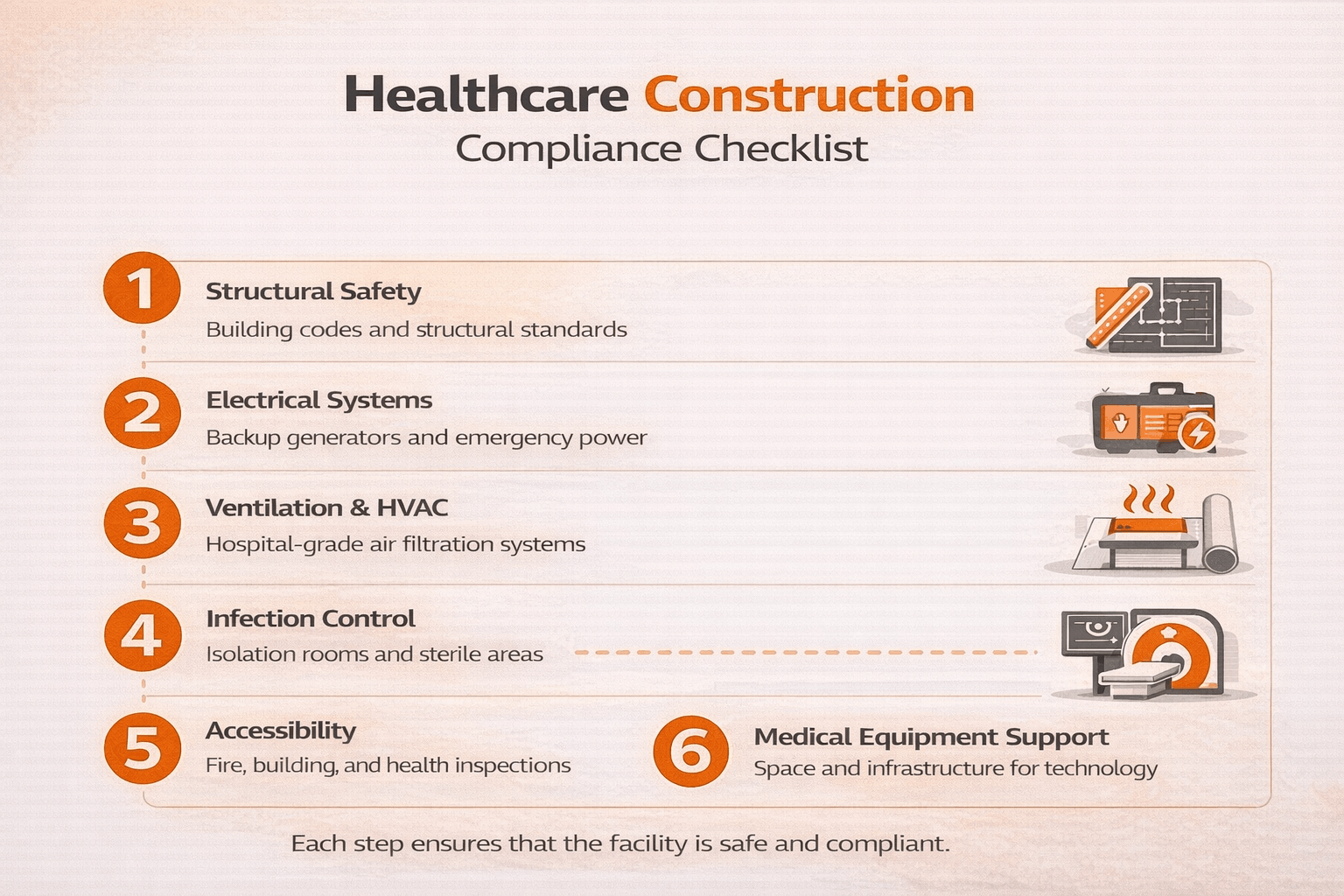
Healthcare construction projects must meet several technical standards. The table below summarizes common compliance areas.
| Compliance Area | Key Requirements |
|---|---|
| Structural Safety | Building codes and structural stability standards |
| Electrical Systems | Backup power and emergency electrical systems |
| Ventilation | Hospital-grade HVAC and air filtration systems |
| Infection Control | Isolation rooms and sterile environments |
| Accessibility | ADA-compliant access and patient mobility features |
Meeting these requirements helps healthcare facilities maintain safe and effective environments for patient care.
Healthcare Facility Licensing Process: Step-by-Step
Opening a healthcare facility requires more than construction approvals. Before a facility can treat patients, it must complete the healthcare licensing process. This process verifies that the building, staff, and medical services meet regulatory standards. While requirements vary by state, the overall process follows a similar sequence. Planning each step early helps prevent delays and costly redesigns.
Step 1: Determine Facility Type and Regulatory Category
The first step is identifying the type of healthcare facility you plan to operate. Regulations differ depending on the services provided.
Common facility categories include:
Hospitals
Outpatient clinics
Ambulatory surgery centers
Diagnostic laboratories
Long-term care facilities
Each category has different licensing rules. For example, a surgery center must meet stricter infection control and ventilation standards than a small physician office. Because of this, regulators classify facilities before reviewing permit applications.
Developers should confirm the regulatory category early in the planning stage. This step determines which permits and inspections will apply later.
Step 2: Submit Healthcare Facility Registration
After determining the facility type, the next step is submitting a facility registration application. This application usually goes to the state health department. The agency reviews the proposed healthcare services and facility details.
Typical information required in the application includes:
Facility ownership information
Business registration documents
Description of healthcare services
Expected patient capacity
Staffing plans
The health department uses this information to determine whether the project meets regulatory guidelines. If the proposal meets basic requirements, the agency allows the project to move forward to the next stage.
Step 3: Prepare Architectural and Engineering Plans
Healthcare facilities must follow strict design standards. Because of this, regulators review detailed architectural and engineering plans. These plans must show how the facility will support patient care and safety.
Architectural plans often include:
Patient treatment areas
Surgical rooms or procedure rooms
Waiting areas and reception spaces
Medical equipment locations
Emergency exits and evacuation routes
Engineering plans also address technical systems such as electrical power, plumbing, and ventilation. Healthcare buildings must support specialized equipment and infection control systems. Regulators review these designs carefully before construction begins.
Step 4: Apply for Required Permits and Licenses
Once design plans are complete, developers can apply for the necessary permits. These applications usually involve several government agencies. Each agency reviews a different part of the project.
Common applications include:
Building permits
Healthcare facility licenses
Fire safety permits
Environmental health permits
Business registration approvals
Some states may also require additional approvals for specialized medical services. Submitting complete documentation helps prevent delays during the review process.
Step 5: Undergo Inspections and Compliance Reviews
After construction is complete, regulators conduct inspections to verify compliance. Inspectors review whether the facility matches the approved design plans and meets safety requirements.
Common inspection areas include:
Fire protection systems
Electrical and backup power systems
Ventilation and HVAC systems
Medical equipment installation
Infection control features
If inspectors identify problems, the facility must correct them before licensing approval. Multiple inspections may occur before the final approval is granted.
Step 6: Obtain Final License to Operate
Once the facility passes inspections, regulators issue the final healthcare facility license. This license allows the facility to begin treating patients legally.
However, licensing does not end the regulatory process. Healthcare facilities must continue meeting compliance standards after opening. Periodic inspections and license renewals help ensure ongoing patient safety.

Documentation Required for Healthcare Permit Applications
Healthcare permit applications require detailed documentation. Regulators use this information to confirm that the facility meets safety and operational standards.
Incomplete documentation is one of the most common reasons for permit delays. Preparing documents early helps keep the approval process moving smoothly.
Business Registration Documents
Every healthcare facility must register as a legal business entity. These documents confirm the ownership and legal structure of the organization.
Typical documents include:
Business registration certificates
Articles of incorporation or organization
Ownership agreements
Tax identification numbers
These documents show regulators who is responsible for operating the facility.
Ownership and Investor Documentation
Healthcare projects often involve multiple investors or partners. Regulators may require ownership disclosure to ensure transparency.
Ownership documentation may include:
Investor agreements
Ownership percentages
Corporate governance structures
This review helps confirm that the facility follows financial and legal regulations.
Architectural Drawings and Facility Plans
Architectural drawings play a major role in healthcare permit reviews. Regulators examine floor plans to ensure the facility supports safe patient care.
Typical drawings include:
Floor layouts
Equipment placement diagrams
Emergency exit routes
Accessibility features
Engineering plans may also be required for electrical, plumbing, and mechanical systems.
Equipment and Medical Technology Lists
Healthcare facilities must report the medical equipment they plan to use. This list helps regulators verify that the facility has the proper tools to deliver services safely.
Examples of equipment documentation include:
Diagnostic imaging machines
Surgical equipment
Laboratory testing systems
Patient monitoring devices
Certain equipment may require additional certifications or inspections.
Staff Licensing and Credentialing Records
Healthcare facilities must employ qualified medical professionals. Regulators often review staff credentials before approving a facility license.
These records may include:
Physician licenses
Nursing certifications
Professional training records
Background verification documents
This review ensures that trained professionals provide patient care.
Safety and Infection Control Policies
Healthcare facilities must also provide written safety procedures. These policies explain how the facility will protect patients and staff.
Common policy documents include:
Infection control procedures
Emergency response plans
Medical waste management policies
Patient privacy procedures
Regulators review these documents to confirm that safety protocols are in place.
Healthcare Facility Inspections and Compliance Reviews
Inspections are a critical part of healthcare facility regulation. They confirm that the building and operations meet safety standards.
Most healthcare facilities undergo inspections both before opening and during operations. These inspections help ensure that facilities maintain safe environments for patients and staff.
Pre-Construction Plan Reviews
Before construction begins, regulators often review design plans. These reviews focus on whether the facility design meets healthcare building standards.
Agencies may evaluate:
Patient flow within the building
Emergency exit placement
Equipment installation areas
Ventilation system design
If the plans do not meet standards, regulators may request design changes before construction begins.
Construction Phase Inspections
During construction, inspectors may visit the site several times. These inspections confirm that the building follows the approved design plans.
Inspectors typically review:
Structural framework
Electrical system installation
Plumbing connections
Fire safety system installation
If issues appear during construction, corrections must be made before work continues.
Final Health Department Inspection
Before opening, the health department conducts a final inspection. This inspection verifies that the facility meets healthcare licensing requirements.
Inspectors review:
Treatment rooms and equipment
Sterilization procedures
Infection control systems
Safety equipment
Passing this inspection is necessary to receive the final operating license.
Operational Compliance Audits
After opening, healthcare facilities must continue meeting regulatory standards. Health departments may conduct periodic inspections to confirm compliance.
These audits often examine:
Patient safety procedures
Medical equipment maintenance
Staff credential verification
sanitation and infection control practices
Facilities that fail inspections may receive corrective action notices.
Accreditation Surveys
Many healthcare facilities also seek accreditation from independent organizations. Accreditation reviews focus on quality of care and patient safety standards.
These surveys evaluate:
clinical practices
staff training programs
patient safety policies
operational procedures
Accreditation can strengthen a facility’s reputation and demonstrate commitment to high-quality care.
Ongoing Compliance and Permit Renewal Requirements
Receiving a healthcare facility license is not the end of the regulatory process. Healthcare facilities must continue meeting safety and operational standards after opening. Licenses and permits often require renewal. Regulators also conduct periodic inspections to confirm that facilities remain compliant. Maintaining compliance helps protect patients and ensures the facility can continue operating without interruptions.
Annual Licensing Renewals
Many healthcare licenses require annual or periodic renewal. The renewal process confirms that the facility still meets regulatory standards.
During renewal, regulators may review:
Current ownership information
Updated staff credentials
Operational policies and procedures
Changes in services or equipment
Facilities usually submit renewal applications before the license expiration date. Missing renewal deadlines can lead to penalties or temporary suspension of operations.
Routine Health Department Inspections
Health departments may inspect healthcare facilities regularly. These inspections help ensure that patient care standards remain consistent.
Inspectors often review:
Infection control procedures
Facility cleanliness and sanitation
Patient safety systems
Medical equipment maintenance
Some inspections are scheduled, while others occur without notice. Facilities must maintain readiness for inspections at all times.
Updating Permits for Facility Expansion
Healthcare facilities often expand services as patient demand grows. Adding new services or equipment may require additional permits.
Examples include:
Expanding patient capacity
Adding diagnostic equipment
Opening new treatment departments
Renovating clinical areas
Before making major changes, facilities should review regulatory requirements. Some projects may require new building permits or healthcare license updates. Planning these approvals early helps avoid operational disruptions.
Maintaining Documentation and Records
Accurate documentation plays an important role in healthcare compliance. Facilities must maintain records related to operations, staffing, and safety procedures.
Important records may include:
Staff credential files
Equipment maintenance logs
Infection control reports
Incident and safety reports
Regulators may request these documents during inspections. Keeping organized records helps facilities demonstrate compliance quickly.
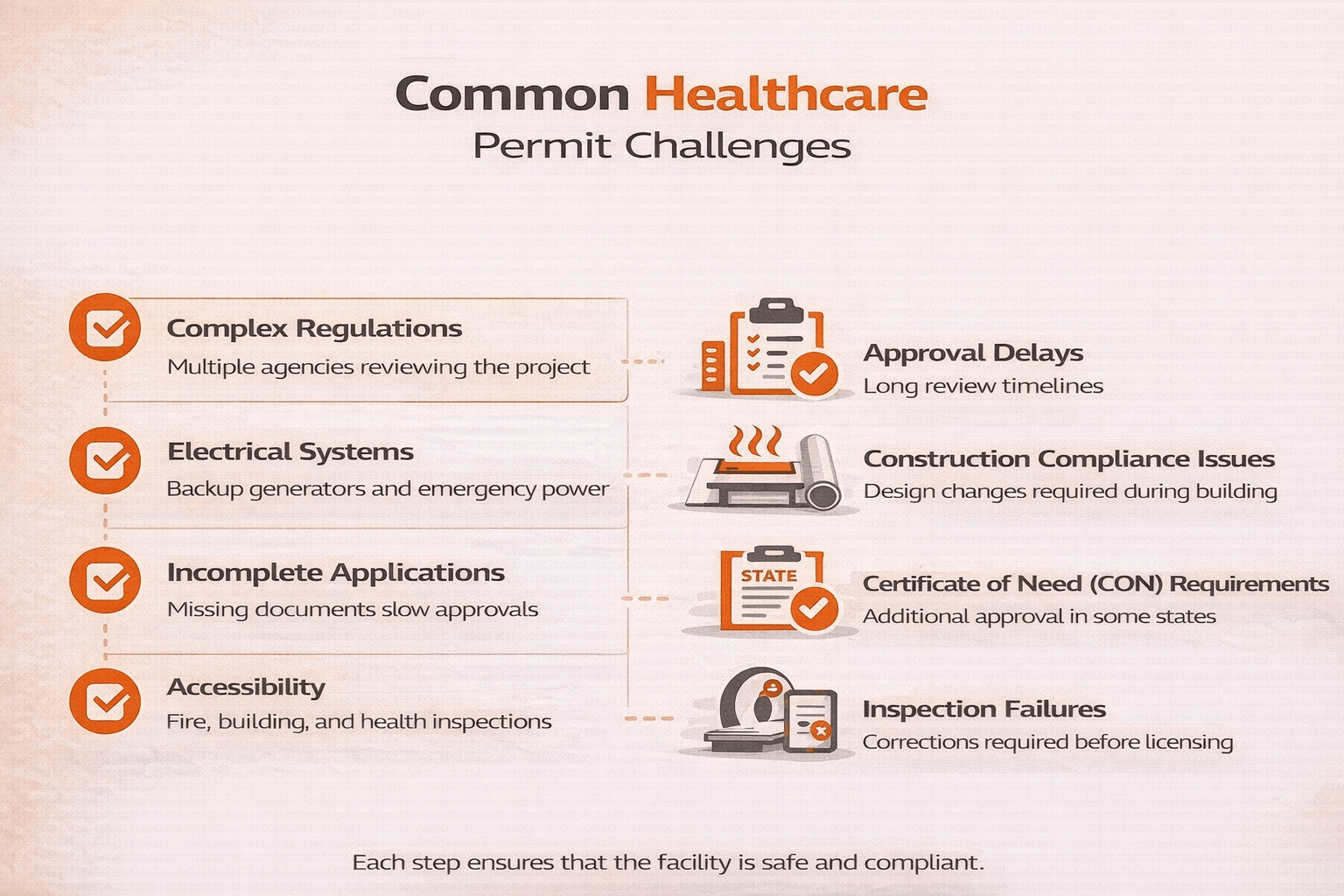
Common Challenges When Securing Healthcare Facility Permits
Obtaining permits for healthcare facilities can be complex. Many projects encounter delays during the approval process. Understanding common challenges can help developers plan more effectively.
Complex Regulatory Requirements
Healthcare regulations often involve multiple agencies and approval stages.
A single project may require permits from:
Local planning departments
State health departments
Fire safety authorities
Environmental agencies
Each agency has its own review process and documentation requirements. Managing these approvals requires careful coordination.
Delays in Approval Processes
Permit reviews can take time. Some approvals require detailed evaluations, which may extend project timelines. Delays may occur due to:
Incomplete applications
Missing documentation
Changes in construction plans
Regulatory backlogs
Submitting accurate applications helps reduce the risk of delays.
Construction Compliance Issues
Healthcare construction projects must follow strict building codes. Even small design changes can require additional approval.
Common construction issues include:
HVAC systems that do not meet healthcare standards
Incorrect room layouts for medical procedures
Insufficient space for medical equipment
Correcting these issues after construction begins can increase project costs. Early coordination between architects, engineers, and regulators helps prevent these problems.
Incomplete Documentation
Permit applications require detailed documentation. Missing information can slow the approval process.
Common documentation issues include:
Incomplete facility plans
Missing ownership records
Inaccurate equipment lists
Outdated staff credential documentation
Carefully reviewing application materials before submission helps avoid delays.
Certificate of Need Application Denials
In states with Certificate of Need requirements, healthcare projects may face additional challenges. Regulators evaluate whether new facilities are necessary for the community.
Applications may be denied if regulators believe:
The area already has sufficient healthcare services
The project may increase healthcare costs
Community demand is not demonstrated
Developers often conduct market studies to support their applications.
How Healthcare Consulting Firms Help with Permits and Compliance
Because healthcare regulations are complex, many organizations work with healthcare consulting firms during development. Consultants help guide projects through regulatory requirements and licensing processes. This support can reduce delays and improve project planning.
Regulatory Planning Before Construction
Consultants help healthcare developers understand regulatory requirements before construction begins.
Early planning helps identify:
Required permits and approvals
Licensing timelines
Facility design requirements
Addressing these issues early prevents costly design changes later.
Managing Permit Applications
Permit applications often require coordination between multiple agencies. Consultants assist with preparing and submitting applications.
This support may include:
Gathering required documentation
Preparing regulatory forms
Coordinating communication with regulators
Professional guidance helps ensure that applications meet regulatory standards.
Healthcare Facility Design Compliance
Healthcare buildings must follow specialized design standards. Consultants often work with architects and engineers to review facility plans. This review helps confirm that designs meet regulatory expectations.
Common design considerations include:
Patient safety features
Infection control systems
Equipment space requirements
Design compliance helps prevent problems during inspections.
Preparing for Licensing Inspections
Before final approval, healthcare facilities must pass several inspections. Consultants help facilities prepare by reviewing operational procedures and safety systems.
Preparation may include:
Conducting mock inspections
Reviewing policy documents
Verifying equipment installation
These steps help ensure that facilities meet regulatory standards before official inspections.
Long-Term Compliance Strategy
Healthcare regulations continue after a facility opens. Consultants help organizations develop compliance systems that support long-term operations.
This may involve:
Compliance training for staff
Regular policy reviews
Monitoring regulatory updates
Strong compliance systems help healthcare facilities maintain high standards of care.
Best Practices for Navigating Healthcare Facility Permit Requirements
Healthcare permitting can be complex, but good planning helps simplify the process. Organizations that prepare early often complete approvals more smoothly. The following practices can help healthcare developers manage permit requirements effectively.
Start the Permit Process Early
Healthcare permits often require detailed review. Starting the process early helps prevent project delays. Developers should research permit requirements during the planning stage. Early preparation allows time to gather documents and address regulatory questions.
Work With Healthcare Compliance Experts
Healthcare regulations involve many technical standards. Working with experienced consultants, architects, and engineers can improve project planning. These professionals understand healthcare design and licensing requirements. Their expertise helps prevent costly mistakes.
Conduct Pre-Inspection Readiness Checks
Before official inspections occur, facilities should review their systems and procedures. Internal readiness checks help identify issues early.
These reviews may include:
Verifying safety equipment
Reviewing infection control procedures
Checking emergency response plans
Addressing problems before inspections helps improve approval outcomes.
Maintain Documentation and Compliance Systems
Healthcare facilities must maintain accurate records throughout their operations. Organized documentation supports compliance during inspections and license renewals.
Facilities should maintain systems for tracking:
staff credentials
equipment maintenance
safety training records
Clear documentation helps regulators confirm compliance quickly.
Stay Updated on Changing Healthcare Regulations
Healthcare regulations change over time. Facilities must stay informed about new rules and standards. Monitoring regulatory updates helps organizations adjust policies when necessary.
Regular policy reviews ensure that operations remain compliant with current regulations.

FAQs About Healthcare Facility Permits
What permits are required to open a healthcare facility?
Opening a healthcare facility usually requires several permits and approvals from local and state authorities. The exact permits depend on the type of facility and services offered.
Common permits include:
Healthcare facility license from the state health department
Local business license
Zoning approval for medical use
Building and construction permits
Fire safety approval
Certificate of occupancy
Each permit ensures the facility meets safety, structural, and operational standards before treating patients.
How long does it take to get healthcare facility permits?
The timeline varies based on the facility type, location, and project complexity. Smaller clinics may complete the permit process faster than hospitals.
Typical timelines include:
Small outpatient clinics: 3–6 months
Ambulatory surgery centers: 6–12 months
Hospitals or large facilities: 12–24 months
Delays often occur when applications are incomplete or when construction plans require revisions.
Do healthcare facilities need zoning approval?
Yes, zoning approval is usually required before opening a healthcare facility. Local planning departments regulate where certain types of businesses can operate.
Zoning permits confirm that the property can legally support healthcare services. Authorities may review factors such as:
Traffic impact
Building size and capacity
Neighborhood compatibility
If zoning restrictions exist, the developer may need a special use permit or zoning variance.
What is a healthcare facility license?
A healthcare facility license is a government authorization that allows a facility to provide medical services. State health departments usually issue this license.
The licensing process evaluates whether the facility meets regulatory requirements related to:
Patient safety systems
Clinical services offered
Medical equipment
Staff qualifications
Facilities cannot legally treat patients until this license is approved.
What is a Certificate of Need in healthcare?
A Certificate of Need (CON) is a regulatory approval required in some states before building or expanding certain healthcare services.
The purpose of a CON program is to ensure that new healthcare facilities meet community needs and avoid unnecessary duplication of services.
Projects that may require CON approval include:
New hospital construction
Expansion of hospital bed capacity
Opening ambulatory surgery centers
Adding specialized diagnostic equipment
Do small clinics require the same permits as hospitals?
Small clinics usually require fewer permits than hospitals, but they still must meet several regulatory requirements.
Most clinics need:
Healthcare facility licensing
Business registration
Zoning approval
Building occupancy permits
Hospitals typically face additional requirements because they provide more complex services such as surgery, inpatient care, and emergency treatment.
What inspections are required before a healthcare facility opens?
Before opening, healthcare facilities must pass several inspections to confirm compliance with safety standards.
Common inspections include:
Building safety inspections
Fire protection system inspections
Electrical and mechanical system reviews
Health department inspections
Inspectors verify that the facility follows approved plans and meets patient safety requirements.
What documents are needed to apply for healthcare permits?
Healthcare permit applications require detailed documentation to support regulatory review.
Common documents include:
Business registration records
Ownership and investor information
Architectural and engineering plans
Medical equipment lists
Staff credential documentation
Preparing these documents early helps prevent delays during the approval process.
Can healthcare construction begin before licensing approval?
In many cases, construction can begin once building permits are approved. However, the facility must complete the healthcare licensing process before treating patients.
Construction approvals typically focus on building safety, while healthcare licensing evaluates medical operations.
Because of this difference, many projects complete construction first and obtain final licensing approval afterward.
What role do fire safety permits play in healthcare facilities?
Fire safety permits confirm that healthcare facilities meet emergency safety standards. Fire departments review building systems and evacuation plans.
Inspections often check:
Fire alarm systems
Sprinkler systems
Emergency exits
Evacuation routes
Healthcare buildings must meet strict fire safety requirements because many patients may require assistance during emergencies.
What is a certificate of occupancy for a healthcare facility?
A certificate of occupancy confirms that a building is safe and approved for its intended use.
Local governments issue this certificate after reviewing construction inspections and safety approvals.
Before granting the certificate, officials verify that the building meets:
Structural safety codes
Fire safety regulations
Accessibility requirements
Approved building plans
Without this certificate, the facility cannot legally operate.
Do healthcare facilities need environmental health permits?
Yes, many healthcare facilities require environmental health permits. These permits ensure that facilities manage sanitation and waste safely.
Environmental permits may cover:
Medical waste disposal
Hazardous material handling
Water safety standards
Sanitation procedures
These regulations help prevent environmental contamination and protect public health.
What happens if a healthcare facility fails an inspection?
If a healthcare facility fails an inspection, regulators usually issue a report outlining the problems that must be corrected. Facilities must resolve these issues before receiving final approval.
Common corrective actions may include:
Upgrading safety systems
Adjusting building layouts
Improving sanitation procedures
Once corrections are completed, inspectors may schedule a follow-up inspection.
How often do healthcare facilities need license renewals?
Healthcare licenses usually require periodic renewal. The timeline depends on the state and facility type.
Many facilities renew licenses every one or two years.
During renewal, regulators may review:
Updated staff credentials
Facility operations
Safety procedures
Compliance records
Renewal ensures that facilities continue meeting regulatory standards.
Can healthcare facilities expand without new permits?
Expanding a healthcare facility often requires new permits or license updates. Examples of changes that may require additional approval include:
Adding new treatment departments
Increasing patient capacity
Installing new diagnostic equipment
Renovating clinical areas
Facilities should review regulatory requirements before beginning expansion projects.
Why are healthcare construction standards stricter than other buildings?
Healthcare buildings must support patient care and medical equipment. Because of this, they require higher safety standards than many commercial structures.
Special design considerations include:
Infection control systems
Specialized ventilation systems
Backup power systems
Accessibility features for patients
These requirements help ensure safe and effective healthcare environments.
What role do healthcare consultants play in the permit process?
Healthcare consultants help organizations understand regulatory requirements and manage permit applications.
Consultants often assist with:
Regulatory planning
Preparing permit documentation
Coordinating with government agencies
Preparing for inspections
Their expertise can reduce delays and improve project planning.
Do healthcare facilities need ADA compliance?
Yes, healthcare facilities must follow accessibility regulations under the Americans with Disabilities Act (ADA). These requirements ensure that patients with disabilities can safely access healthcare services.
Common accessibility features include:
Wheelchair-accessible entrances
Accessible restrooms
Wide hallways for patient movement
Elevators and ramps
Accessibility standards must be included during the building design phase.
Are healthcare permits different for diagnostic laboratories?
Yes, diagnostic laboratories often have additional regulatory requirements. Because laboratories perform medical testing, regulators review specialized standards such as:
Laboratory equipment certification
Sample handling procedures
Staff laboratory training
Some laboratories must also obtain federal certifications depending on the type of testing performed.
Why is early permit planning important for healthcare projects?
Early planning helps healthcare developers avoid delays and unexpected costs. When permit requirements are identified early, project teams can prepare documentation and design facilities that meet regulatory standards.
Benefits of early planning include:
Faster approval timelines
Reduced construction changes
Better coordination with regulatory agencies
Proper planning helps healthcare facilities open on schedule and operate safely.
Final Thoughts on Healthcare Facility Permit Requirements
Healthcare facility permits play a critical role in protecting patient safety and ensuring quality medical care.
Before opening, facilities must complete several approvals. These often include healthcare licensing, building permits, zoning approvals, and safety inspections.
The process can be complex because multiple agencies review different parts of the project.
However, careful planning helps simplify the process. Starting early, preparing documentation, and coordinating with regulatory authorities can reduce delays.
Healthcare organizations that prioritize compliance often achieve smoother project development and safer patient environments.
Understanding healthcare facility permit requirements helps developers, physicians, and healthcare administrators build facilities that meet both regulatory standards and community healthcare needs.
References
This guide draws from widely used healthcare regulatory and compliance resources.
These sources help healthcare organizations understand licensing, safety, and compliance requirements.
Need Help With Healthcare Permits?
Managing healthcare permits can be complex. JDJ Consulting helps healthcare organizations plan, prepare, and manage the approval process.
Our team assists with:
Healthcare facility licensing guidance
Permit and compliance planning
Inspection preparation
If you are planning a new facility or expanding your practice, our team can help simplify the process.
- Phone number : (818) 793-5058
- Email: sales@jdj-consulting.com
- Contact page: https://jdj-consulting.com/contact-us/