

Construction projects rarely begin the day an idea appears. Before work starts, most cities require a building permit review. This review checks whether a project follows safety rules, zoning laws, and construction codes.
For many property owners, the permit process can feel slow. Plans move between departments. Reviewers send corrections. Weeks pass before approval arrives.
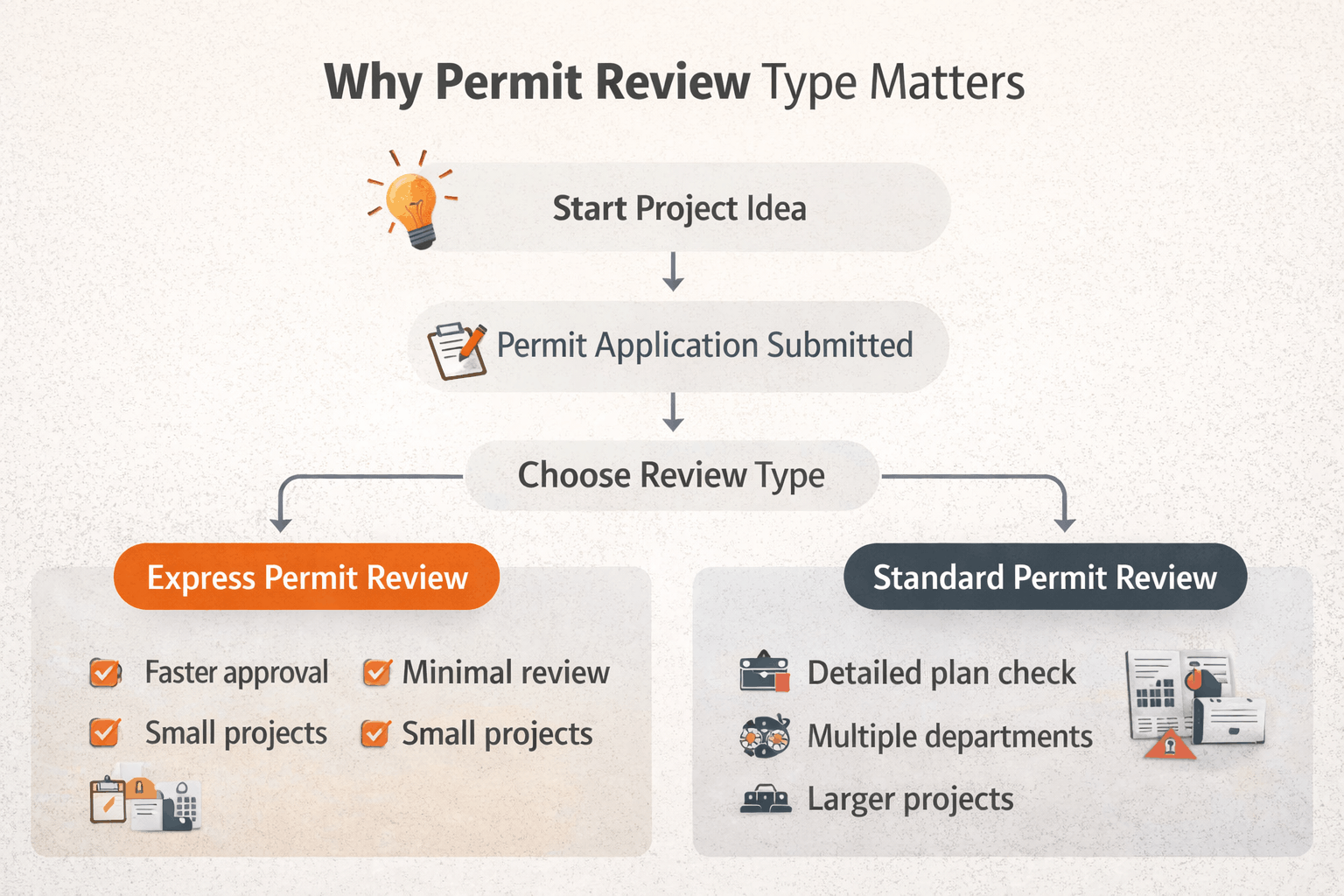
Because of this, many cities now offer two main review paths:
Standard permit review
Express permit review
Each process serves a different purpose. Some projects need full plan checks. Others qualify for faster approval because they involve simple work.
Understanding these options helps property owners make better decisions. It can also prevent delays and unexpected costs. In this guide, we will explain how permit reviews work and how the two processes compare.
Table of Contents
Why Understanding Permit Review Types Matters
A building permit review affects the timeline of almost every construction project. Even small renovations often require approval from local building departments.
Without permits, construction may violate local codes. This can create safety risks. It can also lead to fines or forced demolition. Because permits play such an important role, the type of review process matters.
Some projects qualify for fast approval through express permits. Others must go through the standard review process, which involves deeper checks.
Choosing the right process can affect:
Construction timelines
Contractor scheduling
Financing deadlines
Project costs
Inspection approvals
When developers or homeowners misunderstand the review process, projects often stall. Plans may be rejected. Departments may request corrections. In some cases, applicants must restart the process.
A clear understanding of permit review options helps avoid these problems.
Common Problems During Permit Review
Many delays occur because applicants do not know how the review system works.
Common issues include:
Submitting incomplete applications
Missing engineering documents
Incorrect zoning information
Poorly prepared construction plans
Choosing the wrong permit type
Each of these problems can slow down approval.
For developers and contractors, delays create serious financial pressure. Construction loans still accrue interest. Contractors must adjust schedules. Investors may expect progress. Because of these risks, many project teams plan their permit strategy early.
Why Cities Offer Multiple Review Options
Local governments must balance efficiency and safety. If every project required a full review, permit departments would quickly become overwhelmed. Small repairs would wait in line with large commercial projects.
To solve this problem, many cities introduced express permit programs. These programs allow minor work to move forward faster.
The result is a two-tier system:
| Permit Review Type | Purpose | Typical Projects |
|---|---|---|
| Express Permit Review | Fast approval for simple work | Minor repairs and replacements |
| Standard Permit Review | Full technical review | New construction and large renovations |
This system helps cities process permits more efficiently. Small projects move quickly through express review. Meanwhile, complex projects receive detailed analysis. Understanding how these two paths work helps property owners choose the right one.
What Is a Building Permit Review?
A building permit review is the process cities use to evaluate construction plans before issuing a permit. The goal is simple: confirm that a project follows local laws and safety standards.
Cities must protect the public. Buildings must meet structural requirements. Electrical systems must follow safety codes. Plumbing must work correctly. Permit reviews help ensure that buildings remain safe long after construction ends. Most reviews involve several city departments. Each department focuses on a specific area of compliance.
Typical review areas include:
Structural safety
Zoning regulations
Fire safety systems
Electrical design
Plumbing systems
Mechanical systems such as HVAC
These checks help reduce the risk of unsafe construction.
What Happens During a Permit Review
The permit review process follows a clear sequence. While details vary by city, the general steps remain similar.
Application Submission: Applicants submit permit forms, drawings, and project details.
Initial Review: The permit office confirms that required documents are included.
Departmental Review: Different departments evaluate specific parts of the project.
Correction Requests: If reviewers find problems, they issue correction comments.
Plan Revisions: The applicant updates the plans and resubmits them.
Final Approval: Once plans meet all requirements, the permit is issued.
This process protects both the city and the property owner. If construction followed unsafe plans, repairs later would be expensive and dangerous.
Departments Involved in Permit Review
Several city departments may participate in the review process. Each department reviews a specific aspect of the project.
| Department | What They Review |
|---|---|
| Building Department | Structural safety and construction methods |
| Planning or Zoning | Land use rules and property setbacks |
| Fire Department | Fire alarms, sprinklers, and emergency access |
| Public Works | Utility connections and infrastructure |
| Environmental Review | Environmental and sustainability rules |
Not every project requires review from every department. Smaller projects may involve fewer checks. Large developments, however, often require approvals from several agencies. Because of this complexity, permit reviews can take time. Reviewers must carefully study plans to confirm compliance with local codes.
Why Permit Reviews Take Time
Permit reviews protect safety, but they can also slow projects.
Several factors influence review speed:
Project size
Plan complexity
Workload of city departments
Number of required corrections
Quality of submitted drawings
For example, poorly prepared plans often create delays. Reviewers may request revisions multiple times. Clear, professional drawings usually move through the process faster. Understanding these factors helps project teams prepare stronger submissions.
What Is Express Permit Review?
An express permit review is a faster approval process designed for simple construction work. Cities created express systems to reduce backlogs in permit departments. Minor projects no longer need full plan checks. Instead, qualified projects receive approval quickly.
In many cities, express permits may be issued:
The same day
Within a few days
Within one week
The exact timeline depends on local regulations.
How Express Permits Work
The express permit process is usually simple. Applicants submit basic project information. If the project qualifies, the permit office issues approval quickly.
The typical steps include:
Submit permit application
Confirm eligibility for express review
Pay permit fees
Receive permit approval
Because the work is limited in scope, reviewers often do not require detailed engineering plans. This shortens the approval process significantly.
Projects That Qualify for Express Permits
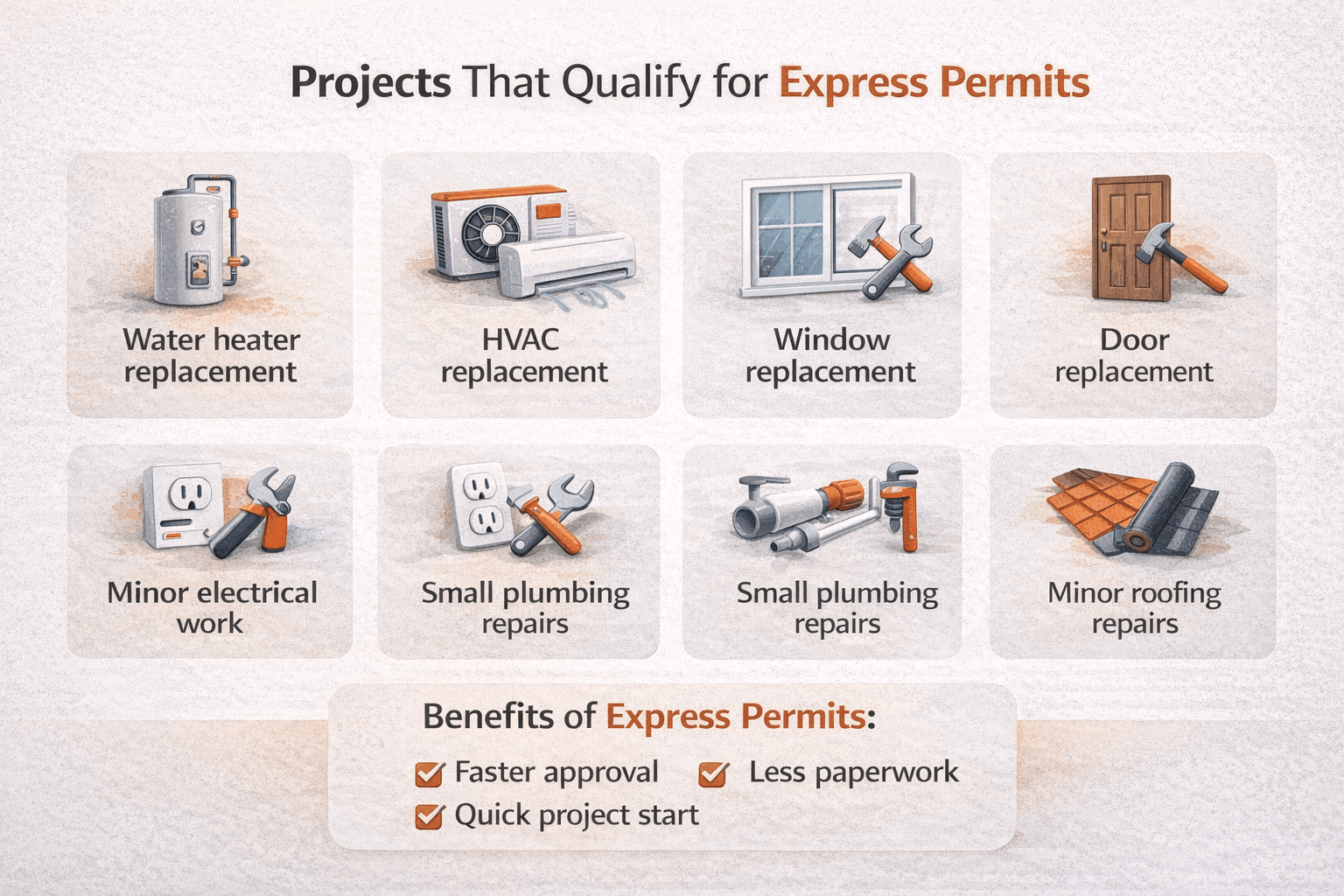
Express permits are usually limited to small or routine projects.
Common examples include:
Water heater replacement
HVAC equipment replacement
Window replacement
Door replacement
Minor electrical work
Plumbing fixture replacement
Small roofing repairs
These projects rarely affect the structural integrity of a building. Because of this, cities consider them low risk.
Advantages of Express Permit Review
Many property owners prefer express permits because they reduce delays.
Major benefits include:
Faster permit approval
Less paperwork
Simpler application process
Faster construction start dates
For contractors, faster permits mean projects can begin sooner. For property owners, faster timelines reduce holding costs and project uncertainty.
Limitations of Express Permits
While express permits are convenient, they have strict limitations. Cities carefully control which projects qualify.
Common restrictions include:
Project size limits
No structural changes
Limited project value
Licensed contractors may be required
If a project exceeds these limits, it must go through standard permit review instead. Because of these limits, express permits are best suited for simple upgrades and repairs. More complex projects require deeper technical review.
What Is Standard Permit Review?
Standard permit review is the traditional approval process used for most construction projects. Unlike express permits, this process involves a full technical review of construction plans. Cities use standard review for projects that affect structural safety, building systems, or land use rules.
Because these projects carry higher risk, the city must examine drawings carefully. Engineers and plan reviewers study the project to confirm it follows building codes and zoning regulations. This process takes longer than express review. However, it ensures that complex construction meets safety requirements.
Many residential and commercial projects must go through this process.
Examples include:
New home construction
Major home renovations
Building additions
Structural changes
Commercial developments
Multi-unit housing projects
Accessory dwelling units (ADUs)
These projects require detailed documentation before approval.
Steps in the Standard Permit Review Process
Standard permit review usually follows a structured process. Each step ensures the project meets local regulations.
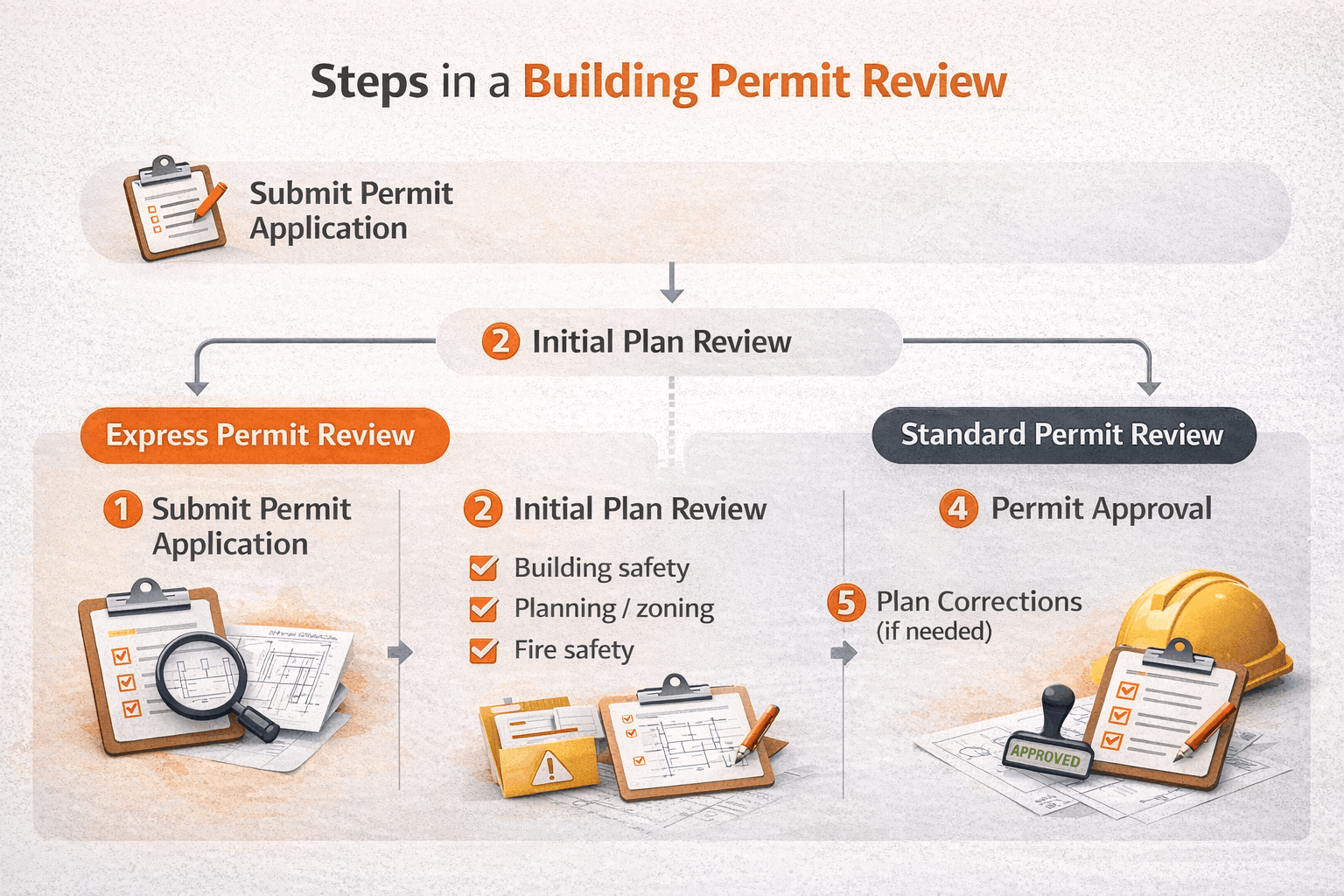
Permit Application Submission
Applicants submit drawings, engineering plans, and permit forms. Most cities now allow digital submissions through online portals.
Typical documents include:
Architectural drawings
Structural calculations
Site plans
Electrical and plumbing plans
Energy compliance reports
Incomplete applications often cause early delays. For this reason, many developers work with architects or permit consultants before submitting plans.
Initial Permit Screening
The permit office reviews the submission to confirm that required documents are included. If information is missing, the application may be rejected or returned for correction.
Departmental Plan Review
After the initial screening, plans move to several city departments. Each department evaluates a different aspect of the project.
These departments often include:
Building safety
Planning and zoning
Fire safety
Public works
Environmental compliance
Reviewers analyze the drawings to confirm that the project follows building codes and land use regulations.
Correction Comments
If reviewers find issues, they issue plan correction comments. These comments explain what must change before approval can continue.
Examples of common corrections include:
Missing structural details
Incorrect building setbacks
Incomplete electrical plans
Fire safety requirements
Applicants must revise the plans before resubmitting them.
Plan Resubmission
The project team updates drawings based on the correction comments. After revisions, the plans return to the city for another review cycle. Some projects require multiple correction rounds before approval.
Permit Approval
Once the plans meet all requirements, the city issues the building permit. Construction can then begin.
Why Standard Permit Review Takes Longer
Standard permit review often takes several weeks or months. Several factors influence review timelines.
- First, large projects involve many technical details. Reviewers must study these details carefully.
- Second, multiple departments may review the same project. Each department has its own workload and review schedule.
- Third, plan corrections can slow the process. If revisions are incomplete, additional review cycles may occur.
Because of these factors, standard permit review requires careful planning. Developers often begin the permit process early to avoid delays.
Projects That Require Standard Permit Review
Most large construction projects must go through full review. These projects usually affect structural safety or zoning compliance.
Common examples include:
Home additions
Second-story expansions
Structural wall removal
New residential construction
Commercial tenant improvements
Apartment developments
Mixed-use buildings
Even moderate renovations may require standard review if structural elements change. For example, removing a load-bearing wall often triggers structural analysis and full plan review.
Express vs. Standard Permit Review: Key Differences
Understanding the difference between express and standard review helps property owners plan their projects more effectively. Both systems exist to serve different types of construction work.
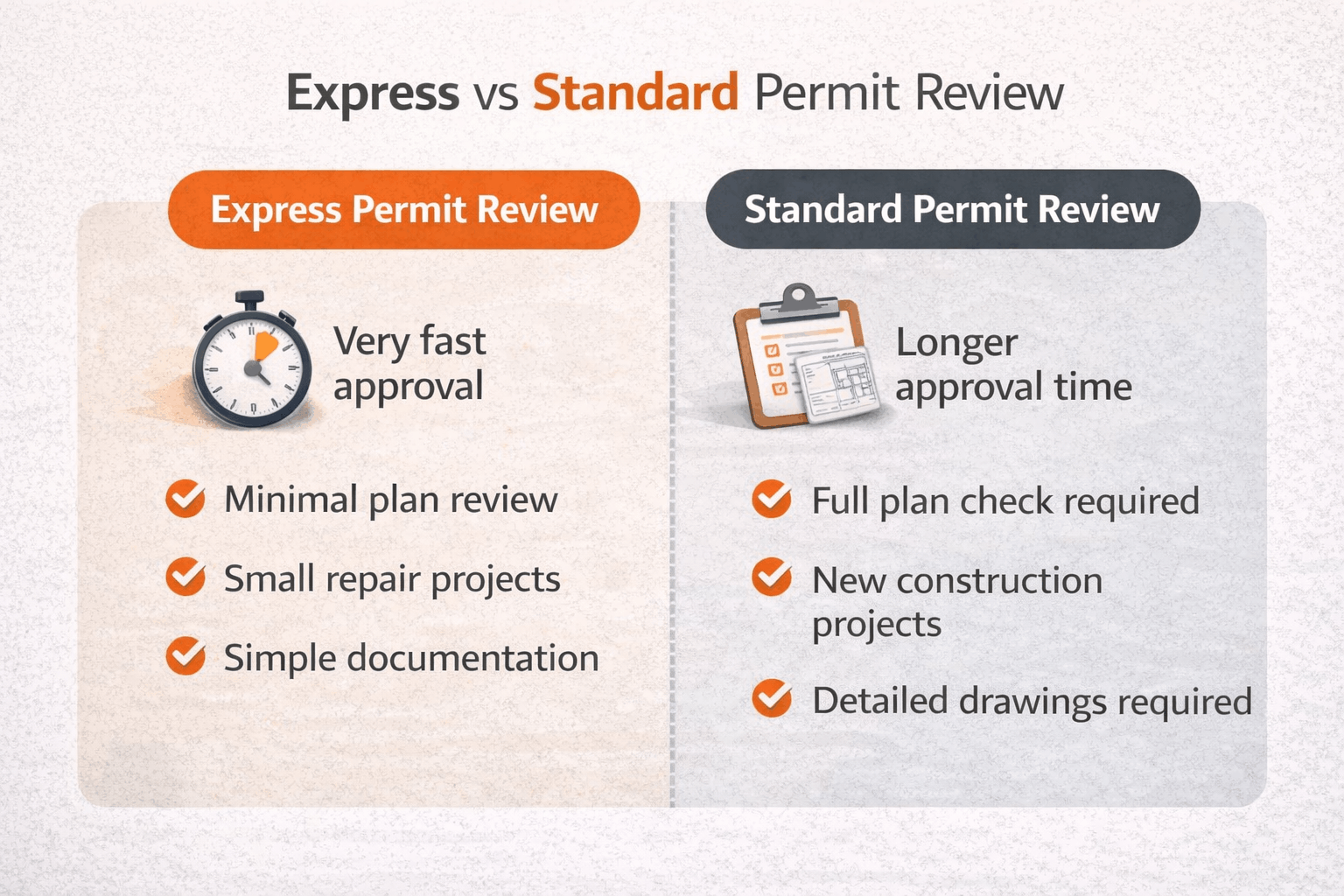
Express review focuses on speed and simplicity. Standard review focuses on detailed safety evaluation. Choosing the wrong process can lead to permit rejection or delays.
The following comparison highlights the key differences.
| Feature | Express Permit Review | Standard Permit Review |
|---|---|---|
| Approval speed | Same day to a few days | Several weeks or months |
| Project complexity | Simple repairs or replacements | Complex construction projects |
| Plan review requirement | Minimal or none | Full technical review |
| Documentation needed | Basic project details | Detailed drawings and engineering plans |
| Departments involved | Usually limited review | Multiple departments involved |
| Eligibility | Restricted to minor work | Required for most construction |
These differences exist because not every project carries the same risk. Replacing a water heater does not affect structural safety. A building addition does. Cities adjust their review process based on that risk.
Why Cities Separate These Two Processes
Permit departments process thousands of applications each year. If every project required full plan review, the system would slow down significantly. Small repairs would wait in line with large commercial developments.
Express permits solve this problem. They allow cities to process simple projects quickly while still reviewing complex construction carefully. This approach improves efficiency without sacrificing safety.
How the Wrong Permit Choice Can Cause Delays
Sometimes applicants choose the wrong permit type. For example, a homeowner may submit an express permit request for a project that includes structural changes. When this happens, the permit office usually rejects the application. The applicant must then resubmit the project under standard review.
This mistake can add weeks to the approval timeline. Because of this, many developers review permit requirements before submitting plans. In larger projects, permit consultants often help determine the correct review process.
Which Review Process Is Faster?
Express permits are clearly faster when the project qualifies. However, most large projects cannot use express review. For those projects, careful preparation is the best way to shorten the standard permit process.
Submitting complete plans, accurate drawings, and proper engineering documentation can significantly reduce delays. Many experienced developers focus heavily on plan quality before submitting permits. Better plans often mean fewer correction cycles. Fewer corrections lead to faster approvals.
Typical Permit Review Timelines
Permit timelines vary depending on the project, the city, and the quality of the submitted plans. However, one factor has the biggest impact: the type of review process.
Express permits move quickly because the work is limited in scope. Standard permits take longer because the city must evaluate detailed plans.
For property owners and developers, understanding typical timelines helps with project planning. Contractors must schedule labor. Lenders often expect progress. Investors may set construction deadlines.
If permit approval takes longer than expected, the entire project schedule shifts. Because of this, many project teams estimate permit timelines before submitting applications.
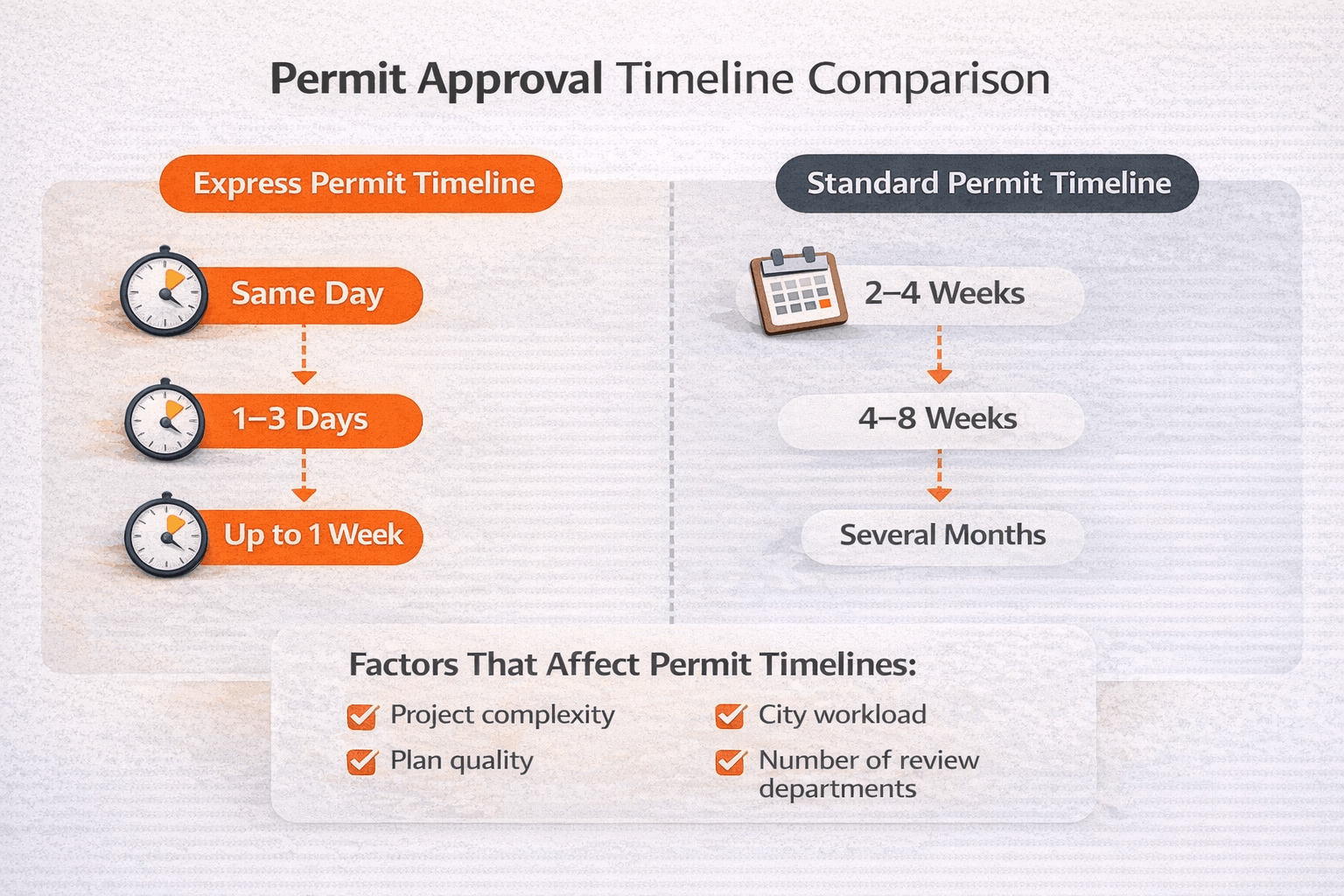
Express Permit Timeline
Express permits are designed for speed. In many cities, these permits are issued the same day or within a few days. The process is shorter because reviewers do not conduct full plan checks. Instead, they confirm that the project meets basic eligibility requirements.
Typical express permit steps include:
Submit application
Confirm project eligibility
Pay permit fees
Receive permit approval
If the application is complete, the permit may be issued immediately. The table below shows common timelines for express permits.
| Project Type | Typical Express Permit Timeline |
|---|---|
| Water heater replacement | Same day |
| Minor electrical repair | Same day – 2 days |
| Window replacement | 1 – 3 days |
| HVAC replacement | 1 – 5 days |
| Minor roofing work | 2 – 5 days |
These timelines assume the project meets all express permit requirements. If the city determines that the project is more complex, the application may be moved to standard review.
Standard Permit Timeline
Standard permit review requires deeper analysis. For this reason, approval timelines are longer. Several departments may review the plans. Each department must confirm that the project follows its specific regulations.
Typical review stages include:
Plan submission
Departmental review
Correction comments
Plan revisions
Final approval
The timeline depends on the size and complexity of the project. Smaller residential renovations may move through review within a few weeks. Larger developments may take months.
Below is a general timeline comparison.
| Project Type | Typical Standard Review Timeline |
|---|---|
| Interior residential remodel | 2 – 4 weeks |
| Home addition | 4 – 8 weeks |
| ADU construction | 6 – 10 weeks |
| Commercial tenant improvement | 6 – 12 weeks |
| Large commercial development | 3 – 6 months |
These estimates vary by city. Permit offices with heavy workloads may take longer.
Factors That Affect Permit Timelines
Several factors influence how long permit approval takes.
Project Complexity
Large projects require more detailed analysis. Structural engineering, fire safety systems, and energy compliance reviews can extend timelines.
Quality of Submitted Plans
Clear and complete drawings often move through the review process faster. When plans lack detail, reviewers issue correction comments. Each correction cycle adds time to the process.
Number of Departments Involved
Some projects require approvals from several agencies. Each agency adds another review stage. For example, a commercial building may require approval from:
Building safety
Planning department
Fire department
Public works
Environmental review
City Workload
Permit departments sometimes handle thousands of applications each year. During busy periods, review queues may grow.
Correction Cycles
Many projects require at least one correction round. Complex projects may require several. Each resubmission restarts part of the review process. Because of these factors, developers often plan permit submissions well before construction begins.
Express Plan Review vs. Expedited Permit Review
Many cities offer another option between express permits and standard review. This option is often called expedited plan review. While the names sound similar, expedited review works differently from express permits.
Express permits skip most plan checks because the project is simple. Expedited review still includes a full plan check. The difference is that the city processes the review faster. Applicants usually pay an additional fee for this service.
How Expedited Plan Review Works
Expedited review programs vary by city, but the process usually follows a similar structure. Applicants submit their plans through a special review program. The city then assigns reviewers to analyze the project more quickly.
In many cases, reviewers meet directly with the project team during scheduled review sessions. These sessions allow issues to be resolved immediately instead of waiting weeks for written comments.
Typical steps include:
Submit plans through the expedited review program
Pay premium review fees
Attend scheduled review meetings
Address corrections quickly
Receive permit approval faster than standard review
Because reviewers dedicate time specifically to these projects, the process moves faster.
Benefits of Expedited Plan Review
Expedited review can significantly shorten permit timelines for complex projects. Developers often use this option when construction schedules are tight.
Benefits include:
Faster plan review
Fewer correction cycles
Direct communication with city reviewers
Shorter approval timelines
For large developments, these benefits can be valuable. Faster approvals allow construction to begin sooner.
When Expedited Review Makes Sense
Expedited review is often used for projects that:
Have strict construction deadlines
Require financing milestones
Involve large development budgets
Cannot qualify for express permits
For example, a commercial developer preparing a retail center may choose expedited review to keep the project on schedule.
Cost Considerations
Expedited plan review usually involves higher permit fees. Cities charge these fees because expedited reviews require additional staff time. However, developers often consider the cost worthwhile.
Faster permit approval can reduce project delays, which may save money in other areas such as financing and contractor scheduling.
The table below shows how the three review types compare.
| Review Type | Speed | Plan Review Depth | Typical Use |
|---|---|---|---|
| Express Permit | Very fast | Minimal review | Small repairs |
| Standard Review | Moderate | Full plan review | Most construction |
| Expedited Review | Faster than standard | Full plan review | Time-sensitive projects |
Understanding these options allows developers and property owners to choose the review process that best fits their project.
Costs: Express vs Standard Permit Review
Permit costs vary depending on the type of project, the city, and the review process. In most cases, the permit fee is based on project valuation or construction cost.
Cities use permit fees to cover administrative work, plan reviews, inspections, and documentation. While every municipality sets its own fee schedule, the review type can influence total costs.
Express permits usually cost less because the review process is shorter and simpler. Standard permit reviews often cost more because they involve multiple departments and detailed plan checks.
Factors That Affect Permit Costs
Several factors determine how much a permit will cost.
Common factors include:
Project valuation
Square footage of the project
Type of construction work
Number of required inspections
Engineering or structural review requirements
Additional agency approvals
For example, replacing a water heater requires minimal review. A building addition may require structural analysis, zoning review, and fire safety approval. Because of this difference, the permit cost increases as project complexity grows.
Typical Permit Cost Comparison
The table below shows common cost ranges for different permit types.
| Permit Type | Typical Cost Range | Review Complexity |
|---|---|---|
| Express permit | $100 – $1,000 | Minimal review |
| Residential standard permit | $500 – $5,000 | Full plan review |
| Commercial building permit | $5,000+ | Multi-department review |
These figures vary widely by city. Larger projects can involve much higher permit fees, especially for commercial developments. However, the cost of permits is often small compared with the total construction budget.
Expedited Plan Review Fees
Some cities offer expedited review services for projects that need faster approval. These programs usually require additional fees. The extra cost pays for dedicated reviewers or faster processing schedules.
Although expedited review costs more upfront, developers sometimes choose this option when project timelines are tight. Faster permit approval may reduce other expenses such as loan interest or contractor delays.
Common Permit Delays (And How to Avoid Them)
Permit delays are common in construction projects. Even well-prepared applications can encounter slowdowns during review. However, many delays happen because of preventable mistakes. Understanding the most common issues can help property owners avoid unnecessary setbacks.
Incomplete Permit Applications
One of the most frequent problems is missing documentation. Permit offices require several documents before they can begin the review process.
Typical requirements include:
Architectural drawings
Site plans
Engineering calculations
Permit application forms
Energy compliance documents
If any of these documents are missing, the permit office may reject the application. This forces the applicant to resubmit the package and restart the process.
Poorly Prepared Construction Plans
Plan quality plays a major role in permit approval speed. When drawings lack detail, reviewers cannot confirm whether the project meets code requirements.
This leads to correction requests.
Common issues include:
Missing dimensions
Unclear structural details
Incomplete electrical layouts
Incorrect zoning information
Each correction cycle adds time to the review process. Clear, professional drawings often move through the system faster.
Zoning and Code Compliance Issues
Some projects fail to meet zoning rules.
Examples include:
Building too close to property lines
Exceeding height limits
Incorrect land use designation
When these issues appear, the project may require zoning adjustments or additional approvals. These steps can significantly delay permit approval.
High Permit Department Workload
City permit offices often manage large volumes of applications. During busy construction periods, review queues can grow. While applicants cannot control city workload, they can reduce delays by submitting complete, well-prepared plans.
Simple Ways to Reduce Permit Delays
Property owners and developers can improve approval timelines by following a few simple practices.
Helpful steps include:
Submit complete permit applications
Work with experienced architects and engineers
Review zoning requirements before submitting plans
Respond quickly to correction comments
Ensure drawings meet local building codes
These steps help reduce correction cycles and keep projects moving forward.
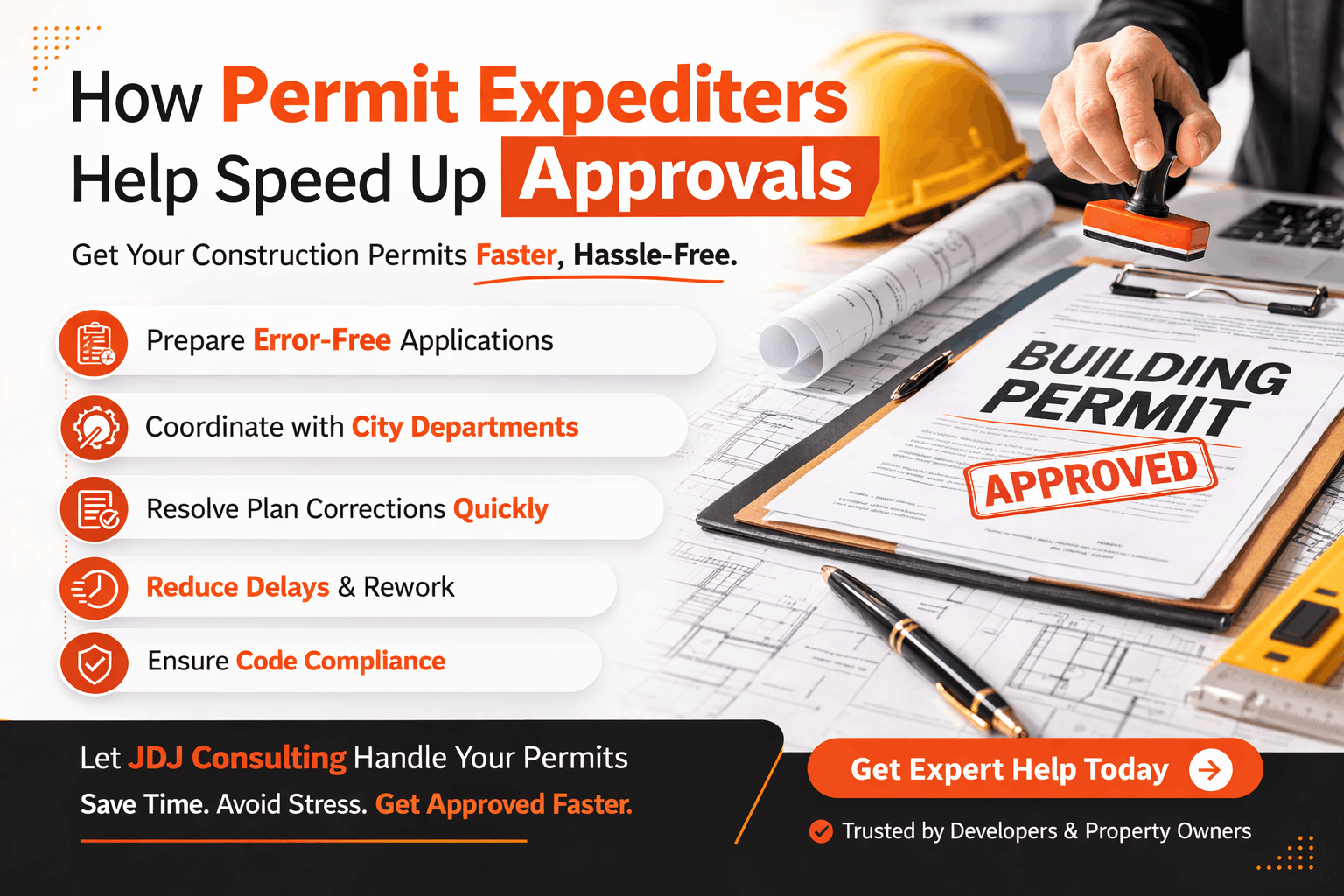
How Permit Expediters Help Speed Up Approvals
Permit expediters specialize in managing the permit approval process. Their job is to help property owners move projects through city review systems more efficiently. Construction permits often involve complex procedures. Different departments review different parts of a project. Each department may require specific documentation. Permit expediters help coordinate these steps.
What Permit Expediters Do
Permit expediters handle several tasks during the permit process.
Typical responsibilities include:
Preparing permit application packages
Reviewing construction plans for compliance
Submitting applications to city departments
Tracking permit review progress
Communicating with plan reviewers
Coordinating plan corrections and resubmissions
Because expediters work closely with local permit offices, they understand how the process works. This experience helps prevent common mistakes that cause delays.
Benefits of Hiring a Permit Expediter
Many developers and property owners use permit expediters to reduce project risk.
Key benefits include:
Faster permit approvals
Fewer plan correction cycles
Improved communication with city reviewers
Better preparation of permit documents
For large construction projects, professional permit assistance can save significant time. Reducing permit delays helps keep projects on schedule.
How JDJ Consulting Helps Clients Manage Permit Reviews
Permit approvals can be complicated, especially for larger construction projects. JDJ Consulting helps clients prepare strong permit applications and manage the review process. Their team works with property owners, architects, engineers, and developers to support permit approvals from start to finish.
Services Offered by JDJ Consulting
JDJ Consulting supports several parts of the permitting process.
Services may include:
Permit expediting
Plan submission coordination
Zoning and compliance review
Agency communication
Correction response management
By assisting with these steps, the team helps reduce delays and keep projects moving forward.
Projects JDJ Consulting Supports
The firm works on many types of construction projects.
These may include:
Residential renovations
New home construction
Accessory dwelling units (ADUs)
Commercial tenant improvements
Large development projects
Each project requires a clear permit strategy. Proper planning and organized submissions help prevent unnecessary delays.
Conclusion: Choosing the Right Permit Review Strategy
Permit review is an essential part of the construction process. Every project must meet safety standards and local building regulations before work begins. Cities provide different review paths to manage this process efficiently.
Express permits allow simple repairs and replacements to move forward quickly. Standard permit review ensures that larger construction projects receive thorough technical evaluation. For time-sensitive developments, expedited plan review may offer a faster alternative to standard review.
Understanding these options helps property owners and developers choose the right strategy. Clear planning, complete documentation, and professional guidance can make a major difference in how quickly a permit is approved.
When projects are prepared carefully, the permit process becomes far more predictable. Construction can begin sooner, and project timelines remain on track.
Need Help With Permit Approvals?
Understanding express vs. standard permit review can make a big difference in how quickly your project moves forward. The right approach helps avoid delays, reduce correction cycles, and keep construction timelines on track.
If you’re unsure which permit process your project requires, JDJ Consulting can help. Our team works with developers, architects, and property owners to prepare strong permit submissions and move projects through review more efficiently.
- Call: (818) 793-5058
- Email: sales@jdj-consulting.com
Or contact us here: https://jdj-consulting.com/book-consultation/
FAQs About Express vs. Standard Permit Review
What is the difference between express permit review and standard permit review?
Express permit review is designed for simple construction work that does not require a full technical plan check. These permits can often be issued quickly because the scope of work is limited.
Standard permit review involves a detailed evaluation of construction plans by multiple departments.
Key differences include:
Express review: Used for small repairs or replacements
Standard review: Required for complex projects
Review depth: Minimal vs. full technical analysis
Choosing the correct review type helps prevent permit rejection and delays.
How long does express permit review usually take?
Express permit review is meant to speed up approval for small projects. In many cities, these permits can be issued on the same day or within a few days.
Typical timelines include:
Same-day approval for simple repairs
1–3 days for minor installations
Up to one week for slightly larger maintenance work
The exact timeline depends on the city and whether the application includes all required information. Incomplete applications may still cause delays.
What types of projects qualify for express permits?
Express permits usually apply to routine work that does not affect the structure of a building. Cities allow these projects to move faster because they involve lower safety risks.
Common examples include:
Water heater replacement
Minor electrical repairs
Window or door replacement
HVAC equipment replacement
Small roofing repairs
If a project includes structural changes or major renovations, it will typically require standard permit review instead.
When is standard permit review required?
Standard permit review is required for projects that involve structural changes, major renovations, or new construction. These projects must undergo detailed plan checks to ensure safety and code compliance.
Examples include:
Home additions
Structural wall removal
New residential construction
Commercial tenant improvements
Multi-unit housing developments
Because these projects involve complex engineering and safety considerations, multiple departments usually review the plans before issuing approval.
Why does standard permit review take longer?
Standard permit review takes longer because several city departments evaluate the construction plans. Each department focuses on a different aspect of the project.
Common review areas include:
Structural safety
Fire protection systems
Zoning and land use regulations
Electrical and plumbing systems
If reviewers find issues, they issue correction comments. The applicant must revise the plans and resubmit them, which can add time to the approval process.
What is expedited plan review and how is it different from express permits?
Expedited plan review is a faster version of the standard review process. Unlike express permits, it still includes a full plan check.
The difference is that cities prioritize the review schedule.
Key characteristics include:
Full technical review still required
Dedicated reviewers or scheduled review sessions
Additional fees for faster processing
This option is often used for large projects that need faster approvals but cannot qualify for express permits.
How much do building permits usually cost?
Permit costs vary depending on the type of project and the city where construction takes place. Fees are often based on the estimated value of the construction work.
Typical ranges include:
$100–$1,000 for small express permits
$500–$5,000 for residential permits
Several thousand dollars for commercial projects
Additional fees may apply for inspections, plan reviews, or expedited processing services.
What are the most common reasons permits get delayed?
Permit delays often happen because applications are incomplete or construction plans do not meet code requirements.
Common causes of delays include:
Missing documents in the application
Poorly prepared construction drawings
Incorrect zoning information
Structural details that need clarification
Multiple correction cycles during plan review
Preparing clear, complete plans before submitting a permit application can significantly reduce delays.
Can a permit application be rejected?
Yes, permit applications can be rejected if they do not meet local building codes or zoning regulations. Rejection usually happens during the initial review stage.
Common reasons include:
Incomplete documentation
Incorrect permit type selection
Missing engineering calculations
Violations of zoning rules
When this happens, the applicant must correct the issues and resubmit the plans before the review process can continue.
How can permit expediters help with permit approvals?
Permit expediters help property owners and developers move construction projects through the approval process more efficiently. They understand how local permit departments operate and what documentation reviewers expect.
Permit expediters typically assist with:
Preparing permit applications
Coordinating plan submissions
Communicating with city reviewers
Managing correction responses
By organizing the permit process and reducing errors, permit expediters often help projects receive approvals faster.
References
Los Angeles Department of Building and Safety – Express Permit Program
City of San Diego Development Services – Express Plan Check
City of Miami – Express Permit Program
International Code Council (ICC) – Building Codes and Safety Standards
JDJ Consulting Blog – Permit and Development Insights