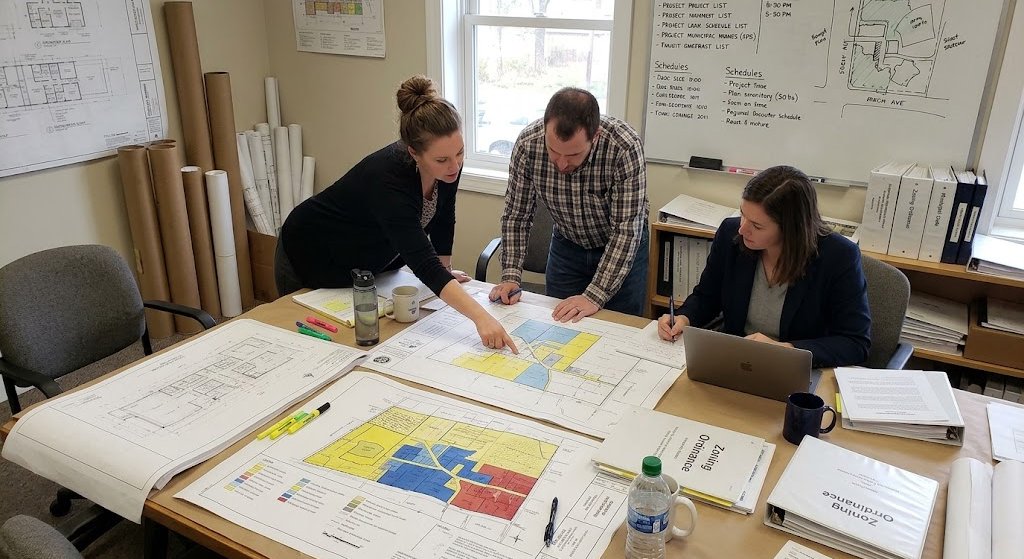

Planning a public event takes more than booking a venue and inviting guests. Many events must receive approval from local government agencies before they can take place. This approval usually comes in the form of a special event permit.
Cities and counties use permits to review event plans and protect public safety. When hundreds or thousands of people gather in one place, local officials need to review things like crowd size, traffic flow, security, and sanitation. Without permits, these issues can quickly become safety problems.
Permits also help cities coordinate services. Police officers may be needed for traffic control. Fire departments may inspect temporary structures. Public works teams may help with road closures or waste removal.
For event organizers, the permit process can feel complicated. Different departments may require separate approvals. Documents must be submitted on time. Missing paperwork can delay the event schedule.
This guide explains how special event permits work, why they are required, and what organizers should expect during the approval process. Whether you are planning a community festival, charity race, or public celebration, understanding the permit process early can save time and avoid delays.
Table of Contents
What Is a Special Event Permit?
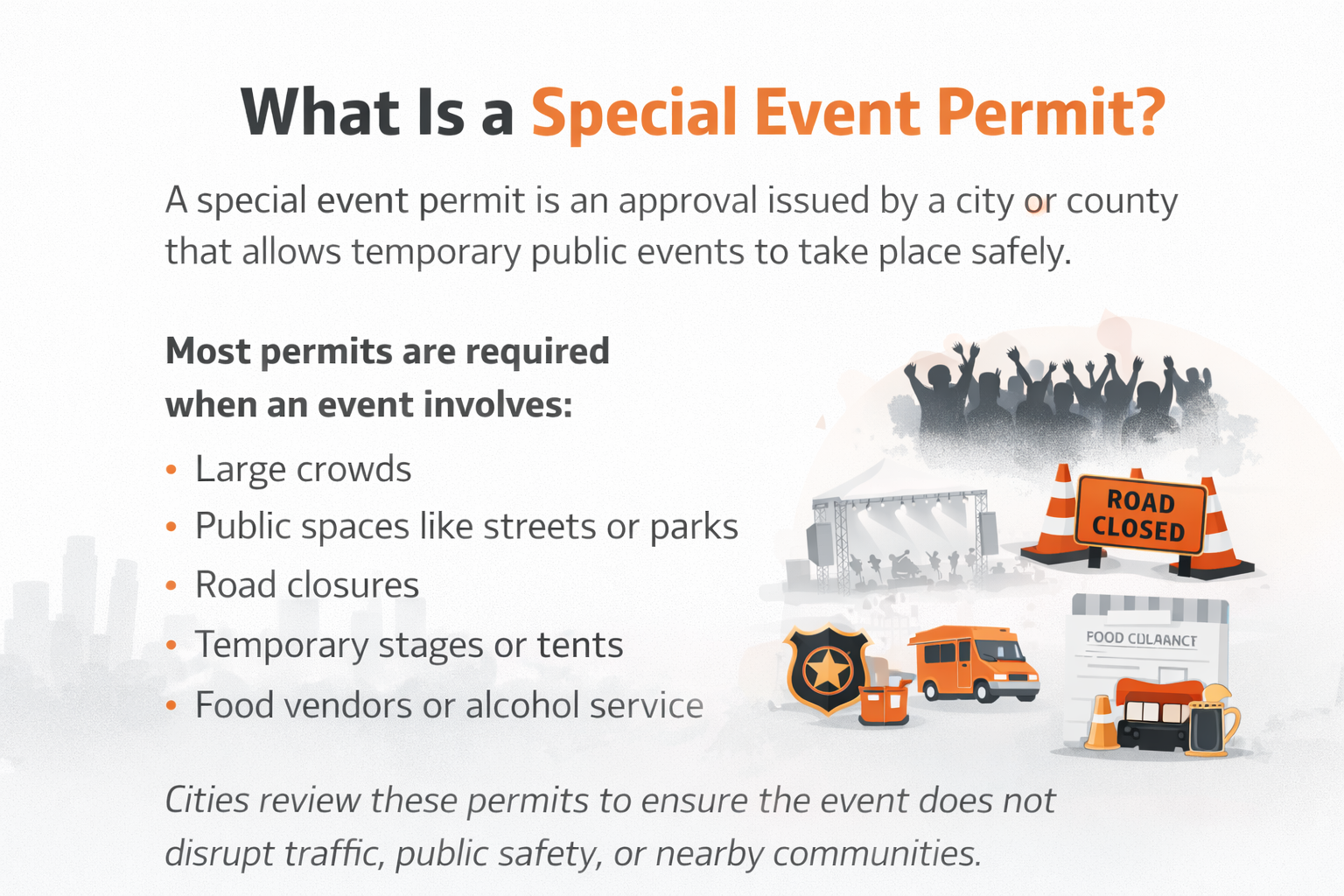
A special event permit is an official authorization issued by a city or county government that allows a temporary event to take place. These events usually occur in public spaces or involve activities that affect the community.
Local governments review event plans before granting approval. The goal is to make sure the event will not create safety risks, traffic problems, or public disturbances.
Most cities require permits for events that involve large gatherings, temporary structures, street closures, or amplified sound. If an event affects public infrastructure or requires city services, a permit is usually required.
Legal Definition of a Special Event
Each city defines “special event” slightly differently. However, most definitions follow the same general idea. A special event is typically a temporary gathering that impacts public property, city services, or community safety.
This may include events held on:
Public streets
Parks or plazas
Government-owned spaces
Areas requiring road closures
Local governments review these events to ensure they comply with safety regulations.
Common factors that determine whether a permit is required include:
Expected number of attendees
Use of public space
Traffic or parking impact
Temporary stages or tents
Food vendors or alcohol service
Amplified music or entertainment
Even events held on private property may require permits if they attract large crowds or affect nearby roads.
Examples of Events That Require Special Event Permits
Many public gatherings fall under special event permit rules. These events often involve crowds, vendors, or temporary infrastructure.
Common examples include:
Music festivals
Concerts
Street fairs
Parades
Food festivals
Charity walks and marathons
Cultural celebrations
Outdoor markets
Community block parties
Holiday festivals
Large sporting events and races also require permits because they often involve road closures and traffic coordination. Some events may require several permits from different departments.
For example, a city festival might need:
a special event permit
a street closure permit
a food vendor permit
a noise permit
Because of this, planning early is important.
Events That May Not Require Permits
Not every gathering requires government approval. Smaller events may be exempt if they do not impact public safety or city infrastructure.
Examples of events that may not require permits include:
Small private parties
Weddings in approved venues
Business meetings or conferences
Private events inside licensed facilities
However, rules vary widely between cities. Some municipalities require permits for events with more than a certain number of people.
For example:
| Event Type | Permit Usually Required |
|---|---|
| Small private gathering | No |
| Public festival | Yes |
| Marathon or road race | Yes |
| Concert in a park | Yes |
| Private wedding at venue | Usually no |
Because regulations differ between locations, event organizers should always check with the local permitting office before planning an event.
Why Cities Require Special Event Permits
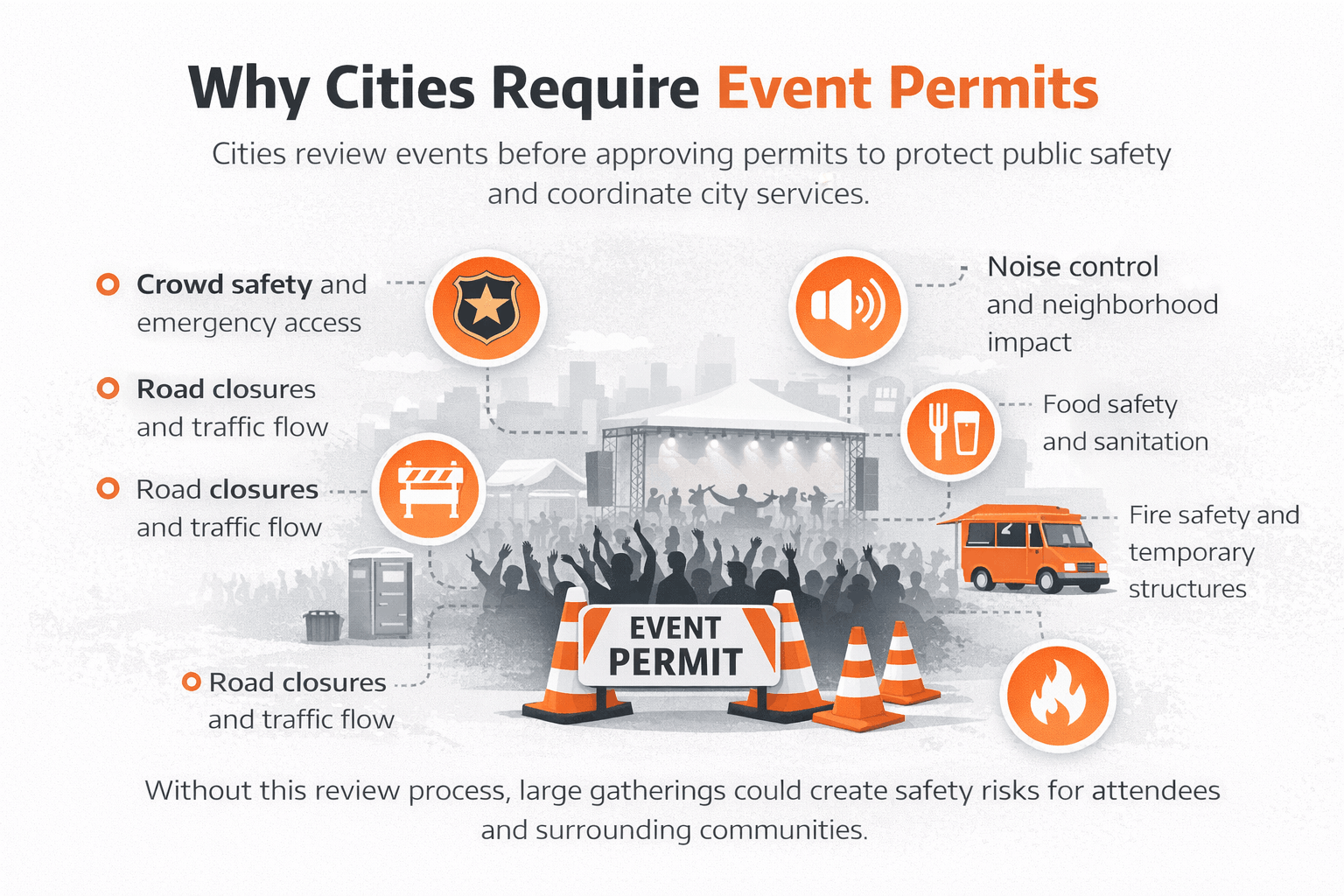
Cities require permits to protect public safety and ensure events run smoothly. When large gatherings occur, they affect traffic, emergency services, and surrounding neighborhoods.
Permits allow local governments to review event plans in advance. This review helps identify risks and prepare city services.
Without proper planning, events can cause traffic congestion, overcrowding, or safety hazards. Permit approvals allow city departments to coordinate their work before the event begins.
Public Safety and Crowd Control
One of the main reasons cities require permits is crowd safety. Large gatherings can quickly become dangerous if there is no clear plan for managing people. Event organizers must show how they will control crowds and prevent overcrowding.
Cities often review:
Expected attendance
Entry and exit points
Emergency evacuation routes
Security staffing levels
Police departments may also review security plans for large events.
If the crowd size is significant, officials may require:
additional security personnel
barriers or fencing
emergency medical staff
Proper crowd management helps prevent accidents and keeps attendees safe.
Traffic Management and Road Closures
Many events affect traffic patterns. Parades, races, and festivals often require street closures or parking restrictions. Cities must review traffic plans before approving the event.
Organizers may need to submit a traffic control plan that shows:
road closures
detour routes
parking areas
pedestrian zones
Transportation departments review these plans to prevent traffic congestion and ensure emergency vehicles can move through the area if needed.
Here is a simple example of how cities evaluate traffic impacts:
| Traffic Impact | City Review Requirement |
|---|---|
| Street closures | Transportation department approval |
| Parking restrictions | Public works coordination |
| Road detours | Traffic engineering review |
| Emergency access routes | Police and fire review |
This process ensures the event does not disrupt daily transportation more than necessary.
Health and Sanitation Requirements
Public events must also meet health and sanitation standards. Events with food vendors, large crowds, or long durations often require sanitation planning.
Health departments may review plans for:
food handling and preparation
temporary kitchens or food trucks
waste disposal
restroom availability
For large events, cities may require a minimum number of portable restrooms based on attendance. Clean facilities and proper waste management protect public health and maintain a safe environment for attendees.
Noise and Community Impact Regulations
Events can also affect nearby neighborhoods. Loud music, fireworks, or late-night activities may disturb residents. Cities use permits to regulate noise levels and event schedules. Organizers may need to request a noise permit if their event includes amplified music or entertainment.
Cities may also set rules for:
sound limits
event start and end times
stage placement
lighting impacts
These rules help balance public events with community comfort. When organizers follow these guidelines, events can take place without causing unnecessary disruptions to surrounding areas.
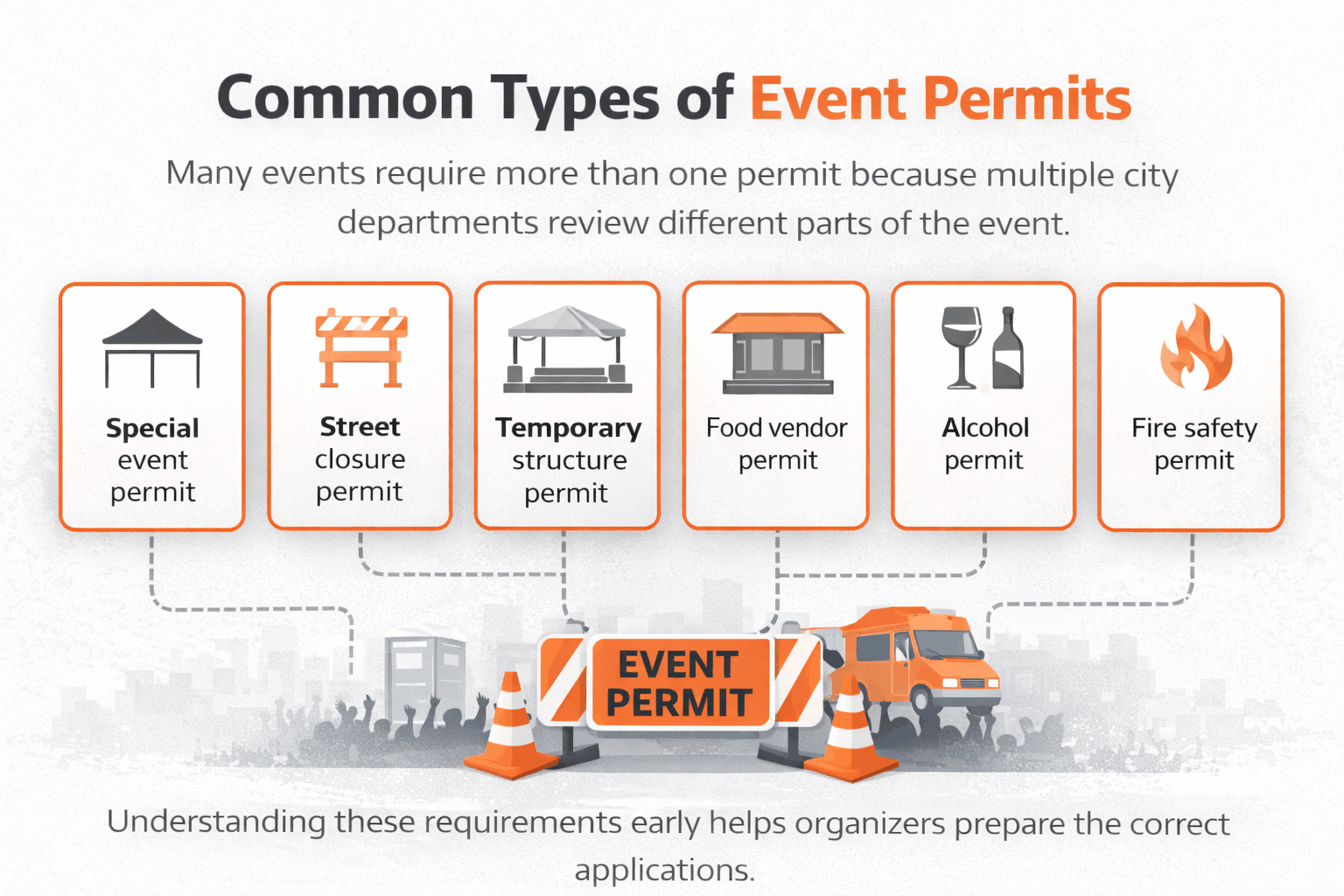
Types of Special Event Permits You May Need
Most events require more than one permit. A single application rarely covers every activity involved in a public gathering.
Cities often review events through several departments. Each department focuses on a different safety or operational concern. Because of this, organizers may need multiple approvals before an event can move forward.
For example, a street festival may require permits for road closures, food vendors, temporary stages, and amplified sound. The exact permits depend on factors such as event size, location, and planned activities.
Below is a simple overview of permits commonly required for public events.
| Permit Type | Issued By | When It Is Required |
|---|---|---|
| Special Event Permit | City event office | Large public gatherings |
| Street Closure Permit | Transportation department | Road closures or parades |
| Noise Permit | Local government | Amplified music or speakers |
| Health Permit | Health department | Food vendors or temporary kitchens |
| Fire Safety Permit | Fire department | Fireworks, open flames, cooking |
| Alcohol Permit | State or local agency | Alcohol sales or distribution |
| Temporary Structure Permit | Building department | Stages, tents, booths |
Many cities review these permits at the same time. However, each department may still require separate documentation. Understanding these permit types early helps event planners prepare the correct paperwork.
Temporary Structure Permits (Stages, Tents, Booths)
Many outdoor events use temporary structures. These structures may include stages, tents, vendor booths, or lighting towers. Although they are temporary, these structures must still meet safety standards. Building departments or fire departments usually review these installations.
Officials often check:
structural stability
fire resistance
electrical connections
emergency access routes
Large tents and stages sometimes require engineering drawings or installation plans. These inspections help prevent structural failures during crowded events.
Food Vendor and Health Permits
Events with food vendors must follow local health regulations. Health departments review temporary food operations to ensure food safety. Vendors may need permits for:
food trucks
temporary food booths
beverage stands
catering services
Health inspectors may check:
food storage temperatures
handwashing stations
sanitation equipment
waste disposal procedures
These rules protect attendees from foodborne illness. Some cities also require event organizers to submit a full list of vendors before approval.
Alcohol and Beverage Licensing
Events that serve alcohol usually require additional approval. Alcohol permits are often issued by state or regional alcohol control agencies. These permits regulate how alcohol is served and who is responsible for compliance.
Common requirements include:
licensed alcohol vendors
age verification procedures
restricted service areas
trained staff or security personnel
Events serving alcohol may also require increased security planning. Because alcohol permits often involve state agencies, the approval process may take longer than other permits.
Fire Safety and Fireworks Permits
Fire safety is another major concern for large gatherings. The fire departments review events that include:
fireworks displays
open flames
outdoor cooking equipment
large electrical setups
Officials may inspect equipment before the event begins.
They may also require:
fire extinguishers
emergency vehicle access
flame-resistant materials
Fire safety planning becomes especially important for crowded outdoor festivals.
Step-by-Step Special Event Permit Application Process
Applying for event permits involves several steps. Although the details vary between cities, the general process is similar in most locations. Planning early is important. Some cities require applications weeks or even months before the event date.
The permit process usually includes research, documentation, and review by multiple departments. Below is a simplified version of how most applications move through the approval system.
Step 1: Determine If Your Event Requires a Permit
The first step is confirming whether your event needs a permit. Organizers should review local regulations and contact the city’s special events office if necessary.
Important factors include:
event location
number of attendees
road closures
temporary structures
food or alcohol service
Even small events may require permits if they use public spaces. Early confirmation prevents delays later in the planning process.
Step 2: Contact the Local Permitting Authority
Most cities have a department that manages special event permits.
This office coordinates reviews from other departments such as:
police
fire department
transportation
public works
health department
Speaking with the permitting office early helps organizers understand requirements. Officials may provide application guidelines, deadlines, and documentation checklists. This step helps event planners avoid missing important requirements.
Step 3: Submit the Special Event Permit Application
Once organizers understand the requirements, they must complete the official application. The application typically asks for basic information about the event, including:
event name and description
event location
date and time
estimated attendance
contact information for organizers
Cities use this information to begin their review process. Some municipalities provide online permit portals where applications can be submitted electronically.
Step 4: Submit Supporting Documents
In addition to the application form, cities often require supporting documents. These documents help departments review safety and logistics.
Common documents include:
event site plans
traffic control plans
security plans
vendor lists
insurance certificates
Incomplete documentation is one of the most common reasons for permit delays. Organizers should double-check requirements before submitting applications.
Step 5: Department Review and Approval
After submission, the application moves through several department reviews. Each department evaluates the event from its area of responsibility.
For example:
police review security plans
fire departments review safety procedures
transportation departments review traffic impacts
health departments review food vendor plans
Departments may request additional information if plans are incomplete. This review process ensures the event meets local safety regulations.
Step 6: Pay Permit Fees
Once the event receives approval, organizers must pay any required fees. Fees vary depending on event size and city services required.
Typical fees may include:
permit processing fees
inspection fees
police staffing costs
street closure setup costs
Cities often calculate these costs based on the services needed for the event. After fees are paid, the city issues the final permit approval.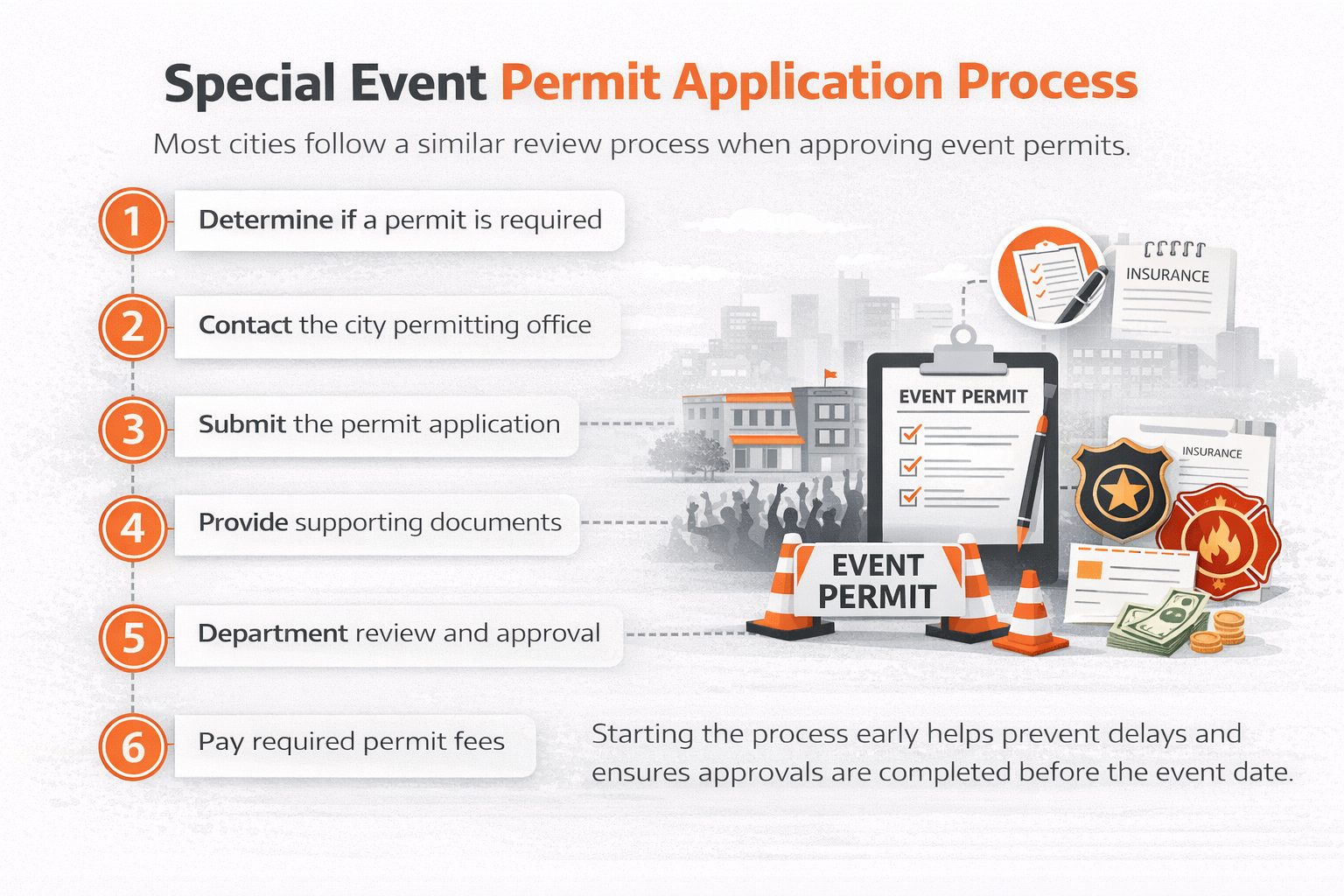
Documents Required for Special Event Permit Applications
Permit applications usually require detailed documentation. These documents allow city departments to review event logistics and safety plans. Preparing documents early helps prevent approval delays. Although requirements vary by location, most cities request similar materials.
Event Site Plan
A site plan shows the layout of the event area. This document helps officials understand how people will move through the event.
A typical site plan may include:
entrances and exits
stages and entertainment areas
vendor booths
seating areas
emergency access routes
restrooms and sanitation stations
Clear site plans help emergency responders understand the event layout.
Traffic and Parking Plan
Events that affect traffic must submit a traffic management plan. This document explains how vehicles and pedestrians will move during the event.
Traffic plans often include:
road closures
detour routes
parking areas
pedestrian crossings
signage locations
Transportation departments review these plans to minimize disruptions to nearby roads.
Security and Emergency Response Plan
Cities also require a safety plan for large gatherings. This plan explains how organizers will handle emergencies or crowd issues.
A security plan may include:
number of security personnel
medical staff availability
evacuation procedures
communication systems
Emergency preparation is critical for large public events. Cities want to ensure organizers are ready to respond if problems occur.
Insurance Requirements
Many cities require proof of liability insurance before issuing permits. Insurance protects both the city and event organizers if accidents occur.
Typical insurance requirements include:
general liability coverage
minimum coverage limits
listing the city as an additional insured party
Insurance documentation must usually be submitted before final permit approval. Organizers should confirm these requirements early in the planning process.
How Long Does It Take to Get a Special Event Permit?
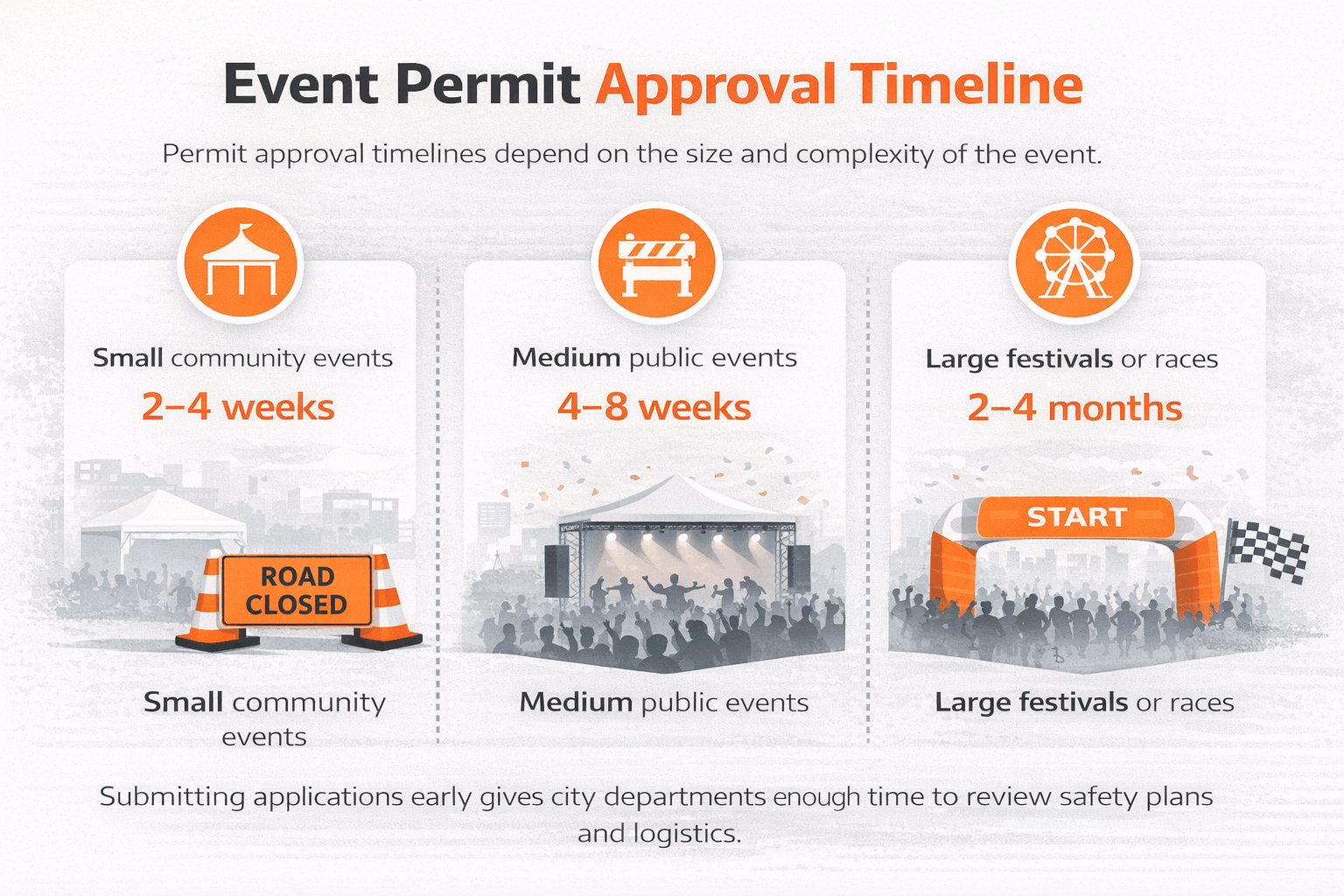
One of the most common questions event organizers ask is how long the permit process takes. The answer depends on several factors, including the size of the event, the location, and the type of activities planned.
In many cities, the permit process takes several weeks to a few months. Smaller events may move through approval quickly, while large festivals often require longer review periods.
Cities need time to review documents, coordinate departments, and schedule inspections. Because several agencies may be involved, the approval process takes time. Submitting applications early helps prevent delays.
Below is a general example of how approval timelines may vary depending on event size.
| Event Size | Typical Approval Time | Review Complexity |
|---|---|---|
| Small community event | 2–4 weeks | Basic review |
| Medium public event | 4–8 weeks | Multi-department review |
| Large festival or race | 2–4 months | Full safety and traffic review |
These timelines are only estimates. Some cities require applications 45 to 90 days before the event date. Starting early gives organizers enough time to respond to review comments or submit additional documents if needed.
Factors That Affect Approval Timelines
Several factors can influence how long the permit review process takes. Events with more complex logistics usually require additional review.
Common factors that affect approval timelines include:
size of the expected crowd
number of vendors
road closures or traffic detours
alcohol service
fireworks or open flames
temporary structures or stages
Large events often involve multiple departments working together. Each department may review the application separately. For example, a city marathon may require approvals from transportation, police, fire, and public works departments. When several agencies are involved, review timelines naturally increase.
When to Start the Permit Process
Experienced event planners usually begin the permit process three to six months before the event date. Early planning provides several advantages.
- First, it allows time to gather required documents such as site plans, insurance certificates, and vendor lists.
- Second, it provides flexibility if city departments request revisions.
- Third, early submission reduces the risk of last-minute delays.
A simple planning timeline often looks like this:
6 months before event – initial planning and permit research
3–4 months before event – submit permit applications
1–2 months before event – city review and approvals
2–4 weeks before event – final permits issued
Starting early helps ensure the event stays on schedule.
Common Challenges When Applying for Special Event Permits
The permit process can be challenging, especially for organizers planning their first public event. Many applications experience delays because of missing documents, incomplete forms, or coordination issues between departments. Understanding common challenges helps organizers prepare better applications.
Incomplete Applications
One of the most common problems is incomplete paperwork. Cities require detailed information about the event. Missing details can delay the review process.
Common issues include:
incomplete application forms
missing site plans
missing insurance certificates
incomplete vendor lists
When documents are missing, city officials must request additional information. This adds extra time to the approval process. Carefully reviewing the application checklist before submission helps prevent these delays.
Multiple Department Approvals
Many permits require approval from several city departments. Each department focuses on a different aspect of the event.
These departments often include:
police department
fire department
transportation department
public works department
health department
Because each department must review the application, the process may take longer than expected. If one department requests changes, the application may return for additional review. Coordination between departments is one reason why permit approvals can take several weeks.
Late Submissions
Submitting permit applications too close to the event date is another common problem. Many cities have strict deadlines for event permit applications. If organizers miss the deadline, the event may not receive approval in time. Late submissions also leave little time for revisions if problems appear during the review process. Planning early is the best way to avoid this issue.
Insurance or Safety Plan Issues
Cities take public safety seriously. Applications that lack clear safety planning may face delays or rejection.
Officials often review:
crowd management plans
emergency evacuation routes
fire safety procedures
insurance coverage
If these plans are unclear or incomplete, departments may request revisions. Providing detailed safety documentation improves the chances of faster approval.
Special Event Permit Costs and Fees
Permit costs vary widely depending on the event and the city where it takes place. Some small community events may only require a small application fee. Larger events may involve several costs related to city services and inspections.
Cities typically charge fees to cover administrative review and the public services required for the event. These services may include police staffing, traffic control, and sanitation support.
Below is an example of common cost categories for special event permits.
| Cost Category | Typical Fee Range | Purpose |
|---|---|---|
| Permit application fee | $50 – $500 | Administrative review |
| Police services | Hourly rates | Crowd and traffic control |
| Fire inspection fee | $100 – $500 | Fire safety review |
| Traffic control setup | $500 – $5,000 | Barricades and signage |
| Cleanup deposit | Varies | Waste management and restoration |
Actual costs depend on the size and complexity of the event. For example, a small charity run may only require basic permit fees. A large music festival may require significant city resources, which increases costs. Organizers should review fee schedules early so they can budget properly.
Factors That Influence Permit Costs
Several factors affect the final cost of event permits.
These factors include:
event size and attendance
length of the event
location within the city
required city services
security and safety needs
Events that require road closures, police staffing, or sanitation services usually cost more. Cities calculate these fees to recover the cost of public resources used during the event. Understanding these costs early helps organizers avoid unexpected expenses.
How Permit Expediters Help Speed Up Special Event Permit Approvals
Planning an event involves many moving parts. Permit applications are only one part of the process, but they can create serious delays if handled incorrectly. This is where permit expediters can help.
Permit expediters specialize in preparing and submitting applications, coordinating with city departments, and resolving issues during the approval process. Their experience helps organizers avoid common mistakes.
Permit Research and Requirements Analysis
Different cities have different rules. Permit expediters begin by identifying all requirements for the specific event.
They review:
local permit regulations
department approval requirements
application deadlines
documentation requirements
This early research ensures the correct permits are identified before applications are submitted.
Application Preparation and Submission
Permit consultants help organize the application process.
They assist with preparing documents such as:
permit applications
site plans
traffic management plans
safety documentation
Submitting accurate applications reduces the chance of delays caused by missing information.
Coordinating With City Departments
Events often require communication with several departments. Permit expediters act as a central point of contact between event organizers and city officials.
They help coordinate reviews with departments such as:
planning offices
transportation agencies
fire departments
public safety officials
This coordination helps move applications through the system more efficiently.
Reducing Approval Delays
Experienced permit professionals understand the review process. They know what documentation departments expect and how to address issues quickly.
Their involvement often leads to:
fewer revisions
faster responses from city agencies
smoother approval timelines
For large or complex events, professional permit assistance can significantly reduce the risk of delays.
How JDJ Consulting Helps Clients Secure Special Event Permits Faster
Special event permits can involve several applications, multiple departments, and strict deadlines. Without experience in the permit process, organizers may struggle to keep everything on schedule. JDJ Consulting helps simplify this process.
The team works closely with clients to identify permit requirements, prepare documentation, and coordinate approvals with city departments. Their goal is to help events move through the permitting process efficiently.
JDJ Consulting supports clients with:
permit research and planning
application preparation
coordination with local agencies
document organization
permit submission and follow-up
This support helps event organizers focus on planning their event while the permitting process moves forward. Early permit planning often prevents delays and helps ensure the event can take place as scheduled.
Final Thoughts on Special Event Permits
Special event permits play an important role in public safety and event planning. Cities use permits to review logistics, coordinate services, and protect the community during large gatherings.
For event organizers, the permit process may seem complex. Multiple departments, documentation requirements, and review timelines can make planning challenging. However, understanding the process early makes a significant difference.
Starting the permit process several months before the event allows time to prepare documents, respond to review comments, and secure approvals. Working with experienced permit consultants can also simplify the process and reduce delays.
With proper planning and the right support, event organizers can move through the permit process smoothly and focus on creating successful events.
Need Help With Special Event Permits?
Handling permits alone can take time and create unnecessary stress. Missing documents or late submissions often lead to delays.
JDJ Consulting helps businesses and event organizers manage the permitting process from start to finish. Our team assists with permit research, application preparation, and coordination with city departments.
If you need help securing special event permits, connect with our team here.
- Phone number: (818) 793-5058
- Email: sales@jdj-consulting.com
- Contact page: https://jdj-consulting.com/book-consultation/
FAQs About Special Event Permits
What is a special event permit?
A special event permit is an approval issued by a city or county that allows a temporary public event to take place. Governments use these permits to review safety plans and coordinate services before the event happens.
These permits are commonly required when an event involves:
Large public gatherings
Use of parks, streets, or public property
Road closures or traffic changes
Food vendors, alcohol service, or temporary structures
The goal is to ensure the event is organized safely and does not disrupt the surrounding community.
When do you need a special event permit?
You usually need a permit when your event affects public space, city services, or public safety.
Common situations that require a permit include:
Festivals, parades, or concerts
Charity races or marathons
Events that close streets or sidewalks
Events with amplified music
Gatherings with food vendors or alcohol service
If your event involves large crowds or public infrastructure, your local government will likely require a permit.
How do you apply for a special event permit?
Applying for a special event permit usually involves submitting an application to the city’s event or permitting office. The process typically includes several steps.
Most applications require:
Event description and schedule
Site layout or event map
Estimated attendance
Safety or security plans
Insurance documentation
After submission, multiple departments such as police, fire, and transportation may review the application before approval is granted.
How long does it take to get a special event permit approved?
Approval timelines vary depending on the event size and complexity. Smaller community events may be approved quickly, while large festivals require longer reviews.
Typical timelines include:
Small events: 2–4 weeks
Medium events: 4–8 weeks
Large events: 2–4 months
Events that involve road closures, alcohol service, or fireworks often require additional approvals, which can extend the timeline.
What documents are required for a special event permit?
Cities usually require several documents to evaluate safety and logistics before approving an event.
Common required documents include:
Event site plan showing layout and entrances
Traffic or parking management plan
Security and emergency response plan
Vendor lists and food permits
Liability insurance certificate
Submitting complete documentation helps the city review the application faster and reduces the chances of permit delays.
Do private events require a special event permit?
Not all private events require permits. Small gatherings held on private property may be exempt if they do not affect public spaces or city services.
However, permits may still be required if the event involves:
Large attendance numbers
Temporary structures or stages
Amplified music or loud entertainment
Street parking or traffic disruption
Local regulations vary, so it is always best to check with the city before planning a large private event.
How much does a special event permit cost?
Permit costs depend on the size of the event and the city where it is held. Some small events only require a basic application fee, while larger events may involve additional service costs.
Typical expenses may include:
Permit application fee
Police or security staffing
Fire safety inspections
Traffic control or barricades
Cleanup or sanitation deposits
Cities calculate these fees to cover the public services required during the event.
Can a special event permit be denied?
Yes, a permit can be denied if the event does not meet local safety or regulatory requirements.
Common reasons for denial include:
Incomplete applications
Lack of safety planning
Conflicts with other scheduled events
Traffic or crowd management concerns
In many cases, organizers can revise their plans and resubmit the application after addressing the issues identified by the city.
What departments review special event permits?
Special event permits are often reviewed by multiple city departments. Each department focuses on a specific area of safety or infrastructure.
Common reviewing departments include:
Police department (security and crowd control)
Fire department (fire safety and emergency access)
Transportation department (traffic management)
Health department (food vendor regulations)
Public works (street closures and sanitation)
This multi-department review helps ensure events are safe and properly organized.
How can permit expediters help with special event permits?
Permit expediters help event organizers manage the permit process more efficiently. Their experience with local regulations helps prevent common mistakes.
Permit consultants typically assist with:
Identifying required permits
Preparing and submitting applications
Organizing site plans and safety documents
Coordinating with city departments
Working with professionals can reduce delays and help ensure the event receives approval on time.