
Permits are part of almost every construction project, property improvement, or public event. Cities and counties issue permits to make sure work follows local regulations and safety standards. However, getting a permit often involves more than submitting an application.
In many cases, the city will also require a permit bond before approving the permit. This bond acts as a financial guarantee. It assures the local government that the permit holder will follow regulations and complete the work properly.
Permit bonding requirements protect public property. They also help cities recover costs if a project causes damage or fails to meet local standards.
For developers, contractors, and event organizers, these requirements can feel confusing at first. Bond amounts vary by project type. Different permits also require different types of bonds.
This guide explains how permit bonding works and why cities require it. You will also learn when bonds apply and how they differ from insurance. Understanding these requirements early can prevent delays and help your project move forward faster.
Table of Contents
What Is a Permit Bond?
A permit bond is a type of surety bond required by a government agency before issuing certain permits. It guarantees that the permit holder will follow local rules and complete the approved work responsibly.
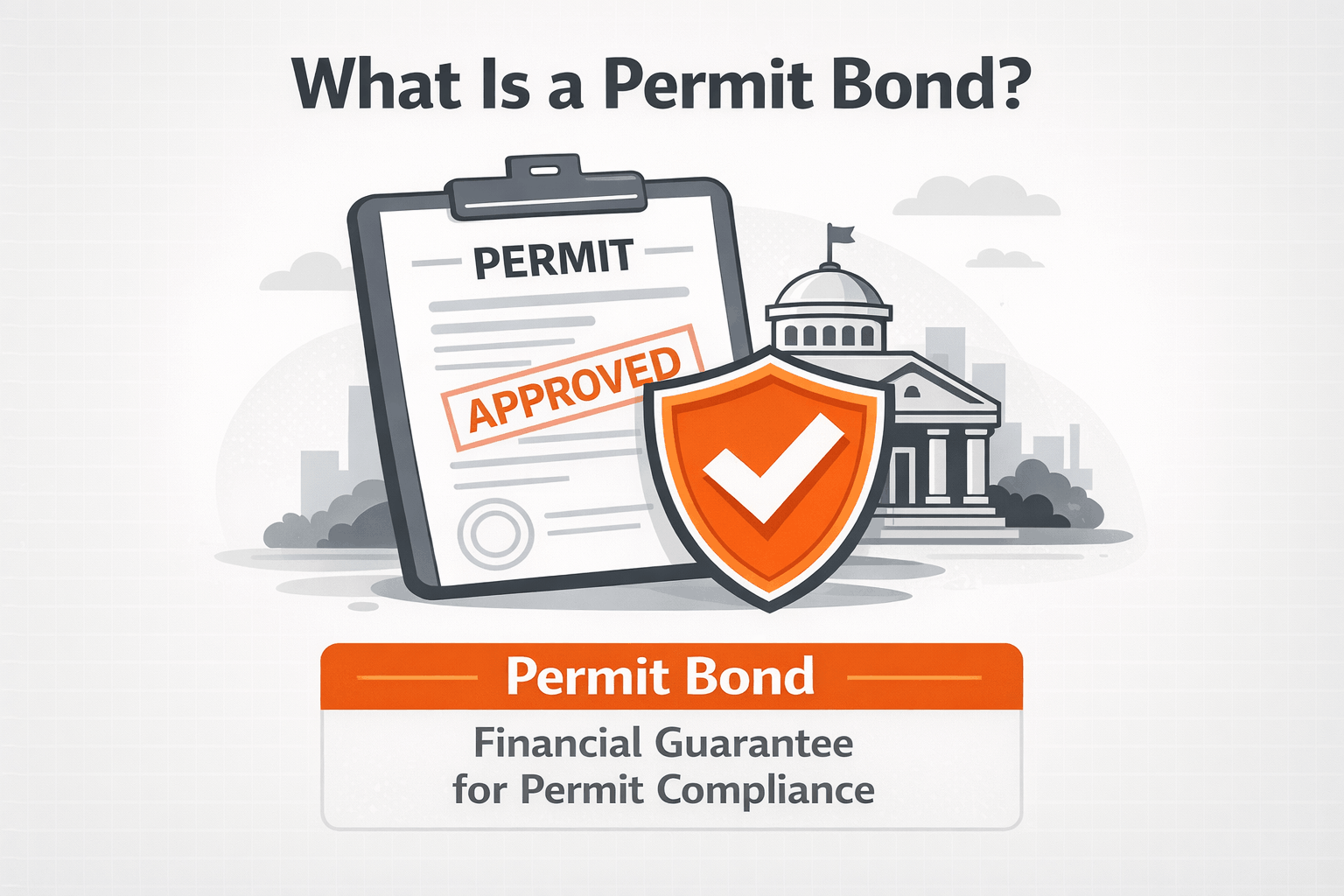
In simple terms, the bond protects the public and the city. If the permit holder breaks regulations or fails to finish the work correctly, the city may file a claim against the bond. The bonding company may pay for damages first. After that, the permit holder must repay the bonding company.
Permit bonds are common in industries that affect public infrastructure or safety. Examples include construction projects, utility work, and large public events. These bonds help local governments reduce financial risk while allowing private projects to move forward.
How Permit Bonds Work
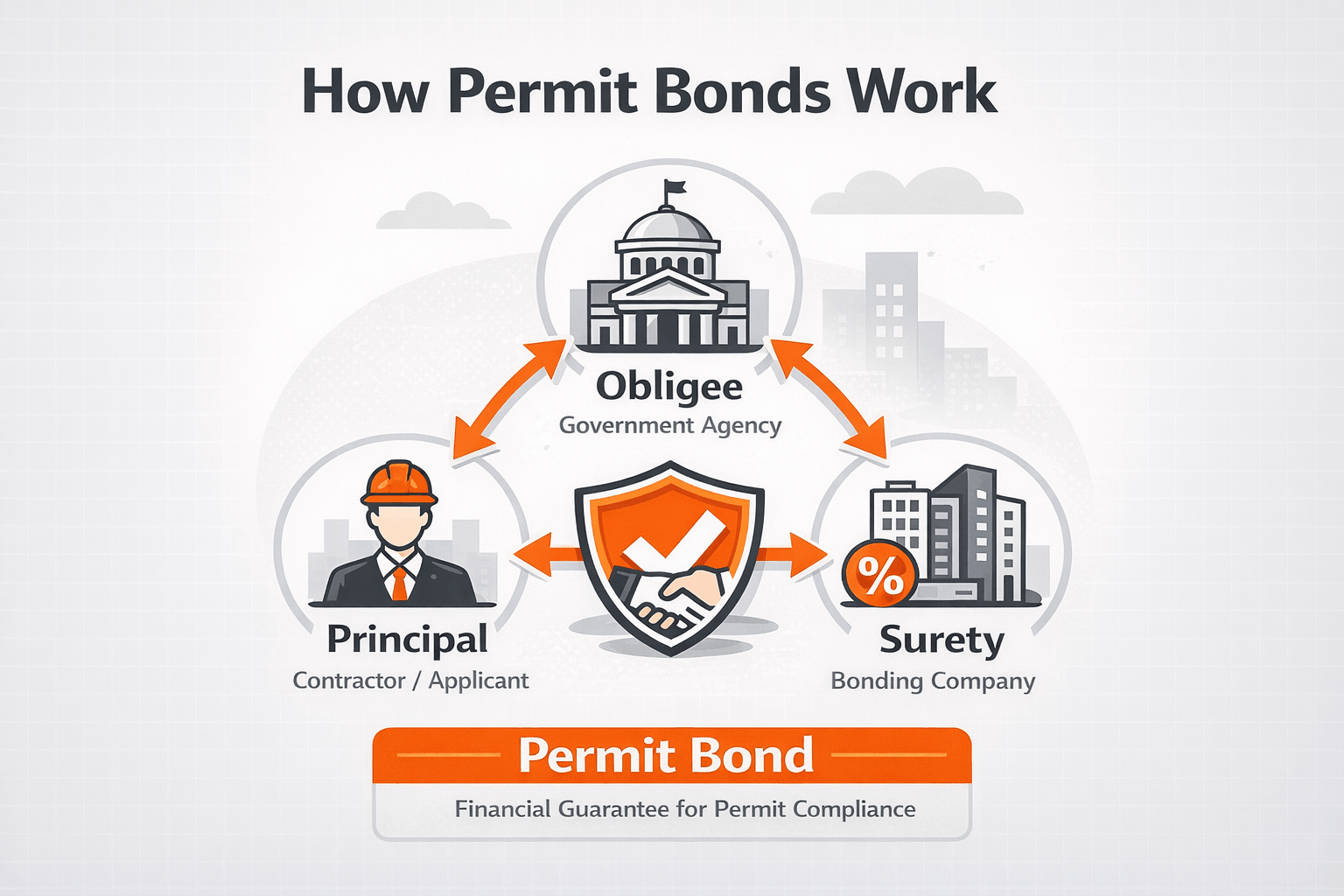
Permit bonds involve three different parties. Each one has a specific role in the agreement.
| Party | Role in the Bond |
|---|---|
| Principal | The contractor, developer, or organizer who must obtain the bond |
| Obligee | The government agency requiring the bond |
| Surety | The bonding company that guarantees the obligation |
The principal applies for the bond. This is usually the business or person requesting the permit. The obligee is the city, county, or government agency that requires the bond. Their goal is to protect public resources. The surety is the bonding company. It provides the financial guarantee that the permit holder will follow the rules.
If the permit holder violates the permit conditions, the city may file a claim against the bond. The surety may cover the damages first. However, the permit holder must repay the surety afterward. Because of this repayment requirement, permit bonds are different from traditional insurance.
Why Cities and Counties Require Permit Bonds
Local governments must protect public infrastructure and taxpayer funds. Construction projects, public events, and utility work can all affect roads, sidewalks, utilities, and nearby properties. Permit bonds reduce the risk of financial loss for the city.
Common reasons cities require permit bonds include:
Protecting roads, sidewalks, and public property
Ensuring projects meet approved plans
Guaranteeing cleanup after events
Covering damage to utilities or infrastructure
Encouraging contractors to follow regulations
For example, a contractor installing underground utilities may need a bond. If the contractor damages a public road and does not repair it, the city can file a claim against the bond. This system creates accountability while still allowing projects to proceed.
Permit Bonds vs Insurance
Many people confuse permit bonds with insurance policies. While both involve financial protection, they work very differently.
| Feature | Permit Bond | Insurance |
|---|---|---|
| Who is protected | Government agency or public | Policyholder |
| Purpose | Guarantee compliance with regulations | Protect against accidents or losses |
| Claim repayment | Permit holder repays the surety | Insurance company covers the loss |
| Required for permits | Often required by cities | Usually optional |
Insurance protects the policyholder from unexpected losses. Permit bonds, on the other hand, protect the city or public. Because of this difference, bonding companies review an applicant’s financial stability before issuing a bond.
When Permit Bonding Requirements Apply
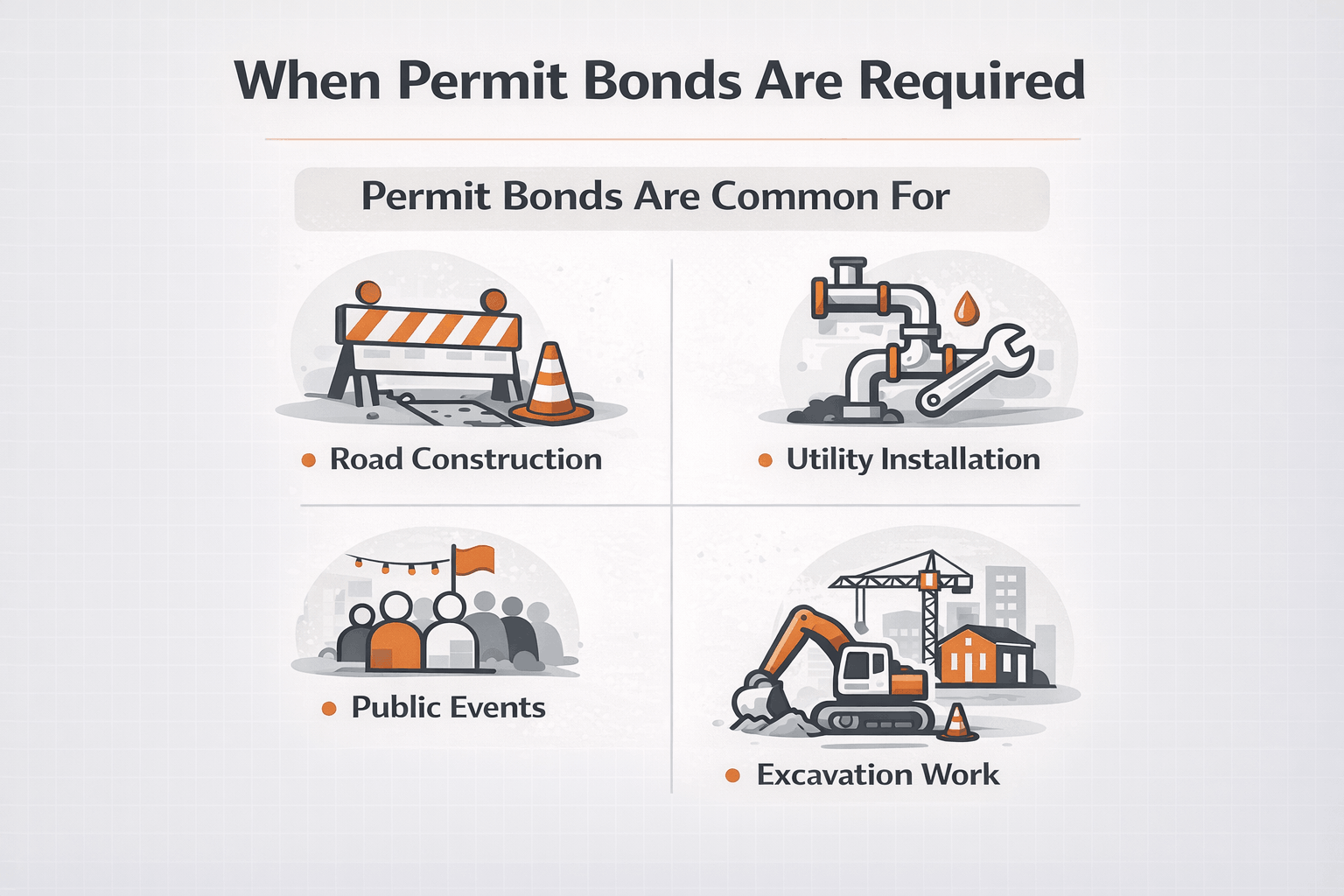
Permit bonding requirements depend on the type of project and the local regulations. Not every permit requires a bond, but many projects that affect public property or safety do. Cities often require bonds when work involves infrastructure, land development, or large gatherings.
Common situations that require permit bonds include:
Construction projects near public roads
Utility or excavation work
Large public events
Development of new subdivisions
Work within city rights-of-way
The purpose is always the same. The bond ensures the permit holder follows the approved plans and restores public areas if damage occurs. Understanding when bonding requirements apply helps applicants prepare their permit packages correctly.
Construction Permit Bond Requirements
Construction projects are one of the most common reasons cities require permit bonds. When contractors work near public infrastructure, there is always some risk of damage. Roads, sidewalks, drainage systems, and underground utilities can all be affected during construction.
Permit bonds guarantee that contractors will repair any damage and complete the work according to local standards. Below are some common construction permits that require bonding.
| Permit Type | Purpose of Bond |
|---|---|
| Right-of-way permit | Protect streets, sidewalks, and curbs |
| Excavation permit | Ensure underground utilities are restored |
| Grading permit | Prevent soil erosion or environmental damage |
| Utility connection permit | Guarantee proper installation of water, gas, or sewer lines |
For example, a contractor installing a new driveway may need a right-of-way permit bond. If the driveway construction damages the sidewalk, the city can use the bond to pay for repairs. These requirements help ensure contractors complete work responsibly.
Special Event Permit Bond Requirements
Large public events can also require permit bonds. Cities must make sure organizers follow regulations and leave public spaces in good condition.
Special event bonds are often required for events that include:
Street closures
Large crowds
Vendor booths
Temporary structures
Public parks or city property
Events such as festivals, parades, races, and outdoor concerts commonly require bonding. These bonds usually guarantee two main responsibilities. First, the event organizer must follow local regulations. Second, the organizer must clean up and restore the event area afterward.
Typical bonding requirements for events may look like this:
| Event Feature | Why the Bond Is Required |
|---|---|
| Street closures | Protect roads and traffic infrastructure |
| Vendor booths | Ensure proper licensing and safety compliance |
| Large crowds | Cover potential damage to public property |
| Temporary stages | Guarantee safe installation and removal |
If the event causes damage or fails to meet city conditions, the bond provides financial protection for the municipality.
Business License Permit Bonds
Some industries must obtain permit bonds as part of their licensing requirements. These bonds protect consumers and ensure businesses follow regulations.
Industries that often require license and permit bonds include:
contractors
auto dealerships
mortgage brokers
freight brokers
notaries
collection agencies
These bonds serve a different purpose than construction or event bonds. Instead of protecting infrastructure, they protect consumers from fraud or unethical business practices.
For example, a contractor license bond guarantees that the contractor will follow building codes and contract laws. If the contractor violates those rules, affected parties may file a claim against the bond. License and permit bonds help maintain trust between businesses, regulators, and the public.
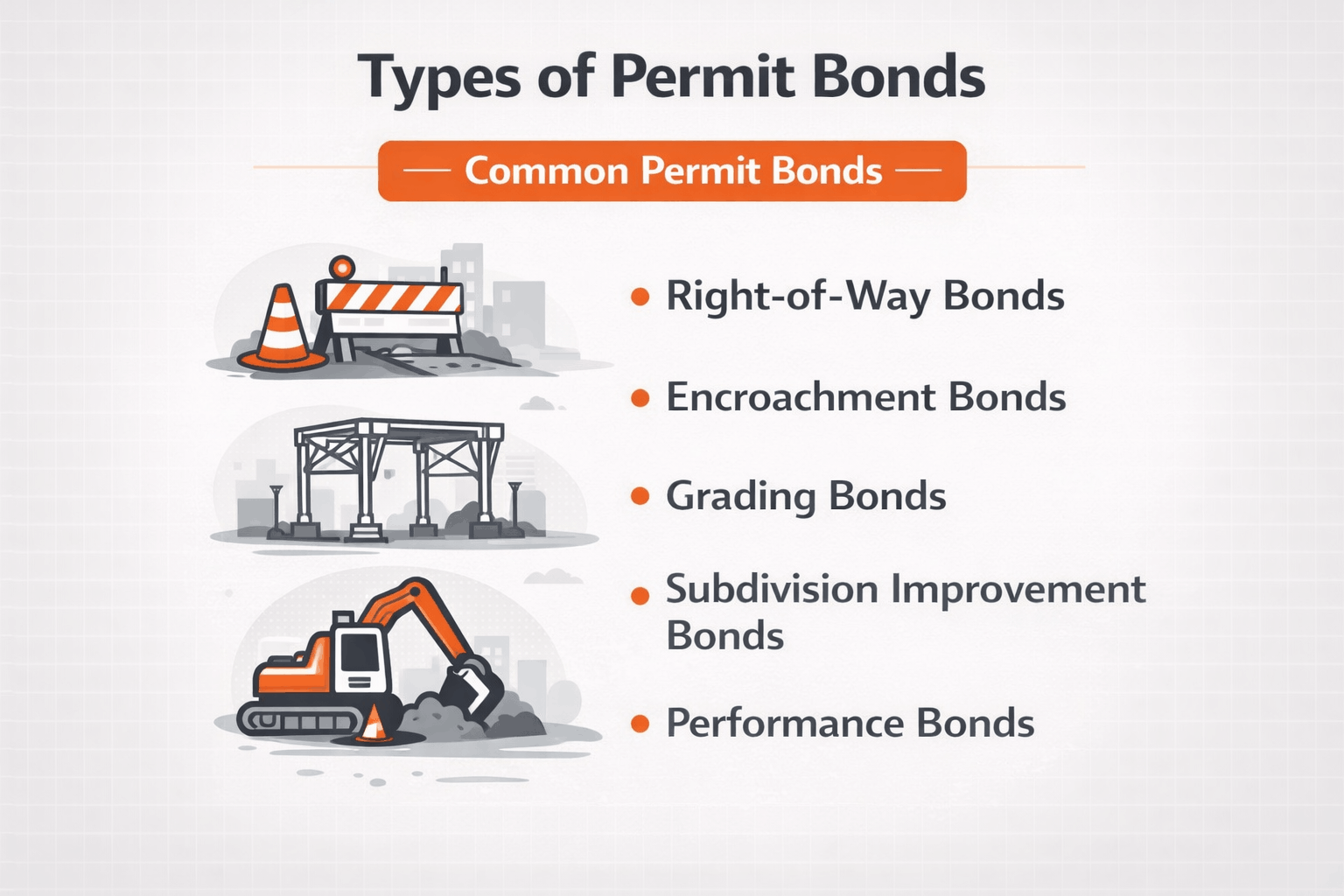
Types of Permit Bonds Required by Local Governments
Local governments use different types of permit bonds depending on the project. Each bond protects a specific type of public interest. Some bonds protect roads and utilities, while others ensure developers complete required improvements.
Understanding these bond types helps applicants prepare their permit applications correctly. It also reduces the risk of delays during project approval. Below are the most common permit bonds required by cities and counties.
Right-of-Way Permit Bonds
Right-of-way bonds are one of the most common permit bonding requirements. Cities require these bonds when construction work affects public streets, sidewalks, or curbs.
Contractors often need this bond when they install utilities, build driveways, or perform excavation near public roads. The bond guarantees that the contractor will restore the public area after the work is finished.
Typical projects that require right-of-way bonds include:
Driveway construction connecting to city streets
Utility installation under public roads
Sidewalk repairs or modifications
Sewer or drainage connections
If a contractor damages pavement, sidewalks, or curbs, the city may use the bond to cover repair costs. Right-of-way bonds help ensure public infrastructure remains safe and usable after construction work is complete.
Encroachment Permit Bonds
Encroachment permit bonds apply when private work temporarily uses public land or right-of-way space. Cities require these bonds to ensure the public area is returned to its original condition once the project is complete. Encroachments often occur during construction projects that extend slightly into public space.
Examples include:
Scaffolding over sidewalks
Outdoor dining structures
Temporary construction fencing
Building materials stored near public roads
An encroachment bond protects the city if the space is damaged or not restored properly. These bonds are common in dense urban areas where projects often interact with sidewalks and public streets.
Grading and Excavation Bonds
Grading and excavation bonds are common in land development projects. These bonds guarantee that contractors follow approved grading plans and environmental regulations.
Grading work changes the natural slope of the land. If done improperly, it can cause erosion, flooding, or drainage problems. Cities require bonds to make sure developers stabilize the soil and follow erosion control rules.
Projects that often require grading bonds include:
Residential developments
Commercial construction sites
Hillside property development
Large landscaping or earth-moving projects
The bond ensures that the contractor completes the grading work safely and according to the approved plan.
Subdivision Improvement Bonds
Subdivision improvement bonds are often required when developers build new residential communities or commercial developments.
Local governments require these bonds to guarantee that developers complete the required infrastructure for the project. These improvements often include public features that will eventually belong to the city.
Common improvements covered by subdivision bonds include:
Streets and roadways
Sidewalks and curbs
Drainage systems
Sewer and water lines
Street lighting
If the developer fails to complete these improvements, the city can claim the bond to fund the work. Subdivision bonds protect taxpayers by ensuring developers—not the city—pay for required infrastructure.
Performance Bonds for Permit Compliance
Some permits require performance bonds to ensure that the entire project follows the approved permit conditions. These bonds guarantee that the work will be completed according to city regulations, building codes, and approved plans.
Performance bonds may apply to:
Large construction projects
Infrastructure improvements
Public facility installations
If the contractor does not complete the project properly, the city may claim the bond and hire another contractor to finish the work. Performance bonds help maintain quality and accountability in large development projects.
Permit Bond Amounts and How They Are Calculated
Permit bond amounts vary widely depending on the project type and risk level. Smaller projects may require bonds of only a few thousand dollars, while major developments may require bonds worth hundreds of thousands.
Cities determine bond amounts based on the potential cost of repairing public property or completing unfinished work. Understanding how bond values are calculated helps applicants budget for project costs early.
Typical Permit Bond Amounts
Bond requirements vary from one city to another. However, some general ranges are common across many municipalities.
| Project Type | Typical Bond Amount |
|---|---|
| Small event permits | $1,000 – $10,000 |
| Minor construction permits | $5,000 – $25,000 |
| Right-of-way work | $10,000 – $50,000 |
| Large infrastructure projects | $50,000 – $500,000+ |
| Major development projects | $1 million or more |
Smaller projects usually require lower bond amounts because the potential risk to public infrastructure is limited. Large development projects require higher bond values because they involve extensive public improvements. Cities calculate these amounts carefully to make sure the bond can cover possible repair costs.
Factors That Determine Bond Value
Several factors influence the required bond amount. Cities review the details of each project before setting the bond value.
Key factors include:
The size of the construction project
The location of the work
Potential impact on roads or utilities
Environmental risk
Local permit regulations
Projects that involve heavy equipment, excavation, or public infrastructure usually require larger bonds. For example, installing underground utilities under a busy street carries more risk than installing a driveway on private property. Because of this higher risk, the city may require a larger bond.
Bond Premium Costs
The bond amount is not the same as the cost of the bond. Applicants do not pay the full bond value. Instead, they pay a premium, which is a small percentage of the bond amount. Most permit bond premiums fall between 1% and 5% of the total bond value.
The final premium depends on factors such as credit history, business experience, and project risk.
| Bond Amount | Typical Premium Range |
|---|---|
| $10,000 | $100 – $500 |
| $25,000 | $250 – $1,250 |
| $50,000 | $500 – $2,500 |
| $100,000 | $1,000 – $5,000 |
Applicants with strong credit and business history often qualify for lower premiums. Bonding companies evaluate risk before approving the bond. If the applicant has limited financial history or higher risk, the premium may increase. Planning for these costs early helps prevent unexpected expenses during the permit approval process.
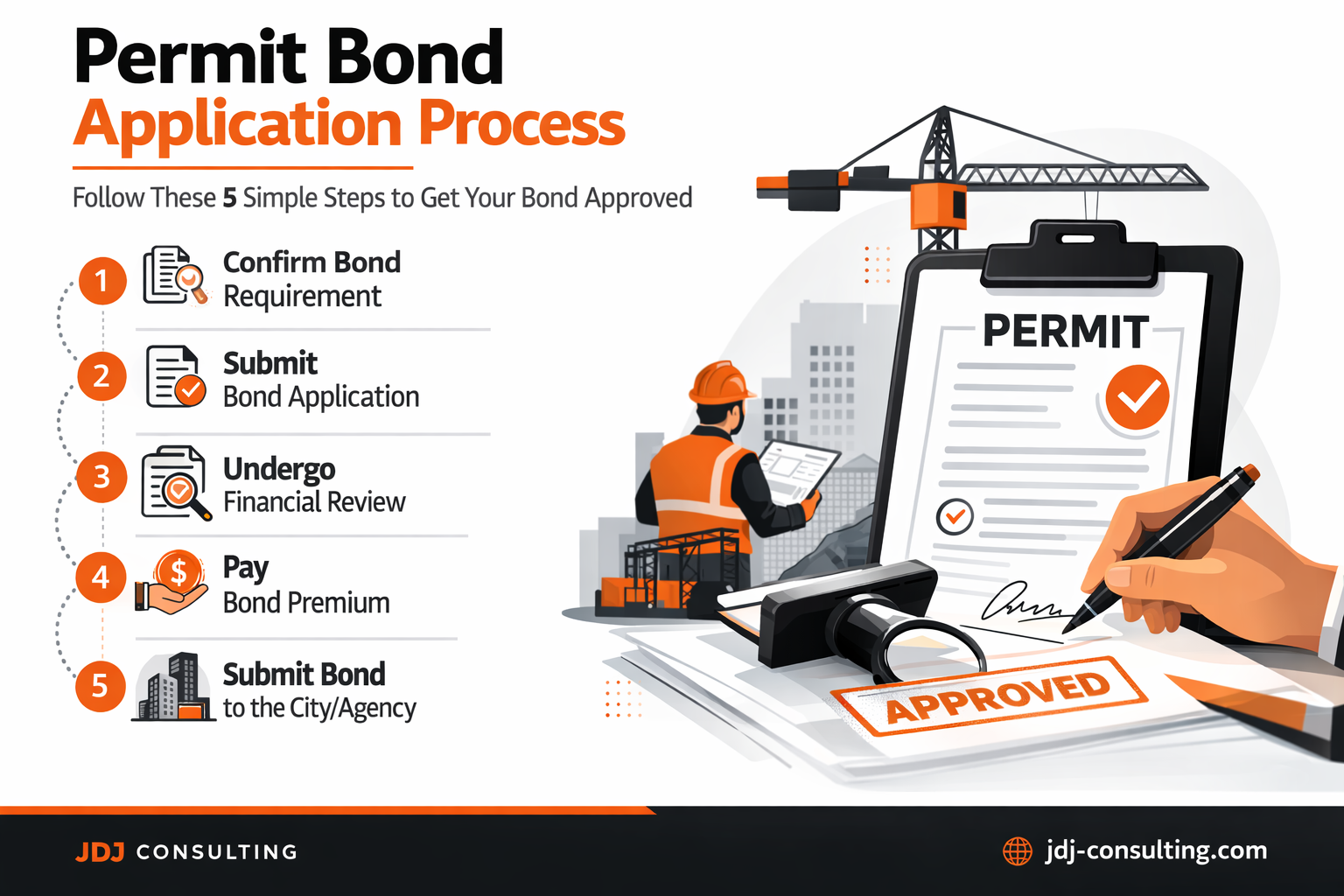
Permit Bond Application Process (Step-by-Step)
Obtaining a permit bond is usually a straightforward process. However, applicants must follow several steps before the city will accept the bond. Preparing the required documents and understanding the process can help avoid delays.
Below is a typical step-by-step process for obtaining a permit bond.
Step 1: Determine Bond Requirements
The first step is confirming whether the permit requires a bond.
Applicants should review the requirements with the local permitting authority. This may include the city planning department, building department, or permit office.
Key questions to ask include:
Is a bond required for this permit?
What type of bond is needed?
What bond amount must be submitted?
Which bonding companies are approved?
Getting this information early helps avoid problems later in the permit process.
Step 2: Submit a Bond Application
Once the bond requirement is confirmed, the applicant must submit a bond application to a bonding company. The application typically asks for basic business and project information.
Common information requested includes:
Business name and contact information
Contractor license number
Permit type and project description
Estimated project value
Location of the work
Bonding companies use this information to evaluate the level of risk associated with the bond.
Step 3: Credit and Financial Review
Before issuing the bond, the bonding company usually reviews the applicant’s financial background. This process helps determine whether the applicant is likely to meet the obligations of the bond.
The review may include:
Credit history
Financial stability
business experience
previous bonding history
Applicants with strong financial records usually receive faster approval and lower premiums.
Step 4: Pay the Bond Premium
After approval, the bonding company issues the bond once the premium is paid. The premium is the cost of the bond. As explained earlier, it is usually a small percentage of the total bond value. Most bonds can be issued quickly once payment is complete. In many cases, the process takes one to three business days.
Step 5: Submit the Bond to the Permit Authority
The final step is submitting the bond to the government agency issuing the permit. The agency will review the bond to confirm it meets the required format and amount. Once accepted, the permit process can move forward.
If the bond is incorrect or incomplete, the city may reject it and request corrections. This is why working with experienced permit professionals can help reduce delays.
Documents Required for Permit Bond Approval
Before a permit bond is issued, the bonding company and the city usually require supporting documents. These documents help verify the project details and confirm that the applicant meets the bonding requirements.
Preparing these materials early can save time during the permit process. Missing documents often cause delays, especially when cities review applications for construction or event permits.
Although requirements vary by city, most bonding companies request similar information.
Common Bond Documentation
Applicants must provide basic information about the project and the business responsible for the work.
Typical documents include:
Completed permit application
Business license or contractor license
Project plans or construction drawings
Site maps or property details
Government-issued identification
Proof of insurance coverage
Cities often review project plans carefully. These plans show how the work will affect nearby infrastructure and public areas.
For example, if a contractor plans to install a driveway that connects to a public road, the city may review the site plan to ensure the design meets local standards.
Submitting accurate documents helps the city verify that the project follows permit requirements.
Financial Documents Sometimes Required
Some bonds require additional financial information. This usually happens when the bond amount is large or the project involves higher risk. Bonding companies may review financial records to determine whether the applicant can handle the responsibilities of the bond.
Examples of financial documents include:
Credit reports
Business financial statements
Tax returns for the business
Personal financial statements for owners
Applicants with strong financial records usually receive faster approval. However, even applicants with limited credit history can often obtain permit bonds. The premium may simply be higher. Bonding companies evaluate each application based on overall risk rather than one single factor.
Event Permit Documentation
Permit bonds for special events often require additional paperwork. Event organizers must show that they have plans for safety, crowd management, and cleanup. Cities want to ensure that large gatherings do not damage public property or create safety risks.
Below are common documents required for event permits.
| Document | Purpose |
|---|---|
| Site layout plan | Shows stages, booths, and event areas |
| Vendor list | Identifies participating vendors |
| Waste management plan | Explains how the event area will be cleaned |
| Security plan | Describes crowd control and safety measures |
| Insurance certificate | Confirms liability coverage |
Providing these documents helps city officials evaluate whether the event can operate safely and responsibly. If the city believes the event may create risk to public spaces, it may require a bond before issuing the permit.
Common Mistakes That Delay Permit Bond Approval
Many permit applications face delays because bonding requirements are misunderstood or overlooked. Small mistakes in documentation or timing can slow down the entire approval process.
Understanding these common issues helps applicants avoid unnecessary problems.
Applying for Bonds Too Late
One of the most common mistakes is waiting too long to obtain the permit bond.
Some applicants submit permit paperwork first and only learn about the bond requirement later. This can delay approval while the bond is arranged.
Bonding is usually a quick process, but it still takes time for review and documentation. Applying for the bond early helps keep the permit process moving forward.
Incorrect Bond Amount
Cities often require a specific bond amount based on the permit type. Submitting a bond with the wrong value can lead to rejection. For example, a city might require a $25,000 right-of-way bond, but the applicant submits a $10,000 bond instead.
In this situation, the permit office will request a correction before continuing the approval process. Checking the bond amount carefully before submission prevents this issue.
Using a Non-Approved Surety Company
Some cities only accept bonds issued by approved surety companies. These companies must meet financial and licensing standards. If an applicant submits a bond from a non-approved provider, the city may reject the bond.
This mistake can delay permit approval while the applicant secures a new bond. Working with experienced bonding companies helps avoid this problem.
Incomplete Documentation
Permit applications often require several documents at the same time. If even one document is missing, the application may be placed on hold.
Common missing documents include:
incomplete permit applications
missing site plans
contractor license verification
insurance certificates
Cities review permit packages carefully. When documents are missing, the permit department usually sends a correction notice. Providing complete documentation from the beginning helps prevent these delays.
How Permit Expeditors Help With Bonding Requirements
Permit requirements can be complex. Each city has different regulations, documentation standards, and approval processes. Permit expediters help applicants manage these requirements and avoid delays.
Companies such as JDJ Consulting specialize in coordinating permit approvals and ensuring that all required documents—including bonds—are submitted correctly. Working with a permit expeditor can save time, especially for large projects or events with tight timelines.
Navigating Complex Local Regulations
Local permit rules often vary by city or county. Even similar projects may have different requirements depending on location.
Permit expediters stay familiar with local regulations and approval processes. They understand which permits require bonds and how those bonds must be submitted.
This knowledge helps prevent errors that could slow down the project.
Coordinating With Bonding Companies
Expediters often work directly with bonding providers. They can help applicants obtain the correct bond quickly.
This coordination reduces confusion about:
required bond types
approved bond formats
correct bond amounts
When these details are handled early, the permit review process usually moves faster.
Preventing Permit Delays
One of the main benefits of working with permit professionals is avoiding common delays.
Permit expediters help by:
reviewing permit requirements early
organizing required documents
confirming bonding requirements
communicating with permit offices
These steps reduce the risk of corrections or rejected applications. For developers, contractors, and event organizers, faster approvals can help projects stay on schedule.
Tips to Simplify Permit Bond Compliance
Permit bonding requirements may seem complicated at first. However, a few simple steps can make the process much easier. Planning ahead and understanding the requirements early helps prevent delays and unexpected costs.
Research Local Bonding Requirements Early
Each city has its own permit regulations. Bond requirements may vary even between nearby municipalities.
Before starting a project, review the permit guidelines provided by the city or county. This helps confirm whether a bond is required and what type of bond is needed.
Early research prevents surprises later in the approval process.
Budget for Bond Premiums in Advance
Although bond premiums are usually small compared to the bond value, they should still be included in the project budget. Contractors and event organizers often include bonding costs as part of their permit planning. Planning for these costs early helps avoid financial stress during the permit process.
Work With Experienced Permit Consultants
Permit consultants can simplify the entire process. They help applicants understand local requirements and prepare the correct documentation. Experienced consultants also communicate directly with permit offices, which can speed up approvals.
For projects involving construction, infrastructure work, or large public events, professional guidance can make the process much smoother.
Conclusion: Understanding Permit Bonding Requirements Saves Time and Money
Permit bonding requirements play an important role in many projects. They protect cities, public infrastructure, and communities from financial risk.
Construction work, public events, and certain licensed businesses often require bonds before permits are approved. Understanding these requirements helps applicants prepare the correct documentation and avoid delays.
Permit bonds may seem complex at first. However, the process becomes much easier when applicants understand the types of bonds, the costs involved, and the application steps.
Planning ahead, gathering the right documents, and confirming local regulations can help projects move forward smoothly.
For developers, contractors, and event organizers, meeting bonding requirements early is one of the best ways to keep permit approvals on schedule.
Need Help With Permit Bonding or Permit Approvals?
Permit requirements can sometimes feel overwhelming, especially when multiple approvals and documents are involved. That is where experienced permit professionals can make a difference.
At JDJ Consulting, we help developers, contractors, and business owners handle complex permitting processes more efficiently. Our team understands local permit procedures and works to ensure that applications, documentation, and bonding requirements are handled correctly from the start.
If you need assistance with permit approvals or understanding permit bonding requirements, our team is here to help.
Contact JDJ Consulting
- Phone: (818) 793-5058
- Email: sales@jdj-consulting.com
- Contact Page: https://jdj-consulting.com/book-consultation/
Reach out today to discuss your project and see how we can help simplify your permit process.
FAQs Permit Bonding Requirements
What is a permit bond and why is it required?
A permit bond is a type of surety bond required by many cities or government agencies before issuing certain permits. It guarantees that the permit holder will follow regulations and complete the approved work responsibly.
Local governments require permit bonds to protect public property and infrastructure. If the permit holder fails to follow the rules, the city can file a claim against the bond.
Common reasons permit bonds are required include:
Protecting roads, sidewalks, and utilities
Ensuring construction follows approved plans
Covering damage to public property
These bonds help reduce financial risk for municipalities.
Who needs a permit bond?
Permit bonds are required for many professionals and organizations that apply for government permits. The requirement depends on the type of project and local regulations.
Developers, contractors, and event organizers often need permit bonds before starting work or hosting an event. Businesses applying for certain licenses may also need them.
Common applicants include:
Construction contractors
Property developers
Utility installation companies
Event organizers hosting public gatherings
Cities use these bonds to ensure that permit holders follow regulations and complete projects properly.
How much does a permit bond cost?
The cost of a permit bond is called the bond premium. Applicants do not pay the full bond amount. Instead, they pay a small percentage of the bond value.
Most permit bond premiums range from 1% to 5% of the total bond amount. For example, a $25,000 bond may cost between $250 and $1,250 depending on the applicant’s credit and financial history.
Factors that affect bond cost include:
Credit score
Business experience
Project risk level
Stronger financial profiles usually receive lower premiums.
How long does it take to obtain a permit bond?
Most permit bonds can be issued quickly once the application is submitted. In many cases, the process takes one to three business days.
The timeline depends on the bond amount and the information required by the bonding company. Smaller bonds often require minimal documentation, while larger bonds may involve a financial review.
Typical steps include:
Completing a bond application
Reviewing credit and financial history
Paying the bond premium
Once approved, the bond is issued and submitted to the permit authority.
What happens if a claim is filed against a permit bond?
A claim occurs when the permit holder fails to meet the conditions of the permit. This might involve damage to public property or failure to complete the required work.
If the city files a claim, the bonding company investigates the situation. If the claim is valid, the surety may pay for damages or repairs.
However, unlike insurance, the permit holder must repay the surety for any claim payments.
This structure encourages contractors and businesses to follow permit requirements carefully.
What types of projects typically require permit bonds?
Permit bonds are most common for projects that affect public infrastructure or community safety. Cities require these bonds to ensure work is completed responsibly.
Examples of projects that may require permit bonds include:
Right-of-way construction projects
Utility installation or excavation work
Land grading and development
Public events such as festivals or parades
These bonds guarantee that the permit holder restores public areas and follows local regulations during the project.
What is the difference between a permit bond and a performance bond?
Permit bonds and performance bonds are both types of surety bonds, but they serve different purposes.
A permit bond guarantees that the permit holder follows local rules and permit conditions. It is usually required before a permit is issued.
A performance bond guarantees that a contractor will complete a project according to the contract terms.
Key differences include:
Permit bonds focus on regulatory compliance
Performance bonds focus on contract completion
Both bonds help protect public and financial interests.
Are permit bonds required for special events?
Yes, many cities require permit bonds for large public events. These bonds help protect public spaces and ensure event organizers follow local regulations.
Events that often require bonding include:
Festivals and fairs
Parades and races
Outdoor concerts
Events with street closures or large crowds
These bonds guarantee that organizers clean up the event area and repair any damage to city property.
Can a permit bond be rejected by the city?
Yes, a permit bond can be rejected if it does not meet the city’s requirements. This can delay permit approval until the correct bond is submitted.
Common reasons bonds are rejected include:
Incorrect bond amount
Missing signatures or documentation
Bonds issued by non-approved surety companies
To avoid these issues, applicants should confirm the bond requirements with the local permit office before submitting their bond.
How can permit expediters help with permit bonding requirements?
Permit expediters assist applicants with the entire permitting process, including bonding requirements. Their experience with local regulations helps reduce mistakes and delays.
Permit consultants often help with tasks such as:
Confirming bond requirements with city agencies
Coordinating with bonding companies
Preparing complete permit documentation
By organizing these steps early, expediters help developers, contractors, and event organizers obtain permits faster and keep projects on schedule.