
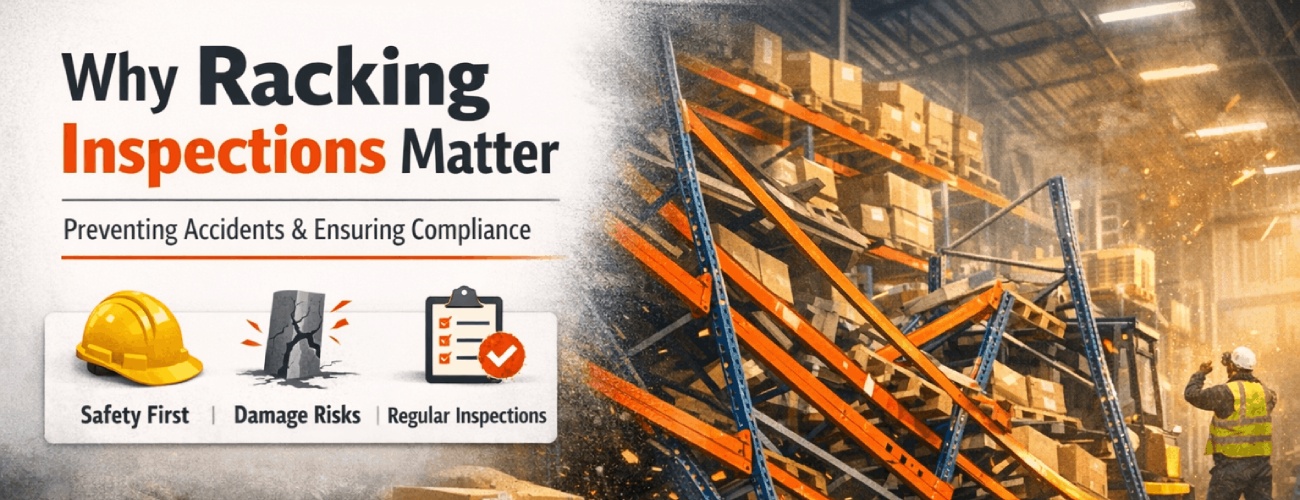
Warehouses rely on racking systems every day. These racks hold heavy pallets, equipment, and large amounts of inventory. When racks work properly, they help businesses store goods safely and keep operations organized.
However, damaged racks can become dangerous. A bent column or loose beam may look small at first. But over time, it can lead to a serious rack collapse. When that happens, workers can get hurt and inventory can be destroyed.
This is why racking inspection requirements exist. Inspections help businesses spot damage early and fix problems before they get worse.
Regular inspections also help warehouses stay compliant with safety rules. Workplace safety laws require employers to keep storage systems stable and secure. Fire codes and building codes may also apply to large racking systems.
Many companies only check racks when something breaks. That approach can lead to accidents and costly repairs. A better approach is to inspect racks regularly and keep maintenance records.
In this guide, we explain warehouse racking inspection requirements in simple terms. You will learn how rack inspections work, what inspectors look for, and how businesses can keep racks safe.
Table of Contents
What Are Warehouse Racking Systems?
Warehouse racking systems are storage structures used to hold palletized goods. These systems allow businesses to store products vertically instead of spreading them across the warehouse floor. Vertical storage helps warehouses save space. It also improves organization and inventory access.
Most racking systems are made from steel. They include upright frames, horizontal beams, braces, and base plates. These components work together to support heavy loads.
When installed correctly, racking systems can hold thousands of pounds. However, racks must stay stable and balanced. If one component fails, the whole structure can weaken. Because racks carry heavy weight, they must be maintained and inspected regularly.
Types of Industrial Racking Systems Used in Warehouses
Not all racks are the same. Warehouses use different rack designs based on their storage needs.
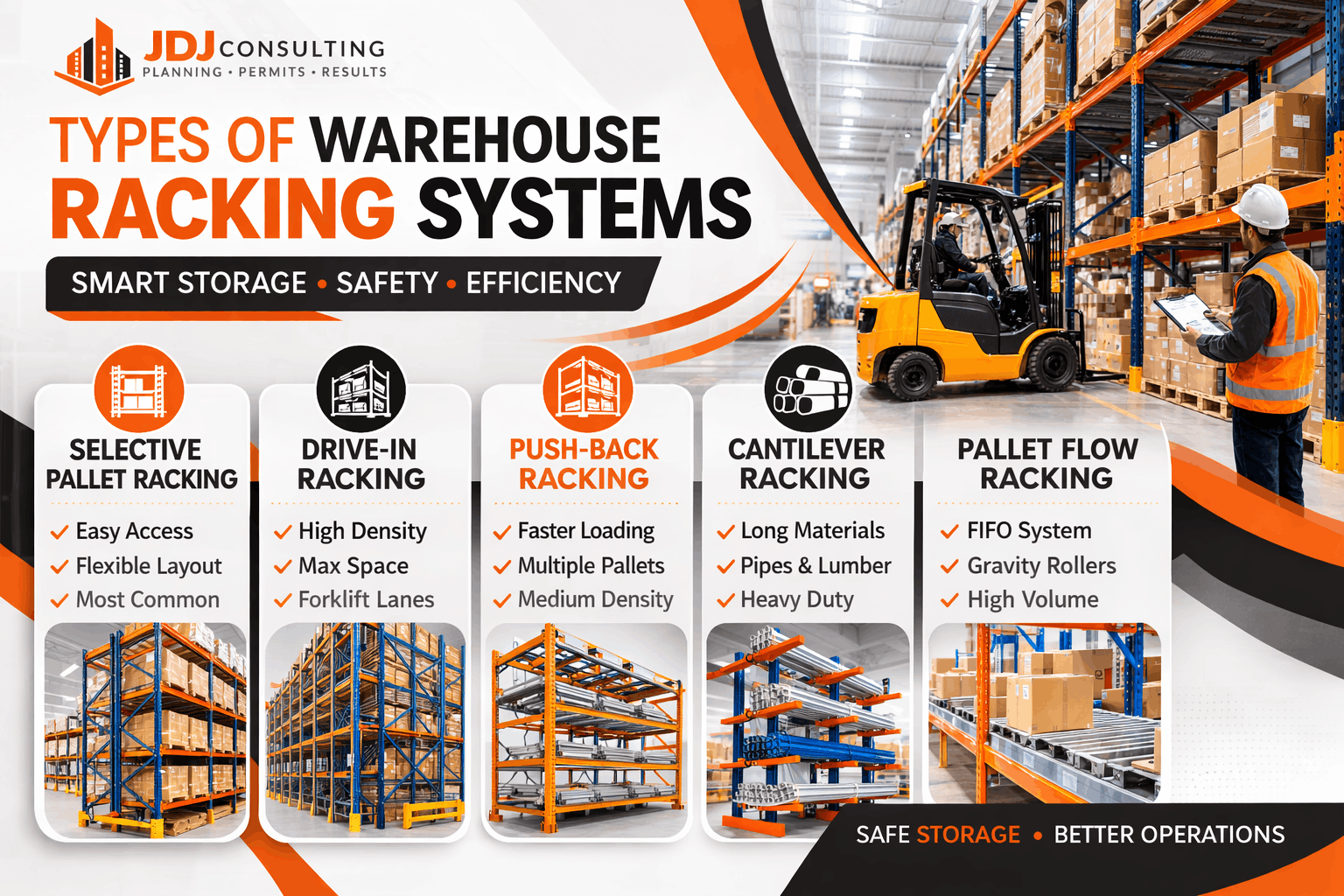
Below are some common warehouse racking systems.
| Racking Type | Best Use | Key Benefit |
|---|---|---|
| Selective Pallet Racking | General storage | Easy access to pallets |
| Drive-In Racking | High density storage | Saves floor space |
| Push-Back Racking | Medium density storage | Faster pallet loading |
| Cantilever Racking | Long materials | Ideal for pipes and lumber |
| Pallet Flow Racking | High volume goods | Supports FIFO inventory |
- Selective pallet racks are the most common. Each pallet is easy to reach with a forklift. This makes them ideal for distribution centers.
- Drive-in racks focus on storage density. Forklifts enter the rack structure to place pallets. This reduces aisle space and increases storage capacity.
- Cantilever racks store long items such as lumber, pipes, or steel bars. Instead of beams, they use arms that extend outward.
Each rack type has different structural features. Because of this, inspection procedures may vary.
Why Racking Systems Need Regular Inspections
Warehouse racks deal with constant pressure. Forklifts move around them all day. Pallets are loaded and unloaded repeatedly. Over time, these activities can cause damage.
Small issues often go unnoticed. But even minor damage can weaken a rack.
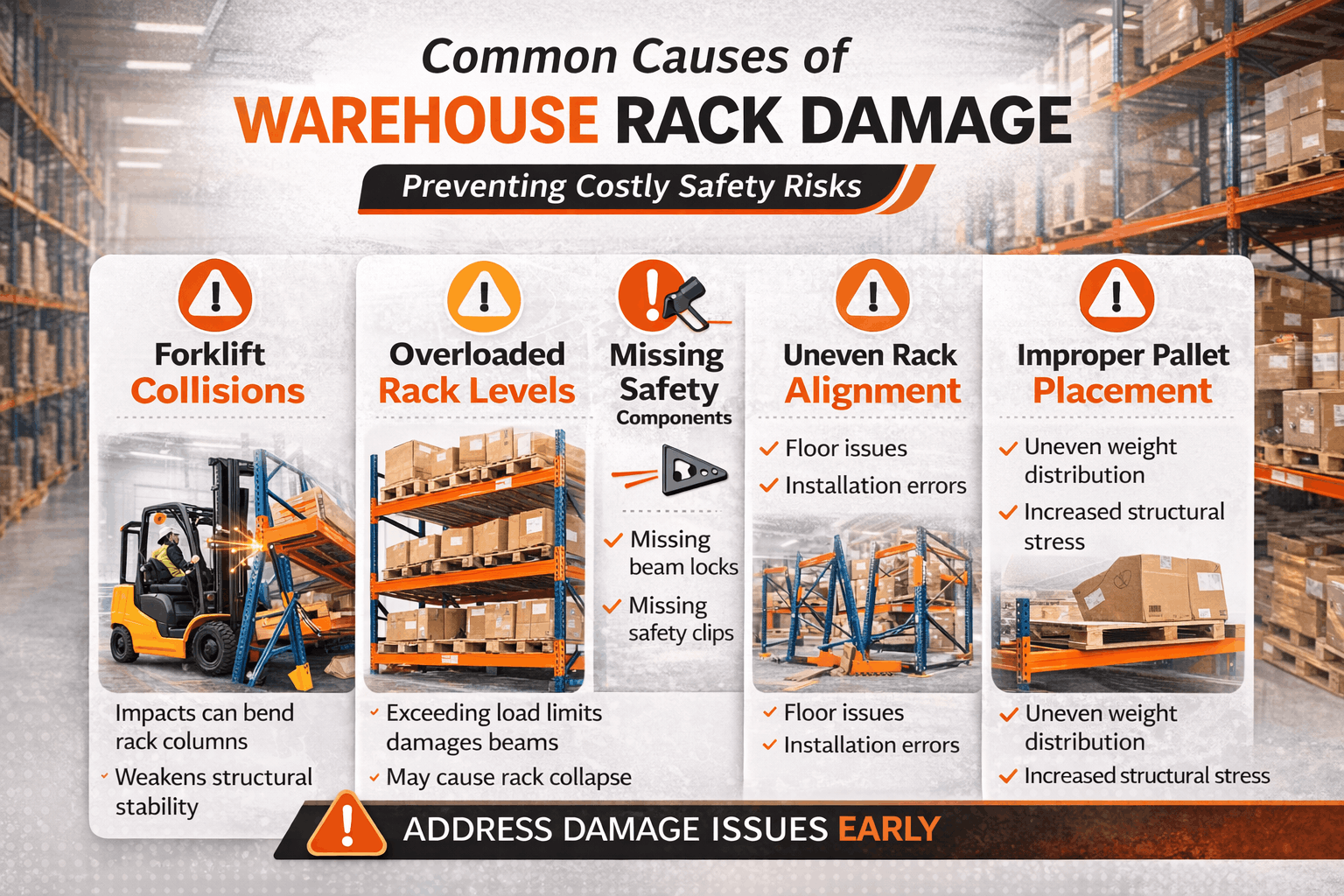
Common problems include:
Forklift collisions with rack columns
Bent or dented upright frames
Overloaded pallet levels
Missing safety clips
Loose floor anchors
Uneven rack alignment
Forklift impact is one of the biggest causes of rack damage. A small hit may bend a column slightly. Even a small bend can reduce the rack’s load capacity. Overloading racks is another common issue. When workers place too much weight on a beam level, the beam may start to bend.
Improper pallet placement can also cause uneven weight distribution. When loads are unbalanced, the rack structure becomes unstable. Regular inspections help catch these problems early. Fixing a small issue is always easier than dealing with a rack collapse.
Understanding Racking Inspection Requirements
Racking inspection requirements help protect workers and inventory. They ensure storage systems remain safe and stable.
Most inspection rules focus on three main areas:
workplace safety regulations
structural integrity
fire protection standards
Warehouses that follow these rules reduce the risk of accidents and equipment damage.
OSHA Safety Expectations for Warehouse Racking
Workplace safety regulations require employers to maintain safe storage systems. While there is no single OSHA rule just for pallet racks, general safety standards still apply. These rules focus on safe material storage.
Warehouse operators must ensure that racks:
remain stable and secure
support stored loads safely
do not create falling hazards
stay properly maintained
Damaged racks must be repaired or replaced quickly. Inspectors may also check whether racks are overloaded. If racks exceed their weight limits, they can become unstable.
Another common issue is blocked aisles. Workers must have clear paths to move safely through the warehouse. Regular inspections help businesses stay compliant with these safety expectations.
Industry Standards for Storage Rack Inspections
Many warehouses follow standards created by rack manufacturers and safety organizations. These guidelines explain how racks should be designed, installed, and inspected.
One widely used standard comes from the Rack Manufacturers Institute (RMI). Their guidelines help engineers design safe pallet racking systems.
Inspection programs based on industry standards usually check:
upright column damage
beam deflection
missing safety locks
anchor bolt condition
rack alignment
Inspections can be performed by trained staff or professional inspectors.
Many companies follow a three-level inspection approach:
daily visual checks
monthly safety reviews
annual professional inspections
This layered approach helps detect damage early.
Local Building Codes and Permit Requirements
In many cities, pallet racks must also meet local building codes. These rules often apply when racks reach certain heights or storage capacities. Some cities require permits before large racking systems can be installed.
Building departments may review:
rack design plans
structural engineering documents
anchoring systems
fire safety clearance
Fire departments may also review high-pile storage areas. These inspections help ensure sprinkler systems can control warehouse fires. Because local rules vary, businesses often need help managing permits and inspections.
Permit expediters help companies prepare documents, submit applications, and schedule inspections with local authorities. Handling these requirements correctly can prevent delays during warehouse construction or expansion.
Fire Code Requirements for Warehouse Racking Systems
Fire safety is a major concern in warehouses. Large storage racks can hold thousands of products, and many of those materials are combustible. If a fire starts, stacked inventory can make it spread faster. Because of this risk, fire codes regulate how warehouse racking systems are installed and used.
Fire safety rules usually focus on three areas:
sprinkler system access
storage height limits
rack spacing and aisle clearance
These rules help firefighters control fires more effectively. They also reduce the risk of large warehouse fires that damage buildings and inventory.
Most warehouse fire protection rules come from national fire safety standards. Local fire departments often enforce these rules during inspections. Businesses that install large racking systems must ensure they follow these fire safety requirements.
NFPA Fire Safety Standards for Storage Racks
Many fire safety rules for warehouses come from standards developed by the National Fire Protection Association (NFPA). These standards help engineers design safe storage systems. One of the most important standards is NFPA 13, which covers fire sprinkler systems.
This standard explains how sprinkler systems must work inside warehouses with pallet racks. The goal is to make sure water can reach stored materials quickly during a fire.
NFPA guidelines often address:
sprinkler placement above racks
water flow requirements
rack storage height
aisle spacing between racks
When racks block sprinkler coverage, fires can grow quickly. That is why warehouses must maintain proper clearance between stored goods and sprinkler heads. Fire inspectors often check these clearances during safety inspections.
Clearance Requirements for Pallet Racks
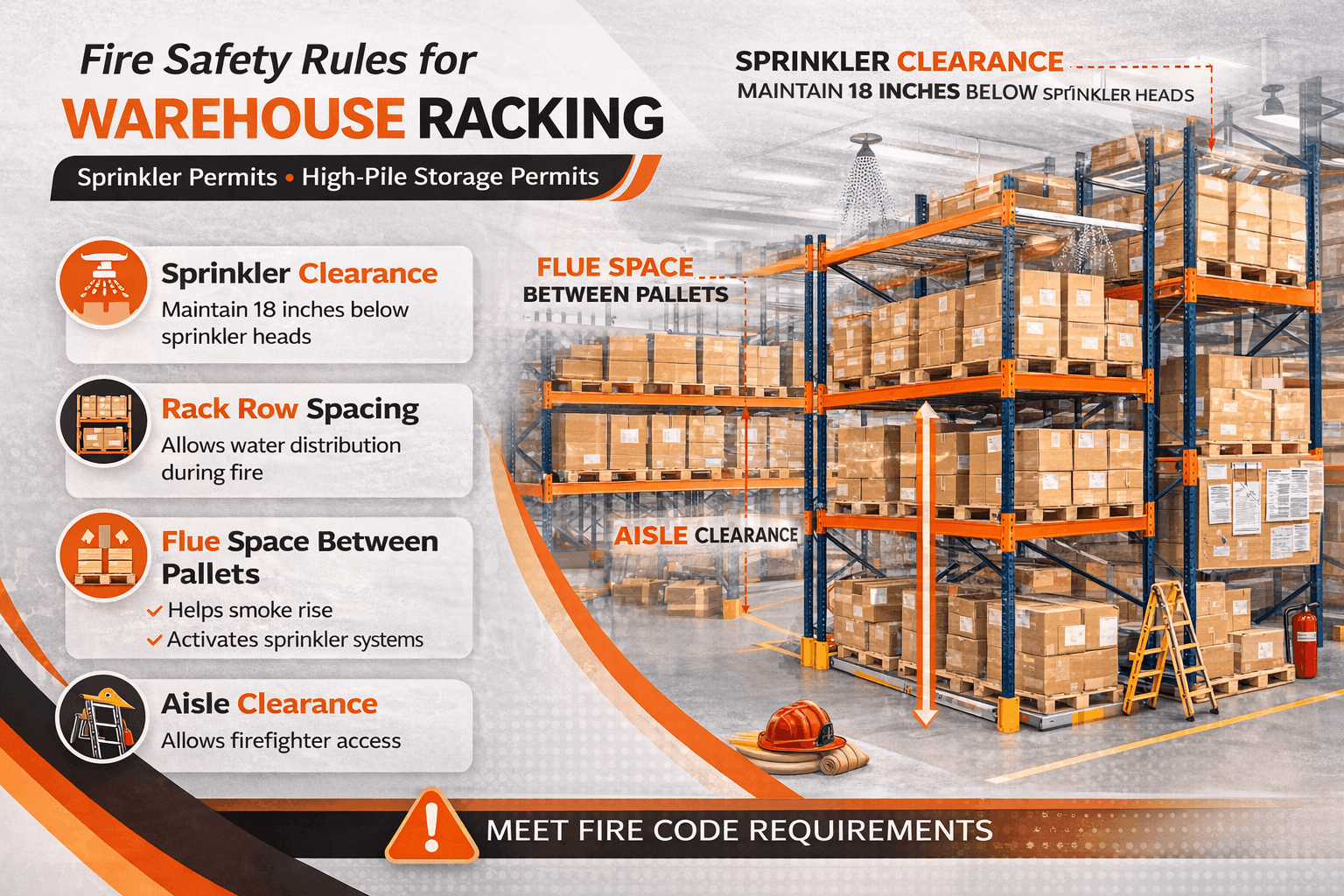
One of the most important fire safety rules is maintaining clearance below sprinkler heads. If pallets are stacked too high, they can block sprinkler water from spreading properly.
Most fire safety guidelines recommend maintaining at least 18 inches of space between stored goods and sprinkler heads.
This space allows water to spread evenly during a fire.
Other clearance rules may include:
space between rack rows
flue space between pallets
aisle width requirements
Flue spaces are small vertical gaps between pallet loads. These gaps allow heat and smoke to rise so sprinkler systems can activate properly.
If these spaces are blocked, fire suppression systems may not work effectively. Warehouse operators should regularly check these clearances as part of their inspection process.
High-Pile Storage and Fire Department Inspections
Some warehouses store products at very high levels. This type of storage is called high-pile storage. High-pile storage often requires special permits and fire department approval.
These inspections may evaluate:
storage height
type of stored materials
sprinkler system coverage
rack layout design
If the warehouse stores hazardous materials or combustible products, additional safety requirements may apply. Fire inspectors may also check whether aisles remain clear for emergency access.
Failing to meet these requirements can lead to fines or operational restrictions. Regular inspections help warehouse operators ensure that racks remain compliant with fire safety rules.
How Often Should Racking Inspections Be Conducted?
Many warehouse operators ask the same question: how often should racks be inspected? The answer depends on the size of the warehouse, the type of storage system, and daily activity levels.
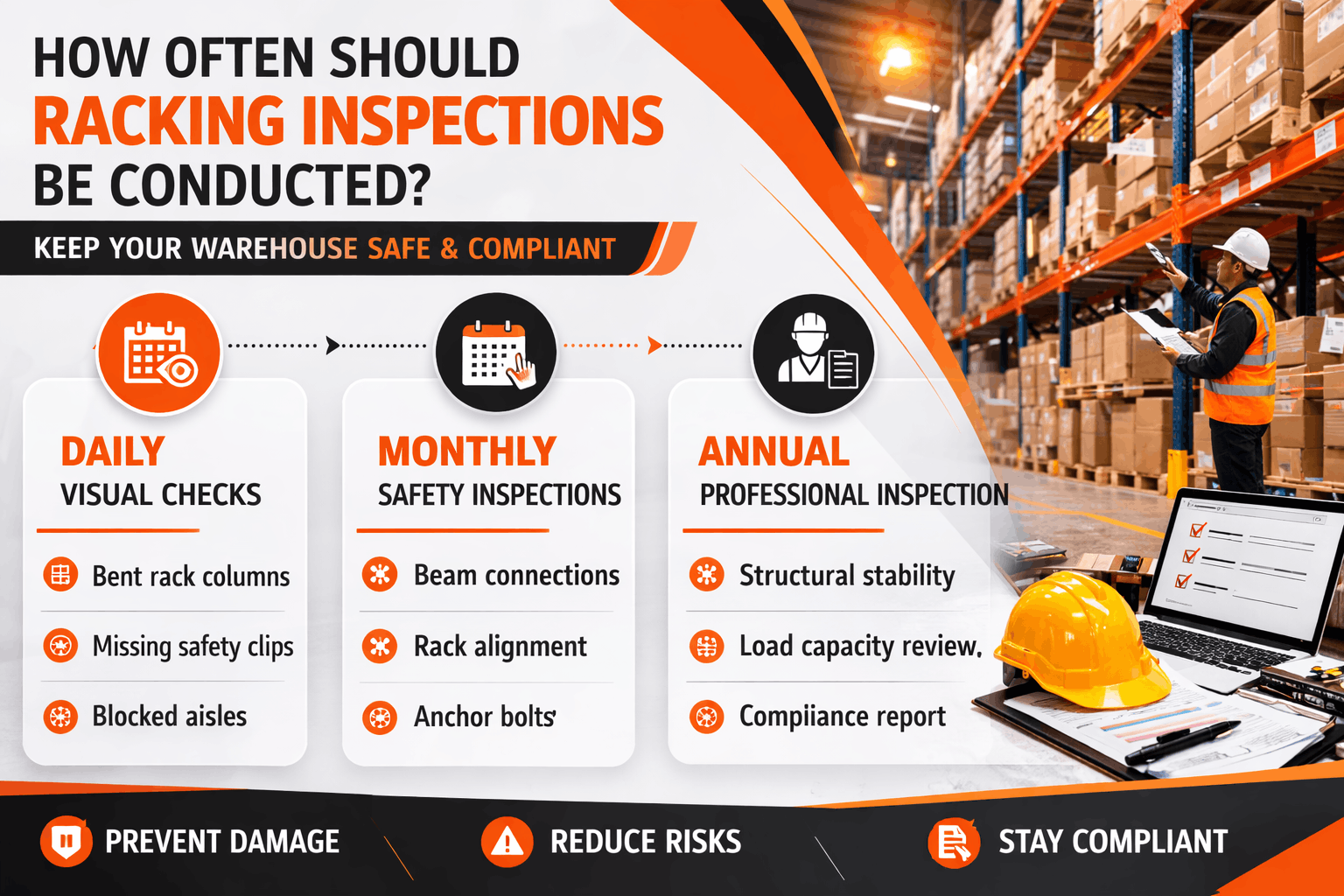
However, most safety programs follow a three-level inspection schedule:
daily visual inspections
periodic internal inspections
annual professional inspections
This layered approach helps businesses detect damage early and prevent serious safety problems.
Daily Visual Inspections by Warehouse Staff
Daily inspections are the first line of defense. These checks are usually done by warehouse workers or supervisors while performing normal tasks. The goal is to quickly spot obvious problems.
Daily inspections should look for:
bent rack columns
loose beams
missing safety clips
damaged pallets
blocked aisles
Workers should also watch for racks that appear tilted or unstable. If a problem is found, the damaged rack should be reported immediately. In some cases, the rack section may need to be unloaded until repairs are completed.
Daily checks only take a few minutes, but they can prevent serious accidents.
Monthly Internal Safety Inspections
Monthly inspections go deeper than daily checks. These inspections are usually performed by warehouse safety managers or maintenance staff. During a monthly inspection, teams review the structural condition of the racks.
They may check:
upright frame damage
beam connections
floor anchor bolts
rack alignment
load capacity labels
This inspection also ensures that racks are being used correctly. For example, inspectors may verify that pallets are evenly placed and that loads do not exceed rack capacity.
Documentation is also important during these inspections. Keeping records helps businesses track damage patterns and maintenance history.
Annual Professional Rack Inspections
Most safety experts recommend a professional rack inspection at least once per year. These inspections are typically performed by qualified rack inspectors, engineers, or safety consultants.
Professional inspectors examine the rack system in detail. They may use specialized tools to measure rack alignment and beam deflection.
Annual inspections often review:
structural stability of racks
damage to columns and beams
compliance with safety standards
overall rack system design
Inspectors may also recommend repairs or upgrades if they find safety risks. Professional inspections provide an extra layer of protection. They help ensure the warehouse meets safety standards and reduces liability risks.
What Inspectors Look for During a Rack Inspection
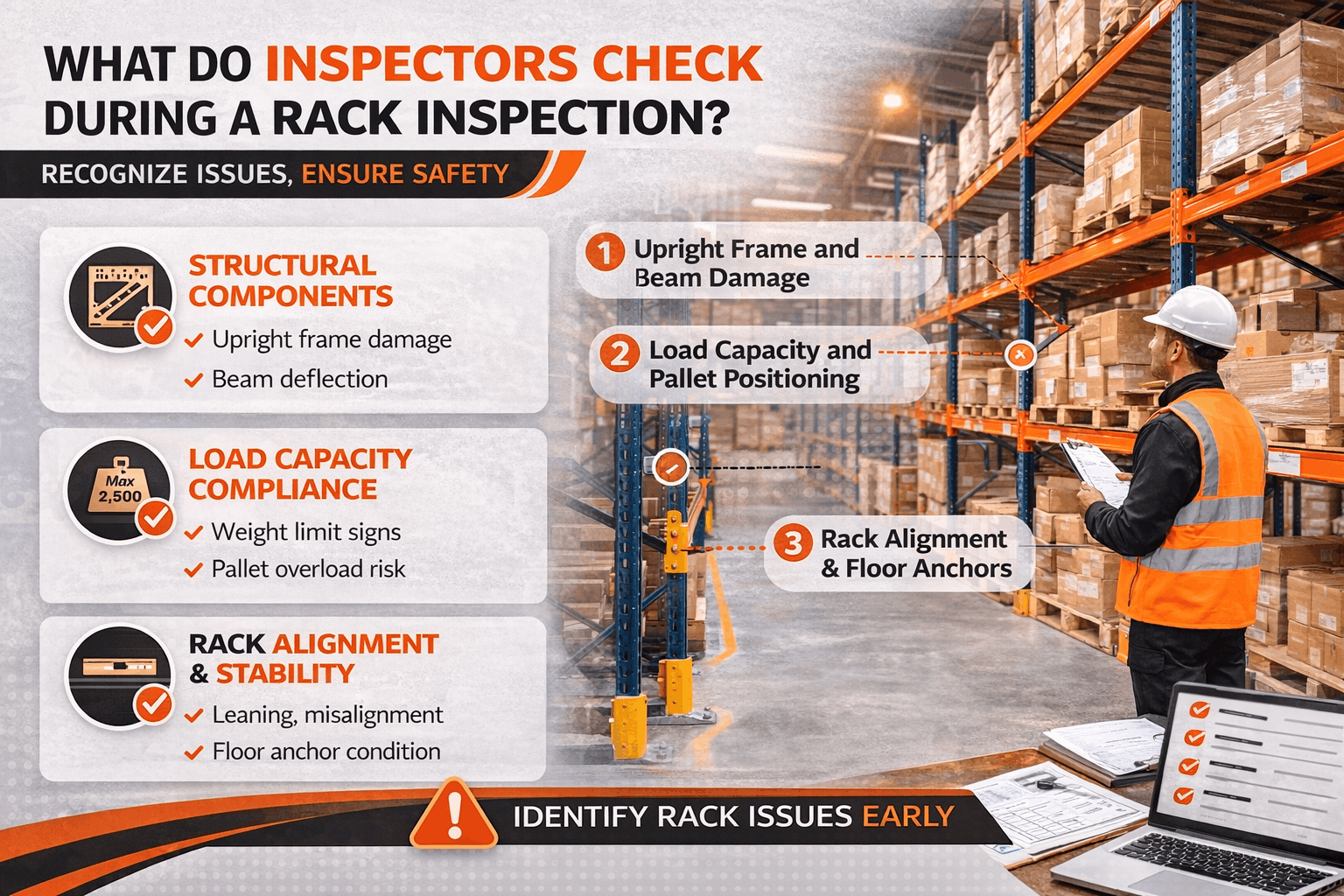
During a rack inspection, inspectors examine several structural and safety components. The goal is to identify damage that could weaken the rack system.
Inspections usually focus on three key areas:
structural components
load capacity compliance
rack stability
Understanding these inspection points helps warehouse operators maintain safer storage systems.
Structural Components
Inspectors first review the main structural parts of the rack system. These components carry the weight of stored inventory.
Key components inspected include:
upright frames
horizontal beams
cross braces
base plates
Inspectors check for bending, cracks, or dents in these components. Even small damage can reduce the strength of the rack.
Load Capacity and Safety Labels
Every rack system has a maximum weight limit. These limits are usually displayed on load capacity signs. Inspectors verify that these labels are visible and accurate. They may also check whether workers are placing too much weight on rack levels.
Below is a simple example of how load limits may appear on warehouse racks.
| Rack Level | Maximum Load Capacity |
|---|---|
| Level 1 | 4,000 lbs |
| Level 2 | 3,500 lbs |
| Level 3 | 3,000 lbs |
| Level 4 | 2,500 lbs |
If loads exceed these limits, the rack may bend or collapse. Proper labeling helps workers follow safe loading practices.
Rack Alignment and Stability
Inspectors also examine rack alignment. Over time, racks may shift or lean due to impact damage or uneven floors.
Signs of alignment problems include:
leaning racks
misaligned frames
loose floor anchors
If racks are not anchored properly, they may tip during heavy loading. Inspectors also check whether safety components are in place. These include beam locks, safety clips, and protective guards.
When these parts are missing, the rack system becomes more vulnerable to collapse. Routine inspections help warehouses detect these problems early and maintain a safe working environment.
Common Warehouse Racking Problems Found During Inspections
Even well-maintained warehouses can develop rack damage over time. Forklifts move constantly, pallets shift, and heavy loads stress the rack structure. Because of this, inspectors often find similar problems during rack inspections.
Some issues appear small at first. However, they can weaken the structure if they are ignored. Understanding common rack problems helps warehouse managers fix issues early and prevent larger safety risks.
Forklift Impact Damage
Forklifts are one of the main causes of rack damage. Operators often work in tight aisles, and even a small mistake can lead to a collision.
When a forklift hits a rack column, the steel may bend or dent. This reduces the rack’s strength. Even a small bend can lower the load capacity of the rack.
Common signs of forklift damage include:
bent upright frames
scratched or dented columns
cracked base plates
shifted rack alignment
To reduce this risk, many warehouses install rack column guards or protective barriers. These guards absorb impact and protect the structural frame. Training forklift operators is also important. Skilled drivers are less likely to strike racks during daily operations.
Overloaded Pallet Racks
Another common problem is overloading. Each rack level has a maximum weight capacity. When workers exceed this limit, the beams can start to bend.
Overloading often happens when warehouses add more inventory but forget to update rack load limits.
Warning signs of overloaded racks include:
beams that appear curved or sagging
pallets hanging over beam edges
uneven weight distribution
When inspectors find overloaded racks, the safest action is to remove excess weight immediately. The rack may also need repair or reinforcement.
Missing Safety Pins or Beam Locks
Safety pins and beam locks keep rack beams secured to upright frames. These small components prevent beams from lifting out of place when forklifts move pallets.
Sometimes these pins fall out during loading or maintenance work. When this happens, the beam connection becomes weak. Without safety locks, a beam can dislodge and cause pallets to fall. Inspectors usually check every rack level to confirm that these components are present and secure.
Poor Rack Installation
Improper installation can create problems from the start. If racks are not installed correctly, they may lean, shift, or carry loads unevenly.
Some common installation issues include:
racks not anchored to the floor
uneven floor surfaces
incorrect beam spacing
misaligned frames
Professional installation helps prevent these issues. Engineers and installers ensure that racks meet structural standards and load requirements. If inspectors find installation problems, the rack system may need adjustment or reinforcement.
Warehouse Racking Inspection Checklist
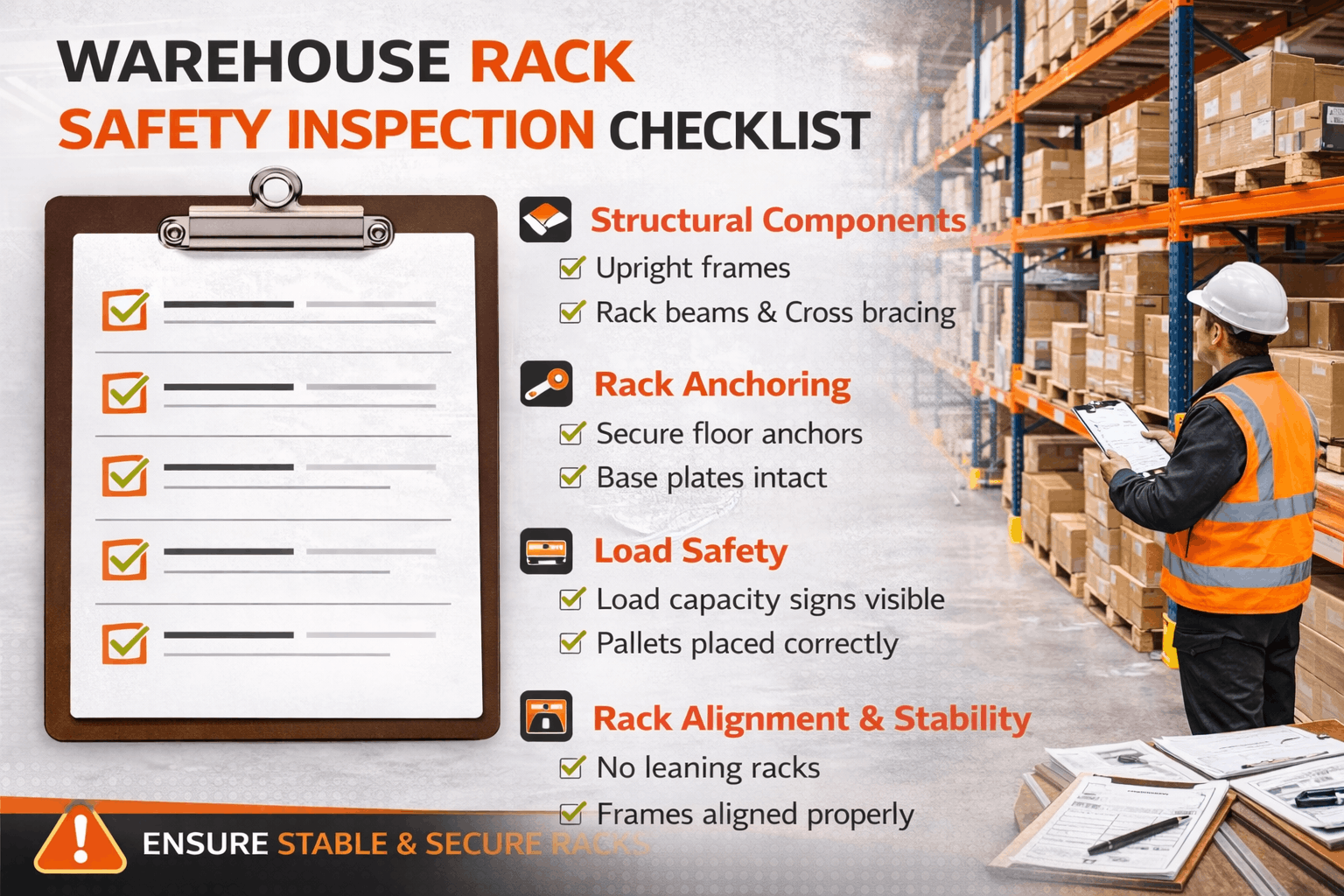
Inspection checklists help warehouses maintain consistent safety reviews. They guide inspectors through each step of the process and ensure that important components are not overlooked.
Most rack inspection checklists focus on structural integrity, safety features, and storage practices. A good checklist helps warehouse teams identify damage quickly and document inspection results.
Below is an example of a basic rack inspection checklist.
| Inspection Area | What to Check | Risk Level |
|---|---|---|
| Upright Frames | Bent or dented columns | High |
| Beams | Cracks, bending, or loose connections | High |
| Anchor Bolts | Secure attachment to floor | High |
| Safety Clips | Properly installed on beams | Medium |
| Load Labels | Visible and accurate | Medium |
| Aisles | Clear and safe for forklift travel | Medium |
Inspectors should also take photos when they find damage. Documentation helps maintenance teams repair problems quickly.
Structural Inspection Steps
During a structural inspection, the inspector reviews all major rack components.
This includes:
upright columns
horizontal beams
cross bracing
base plates
Inspectors check for bending, corrosion, or cracks in the steel structure. If damage is found, the rack section may need to be unloaded until repairs are completed.
Storage and Load Checks
Inspectors also review how pallets are stored on the racks. Proper pallet placement is critical for rack stability.
During this step, inspectors check for:
pallets placed evenly on beams
loads within weight limits
no pallets hanging over rack edges
stable stacking of products
Improper pallet placement can shift weight unevenly and create structural stress.
Safety Equipment Review
Safety equipment helps protect racks from damage.
Inspectors often check whether the warehouse uses protective devices such as:
rack column guards
end-of-aisle barriers
pallet stops
safety netting
These safety features reduce the chance of accidents and rack collapses. A strong inspection checklist helps warehouse teams keep racks safe and organized.
Who Can Perform a Warehouse Rack Inspection?
Rack inspections can be performed by different people depending on the type of inspection. Some inspections are handled internally by warehouse staff. Others require experienced inspectors or engineers. Using the right inspection process helps ensure accurate results.
Internal Safety Teams
Many warehouses rely on internal safety teams for routine inspections. These inspections usually include daily checks and monthly reviews. Warehouse supervisors or safety managers may perform these inspections. They are familiar with the facility layout and understand how racks are used.
Internal inspections often focus on:
visible rack damage
loading practices
aisle safety
missing safety components
While these inspections are important, they may not detect deeper structural issues.
Certified Rack Inspectors
Professional rack inspectors provide more detailed evaluations. These inspectors are trained to assess rack systems and identify structural risks.
Professional inspections often include:
rack alignment measurements
beam deflection checks
load capacity evaluation
structural damage assessment
Some warehouses hire third-party inspection companies to perform these evaluations. Professional inspections are usually recommended once per year.
Fire and Building Inspectors
In some cases, government inspectors may also review warehouse racking systems. Building departments and fire departments often inspect racks when warehouses install new storage systems.
These inspections may review:
rack height limits
fire sprinkler clearance
structural permits
warehouse layout plans
If racks do not meet code requirements, the business may need to make adjustments before the facility can operate.
Working with experienced permit specialists can make this process easier. They help businesses prepare documentation, submit plans, and schedule required inspections.
Proper inspections protect workers, inventory, and the entire warehouse operation.
Why Racking Inspections Matter for Compliance and Liability
Racking inspections are not just a safety task. They also protect businesses from legal and financial problems. When racks fail, the results can be serious. Workers may get injured. Inventory can be destroyed. In some cases, an entire warehouse section may shut down.
Regular inspections help prevent these situations. They also show that a business is taking safety seriously. Companies that inspect their racks regularly reduce risk, protect employees, and avoid costly disruptions.
Worker Safety and Workplace Compliance
Worker safety is the main reason for rack inspections. Warehouse employees work around heavy inventory every day. If racks become unstable, falling materials can cause serious injuries.
Safety inspections help identify problems before accidents happen.
Common safety risks inspectors look for include:
damaged rack frames
overloaded storage levels
unstable pallets
blocked aisles
Employers are responsible for providing a safe workplace. Regular inspections help ensure that storage systems remain safe for employees.
Preventing Rack Collapse
Rack collapse is one of the most dangerous warehouse incidents. When one rack fails, it can trigger a chain reaction. Adjacent racks may also collapse under the sudden shift of weight. This type of failure can damage large areas of a warehouse.
Several issues can lead to rack collapse, including:
structural damage
overloaded storage levels
missing safety components
improper installation
Inspections help detect these risks early. Repairing a damaged rack beam is much easier than dealing with a full rack failure.
Insurance and Legal Protection
Many insurance providers expect warehouses to follow safety standards. Regular inspections show that a business is maintaining its storage systems properly. If an accident happens, inspection records can also help protect the business legally.
Without inspection records, companies may face:
insurance claim disputes
regulatory penalties
lawsuits
operational shutdowns
Keeping inspection reports and maintenance logs helps demonstrate that the warehouse follows responsible safety practices.
How Permit Expediters Help With Warehouse Compliance
Large warehouse storage systems often require permits and code approvals. This is especially true when racks exceed certain heights or when buildings store large amounts of inventory.
Permit expediters help businesses manage this process. They work with building departments, fire departments, and engineers to ensure that warehouse projects meet local requirements.
Permits Required for Warehouse Racking Systems
Some cities require permits before pallet racking systems can be installed. These permits help ensure the rack system is structurally safe and meets fire protection standards.
Permit requirements may apply to:
new rack installations
warehouse expansions
high-pile storage systems
structural modifications
During the permit process, building officials may review engineering plans and storage layouts. These reviews ensure that racks can safely support stored materials.
Coordinating Inspections and Code Approvals
Permit expediters also help coordinate inspections during construction or installation. This process may involve several steps.
For example:
submitting engineering plans
communicating with building departments
scheduling inspections
addressing correction notices
Managing these steps alone can take time. Permit specialists help move the process forward and prevent delays. They also ensure that projects follow local codes and regulations.
How JDJ Consulting Helps Simplify the Process
Managing permits and inspections can be complicated, especially for large commercial projects. This is where professional permit consulting services can help.
Permit specialists assist businesses by:
preparing permit applications
coordinating with city agencies
managing plan submissions
scheduling required inspections
This support helps projects move faster and reduces administrative work for businesses. When warehouse projects involve new racking systems or building modifications, permit professionals help ensure everything stays compliant.
Contact our consultants for free consultation today! We serve residential and commercial clients in Miami, Austin, and Los Angeles.
- Phone number (818) 793-5058
- Email: sales@jdj-consulting.com
- Contact page: https://jdj-consulting.com/book-consultation/
Best Practices to Maintain Safe Warehouse Racking Systems
Maintaining safe racking systems requires more than occasional inspections. Warehouses should follow consistent safety practices to prevent damage and maintain compliance. Simple daily habits can make a big difference in rack safety.
Train Employees on Proper Loading
Employees should understand how to place pallets correctly on racks. Proper loading reduces uneven weight distribution and structural stress.
Training should cover:
correct pallet placement
maximum weight limits
safe forklift operation
reporting rack damage
Well-trained workers help prevent many common rack problems.
Implement Routine Inspection Programs
Regular inspections help detect problems early. Most warehouses benefit from a layered inspection system.
This usually includes:
daily visual checks
monthly safety inspections
annual professional evaluations
Routine inspections allow maintenance teams to repair issues before they become serious.
Maintain Clear Aisles and Safe Work Areas
Clean and organized aisles improve warehouse safety. Blocked aisles can increase the risk of forklift collisions with racks.
Warehouses should maintain:
clear forklift paths
proper aisle spacing
good lighting
visible safety markings
These simple steps reduce the chance of accidents.
Keep Inspection Records and Maintenance Logs
Documentation is an important part of rack safety programs. Inspection records help track damage, repairs, and maintenance activities.
A simple inspection log may include the following information.
| Inspection Date | Inspector | Issue Found | Action Taken |
|---|---|---|---|
| March 3 | Safety Manager | Bent beam | Beam replaced |
| March 15 | Warehouse Supervisor | Missing safety clip | Clip installed |
| April 2 | External Inspector | Loose anchor bolts | Bolts tightened |
Keeping records also helps businesses demonstrate compliance during safety inspections.
Conclusion
Warehouse racking systems play a major role in storage operations. When these systems are properly installed and maintained, they help businesses store products safely and efficiently.
However, damaged racks can create serious risks. Bent columns, overloaded beams, and missing safety components can weaken the entire structure.
That is why racking inspection requirements are so important. Regular inspections help warehouses detect problems early and maintain safe storage conditions.
Following inspection schedules, maintaining proper load limits, and documenting safety checks can reduce the risk of accidents and costly downtime.
For warehouses planning new installations or structural changes, managing permits and inspections is also important. Working with experienced permit specialists can help ensure that projects meet local building and fire safety requirements while keeping operations running smoothly.
FAQs About Racking Inspection Requirements
What are racking inspection requirements?
Racking inspection requirements are safety guidelines that ensure warehouse storage racks remain stable and safe. These inspections help detect damage, overloading, or structural problems before they cause accidents.
Regular rack inspections usually include:
checking upright frames and beams
verifying load capacity limits
inspecting anchors and safety clips
identifying forklift impact damage
Most warehouses perform daily visual checks, periodic internal inspections, and annual professional inspections. Following these requirements helps prevent rack collapses and improves workplace safety.
How often should warehouse racking systems be inspected?
Warehouse racking systems should be inspected regularly to maintain safety and compliance. Most safety programs recommend a three-level inspection approach.
Typical inspection frequency includes:
Daily visual checks by warehouse staff
Monthly internal inspections by supervisors or safety managers
Annual professional inspections by trained rack inspectors
Daily checks focus on visible damage. Monthly inspections review structural components. Annual inspections provide a detailed evaluation of the entire rack system.
What does a pallet rack inspection include?
A pallet rack inspection reviews the structural condition and safety of the rack system. Inspectors check whether racks are capable of safely supporting stored materials.
During an inspection, common checks include:
bent or damaged upright frames
cracked or sagging beams
loose anchor bolts
missing safety pins or beam locks
rack alignment and stability
Inspectors may also verify load capacity labels and pallet placement to ensure racks are used correctly.
Who is qualified to perform a rack inspection?
Rack inspections can be performed by trained warehouse staff or professional inspectors, depending on the type of inspection.
Common inspectors include:
warehouse safety managers
maintenance personnel
certified rack inspectors
structural engineers
Daily inspections are usually performed internally. However, annual inspections are often completed by qualified rack inspection professionals who understand structural safety standards.
What are common signs of pallet rack damage?
Rack damage often develops slowly and may not be obvious at first. Regular inspections help detect early warning signs.
Common signs of rack damage include:
bent upright columns
cracked or dented beams
missing safety clips
loose floor anchors
racks that appear tilted or misaligned
Even small damage can weaken the structure. When damage is found, the rack section should be evaluated and repaired before it is used again.
Are pallet rack permits required for warehouse installations?
In many cities, pallet rack installations require permits. Local building departments may review rack systems to ensure they meet structural and fire safety codes.
Permit requirements may apply to:
new rack installations
high-pile storage systems
warehouse expansions
structural modifications
Permit reviews may include engineering drawings, rack height limits, and fire sprinkler clearance requirements. Businesses often work with permit specialists to manage this process.
What causes warehouse racking systems to fail?
Rack failures usually happen when multiple safety problems occur at the same time. Structural damage combined with heavy loads can create serious risks.
Common causes of rack failure include:
forklift impact damage
overloaded storage levels
improper rack installation
missing safety components
uneven floor conditions
Regular inspections help identify these issues before they lead to rack collapse.
Why is fire safety important for warehouse racking systems?
Fire safety is critical in warehouses because large storage racks can hold combustible materials. If racks block sprinkler systems or reduce airflow, fires can spread quickly.
Fire safety inspections usually focus on:
clearance below sprinkler heads
proper rack spacing
flue space between pallets
aisle access for firefighters
Maintaining proper clearance helps sprinkler systems control fires effectively.
What should workers do if they notice rack damage?
Workers should report rack damage immediately. Ignoring damage can increase the risk of rack failure.
When damage is discovered, warehouses typically take the following steps:
report the issue to supervisors
unload the damaged rack section
restrict access to the area
schedule repairs or replacement
Quick action helps prevent accidents and keeps warehouse operations safe.
Why are rack inspection records important?
Inspection records help warehouses track maintenance and demonstrate compliance with safety standards.
These records typically include:
inspection dates
inspector names
damage identified
repairs performed
Documentation helps businesses monitor recurring issues and plan maintenance. It also provides evidence that safety inspections are performed regularly if regulators or insurance providers review warehouse operations.