

The construction industry builds cities, homes, and infrastructure, yet much of its workflow still runs on outdated systems. Permitting, in particular, remains one of the slowest and most frustrating parts of the process. Delays, paperwork, and inconsistent regulations often hold projects back long before construction even begins.
Now, PermitFlow is stepping in with a bold approach. After raising $54 million in a Series B round led by Accel, the company is doubling down on its mission to bring AI into construction workflows. Its goal is clear: simplify permitting, reduce delays, and help builders move from plans to progress much faster.
This is not just another tech funding story. It signals a shift in how one of the world’s largest industries may finally start to modernize.
Table of Contents
A Big Bet on Fixing Construction’s Slowest Layer
The construction industry is finally stepping into a new phase. For decades, it has operated with outdated systems, slow approvals, and heavy paperwork. While other industries adopted automation and digital workflows, construction stayed stuck in fragmented processes. Now, PermitFlow is trying to change that.
The company recently raised $54 million in a Series B funding round led by Accel, with participation from Kleiner Perkins, Felicis, Initialized Capital, Altos Ventures, and Y Combinator. This funding is not just another startup milestone. It reflects a growing belief that construction, one of the world’s largest industries, is ready for meaningful transformation.
PermitFlow’s goal is simple but ambitious. It wants to eliminate the inefficiencies that slow down building projects by introducing AI into permitting, inspections, and compliance workflows. If successful, this could reshape how projects move from planning to completion.
What PermitFlow Is Building Behind the Scenes
PermitFlow is not trying to replace builders or engineers. Instead, it focuses on one of the most frustrating parts of construction: approvals and permits. These processes are often manual, inconsistent, and dependent on local regulations that vary widely across regions.
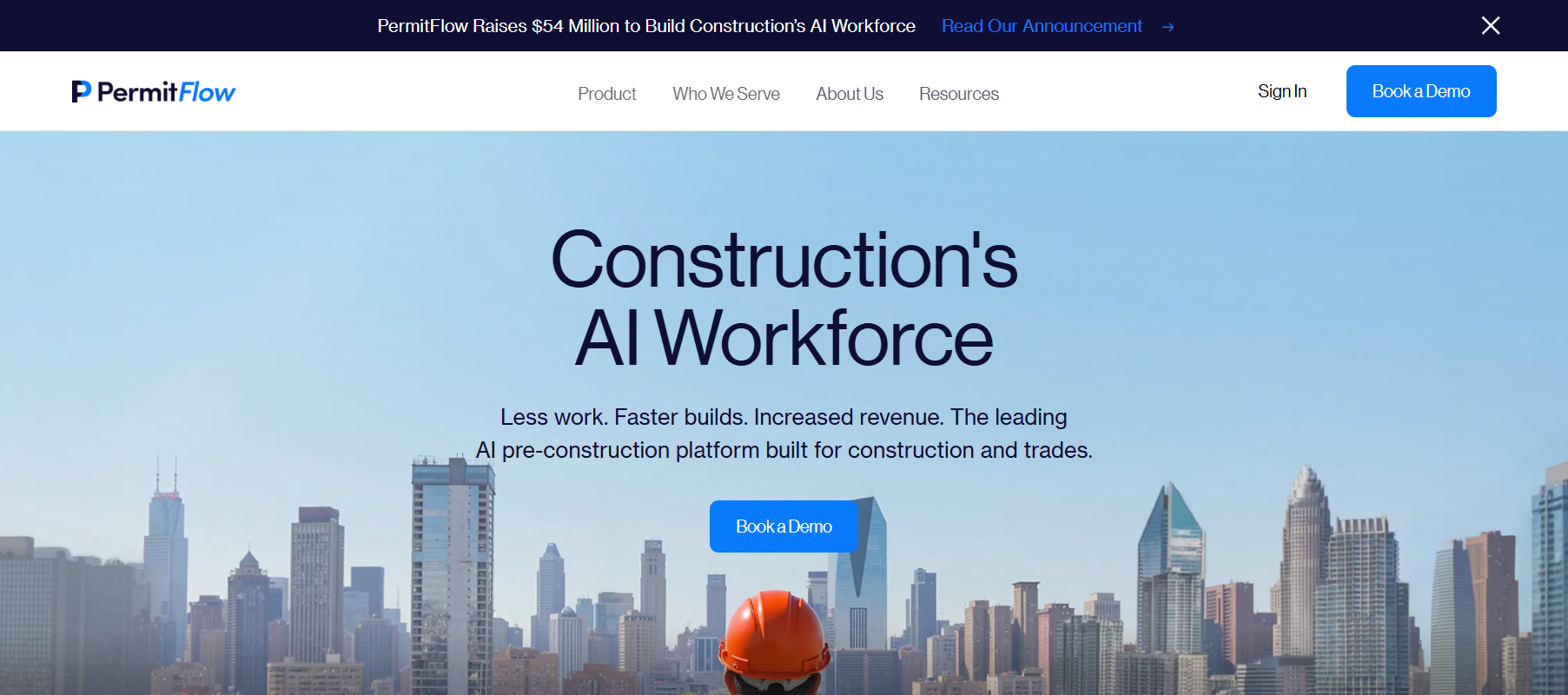
The company has built an AI-powered platform designed to handle these challenges more efficiently. Its system automates tasks that traditionally require significant human effort. This includes permit submissions, document tracking, inspection coordination, and regulatory compliance.
At its core, PermitFlow relies on a large dataset of more than 12 million permitting data points. This allows its AI systems to understand patterns, predict requirements, and reduce errors before they happen. Instead of reacting to delays, teams can anticipate them and act early.
The result is a smoother workflow that reduces friction at the earliest stage of construction.
Why Permitting Has Always Been a Major Bottleneck
Permitting is not just a small administrative step. It is often the biggest source of delay in construction projects. Every city, county, and state has its own rules, forms, and approval timelines. There is no universal system, which creates confusion and inefficiency.
Common issues include:
Inconsistent documentation requirements
Long approval wait times
Poor communication between departments
Repeated revisions due to missing details
These challenges affect everything from residential housing to large infrastructure projects. Even well-funded projects can face delays simply because approvals take longer than expected.
PermitFlow is targeting this exact problem. By standardizing and automating workflows, it aims to remove unnecessary delays and make the process more predictable.
The Role of AI in Modern Construction Workflows
Artificial intelligence often feels like a buzzword, but in this context, it serves a clear purpose. Construction generates large amounts of data, especially in permitting and compliance. When used correctly, AI can turn that data into actionable insights.
PermitFlow’s platform uses AI to:
Identify missing information before submission
Predict approval timelines based on historical data
Automate repetitive documentation tasks
Reduce manual coordination between teams
This approach shifts construction workflows from reactive to proactive. Instead of waiting for problems to appear, teams can prevent them early in the process.
The company reports strong performance metrics from its platform. Projects using its system have seen reduced timelines, lower workloads, and improved return on investment. While these claims are promising, their long-term consistency across different markets remains an important factor to watch.
Strong Industry Adoption Signals Early Trust
One of the most notable aspects of PermitFlow’s growth is its client base. The platform is already used by major companies such as Amazon, Lennar, IKEA, and Toll Brothers.
These companies operate at a large scale and manage complex construction pipelines. Their adoption suggests that PermitFlow’s solution is not just theoretical. It is being tested and used in real-world environments.
However, enterprise adoption does not automatically guarantee industry-wide success. Smaller contractors and developers may face different challenges when integrating new technology. Cost, training, and workflow adjustments can all influence adoption rates.
Connecting Technology to Real-World Impact
PermitFlow is not only focused on efficiency. It positions its platform as a solution to broader challenges such as housing shortages, infrastructure development, and clean energy expansion.
This connection is important. Delays in permitting often slow down projects that directly impact communities. Housing developments take longer to complete. Renewable energy installations face approval hurdles. Infrastructure upgrades get pushed back.
By reducing these delays, PermitFlow could indirectly support faster development across multiple sectors. More efficient permitting can lead to increased housing supply, improved infrastructure, and quicker deployment of clean energy solutions.
Still, it is important to recognize that technology alone cannot solve every issue. Regulatory frameworks and government processes also play a major role.
Challenges That Could Shape the Outcome
Despite its strong positioning, PermitFlow faces several challenges that could influence its growth.
- Government Dependency
The permitting process involves local authorities. Even the best AI system must work within existing regulations. If government systems remain outdated, progress could slow down.
- Data Complexity
Construction data is not always clean or consistent. Variations in rules and documentation can make automation more difficult. AI systems need to handle exceptions, not just standard cases.
- Industry Resistance
Construction is traditionally cautious when adopting new technology. Many professionals rely on established workflows and relationships. Convincing them to trust automated systems will take time.
The “AI Workforce” Vision Explained
PermitFlow describes its technology as building an “AI workforce.” This concept may sound futuristic, but it reflects a practical shift in how work gets done.
Instead of replacing human workers, AI handles repetitive administrative tasks. This allows professionals to focus on planning, decision-making, and execution.
For example:
Project managers spend less time tracking paperwork
Engineers focus more on design and optimization
Contractors deal with fewer approval delays
This approach enhances productivity rather than reducing the need for skilled labor. It also aligns with the industry’s need to do more with limited resources.
Why This Funding Round Signals a Bigger Trend
The $54 million funding round is not just about one company. It reflects a broader trend of investment in construction technology. Investors see a large, underserved market with significant inefficiencies.
Construction is a trillion-dollar industry, yet it has been slow to adopt modern tools. This creates an opportunity for companies like PermitFlow to introduce meaningful change.
The involvement of well-known investors indicates confidence in this direction. It also suggests that the industry may be approaching a tipping point where digital transformation becomes necessary rather than optional.
The Road Ahead for PermitFlow
PermitFlow’s future will depend on how effectively it can scale its platform. Expanding its technology to different regions, adapting to local regulations, and maintaining data accuracy will all be critical.
If the company succeeds, it could become a central platform for construction workflows. Its system could act as the bridge between builders, regulators, and project stakeholders.
If it struggles, it may still influence the industry by pushing others to innovate. Even partial success could lead to improved processes and increased adoption of automation tools.
Final Thoughts: A Promising Step Toward Smarter Construction
PermitFlow is addressing a real and persistent problem in construction. Its focus on permitting gives it a clear entry point into a complex industry. By combining data, automation, and AI, it offers a solution that could reduce delays and improve efficiency.
The company’s progress so far is encouraging. Strong funding, early adoption, and a clear vision all point in the right direction. However, long-term success will depend on execution, industry acceptance, and the ability to navigate regulatory systems.
Construction does not change overnight. But when it does, the impact is significant. If PermitFlow can deliver on its promise, it may not only improve workflows but also help accelerate the development of homes, infrastructure, and energy systems. That is a goal worth watching closely.
Ready to Move Forward Faster?
Permits holding your project back? Let’s fix that.
At JDJ Consulting, we help you simplify approvals and avoid delays—so you can keep things moving.
Fill out our pre-consultation form
Schedule a quick talk with our experts, call us at (818) 793-5058 or email sales@jdj-consulting.com
Let’s get your project unstuck.
FAQs: PermitFlow Raises $54M to Reinvent Construction Permitting
What is PermitFlow and what problem does it solve?
PermitFlow helps builders handle permits and approvals faster. It focuses on removing delays caused by paperwork and manual steps.
Automates permit submissions
Tracks approvals in one place
Reduces back-and-forth with agencies
In simple terms, it removes friction. Builders spend less time on admin work and more time on actual construction.
How much funding did PermitFlow raise and who invested?
PermitFlow raised $54 million in a Series B round led by Accel, with support from Kleiner Perkins and Y Combinator.
Backed by top investors
Strong signal of market trust
Focus on scaling AI tools
This funding helps the company grow faster and improve its technology.
How does AI improve construction permitting?
AI helps reduce mistakes and speed up approvals. It uses past data to guide decisions.
Finds missing details early
Predicts approval timelines
Automates repetitive tasks
This means fewer delays. Teams can plan better and avoid last-minute issues.
What results can builders expect from using PermitFlow?
PermitFlow claims strong improvements in speed and efficiency. These results focus on saving time and effort.
Faster project timelines
Less manual work
Better return on cost
While results may vary, many builders report smoother workflows and fewer delays.
Which companies are using PermitFlow?
Large companies like Amazon and Lennar use PermitFlow.
Trusted by major builders
Used on large-scale projects
Growing adoption across the industry
This shows the platform works in real-world conditions, not just theory.
Why is permitting such a big challenge in construction?
Permitting takes time because rules change by location. Each city or county has its own system.
Different requirements everywhere
Slow approvals
Manual paperwork
These issues delay projects before they even start. That’s why solving this step matters so much.
Can AI replace workers in construction?
No, AI supports workers. It handles repetitive tasks but does not replace skilled roles.
Reduces paperwork
Helps teams plan better
Saves time on admin work
Workers still make key decisions. AI just makes their job easier and faster.
Is construction technology becoming more popular?
Yes, more investors are backing construction tech. Firms like Felicis are investing in this space.
Industry has many inefficiencies
Demand for automation is rising
More startups entering the market
This trend shows construction is slowly moving toward digital transformation.