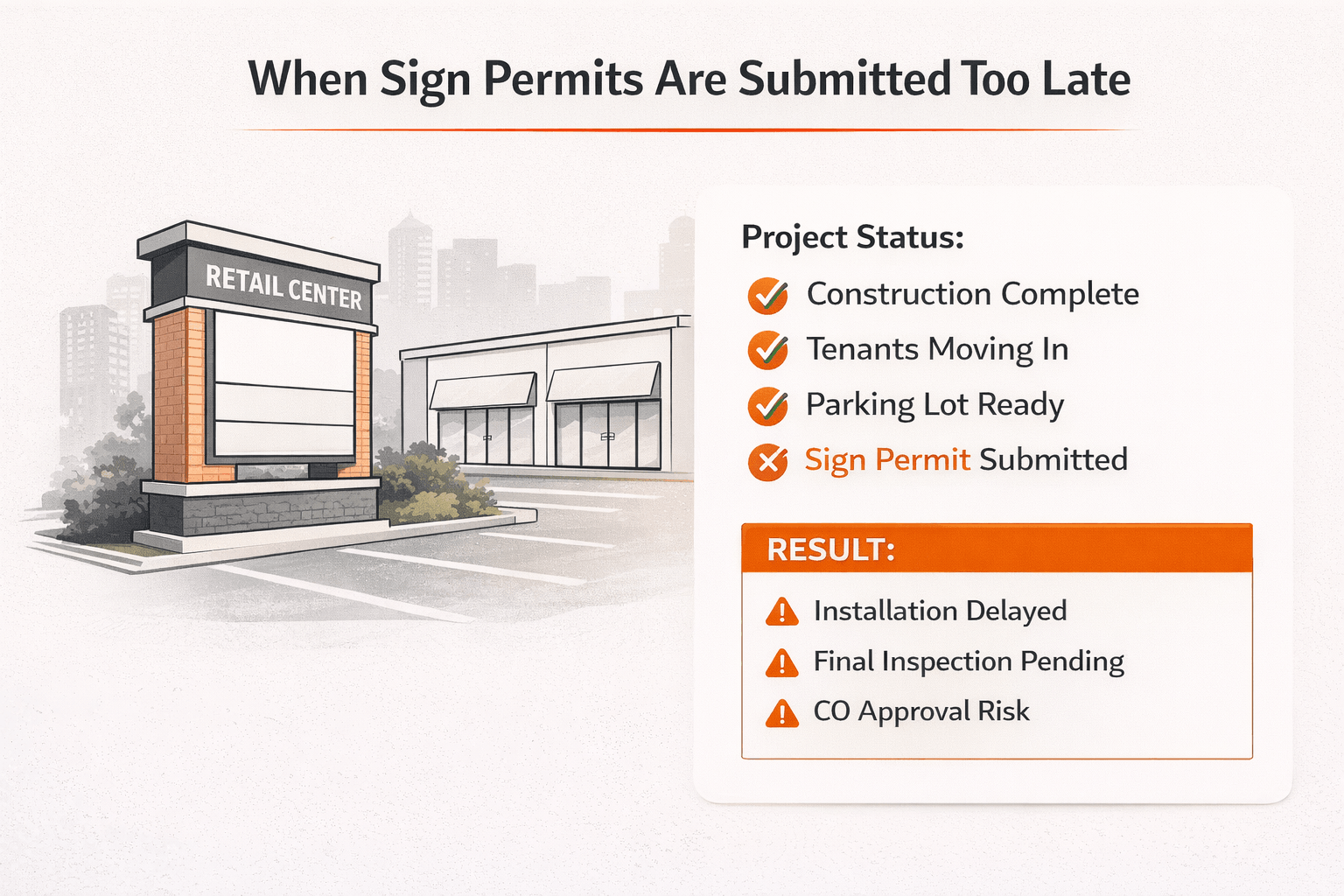
A retail center is almost ready to open. Construction is complete. Tenants are moving in. Leasing banners are coming down. The parking lot has fresh striping. Everything looks set for opening week.
Then someone asks a simple question: “Has the sign permit been approved yet?” Silence.
The monument sign at the entrance is already fabricated. The tenant channel letters are sitting in a warehouse. Installation was scheduled for next week.
But the permit application was never submitted.
Now the city won’t allow installation. The signage contractor can’t move forward. Final inspection is delayed. The tenant can’t install branded storefront signage. And in some cases, the Certificate of Occupancy may also be pushed back.
All because of one step that usually happens at the very end of the project timeline. This is how signage becomes a last-minute issue in many commercial real estate developments across Texas.
Sign permits are often treated as minor paperwork. In reality, they are part of zoning compliance, electrical safety, and structural review. Local municipalities want to confirm that signage:
-
Meets size and placement limits
-
Does not affect traffic visibility
-
Is installed safely
-
Follows illumination rules
And because every Texas city has its own sign code, approvals can vary from one municipality to another. For developers working on multi-tenant retail centers, office parks, or mixed-use projects, signage approvals are not always quick.
They may involve:
-
Zoning verification
-
Engineering drawings
-
Contractor registration
-
Electrical review
-
Final inspection
Starting the permit process early can help prevent delays during project close-out.
This guide explains how the sign permit process Texas works for commercial projects. It covers zoning considerations, application steps, approval timelines, and common reasons permits get denied.
Why Sign Permits Matter for Commercial Developments in Texas
If you’re planning to install a new commercial sign in Texas, you usually can’t just put it up and call it a day.
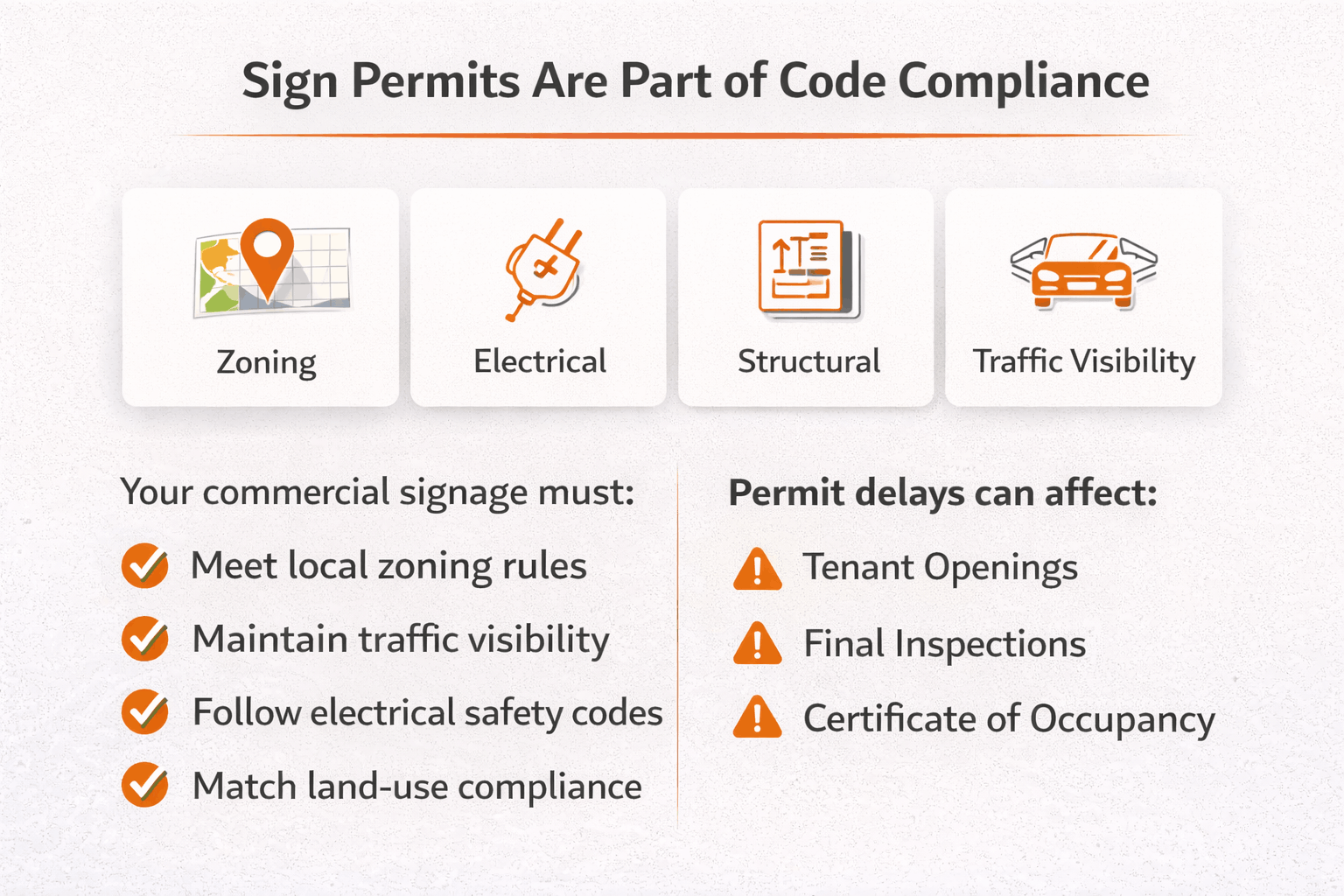
Most cities require a sign permit before you install, modify, or relocate any permanent signage that is visible from a public road. This applies to office buildings, retail centers, restaurants, warehouses, and mixed-use developments.
Sign permits are not just paperwork. They help ensure your signage:
-
Meets local zoning rules
-
Does not block traffic visibility
-
Is structurally safe
-
Follows electrical safety codes
-
Matches land-use requirements
In commercial real estate projects, signage often goes in during the final stages of development. However, permit approval can take time. Because of this, delays in sign permits can hold back:
-
Tenant openings
-
Final inspections
-
Certificate of Occupancy approvals
-
Branding rollouts
This is why developers and property managers often start the sign permit process early in the construction timeline. Installing a sign without approval may lead to stop-work notices or fines. In some cases, cities may also require full removal of non-permitted signage.
Here is a quick overview of what happens when signage is installed without a permit:
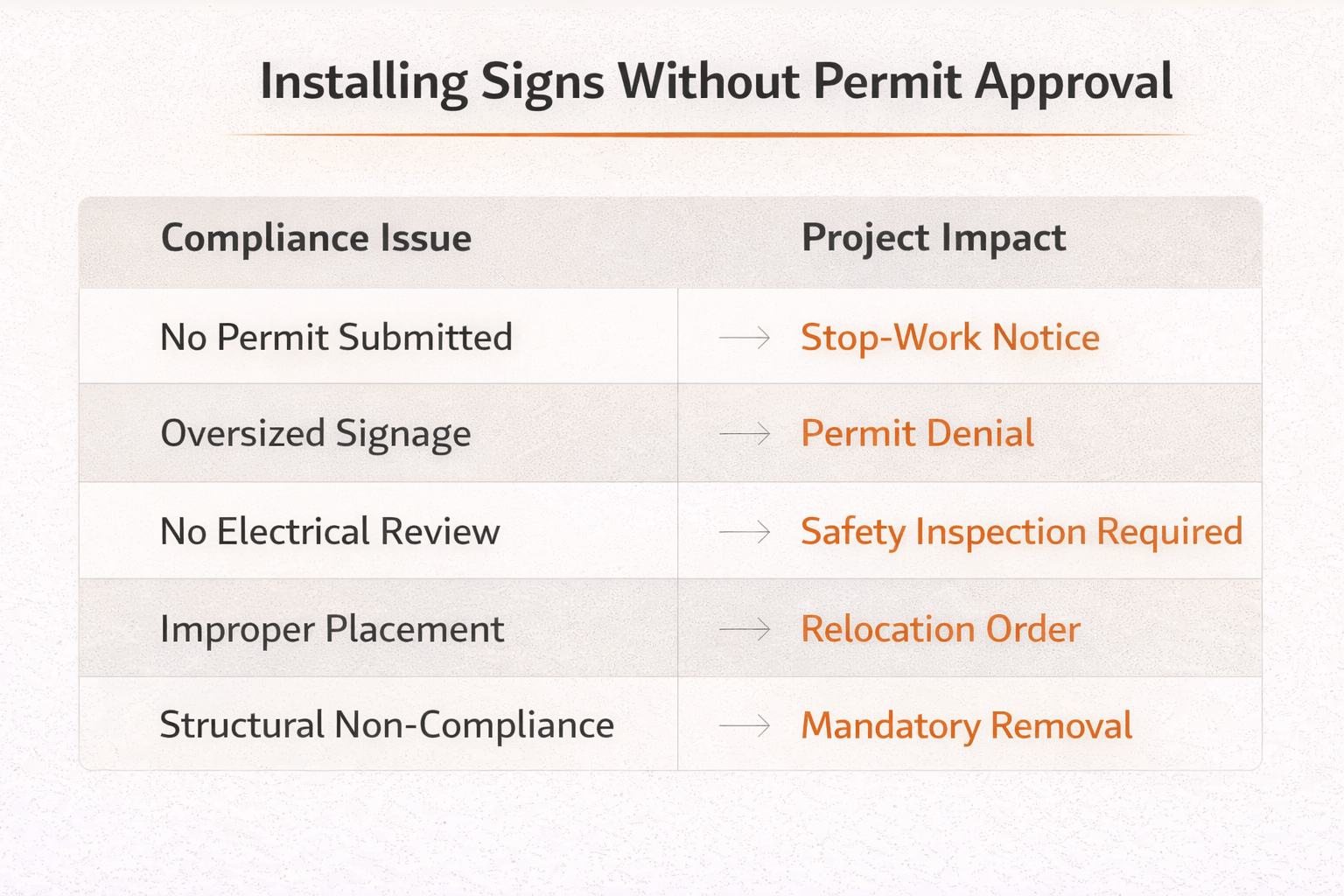
For multi-tenant retail projects or ground-up developments, these issues can affect leasing timelines. That is why understanding the permit process early can save both time and cost later.
Understanding How Sign Regulations Work in Texas
Texas does not follow a single statewide sign code for commercial properties. Instead, sign regulations are handled at different levels. Some rules apply at the state level. Others depend on the city or county where your project is located.
In most commercial projects, your signage must comply with:
-
Local zoning ordinance
-
Municipal sign code
-
Building code
-
Electrical code
For projects near highways or rural roads, state rules may also apply.
State vs Local Jurisdiction for Sign Permits
The Texas Department of Transportation (TxDOT) regulates signs that fall under outdoor advertising rules. These usually include:
-
Signs near interstate highways
-
Rural roadway billboards
-
Off-premise advertising structures
However, most business signage used for branding or tenant identification is regulated by local municipalities.
Cities control permits for:
-
Wall-mounted signs
-
Monument signs
-
Tenant suite signage
-
Freestanding pole signs
-
Illuminated business signs
Each city has its own standards for:
-
Maximum sign height
-
Sign area per frontage
-
Illumination type
-
Setback distance
-
Mounting method
This means a sign that is approved in one Texas city may not meet the requirements in another. For example, retail signage in Dallas may have different size limits than a similar sign in Austin or Houston. Because of this variation, commercial developers often review the local sign ordinance before submitting any application.
Special Rules for Highway and Rural Road Signage
Commercial signage placed near highways or outside city limits may fall under outdoor advertising rules.
These signs often require:
-
Outdoor advertising license
-
Separate permit application
-
Annual renewal
Below is a general fee structure often associated with highway-adjacent signage in Texas:
| Permit Type | Typical Fee Range |
|---|---|
| Outdoor Advertising License | $100 – $150 |
| Sign Permit Application | $75 – $125 |
| Annual Permit Renewal | $50 – $80 |
| Inspection Fee | Varies by county |
If your development is near a controlled roadway, both local and state approvals may be required before installation begins. This step is often missed in early planning stages. As a result, signage approvals can get delayed during project close-out.
Types of Commercial Signs That Require Permits in Texas
In Texas, most permanent commercial signage requires permit approval before installation. This applies to new construction, tenant improvements, and renovation projects.
Permit requirements usually depend on:
-
Sign size
-
Electrical components
-
Mounting method
-
Structural support
-
Placement on the building
Below are the most common sign types that require review.
Permanent Signs
Permanent signs are fixed structures that remain installed for long periods.
These include:
-
Wall signs
-
Freestanding signs
-
Monument signs
-
Projecting signs
-
Roof-mounted signs
-
Channel letter signs
-
LED or illuminated signage
Large freestanding or illuminated signs often require full plan review before approval. Review may include:
-
Structural engineering check
-
Wind load calculation
-
Electrical wiring inspection
-
Attachment method review
Temporary Signs
Temporary signage may still require permits depending on the city ordinance. Common examples include:
-
Promotional banners
-
Leasing signs
-
Construction project signage
-
Directional site signs
-
Event signage
Temporary sign permits are often valid for a limited duration.
| Temporary Sign Type | Typical Permit Duration |
|---|---|
| Promotional Banner | 30 – 60 days |
| Leasing Sign | Project duration |
| Construction Sign | Active build phase |
| Event Signage | 7 – 14 days |
Even though these signs are short-term, many municipalities still require permit approval before installation.
Zoning Laws That Affect Your Sign Permit Approval
Before your sign permit gets approved, your project must meet local zoning rules. Zoning plays a major role in how signage is reviewed across Texas cities. Even if your sign design looks simple, approval often depends on where your property sits within a zoning district.
Most municipalities divide land into different zones such as:
-
Commercial
-
Industrial
-
Mixed-use
-
Planned developments
-
Historic districts
-
Scenic corridors
Each of these zones may have its own signage standards. These rules usually control:
-
Sign height
-
Total sign area
-
Illumination type
-
Placement on building
-
Distance from property line
-
Number of signs allowed per tenant
For example, a freestanding monument sign allowed in a retail zoning district may not be approved in a mixed-use development. Likewise, illuminated signage may be restricted near residential transition zones.
Below is a simplified look at how zoning may affect signage approvals:
| Zoning District | Common Sign Restrictions |
|---|---|
| Commercial Retail | Larger wall signage allowed |
| Industrial | Freestanding signs permitted |
| Mixed-Use | Illumination limits apply |
| Historic District | Design review required |
| Scenic Corridor | Size limitations apply |
Because zoning varies by city, developers often check the municipal sign ordinance before submitting sign plans. This helps reduce permit revisions later in the process.
Zoning District Considerations
Each zoning district has its own frontage-based sign allowance. In most Texas cities, signage area is calculated using:
-
Building frontage
-
Tenant lease width
-
Property line length
For multi-tenant retail centers, the allowable sign size may depend on the tenant’s storefront width. For example:
| Tenant Storefront Width | Maximum Wall Sign Area |
|---|---|
| Up to 25 ft | 50 sq ft |
| 25 – 50 ft | 75 sq ft |
| 50 – 75 ft | 100 sq ft |
| Over 75 ft | Based on frontage ratio |
Cities may also regulate:
-
Internally illuminated signage
-
Digital displays
-
LED message boards
-
Directional signage within the site
If your sign exceeds the allowed area or height, you may need to apply for a variance before installation. Variance approval often adds time to the permit timeline.
Extraterritorial Jurisdiction (ETJ) Regulations
Commercial developments located outside city limits may still fall under local control. This area is called the Extraterritorial Jurisdiction (ETJ).
Many Texas counties regulate signage in ETJ zones, especially near:
-
Toll roads
-
Scenic highways
-
Major intersections
-
Planned commercial corridors
In ETJ areas, developers may need approval from:
-
County engineering department
-
Planning review board
-
Transportation authority
Permit requirements in these zones may include:
-
Setback verification
-
Height compliance
-
Structural safety review
Because ETJ rules often differ from city limits, signage that meets municipal code may still require additional review.
Step-by-Step Commercial Sign Permit Application Process in Texas
For most commercial real estate projects, the sign permit process follows a standard sequence. Starting early can help prevent installation delays during the final phase of construction. Below is the typical workflow followed across many Texas municipalities.
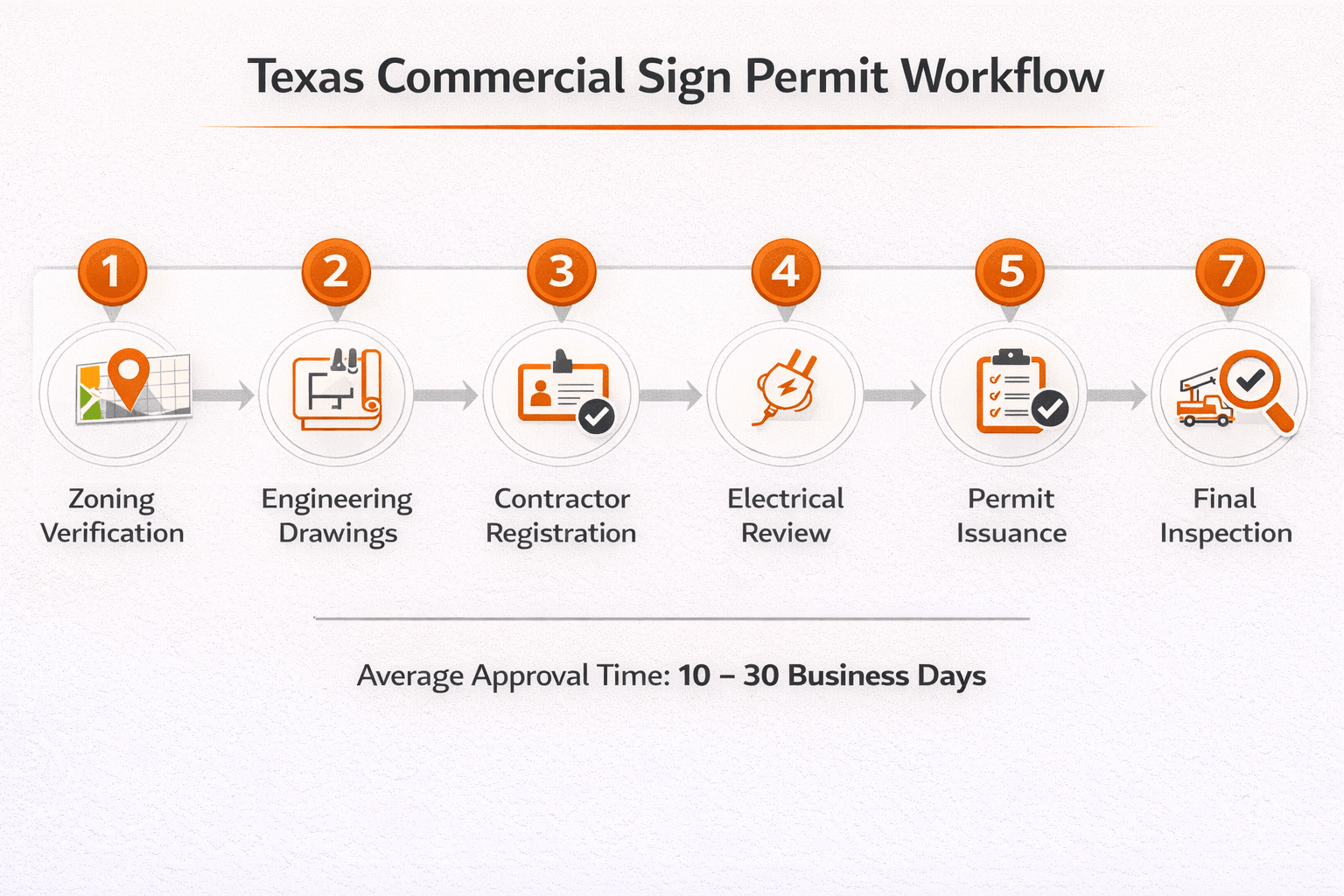
Step 1: Pre-Application Research
The first step is to confirm whether your signage meets local zoning rules. During this stage, your project team may review:
-
Sign district classification
-
Property zoning designation
-
Maximum allowed sign area
-
Illumination restrictions
-
Frontage limitations
This help ensure your sign design aligns with local ordinance before submission. Incomplete research at this stage is one of the most common reasons for permit rejection.
Step 2: Prepare Required Documents
Most Texas cities require a standard set of documents with your application.
These may include:
-
Completed permit form
-
Site plan
-
Building elevation drawing
-
Property owner authorization
-
Sign detail drawings
-
Electrical layout (for illuminated signs)
-
Contractor registration
Here is a general checklist used for commercial sign permit applications:
| Document Type | Purpose |
|---|---|
| Site Plan | Shows sign location |
| Elevation Drawing | Placement on building |
| Sign Detail Drawing | Dimensions and materials |
| Electrical Diagram | Wiring method |
| Owner Consent Letter | Property approval |
| Contractor License | Installer verification |
Missing documents can delay the review timeline.
Step 3: Engineering Drawings (If Required)
Freestanding or projecting signs often require engineering review. This applies to:
-
Pole signs
-
Monument signs
-
Blade signs
-
Large wall-mounted signs
Engineering documents may include:
-
Structural calculations
-
Wind load analysis
-
Foundation detail
-
Mounting support system
These drawings are typically sealed by a:
-
Licensed Texas Professional Engineer
-
Registered Architect
Without sealed drawings, the permit may not move forward to plan review.
Step 4: Application Submission
Applications may be submitted:
-
Online
-
In person
-
Through a registered contractor
Submission usually includes:
-
Permit fee payment
-
Document upload
-
Plan review request
Some cities also require contractor registration before submission.
Step 5: Plan Review
Once submitted, your application may be reviewed by:
-
Planning department
-
Building inspection
-
Electrical inspection
-
Transportation review (if required)
Each department checks compliance with local codes.
Step 6: Permit Issuance
If approved, the permit is issued after fee payment. Most municipalities require the permit to be:
-
Printed
-
Displayed on-site during installation
Step 7: Installation Inspection
After installation, a final inspection may be required.
Inspectors typically check:
-
Structural attachment
-
Electrical safety
-
Sign placement
If the installation meets code, the permit is closed.

Sign Permit Documentation Requirements for Commercial Projects
Sign permit approvals often depend on how complete your application package is. Many delays in Texas commercial projects happen because required drawings or ownership documents are missing at the time of submission.
Most municipalities ask for a similar set of documents during sign permit review. These help the city confirm that your signage meets building, electrical, and zoning codes.
Below is a general list of documents required for commercial sign permit applications:
-
Site plan showing sign location
-
Building elevation drawing
-
Sign copy layout
-
Dimensions and material details
-
Structural attachment method
-
Electrical wiring diagram (for illuminated signs)
-
Property owner authorization
-
Contractor license or registration
-
Existing sign photos (if replacing signage)
Here is how these documents are used during plan review:
| Documentation Item | Why It Is Required |
|---|---|
| Site Plan | Confirms placement on property |
| Elevation Drawing | Shows mounting location |
| Sign Detail Drawing | Verifies size and materials |
| Electrical Diagram | Reviews wiring safety |
| Attachment Details | Checks support method |
| Owner Consent Letter | Confirms property approval |
| Contractor License | Installer verification |
In some cases, cities may also ask for:
-
Wind load calculations
-
Foundation detail drawings
-
Engineering seal for freestanding signs
If your signage includes electrical components such as LED channel letters or digital displays, an electrical review is usually required before approval.
Because requirements vary by city, developers often review the municipal checklist before submitting the application. Submitting a complete package at the start can reduce back-and-forth during plan review.

Sign Permit Approval Timeline in Texas
Approval timelines for commercial signage depend on several factors.
In most Texas cities, sign permit reviews take between 10 to 30 business days. However, more complex signage may require additional review time.
For example:
| Sign Type | Estimated Approval Time |
|---|---|
| Wall Sign | 7 – 14 business days |
| Channel Letter Sign | 10 – 20 business days |
| Monument Sign | 15 – 25 business days |
| Pole Sign | 20 – 30+ business days |
| Digital Display Sign | 30+ business days |
Timelines may be affected by:
-
Application completeness
-
Engineering requirements
-
Electrical review
-
Zoning compliance check
-
City staff workload
Permit revisions can also extend the review period. For multi-tenant retail centers or office parks, multiple tenant signs may require separate applications. This often adds time to project close-out if approvals are not planned early.
Starting the permit process during the construction phase can help avoid delays near tenant occupancy dates.
Common Reasons Commercial Sign Permits Get Denied
Even small errors in the application can lead to permit denial. Below are some of the most common issues seen in Texas commercial projects:
-
Missing property owner consent
-
Incorrect project address
-
Outdated application forms
-
Sign area exceeding allowed limits
-
Incomplete structural drawings
-
No electrical diagram for illuminated signs
-
Contractor not registered with city
Here is a quick summary:
| Application Issue | Possible Outcome |
|---|---|
| Missing documents | Review delay |
| Incorrect sign dimensions | Permit denial |
| Non-compliant placement | Revision request |
| Oversized signage | Variance required |
| Electrical details missing | Safety review hold |
If the proposed signage does not meet zoning standards, the applicant may need to apply for a variance. Variance approvals usually require:
-
Planning board review
-
Public notice
-
Additional documentation
This can add several weeks to the overall timeline. Because of this, many developers review sign code requirements before finalizing signage design.
Do You Need a Licensed Contractor to Apply for a Sign Permit in Texas?
In many Texas cities, commercial sign permits must be submitted by a registered contractor.
This rule often applies to:
-
Illuminated signs
-
Freestanding signs
-
Monument signage
-
Pole signs
-
Digital display signs
Cities may require the installer to be:
-
A registered sign contractor
-
A licensed electrical contractor (for powered signs)
-
A contractor registered with the local building department
For example, if your signage includes internal lighting such as LED channel letters, the electrical portion of the installation must follow local electrical codes. Because of this, some municipalities require:
-
Contractor registration before permit submission
-
Proof of license
-
Insurance verification
Here is a general overview:
| Sign Type | Contractor Required? |
|---|---|
| Non-Illuminated Wall Sign | Sometimes |
| Illuminated Sign | Yes |
| Monument Sign | Yes |
| Pole Sign | Yes |
| Digital Display | Yes |
If a licensed contractor is not listed on the application, the city may place the permit on hold.
For developers working on retail centers or office developments, coordinating with the sign installer early in the process can help avoid delays during submission.
Costs Associated with Commercial Sign Permits in Texas
Sign permit fees vary based on the size and type of signage. Most Texas municipalities calculate fees using:
-
Sign square footage
-
Electrical components
-
Structural review requirements
-
Inspection needs
Below is a general cost breakdown for commercial signage permits:
| Fee Category | Typical Cost Range |
|---|---|
| Application Fee | $50 – $150 |
| Plan Review Fee | $75 – $300 |
| Electrical Review | $100 – $250 |
| Inspection Fee | $75 – $200 |
| Engineering Review | Varies |
Additional costs may include:
-
Variance application fee
-
Contractor registration fee
-
Re-submission fee (if revisions are required)
Large freestanding signs may also require engineering calculations. Engineering review fees depend on:
-
Sign height
-
Structural support system
-
Foundation detail
For multi-tenant developments, separate permit fees may apply for each tenant sign. This is why signage permitting should be included in early-stage project budgeting.
Compliance After Installation
Once your signage is installed, the process is not always complete. Many Texas cities require a final inspection before closing the permit.
Inspectors may review:
-
Structural attachment
-
Electrical wiring
-
Placement on building
-
Illumination method
If the installation meets code requirements, the permit can be finalized. After approval, property managers should:
-
Maintain permit documentation
-
Keep inspection records
-
Monitor local ordinance updates
-
Renew permits if required for digital signage
Here is a quick checklist:
| Post-Installation Task | Why It Matters |
|---|---|
| Schedule inspection | Close permit |
| Keep approval records | Future compliance |
| Track ordinance updates | Avoid violations |
| Renew digital permits | Maintain legality |
Failure to complete final inspection may result in:
-
Permit expiration
-
Code violation notice
-
Possible removal order
For commercial real estate developments, completing this final step helps ensure compliance before tenant occupancy.
Penalties for Installing Commercial Signs Without a Permit in Texas
Installing signage without an approved permit can create serious issues for commercial projects.
Most Texas municipalities enforce local sign codes through building inspections. If signage is installed before permit approval, the city may issue a violation notice.
Common enforcement actions include:
-
Stop-work orders
-
Code violation notices
-
Daily fines
-
Permit suspension
-
Mandatory sign removal
Here is how non-compliant signage may affect your project:
| Violation Type | Possible Consequence |
|---|---|
| Sign installed before permit | Stop-work order |
| Oversized signage | Removal required |
| Electrical sign without approval | Safety re-inspection |
| Improper placement | Relocation notice |
| No final inspection | Permit expiration |
In retail or mixed-use developments, signage violations may delay:
-
Tenant opening dates
-
Final inspections
-
Certificate of Occupancy issuance
-
Project close-out timelines
In some cases, cities may also require the property owner to remove or modify signage before reapplying for approval. This can increase project costs and affect leasing schedules.
Because of this, developers often begin the sign permit process before signage fabrication begins.
When to Hire a Sign Permit Consultant for CRE Projects
For small single-tenant signage, the permit process may be manageable in-house. However, larger commercial developments often involve:
-
Multiple tenant signs
-
Freestanding monument signage
-
Directional site signage
-
Branded wall signage
-
Digital displays
Each sign type may require a separate permit application. Projects that typically benefit from permit consulting include:
-
Multi-tenant retail centers
-
Office parks
-
Ground-up developments
-
Rebranding projects
-
Mixed-use developments
-
Multi-site commercial portfolios
Permit consultants can assist with:
-
Zoning verification
-
Application preparation
-
Engineering coordination
-
Plan review responses
-
Inspection scheduling
This support can help reduce approval delays during the later stages of construction.
Final Thoughts on Commercial Sign Permits in Texas
Signage plays a key role in tenant visibility and property branding. However, in Texas commercial developments, installing signage without proper approval can affect more than just appearance.
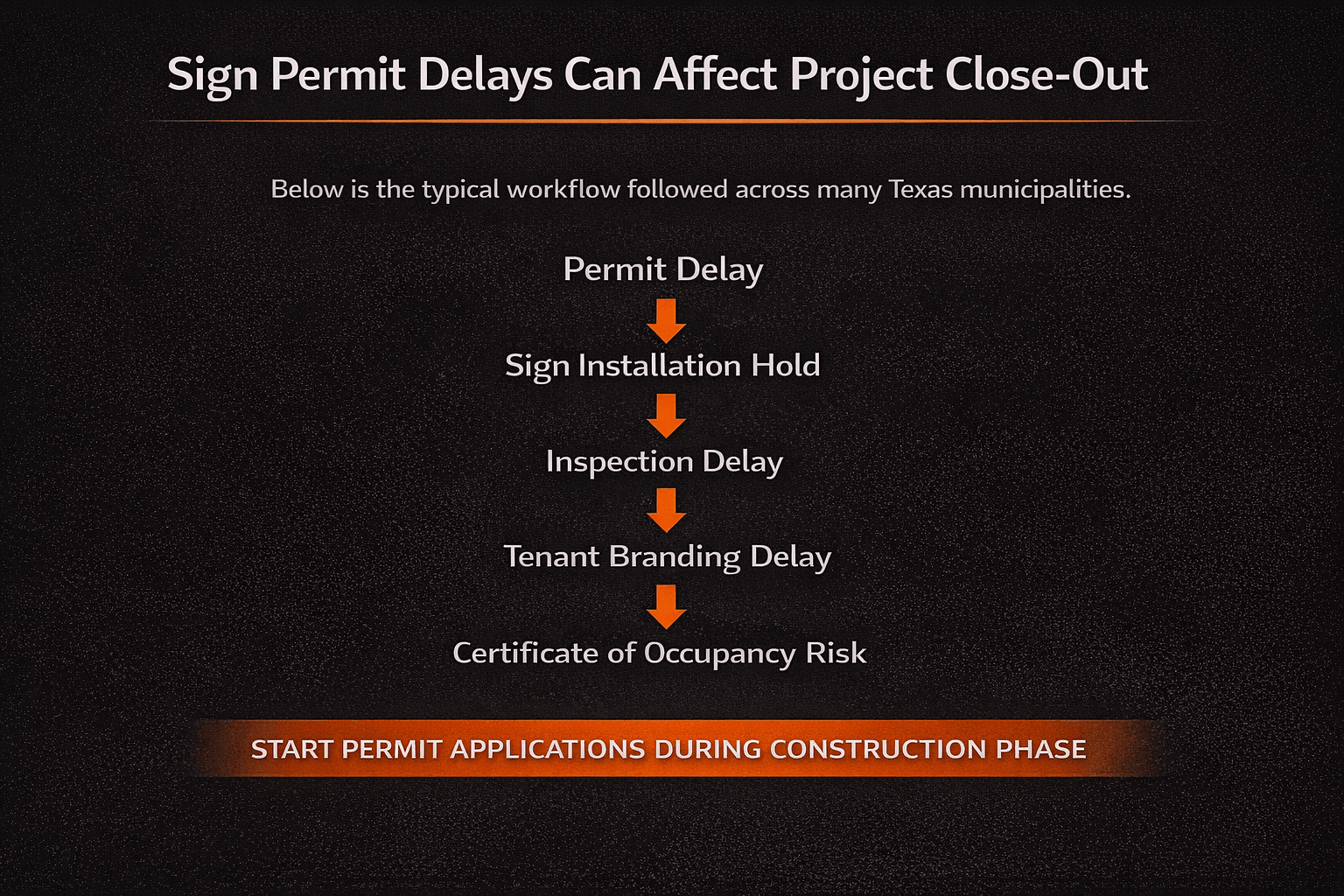
Permit delays may impact:
-
Tenant move-in schedules
-
Final inspections
-
Project close-out
-
Certificate of Occupancy approvals
Because local sign codes vary across municipalities, developers often review zoning requirements before submitting signage plans.
This helps ensure:
-
Proper sign placement
-
Code-compliant dimensions
-
Approved illumination methods
-
Structural safety
For multi-tenant retail centers, office developments, and mixed-use projects, starting the sign permit process early can reduce:
-
Application revisions
-
Plan review delays
-
Inspection scheduling issues
Planning ahead also allows time for:
-
Engineering review
-
Electrical compliance check
-
Contractor registration
How JDJ Consulting Helps Streamline the Texas Sign Permit Process
For commercial real estate developers, signage is often one of the final steps before tenant move-in. Delays in sign permit approvals can affect project timelines, especially in multi-tenant developments.
JDJ Consulting supports commercial projects across Texas by assisting with:
-
Zoning compliance checks
-
Sign permit application management
-
Engineering coordination
-
Code compliance review
-
Inspection scheduling
Our team works with:
-
Developers
-
Property managers
-
General contractors
-
Tenant improvement teams
By reviewing signage plans early in the project lifecycle, we help reduce permit revisions and approval delays. This allows your signage installation to move forward on schedule during the final phase of development.
Reach out to JDJ Consultants
Call us at (818) 793-5058 or email: sales@jdj-consulting.com to schedule a free consultation with our team of permit expeditors serving Los Angeles, Austin and Miami.
Starting the process early can help your signage move forward on time during the final phase of development.
FAQs: Commercial Sign Permit Process for Texas CRE Projects
1. Why are sign permits important for commercial real estate developments in Texas?
Sign permits are more than simple paperwork. They confirm that your signage meets zoning, electrical, and structural safety standards required by local municipalities.
-
Ensure signage does not obstruct traffic visibility
-
Verify compliance with municipal sign codes
-
Confirm safe electrical installation for illuminated signs
-
Help align signage with land-use requirements
Without permit approval, signage installation may be delayed, which can impact tenant move-ins or even Certificate of Occupancy timelines. Starting early helps developers avoid stop-work notices and costly removal orders later in the project lifecycle.
2. Do all commercial signs in Texas require a permit before installation?
In most Texas cities, permanent signage visible from public roads requires permit approval before installation.
This typically applies to:
-
Wall-mounted tenant signs
-
Monument signage
-
Channel letter signs
-
Freestanding pole signs
-
Illuminated storefront signage
Even signage modifications or relocation may require new permits. Failure to obtain approval may result in fines or forced removal, especially during final building inspections in retail or mixed-use developments nearing completion.
3. What types of commercial signs usually require permits in Texas?
Permit requirements depend on how the sign is installed, powered, and positioned on the building or site.
Common permit-required signs include:
-
Permanent wall signage
-
Freestanding or monument signs
-
Projecting blade signs
-
Roof-mounted signs
-
LED or internally illuminated channel letters
These signs often undergo structural and electrical review during plan check. Larger installations may also require engineering calculations before municipalities approve the permit application.
4. Can installing signage without a permit delay project close-out?
Yes, unpermitted signage is one of the most common reasons commercial projects experience delays near completion.
Potential consequences include:
-
Stop-work notices
-
Failed final inspections
-
Certificate of Occupancy delays
-
Tenant branding hold-ups
-
Mandatory signage removal
In multi-tenant retail centers, this may affect leasing schedules and opening timelines. Because signage is often installed late in construction, missing permit approval can quickly disrupt project close-out.
5. How do local zoning laws affect sign permit approvals?
Zoning determines whether your signage design is eligible for approval within a specific commercial district.
Municipal zoning rules may regulate:
-
Maximum sign height
-
Total allowable sign area
-
Illumination type
-
Distance from property line
-
Number of signs per tenant
For example, signage allowed in a retail zone may not meet standards in mixed-use or historic districts. Developers often review zoning ordinances early to reduce application revisions later.
6. What documents are required for a commercial sign permit application?
A complete application package helps reduce delays during municipal plan review.
Typical documentation includes:
-
Site plan showing sign placement
-
Building elevation drawings
-
Sign detail and material specifications
-
Electrical layout for illuminated signs
-
Property owner authorization letter
-
Contractor license or registration
Incomplete documentation is one of the leading causes of permit denial in Texas commercial developments.
7. Do illuminated signs require electrical review during permit approval?
Yes, illuminated commercial signage usually undergoes electrical safety review.
Cities typically evaluate:
-
Internal wiring layout
-
Power supply method
-
LED or digital display configuration
-
Compliance with local electrical codes
Applications missing electrical diagrams may be placed on hold until safety documentation is submitted.
8. How long does the sign permit approval process take in Texas?
Approval timelines vary based on sign complexity and application completeness.
Estimated review periods:
-
Wall signs: 7–14 business days
-
Channel letters: 10–20 business days
-
Monument signs: 15–25 business days
-
Digital display signage: 30+ business days
Engineering review or zoning revisions may extend these timelines, particularly in multi-tenant developments requiring multiple applications.
9. Can zoning district classification impact allowable sign size?
Yes, allowable signage area is often calculated using property frontage or tenant lease width.
Municipalities may consider:
-
Building frontage
-
Tenant storefront width
-
Property line length
If signage exceeds allowable dimensions, developers may need to apply for a variance, which can add weeks to approval timelines.
10. Are temporary commercial signs exempt from permit requirements?
Not always. Some municipalities require permits for temporary signage as well.
This may include:
-
Leasing banners
-
Construction project signs
-
Promotional event signage
-
Directional site signage
Temporary permits are often valid for limited durations such as 7 to 60 days depending on sign type.
11. Do monument signs require engineering drawings for approval?
Freestanding monument signage typically requires structural review before approval.
Engineering documents may include:
-
Wind load analysis
-
Foundation detail drawings
-
Mounting support calculations
Drawings are usually sealed by a licensed Professional Engineer or registered architect to move forward in the review process.
12. Can signage placement affect traffic visibility compliance?
Yes, municipalities evaluate signage placement to ensure driver visibility is not obstructed.
Review factors may include:
-
Sign setback distance
-
Height above grade
-
Proximity to intersections
-
Sightline interference
Non-compliant placement may result in relocation orders or permit denial.
13. Do commercial projects outside city limits still require sign permits?
Developments located in Extraterritorial Jurisdiction (ETJ) areas may still fall under regulatory control.
Approvals may be required from:
-
County engineering departments
-
Planning review boards
-
Transportation authorities
Additional structural or setback compliance checks may apply in these zones.
14. What are the most common reasons sign permits get denied?
Permit denial often results from incomplete or inaccurate submissions.
Frequent issues include:
-
Missing owner consent
-
Oversized signage dimensions
-
Incorrect project address
-
Incomplete structural drawings
-
Contractor not registered locally
Variance applications may be required if zoning standards are not met.
15. Do commercial sign permits need to be submitted by licensed contractors?
Many Texas municipalities require permit applications for powered signage to be submitted by registered contractors.
This applies to:
-
Monument signs
-
Pole signs
-
Digital displays
-
Illuminated channel letters
Proof of license or insurance may also be required during submission.
16. What costs are associated with commercial sign permits?
Permit fees are usually calculated based on sign size and electrical components.
Typical costs may include:
-
Application fee
-
Plan review fee
-
Electrical inspection
-
Engineering review
-
Final inspection
Separate permit fees may apply for each tenant sign in multi-tenant retail centers.
17. Is a final inspection required after signage installation?
Yes, many municipalities require post-installation inspection before closing the permit.
Inspectors may verify:
-
Structural attachment
-
Electrical wiring safety
-
Approved sign placement
-
Illumination method
Failure to schedule inspection may result in permit expiration.
18. Can unapproved signage affect tenant move-in schedules?
Non-compliant signage may delay tenant occupancy in retail or mixed-use developments.
This may impact:
-
Branding installation
-
Final inspections
-
Certificate of Occupancy issuance
-
Leasing timelines
Cities may require signage modification before approving occupancy.
19. When should developers begin the sign permit process?
Permit applications should ideally begin during the construction phase.
Early submission allows time for:
-
Engineering review
-
Electrical compliance check
-
Contractor registration
-
Zoning verification
This helps prevent last-minute installation delays during project close-out.
20. Should multi-tenant retail projects hire a sign permit consultant?
Large commercial developments often benefit from permit consulting support.
Consultants can assist with:
-
Zoning compliance review
-
Application preparation
-
Engineering coordination
-
Inspection scheduling
This can help signage installation move forward on schedule as tenants prepare for opening.
References
The following resources were reviewed while preparing this guide:
-
Texas Department of Transportation – Outdoor Advertising Program (TxDOT regulates commercial signs along Texas highways under Transportation Code Chapters 391 and 394.)
-
City of Austin Development Services – Sign Permit Guidelines (The City of Austin requires a Sign Permit for outdoor signage under its Land Development Code.)
-
City of San Antonio Development Services – Commercial Sign Permit Process (Freestanding, electric, and large building signs require plan review and permit.)
-
Addison Development Services – Sign Regulations (Businesses must obtain a sign permit to ensure compliance with Addison regulations.)
-
Richardson Building Inspection – Sign Permit Requirements (Permit approval is required prior to installation of any sign.)
-
Harris County Engineering Department – ETJ Signage Permits (Commercial signage in ETJ areas requires plan review and inspection.)