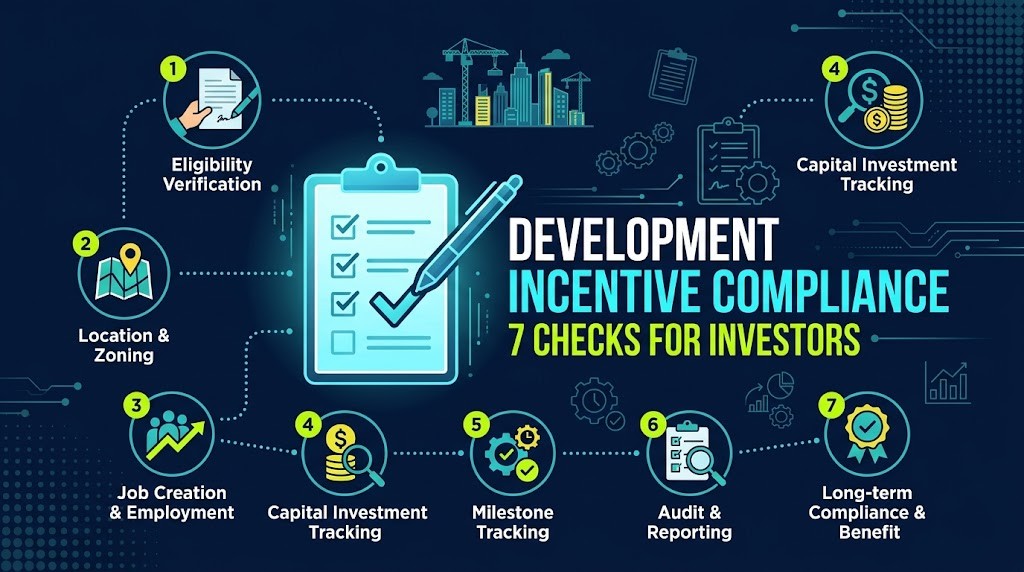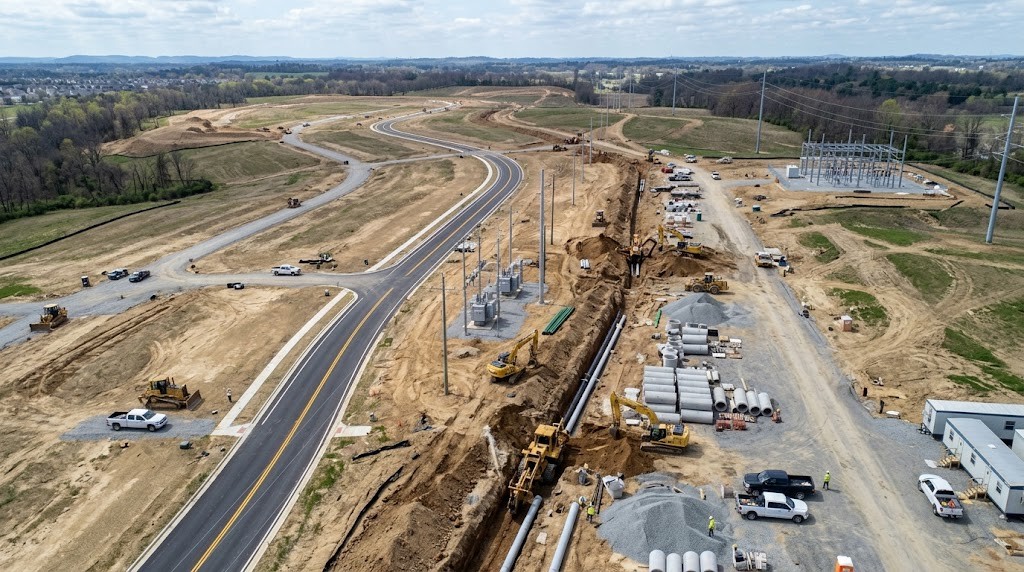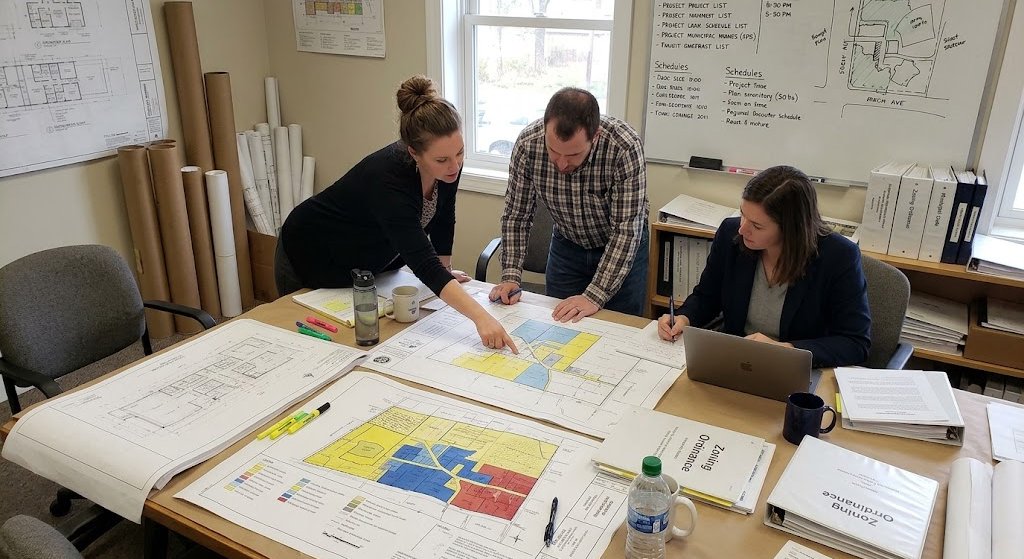

A development feasibility study is one of the first and most important steps in any real estate project. Before money is spent on land, design, or permits, developers need to understand whether a project makes sense. This is where feasibility analysis comes in.
At its core, a feasibility study helps answer a simple question: Is this project worth pursuing? It looks at the site, the market, the costs, and the risks. It brings all the key factors into one clear picture so better decisions can be made early.
For developers, investors, and landowners, this process reduces uncertainty. It highlights potential problems before they become expensive issues. It also provides a solid foundation when working with city agencies, lenders, and partners.
In land use and permitting, feasibility studies are even more valuable. Zoning rules, entitlement timelines, and regulatory hurdles can quickly change a project’s direction. A well-prepared study helps you plan around these challenges instead of reacting to them later.
Table of Contents
What Is a Development Feasibility Study?
A development feasibility study is a structured analysis that evaluates whether a proposed project is practical, compliant, and financially viable. It combines research, data, and expert insight to guide decision-making before moving forward.
Simple Definition (Humanized)
In simple terms, a feasibility study is a reality check for your project.
It looks at:
What you want to build
Where you want to build it
How much it will cost
Whether it will generate returns
Instead of relying on assumptions, it uses data to test your idea. This helps you avoid costly surprises later in the process.
Think of it as a filter. Projects that pass the feasibility stage move forward with confidence. Projects that don’t can be adjusted—or stopped—before significant money is spent.
Why Feasibility Studies Matter in Development
Every real estate project carries risk. Costs can rise, approvals can be delayed, and market demand can shift. A feasibility study helps reduce these risks by identifying issues early.

Here’s why it matters:
- Prevents costly mistakes
Many failed projects start with poor planning. Feasibility studies catch problems before construction begins. - Supports smarter land acquisition
Buying land without understanding zoning or market demand can lead to losses. - Improves permitting outcomes
Projects aligned with regulations are more likely to get approved quickly. - Builds investor confidence
Lenders and partners want to see clear data before committing funds. - Saves time in the long run
Early analysis avoids delays later in design and approvals.
Key Questions a Feasibility Study Answers
A strong feasibility study answers several critical questions:
Can this project be built on this site?
Does zoning allow this type of development?
Is there enough market demand?
What will it cost to develop?
Will the project generate a reasonable return?
What risks could impact success?
To make this clearer, here is a simple breakdown:
| Question | What It Means |
|---|---|
| Can we build it? | Site conditions, zoning, and infrastructure |
| Should we build it? | Market demand and competition |
| Will it be profitable? | Financial returns and cost analysis |
Types of Development Feasibility Studies
Feasibility is not a single report. It is made up of several focused analyses. Each type looks at a different part of the project. Together, they provide a complete picture.
Market Feasibility
Market feasibility studies focus on demand. They evaluate whether people or businesses will actually use the project once it is built.
This includes:
Population and demographic trends
Local economic conditions
Supply and demand balance
Competing developments
For example, a multifamily project may look strong on paper. However, if the area already has high vacancy rates, demand may not support new units. Market feasibility helps answer: Is there a real need for this project?
Financial Feasibility
Financial feasibility looks at the numbers. It determines whether the project will make money.
Key elements include:
Land acquisition cost
Construction expenses
Soft costs (permits, design, fees)
Operating income
Return metrics such as ROI and IRR
This step often uses financial models to test different scenarios. Small changes in costs or rents can significantly impact profitability.
Technical Feasibility
Technical feasibility focuses on whether the project can physically be built.
This includes:
Site topography
Soil conditions
Access to utilities
Infrastructure capacity
Buildability constraints
For example, a site may look ideal but require expensive grading or utility upgrades. These factors can affect both cost and timeline.
Legal & Regulatory Feasibility
This is one of the most critical areas, especially for land development.
It reviews:
Zoning regulations
Land use designations
Permitting requirements
Entitlement processes
Projects that do not align with local regulations may face delays or rejection. Early review helps identify what is allowed—and what changes may be needed.
Environmental Feasibility
Environmental feasibility evaluates how a project interacts with its surroundings.
It may include:
Environmental impact assessments
Flood zones or protected areas
Air and water quality concerns
Sustainability requirements
Environmental constraints can limit development or require mitigation measures, which add cost and time.
Key Components of a Development Feasibility Study
A complete feasibility study brings multiple components together. Each one plays a role in shaping the final decision.

Market Analysis
Market analysis examines demand, competition, and pricing. It helps determine whether the project fits current and future conditions.
This includes:
Target users or tenants
Comparable properties (comps)
Rental or sales trends
Absorption rates
A strong market supports stable income and long-term value.
Site & Location Analysis
Location is one of the most important factors in development.
Site analysis looks at:
Accessibility and transportation
Nearby amenities
Infrastructure availability
Physical limitations
While overall feasibility considers multiple factors, site analysis focuses specifically on physical conditions, access, and infrastructure.
When these questions are answered early, developers can move forward with clarity instead of uncertainty.
| Factor | Strong Site | Weak Site |
|---|---|---|
| Access | Close to major roads | Limited or indirect access |
| Utilities | Existing connections | Requires upgrades |
| Surroundings | Growing area | Declining market |
| Zoning | Supports project type | Requires changes |
A good site can improve project success. A poor site can create ongoing challenges.
| Category | Estimated Cost |
|---|---|
| Land Purchase | $2,000,000 |
| Construction | $8,000,000 |
| Soft Costs | $1,000,000 |
| Total Cost | $11,000,000 |
Then you compare it with projected income. This helps determine profitability and return.
Development Feasibility Study Example (Real-World Scenario)
Understanding theory is helpful, but real-world examples make it clearer. Let’s look at a simple development scenario.
Example: Multifamily Development
A developer is considering a mid-size apartment project.
Project details:
- Location: Growing suburban area
- Type: Multifamily housing
- Units: 80 apartments
The feasibility study begins with basic assumptions.
Financial Snapshot
Financial modeling ties everything together. It estimates costs, revenue, and returns.
Typical elements include:
Total development cost
Projected income
Financing structure
Profit margins
Developers often test different scenarios to understand risk. For example, what happens if costs increase by 10%? Or if rents decrease?
| Item | Value |
|---|---|
| Land Cost | $2,000,000 |
| Construction Cost | $9,000,000 |
| Soft Costs | $1,500,000 |
| Total Investment | $12,500,000 |
| Annual Rental Income | $1,500,000 |
| Operating Expenses | $500,000 |
| Net Income | $1,000,000 |
Legal & Zoning Review
This step ensures the project complies with local regulations.
It covers:
Zoning classification
Permitted uses
Height and density limits
Parking requirements
If a project does not meet zoning rules, it may require approvals such as rezoning or variances. These processes can take time and add uncertainty.
Risk Assessment
Every project has risks. The goal is to identify and manage them early.
Common risks include:
Market shifts
Construction delays
Cost overruns
Regulatory challenges
By understanding these risks, developers can plan ahead and reduce potential impacts.
Operational Feasibility
Operational feasibility looks at execution. It evaluates whether the team and resources are in place to complete the project.
This includes:
Developer experience
Consultant team
Project timeline
Management capacity
Even a strong project can fail without proper execution.
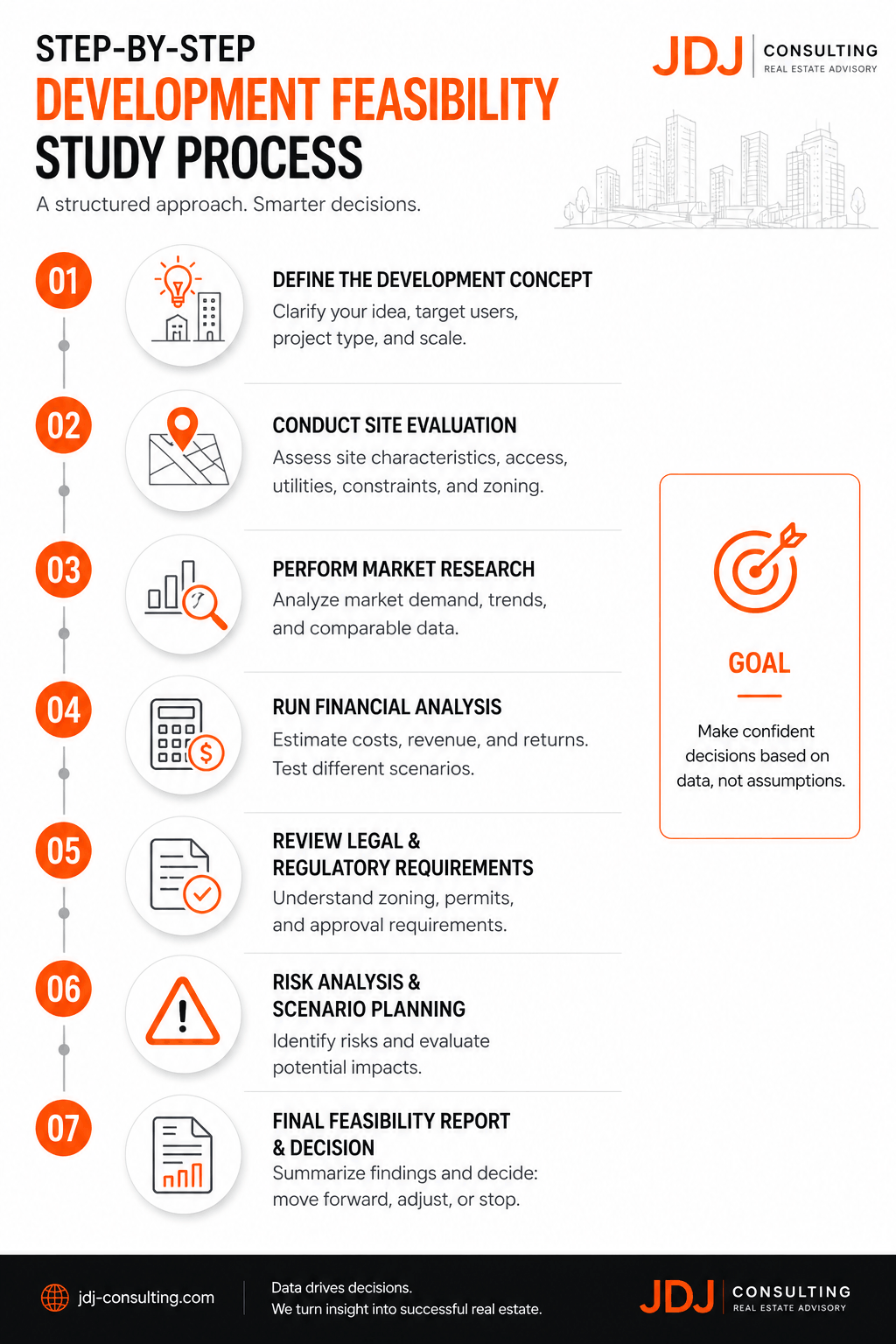
Step-by-Step Development Feasibility Study Process
A feasibility study is most effective when it follows a clear, structured process. Each step builds on the previous one. Skipping steps often leads to gaps in analysis, which can create problems later.
Step 1: Define the Development Concept
Every project starts with an idea. This step turns that idea into a clear concept.
You define:
Property type (multifamily, retail, industrial, mixed-use)
Target users or tenants
Project scale and density
Basic design direction
At this stage, the goal is not perfection. It is clarity. A well-defined concept makes the rest of the analysis more focused and efficient.
Step 2: Conduct Site Evaluation
Once the concept is clear, the next step is to study the site.
This includes:
Lot size and shape
Access points and road connections
Utility availability
Physical constraints such as slope or soil conditions
Zoning review also begins here. You need to confirm whether the site allows your intended use. A quick site check can prevent major issues later. For example, limited access or utility gaps can significantly increase costs.
Step 3: Perform Market Research
Market research tests whether your concept fits the local demand.
You analyze:
Population growth and trends
Employment and income levels
Comparable developments
Vacancy rates and absorption
This step helps answer a key question: Will people actually use this project? If demand is weak, the concept may need to be adjusted before moving forward.
Step 4: Run Financial Analysis
After confirming demand, the next step is financial modeling.
You estimate:
Land and acquisition costs
Construction and development costs
Soft costs such as permits and design
Expected revenue (rent or sales)
Here is a simplified example:
| Item | Value |
|---|---|
| Land Cost | $2,000,000 |
| Construction Cost | $9,000,000 |
| Soft Costs | $1,500,000 |
| Total Investment | $12,500,000 |
| Annual Rental Income | $1,500,000 |
| Operating Expenses | $500,000 |
| Net Income | $1,000,000 |
What This Means
From this data:
- Net income is $1M annually
- Total investment is $12.5M
This gives a rough return of about 8% annually.
Interpreting the Results
At first glance, the project may seem viable. However, deeper analysis is needed.
Questions to consider:
- Is 8% return acceptable for this market?
- What happens if construction costs increase?
- Are rental projections realistic?
Adjusting the Scenario
If construction costs rise by 10%, the numbers change:
| Item | Updated Value |
|---|---|
| Construction Cost | $9,900,000 |
| Total Investment | $13,400,000 |
| Net Income | $1,000,000 |
| New Return | ~7.4% |
A small cost increase reduces returns noticeably. This shows why scenario testing is important.
Key Takeaways from the Example
Feasibility is not just about one set of numbers
Small changes can impact profitability
Market assumptions must be realistic
Financial analysis should include multiple scenarios
Real-world feasibility studies are more detailed, but this example shows the core idea: data drives decisions.
Step 5: Review Legal & Regulatory Requirements
At this stage, the focus shifts to approvals and compliance.
You review:
- Zoning regulations
- Required permits
- Approval timelines
- Potential entitlement processes
Some projects may require:
- Rezoning
- Conditional use permits
- Variances
Understanding these requirements early helps avoid delays.
Step 6: Risk Analysis & Scenario Planning
No project is risk-free. This step identifies what could go wrong and how to prepare.
Common risks include:
- Cost increases
- Market slowdowns
- Approval delays
Developers often test different scenarios:
| Scenario | Impact |
|---|---|
| Costs increase by 10% | Lower profit margin |
| Rents decrease by 5% | Reduced income |
| Approval delay (6 months) | Higher holding costs |
This helps you plan for uncertainty instead of reacting to it later.
Step 7: Final Feasibility Report & Decision
The final step is to bring everything together.
The report summarizes:
- Market findings
- Financial projections
- Site and zoning analysis
- Risks and recommendations
At this point, you make a decision:
- Move forward
- Adjust the project
- Pause or stop
This structured approach ensures decisions are based on data, not assumptions.
Financial Metrics Used in Feasibility Studies
Financial metrics help developers and investors evaluate whether a project is worth pursuing. These metrics turn raw numbers into clear insights.
Key Metrics Explained
Here are the most common metrics used in development feasibility:
Return on Investment (ROI): Measures how much profit is generated compared to the total cost
Net Present Value (NPV): Calculates the value of future cash flows in today’s terms
Internal Rate of Return (IRR): Estimates the annual return rate over the life of the project
Development Margin: Shows profit as a percentage of total development cost
Simple Comparison of Metrics
| Metric | What It Shows | Why It Matters |
|---|---|---|
| ROI | Overall profitability | Easy to understand |
| NPV | Value over time | Accounts for the timing of cash |
| IRR | Annual return rate | Useful for comparing projects |
| Margin | Profit percentage | Shows efficiency |
Each metric provides a different perspective. Together, they give a complete financial picture.
Why These Metrics Matter
These metrics help answer key investment questions:
Is the return strong enough for the risk?
How does this project compare to others?
Does the timeline affect profitability?
Investors rarely rely on one metric alone. They look at multiple indicators to make informed decisions.
Practical Use in Development
In real projects:
ROI gives a quick snapshot
IRR helps compare long-term investments
NPV shows whether the project adds value
For example, a project with a high ROI but low IRR may not be ideal if it takes too long to generate returns.
Balancing Risk and Return
Higher returns often come with higher risk. Feasibility studies help balance this by:
Testing different financial scenarios
Adjusting assumptions
Identifying weak points in the model
This allows developers to refine their strategy before committing resources.
Common Challenges in Development Feasibility Studies
Even with a structured process, feasibility studies are not always straightforward. Many projects face challenges that can affect accuracy and decision-making. Understanding these issues early helps improve the quality of your analysis.
Inaccurate Market Data
Market data is the foundation of any feasibility study. If the data is wrong, the conclusions will also be wrong.
Common issues include:
Outdated demographic information
Incorrect rental or sales comps
Overlooking new developments in the pipeline
For example, a project may appear viable based on current demand. However, if several competing projects are under construction, future demand may weaken.
How to reduce this risk:
Use multiple data sources
Review recent and pipeline developments
Validate assumptions with local experts
Underestimating Costs
Cost estimation is one of the most common weak points in feasibility studies.
Developers often underestimate:
Construction costs
Permit and impact fees
Utility upgrades
Financing costs
Even small errors can have a large impact on returns.
Here is a simple example:
| Scenario | Total Cost | Profit |
|---|---|---|
| Initial Estimate | $10M | $2M |
| +10% Cost Increase | $11M | $1M |
A 10% increase cuts profit in half. This shows how sensitive projects can be to cost changes.
Zoning & Entitlement Risks
Zoning and permitting are often more complex than expected. Projects that seem feasible on paper may face delays or denial during approvals.
Typical challenges include:
Zoning restrictions
Lengthy entitlement processes
Community opposition
Changing regulations
These risks can affect both timeline and budget.
Best practice: Always review zoning early and plan for realistic approval timelines.
Overestimating Demand
Optimistic projections can make a project look stronger than it actually is.
Common mistakes:
Assuming high occupancy rates
Overpricing rents or sales values
Ignoring market saturation
This can lead to lower income once the project is completed.
Lack of Scenario Planning
Some feasibility studies rely on a single set of assumptions. This creates risk because real-world conditions rarely stay constant.
Without scenario planning, developers may not be prepared for:
Market downturns
Cost increases
Delays in construction or approvals
A strong feasibility study always tests multiple scenarios.
Benefits of Conducting a Feasibility Study
Despite the challenges, feasibility studies provide clear advantages. They improve decision-making and reduce uncertainty throughout the development process.
Better Decision-Making
Feasibility studies replace guesswork with data. Instead of relying on assumptions, developers can evaluate real conditions.
This leads to:
More informed project selection
Clear understanding of risks
Stronger planning strategies
Risk Reduction
One of the biggest benefits is risk reduction.
By identifying issues early, developers can:
Adjust project scope
Improve financial planning
Avoid projects that are not viable
This helps prevent costly mistakes later.
Improved Investor Confidence
Investors and lenders want to see well-prepared projects. A detailed feasibility study shows that the project has been carefully evaluated.
This can:
Increase chances of securing funding
Improve loan terms
Attract partners
Cost Savings
Although feasibility studies require upfront investment, they often save money in the long run.
They help avoid:
Purchasing unsuitable land
Designing unbuildable projects
Facing unexpected costs during construction
Clear Project Direction
Feasibility studies provide a roadmap for the project. They align all stakeholders around the same goals and expectations.
Here is a quick summary of benefits:
| Benefit | Impact |
|---|---|
| Better Decisions | Data-driven planning |
| Risk Reduction | Fewer surprises |
| Investor Confidence | Easier funding |
| Cost Savings | Avoid wasted expenses |
| Clear Direction | Strong project alignment |
When Should You Conduct a Feasibility Study?
Timing plays a critical role in development. Conducting a feasibility study at the right stage can significantly improve outcomes.
Early Planning Stage
The best time to start is at the very beginning—before major commitments are made.
At this stage, feasibility helps:
Evaluate multiple site options
Compare development concepts
Identify early risks
Starting early allows flexibility. Changes are easier and less costly.
Before Land Acquisition
Buying land without a feasibility study is risky. You may discover later that the site cannot support your intended project.
A feasibility study before purchase helps:
Confirm zoning and land use
Estimate development costs
Evaluate market demand
This ensures the land aligns with your goals.
Before Permitting & Entitlements
Permitting can be time-consuming and expensive. Entering this phase without proper analysis increases the risk of delays.
Feasibility studies help:
Align the project with zoning requirements
Identify necessary approvals
Prepare for potential challenges
This improves the chances of a smoother approval process.
Before Seeking Investors or Financing
Investors expect clear data and realistic projections. A feasibility study provides the information they need to evaluate the opportunity.
It helps you:
Present a strong business case
Demonstrate project viability
Build trust with partners
During Project Re-Evaluation
Feasibility is not only for the beginning. It can also be used during the project lifecycle.
For example:
If costs increase
If market conditions change
If the project scope is modified
Re-evaluating feasibility helps ensure the project remains on track.
Tools & Data Used in Feasibility Studies
A strong feasibility study depends on accurate data and the right tools. Without reliable inputs, even the best analysis can lead to poor decisions. Developers use a mix of market data, financial tools, and site analysis systems to build a complete picture.
Market Research Tools
Market research tools help assess demand and competition. These tools provide insights into trends, pricing, and local conditions.
Common data sources include:
Demographic reports (population, income, growth trends)
Real estate market reports
Comparable property data (sales and rentals)
Local economic indicators
Developers often combine public data with private reports to get a clearer view of the market.
Why this matters: Accurate market data ensures your assumptions about demand and pricing are realistic.
Financial Modeling Tools
Financial modeling is typically done using structured spreadsheets or specialized software.
These tools help:
Estimate total development costs
Project income and expenses
Calculate returns such as ROI and IRR
Test multiple scenarios
Most developers rely on detailed pro forma models. These models allow quick adjustments to assumptions, which helps in decision-making.
GIS & Site Analysis Tools
Geographic and site analysis tools are essential for understanding land conditions.
They provide insights into:
Zoning boundaries
Land use designations
Flood zones and environmental constraints
Infrastructure and utility access
These tools help identify physical and regulatory limitations early.
Consultant & Expert Inputs
In addition to software, feasibility studies rely heavily on expert input.
This may include:
Land use consultants
Civil engineers
Architects and planners
Environmental specialists
Each expert contributes to a specific part of the analysis. Together, they ensure the study is both accurate and practical.
Summary of Tools and Their Purpose
| Tool Type | Purpose |
|---|---|
| Market Data Tools | Analyze demand and competition |
| Financial Models | Evaluate costs and returns |
| GIS Tools | Assess site and zoning conditions |
| Expert Consultants | Provide specialized insights |
Using the right combination of tools improves accuracy and reduces uncertainty.
Development Feasibility vs Due Diligence
Many people confuse feasibility studies with due diligence. While they are related, they serve different purposes in the development process.
Key Differences
A simple way to understand the difference is:
Feasibility Study: Should we do this project?
Due Diligence: Verify everything before moving forward
Feasibility focuses on potential. Due diligence focuses on confirmation.
Here is a side-by-side comparison:
| Aspect | Feasibility Study | Due Diligence |
|---|---|---|
| Purpose | Evaluate viability | Verify facts |
| Timing | Early stage | Later stage |
| Focus | Market, financial, zoning | Legal, financial, physical details |
| Outcome | Go / No-Go decision | Risk confirmation |
How They Work Together
These two processes are not separate. They work together in sequence.
Feasibility study comes first: It determines whether the project is worth pursuing
Due diligence comes next: It confirms all assumptions before final commitment
For example:
A feasibility study may assume that zoning allows a project
Due diligence confirms this through official documentation
Why Both Are Important
Skipping feasibility can lead to poor project selection. Skipping due diligence can lead to hidden risks.
Together, they help:
Improve decision-making
Reduce uncertainty
Protect investment
Developers who use both processes are more likely to complete successful projects.
How JDJ Consulting Supports Development Feasibility Studies
Development feasibility is not just about numbers. It also involves strategy, planning, and navigating regulations. This is where experienced consultants add value. JDJ Consulting supports projects from early analysis to final approvals. The focus is on reducing risk and improving outcomes.
Site Analysis & Entitlement Strategy
One of the first steps is understanding what can be built on a site.
This includes:
Zoning and land use review
Development potential analysis
Identification of constraints
A clear entitlement strategy helps avoid delays later in the process.
Feasibility & Risk Assessment
JDJ Consulting helps identify risks early and provide practical solutions.
This includes:
Reviewing project assumptions
Highlighting regulatory challenges
Suggesting alternative approaches when needed
Early risk assessment improves project planning and reduces surprises.
Permitting & Regulatory Expertise
Permitting is often one of the most complex parts of development.
Support includes:
Navigating approval processes
Coordinating with local agencies
Preparing required documentation
This helps streamline approvals and keep projects on schedule.
End-to-End Development Support
Feasibility is only the beginning. JDJ Consulting supports projects throughout the development lifecycle.
Services may include:
Pre-development planning
Entitlement processing
Ongoing project coordination
This ensures consistency from concept to approvals.
Why This Matters
Working with experienced consultants provides:
Better understanding of local regulations
Faster approval timelines
Reduced project risk
In complex development environments, this support can make a significant difference in project success.
Cost of a Development Feasibility Study
The cost of a feasibility study can vary widely depending on the size and complexity of the project. While it may seem like an added expense, it is often a small investment compared to the potential losses from a poorly planned development.
Typical Cost Range
Feasibility study costs are usually based on project scope:
| Project Type | Estimated Cost |
|---|---|
| Small Projects (single-use, low complexity) | $5,000 – $15,000 |
| Mid-Size Developments | $15,000 – $50,000 |
| Large or Complex Projects | $50,000+ |
Smaller projects may only require basic market and financial analysis. Larger developments often need detailed studies involving multiple consultants.
Factors That Affect Cost
Several factors influence how much a feasibility study will cost:
Project Size: Larger developments require more detailed analysis
Site Complexity: Challenging terrain or infrastructure gaps increase effort
Regulatory Requirements: Complex zoning or environmental reviews add time
Level of Detail Needed: High-level studies cost less than detailed, investment-grade reports
Consultants Involved: Engineers, planners, and environmental experts may be required
What’s Included in the Cost
A comprehensive feasibility study may include:
Market research and demand analysis
Financial modeling and projections
Site and zoning review
Risk assessment
Preliminary development strategy
More detailed studies may also include environmental assessments and conceptual design input.
Is It Worth the Cost?
In most cases, yes. A feasibility study helps avoid much larger losses.
For example:
Buying land that cannot be developed
Underestimating construction costs
Entering a weak market
Spending upfront on analysis often saves significant time and money later.
Final Thoughts: Why Feasibility Studies Are Critical for Successful Development
Development projects involve many moving parts. Without proper analysis, even experienced developers can face unexpected challenges. A feasibility study brings clarity to the process. It connects market conditions, financial data, site constraints, and regulations into one clear framework.
Key Takeaways
Every development idea should be tested before moving forward
Data-driven decisions reduce risk and improve outcomes
Small errors in assumptions can significantly impact profitability
Early planning leads to smoother approvals and execution
The Role of Feasibility in Long-Term Success
Feasibility studies are not just about deciding whether to proceed. They also help shape better projects.
They allow developers to:
Refine project concepts
Adjust scale and design
Align with market demand
Plan for regulatory requirements
This leads to stronger, more resilient developments.
A Practical Approach
Successful developers treat feasibility as an essential step, not an optional one.
They:
Start early
Use reliable data
Test multiple scenarios
Work with experienced consultants
This approach improves both short-term decisions and long-term results.
FAQs About Development Feasibility Studies
What is a development feasibility study in real estate?
A development feasibility study is a detailed analysis used to determine whether a real estate project is practical and financially viable. It looks at market demand, site conditions, costs, and regulations before any major investment is made.
It typically includes:
Market research to assess demand
Financial projections for costs and returns
Zoning and site analysis
This process helps developers avoid costly mistakes and make informed decisions early.
Why is a feasibility study important before buying land?
A feasibility study ensures the land you plan to purchase can actually support your project. Without it, you risk buying property that cannot be developed as intended due to zoning or physical constraints.
It helps you:
Confirm permitted land uses
Estimate total development costs
Evaluate demand in the area
By doing this upfront, you reduce financial risk and avoid delays later.
What are the key components of a feasibility study?
A feasibility study combines several key components to give a complete picture of a project’s viability. Each part focuses on a different factor that affects success.
Core components include:
Market analysis to understand demand
Site and location review
Financial modeling and projections
Zoning and legal review
Risk assessment
Together, these elements help determine whether the project should move forward.
How long does a development feasibility study take?
The time required depends on project size and complexity. Smaller projects may only need a few weeks, while larger developments require more detailed analysis.
Typical timelines:
Small projects: 2–4 weeks
Medium projects: 4–8 weeks
Large or complex projects: 2–3 months
Projects involving multiple consultants or regulatory reviews often take longer.
How much does a feasibility study cost?
The cost of a feasibility study varies based on the level of detail and project scope. More complex developments require more in-depth analysis and expert involvement.
Typical ranges:
Small projects: $5,000–$15,000
Mid-size projects: $15,000–$50,000
Large developments: $50,000+
While it adds upfront cost, it often prevents much larger financial losses.
What is the difference between a feasibility study and due diligence?
A feasibility study evaluates whether a project is worth pursuing, while due diligence verifies all details before final investment. They are different but closely related steps.
Key difference:
Feasibility = decision-making tool
Due diligence = verification process
Feasibility comes first to assess potential, and due diligence follows to confirm all assumptions.
What is market feasibility in real estate development?
Market feasibility focuses on whether there is enough demand for the project. It analyzes local conditions to ensure the development will attract tenants or buyers.
It evaluates:
Population and economic trends
Competing properties
Pricing and absorption rates
This helps determine if the project fits the current and future market.
What is financial feasibility in development?
Financial feasibility assesses whether the project will generate acceptable returns compared to its costs. It is a key part of decision-making for developers and investors.
It includes:
Total development costs
Projected income
Return metrics such as ROI and IRR
This analysis shows whether the project is financially sustainable.
What risks are identified in a feasibility study?
A feasibility study highlights risks that could impact the project’s success. Identifying these early allows developers to plan and reduce potential issues.
Common risks include:
Cost overruns during construction
Weak or declining market demand
Zoning and permitting delays
Financing challenges
Understanding these risks helps improve planning and reduce uncertainty.
Can a feasibility study guarantee project success?
A feasibility study cannot guarantee success, but it significantly improves the chances of a successful project. It provides data-driven insights rather than relying on assumptions.
It helps by:
Identifying potential issues early
Providing realistic projections
Supporting better decision-making
While conditions may change, it reduces uncertainty and improves outcomes.
When should you conduct a feasibility study?
A feasibility study should be conducted as early as possible in the development process. Early analysis allows for adjustments before major costs are incurred.
Best times include:
Before purchasing land
Before starting design
Before seeking financing
This ensures your project is aligned with market and regulatory conditions.
What tools are used in feasibility studies?
Feasibility studies rely on a mix of tools and data sources to ensure accuracy. These tools help analyze market conditions, financial performance, and site constraints.
Common tools include:
Market research databases
Financial modeling spreadsheets
GIS and zoning analysis tools
Consultants also provide expert input to strengthen the analysis.
What is site feasibility in development?
Site feasibility evaluates whether the physical characteristics of a property support the proposed project. It focuses on practical and technical factors.
It examines:
Land size and shape
Access and infrastructure
Utility availability
Environmental constraints
This ensures the site can accommodate the development without major issues.
What is zoning feasibility?
Zoning feasibility determines whether local regulations allow the proposed development. It is a critical step before moving forward.
It includes reviewing:
Permitted land uses
Density and height limits
Parking and design requirements
If zoning does not align, developers may need approvals such as rezoning or variances.
What happens if a project is not feasible?
If a project is not feasible, it does not mean the idea must be abandoned completely. Developers often adjust their approach.
Possible actions include:
Modifying the project design
Reducing scale or density
Selecting a different site
Pausing the project
This prevents further investment in a project that may not succeed.
How accurate are feasibility studies?
Feasibility studies are based on data and assumptions, so their accuracy depends on the quality of inputs. They are not perfect but are highly useful.
Accuracy improves with:
Reliable and current data
Realistic assumptions
Experienced professionals
They provide a strong foundation for decision-making.
Do lenders require feasibility studies?
Many lenders expect feasibility analysis before approving financing. It helps them evaluate the project’s risk and potential return.
It provides:
Clear financial projections
Market validation
Risk assessment
A strong feasibility study can improve approval chances and financing terms.
What is included in a feasibility report?
A feasibility report compiles all findings into a structured document. It provides a clear overview of the project’s viability.
It usually includes:
Market analysis
Financial projections
Site and zoning review
Risk assessment and recommendations
This report supports decision-making and investor discussions.
Can feasibility studies be updated during a project?
Yes, feasibility studies can and should be updated as conditions change. Development projects often evolve over time.
Updates may be needed when:
Costs increase
Market conditions shift
Project scope changes
Revisiting feasibility helps keep the project aligned with current realities.
Why work with a consultant for feasibility studies?
Working with a consultant improves the quality and reliability of a feasibility study. Consultants bring experience, data access, and regulatory knowledge.
They help:
Identify risks early
Navigate zoning and permitting
Improve accuracy of projections
This leads to better planning, fewer delays, and stronger project outcomes.