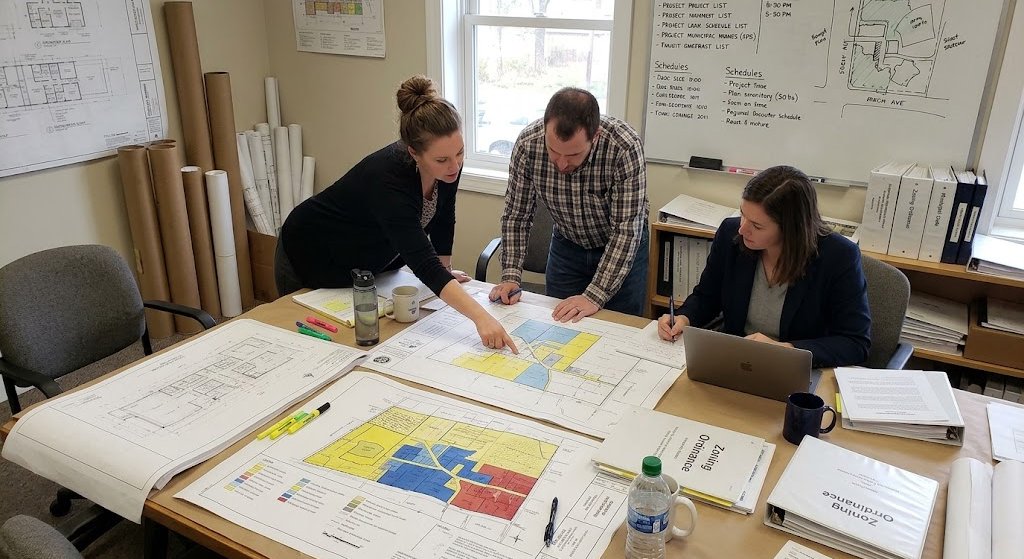

Texas is growing fast. New homes, apartments, offices, warehouses, and mixed-use projects are being built across the state. As development increases, cities must review more permit applications than ever before.
To keep up, many Texas cities now use digital permitting portals. These online systems allow developers, builders, architects, and property owners to handle much of the permit process online.
In the past, getting permits often meant printing large plan sets, visiting city offices, and making countless follow-up calls. Today, many of those tasks can be completed from a computer. That sounds simple. However, digital permitting does not automatically mean faster approvals.
Projects still need complete applications. Plans must meet local codes. Zoning requirements still apply. Review comments must still be addressed. The portal is simply a tool. Success still depends on good preparation and strong project management.
For developers and investors, understanding how these systems work can save time and reduce delays. It can also help teams avoid costly mistakes during the approval process.
This guide explains what digital permitting portals are, how they work in Texas, and what developers should know before submitting applications.
Table of Contents
Key Development & Permitting Statistics
Texas remains one of the busiest development markets in the country. As construction activity grows, cities continue investing in online permitting systems.
A few numbers help show the scale of this shift:
Austin’s permit database contains more than 2.3 million permit records.
Dallas uses digital tools to track permit activity and review performance.
Many Texas cities now offer online permit applications and plan reviews.
Digital systems continue replacing paper-based permitting processes.
Building permit activity remains a major measure of construction growth.
These trends show one clear reality. Digital permitting is no longer optional in many cities. It has become a normal part of the development process. For small projects, the difference may seem minor. For larger developments, however, online systems can save significant time and reduce administrative work.
What Are Digital Permitting Portals?
A digital permitting portal is an online platform used by cities to manage permits and development applications. Instead of relying on paper documents, applicants submit information through a web-based system.
Most portals allow users to complete nearly every step of the permitting process online. While each city uses different software, the overall process is usually very similar.
Digital Permitting Portal Definition
At its core, a digital permitting portal is a central location where applicants and city reviewers manage permits. The portal stores project information, plans, comments, approvals, payments, and inspection records in one place.
Think of it as an online workspace for the permit process. Instead of searching through emails or calling different departments, users can often find everything within a single system.
How Digital Permitting Portals Differ From Traditional Processes
A traditional permit process often involved several trips to city offices.
Applicants usually had to:
Fill out paper forms
Print construction plans
Deliver documents in person
Wait for updates by phone or email
Submit revised plans multiple times
The process worked, but it was often slow. Digital permitting removes many of those extra steps.
Today, applicants can:
Submit applications online
Upload plans instantly
Receive review comments electronically
Pay fees through the portal
Track application status anytime
Schedule inspections online
The review itself still takes time. However, the process becomes easier to manage.
Core Functions Found in Most Texas Permit Portals
Most permit systems offer the same basic tools.
Application Submission
The first step is entering project information online.
This usually includes:
Property address
Project description
Owner details
Contractor information
Design team information
Plan Uploads
Applicants upload project documents directly to the portal.
Common documents include:
Architectural plans
Site plans
Surveys
Engineering reports
Supporting studies
Plan Review
City departments review the submitted documents. Depending on the project, reviews may come from:
Building officials
Planning staff
Fire departments
Public works departments
Utility agencies
Several departments can review the project at the same time, which often improves efficiency.
Review Comments
Reviewers post comments directly in the system.
These comments may identify:
Missing information
Code issues
Design concerns
Required corrections
Applicants then upload revised documents for another review.
Online Payments
Most portals accept digital payments.
Fees may include:
Application fees
Review fees
Permit fees
Inspection fees
Inspection Scheduling
After permit approval, inspections can often be requested online. Results are usually posted in the portal shortly after the inspection is completed.
Who Uses Digital Permitting Portals?
Many people rely on these systems during a project.
Common users include:
Developers
Investors
Property owners
Architects
Engineers
Contractors
Development consultants
On larger projects, several team members may use the same application at different stages. This makes communication easier and helps everyone stay informed.
Digital permitting has improved the way many Texas cities process applications. Still, technology is only one part of the process. Understanding local requirements remains just as important for keeping a project on schedule.
Why Texas Cities Are Moving Toward Digital Permitting
More Texas cities are moving permit applications online. The change is happening for a simple reason. Development activity continues to grow, and local departments need better ways to handle increasing workloads.
Paper-based systems can slow projects down. Documents get misplaced. Updates take longer. Communication becomes harder when multiple departments are involved.
Digital permitting portals help solve many of these issues. They do not remove permit requirements. They simply make the process easier to manage for both applicants and city staff.
Faster Permit Processing
One of the biggest reasons cities adopt digital permitting systems is speed. With paper applications, documents often move from one department to another manually. That takes time.
Digital systems allow reviewers to access files immediately. Multiple departments can often review the same project at the same time. As a result, many projects move through the process more efficiently.
That does not mean approvals happen overnight. Reviews still require careful evaluation. However, the administrative side of the process becomes much faster.
Better Transparency
Many developers become frustrated when they do not know the status of a permit application. With traditional systems, applicants often had to call city staff for updates. Digital permitting portals provide more visibility.
Most systems allow users to see:
Current review status
Review comments
Required corrections
Outstanding fees
Inspection results
Approval milestones
This helps project teams stay informed without making constant follow-up calls.
Easier Communication
Permit reviews often involve several departments.
A project may need input from:
Planning
Building
Fire
Public Works
Utilities
Environmental Services
In a paper-based system, communication between departments can be slow. Digital portals keep information in one location. Everyone works from the same documents and review history. This reduces confusion and helps create a more organized review process.
Improved Document Management
Development projects generate a large number of documents.
These may include:
Site plans
Architectural drawings
Civil plans
Surveys
Engineering reports
Environmental studies
Managing paper copies can become difficult.
Digital systems store everything electronically. Project teams can quickly access the most recent versions of documents whenever needed.
Reduced Administrative Costs
Processing paper applications requires staff time and physical storage space. Cities must print documents, file records, and manage large archives. Digital permitting systems reduce many of these costs. At the same time, applicants often spend less money on printing, shipping, and document handling.
Remote Access for Applicants
Development teams are not always located in the same city as a project. A developer in Miami may own property in Austin. An architect in Dallas may be working on a project in Houston.
Digital permitting portals allow teams to work remotely. Applications can be submitted from anywhere with internet access. Reviews can be monitored without visiting city offices.
This flexibility has become especially valuable for larger development teams managing projects across multiple markets.
Support for Growing Development Activity
Texas continues to attract new residents and businesses. As cities grow, permit volumes increase. Local governments need systems that can handle higher application numbers without creating major backlogs.
Digital permitting helps cities manage this growth more effectively. While every city faces different challenges, most are working toward the same goal: improving service while maintaining compliance and public safety.
Table: Why Cities Are Adopting Digital Permitting
| Challenge With Traditional Systems | Benefit of Digital Permitting |
|---|---|
| Paper applications | Online submissions |
| Manual file transfers | Instant document access |
| Limited status visibility | Real-time tracking |
| Multiple office visits | Remote access |
| Physical document storage | Digital records |
| Slow communication | Centralized updates |
| Printing costs | Reduced paperwork |
| Higher administrative workload | More efficient workflows |
How Digital Permitting Portals Work Step by Step
For many first-time applicants, the permit process can feel overwhelming. The good news is that most digital permitting systems follow a similar structure. While each city has its own portal, the overall process usually follows the same path.
Step 1: Create an Applicant Account
The process starts with account registration.
Applicants typically provide:
Name
Company information
Contact details
Email address
Once the account is approved, users can access the portal dashboard.
Step 2: Start a New Application
The applicant selects the type of permit needed.
Common options may include:
Building permits
Site development permits
Grading permits
Demolition permits
Trade permits
The portal then requests project-specific information. Accuracy is important at this stage. Errors can create delays later.
Step 3: Upload Required Documents
After entering project details, applicants upload supporting documents. Requirements vary by project type.
Common uploads include:
Site plans
Architectural drawings
Surveys
Structural plans
Engineering reports
Most cities provide file format and naming requirements. Following those instructions helps avoid unnecessary corrections.
Step 4: Initial Agency Review
City staff reviews the submission for completeness.
They verify that:
Required documents are included
Forms are complete
Fees are submitted if required
If information is missing, the application may be returned for corrections before technical reviews begin.
Step 5: Department Reviews
Once accepted, the project moves through technical reviews. Several departments may review the project simultaneously.
These reviews often include:
Building compliance
Zoning compliance
Fire safety
Utility requirements
Public works standards
Review timelines vary based on project complexity and local workloads.
Step 6: Address Review Comments
Most projects receive comments during review. This is normal.
Comments may request:
Additional information
Drawing revisions
Code clarifications
Design modifications
Applicants update the documents and upload revised versions through the portal. The project then returns for re-review.
Step 7: Pay Permit Fees
After approvals are complete, permit fees are assessed. Many systems allow payment directly through the portal. Once payment is confirmed, the permit can move toward issuance.
Step 8: Permit Issuance
The approved permit becomes available electronically. Applicants can usually download the permit directly from the system. Construction activities may begin once all required approvals are in place.
Step 9: Schedule Inspections
During construction, inspections are scheduled through the portal.
Typical inspections may include:
Foundation inspections
Framing inspections
Mechanical inspections
Electrical inspections
Final inspections
Results are typically posted online after completion.
Step 10: Receive Final Approval
After all required inspections pass, the project receives final approval. The permit record remains stored within the system for future reference. For developers, this digital record can be valuable during future property transactions, financing reviews, or project audits.
Types of Permits Commonly Processed Through Digital Portals
Digital permitting portals handle many types of development approvals. The exact list depends on the city, but most Texas municipalities process similar permits through their online systems.
Knowing which permit applies to your project is important. Submitting the wrong application can lead to delays before the review even begins.
Building Permits
Building permits are the most common permits processed through digital portals.
These permits typically cover:
New construction
Building additions
Interior renovations
Tenant improvements
Structural modifications
Most commercial and residential projects require a building permit before construction begins.
Site Development Permits
Site development permits focus on work occurring outside the building itself.
These permits often cover:
Site grading
Drainage improvements
Utility connections
Parking areas
Stormwater systems
Many projects require site development approvals before building permits can move forward.
Grading Permits
Projects involving significant earthwork usually require grading permits.
Examples include:
Excavation
Fill placement
Slope modifications
Site preparation
Cities review grading plans to ensure proper drainage and erosion control.
Demolition Permits
Existing structures often need demolition approval before redevelopment begins.
A demolition permit may be required for:
Residential buildings
Commercial structures
Accessory buildings
Partial building removal
Many cities also require utility disconnection verification before demolition approval.
Utility Permits
Utility-related work often requires separate permits.
Common examples include:
Water connections
Sewer connections
Storm drainage systems
Electrical infrastructure
Utility relocations
These permits may involve reviews from multiple agencies.
Trade Permits
Trade permits cover specialized construction work.
Typical categories include:
Electrical permits
Mechanical permits
Plumbing permits
Fire protection permits
Contractors often obtain these permits separately from the primary building permit.
Occupancy and Final Approval Permits
Before a building can be occupied, final approvals are usually required.
Depending on the city, this may include:
Certificate of Occupancy
Temporary Certificate of Occupancy
Final building approval
These approvals confirm that the project meets applicable requirements and has passed required inspections.
Table: Common Permits Processed Through Digital Portals
| Permit Type | Typical Purpose | Common Project Types |
|---|---|---|
| Building Permit | Construction approval | Residential and commercial |
| Site Development Permit | Site improvements | New developments |
| Grading Permit | Earthwork activities | Large sites |
| Demolition Permit | Structure removal | Redevelopment projects |
| Utility Permit | Utility infrastructure | Commercial and residential |
| Trade Permit | Specialized systems | Construction projects |
| Occupancy Approval | Final use authorization | Completed buildings |
Many larger developments require several permit types. Because of this, project teams should review local requirements early in the planning process.
Texas Cities Leading Digital Permitting Adoption
Texas cities have invested heavily in online permitting over the past decade. While every municipality has its own process, several cities have become leaders in digital permit management.
Their systems continue to evolve as development activity increases.
Austin Digital Permitting Systems
Austin has one of the most active development environments in Texas. The city has expanded online permitting services to support a growing number of residential and commercial projects.
Applicants can generally:
Submit applications online
Upload plans electronically
Track review progress
Receive review comments
Schedule inspections
Austin continues to expand digital services as development demand grows.
Dallas Digital Development Services
Dallas has also invested significantly in digital permitting technology. The city uses online systems to manage permit reviews, approvals, and project tracking.
For developers, digital access provides better visibility throughout the approval process. This is especially valuable for large commercial and mixed-use developments.
Houston Online Permit Systems
Houston processes a large volume of development applications each year. To improve efficiency, the city offers multiple online tools for permit applications and project reviews.
Digital access helps applicants:
Submit required documents
Monitor application status
Receive agency feedback
Manage approvals more efficiently
Houston’s development activity makes online systems increasingly important for both applicants and city staff.
San Antonio Development Portals
San Antonio continues expanding its digital development services. Many permitting and review functions are now available online. These tools help reduce paperwork while improving communication between applicants and review agencies. For developers working on multiple projects, centralized access can simplify project management.
Growing Adoption Among Mid-Sized Cities
Digital permitting is no longer limited to major metropolitan areas. Many mid-sized Texas cities are also investing in online systems.
Examples include cities experiencing rapid population growth and increased development activity. As permit volumes rise, municipalities are looking for better ways to manage applications while maintaining review quality.
Table: Digital Permitting Trends Across Texas
| City Type | Digital Adoption Level | Primary Focus |
|---|---|---|
| Major Metro Cities | Advanced | Full permit lifecycle management |
| Growing Regional Cities | Expanding | Online submissions and reviews |
| Mid-Sized Cities | Increasing | Permit tracking and document management |
| Smaller Municipalities | Developing | Basic online permitting functions |
Although systems vary from city to city, the overall direction is clear. More municipalities are moving permit activities online to improve efficiency and better serve the development community.
Benefits of Digital Permitting Portals for Developers
For developers, time matters. Every delay can affect budgets, financing, contractor schedules, and project delivery dates. Digital permitting portals help reduce some of the administrative challenges that often slow projects down. While they cannot eliminate every review delay, they can make the process easier to manage.
Real-Time Project Visibility
One of the biggest advantages is visibility.
Project teams can often see:
Current review status
Outstanding comments
Pending approvals
Inspection results
Payment requirements
This reduces uncertainty and helps teams make better decisions.
Faster Communication
In traditional systems, obtaining updates often required phone calls or emails. Digital portals place much of that information in one location. Applicants can quickly review comments, respond to requests, and monitor progress without waiting for manual updates.
Reduced Administrative Work
Managing paper files can consume a surprising amount of time.
Digital systems reduce the need for:
Printing large plan sets
Delivering documents in person
Managing physical records
Tracking paperwork manually
This allows project teams to focus more on development activities.
Better Collaboration
Most development projects involve multiple stakeholders.
These may include:
Owners
Developers
Architects
Engineers
Contractors
Consultants
Digital permitting systems help everyone work from the same information. This reduces communication gaps and improves coordination.
Easier Document Management
Development projects generate hundreds or even thousands of files.
Digital portals provide a centralized location for:
Plans
Reports
Review comments
Approvals
Inspection records
Having everything organized in one place can save significant time throughout the project lifecycle.
Improved Schedule Planning
When project teams can see review progress in real time, they can make more informed scheduling decisions.
This helps with:
Contractor coordination
Financing milestones
Procurement planning
Construction scheduling
While permit reviews still require patience, better visibility often leads to better planning.
Common Challenges When Using Digital Permitting Portals
Digital permitting portals make many parts of the approval process easier. However, they do not eliminate every challenge. In fact, some delays happen because applicants assume the technology will handle everything for them. The reality is different.
Most permit delays still come from incomplete applications, missing information, and review comments that take too long to address. Understanding these common issues can help keep projects moving forward.
Incomplete Applications
One of the biggest causes of delays is an incomplete submission. Many applicants rush through the application process and miss required information.
Common examples include:
Missing forms
Incomplete project descriptions
Incorrect property information
Missing signatures
Missing supporting documents
When this happens, city staff often cannot begin the technical review. Instead, the application is returned for corrections. That can add days or even weeks to the schedule.
Incorrect Document Uploads
Uploading the wrong files is another common problem.
Examples include:
Outdated drawings
Wrong plan sheets
Missing reports
Incorrect file names
Unsupported file formats
Most cities provide document requirements within their portals. Following these instructions carefully can prevent unnecessary delays.
Review Comments and Revision Cycles
Very few projects receive approval on the first review. Most applications generate comments from one or more departments.
Comments may address:
Building code compliance
Fire safety requirements
Zoning concerns
Utility issues
Site design questions
The longer it takes to respond, the longer the overall review process becomes. Fast responses often help keep projects on schedule.
Multiple Agency Reviews
Larger projects may require reviews from several departments at the same time.
For example, a commercial project might involve:
Planning
Building
Fire
Public Works
Utilities
Transportation
Sometimes one department’s comments affect another department’s review. This can create additional revision cycles. Good coordination becomes critical in these situations.
Portal-Specific Requirements
Every city uses its own procedures. A process that works in one municipality may not work in another.
Common differences include:
File naming standards
Document formats
Submission requirements
Review workflows
Payment procedures
Teams working across multiple Texas cities must learn each system individually.
Technical Issues
Technology is helpful, but it is not perfect.
Occasionally, applicants experience:
Upload failures
Login issues
System outages
Payment processing problems
Browser compatibility issues
Most issues are temporary. Still, they can affect project schedules if deadlines are approaching.
Table: Common Digital Permitting Challenges and Solutions
| Challenge | Potential Impact | Recommended Solution |
|---|---|---|
| Incomplete application | Review delays | Verify requirements before submission |
| Missing documents | Application rejection | Use submission checklists |
| Wrong file uploads | Additional review cycles | Review files before uploading |
| Slow response to comments | Longer approval timelines | Address comments quickly |
| Multiple agency reviews | Coordination challenges | Track all review comments carefully |
| Technical portal issues | Submission delays | Submit before deadlines when possible |
Lack of Early Planning
Many permitting problems begin long before the application is submitted.
Developers sometimes focus on permit applications before fully understanding:
Zoning requirements
Site constraints
Development standards
Entitlement requirements
As a result, issues appear during review that could have been identified much earlier. A strong pre-development strategy often prevents many permitting delays.
How Digital Permitting Affects Project Timelines
One of the biggest questions developers ask is simple: Will digital permitting make my project move faster?
The answer is usually yes—but only to a point. Digital systems improve efficiency. However, they do not eliminate technical reviews, code requirements, or agency oversight. The biggest benefit is often better visibility throughout the process.
Faster Application Processing
Digital submissions reach reviewers immediately.
There is no need to:
Deliver paper plans
Sort physical documents
Route files manually
This can reduce administrative delays at the beginning of the process. For straightforward projects, this time savings can be significant.
Simultaneous Department Reviews
In traditional systems, departments sometimes reviewed projects one after another. Digital systems often allow multiple reviewers to access plans at the same time. This may shorten overall review periods. For larger projects, parallel reviews can save several weeks compared to older workflows.
Faster Communication
Review comments are typically posted directly within the portal. Applicants receive notifications and can begin revisions quickly. This reduces the waiting period that often occurs when communication depends on phone calls or paper correspondence.
Better Tracking of Project Milestones
Real-time status updates help project teams monitor progress.
Instead of guessing where a project stands, applicants can often see:
Current review stage
Pending reviews
Required corrections
Upcoming inspections
This helps teams make better scheduling decisions.
Delays Still Happen
Even with digital permitting, delays remain possible.
Common causes include:
Incomplete applications
Major design revisions
Staffing shortages
Complex zoning issues
High permit volumes
Coordination between agencies
Technology improves efficiency, but it does not replace the review process itself.
Table: Factors That Influence Permit Timelines
| Factor | Impact on Timeline |
|---|---|
| Complete application | Faster review |
| Missing documents | Slower review |
| Minor revisions | Small delays |
| Major redesigns | Significant delays |
| Simple project scope | Shorter approval period |
| Complex project scope | Longer review period |
| Quick responses to comments | Faster approvals |
| Delayed responses | Extended timelines |
Timeline Expectations for Different Projects
Not every project follows the same schedule. A small tenant improvement project may move through reviews relatively quickly. A large mixed-use development may require months of coordination and multiple review cycles.
Factors that often affect timing include:
Project size
Site complexity
Zoning requirements
Utility improvements
Environmental considerations
Number of reviewing agencies
Because of this, developers should view digital permitting as a tool that improves efficiency rather than a guarantee of fast approvals.
Best Practices for Faster Approvals Through Digital Portals
While no one can guarantee permit approval timelines, certain practices consistently improve the process. Projects that follow these steps often experience fewer delays and fewer review cycles.
Conduct a Pre-Submission Review
Before submitting an application, review every document carefully.
Check for:
Missing forms
Incomplete drawings
Incorrect project information
Missing signatures
Required supporting studies
A thorough review can prevent many common delays.
Verify Zoning Compliance Early
Many permit problems start with zoning issues.
Before submitting plans, confirm:
Allowed land uses
Setback requirements
Height restrictions
Parking requirements
Density limitations
Identifying these issues early saves time later.
Submit Complete Documentation
Reviewers can only evaluate the information provided. Missing documents often trigger immediate delays. Create a submission checklist and verify every required item before uploading files.
Respond to Comments Quickly
Review comments are a normal part of the process. The key is responding efficiently. Projects often lose more time waiting for applicant responses than waiting for agency reviews. Fast, organized responses help maintain momentum.
Keep Documents Organized
Use clear file names and maintain organized records. This becomes especially important when multiple revisions occur. Well-organized documentation reduces confusion and makes future submissions easier.
Monitor the Portal Regularly
Many applicants submit plans and then wait for email notifications. A better approach is to check the portal regularly.
This helps teams identify:
New comments
Status changes
Payment requests
Inspection updates
The faster issues are identified, the faster they can be addressed.
Work With Experienced Consultants When Needed
Complex projects often benefit from outside expertise. Development consultants, permit expeditors, and entitlement specialists can help identify issues before they become costly delays.
For projects involving multiple agencies or complicated approvals, professional guidance can significantly improve efficiency.
The Role of Feasibility and Entitlement Strategy Before Submission
Many permit delays happen before the permit application is even submitted. A project may look good on paper, but hidden zoning restrictions, land-use limitations, or agency requirements can create major problems later.
This is why experienced developers spend time on feasibility and entitlement planning before entering the permitting stage. A strong strategy early in the process often leads to smoother approvals later.
Why Feasibility Analysis Matters
A feasibility study helps determine whether a project can realistically move forward.
It typically reviews:
Zoning regulations
Site constraints
Development potential
Infrastructure availability
Approval risks
This early analysis helps developers avoid investing time and money into projects with significant barriers.
Identifying Zoning Issues Early
Many permit applications are delayed because zoning questions were not addressed beforehand.
Common issues include:
Use restrictions
Density limits
Height restrictions
Setback requirements
Parking standards
Finding these issues before design work begins can save months of revisions later.
Reducing Risk Before Permit Submission
Permit reviews are not the ideal time to discover major project problems. The best projects identify risks early and develop solutions before applications are submitted.
This approach often leads to:
Fewer review comments
Shorter approval timelines
Lower redesign costs
Better project predictability
Improving Approval Chances
Projects that align with local regulations from the start typically move through reviews more efficiently. Good planning does not guarantee approval. However, it helps reduce avoidable obstacles that commonly slow development projects.
Permit Expediting in a Digital Permitting Environment
Some developers assume digital permitting systems have eliminated the need for permit expediting. In reality, permit expediting remains an important part of many projects. Technology helps organize the process, but it does not replace coordination, communication, or problem-solving.
What Permit Expediting Looks Like Today
Modern permit expediting focuses on helping projects move efficiently through the review process.
This may include:
Reviewing submission packages
Coordinating with agencies
Monitoring review progress
Addressing comments quickly
Identifying approval risks
The goal is not to skip requirements. The goal is to reduce avoidable delays.
How Expeditors Add Value
Experienced permit consultants understand local processes and review expectations.
They often help teams:
Prepare stronger submissions
Reduce revision cycles
Improve communication
Resolve issues faster
This can be especially valuable on larger projects involving multiple departments.
Projects That Benefit Most
Permit expediting is often helpful for:
Commercial developments
Multifamily projects
Mixed-use projects
Time-sensitive developments
Projects requiring multiple approvals
The more complex the project, the greater the potential benefit.
Future of Digital Permitting Portals in Texas
Digital permitting continues to evolve. Many cities are investing in new technologies that improve efficiency and provide better information to applicants. While the core review process will remain important, the tools supporting that process are becoming more advanced.
Greater Automation
Many municipalities are exploring automated reviews for basic compliance checks.
These tools may help identify:
Missing documents
Incomplete applications
Formatting issues
This could reduce administrative review time in the future.
Better Data Integration
Future systems may connect permitting platforms with:
GIS mapping tools
Zoning databases
Property records
Utility systems
This would provide faster access to project information.
Improved Applicant Experience
Cities continue working to make permitting systems easier to use.
Future improvements may include:
Better dashboards
Mobile-friendly access
Faster notifications
Improved document management
The overall goal remains the same: helping applicants and agencies work more efficiently.
When to Hire a Development Consultant
Not every project requires outside assistance. However, some projects benefit greatly from experienced guidance.
A development consultant may be worth considering when:
Multiple agencies are involved
Entitlements are required
The site has zoning challenges
Timelines are critical
Significant capital is at risk
The cost of expert guidance is often much lower than the cost of major project delays.
Conclusion
Digital permitting portals have become a standard part of development across Texas. They help cities manage growing permit volumes while giving developers better access to project information. Online applications, digital reviews, electronic payments, and inspection scheduling have made the process more efficient than traditional paper-based systems.
Still, technology alone does not guarantee faster approvals.
Successful projects depend on complete applications, strong zoning analysis, organized documentation, and timely responses to review comments. Developers who prepare early and understand local requirements often experience fewer delays and smoother reviews.
As Texas continues to grow, digital permitting will play an even larger role in the development process. Understanding how these systems work can help developers, investors, architects, and builders reduce risk and keep projects moving forward.
Need Help With Permits or Development Approvals?
JDJ Consulting Group offers a free consultation for developers, investors, architects, and builders seeking support with permit expediting, entitlement strategy, feasibility studies, due diligence, and development approvals.
Call (818) 793-5058 or email sales@jdj-consulting.com to discuss your project in Los Angeles, Austin, Miami, or anywhere in the United States.
FAQs About Digital Permitting Portals
What is a digital permitting portal?
A digital permitting portal is an online platform used by local governments to manage permit applications and development approvals.
Most systems allow applicants to:
Submit permit applications
Upload plans and documents
Track review progress
Pay fees online
Schedule inspections
These portals replace many paper-based processes and improve communication between applicants and reviewing agencies.
Do all Texas cities use digital permitting portals?
No. However, many Texas cities have adopted some form of digital permitting system.
Large cities such as Austin, Dallas, Houston, and San Antonio offer extensive online permitting services. Smaller municipalities may still use a combination of online and traditional processes.
Applicants should always review the specific requirements of the city where their project is located.
Can digital permitting portals speed up permit approvals?
They can improve efficiency, but they do not automatically guarantee faster approvals.
Digital systems reduce administrative delays by allowing online submissions, electronic reviews, and real-time tracking. However, technical reviews, code compliance checks, and agency approvals still require time.
The quality of the application remains one of the biggest factors affecting approval timelines.
What documents are usually required for permit applications?
Requirements vary by project type and municipality.
Common documents include:
Site plans
Architectural drawings
Surveys
Engineering reports
Construction details
Supporting studies
Submitting complete and accurate documentation helps reduce delays during review.
How can developers avoid permit delays?
Several practices can help reduce delays:
Verify zoning requirements early
Submit complete applications
Review documents before uploading
Respond quickly to comments
Monitor permit status regularly
Good preparation often has a greater impact than the technology being used.
What is permit expediting?
Permit expediting is a professional service that helps projects move more efficiently through the approval process.
Permit expeditors often assist with:
Application preparation
Agency coordination
Review tracking
Comment responses
Approval management
The goal is to reduce avoidable delays and improve project efficiency.
How do zoning issues affect permit approvals?
Zoning regulations determine how land can be used and developed.
Common zoning issues include:
Height restrictions
Density limits
Setback requirements
Parking standards
Use restrictions
If a project does not meet zoning requirements, permit approvals may be delayed or denied until those issues are addressed.
What types of projects benefit most from digital permitting?
Almost every project benefits from online permitting systems.
The greatest advantages are often seen in:
Commercial projects
Multifamily developments
Mixed-use projects
Large residential developments
Projects involving multiple agencies
These projects generate large amounts of documentation and require ongoing coordination.
Are inspections handled through digital permitting portals?
In many cities, yes.
Most modern permitting systems allow applicants to:
Request inspections
View inspection schedules
Review inspection results
Track approval status
This helps reduce administrative work and improves visibility during construction.
Should developers hire a consultant before applying for permits?
For simple projects, it may not be necessary.
For larger or more complex developments, professional guidance can help identify risks early and improve project planning.
Consultants often assist with:
Feasibility analysis
Entitlement strategy
Due diligence
Permit expediting
Agency coordination
Early planning often prevents costly delays later in the process.
Discuss Your Project With JDJ Consulting Group
If you’re planning a development project and want guidance on permitting, feasibility studies, entitlement strategy, due diligence, or permit expediting, JDJ Consulting Group offers a free consultation. Call (818) 793-5058 or email sales@jdj-consulting.com to speak with our team. We support projects in Austin, Los Angeles, Miami, and development markets across the country.