You look at your monthly electricity bill and wonder why it keeps going up. Maybe your business is trying to control operating costs. Or maybe you just want more control over your energy use. At some point, solar panels come up in conversation. You hear about long-term savings, tax incentives, and energy independence. It sounds like a smart move.
So you begin planning your solar installation. You speak with an installer, review panel options and compare system sizes. Everything seems straightforward — until someone mentions permits.
That is where most solar projects in Texas slow down.
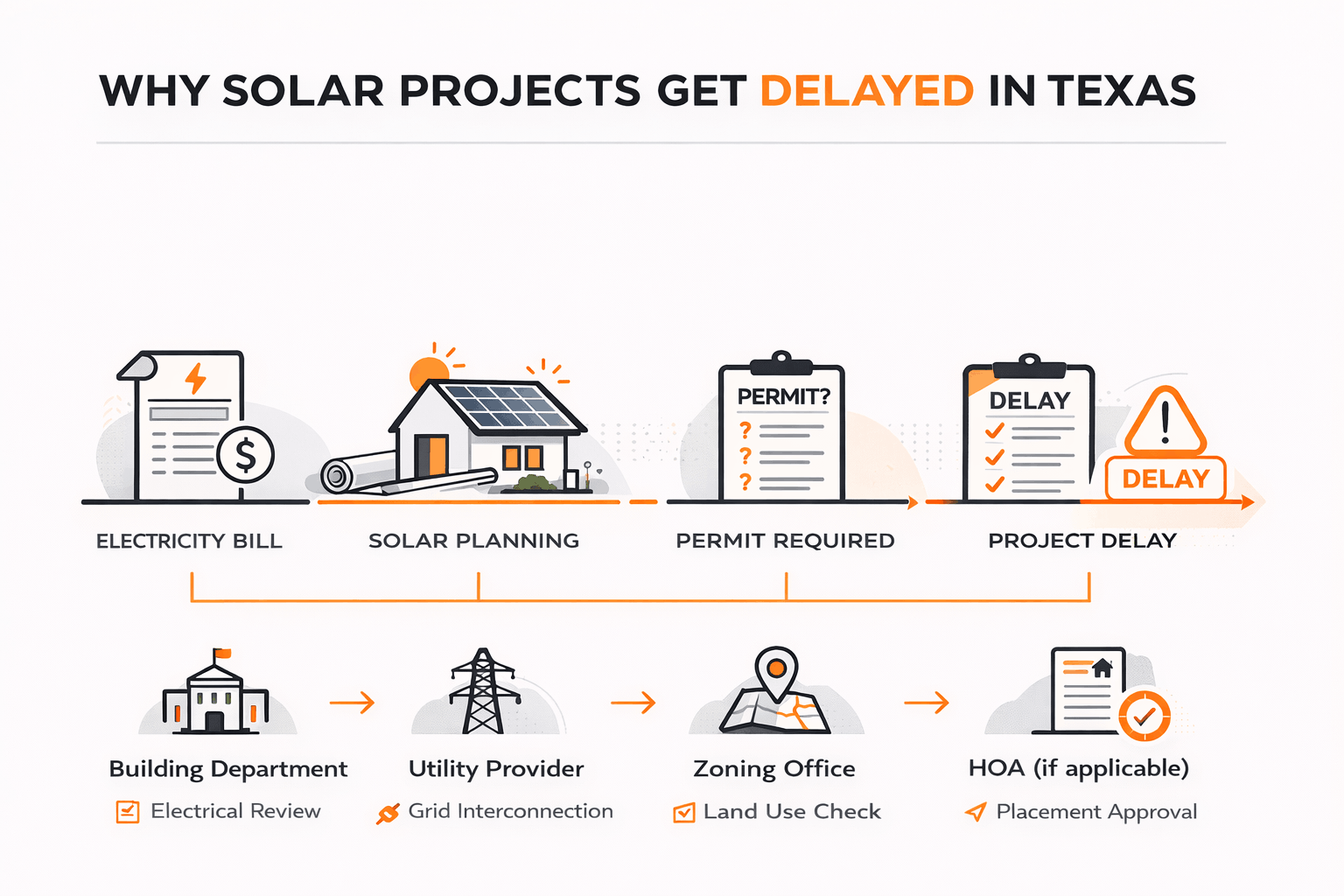
Many property owners assume installing solar panels is just a construction project. In reality, it is also a compliance process. Local building departments, utility companies and zoning offices must approve your installation before work can begin.
Each authority reviews a different part of your system. One checks electrical wiring. Another reviews roof load capacity. Your utility provider studies how your system will interact with the power grid. Even your HOA may have placement guidelines that affect panel layout.
Missing just one approval can delay installation for weeks.
In some cases, projects fail inspection because permit documents were incomplete or submitted incorrectly. Others stall during utility interconnection because zoning clearance was never finalized. These delays are common across both residential and commercial solar installations in Texas.
The truth is, the technology behind solar panels is no longer the biggest challenge. The real hurdle is understanding how the solar installation permit process works in Texas.
This guide explains details solar installation permits Texas. It explains what approvals you need, how the process works, and how to prepare your project for a smooth installation timeline.
Do You Need a Permit to Install Solar Panels in Texas?
Yes. In most cases, you need a permit before installing solar panels in Texas. This applies to both residential and commercial grid-tied systems.
Local building departments require permits to confirm that:
-
Your roof can support the solar panel load
-
The electrical system meets National Electrical Code (NEC) standards
-
Mounting equipment follows fire safety setbacks
-
Wiring and inverter connections are installed safely
Even small rooftop solar setups must go through local approval. Skipping permits can lead to project shutdowns, fines, or failed inspections later.
Below is a simple overview of when permits are usually required:
| Solar Installation Type | Permit Required? | Notes |
|---|---|---|
| Residential Grid-Tied System | Yes | Electrical + Building Permit |
| Commercial Solar System | Yes | Engineering Review Needed |
| Ground-Mounted System | Yes | Zoning Approval Required |
| Off-Grid Residential | Usually | Electrical Inspection May Apply |
| Solar Battery Storage | Yes | Fire Code Compliance Required |
In Texas, permit rules vary by city and county. For example, Houston and Dallas often require full structural plan reviews. Smaller municipalities may only request a basic electrical permit for standard rooftop systems.
Residential vs Commercial Solar Permit Requirements
Residential solar permits are generally simpler. However, they still require proper documentation before approval.
Typical residential permit requirements include:
-
Roof layout showing panel placement
-
Electrical single-line diagram
-
Equipment specification sheets
-
Mounting system details
Commercial solar permits take longer because they involve larger electrical loads and grid export risks. Commercial projects may also require:
-
Professional Engineer (PE) stamped drawings
-
Load calculations
-
Service panel upgrade plans
-
Site development review
Because of these extra steps, commercial solar permits often take twice as long as residential approvals. Here is a comparison:
| Requirement | Residential Solar | Commercial Solar |
|---|---|---|
| Electrical Permit | Required | Required |
| Structural Review | Sometimes | Required |
| Engineering Stamp | Rare | Often Required |
| Zoning Review | Sometimes | Required |
| Utility Study | Basic | Detailed |
Planning for these differences early reduces unexpected approval delays in the project timeline.
Off-Grid Solar System Permit Requirements
Off-grid solar systems do not connect to a utility grid. Still, that does not mean they are exempt from permits. Most Texas jurisdictions require:
-
Electrical safety inspection
-
Mounting system approval
-
Battery storage compliance review
Some counties may waive zoning review for rural properties. However, building permits are still needed to confirm structural safety.
If your off-grid system includes battery storage, fire safety setbacks may also apply. These rules help protect both property owners and emergency responders.
Types of Solar Permits Required in Texas
Solar installation projects in Texas usually involve more than one permit. Each permit covers a different part of the system design or installation process.
Local AHJs often request the following approvals:
-
Electrical permit
-
Building permit
-
Zoning or land-use permit
Understanding how each one works can help you prepare documents correctly before submission.
Electrical Permit for Solar Installations
The electrical permit confirms that your solar power system meets safety standards under the National Electrical Code.
This permit covers:
-
Inverter wiring connections
-
AC and DC disconnect switches
-
Grounding and bonding methods
-
Service panel integration
Inspectors review electrical diagrams to ensure your system will operate safely when connected to the grid. Without this permit, utility companies may refuse to approve your interconnection agreement.
Building Permit for Structural Integrity
A building permit checks whether your roof or mounting surface can safely hold solar panels. Local reviewers assess:
-
Roof load capacity
-
Mount spacing
-
Wind uplift resistance
-
Fire access pathways
Zoning & Land-Use Permit
Zoning permits apply when solar installations affect property layout or visibility. You may need zoning approval if:
-
Your property is in a historic district
-
You are installing ground-mounted panels
-
The system extends beyond roofline limits
-
Commercial site development plans are required
Setback rules often determine how far ground-mounted systems must sit from property boundaries. Failing to meet zoning requirements can delay installation, even if electrical permits are already approved.
Texas Solar Permit Application Process (Step-by-Step)
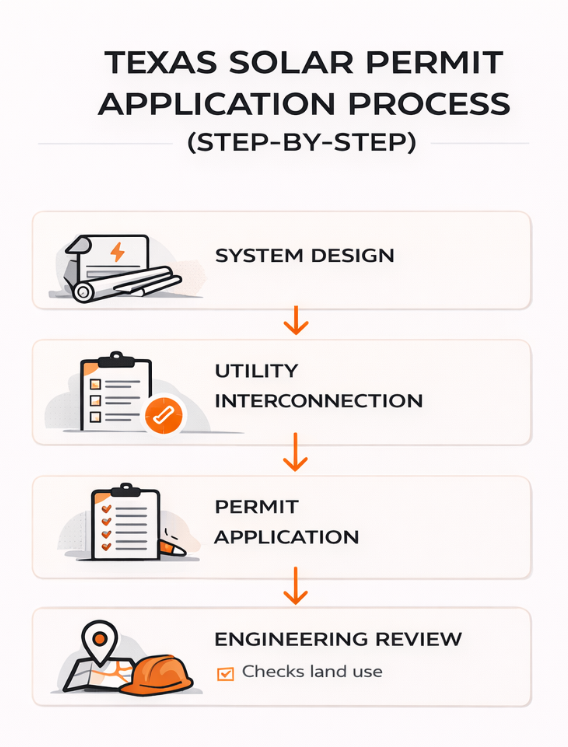
Once your system design is complete, the permit process begins. In Texas, this process involves both local building departments and utility providers. Each authority reviews a different part of your installation plan.
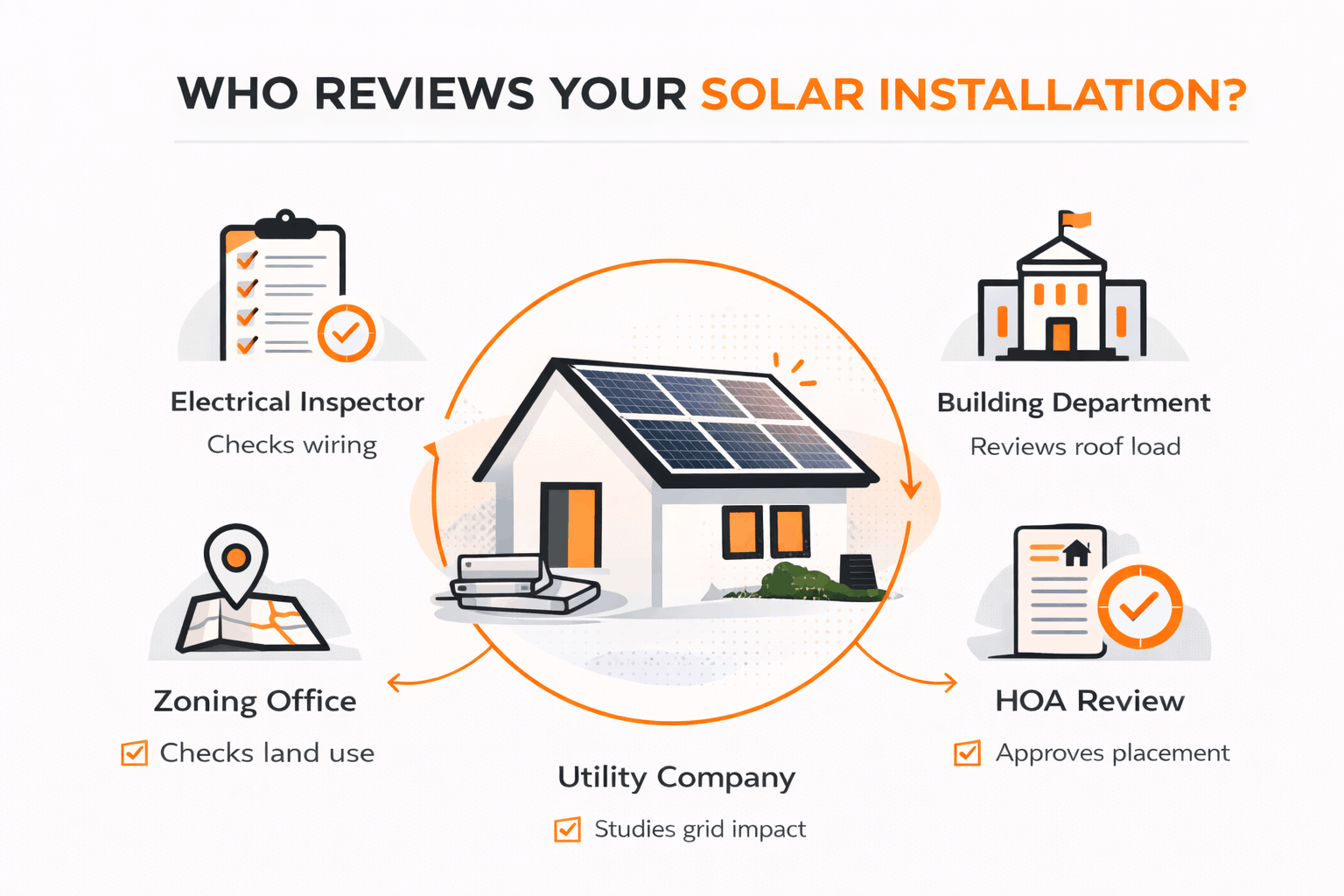
While steps may vary by city, most solar permit approvals follow the same general process.
Step 1: Prepare Solar System Design Documents
Your permit application must include detailed technical drawings. These documents help reviewers understand how your system will be installed and connected.
Most Texas AHJs request:
-
Site plan showing panel layout
-
Roof plan with mounting locations
-
Electrical single-line diagram
-
Equipment specification sheets
-
Inverter installation details
-
Structural load calculations
Commercial projects often require additional engineering reports. If your system exceeds 10kW, stamped drawings from a licensed Professional Engineer (PE) may also be needed.
Incomplete documentation is one of the most common reasons permit applications get rejected. It is best to review your design package carefully before submission.
Step 2: Submit Utility Interconnection Application
If your solar system connects to the power grid, you must apply for utility interconnection approval. This agreement allows your system to:
-
Send excess power back to the grid
-
Operate in parallel with utility supply
-
Receive net metering credits (if available)
Utilities typically request the following details:
| Utility Requirement | Why It Matters |
|---|---|
| System Size (kW) | Determines grid impact |
| Inverter Type | Confirms safety compliance |
| Expected Completion Date | Helps inspection planning |
| Equipment Certifications | Confirms approved hardware |
| Liability Insurance | Required for grid protection |
Processing times vary by provider. In some Texas service areas, interconnection review alone can take several weeks. Submitting this application early helps prevent delays later in the installation phase.
Step 3: Apply for Local Building & Electrical Permits
After preparing your design documents, you must submit them to your local Authority Having Jurisdiction (AHJ). This may include:
-
City building department
-
County planning office
-
Municipal utility authority
Permit reviewers check for:
-
NEC electrical code compliance
-
Structural safety
-
Fire access setbacks
-
Zoning alignment
Here is a general timeline for solar permit approvals in Texas:
| Project Type | Typical Approval Time |
|---|---|
| Residential Rooftop System | 2 – 4 Weeks |
| Commercial Solar Project | 4 – 8 Weeks |
| Ground-Mounted System | 3 – 6 Weeks |
| Large Commercial Array | 6 – 12 Weeks |
Approval times depend on document quality and reviewer workload. Some cities may request corrections or revisions before granting final approval.
Step 4: Engineering Review (If Required)
Not all solar installations require structural review. However, engineering approval is often mandatory for:
-
Commercial rooftop systems
-
Ground-mounted solar arrays
-
Installations above 10kW capacity
-
Systems installed on older buildings
Engineering teams review:
-
Roof load limits
-
Wind uplift factors
-
Mounting rail strength
-
Attachment methods
Once approved, these stamped drawings become part of your final permit file.
Step 5: Installation Inspection & Final Approval
After installation is complete, your system must pass inspection before it can operate.
Inspectors check:
-
Wiring connections
-
Inverter installation
-
Panel mounting
-
Disconnect switches
-
Grounding methods
Some utility providers may also perform a witness test before issuing Permission to Operate (PTO). Without final inspection approval, your system cannot legally connect to the grid.
Solar Installation Permit Costs in Texas
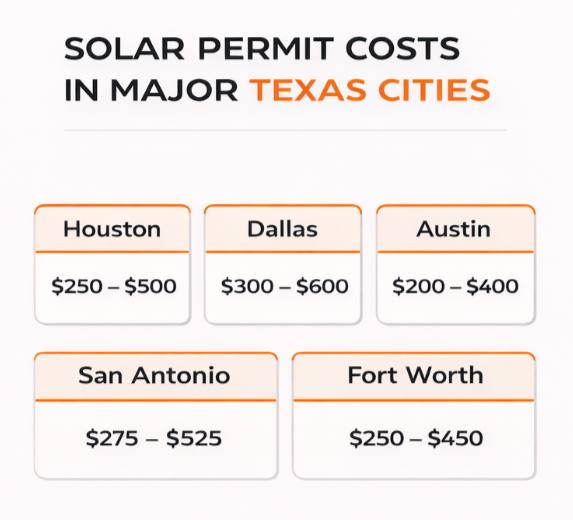
Permit costs vary across Texas municipalities. Residential solar permits are usually affordable, while commercial projects may involve additional review fees.
In most residential cases, permit fees fall between $50 and $500 statewide. Commercial installations may include extra charges for:
-
Engineering review
-
Structural analysis
-
Site plan approval
-
Inspection scheduling
Ground-mounted systems sometimes require zoning application fees as well. Planning for these costs early helps avoid budget surprises during project development.
Here is a general cost range for solar installation permits in major Texas cities:
Texas Solar Laws & HOA Approval Rules
Texas law supports solar energy adoption. However, homeowners associations (HOAs) still play a role in installation approval.
Under Texas Property Code Section 202.010: HOAs cannot fully prohibit solar panel installations. Still, they may enforce reasonable placement guidelines.
They may request:
-
Architectural Review Committee (ARC) approval
-
Panel placement away from street view
-
Flush-mounted rooftop systems
-
Compliance with roofline height limits
HOAs may deny installation if:
-
Panels create safety concerns
-
Installation damages roofing materials
-
System extends beyond allowed boundaries
It is best to request HOA approval before submitting permit applications. Many AHJs will not issue final approval without ARC documentation. Clear communication with your HOA can prevent delays in both zoning review and final inspection stages.
Contractor Licensing Requirements for Solar Installers in Texas
In Texas, solar panel installation is treated as electrical work. Because of this, installers must meet state licensing rules before pulling permits or starting any installation.
Solar systems connect directly to your building’s electrical panel. If installed incorrectly, they can create fire risks or equipment failure. Licensing rules are in place to prevent these issues.
Most solar projects require a contractor with a:
-
Licensed Master Electrician on record
-
State-registered business entity
The licensed contractor is usually responsible for:
-
Submitting permit applications
-
Coordinating inspections
-
Meeting NEC compliance standards
-
Managing utility interconnection requests
If a system is installed by an unlicensed contractor, local authorities may reject the permit application. In some cases, you may be required to remove installed equipment until a licensed electrician completes the work.
Here is a quick overview of installer responsibilities in Texas:
| Installation Task | Licensed Contractor Required? |
|---|---|
| Solar Panel Mounting | Yes |
| Inverter Installation | Yes |
| Electrical Wiring | Yes |
| Battery Storage Setup | Yes |
| Grid Interconnection | Yes |
Working with a licensed installer from the beginning helps avoid inspection failures later in the process.
For commercial solar installations, some AHJs may also request engineering supervision. Larger systems often require stamped drawings or project oversight from a Professional Engineer (PE).
Solar Inspection Requirements in Texas
After installation, your solar energy system must pass inspection before it can operate legally. Inspection confirms that your system meets:
-
Electrical safety standards
-
Structural stability guidelines
-
Local fire code requirements
-
Zoning placement rules
Most Texas jurisdictions conduct inspections in stages.
Rough Electrical Inspection
This inspection happens before final system activation.
Inspectors review:
-
Wiring placement
-
Conduit routing
-
Disconnect switch installation
-
Inverter mounting
If any wiring does not meet NEC standards, corrections must be made before the next inspection step.
Structural Inspection
Structural review confirms that your mounting system is secure.
Inspectors check:
-
Roof attachment points
-
Rail alignment
-
Load distribution
-
Wind uplift resistance
Ground-mounted systems may also be inspected for foundation depth and anchoring strength.
Final AHJ Inspection
Once installation is complete, a final inspection is scheduled. During this visit, officials verify:
-
Panel placement
-
Electrical connections
-
Grounding systems
-
Labeling requirements
-
Emergency shut-off access
If the system passes inspection, the AHJ issues approval for utility connection.
Utility Witness Test
Some utility providers require a final on-site check before granting Permission to Operate (PTO).
This test confirms:
-
System output levels
-
Anti-islanding protection
-
Grid synchronization safety
Only after PTO is issued can your system begin exporting energy to the grid. Inspection timelines can vary by city.
| Inspection Type | Typical Scheduling Time |
|---|---|
| Residential System | 1 – 2 Weeks |
| Commercial Project | 2 – 4 Weeks |
| Ground-Mounted System | 2 – 3 Weeks |
| Large Commercial Array | 3 – 6 Weeks |
Planning inspections early helps prevent installation downtime.
Common Solar Permitting Delays (And How to Avoid Them)
Even well-designed solar projects can face approval delays. Most issues occur during documentation review or zoning approval stages.
Below are some common reasons solar permits get delayed in Texas.
Incomplete Documentation
Missing site plans or electrical diagrams can lead to rejected applications.
Always include:
-
Mounting layout
-
Equipment specification sheets
-
Electrical single-line diagrams
-
Structural calculations
Double-checking documents before submission can reduce revision requests.
HOA Approval Delays
Some HOAs require separate architectural review before installation begins. If this step is skipped, permit approval may be placed on hold until HOA clearance is provided. Submitting ARC requests early helps prevent delays later.
Utility Interconnection Backlogs
Utilities may take several weeks to review grid connection requests. Applying for interconnection approval at the same time as your permit submission can shorten project timelines.
Engineering Stamp Requirements
Commercial installations often require stamped drawings from a licensed Professional Engineer. If this documentation is missing, permit reviewers may request revisions before approval.
Local Municipality Code Differences
Each Texas city follows its own solar installation guidelines. Setback requirements, fire access pathways, and zoning rules may differ between municipalities. Reviewing local code requirements early in your planning phase can help keep your project on schedule.